Author: editc003

Exploring the art of living well, cultural developments, and digital transformation.

format_quote

"Simplicity is the ultimate sophistication."

— Leonardo da Vinci

format_quote
Uncategorized

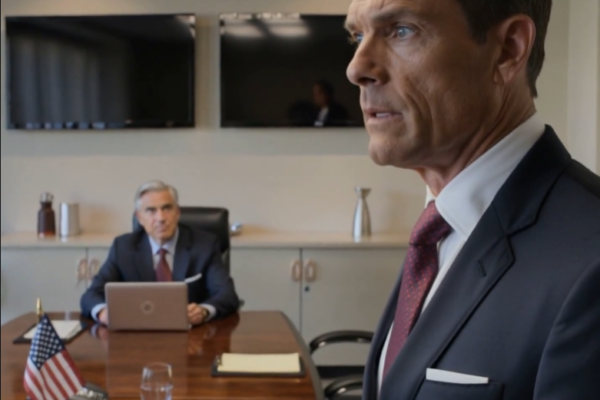
“Eight percent, effective the first of October.” My CEO, Eleanor Prescott, slid my fifth pay cut in two years across her $42,000 custom Italian-walnut desk. Minutes earlier, she’d looked me in the eye and said, “You are far too valuable to this company for me to lose you over a temporary rough patch.” I didn’t touch the paper. “Thank you for informing me, Eleanor.” She blinked. She’d expected another argument. Another reluctant acceptance. Another promise that things would improve if I just stayed loyal. Instead, I stood up and buttoned my jacket. “I truly appreciate your dedication, Julian. People like you are the true engine of Strata Logistics.” “I am well aware.” Then I walked out. What Eleanor didn’t know was that I’d memorized a certain phone number four months earlier. And after that meeting, I was finally ready to use it. I’d spent twenty-four years working in supply chain operations. When I joined Strata Logistics Global, the company had forty employees. I’d built its proprietary freight-routing infrastructure, established compliance systems, and helped it grow to more than 110 people. My starting salary was $165,000. Five cuts later, it had fallen to barely $113,000. Meanwhile, Eleanor had acquired an $85,000 executive electric sedan on the company credit card. Strata had leased premium downtown office space with private executive dining suites. Every time the company prospered, my paycheck somehow became the problem. In March, Eleanor had personally promised that my fourth reduction would be the last if I stabilized the Kensington Retail Group onboarding. I delivered. She cut me again. And this time, the timing wasn’t accidental. My annual employment contract was about to renew. Eleanor had always treated me like someone who would simply accept whatever she put in front of me. She knew how much of the company’s infrastructure depended on my work. But she hadn’t considered what would happen if I stopped accepting her terms. Down in the parking garage, I called Simon Holt, an executive recruiter. “Is the position still on the table, Simon?” “The hiring committee asked about your status two days ago.” Summit Cargo Solutions was expanding in the Midwest. Its leadership wanted someone with my background in automated compliance, and the hiring committee was prepared to move immediately. “I am ready,” I told him. But before making another move, I opened the employment agreement I’d signed with Strata. Section 4.2. One provision controlled everything. My agreement would automatically renew for another twelve months unless I submitted formal written notice at least five business days before expiration. If I missed that deadline, I’d be locked into another year at the reduced salary. My contract expired Friday, October 1. I had until Monday morning to deliver my notice. That evening, my friend Hannah Brooks, general counsel for an independent freight consultancy, sat across from me at my dining room table. She reviewed Summit’s offer and the single-page notice I’d prepared. “The compensation package is airtight, Julian.” Then she examined my letter. “It is perfect.” I signed Summit’s offer through its digital portal that night. Eleanor still knew nothing. Monday morning, I arrived at the corporate tower wearing my charcoal wool suit and burgundy silk tie. At 8:17, Eleanor entered her executive suite, carrying her designer handbag and checking her phone. Her almond milk cortado was already waiting on the polished desk. I knocked on the open glass door. “Eleanor, do you have two minutes?” “Julian. You are in early. Step inside. Take a seat.” I stepped inside and closed the door. Then I placed one sheet of paper directly in front of her coffee. “This is my formal written notice pursuant to Section 4.2 of my employment agreement.” Her eyes moved toward the paper. “I am officially declining the automatic renewal of my contract. My final day with Strata Logistics Global will be Friday, the first of October.” Eleanor froze. She picked up the letter and read it twice. When she finally looked at me, her practiced smile had disappeared. “Julian, what is this?” She insisted the eight percent reduction was temporary. The board was reviewing compensation. The company would make me whole after the fourth-quarter numbers closed. I’d heard it all before. “You made that exact representation four separate times over twenty-four months, Eleanor.” Her expression tightened. I reminded her of the promise she’d made in March, when she said my salary would never be touched again if I secured the Kensington rollout. Then I said the one thing she’d never expected to hear. “And I have decided not to participate in a sixth.” “That is absurdly unfair!” She rose halfway from her chair, insisting that the entire logistics sector was under financial pressure. I looked around her luxurious corner office. The company had spent $140,000 renovating private executive suites while claiming operational insolvency. Eleanor’s face flushed. Then she reached for the one thing she believed could still make me reconsider. “Do you realize what you are doing? The Kensington Retail Group renewal is scheduled for execution in three weeks!” Kensington represented $650,000 in recurring annual revenue. I’d designed its proprietary routing logic. Eleanor knew the relationship depended heavily on technical infrastructure that I understood better than anyone. And she knew Owen Miller, the young account manager, wasn’t prepared to handle that relationship alone. “You cannot simply abandon an enterprise client on five business days’ notice!” I kept my voice steady. “It is precisely the notice period drafted by your own corporate counsel in Section 4.2.” I explained that the same provision protecting Strata’s contractual rights also protected mine. “My notice is timely, lawful, and final.” Then I left her office. For the rest of the week, I worked eight to five, documenting every integration node, compliance requirement, carrier contact, and routing procedure Kensington needed. I spent four afternoons training Owen. “Everything you require is documented in these files, Owen.” I told him to follow the protocols, never skip verification checks under pressure, and know his worth. Friday afternoon, I signed my separation paperwork, handed over my electronic keycard, and walked through the revolving glass doors for the last time. For the first time in two years, I felt unburdened. I thought the silence would finally belong to me. It lasted forty-eight hours. Sunday afternoon, I was in my Oak Park kitchen preparing dinner when my phone vibrated. Eleanor Prescott. I let it go to voicemail. “Julian, it is Eleanor. I need you to call my private mobile immediately.” Her voice sounded strained. Kensington’s compliance director had issued an emergency audit notice concerning third-party carrier indemnity clauses. Owen supposedly couldn’t locate an approved regulatory rider. I knew exactly where it was. I’d filed it fourteen months earlier and cross-referenced it in the handover manual Owen already had. The document was exactly where it belonged. I deleted the voicemail. Forty minutes later, another arrived. By Sunday night, I had eleven missed calls and five voicemails. By Monday morning, twenty-three missed calls. I blocked Eleanor’s number. Twenty minutes later, an unfamiliar number appeared on my screen. I thought it might be Summit calling about my new company laptop. “Julian Vance,” I answered. “Julian, thank God!” Eleanor. She’d borrowed her assistant’s personal phone because her calls weren’t getting through. “Julian, Kensington is preparing to walk away!” George Davenport had contacted her office that morning. Strata couldn’t provide updated safety certifications, and Kensington was demanding an emergency compliance call with its lead architect. I calmly explained exactly where the certifications were filed. Owen had full access. But Eleanor wasn’t interested in the folder anymore. “Owen cannot explain the multi-tier routing architecture to George Davenport!” Her voice sharpened. “George does not trust Owen! He trusts you!” Then came an offer I’d never imagined hearing from the same woman who had spent two years insisting the company couldn’t afford my salary. Five thousand dollars for three hours of consulting. Then ten thousand. Finance would wire the money before noon. I stood there listening to the woman who’d reduced my annual compensation by thirty-one percent suddenly offer me $10,000 for half a day of my expertise. “I must decline your offer, Eleanor.” “Why?” she demanded. “Ten thousand dollars for half a day of remote consulting! Why would you refuse that?” I told her I’d already signed a binding agreement with Summit Cargo Solutions. The conflict-of-interest and confidentiality provisions prevented me from providing consulting services to a direct competitor. My transition was final. “Julian, you cannot do this to me!” She said the board would hold her personally responsible if Kensington walked away. “That sounds like an internal corporate governance matter, Eleanor.” I ended the call. But Eleanor didn’t stop. Calls poured in from Strata’s switchboard, corporate lines, and even a board member asking me to consider mediation. I documented every attempt. By Thursday evening, Hannah was sitting at my table, staring at the communication log on my tablet. “Seventy-four calls in four days, Julian. This is actionable civil harassment.” She told me we could seek an injunction if Eleanor continued. But I knew there was a deadline approaching. Kensington’s deadline. Hannah looked at me. “Are you going to answer if she tries again?” “If she calls after Kensington pulls their business,” I told her, “I will take that call. Because that will be the final closing of the ledger.” By Tuesday afternoon of the following week, I’d spent the morning completing paperwork for Summit, ordering my executive monitors, and speaking with my new colleagues. At 3:15, my phone vibrated. Strata Logistics Global. I opened my communication spreadsheet. Eighty-eight attempted contacts in eight days. This time, I answered. “Julian Vance.” There was static on the line. Then a ragged breath. “Julian,” Eleanor whispered. I barely recognized her voice. The confident CEO who’d sat behind that $42,000 desk was gone. She sounded hollow, exhausted, and shaken. “It is Eleanor.” I leaned back in my chair. “Good afternoon, Eleanor.” For a moment, there was only silence. Then she began speaking. “George Davenport sent formal written notification at noon today…”

Julian Vance had developed a quiet familiarity with the specific silence that preceded a reduction in his compensation. It was not an aggressive quiet; rather,…

calendar_today 08/10/2026
1...7891011...13