HR fired me in the middle of my year-end presentation to the CEO — I put the report down and said, “Then we’re done here.” The entire room went silent.
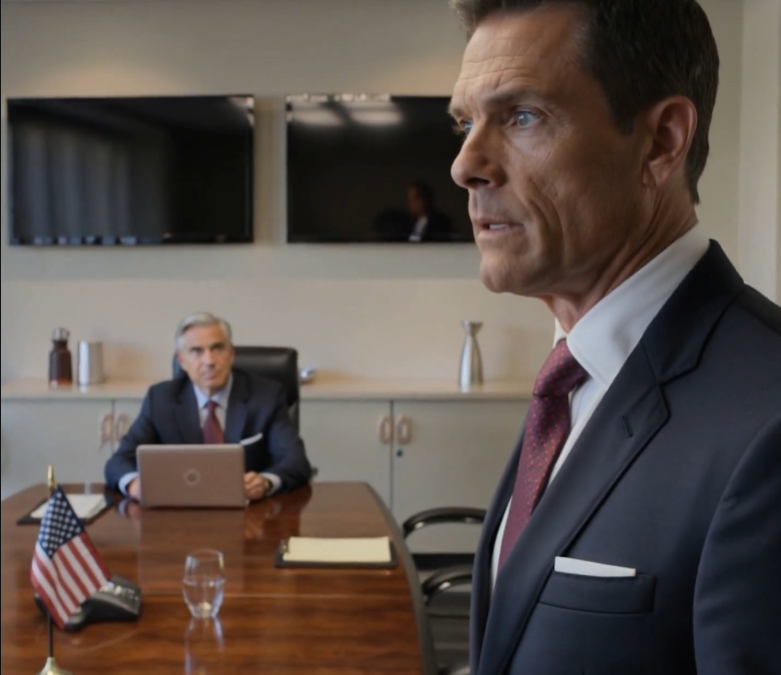
Three minutes before my year-end presentation, human resources fired me in front of the board. I closed my laptop and said, “Then this report is no longer my job.”
My mobile phone vibrated in my tailored suit pocket outside the executive boardroom on the forty-eighth floor of Westlake Industrial Corporation in Chicago. In my hands, I held twenty bound copies of the strategic commercial review, fresh from the printer. For three exhausting weeks, my team had labored past midnight, reconciling eleven revisions of the financial model and verifying operating margins down to the penny. At fifty-one years old, having spent twelve years building Westlake’s enterprise footprint, this fifteen-minute presentation before the chairman, the chief executive officer, and every divisional vice president was the gateway to a promised promotion to executive vice president.
When the phone buzzed a third time, I finally pulled it out. The message was from Brenda Carlson, vice president of human resources. There was no greeting, only an attached file titled Notice of Separation. I stared at the typography in disbelief. Keith Mercer, Director of Strategic Markets. Effective date: Immediate. Reason: Organizational restructuring and elimination of functional position.
The timing was calculated. Four weeks earlier, Julian Drake, executive vice president of commercial development, had invited me into his office and closed the door. He pressured me to reconsider a rejected vendor attempting to secure our multimillion-dollar automated warehouse modernization program. The firm was called OmniFlow Logistics. On paper, OmniFlow was an operational liability: formed two years prior, carrying thin insurance, lacking enterprise references, and using unauthorized logos. My diligence team and procurement specialists had flagged the bid for disqualification.
Julian had informed me that OmniFlow was owned by his sister’s son, Jeremy Drake, suggesting that corporate vendor standards were mere guidelines. I cited Westlake’s mandatory procurement policy, which classified high-risk screening criteria as nonnegotiable. His polite smile had evaporated into cold malice, but I refused to yield. The next morning, I submitted a formal vendor assessment rejecting OmniFlow and logged Julian’s disclosed familial relationship directly into the compliance portal. Julian never mentioned the matter again.
Yesterday, Brenda Carlson had even smiled in the elevator, remarking how eager the board was to hear my three-year roadmap. Now I was standing outside the boardroom holding my own termination notice.
The double doors parted, and Sharon Price, the chief executive’s assistant, stepped forward. “Keith, they’re ready.”
I locked my phone and walked inside. At the head of the walnut table sat Ronald Prescott, our chairman and chief executive officer. At sixty-three, with silver hair and an aristocratic air, Ronald was an executive whose voice rarely rose above a whisper. Julian Drake sat two seats to his left, turning a heavy gold fountain pen between his fingers. When our eyes met, Julian offered a faint smirk that vanished instantly.
I placed my laptop on the lectern, connected the display cable, and watched the title slide illuminate the wall monitors: Enterprise Strategic Markets: Annual Review and Three-Year Strategy.
Ronald nodded warmly. “Go ahead, Keith. Walk us through the margin gains.”
Before I could utter the second sentence, the back door opened. Brenda Carlson entered carrying a dark blue folder.
Ronald frowned in annoyance. “Brenda, we’re in an executive presentation.”
Brenda did not look at Ronald. Her gaze fastened onto me with rehearsed detachment. “Keith, I apologize for the interruption. Westlake has made an executive determination to eliminate your position as part of an organizational restructuring, effective immediately.”
She laid a formal document directly over my presentation notes.
Ronald looked across the table in astonishment. “Brenda, what is this? Why is this happening in an executive session?”
Brenda glanced toward Julian Drake, an unmistakable signal. Julian set his pen down.
“Ronald, the board approved our cost-reduction mandate for next year. We must consolidate overlapping functions. Strategic Markets will be absorbed under my commercial division. This notice was processed this morning to establish immediate organizational clarity.”
Humiliation masquerading as operational efficiency.
Brenda pointed toward the signature line. “Keith, this confirms receipt of notice. We can discuss your separation package in my office after this meeting.”
I looked at the paper, then at the slide behind me displaying hundreds of hours of my team’s labor. My first impulse was blind anger. My second was fear: our mortgage, our daughter Hannah’s tuition, my wife Clara caring for her recovering mother, and my earned performance award from the European supply chain partnership, worth three hundred twelve thousand dollars, scheduled for payout next month.
Then my third impulse took command: disciplined composure.
I picked up the separation notice and read every line. I took Brenda’s pen and signed only the line acknowledging receipt. Beside my name, I wrote the exact time: 3:04 in the afternoon. Julian watched me closely, waiting for an outburst.
Ronald cleared his throat uncomfortably. “Keith, finish the presentation first. We can resolve the administrative matters afterward.”
I reached out, took hold of the display cable, and unplugged my laptop. The wall monitors turned bright blue, then went black.
“No,” I said quietly.
The word cut through the room like a gunshot. Julian stopped moving. Ronald’s eyes widened in disbelief, and Brenda stepped forward.
“Keith, we can handle transition cooperatively.”
“I am entirely willing to cooperate with reasonable administrative procedures through proper channels,” I replied in an even voice. “However, according to the formal legal notice your department just delivered into my hands, my employment with Westlake ended effective immediately at 3:04 this afternoon. Presenting Westlake’s future strategic growth plan is no longer my responsibility.”
Silence engulfed the boardroom.
“All strategic files remain on the enterprise network,” I continued calmly. “The financial models are in the shared repository, and client account ownership is fully documented in the customer database. I have not altered or removed any corporate records.”
I neatly stacked my twenty bound reports, aligning the edges against the wooden lectern. I closed my laptop, slid it into my briefcase, and zipped the compartment shut.
Ronald leaned forward, his palms flat on the table. “Keith, sit down. This is an executive board meeting.”
I met his gaze without flinching. “I was an executive employee when I walked through those doors twelve minutes ago, Ronald.”
I held up the termination notice between two fingers. “I am a private citizen now.”
I looked back at Brenda Carlson. “Please send all separation paperwork and benefits documentation to my personal email on file. I will return all company property before leaving the building today. Any further communication must be in writing.”
I took my briefcase and turned toward the exit. As my hand touched the brass door handle, Julian’s voice rang out, slick and patronizing.
“Keith, you’re taking a routine organizational realignment far too personally.”
I paused at the threshold, turned around, and looked Julian Drake directly in the eyes.
“No, Julian,” I answered evenly. “I’m taking it literally.”
I walked out, and the heavy doors clicked shut behind me.
In the hallway, adrenaline drained from my limbs. I pushed into the concrete stairwell, leaning against the cold painted wall to take slow, deliberate breaths. My phone buzzed against my leg. The screen displayed the name of Paul Alvarez, senior corporate counsel within Westlake’s legal division and a trusted friend of ten years.
I answered, keeping my voice low. “Keith speaking.”
Paul spoke quickly. “Keith, where are you right now? An employment change notification just crossed my intake queue from Brenda’s office. Tell me you did not sign a general liability release.”
“I signed receipt only,” I said, leaning against the steel handrail. “With the exact timestamp.”
“Thank God.” Paul exhaled. “Did they give you a reason?”
“Official corporate realignment and elimination of Strategic Markets,” I replied.
“Do you believe that?” Paul asked after a brief pause.
“You and I both know why this happened, Paul.”
“Listen to me carefully, Keith,” Paul said, mindful of legal ethics. “I represent Westlake and cannot provide personal counsel. But as a friend, I’m warning you: do not copy internal company files to an external drive, do not forward operational emails, do not export customer lists, and do not take photographs of internal screens.”
“I have no intention of violating company policy,” I replied.
“Good,” Paul said firmly. “If you walk out of this building with proprietary operational data, Julian Drake will immediately direct corporate security to file a criminal trade-secret referral and claim an emergency preliminary injunction. That will completely destroy the clean legal leverage you currently possess.”
“What leverage?” I asked.
“The timing,” Paul said. “You submitted a formal written vendor diligence rejection against OmniFlow Logistics four weeks ago. You documented an executive conflict of interest regarding Julian’s familial relation to their leadership. Now you’re terminated without warning minutes before an executive board review. That is a textbook retaliation timeline. But to preserve that claim, you must remain entirely above reproach.”
“What about my compensation?” I asked. “The European logistics partnership performance award.”
Paul hesitated. “That incentive agreement is governed by a separate contract worth roughly three hundred twelve thousand dollars if the margin holds. Retain outside employment counsel immediately. Gather only personal records that lawfully belong to you through the employee self-service portal: offer letter, compensation plans, performance reviews, pay statements, and the termination letter. Do not take the OmniFlow file.”
“How do we prove the assessment exists if I leave it behind?” I asked.
“Your attorney sends a litigation hold notice identifying the document by title, date, and project tracking code,” Paul explained. “Once delivered, Westlake must preserve all communications and logs. If Julian attempts deletion, he commits spoliation of evidence. Now go home, Keith. Write down everything while timestamps are fresh in your memory.”
“Thank you, Paul,” I said quietly.
I stepped out of the stairwell onto the forty-fifth floor. Outside my corner office, two administrative coordinators and an unarmed security supervisor were already waiting to assist with company property retrieval. I sat down in my desk chair but did not log into the company network. Instead, I accessed the external employee benefits portal on my personal phone.
I downloaded only what was strictly personal and lawful: my past three years of performance reviews reflecting top-tier ratings, my formal incentive compensation agreements, my historical pay statements, and the digital copy of the termination notice. I touched no client accounts, no proprietary spreadsheets, and no divisional strategy decks.
I neatly unplugged my corporate mobile phone and set it on the blotter beside my keycard, building badge, corporate purchasing card, parking credential, and physical authentication key. The coordinator signed an asset return receipt and handed me a duplicate copy.
I packed my personal belongings into a single cardboard storage box: a framed photograph of Clara and our daughter Hannah building sandcastles at Lake Michigan, my favorite fountain pen, two personal books on corporate governance, and a potted jade plant that Clara had purchased for me when I was appointed director.
As I carried the cardboard box down the corridor, the open-plan office fell silent. My deputy director, Anita Rao, rose quickly from her desk, her eyes glistening with shock.
“Keith,” Anita whispered.
I offered a slight, reassuring shake of my head. “Not here, Anita. Stay focused on your work. You’re an exceptional leader.”
In the parking garage, I placed the cardboard box on the passenger seat and dialed Clara.
“Keith, how did the presentation go? Did Ronald mention the promotion?”
“The presentation didn’t happen, Clara,” I said softly. “Brenda Carlson walked into the boardroom and terminated my employment.”
Silence lingered on the line.
“Keith, are you serious? After twelve years?”
“I’m coming home right now,” I replied. “We’ll be fine, Clara. But our lives are going to change.”
That evening, after eight-year-old Hannah was asleep, Clara sat beside me at the kitchen table. With a yellow legal pad, I wrote down every detail from memory: the exact time Brenda’s email arrived at 2:57, the moment I entered the boardroom at 3:01, Brenda’s interruption at 3:03, Julian’s remarks, my signed acknowledgment at 3:04, and Ronald’s statements.
At 10:40 that night, I transmitted an inquiry to Eleanor Rhodes, a veteran employment dispute attorney in Chicago. Before sleeping, I checked Westlake’s public career portal.
Exactly six hours after my termination, Westlake had posted an executive requisition for Vice President of Commercial Growth, reporting to Julian Drake. The job description detailed every major commercial responsibility I had overseen for four years.
I captured a timestamped screenshot and sent it to Eleanor. The claim of genuine organizational redundancy had collapsed before midnight.
At eight o’clock sharp the following morning, Eleanor Rhodes joined the secure video conference. In her early fifties, wearing a sharp navy blazer with silver-streaked dark hair, Eleanor had the serene posture of an experienced litigator.
“Let’s separate what is emotionally painful from what provides legal leverage, Keith,” Eleanor said without preamble.
I forwarded Eleanor the digital dossier of documents I had lawfully retained: the termination notice, my compensation statements, the European partnership incentive plan, past evaluations, the signed asset return receipt, the LinkedIn job posting screenshot, and my meeting notes.
Eleanor reviewed the European logistics incentive agreement first. “This is remarkably clear,” she noted. “You earned this bonus under an explicit formula tied to the certified margin. It specifies payment in the first quarter upon audit sign-off, without requiring active employment at distribution. If Westlake withholds it, they face an immediate breach-of-contract claim.”
“What about the termination itself?” I asked.
Eleanor adjusted her spectacles. “At-will employment allows companies to make arbitrary business decisions, Keith. It does not permit them to retaliate against an executive who documents a procurement conflict of interest under statutory compliance guidelines. You documented Julian Drake’s undisclosed familial link to OmniFlow Logistics. You refused to bypass mandatory screening controls. Within twenty-eight days, you were terminated under the pretext of job elimination, while an identical executive role was published six hours later. That sequence destroys their defense of an operational restructuring.”
She leaned forward slightly before continuing.
“We issue two precise communications. The first goes to Westlake’s outside counsel, detailing wage claims, statutory protections, severance, and earned awards. The second goes directly to Patricia Lang, chair of the board’s independent audit committee, placing Westlake on formal litigation hold regarding Julian Drake, Brenda Carlson, OmniFlow Logistics, and your dismissal.”
At 9:40 that morning, Eleanor dispatched both formal notices. At 9:56, Brenda Carlson emailed: Chairman Ronald Prescott expects your presence at ten o’clock in conference room forty-seven for an executive separation conference.
Eleanor dialed in on speakerphone.
I walked back into Westlake headquarters holding a temporary visitor pass. Inside the conference room sat Ronald Prescott and Brenda Carlson. Julian Drake was absent.
Ronald looked weary. “Keith, please sit. Yesterday was handled inappropriately. The timing in front of the board was entirely unacceptable. The company recognizes your contributions over the past twelve years. We are prepared to offer six months of base salary continuation, full payment of accrued paid time off, twelve months of health insurance coverage, and your European project award once certified. In exchange, we require a comprehensive release of all claims and a standard nondisclosure agreement.”
“What kind of nondisclosure?” Eleanor’s voice came clearly through the speakerphone.
Ronald folded his hands. “Keith had access to sensitive commercial strategies. We require a mutual agreement that Keith will not disparage Westlake or discuss internal corporate governance matters with outside parties.”
Eleanor answered instantly. “Mr. Prescott, my client will agree to standard confidentiality regarding trade secrets and financial settlement figures. However, Keith Mercer will never sign a provision that prevents him from cooperating with the board of directors, internal compliance audits, regulatory bodies, or law enforcement.”
Ronald looked across the table at me. “Keith, are you intending to take internal matters outside this building?”
“Ronald, do you know why I rejected OmniFlow Logistics four weeks ago?” I asked, sliding a copy of Eleanor’s preservation notice across the table. “OmniFlow belongs to Julian Drake’s nephew. Julian pressured me to waive mandatory screening protocols. When I logged that conflict into compliance, Julian orchestrated my termination with Brenda within forty-eight hours and fabricated a restructuring excuse to seize control of my division.”
Ronald picked up the letter. His gaze tracked down the bulleted chronology, the timestamps, and the citation of the LinkedIn posting. Color slowly drained from his face.
He turned toward Brenda Carlson, his voice deathly quiet. “Did you know about Julian’s nephew, Brenda?”
Brenda looked down at her hands, unable to meet his eyes. Ronald set the paper down with trembling fingers.
“Give me forty-eight hours, Keith.”
“The legal hold must be executed immediately,” Eleanor insisted through the phone.
“It will be issued before noon,” Ronald said heavily.
At 1:17 that afternoon, Westlake’s general counsel distributed a comprehensive litigation hold across the enterprise.
At 5:06 that evening, Julian Drake called my personal cell twice. When I ignored both attempts, a text message arrived from Julian at 5:19.
You are making a catastrophic mistake with your career, Keith. Walk away while you still have a reputation in this town.
I captured the screen and transmitted it to Eleanor.
“Julian just handed us the entire dispute, Keith,” Eleanor said, laughing quietly. “The audit committee will treat that text as direct witness intimidation.”
Within three days, Westlake’s board stripped Julian of procurement authority. Within one week, the audit committee engaged forensic accountants and placed Julian on paid administrative leave.
For the next four weeks, life settled into an unfamiliar stillness. Clara kept me anchored.
The first significant executive outreach arrived two weeks later from Teresa Walsh, chief executive officer of Horizon Automation Systems, an industrial software firm in Milwaukee employing six hundred specialists with two hundred forty million dollars in annual revenue.
Teresa called my mobile phone directly. “Keith, I hear you parted ways with Westlake. Senior executives walking out of boardrooms travel fast. Horizon is preparing to expand into turnkey enterprise automation programs. I need a Vice President of Commercial Strategy who understands how to build institutional governance, not just push sales quotas. Are you interested in having lunch?”
We met at a restaurant in northern Illinois two days later. Teresa was direct, brilliant, and possessed an intolerance for corporate politics. When I insisted that commercial governance must remain strictly independent of sales incentives, Teresa smiled broadly.
“That is precisely why I want you in Milwaukee, Keith.”
Eleanor Rhodes reviewed Horizon’s executive offer. We ensured the agreement contained an explicit covenant: Keith Mercer is neither expected nor permitted to disclose, use, or rely upon any proprietary trade secrets belonging to any former employer.
The base compensation was higher than Westlake’s, accompanied by a twenty-five percent target bonus and meaningful equity participation. I signed the contract.
Meanwhile, Westlake’s independent investigation reached its conclusion.
Westlake’s outside counsel presented a comprehensive settlement agreement: six months of base salary continuation, full medical premium subsidies, complete payout of my eighty-four-thousand-dollar annual bonus compromise, immediate payment of my three-hundred-twelve-thousand-dollar European project award upon audit sign-off, reimbursement of all legal fees, and an absolute neutral employment reference.
The nondisclosure covenant was strictly limited to financial terms, explicitly preserving my lawful right to communicate with regulators and auditors. I executed the agreement. Twelve days later, the funds cleared into our account.
I immediately paid off Clara’s vehicle loan, fully funded Hannah’s college investment trust, and placed twelve months of living expenses into secure treasury reserves. We had survived the ambush. Now it was time to build something enduring.
Starting at Horizon Automation Systems in Milwaukee was humbling. At Westlake, twelve years of tenure had given my voice automatic weight. At Horizon, senior managers viewed me with cautious skepticism during my first leadership briefing.
I spent my first forty-five days listening. I visited deployment sites, shadow-audited engineering scrums, and sat with technicians in plant backrooms. Horizon had exceptional engineering talent, but its commercial operation suffered from a classic structural flaw: sales executives were compensated solely on gross contract bookings, leaving delivery teams to absorb financial losses when overpromised implementations went over budget.
With Teresa Walsh’s full backing, I established the Commercial Review Council. It was a rigorous qualification forum where sales, finance, legal, and operational delivery leads evaluated major proposals before pricing commitments were finalized.
During my third week, Scott Jenkins, an aggressive regional sales vice president, brought a fourteen-million-dollar deal to the council, expecting immediate endorsement. Our analysis revealed Scott had priced single-facility installation rates for six facilities across four states, triggering massive overtime penalties, alongside an uncapped liquidated damages clause.
Scott glared at me across the table. “Keith, are you here to help us win contracts, or are you here to paralyze this company with bureaucratic red tape?”
“I’m here to ensure Horizon wins profitable business that we can deliver without destroying our margins, Scott,” I responded calmly. “If you’re willing to personally absorb the operational overrun costs out of your regional commission pool, we can submit the proposal as written.”
Scott’s bluster deflated.
Within forty-eight hours, the council restructured the proposal. We lengthened the timeline, capped delay penalties, sequenced installations across two phases, and secured customer-funded engineering support.
Horizon won the contract two weeks later, and Scott brought two craft beers to my desk with a begrudging grin of respect.
While Horizon was finding its operational rhythm, Westlake’s internal reckoning concluded. Eleanor Rhodes contacted me with the formal findings authorized by Patricia Lang’s audit committee.
The forensic investigators uncovered that Julian Drake had submitted his formal request to eliminate my position exactly two business days after I filed my rejection of OmniFlow Logistics. The organizational realignment documentation had been created after the fact to provide an administrative alibi.
Furthermore, the committee discovered that Julian had provided an undisclosed sixty-thousand-dollar personal loan to his nephew’s holding company and had previously guided two discounted surplus equipment disposals to entities connected to former business associates.
Julian Drake was forced to submit his immediate resignation to the board. Brenda Carlson was dismissed for severe violations of human resources governance and failure to enforce whistleblower protection standards.
Westlake issued an internal memorandum acknowledging that a senior executive separation had failed to satisfy corporate governance benchmarks and had been resolved amicably.
That evening, Ronald Prescott called my private line. His voice was subdued and deeply penitent as he offered an unqualified personal apology for permitting a corporate culture where operational speed overshadowed procedural integrity.
Ronald then extended an unexpected offer.
“Keith, our board has authorized me to offer you the position of Executive Vice President of Strategic Growth, reporting directly to me, with compensation significantly higher than what you earned previously. We want you to come home and lead this company.”
Six months earlier, that offer would have been my ultimate vindication. Now, listening to the chairman’s voice, I felt only clarity.
“Thank you for the honor, Ronald,” I said gently. “But the answer is no. I’m building a future at a company where I don’t have to prove that my dismissal was a mistake. Westlake made me believe my entire identity was tied to being indispensable in your building. I’ve learned that my judgment belongs to me, not to an executive title.”
Ronald accepted my decision with quiet grace, informing me before we disconnected that Anita Rao had been promoted to Vice President of Strategic Markets.
That news brought me genuine joy.
Two months later, Midwest Alliance Manufacturing, an industrial consortium of eleven major manufacturing enterprises, released an eighty-million-dollar tender titled Project Northline to modernize warehouse logistics across twenty-three production facilities.
Every major provider entered the contest, including Westlake Industrial Corporation.
When Scott Jenkins suggested using my knowledge of Westlake’s pricing to undercut them, I shut the idea down immediately. We established an ironclad Clean Bid Protocol, deriving every assumption exclusively from Horizon data, public benchmarks, or customer site evaluations, certifying under penalty of perjury that no Westlake proprietary information was used.
Our commercial team visited eight manufacturing facilities, discovering that the client’s core problem was not inadequate software but complete operational mistrust. Frontline workers routinely printed enterprise inventory reports and corrected unit counts in red ballpoint pen because the central computer system updated only once a day.
Horizon crafted an operational partnership rather than a software dump. We proposed phased implementation across four pilot facilities, contractually tying our subsequent revenues to verifiable frontline adoption milestones.
Midwest Alliance shortlisted three finalists for decisive presentations in Minneapolis: a global management consultancy, Westlake Industrial Corporation, and Horizon Automation Systems.
During our presentation, I opened by displaying a photograph of the plant supervisor’s printed inventory sheet covered in handwritten red ink.
“This is the system Horizon is actually replacing,” I told the evaluation panel. “Your frontline workers write in red pen because they cannot afford to shut down an assembly line when the database is wrong. Real modernization does not begin with algorithms; it begins with operational trust.”
When consortium board member Gordon Lewis asked how they could be certain our bid did not exploit Westlake’s proprietary commercial intelligence, I presented our comprehensive Bid Source Register, documenting the clean lineage of every single calculation.
Gordon asked if I wanted to defeat Westlake that day.
“Yes, Mr. Lewis,” I answered without hesitation. “I’m competitive, and I believe Horizon is the superior partner. But if you award this contract to Horizon simply because my departure from Westlake made for a compelling story, you should award it to someone else. Personal grievances do not deliver eighty-million-dollar programs. Flawless execution and disciplined governance do.”
Gordon Lewis smiled faintly and closed our binder.
“That is the most honest answer we’ve heard all week.”
Seventeen days after our Minneapolis presentation, Midwest Alliance awarded Project Northline to Horizon Automation Systems.
The initial award encompassed a sixteen-point-four-million-dollar contract covering four pilot facilities, with subsequent expansions contingent upon hitting audited adoption milestones.
Midwest Alliance’s evaluation scorecard awarded Horizon the highest marks in governance integrity, frontline feasibility, and implementation risk mitigation. Westlake placed second, and the international consulting firm placed third.
That evening, Anita Rao called to congratulate me with genuine warmth, noting that our implementation architecture was unbeatable and mentioning that Ronald Prescott had formally announced his retirement.
Three days later, the third-place global consulting firm filed a formal procurement protest, alleging Horizon possessed an unfair competitive advantage due to my former employment at Westlake.
Because we had maintained the Bid Source Register, every calculation had an unassailable digital timestamp.
Midwest Alliance engaged outside counsel to conduct a forensic review of our repository. For two weeks, investigators audited my emails, workspaces, and source citations, finding zero Westlake documents and zero improper communications.
On the nineteenth day of the review, Midwest Alliance’s general counsel issued a decisive memorandum dismissing the protest in its entirety.
The findings confirmed that Horizon’s submission was completely independent and fully substantiated by verifiable commercial data. The contract execution proceeded immediately.
Then began the true test: operational delivery.
During the first six weeks of rollout, I caught myself sliding back into old executive habits, attending daily scrums and micromanaging escalations. Clara gently confronted me at home, reminding me that I was acting as if Horizon would collapse without my personal intervention.
Her words struck home.
The following morning, I restructured Northline’s governance, delegating executive sponsorship to Chief Operating Officer Gary Henderson, granting operational authority to Program Director Natalie Diaz, and empowering frontline engineering leads. I stepped back to high-level commercial governance and client stewardship.
The strength of this delegation was tested two weeks before go-live in Ohio, when Natalie Diaz discovered a conversion defect in the legacy parts catalog that could skew inventory counts. When the client director demanded I fly to Columbus to override Natalie and force the launch date, I refused.
Responsible leadership meant trusting the engineers running the code.
Horizon stood behind Natalie’s recommendation for a nine-day delay. When the Ohio plant went live nine days later, the deployment was flawless. Inventory accuracy reached ninety-nine point two percent, manual workarounds dropped to zero, and the facility reached full operational velocity ahead of schedule.
At the post-launch banquet, Teresa Walsh raised her glass to Natalie Diaz amid thunderous applause.
True executive success is measured not by how indispensable you make yourself, but by how effectively an organization flourishes when you step out of the room.
Over the next two years, Horizon Automation Systems expanded rapidly. Project Northline unlocked its second phase, adding twenty-one million dollars in deployments across nine additional facilities.
The board appointed me Executive Vice President of Commercial Strategy and Corporate Partnerships, granting substantial equity that solidified my family’s financial future.
One morning, our director of strategic sourcing, Candice Ward, stepped into my office with a tense expression. We had published an enterprise tender for a logistics analytics platform, and one of the bidders was founded by Darren Wright, my former university roommate of fifteen years.
Darren had contacted me asking if Horizon could waive our mandatory three-year balance sheet requirement for early-stage software firms. I had refused immediately, submitted a formal conflict-of-interest disclosure to compliance, and recused myself from the selection committee.
Candice informed me that Darren had emailed board member Gordon Lewis to lobby for an exception. She recommended completing the tender under published criteria without exceptions, evaluating thresholds prospectively next quarter.
I gave Candice my unconditional backing.
At the board meeting, when Gordon asked if I supported maintaining strict screening even though my friend was disqualified, I answered that we must build transparent policies rather than private exceptions.
The board adopted Candice’s recommendation.
A month later, a handwritten envelope arrived from Florida containing a letter from the newly retired Ronald Prescott. Ronald reflected on our final boardroom exchange, writing that procedural integrity matters most when dealing with people we instinctively trust, and thanking me for holding the line when he had failed to do so.
I placed the letter in my desk drawer beside the signed asset return receipt from three years earlier.
On the windowsill of our sunlit kitchen in Illinois, the jade plant Clara had purchased for me sat in a large terracotta pot, its thick green branches spreading broad and strong toward the morning light.
My daughter Hannah had named the plant Kevin, and whenever I watered its glossy leaves, I remembered the cardboard box I had carried to the parking garage when my corporate world seemed to shatter.
Leaving Westlake with clean hands and absolute restraint had felt painful in the moment, but it was the most devastating strategic maneuver I could have executed. By taking nothing that belonged to the company, I denied them the ability to obscure their corruption behind false allegations of corporate theft.
The fight remained focused where it belonged: on truth, ethics, and accountability.
Looking back, three immutable principles guided my journey through the corporate storm.
First, know precisely what belongs to you. Your integrity, your technical competence, your lawful personal records, and your reputation belong to you; operational files and corporate titles belong to the organization. Never confuse the two.
Second, when confronted with institutional malice or retaliation, document verifiable facts before constructing theories. Record timestamps, exact dialogue, and objective decisions. Anger makes people careless witnesses; disciplined records dismantle injustice.
Third, never allow your professional identity to depend on being indispensable to a corporate institution. A truly successful career is not proven by making a company unable to function without you; it is proven by carrying judgment and principles that elevate any room you enter.
On a warm Friday afternoon in May, my mobile phone vibrated on my office desk. The calendar notification flashed: Hannah’s middle school orchestra concert, 6:30 in the evening.
In my former life, I would have stayed at my desk to review another financial slide or resolve an operational emergency that someone else could handle.
Instead, I shut down my laptop, slid my notebook into my leather briefcase, and stepped out of the office.
“Keith,” Scott Jenkins called out from the glass corridor. “Are you joining us for the quarterly partner reception tonight?”
“Not tonight, Scott,” I said with a smile, tapping my watch. “My daughter is playing the clarinet in forty minutes, and I have the best seat in the front row.”
Scott grinned and nodded. “Go, Keith. Everything here is running smoothly.”
I walked out into the warm spring air, got into my car, and drove home to my family, knowing with absolute certainty that everything that truly mattered was safe, secure, and right where it belonged.








