I drove my kids to my lake cabin—and found Mom, Dad, and my brother’s whole family living there. My brother stormed out: “You’re trespassing! I’m calling the cops!” I smiled: “Please do.” I sat with my kids on my porch swing and sent one text. 3 hours later…
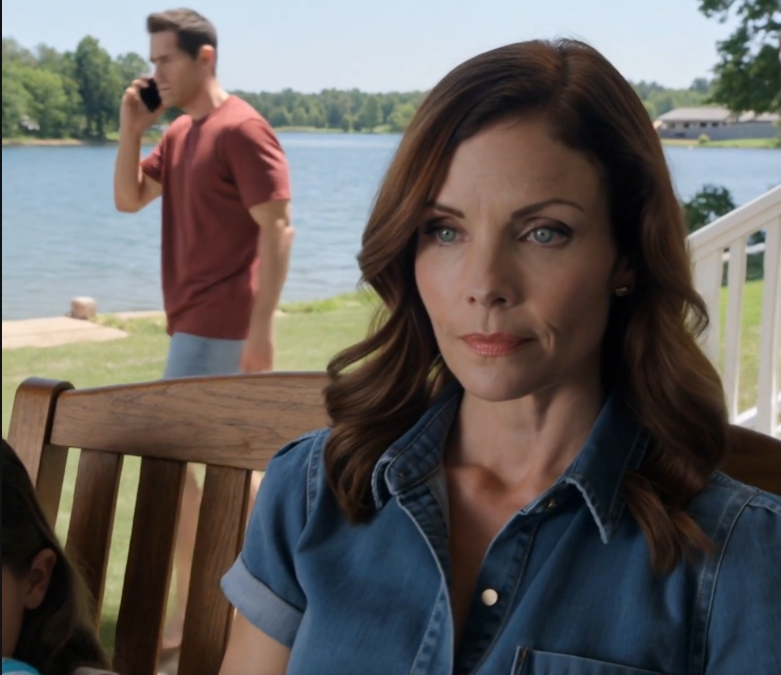
I’m Heidi Brandt, 41, and I had just brought my two kids up to my lake cabin for the Fourth of July weekend when I discovered that my parents and my brother’s entire family were living inside it.
My nine-year-old daughter was still holding her beach towel when my brother came banging through my front door.
“You’re trespassing. I’m calling the cops.”
My parents stood behind the screen door and said nothing.
I smiled. “Please do.”
Then I sat down on my porch swing between my children and sent one text.
For twenty-five years, they’d blamed me for the fire that destroyed my grandfather’s cabin. I believed them, and I’d been paying for it ever since.
Three hours later, something my father had kept from me would arrive on that porch. And this time, my father would have to answer to me.
I know what it is to have your parents stand behind a door and say nothing. If yours ever did, tell me your story and where you’re listening from.
I still haven’t said who that text went to.
Big Spirit is the biggest natural lake in Iowa, shallow and clear, wide open from Marble Beach to the Minnesota line, so nothing along its shore stays private. And for twenty-five years, I believed the one secret it had ever kept was mine.
I had driven three and a half hours from West Des Moines to reach it that Friday, the third of July. I hadn’t seen my cabin since I’d closed it up the previous fall. Storm season had kept me on the road all spring, and my father had texted to say he would open the place for me.
So I came up the gravel driveway expecting an aired-out house and a mowed lawn.
What I got was my brother’s work truck and trailer parked in my usual spot, a clothesline full of children’s shirts that didn’t belong to my children, and firewood stacked clear to the porch rail in July. Through the bunk room window, I could see sheets I’d never bought covering beds that I had.
Next door, Bev Carlson, who had lived on that shore year-round since before I was born, lifted one hand from her dock. Then she turned away very quickly.
I’ve adjusted property claims for nineteen years. You count what’s in front of you first. You react second.
“Mom.”
My son Owen was twelve and didn’t waste words.
“That’s Uncle Travis’s truck.”
My daughter Josie had already climbed out with her beach towel. She was reading the mailbox aloud, one letter at a time, the way she read road signs.
“T-R-A-V-I-S.”
She looked back at me.
“Why does our mailbox say Uncle Travis?”
“Stay by the car a second,” I said.
Nobody raised a voice. The steering wheel was hot beneath both my hands, and I hadn’t let go of it yet.
Up on my porch, a screen door banged open.
I didn’t turn around. I was still reading that mailbox. The letters were the stick-on kind, and they had already faded.
The screen door slapped against the siding, and my brother, Travis Brandt, came down my front steps barefoot, wearing a T-shirt from the dock business he no longer owned.
I got out of the car and shut my door quietly.
“You’re trespassing.”
He pointed at me, then at the road.
“I’m calling the cops. We live here. You don’t walk in on people where they live.”
We live here.
He said it like a man who had been promised something.
Behind the screen stood my father, Walter Brandt—Walt to everyone in the county—and my mother, Diane, with a dish towel still in her hand.
Travis’s wife, Kendra, was at my kitchen window. His oldest daughter, Paige, stood motionless on my dock. And his thirteen-year-old, sitting on my top step, said it the way you might remind somebody of the weather.
“Grandpa says she burned his house down.”
Under my hood, the engine ticked as it cooled.
Tick. Tick.
I could hear that, and my brother breathing, and nothing else.
A trespasser on my own gravel. My house full of other people’s laundry. And the police being threatened out loud in front of my children.
I looked at Josie.
Josie was looking at me.
So I didn’t argue, and I didn’t back up. I smiled at my brother and gave him the only two words he hadn’t planned for.
“Please do.”
Josie’s eyes were still on me, so I gave her my hand and Owen my other one. I walked the two of them past their uncle, up my steps, and onto my porch.
I didn’t go inside. I didn’t return to the car.
I sat down on the porch swing and put one child on either side of me. The chains creaked, and the wooden slats were warm from the sun.
Travis actually dialed.
He walked out onto my grass and used his good-citizen voice, loud enough for everyone on the porch to hear.
“Yes, ma’am. We’re the residents. There’s a woman on the property refusing to leave.”
A recorded call.
In my line of work, you couldn’t ask for anything better.
“Are we in trouble?” Owen asked, keeping his voice low.
“No,” I told him. “We’re home.”
Josie didn’t ask anything. She just held on to her beach towel with both fists.
At 3:42, I sent one text.
I’m going to keep who it went to and what it said to myself for a little while. I will tell you that it didn’t contain a single angry word, and that I believed I knew everything it would do.
One reply came back.
“Give me three hours. I’ll bring the file.”
I turned the phone face down.
It had started with a jar. A citronella candle in a glass jar, sitting on the windowsill of a sleeping porch on the night of July 3, 2001.
I was sixteen.
My grandfather had built that first cabin forty years earlier with his own hands and a cedar-shake roof. He’d died two summers before the fire, and the cabin had gone to my father.
The sleeping porch was on the roadside of the house, screened on three walls, and it was mine every summer.
The mosquitoes were bad that night. I lit the candle to keep them away.
I cannot swear to you that I blew it out.
I’ve tried for twenty-five years.
That’s the one soft place in my memory, and everything that came later took hold right there.
I woke up coughing.
What I saw and what I understood were two different things that night. Smoke was coming down from the roof, from the lakeside of the house. And when I put my hand against the porch screen to push myself up, the screen was still cool.
I got my parents up. Then I climbed the ladder to the loft because my brother was fourteen and slept like a stone.
The heat up there was already wrong, heavy and close, like opening an oven.
“Travis!”
My voice broke around his name.
“Travis!”
I dragged him down that ladder by one arm.
Out on the grass, my father counted us aloud.
“One. Two. Three. Four.”
The roof collapsed while we watched.
A volunteer fireman, hardly older than I was, put a rough blanket around my shoulders.
“You did good, kid,” he said.
By daylight, the cabin was a chimney and a black square. A few burned rocket sticks floated in the shallows by the dock, the way they did every July. My grandfather’s tackle box still sat in the boat, dry.
I remember that the smoke had come from above me, from the lakeside of the house.
And I remember deciding that didn’t matter.
I still had smoke in my hair the next morning when I sat at the kitchen table in our house in town, because nobody had told me to go wash it out.
My father sat across from me with both hands flat on the Formica.
“We talked to the inspector. He said it started on the sleeping porch. Your candle.”
He let that sit between us.
“The insurance company won’t pay one dime for a flame somebody left burning. So the bank takes the lot. We lose your grandfather’s place.”
My mother stood at the sink with her back to us. My brother sat on the stairs, where he could hear every word.
“Folks around the lake are saying fireworks,” my father continued. “Let them. That’s us protecting you. We’re not going to correct it. And what happened on that porch doesn’t leave this house.”
He never raised his voice. He’d never needed to.
Every sentence came back around to we.
“We forgive you, Heidi.”
I looked down at the table. There was the sugar bowl. There were his hands.
There was no letter from any insurance company and no report from any inspector.
I noticed that, and I didn’t ask.
I was sixteen years old.
There was no letter on that table.
And I said, “Okay.”
Okay turned out to be a long word.
That summer, I bused tables at a supper club and handed my mother the envelopes. Nobody had to ask me.
I quit fishing because my grandfather’s fishing log, the cloth-covered book in which he’d recorded every catch, had burned with the cabin.
That was what I was told.
My fishing rod went up on two nails in the garage, and I never took it down.
I finished high school in that town, and whenever somebody said the word fireworks near me—at school, at the gas station—I didn’t hear a clue.
I heard my parents covering for me.
That was how well the story had been built.
At twenty-two, I became a property claims adjuster. I wanted to be the person who sat at a family’s table after a fire and told them the truth.
One part of this is mine.
By my second year on the job, I knew that a forgotten candle didn’t cancel an insurance policy. Carelessness was exactly what insurance was for. It paid for mistakes. That was the whole idea.
So I told myself there must have been some other reason.
And I told myself that asking my father what that reason was would only make him say it all again.
So I never asked.
That part is mine. Nobody did that to me.
I had other people’s fires stacked on my desk every week of my working life. I read the line that said cause of loss maybe forty times a month. I could find it on any form in under three seconds.
Back on the swing, with Josie’s shoulder pressed against my arm, I heard the screen door open.
My mother came out carrying a pitcher of lemonade.
I watched her approach, and for the first time, I let myself finish a thought.
I’d pulled thousands of fire files in nineteen years and never once pulled the one with my own name.
My mother set the pitcher on my porch rail and placed three glasses beside it, as though I’d merely dropped by for a visit.
“Honey, you should have called first.”
Diane smoothed her dish towel over the railing.
“Wouldn’t that have been nicer for everybody? And these two must be roasting. Come inside where it’s cool, babies.”
Neither of my children moved.
“Heidi, it’s a holiday weekend. Every dock on this shore is full. Do you really want to embarrass your father in front of all of them?”
I didn’t stand up, and I didn’t reach for a glass.
“How long, Mom?”
She looked out at the lake.
“Since November.”
November.
I counted the months against my knee.
Eight months.
Then the explanation came, light as a passing remark about the weather.
Travis’s dock business had gone under. The house in town—my parents’ house—had been put up to keep that business going, and they’d lost it the previous fall.
And this place was just sitting here empty.
“Honey, we didn’t want to worry you with it. You have so much on your plate with the divorce and the children and all that driving.”
She bent toward Josie.
“You don’t mind sharing your room with your cousins, do you, sweetheart?”
Josie’s room.
The one with the quilt she’d picked herself and the stuffed rabbit she’d left on her pillow the previous August.
“She doesn’t have to answer that,” I said.
Josie’s hand found my sleeve.
“Nobody asked me one question in eight months,” I said. “Why?”
For a second, my mother’s face was simply tired.
“Your father wasn’t going to ask his daughter for a roof.”
There it was.
He would rather take it than ask for it.
Then the sweetness returned to her voice.
“Some things are better kept than explained.”
The pitcher sweated a ring onto my porch rail. Nobody poured a glass.
“Mom, who decided this?”
“Your father handled it,” she said, looking toward the door instead of at me.
The lemonade was still sitting there untouched when the screen door opened again.
My father stepped onto the porch and took the chair across from the swing, the way a man sits down to receive company.
He didn’t deny a single thing.
“You gave me a key,” Walt said.
He turned it on his key ring between two fingers.
“Every winter since you built this place, you pay me to look after it. I’m looking after it.”
My own check. Every month, all winter.
“This lot was your grandfather’s before your candle, Heidi. Before you. We forgave you for that. Twenty-five years. And your mother and I never said one word of it outside this family.”
His voice stayed level, and it carried exactly as far as the two children beside me.
“And this is how you come up my drive.”
Owen went still.
Josie’s fist tightened in my sleeve.
My throat had closed to about the width of a drinking straw.
My father had texted me himself to say he would open the place.
Nobody inside my house had planned to leave.
They had planned on the candle.
I didn’t argue with him about the candle. On that porch, at that hour, I still believed in it.
“The kids and I are staying on the porch, Dad,” I said.
He waited for more.
The key turned once on its ring.
He said forgave the way other men said paid.
And my own children heard him say it.
My father took his key ring back inside with him. My mother followed, carrying her dish towel, and the three of us were alone on the swing again.
Owen was studying his shoes.
“Is it true?” he asked.
I waited.
“What Grandpa said.”
“There was a fire when I was a kid,” I told him. “I’m going to tell you about it properly. Not today. And not because somebody shouted it across a yard.”
“Okay. But you’ll tell us?”
“I’ll tell you.”
He nodded at his shoes.
Owen takes a promise the way other boys take a handshake.
Josie had a more urgent matter.
“Can I go get Rabbit? He’s on my bed.”
“Not yet. Soon.”
“But he’s right there.”
“I know he is, sweetheart. Soon.”
There were two things I was expected to do that afternoon.
I could push my way inside and become the woman making a scene, or I could back my car down the driveway and make their eight months permanent.
I did neither.
I sat.
And I watched it the way my children were watching it: their mother sitting still while every other grown-up in sight got loud.
I’d built this porch for exactly these two people. Whatever was happening inside that house, the porch was still doing its job.
Out on the grass, Travis had the phone to his ear again, pacing.
I heard his end of the conversation.
“What do you mean, a while? It’s a holiday. I know it’s a holiday.”
Then, more quietly, “Fine. A deputy. Fine.”
So the sheriff was coming slowly.
And somewhere, the person I’d texted was coming, too.
Two and a half hours remained on that reply.
Josie leaned against me and set the swing moving with one foot. The chains took our weight without a sound of complaint.
I looked up at the beam.
I’d hung that swing myself. Two hooks driven into a beam I’d paid for, and it held us.
Those two hooks had gone into that beam the summer after I built the cabin.
Before that, there had been no beam.
There had been a For Sale sign.
For sixteen years after the fire, our lot was an empty lawn. A couple from Sioux Falls had bought it and never built a thing.
Every summer when I came home, I drove past that grass the way you drive past a bill you cannot pay.
Then the sign went up, the same year Josie was born.
I emptied my savings. I borrowed the rest.
I paid full market price to strangers for the ground my grandfather had cleared.
We closed at a lawyer’s office in Spirit Lake, with Josie asleep in her carrier beneath the conference table.
In Iowa, the buyer is handed something called an abstract of title—the entire history of the land. Mine was as thick as a phone book.
The lawyer flipped through it like a deck of cards.
“Mortgage released August of ’01. Deed out that October. Clean.”
That was all. Three seconds of my life.
I read every line of other people’s paperwork for a living, but I nodded that one right past me.
I only wanted to hear the word clean.
“Where do I sign?” I asked.
The pen was still warm from the seller’s hand.
My father knew what I was doing.
I was buying back, at full price, the land I believed my candle had cost him.
He stood in my kitchen that weekend and gave it his blessing in five words.
“That’s the right thing, Heidi.”
He didn’t offer a dollar toward it, and I didn’t expect one.
That was the arrangement as I understood it. I’d cost the family that lot. I was returning it.
I keep a gray file box for the cabin. It rides in my trunk on every trip north.
The abstract went into that box, and I never read a page of it.
Clean land still needs an insurance policy before anybody will pour a foundation on it.
So that same week, I walked into Halverson Insurance on Main Street.
Gene Halverson had been an independent agent in that town since before I could drive. He was a tall, slow-talking man with reading glasses on a cord. He’d insured half the cabins on Big Spirit and their fathers’ cabins before them.
Behind his desk stood a row of beige fireproof filing cabinets, floor to ceiling.
“My dad never threw out a file,” he told me, “and neither have I.”
He wrote up the new cabin as a seasonal home, owner-occupied.
Then he put his pen down.
“Here’s the deal on a seasonal. The company prices that house by who’s living in it. So if that ever changes—a renter, a cousin who stays on, anybody—you text me that same day. Not Monday. That day. And I come out with the file and look at it myself.”
He wrote his cell number on the back of his business card and slid it across the desk.
I put it in my phone before I left the chair.
I thought we were done.
But he was looking at me a little too long.
“Your dad ever sit down with you about that fire?”
He asked it in the same voice he’d used to discuss my deductible.
“Every Fourth of July,” I answered quickly and politely.
The way you answer a man you think is being kind about the worst night of your life.
Gene held my eyes one beat longer than the answer deserved.
Then he nodded, wrote something on a page inside my folder, and closed it.
The file I’d never pulled was standing about eight feet behind his chair.
I knew that.
I picked up my purse.
Keep hold of that question.
I didn’t.
He asked one question. I answered a different one.
And neither of us noticed for nine years.
The foundation went in before the ground froze, and by spring, the cabin stood where the black square had been.
I’d had the sleeping porch rebuilt from memory. Same side of the house, same three screened walls. I paced it off for the carpenter myself.
And I made one law for that cabin.
No open flames.
Not on a table, not on a cake, not on a windowsill.
The kitchen drawer where other families kept matches and birthday candles held flashlights and two rechargeable lanterns.
That was all it held.
Our first summer there, Josie was barely one, and she spent it on a blanket in the shade.
Owen was four.
He stood on a step stool holding my level against the swing while I drilled two hooks into the porch beam.
“Is it level, Mom?”
“You tell me. Where’s the bubble?”
“In the middle.”
“Then it’s level.”
We sat on that swing before the sawdust had been swept away. He fell asleep against me in less than ten minutes.
I told myself I’d built that place for the two of them.
That was true.
It was also true that I’d built it so I would be allowed to come back.
Eight summers in that cabin, and not one candle, because I knew what my candles did.
That sleeping porch sheltered my children, and the long table inside fed my whole family every Fourth of July, at my invitation.
My father sat at the head of it.
My table.
He would fold his hands and thank the Lord, in his church voice, for the forgiveness in this family.
And I would get up and start the dishes while everyone else went outside to watch the fireworks.
Everyone but Travis.
My brother got a headache every single year, right around dusk, and went inside.
And every single year, he made the same half-joke on his way past the sink.
Twenty-five years, and the whole town still called him the bottle-rocket kid.
I heard that as one more thing my family was carrying for me.
The first winter, I started paying my father a little every month to watch the cabin. It was a way to hand him money without it costing him anything to accept it.
Then, last October, I closed the place for the season.
And he had ideas.
Leave the heat on low that year instead of draining the pipes. Put the propane account in his name so the delivery driver would call him instead of me.
“Leave the worrying to me,” he said on the phone.
“Thanks, Dad.”
It was what I always said.
The internet was shut off for the winter, as it was every winter, so the porch camera was dark.
The electric co-op billed me the same flat amount each month and settled up in summer. That letter was still sitting in a stack of mail on my counter.
And on Memorial Day, when I was working storm claims two states away, my father told me not to rush up.
Every step had been reasonable.
That was precisely what I looked for in other people’s files.
Leave the worrying to me, he’d said.
And eight months later, I heard tires on my gravel.
The tires belonged to a Dickinson County Sheriff’s cruiser, and it rolled up my driveway at 4:27, with no lights and no hurry.
Two men got out.
The older one was Sergeant Neil Pollson, in his mid-forties, gray at the temples. The other was a deputy young enough to still be careful about his hat.
Each wore a body camera on his chest, with a small red light burning.
Everything said on my porch from that minute forward was being recorded.
Travis reached them first. He shook the sergeant’s hand like a homeowner and pointed toward me on the swing.
Sergeant Pollson did it by the book.
He sent the young deputy to stand with my brother. Then he climbed my steps alone and stopped a respectful distance from my children.
“Afternoon, ma’am. Could I see some identification?”
I handed him my driver’s license.
He looked at it longer than a name and address should have required.
“What’s your connection to this property?”
“I own it.”
“Since when?”
“Nine years this September.”
“And the folks inside. Did you give any of them permission to live here?”
“No, sir. None of them.”
He wrote that down.
I answered what he asked and stopped where the question stopped.
Nineteen years of depositions will teach you that.
Then he bent a little at the waist toward Owen and Josie, and his voice changed altogether.
“You two doing okay?”
Owen nodded for both of them.
Josie pressed closer beneath my arm and studied the red light on his chest.
The sergeant straightened and held my license out to me.
That was when I let myself notice what he’d done with it.
He’d looked at the card, then at my face, then, for no reason I could see, at the swing itself.
Then he was a sergeant again.
He read my name from my license, stopped for half a second, and looked at me once more.
Down on the grass, my brother was giving his side of the story to the young deputy, making sure the porch heard every word.
“We’ve lived here since November. All seven of us. We get our mail here. My kids ride the school bus from this address.”
Travis counted the points on his fingers.
“This is our family’s place. My sister just holds the paper.”
The deputy’s finger tapped the information into a tablet, line by line.
“And she’s got a history with this exact lot,” Travis continued. “The first cabin that stood here, she’s the one who burned it down.”
Tap. Tap. Tap.
My father came down the steps and stood at Travis’s shoulder.
Walt had run the pancake breakfast in that town for thirty years. He spoke to the sergeant on my porch by his first name.
“Neil, you know me. We’ve had an understanding with her. This is a family thing.”
I heard all of it.
I didn’t correct a single sentence.
My hands stayed open in my lap because I made them.
Sergeant Pollson glanced down at the pair of them, then keyed the radio on his shoulder.
“Run this address through the county for me.”
Every word of it went onto a camera with the date and time, and I let it.
The young deputy carried that address back to the cruiser, and Sergeant Pollson used the pause.
“Walt, this understanding—what is it exactly? Is any of it written down?”
My father came up onto the porch to answer him in a friendly tone.
“She asked me to look after the place. Winters. That part she’ll tell you herself.”
All true.
Then he stretched it, the way you stretch a tarp over a load that’s too big.
“And this year, with what we’ve been through, she asked us to stay on. Family doesn’t put things in writing, Neil.”
The sergeant turned to me with the identical question in the identical voice.
“Did you ask them to stay?”
“No. I paid my father to check on an empty house.”
“Anything to show that, ma’am?”
He’d asked, so I showed him.
I opened my father’s text messages and handed over my phone.
One message a month, all winter long, each one the same.
Pollson read the top message aloud for his camera.
“All quiet up here. Pipes fine.”
He scrolled.
“All quiet up here. Pipes fine.”
Behind him, the screen door opened.
My sister-in-law stepped onto my porch for the first time that day.
Kendra had a dish towel over her shoulder. She heard those six words read twice in a policeman’s voice, and she turned her whole body toward her husband.
“Travis.”
It was barely a sound.
He didn’t look at her.
I watched her work it out.
Whatever she’d been told about my blessing, it hadn’t included a caretaker.
By then, there were people at the fence.
On a holiday Friday, every dock is full, and a sheriff’s car in a driveway travels down a shoreline faster than a boat.
Bev Carlson stood with her arms folded on the top rail.
Two more neighbors were behind her, holding paper plates they’d forgotten about.
My father saw them at the same moment I did.
The cruiser door opened.
The young deputy got out carrying his tablet like a plate he didn’t want to spill.
He carried it up my steps with the whole fence watching and read from it the way you read a license plate.
“County has it as Heidi Brandt since 2017. Sole owner. No lease on file. No other name anywhere.”
“That’s just paper,” Travis said.
His voice cracked on the word paper.
Then he turned and looked at our father.
The way you look at a man who promised you something.
Walt didn’t look back.
Out at the fence, somebody set a paper plate down on a post.
The sergeant waited until it had landed.
Then he lowered his voice and gave me the rest.
“Ma’am, here’s my problem. Seven people have been living in there eight months. They get mail. There are children. I can’t put a family in the road on a holiday Friday because of a screen I read off a tablet. That goes through paperwork and a judge. Today, nobody is trespassing. Not you. Not them.”
I nodded.
I’d explained that same rule to homeowners myself.
“You planning on going anywhere, ma’am?”
“No.”
Josie pulled her feet up onto the wooden slats and laid her head against my arm.
The chains gave one small creak and fell quiet.
“It’s your house, ma’am. That part’s settled,” the sergeant said. “The other part isn’t.”
The other part kept two lawmen standing at the bottom of my steps, writing.
Sergeant Pollson was the nearer one, three steps from the swing, no more, with a notebook and a ballpoint pen.
My father had gone to stand beside the door of my house like a man guarding it.
Nobody was speaking.
You could hear a boat motor far out on the water, and the scratch of the pen.
The whole west shore seemed to be gathered at my fence.
Josie hadn’t said one word since she’d asked for Rabbit.
I felt her take a breath against my arm.
“Mom?”
It came out small.
“Did you really burn down a house?”
Owen’s hand, lying flat on the slat between us, went still.
I had two choices and about one second.
I could make it soft. Say it was complicated. Say we’d talk later.
She was nine. She would have accepted either one.
And there was a police officer listening, with a camera and a red light.
Or I could tell my daughter the truth as I knew it.
“Yes,” I said.
She looked up at me.
“When I was sixteen. One candle. It was an accident, and it was mine.”
I kept my voice exactly as level as I keep it now.
“That’s why we never have candles here.”
She thought about that.
Nine-year-olds are thorough.
“Is that why Grandpa’s mad?”
“That’s part of it.”
“Okay,” Josie said.
And she put her head back down.
The word I’d given my father at sixteen, coming out of my daughter’s mouth on my porch.
Something went through my chest that I’m not going to describe.
I pressed my lips to the top of her head and kept them there until I could trust my face.
I wasn’t performing for the officer.
I wasn’t being brave.
I believed every single word I’d just said to my child.
Three steps away, the sergeant’s pen stopped moving.
It stayed where it was.
Then Sergeant Pollson turned around, and he spoke before the officer in him could stop the man.
“Ma’am, that’s not right.”
I looked up from my daughter’s hair.
“I was on the hose that night. Spirit Lake Volunteers. My second summer. That fire came off the roof, lakeside. The roof was fully going when we pulled in, and that sleeping porch was the last wall standing. We wet it down to save it and couldn’t.”
He was looking at me the way he’d looked at my driver’s license.
“You’re the girl with the blanket.”
I couldn’t answer him.
I could feel it again, the wool rough as a feed sack coming down around my shoulders. A boy’s voice telling me I’d done good.
I smelled smoke so plainly that I turned my head to find it.
There was no smoke.
There was a lake, and a fence full of neighbors, and my father taking one step forward from my door.
Pollson saw him move.
I watched the sergeant climb back into his uniform.
He cleared his throat and squared his notebook.
The red light on his chest was still burning.
“That’s not what I’m here for. I’ve said more than I should,” he told me.
But he’d already said it.
My father finished that step and took two more. He started arguing before he reached us.
He had to.
If I stopped believing, he was out of a roof by dark.
He spoke to the sergeant, but his eyes were on me.
“Neil, with respect, you were a kid holding a hose. You didn’t write the report. The inspector settled it. It was her candle. The insurance wouldn’t touch it, and we lost the lot over it.”
My mother had come out behind him.
“We’ve made our peace with all that,” Diane said gently. “Don’t stir it up in front of the children.”
The sergeant didn’t argue.
“I’m noting that, Walt.”
And he wrote it down, word for word, in front of the man who’d said it.
Then he turned to me.
“Ma’am, I’ve now got two different accounts of this property in one report. I’d like the number off your ownership papers. Do you have them with you?”
“It’s in the trunk. Gray file box.”
I took out my keys and pressed the button without getting up.
The trunk lid rose.
The young deputy walked over and lifted the box out with both hands.
He set my gray file box on the porch boards.
And for once, I opened it.
The lid came off, and my own handwriting was on every tab inside.
Taxes. Well. Roof.
And the deed right on top, where a careful person keeps it.
I handed the deed to Sergeant Pollson.
Underneath lay the abstract, thick as a phone book, with nine years of dust along its edge.
My father’s sentence was still hanging over that porch.
We lost the lot.
And my eyes did what they were trained to do when a statement and a file sat side by side.
They went to check.
I turned to the pages for the year of the fire.
I read them slowly, for the first time in my life.
A loan taken out against my grandfather’s cabin by my parents the year before it burned.
That loan paid off, released by the bank six weeks after the fire.
And that fall, a deed.
My parents’ two signatures selling the lot.
Not a bank taking it.
No foreclosure anywhere on the page.
Selling it.
I read it the way I would read a stranger’s file.
A bank releases a loan when the bank has its money.
Six weeks after a house burns to the ground, that money comes from one place on Earth.
And nobody signs a deed to sell something they’ve already lost.
The insurance had paid.
The lot had been sold.
“What am I looking at, ma’am?” the sergeant asked.
“The loan on the old cabin.”
My voice held for that much.
“Paid off six weeks after the fire.”
It gave out on the word fire.
It hadn’t done that since I was sixteen.
“That’s not—” my father began.
He didn’t finish.
I looked at him.
I had nothing to say to him yet.
What I felt wasn’t anger.
It was clarity, plain and cold, like lake water closing over your head.
For twenty-five years, I’d been paying on a bill that was already marked paid.
Some of you know that feeling. Years of apologizing for something that was already settled. If that was you, tell me what it cost you.
My father was standing a few steps away.
And he wasn’t finished talking.
Sergeant Pollson gave the deed back and closed his notebook around one finger.
“Here’s where we are. It’s the third of July on this lake, and we’ve got calls stacked up. Deputy and I have to clear. Everybody stays civil and stays apart, and I’ll be back before dark because I want to see for myself where these children are sleeping tonight.”
My father heard an opening in that.
He stepped right into it.
“Neil, before you go, so it’s straight in your report. That insurance money, the bank got every cent of it. This family never saw a penny.”
The sergeant opened his notebook again without hurrying.
“Walt, twenty minutes ago, you told me it didn’t pay.”
He wrote the new statement directly beneath the first version.
Down on the grass, my brother had heard both of them in his father’s own voice.
He’d taken two steps toward the porch and stopped, his phone still in his hand, like a man who’d walked into the wrong room.
“Dad,” Travis said. “You always said it never paid. My whole life.”
My father didn’t turn his head.
“Dad.”
The second one was smaller.
Walt was looking at me.
“After everything this family has carried for you,” he said. “Twenty-five years of it.”
“Carried what, Walt?”
That was Kendra.
She’d never once called him Walt in my hearing.
She stood in my doorway with the dish towel wrung between her hands.
My mother took her by the elbow.
“Come help me in the kitchen, honey.”
She steered her inside, and the screen door closed on both of them.
I didn’t ask my father anything.
Not one question.
He was doing that work himself.
“Anything you want to add before I go, ma’am?” the sergeant asked me.
“Not yet.”
He nodded, and the cruiser backed down my gravel driveway.
My brother had asked our father a direct question, and our father had answered me instead.
Travis was still standing out there alone when Bev Carlson came around the end of the fence carrying a paper plate beneath a dish towel and two juice boxes.
She climbed my steps like she’d been climbing them all her life.
“Kids eat first, questions later.”
She set the plate on Josie’s knees.
“And then you two are coming next door to use my bathroom, and I’m walking you straight back.”
“Thanks, Mrs. Carlson,” Owen said.
She did exactly that.
When my children were back on the swing with ham sandwiches, Bev stayed standing beside me and kept her voice low enough that it barely carried beneath the chains.
“I saw lights over here in December. All winter. I had the phone in my hand to call you. Your mother told me it was your idea, that you’d asked them to stay on.”
Her mouth went tight.
“I should have called anyway. I’m sorry for it.”
“Thank you, Bev.”
She didn’t leave.
She was looking across my porch at my father, who was looking at the lake.
She opened her mouth, and I watched her make a decision.
“Seventy-four years old, and I still can’t tell when to mind my own business. It’s not mine to say,” Bev told me, “but somebody on this shore ought to.”
Then she looked at my children, closed her mouth, and went back to her side of the fence.
Josie ate half a sandwich and held the other half the way she does when she’s thinking.
I owed her something, and it couldn’t wait for a better hour.
“Josie. Owen. An hour ago, I told you something I believed about the candle.”
They both looked at me.
“The officer was there that night. He says it didn’t happen that way. So right now, the honest answer is that I don’t know. When I do know, I’ll tell you, and I’ll show you where it’s written down.”
Josie turned that over in her mind.
“So maybe you didn’t.”
“Maybe I didn’t.”
“Then why did Grandpa—”
Owen started the question and stopped himself.
He looked toward the door of the house.
He was twelve. He’d done the arithmetic.
I didn’t finish his sentence for him.
I didn’t say one word about their grandfather.
He would get to say his own.
The side door opened then, the one off the bunk room.
It was Paige, sixteen, all elbows, my brother’s oldest daughter.
She had a quilt held against her chest, yellow with foxes on it, and a stuffed rabbit riding on top.
Josie had picked that quilt out herself when she was five.
Paige walked over and laid it on the arm of the swing without looking at any of us.
“This is yours,” she told Josie.
Then she looked down at the floorboards.
“I didn’t know it was yours.”
She went back inside before I could find a word.
I let her go.
I didn’t call her back.
Some things a girl has to carry out of a house in her own time.
Josie pulled Rabbit and the foxes into her lap.
I wasn’t trying to teach my children that their mother wins.
I wanted them to see a grown woman say out loud that she’d been wrong about what she believed.
Half an hour was left on my clock.
I’d promised my daughter the truth in writing before I had any idea it existed.
That half hour was nearly gone, and the sheriff’s car hadn’t returned when my father walked onto the porch one more time.
He’d picked his moment.
No uniform. No red light.
He sat down across from me and made his voice kind.
“Heidi, take the children home tonight. Drive back to Des Moines. Sleep in your own beds. After the holiday, we sit down and work this out as a family, and nobody ever has to know about today.”
There it was.
The other thing I was supposed to do.
Back my car down the driveway.
My hand lay flat on the slat beside my phone.
I didn’t pick it up.
“I’m waiting for someone, Dad.”
“Who?”
I looked at the lake.
The evening light had started to slant across the water, and the first early firecracker popped somewhere down the shore.
“Heidi, who did you call?”
I hadn’t called anyone.
I let that question sit there between us.
Then came the sound of gravel.
The cruiser first, back as promised, easing up my driveway with its windows down.
And close behind it, a second set of tires I’d been listening for since the afternoon.
My father stood up.
At 6:42, a white sedan turned into my driveway with a banker’s box belted into the passenger seat.
The man who unbuckled that box and carried it up my walk was Gene Halverson, my insurance agent.
Sixty-seven now, slower on the steps, with the same reading glasses on the same cord.
So here is the text.
I turned my phone face up on the slat and read it again myself.
I’m at the cabin. There are seven people living in it that I didn’t authorize. Reporting it today like you said.
Twenty-one words.
Not one of them about a fire.
And his entire answer:
Give me three hours. I’ll bring the file.
That was the whole of it.
My policy required a report the same day, and a written record of who was living in a house was something I knew how to use.
I thought that record was all he was bringing.
The three hours hadn’t been a mystery, either.
His office was closed for the holiday. He’d been at his daughter’s in Sioux Falls.
He drove back, unlocked the office, and pulled a folder out of those beige cabinets.
Gene filed by the lot, not by the customer.
So that folder held everything going all the way back to my grandfather.
And he’d come that same night because seven people in a seasonal house on the eve of the Fourth was a risk he wasn’t willing to leave until Monday.
Not on a lot that had already burned once.
“Evening, Neil,” he said to the sergeant.
Sergeant Pollson touched the brim of his hat.
Then Gene nodded toward my father.
And for the first time that day, Walt lost his color.
My mother had come out onto the porch behind him.
“You did right to text,” Gene told me.
He set the box on my porch rail and uncapped a pen.
“I need to put down who’s living here, since when, and on what arrangement.”
My father found his voice.
“Gene, this is a family matter.”
“It’s a policy matter, Walt,” Gene replied. “And I have to write down why they’re here.”
My brother answered that.
Nobody had asked him.
“I’ll tell you why we’re here.”
Travis came up the steps.
“She burned the first one down. Her candle. Paid or not paid, I don’t care. This lot was ours. She owes this family a roof.”
“Travis,” my father said.
“No, he should write it down.”
My brother’s voice shook.
“My rockets went out over the water. Everyone knew it. And I still let this town think it was my bottle rockets. Twenty-five years for her.”
“Travis, stop talking.”
It was too late.
Gene’s pen had stopped in the middle of a line.
He took off his glasses.
“Son,” he said. “Who told you that?”
Travis didn’t answer.
He turned his head and looked at our father.
Gene looked there, too.
Then he put his glasses back on.
“That’s not what happened. I took that claim myself. We paid that claim in full.”
Kendra made a sound in the doorway.
The sergeant’s red light was burning again.
Out at the fence, nobody moved.
Gene laid his hand on the banker’s box.
He lifted the lid and took out a brown folder with our old address typed on the tab.
The folder was soft at the corners.
Gene opened it on my porch rail.
He didn’t read it to the fence.
He turned one page around to face two people.
“Walt. Diane. That’s your signature. Both of you.”
My mother looked at the lake.
Sergeant Pollson stepped closer.
So did I.
It was a claim form.
July 2001.
There was a line for the cause.
I could find that line in three seconds on any other form.
This one took me longer.
Fireworks.
Not a candle.
Not a porch.
Set off from the dock by the owner’s son, age fourteen.
The rockets had caught the wooden roof.
Lakeside.
My name wasn’t on that page.
Below that one word was a stamp.
PAID.
The bank first.
The rest to my parents.
And all that summer, I’d handed my mother my tip envelopes.
Travis read it over Gene’s shoulder.
His lips moved.
“Age fourteen.”
He swallowed.
“That’s me.”
He sat down on my top step.
Nobody spoke to him.
I read the line once.
Once was enough.
I said nothing to my father.
Nothing to my mother.
A small hand pulled at my sleeve.
“Mom,” Josie whispered. “Is that where it’s written?”
“Yes.”
It had never been my candle.
And they’d signed their names beneath the proof.
There was one more sheet in that folder.
A yellow page clipped behind the claim form, written in blue ink that had gone a little brown with age.
Gene unclipped it.
He held it for a moment.
“I wrote this the day your father asked me. I’ve never liked having it.”
He gave it to me.
It was about me.
I read it without moving my lips.
I’ll read it to you.
Don’t tell the girl the cause. She’s the tough one. She can carry it.
My father’s words.
In another man’s handwriting.
Dated the week of the fire.
“Ma’am,” the sergeant said. “May I?”
I handed it to him.
He read it beneath the red light of his camera.
Then I looked at the man standing beside my door.
I’d called him Dad for forty-one years.
“Walter.”
That was all.
He waited for the rest of it.
There was no rest of it.
My mother spoke into the quiet.
“We were protecting your brother.”
On the step, my brother put his face in his hands.
At the fence, Bev Carlson covered her mouth with one hand.
My father had been right about one thing.
I was the tough one.
And I’d carried it here.
My brother spoke into his hands, sitting on that step.
“You pulled me out of the loft.”
He wasn’t asking.
He lifted his face and looked at me.
Nearly forty now, and fourteen again.
“It was me. And you went up that ladder.”
For twenty-five years, he’d believed he was doing me a kindness in that town.
The kindness had just turned out to be the truth.
I didn’t comfort him.
I didn’t condemn him, either.
I had no sentence ready for that, and I wasn’t going to make one up in front of my children.
Kendra was the one who moved.
She looked at her husband on the step.
She looked at Walt and Diane.
Then she turned around and went into my house without a word to any of them.
I heard her call her children by name.
One.
Two.
Three.
Three sets of feet on my stairs.
Sergeant Pollson came to stand in front of me.
He spoke carefully.
“Ma’am, given what’s been said here, is there anything you want noted? Anything you’d like to report? You’re entitled to think about it.”
I looked at the yellow page in his hand.
I looked at Josie, who was looking at me.
My jaw had been locked since my brother came through that door.
I felt it let go.
What came in wasn’t mercy.
It was simpler than that.
I was finished.
I didn’t need one person on that porch punished.
I needed it written down.
And I needed my house.
“I want it in your report the way it was said. And I want my house back. That’s all.”
“Yes, ma’am,” the sergeant said.
Gene closed the folder.
“I’ll put it in a letter for you, Heidi. Signed. Just what the file says. No more.”
Out at the fence, nobody had gone home.
Inside my house, I heard the first suitcase zipper.
And it wasn’t my mother’s.
That zipper was still running when my father finally answered me.
One bare name had done what three hours of questions couldn’t.
He had to say something back.
And he said it loud enough for the fence to hear.
I’d never heard Walt Brandt raise his voice before that night.
“I kept this family together. You think a fourteen-year-old boy lives through that? Burning down his own grandfather’s place? He wouldn’t have survived it.”
He looked straight at me.
“And you were fine. Look at you. A house. A career. You were always going to be fine.”
He drew a breath.
“I’d do it again.”
Nobody had made him say it.
And every word was on the sergeant’s camera.
Gene Halverson picked up his box.
He stopped beside the swing on his way down.
“I should have asked you straight in 2017. That part’s mine.”
I nodded to him.
It was the second apology of the day, and neither one had come from my parents.
Then a voice rose from the fence, dry and clear across my yard.
“Walt.”
It was Bev.
“This whole shore knew about those bottle rockets. Every one of us.”
My father turned toward the people he’d served pancakes to for thirty Fourth of July mornings.
“We thought you’d told her,” Bev said.
And my father looked at the fence and found nobody looking back.
My father’s key ring hung from his fist the whole time the cars were being loaded.
Kendra left first that Friday evening with all three children, without a goodbye to her sisters in Spencer.
Travis followed in his truck.
He didn’t say one word to our father.
That left two people in their late sixties with nowhere to go on a holiday night.
Sergeant Pollson arranged it.
They would sleep in the house one last time, pack in the morning, and a deputy would stand by while they did.
“Tonight, keep a door between you,” he told me.
I kept one.
Owen, Josie, and I slept on the sleeping porch in the sleeping bags we’d brought from the car, with the door to the house latched on our side.
I lay awake a long while.
I put my palm flat against the screen.
It was cool.
I cried then, without a sound, so I wouldn’t wake them.
It was relief.
The plain kind.
For the first time in my life, I was lying on a sleeping porch that I owed nothing.
Saturday morning, the truck came back with Paige riding along to carry boxes.
My mother brought out an old round hatbox, holding it level in both arms.
I saw Paige watch that box all the way to the car.
“You’ll be sorry you did this to your own family,” my mother told me.
I didn’t answer her.
The deputy held out a clipboard with a written notice.
None of them were to come back onto my property.
“Is that everyone, ma’am?”
“Yes. All four adults.”
They had to cross my porch to leave.
My father came last.
At the swing, he stopped and worked one key off his ring with his thumbnail.
He set the key on the arm of my swing because he couldn’t put it in my hand.
That key was in my pocket by dark, and the cabin was quiet.
For the first time in eight months, it held only the three of us.
It was the night of the Fourth.
I went down to the road with a butter knife and peeled my brother’s name off my mailbox, one faded letter at a time.
Bev came over at dusk with something in a glass jar.
“For the mosquitoes,” she said.
It was a citronella candle.
She put it in my hands and went home without another word.
All around Big Spirit, rockets were going up from the docks.
Josie counted them aloud.
I set the jar on the porch sill.
I struck a match.
The smell went straight through me.
And I lit the first candle I’d ever allowed at that cabin.
“I thought we don’t do candles,” Owen said.
“We didn’t. Now we know how.”
“Fourteen,” Josie said. “Fifteen. Sixteen.”
We let it burn through the whole show.
When the last boat horn sounded, I bent down over the jar.
I blew.
Then I touched the wick with my fingertip to be certain it was out.
What I felt was peace.
Small and mine.
I lit one candle on my own porch, watched it burn, and blew it out myself.
After that candle, the rest of the summer went by on paper.
The sheriff’s office served the notice on all four adults.
I ended the caretaking arrangement in a one-page letter and had every lock changed.
Gene’s letter arrived signed in a plain envelope.
It said what the folder said.
Cause: Fireworks.
Claim: Paid.
Nothing about a candle.
Because there had never been anything to say.
I read every word of it standing at my kitchen counter.
Then I put it in the gray file box, right on top.
It is the only file in that box I’ve read twice.
The town did what small towns do, quietly.
By August, the service club had handed the pancake breakfast to another man.
My parents rented an apartment down in Spencer.
My brother wrote me two lines on lined paper.
I read them.
I haven’t answered.
I don’t call those three people, and I don’t pick up when they call me.
And one evening, I kept a promise.
I sat Owen and Josie down at the long table, opened the box, and told them all of it.
One time.
Start to finish.
I put my finger on the page.
“This is where it’s written.”
Josie read the line herself, moving her lips.
Then she sat back.
“So you saved Uncle Travis.”
“I woke up first,” I said. “That’s all.”
“That’s not all,” Owen said to his water glass.
I let him have that one.
We went back up for the end of the season.
The lake was low and warm.
My children had the dock to themselves, and I had the swing and the sound of the two of them hitting the water over and over.
I wasn’t waiting for anything.
That was new.
Then I heard gravel.
On the last Saturday of August, a car I didn’t recognize turned into my driveway, and a girl was driving it.
She parked crooked, the way you do in your first month with a license, and got out holding something wrapped in a dish towel against her chest.
It was Paige.
She came up my steps and stopped at the top one.
“Grandma had this the whole time,” she said. “In a hatbox. I found it when we packed. I didn’t ask them if I could bring it.”
She unfolded the towel.
It was my grandfather’s fishing log.
The cloth cover had gone soft and gray as a work shirt, still smelling faintly of the inside of a tackle box, of line oil and lake water.
It had been in the boat that night.
My mother had kept it for twenty-five years and let me believe it had burned because of me.
Paige opened it to a page she’d marked with a gum wrapper.
And there was my grandfather’s square, patient pencil handwriting.
H. First walleye. Patient as a heron.
I started to read it aloud to her.
I got as far as his word for me, and I had to stop.
Paige waited.
Then she turned to the very last entry.
“Can I sit?” she asked.
The cover wasn’t even scorched, and the last entry inside was in my own handwriting.
I slid over.
“Yes,” I said.
Paige sat down on my swing carefully, the way you sit on something that might not be meant for you.
She smelled like sunscreen and a gas-station air freshener.
The chains took her weight without a sound.
The book lay open on her knees at that last page.
July 3, 2001.
In my sixteen-year-old pencil.
Two perch off the dock. Mosquitoes bad. T. saving his rockets for dark.
I’d written that a few hours before the fire, and I hadn’t seen it since.
Neither of us said her father’s name or her grandfather’s.
There was no need.
My two came running up from the dock, dripping wet, and stopped short at the steps.
“Is that Great-Grandpa’s?” Josie asked, pointing at the book.
“It is.”
“It didn’t burn?”
“It never burned.”
Josie climbed up on my other side, wet swimsuit and all, and leaned across me to see.
Paige turned back a page for her and showed her the walleye.
“He wrote about your mom,” she said. “Look.”
Owen stood in front of us with lake water running off his elbows.
I took the pencil from the loop in the log’s spine and held it out to him.
“What do I write?” he asked.
“Who was here.”
He took the book from Paige, squeezed onto the end of the swing beside his sister, and thought about how to spell Saturday.
I don’t call my mother or my father or my brother, and I don’t take their calls.
The notice from the sheriff is still in force.
I didn’t forgive that debt, because there never was one.
I just stopped paying it.
It’s a kind of distance I can live inside.
And the girl who drove here on her own is welcome on this porch.
She chose that.
I didn’t go looking for her.
The swing I hung for two children holds more than that now.
One day, it will be theirs.
And so will the book.
The guilt they hand you as a child isn’t always yours to keep.
And the truth is usually already written down, waiting for you to ask.
If you carried blame as a child for something that was never yours, tell me what your candle was and how you finally found out. I read every one of those, usually out here on this swing.
And if this story stayed with you, a like and a subscribe help it reach someone who’s still paying on a bill that was already marked paid.
Owen is writing today’s date.
And the swing is holding all four of us.








