When I was 13, my brother told everyone I stole our dad’s credit card. I was grounded for the entire summer without even being asked what happened. Three days later, my aunt pulled the bank statement — and what she found shattered his “perfect son” image for good.
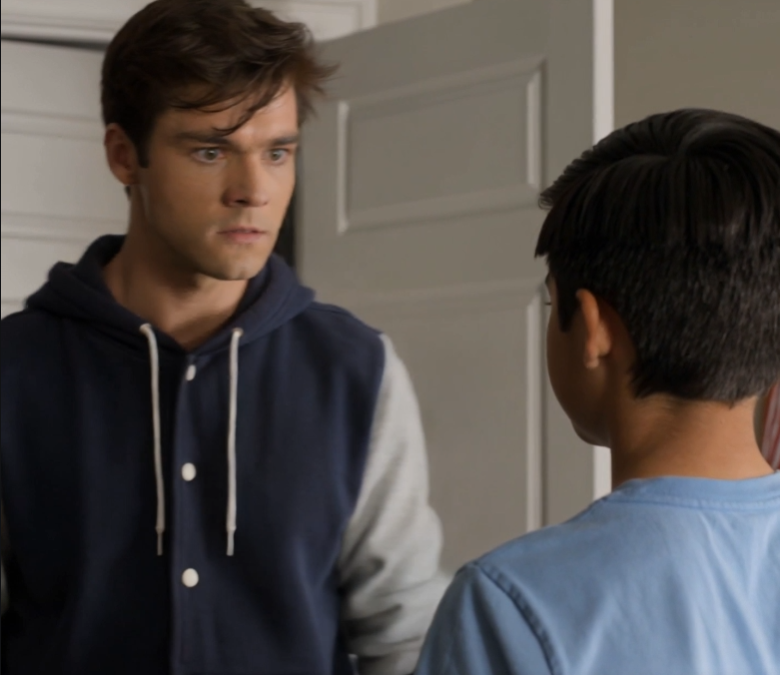
I was thirteen the first time I realized my family didn’t actually see me. Not really. Not as a full person with thoughts, feelings, or even a version of the truth worth hearing.
My name’s Tyler, and I grew up in a house where my older brother Mason was the sun, the moon, and the stars. At least in my parents’ eyes, I was just background noise. Mason was seventeen then, four years older, a varsity soccer star, a straight-A student, the kind of kid teachers emailed my mom about with phrases like “gifted,” “leadership material,” and “an example to others.”
Me? I was decent. Not amazing at anything, not terrible at anything. Just there.
And that was the problem. I wasn’t worth noticing until something went wrong.
We lived in a typical suburban neighborhood in North Carolina. Our dad was a banker, and our mom ran a small online business out of the house. To outsiders, we looked like one of those polished middle-class families with matching Christmas pajamas and coordinated vacation photos. But inside, the pressure to be perfect—or at least to look perfect—suffocated everything, especially when it came to Mason.
He could do no wrong. Ever.
If he got a C, the teacher was unfair. If he broke curfew, it was because he was helping a friend. If something in the house went missing, you can guess who got blamed.
I was already used to being second priority. Forgotten. Overlooked. Dismissed.
It didn’t bother me much when I was younger. I had my video games, my sketchbook, and the occasional visit to my aunt’s place, which felt like a sanctuary. But by thirteen, I was starting to notice the imbalance—the way my dad would light up when Mason walked into the room, how my mom always asked how Mason’s day was but barely remembered I had a math test.
And the worst part was that Mason knew.
He knew how they treated him like royalty, and he leaned into it hard.
Still, I tried. I cleaned up after myself. I kept my head down. I never talked back. Even when Mason teased me or took my stuff without asking, I told myself, “Just wait. Things will even out. People will see you.”
But they didn’t.
The incident that changed everything started on a random Tuesday in July.
It was summer break, and the weather was sweltering. We didn’t go on vacation that year. Dad was busy with a work project, and Mom was trying to launch some new product line, so we were all stuck at home, Mason included.
That morning, I woke up to my mom banging on my bedroom door like the house was on fire.
“Tyler, get downstairs right now.”
I stumbled out of bed, heart racing, still in my pajamas. She was already halfway back to the kitchen, fuming.
Mason sat at the kitchen island, arms crossed, wearing that smug little smirk he always had whenever he knew something I didn’t. Dad stood by the fridge holding a sheet of paper that looked like a printed bank statement.
“What is this?” my mom snapped, shoving a receipt in my face.
I blinked at it.
“$182.34 from a local electronics store. You want to explain this charge on Dad’s credit card?”
I had no clue what she was talking about.
“What? I don’t—”
“Don’t lie,” Mason cut in. “I saw you yesterday looking at headsets online. Don’t act like you weren’t planning something.”
I stared at him, stunned.
“I didn’t buy anything.”
But it didn’t matter. My mom’s face was already set in stone.
“Don’t play dumb, Tyler. We know it was you. The card was in the kitchen drawer. I checked this morning, and it was gone.”
I opened my mouth to speak, but she held up a hand.
“Enough. You’re grounded. All electronics gone. No leaving the house. You’re lucky we’re not calling the store to make them pull footage.”
My chest tightened.
“I didn’t do anything. Why don’t you ask—”
“You want to dig yourself deeper?” my dad interrupted sharply, which was rare. He usually stayed quiet when Mom and Mason went off. “You’re not to use my cards again. Understood?”
I looked between them.
Mom glaring.
Dad disappointed.
Mason looking like he was trying not to laugh.
And I felt something break a little inside me.
This wasn’t a conversation. It was a sentence being handed down. I wasn’t being asked. I wasn’t being believed. I was simply accused and convicted.
They didn’t even ask me if I’d done it.
They just assumed, because I was the less trustworthy one. The one who wasn’t Mason.
So that was it. I was grounded for the summer. No phone. No PlayStation. No TV unless they were already watching it. I was told I could read, clean, and “reflect on my choices.”
I barely left my room except to eat, and even then, it felt like walking into enemy territory. Mason would pass me in the hallway and hum whatever stupid victory tune he’d picked up from his soccer team.
Sometimes he’d whisper, “Hope that headset was worth it,” just loud enough for me to hear.
I wanted to scream. I wanted to break something.
But I didn’t.
I just waited.
Three days in, my aunt Jess came over.
Jess was my mom’s younger sister, but the two couldn’t have been more different. Jess was loud, funny, and sharp in a way that didn’t apologize for itself. She worked in cybersecurity for a tech firm and always brought over the coolest gadgets or weird trivia facts.
She also, bless her, actually listened when I talked.
She was the only adult I felt like I could trust.
When she heard I was grounded, she raised an eyebrow.
“What did you do? Rob a bank?”
I gave her a hollow laugh and said nothing.
She glanced at my mom, who launched into the whole story about the missing credit card, the electronics charge, and Mason being so mature through it all.
But Jess didn’t look convinced.
“What store was it?”
“ElectroHub over on Main,” my mom replied.
Jess nodded slowly.
“You have the receipt?”
“Yeah. Tyler’s dad printed the statement.”
Jess asked to see it, and Dad handed it over. She studied it for a moment, her eyes narrowing.
“Mind if I check something?”
That was the first time anyone in the house looked even remotely uncertain.
My mom crossed her arms. “What for?”
Jess shrugged. “Just want to see the timestamp. Maybe there’s camera footage.”
“Why?” Mason asked, his voice suddenly a little too tight.
Jess looked at him for a beat longer than necessary.
“Just curious.”
She left shortly after that, but something in her expression stayed with me.
It wasn’t just curiosity.
It was suspicion.
And that was the first moment I felt the tiniest flicker of hope, because if Jess was suspicious, she might actually do something.
I didn’t see her again until the next morning.
She showed up unannounced, holding a printed PDF and her iPad. My mom looked annoyed, but Jess just walked in like she owned the place.
“Hey,” she said to me like it was a normal day.
Then she turned to my dad.
“You said the charge was made Monday, right?”
“Yeah,” he replied.
She smiled.
“Funny, because the charge didn’t go through until Tuesday at 3:46 p.m. And guess what? ElectroHub has excellent security. They log every transaction with the cardholder’s ID. They keep the camera footage for ten days.”
My mom stiffened. “What are you saying?”
Jess laid the iPad down on the kitchen table.
“I’m saying the person who used that card is six feet tall and wearing a varsity soccer hoodie. So unless Tyler had a growth spurt and stole Mason’s clothes…”
My dad looked like he’d been slapped.
My mom opened her mouth, then closed it.
And Mason?
He wasn’t in the room.
Jess tapped the iPad again.
“Would you like to see the footage?”
That was where things shifted.
Not resolved. No, not yet.
Because Mason had vanished, and what followed after that was something none of us saw coming.
My parents didn’t say much after Jess showed them the footage. There wasn’t much they could say.
The video wasn’t some grainy clip, either. It was crystal clear, timestamped, and unmistakable.
Mason, in all his smug varsity glory, walked into ElectroHub with Dad’s credit card in his hand and walked out with a brand-new gaming headset, a pair of Bluetooth speakers, and a soda.
He even gave the cashier a thumbs-up when he left.
I watched from the hallway, just out of view. My heart was pounding.
You’d think I would have felt vindicated.
I didn’t.
I felt numb.
Because in that moment, I realized it wasn’t just that they didn’t believe me.
It was that they hadn’t wanted to.
The truth was staring them in the face now, undeniable and embarrassing. And instead of apologizing, instead of owning up to what they’d done, my parents just stood there in silence, shifting awkwardly like kids caught cheating on a test.
Jess, bless her, tried to bridge the gap.
“Well? Anyone want to say anything to Tyler?”
Still nothing.
My dad cleared his throat.
“We’ll deal with Mason.”
Jess raised an eyebrow. “That’s not what I asked.”
My mom looked irritated.
“We didn’t know, Jessica. We acted on the information we had.”
Jess folded her arms.
“No. You acted on what Mason told you. You never once asked Tyler for his side.”
Silence.
I stepped into the room. My voice was quiet but firm.
“So, am I still grounded?”
My mom looked like she’d bitten into a lemon.
“We’ll talk about it.”
That was it.
Not, “Sorry, Tyler.”
Not, “We messed up.”
Not, “We’ll make it right.”
Just, “We’ll talk about it.”
Like I was a minor inconvenience. Like Mason stealing from my dad and throwing me under the bus was just a bump in the road.
Jess stared at them in disbelief.
“Are you kidding me right now?”
My dad ran a hand over his face. “It’s been a long week.”
I should have screamed. I should have thrown something.
But instead, I just turned around and walked out.
That night, I stayed up staring at the ceiling. The injustice of it all burned inside me.
It wasn’t just the false accusation.
It was that Mason got away with everything, every time.
He could lie, cheat, steal, and still walk away with his reputation intact. And I’d always be the one left cleaning up the mess.
I started paying closer attention after that.
And what I saw made things worse.
Mason never even got punished.
In fact, the day after Jess showed them the footage, he came home with a new pair of cleats and a smug grin. He didn’t say a word to me.
No apology. No explanation.
He just went on like nothing had happened.
My parents didn’t mention the incident again. They didn’t tell me they were sorry. They didn’t officially unground me, either. I just sort of ungrounded myself, and no one stopped me.
Three days later, I overheard my dad talking to my mom in the kitchen.
“We can’t make a big deal out of it. If the school finds out Mason’s been stealing—”
“They won’t,” my mom said quickly. “We handled it. No one else needs to know.”
“Jess knows.”
“She won’t say anything. She’s family.”
I stood frozen in the hallway.
They weren’t protecting me.
They were protecting Mason’s image.
That was the moment something inside me changed. It was like a switch flipped.
I stopped trying.
I stopped hoping they’d see me.
Instead, I started watching them closely. Quietly.
I started listening for patterns. Not just with Mason, but with everything. How my dad handled bills. How my mom ran her little business. What Mason got away with. What was expected of me.
By the time school started again in August, I was keeping a notebook.
Not a journal.
A notebook.
Facts. Patterns. Quotes. Timelines.
I didn’t know what I was planning yet, but I was planning something.
At school, things weren’t much better.
Mason made sure the headset story got around before I could defend myself. According to him, he’d caught me using Dad’s card and decided to handle it quietly. He told his friends he had taken the blame to protect me, that he was the hero.
And they ate it up.
I lost friends over it. People started looking at me funny. Teachers started calling on me less, like they assumed I was the problem child.
The narrative stuck.
And again, Mason thrived.
He was team captain now. He got his own car.
Meanwhile, I was invisible.
And if I tried to speak up, I was told not to stir up drama.
Even Jess started backing off. I think she felt like she had done what she could, but nothing really changed, and she had her own life to deal with. She’d check in now and then by text, but it wasn’t the same as having her in the room.
So I learned to operate in the shadows.
I became the quiet observer, not out of fear, but out of strategy.
I started noticing just how often Mason lied. About little things. About big things. About everything in between.
He’d brag to his friends about cheating on tests, sneaking out at night, even breaking into someone’s locker. He’d show off screenshots of girls he was texting, sometimes more than one at once.
I kept my mouth shut.
But I kept the receipts.
Then, around mid-September, I saw something I wasn’t supposed to see.
I was walking past the garage when I heard Mason’s voice through the open side door. He was on the phone, pacing back and forth.
“No, I told you, just send it to the PayPal. Don’t use Mom’s Venmo again. She checks that.”
A pause.
“Yeah, I got the extra set of pills too. I’ll meet you Friday before practice.”
Pills?
My stomach dropped.
I ducked out of view just as he stepped outside. He didn’t see me.
I waited until he left, then snuck into the garage.
There was a locked drawer on Dad’s old tool bench. I didn’t have a key, but I knew Mason kept one taped under the corner of his nightstand drawer. I’d seen him use it once to get into Dad’s liquor cabinet.
I waited until Mason went out that night, then snuck into his room, got the key, and opened the drawer.
Inside were two small bags.
One held cash, maybe a few hundred dollars.
The other held pills.
I didn’t know what kind.
I didn’t care.
All I knew was that Mason was now doing something even more dangerous than lying or stealing.
He was dealing.
And if my parents found out, they’d probably still find a way to blame me.
I didn’t take the evidence right away. I closed the drawer, relocked it, and put everything back exactly the way I’d found it.
But now I had a new section in my notebook, one I labeled with a red tab.
It was no longer just about defending myself.
It was about building a case.
And the thing is, once I started really paying attention, the pieces came together fast.
I learned that Mason had created a fake email account to impersonate my dad and authorize late submissions for school assignments. I found a photo on his old phone of him keying someone’s car in the school parking lot—someone who had beaten him out for a student council nomination the year before.
I even found a folder hidden on a USB drive labeled DO NOT OPEN, full of screenshots and chat logs that would probably destroy his social life if they ever got out.
But the real breaking point didn’t come until the night of my dad’s birthday.
We were at a restaurant, just the four of us. My parents, Mason, and me.
Dad was drinking wine and telling the server it was his special day while Mason bragged about a scholarship scout who had come to watch one of his soccer games.
I just sat there, poking at my food, trying not to roll my eyes.
Then my dad raised his glass.
“To Mason,” he said. “Our future. Our pride. Our legacy.”
I blinked.
Mason beamed.
My mom looked proud.
“And Tyler,” my dad added like an afterthought. “We’re proud of you too, son. Just stay on the right track.”
Stay on the right track.
Like I was one bad choice away from ruining everything.
Like Mason wasn’t sitting right there with a dealer contact in his phone and pills in our garage.
I didn’t say anything that night.
But something shifted again.
This time, not from anger or pain.
This time, it was clarity.
I wasn’t going to convince them.
I wasn’t going to wait for them to see the truth.
I was going to show it to them.
All of it.
At once.
And I was going to make sure there was no walking it back.
If the moment at the restaurant was the breaking point, then what followed was the quiet collapse.
Not of my family. Not yet.
But of my belief that I had any place in it as an equal.
That night, when we got home from my dad’s birthday dinner, I didn’t storm off. I didn’t confront anyone. I didn’t do anything dramatic.
I just went upstairs, shut my door, and sat on the floor of my room for over an hour, staring at nothing.
I kept hearing the words in my head, looping like a broken recording.
Just stay on the right track.
They really thought I was the problem.
Even with all the lies Mason had told.
Even with Jess showing them literal proof of his theft.
Even with me keeping to myself for months, walking on eggshells just to keep the peace.
None of it mattered to them.
I was still the kid who needed to be watched.
And Mason?
He was still the golden boy. The prodigy. The perfect son.
That realization hit harder than anything else.
I wasn’t just fighting to be heard.
I was invisible.
And being invisible in your own family is worse than being hated.
I think something inside me went numb after that.
For the next few weeks, I drifted through school and home like a ghost. I ate my meals quietly. I barely spoke.
My teachers started asking if something was wrong.
I told them I was tired.
They believed it.
I mean, who would assume that the well-behaved kid with the quiet voice and average grades was quietly collapsing?
Even Aunt Jess noticed.
She called me one night, and I could hear the concern in her voice.
“Tyler, talk to me. What’s going on?”
I almost told her everything.
About the pills. The cash. The fake emails. The USB drive.
But then I hesitated.
Jess was the only adult in my life who had ever believed me without hesitation. If I told her all of this and she brushed it off too, I didn’t think I could handle that.
So I lied.
“I’m okay,” I said. “Just tired of school.”
There was a pause.
“You sure?”
I nodded, even though she couldn’t see me.
“Yeah. I’ll be fine.”
After we hung up, I stared at the USB drive again.
I had labeled it EXHIBIT with a strip of masking tape.
Everything was on there.
Mason’s fake email headers. Screenshots of his messages. Photos of the pills and the cash. Even a copy of the ElectroHub footage, which Jess had sent me after her confrontation.
It was all organized in folders with notes and timestamps.
And for weeks, it just sat there, waiting like a nuke under my bed.
Just one push away from impact.
But I didn’t push it yet.
Because I wasn’t ready.
Not emotionally. Not mentally. Not even practically.
Because here’s the truth no one tells you: having the evidence doesn’t make you powerful. It just gives you a weapon.
You still have to be strong enough to use it and brave enough to face what happens after.
So I decided to wait.
And while I waited, I started quietly rebuilding myself.
I didn’t plan it. It just started with small things, like organizing my room, then organizing my files, then diving into the one thing I’d always liked but never really pursued: digital art.
I used to draw a lot when I was younger, mainly cartoon characters or video game designs. But life had a way of pushing that interest to the back of my mind.
After everything that happened, though, it became a lifeline.
A way to zone out. To process. To escape.
I downloaded a free drawing app on my school laptop and started sketching again. First just doodles, then full illustrations.
I found YouTube tutorials, followed online artists, and joined a subreddit for beginners.
Slowly, the pages in my sketchbook filled with new life.
And the more I drew, the more I found myself again.
Not the version of me my parents wanted.
Not the version Mason mocked.
But the quiet, focused, curious version of me who used to stay up late imagining characters and stories just because it felt good.
Art became the thing that grounded me.
But it also became something else.
Something useful.
One day, while messing around with digital design, I created a mock poster exposing a fictional student hero who was secretly cheating and stealing behind the scenes.
It was dramatic, over-the-top, and kind of funny.
I posted it anonymously on a schoolwide meme forum under a burner account.
It blew up.
People started guessing who it was about.
A few even said, “Sounds like Mason, lol.”
I didn’t reply.
I just watched.
That was when I realized something important.
I didn’t have to go to war with my family directly.
I could work in silence.
I could build something outside their system, something that didn’t rely on them seeing me or validating me.
So I kept going.
I started freelancing under a fake name, doing simple commissions for people online. Profile pictures. Twitch banners. Logos.
It wasn’t much at first.
Five dollars here. Ten dollars there.
But it gave me purpose.
It gave me proof that I had value.
Meanwhile, at school, Mason’s empire was starting to show cracks.
I wasn’t the only person he had stepped on.
A girl in our class named Rachel—smart, quiet, always polite—got caught up in one of his lies.
Mason had asked her to write a history paper for him in exchange for help with her math homework. She did it.
He ghosted her.
She told a few friends.
Word spread.
Mason denied it, of course. Said she was lying because he had turned her down romantically.
Typical playbook.
But the seed was planted.
And I watered it anonymously.
I made another poster.
This time, I used exact quotes Mason had written in messages I’d saved, changing just enough that they couldn’t be traced back to me.
“Just do it for me.”
“It’s not a big deal.”
Some hero, huh?
The meme caught fire again.
Teachers started paying attention. One of Mason’s soccer teammates pulled him aside in the hallway, demanding to know what was going on.
For the first time, Mason started to panic.
He came home irritable. He started accusing me of spying on him.
He ripped through my backpack one afternoon when I wasn’t home and confronted me that night.
“Where’s your phone?”
I blinked. “In my pocket.”
“Let me see it.”
“Why?”
“I want to check your accounts.”
I scoffed. “No.”
He stepped closer, squaring his shoulders.
“You think you’re smart, huh? Think you can mess with me?”
I didn’t flinch.
I just looked him dead in the eye.
“Better men than you have tried.”
It was the first time I ever saw a flicker of real fear behind his eyes.
Not because of anything I’d done.
Because I wasn’t afraid anymore.
That scared him.
From that point on, I knew I was close.
The school was looking into several honor code violations, and Mason’s name came up more than once. His grades started slipping. His coach benched him for a game while things were being sorted out.
My parents didn’t know the half of it, and Mason wasn’t telling them.
He was trying to clean up the mess himself, but he couldn’t.
Because every time he lied, someone else popped up to call him out.
And I stayed quiet.
Still invisible.
Still ghosting through the house like I wasn’t even there.
Until the day I got a message that changed everything.
It was from Rachel.
“Hey. I know it was you. Just wanted to say thank you. Whatever happens, you’re not alone.”
I stared at the message for a long time.
Then I replied.
“You’re not alone either. Just wait.”
Because the rise wasn’t over yet.
I wasn’t done.
I was still building. Still gathering. Still waiting for the final piece of the puzzle.
The moment when the truth wouldn’t just come out.
It would explode.
And when it did, there would be no walking it back.
The strange thing about power is how quiet it is when it finally arrives.
There was no thunderclap. No epic moment where I looked in the mirror and suddenly saw a new me.
The transformation didn’t happen overnight.
But by the time October rolled around, I realized I wasn’t the same kid who had sat on his bedroom floor in silence after being accused of stealing a headset.
I’d been kicked, ignored, blamed, and buried beneath Mason’s lies.
And somehow, I hadn’t just survived it.
I’d learned from it.
I’d stopped asking to be seen.
I started working in the dark.
In silence.
In control.
And now, for the first time, I wasn’t waiting for karma.
I was building it.
The shift at school had already begun.
Mason’s name no longer carried the glow it used to. The first crack had formed after Rachel’s incident, and I’d widened it with every subtle jab—memes, rumors, quotes, anonymous posts.
Each one planted doubt.
Each one forced Mason to scramble for damage control, to explain or lie or accuse.
But more importantly, each one made him paranoid.
He didn’t know who was behind it.
And that was the beauty of it.
I wasn’t fighting him on his turf.
I was fighting him on mine.
Quietly.
Surgically.
Like a shadow in the hall.
But if I wanted this to end the way it needed to end, I would have to stop being anonymous eventually.
I’d have to take the risk.
Step out of the shadows and end it all at once with one carefully aimed blow.
And for that, I needed to be ready.
So I made a checklist.
Phase one: gather everything.
I spent hours each night compiling, organizing, cataloging. I dug deeper into the USB drive I had labeled EXHIBIT A, adding folders, cross-referencing dates, screen-recording chat messages, taking photos of Mason’s stash in the garage.
I even added screenshots from the school’s online portal—his late assignments, forged attendance excuses, even his grade slips.
Jess had once taught me how to organize digital folders during a weekend when she babysat me, back when I was nine and obsessed with putting every downloaded cartoon in the right folder.
It came in handy now.
The end result was a perfectly ordered archive.
Dated.
Labeled.
Timestamped.
Undeniable.
Phase two: secure allies.
Rachel was the first person I trusted.
She had every reason to hate Mason, but she also had integrity. She didn’t want to stoop to his level until I showed her just how low he’d actually sunk.
When I gave her a redacted version of the folder with names blurred, she stared at it for a long time.
“This is all real?”
I nodded.
“Every bit of it. And it’s just the surface.”
She looked at me with something between horror and awe.
“What do you want to do?”
“I want to take him down,” I said. “Not just at school. I want the people who protected him to see who he really is.”
Rachel didn’t even blink.
“Okay. I’m in.”
And just like that, I wasn’t alone anymore.
She helped me refine the plan.
We made lists of people Mason had hurt—students, teachers, even coaches. People who’d been lied to, used, disrespected.
We didn’t ask for revenge.
We asked for stories. Proof. Screenshots. Messages. Anything.
Within a week, we had enough to double the size of the original folder.
There was the student Mason had bribed with concert tickets to write his chemistry paper.
The sophomore he had threatened into giving him access to her Google Drive.
A teacher’s aide who quietly admitted Mason had once been caught plagiarizing, but the principal hadn’t wanted to ruin his scholarship chances.
It wasn’t a folder anymore.
It was a case file.
Phase three: find a pressure point.
Every system has a pressure point.
A weakness.
A place where one well-placed push can make the whole thing collapse.
For Mason, that was his scholarship.
He had been bragging for months about a partial ride to an elite private university.
The recruiter had seen him play twice and left glowing feedback. My parents were ecstatic. My dad even framed the university’s brochure and hung it in his office.
It wasn’t an official offer yet, but it was close.
Mason said he expected to get it in writing by the end of fall semester.
Which meant that if something went wrong between now and then, the offer could disappear.
I didn’t want to just expose Mason.
I wanted to hit him where it hurt most.
His future.
His legacy.
The thing my parents had built him up for since he could walk.
But I also had to be careful.
I didn’t want to burn myself with the fire I was about to start.
So I created a new email account: [email protected].
Rachel helped me draft the message.
It was calm, formal, respectful.
“Dear University Athletics Department,
“I am writing to express serious concerns about one of your potential recruits, Mason [Last Name], from [High School Name].
“Over the last year, Mason has been involved in multiple documented cases of academic dishonesty, theft, substance possession, and intimidation of fellow students.
“While I understand the importance of athletic performance, I believe you may want to review this material before making a final decision.
“Attached is a folder containing screenshots, messages, video evidence, and testimonies from multiple students and staff. All names have been redacted to protect the privacy of those involved.
“I hope you will consider this information seriously.
“A concerned student.”
We didn’t send it yet.
Not until everything else was in place.
Phase four: prime the blast radius.
I started laying groundwork at school.
Subtle, quiet groundwork.
Rachel helped spread the word about an anonymous “truth drop” that was coming soon.
Nobody knew what it was.
Nobody knew who was behind it.
But curiosity spread fast.
People love drama.
And high schoolers love secrets.
The rumor mill started churning.
We picked a day.
November 3.
I marked it on my calendar with a tiny red X.
Ten days before the scholarship committee would meet, right in the middle of midterms, and two days before my dad’s company was set to sponsor Mason for a Young Leaders Award at some local gala.
It was perfect.
Then something unexpected happened.
Mason finally cracked.
It was the night of October 28.
I had just finished organizing the final version of the files when he barged into my room without knocking.
He looked wild.
Hair messy.
Eyes bloodshot.
Fists clenched.
“You’ve been talking to people,” he said, his voice low. “Rachel. Marcus. Jenna. You think I don’t notice?”
“I didn’t say a word.”
He stepped closer.
“You’re trying to destroy me.”
I didn’t flinch.
I just stared at him.
“You stole Dad’s card,” he growled. “And they forgave you. You think anyone’s going to believe you over me? You’re pathetic. Always have been.”
I stood up.
Not aggressively.
Just enough to meet his eye.
“You’re scared.”
He blinked.
I tilted my head.
“Because for the first time, someone sees you for what you really are, and you don’t control the story anymore.”
Mason’s jaw clenched so tight I thought his teeth would crack.
But he didn’t hit me.
He just turned and stormed out.
I closed my door behind him and smiled for the first time in days.
Phase five: light the fuse.
On November 3, during the last class of the day, Rachel and I slipped USB drives into three teacher mailboxes, one counselor inbox, and the anonymous tip box in the principal’s office.
At the same time, we sent the email to the university.
Then I posted the link to the redacted folder on the schoolwide meme forum with one sentence:
“This is who’s been running our school.”
Then we went home.
That night, the school exploded.
Messages poured in.
The link was shared hundreds of times.
Screenshots circulated.
People were shocked.
Not because they hadn’t suspected something was off about Mason.
Because they hadn’t realized just how deep the rot went.
The teacher Mason had cheated off during freshman year commented anonymously:
“This confirms everything. I regret staying silent.”
A student athlete from another team wrote:
“He tried to blackmail me into giving him our playbook.”
The next morning, Mason didn’t go to school.
Neither did I.
I stayed home and watched it unfold.
Then my dad got a phone call.
He picked it up in his office.
I could hear his voice—confused at first, then sharp, then angry.
Not at me.
At Mason.
He called him downstairs.
There was yelling.
Footsteps.
Doors slamming.
Then silence.
I didn’t move.
I just waited.
Because this wasn’t the end yet.
It was only the moment before the fallout.
When the shouting finally stopped, I didn’t go downstairs.
I sat on my bed, listening to the silence settle over the house like dust after an earthquake.
There was nothing left to say.
Not yet.
I’d done my part.
Now it was their turn to face what they had built.
And what they had ignored.
For the next two days, our house felt like a courtroom waiting for a verdict.
Mason didn’t leave his room.
My mom barely looked at me.
My dad, who used to walk around the house like a CEO surveying his empire, was suddenly quiet.
Smaller.
I overheard him on the phone more than once.
First with the scholarship representative.
Then with the school principal.
And once with someone I didn’t recognize, murmuring phrases like “total embarrassment” and “legal exposure.”
I didn’t ask questions.
I already knew the answers.
The file had done its job.
Mason’s scholarship was gone.
The university didn’t even respond beyond a single sterile email thanking us for the submitted materials.
His offer was rescinded the next day.
The school hadn’t announced anything officially, but word spread fast.
By the time Monday morning rolled around, everyone knew Mason was off the team, suspended indefinitely pending a disciplinary review, and no longer on track to graduate with honors.
But the worst part for him was the silence.
No one defended him.
Not the teachers.
Not the coaches.
Not even his so-called friends.
Because when someone’s armor finally cracks, people realize they were just hiding behind it all along.
On the morning of the disciplinary hearing, my dad drove Mason to school himself.
He didn’t say a word to me before they left.
My mom didn’t either.
She stood at the sink washing a coffee mug that wasn’t dirty, over and over again, her hands shaking just enough for me to notice.
I didn’t go to school that day either.
I went to Aunt Jess’s house.
She opened the door before I even knocked, holding a cup of tea and wearing a look that made me feel, for once, like I wasn’t carrying this alone.
“I saw the folder,” she said, ushering me inside. “Rachel sent it to me.”
“You’re not mad?”
Jess sat down and gestured for me to do the same.
“Tyler, I’m proud of you.”
I didn’t know what to say.
I felt the emotion rise in my chest, heavy and unfamiliar, like I hadn’t realized how badly I needed to hear those words until they left her mouth.
“I just didn’t want them to get away with it,” I said quietly.
Jess nodded.
“They didn’t.”
She handed me a folded letter.
“What’s this?”
“Read it.”
It was from the school board.
A formal apology.
Not handwritten. Printed. Typed. Institutional.
But still real.
They acknowledged the mishandling of prior incidents, especially the ElectroHub one. They had reopened past complaints tied to Mason’s name, and they thanked the student or students who had courageously brought the evidence forward.
That letter meant something.
Maybe not to my parents.
Maybe not to Mason.
But to me, it was validation.
I wasn’t just some shadow in the house.
I had a voice.
And now they all knew it.
Later that afternoon, when I got back home, the house was quiet again.
But different.
Not courtroom silent.
Graveyard silent.
I walked in to find my dad sitting at the kitchen table, hands steepled, staring at nothing.
“Sit,” he said.
I did.
For the first time in my life, he looked at me like I was a stranger he couldn’t quite figure out.
“We just came back from the hearing,” he said slowly. “Mason’s been expelled.”
I waited.
No celebration.
No smile.
Just stillness.
“He admitted to everything. Most of it. Said he felt pressured. Said he didn’t think he’d get caught.”
I stayed silent.
Let him keep talking.
“They asked us how we didn’t notice. How we let it go on this long. And the truth is…”
He trailed off.
“We didn’t want to notice.”
There it was.
The confession.
He glanced up at me.
His eyes weren’t angry.
Just tired.
“You were never the problem, Tyler.”
It should have felt like victory.
It didn’t.
“You let me believe I was,” I said quietly.
“I know.”
I stood up.
“Is that it?”
“No,” he said, surprising me. “There’s one more thing.”
He reached into a folder and slid something across the table.
A check.
Ten thousand dollars.
“What’s this?”
“Your mother and I talked. We know we can’t undo what we did, but we want to invest in you. In your future. If you want to take classes, build your art, travel, whatever—it’s yours.”
I stared at the check.
Then back at him.
“You think this makes it even?”
“No,” he said. “I think it’s a start.”
I took the check.
But not for the money.
For the acknowledgment.
I would decide what it meant.
Not them.
Upstairs, Mason’s door was shut.
It would stay that way for weeks.
He didn’t go back to school.
He barely came out of his room.
I heard whispers about my parents scrambling to enroll him in some alternative program, trying to salvage what was left of his transcript.
But the glow was gone.
The golden boy had burned out.
And the house felt different.
Not better.
Not yet.
But quieter.
Over the next few months, I kept drawing.
I launched a website under a pseudonym to showcase my art. I started selling prints and taking bigger commissions.
My work even got featured on a small digital art blog.
I was still just a high schooler, but for the first time, I felt like I had something that was mine.
A space no one could take from me or lie their way into.
I stayed close with Rachel.
We weren’t dating or anything, but she became the kind of friend you don’t let go of.
The kind who saw the real you before the world did.
And Jess?
She became more than an aunt.
She became a partner in rebuilding.
She helped me open a separate bank account. Gave me advice on taxes and contracts. Treated me like someone with a future, not a phase.
My parents softened a little.
My mom eventually apologized.
Awkwardly.
Tearfully.
In that way people do when they’ve been wrong for so long they don’t know how to start being right.
I accepted it.
But I didn’t forget.
Forgiveness isn’t forgetting.
Mason never apologized.
He left for some distant boarding school in December.
I didn’t say goodbye.
Neither did he.
But before he left, he did one thing I didn’t expect.
He slipped an envelope under my door.
Inside was a drawing.
One of mine.
An old one from when I was ten.
A robot holding a broken sword, standing in front of a ruined castle.
Mason had written one sentence on the back.
“You always were better at building things.”
It wasn’t an apology.
But it was something.
And sometimes, that’s enough.
Now, nearly a year later, I walk the same hallways Mason once ruled.
And people see me differently.
Not because I ruined someone.
But because I stood up when no one else would.
Because I refused to let the truth stay buried.
Because I reminded everyone that the quiet kid is still paying attention.
And in the end, the one thing I always wanted wasn’t revenge.
It was to be heard.








