My sister threw a glass of water on me at Mom’s house. “That’s my chair. Move.” Dad laughed. “You’ll dry.” Mom added, “Next time, know your place.” I got up, grabbed my coat, and left. Then I called my real estate agent. “List it first thing Monday.” By noon, Dad was pounding on my door.
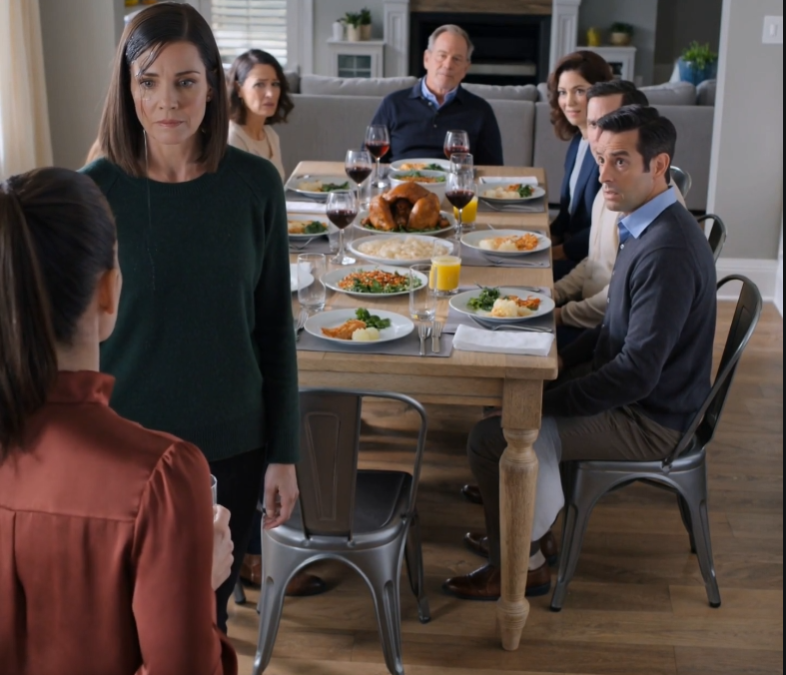
“That’s my chair. Move.”
My sister came in from the porch, saw me in the corner seat I had taken after a year of eating on a folding chair from the garage, and poured a full glass of ice water over my head.
It was Thanksgiving, in front of fourteen people, in the house everyone called Mom’s. I had been cooking since 10:00.
Water ran down my neck. One ice cube slid inside my sweater, and she stood over me with the empty glass and told me to get out of her chair.
My father laughed from the head of the table and said I would dry. My mother didn’t look up from the gravy. She only said, “Next time, know your place.”
As if I had tracked mud across her floor.
I stood up, took my wet coat off the hook by the door, and walked out with water still dripping from my collar.
Nobody followed me. Not my father. Not my mother. Not my sister, who was already sitting down in the chair she had just soaked me to steal.
I dried in twenty minutes with the heater on high.
The laughing did not.
From the driveway, I called my realtor and told her to list the house first thing Monday. She asked if I wanted a sign in the yard. I said yes, and I told her to call my mother for the photos.
By noon on Monday, my father had driven forty-five minutes to pound on my apartment door, and he wasn’t angry.
He was scared.
The first word out of his mouth was not, “How dare you?”
It was, “Please.”
They thought they knew my place.
They were about to learn who actually got to decide where I sat.
My name is Geneva Silva. I’m forty-one years old.
Before I tell you what happened next, please like and subscribe, but only if this story resonates with you, and drop a comment telling me where you’re watching from and what time it is there.
To understand why nobody followed me out that door, you need to know where I’d been sitting in that family for the twenty-five years before I ever bought that house.
The kitchen table I grew up with had six chairs. There were four of us. You would think that math worked out in everyone’s favor, but from the time I was sixteen, I sat on the wooden stool by the stove.
It had one leg shorter than the others, and it clicked against the linoleum every time I shifted my weight. My mother put me there the first fall I got tall enough to reach the top cabinet without a step.
“Sit there, Geneva. You’re up and down anyway.”
She was right. I was up and down anyway.
Somebody needed more rolls. Somebody wanted the butter. Somebody’s tea needed ice. I was the one who got up, so the stool made sense.
And because it made sense, I never asked why the two empty chairs stayed empty.
They were for company.
I was not company.
I was the daughter who got up.
It took me twenty-five years to notice that the stool never moved.
Even after I did, my sister Amber was eight years younger than me. When I was sixteen and clicking on that stool, she was eight and sitting in a real chair with a cushion my mother had sewn for her because the seat was too hard for a little girl.
I’m not telling you that to make you dislike Amber. An eight-year-old doesn’t choose her cushion.
I’m telling you because that’s how it started, and it never really changed.
Amber was the one who got things made for her.
I was the one who got things done.
Amber stayed in Cedar Hollow. She married Kyle Reese in 2018, a heating and air technician with a quiet laugh and good hands. She gave my mother two grandchildren, Tucker, who’s six now, and Hadley, who’s three.
Amber works part-time as a teller at Cumberland Community Bank, the little brick branch on Main Street where everybody knows everybody’s balance whether they should or not.
At Amber’s wedding, my mother stood up with a glass of sweet tea and said something I’ve never forgotten.
“Geneva can send a check. Amber gave me a family.”
People laughed.
I laughed.
It was a toast, and you laugh at toasts.
But I remember looking down at the wedding gift I’d brought, which was a check, and understanding for the first time that I had been sorted.
There was a daughter who stayed and a daughter who sent money, and my mother had just told a hundred people which one I was.
On the refrigerator at that house, there was a picture of Amber in her wedding dress.
My nursing school graduation photo lived in the junk drawer under the phone book.
I know because I found it there once while looking for a pen.
I stopped counting the checks in 2015.
That was a mistake.
They never stopped counting what I owed.
My father laughs. That’s his whole way of getting through a room.
Gary Silva spent thirty-six years underground in the mines outside Cedar Hollow, and he came up every evening with black under his fingernails and a joke ready, because a joke is the fastest way to make sure nobody asks how you’re actually doing.
He is sixty-nine now. He retired in 2019 when his lungs started sounding like a screen door and a doctor in Ridgeway told him the dust had finally collected its rent.
He is not a cruel man.
He is a man who would rather laugh with the person in charge than stand next to the person getting hurt.
I didn’t understand that was a choice until I was much older.
My mother, Cheryl, doesn’t laugh.
She decides.
She ran a register at the IGA for thirty-one years, and she has a cashier’s way of speaking: short, flat, final. She never raises her voice. She doesn’t need to.
She says a thing the way she’d say the total, and you pay it.
The first time she told me to know my place, I was sixteen, and I had just said out loud at that table that I wanted to go to nursing school in Lexington.
I had a brochure. I had been carrying it in my backpack for two weeks, and I finally set it on the table next to the green beans.
She didn’t pick it up.
She slid her plate on top of it.
“Nursing school in Lexington? And who do you think pays for that? Know your place, Geneva. We’re not those kind of people.”
My father laughed.
I don’t think he even heard what she said. He laughed because she’d said something with a period at the end.
I went anyway.
I paid for it myself, with loans and a night job restocking shelves at a pharmacy.
And the first thing I learned as a nurse was to write everything down.
Every dose. Every time. Every name.
Because if it isn’t written down, it didn’t happen.
And if it didn’t happen, nobody has to remember it.
I should tell you one more thing about my family before we get to the house, because it matters.
We never owned anything.
From 1999 until 2021, my parents rented a farmhouse on Bell Branch Road from a man named Hollis who lived two counties over and sent a Christmas card every year with the rent increase written inside it.
Four hundred twenty-five dollars a month when we moved in.
Six hundred fifty by the end.
My mother wrote the check on the first of every month for twenty-two years. In the memo line, she always wrote the same two words: Bell Branch.
As if the check might get lost and forget where it was going.
My father used to say, “A Silva has never owed a bank a dime.”
He said it with his chin up like it was a family crest.
And it was true.
We’d never owed a bank anything because we’d never owned anything a bank would want.
So when people in Cedar Hollow started calling the ranch house on Copper Ridge Road the Silva place, nobody ever thought to ask which Silva.
I got my nursing license in 2006, when I was twenty-two. I worked four years at a hospital in Lexington, and then, in 2010, a recruiter called and asked if I’d ever considered travel nursing.
Thirteen-week contracts. Hospitals that were short-staffed and willing to pay for it. Housing stipends. A different city every season.
I was twenty-six, and I had nothing holding me anywhere except a stool by a stove.
I said yes.
For the next eleven years, I lived out of one suitcase and, starting in 2013, a used camper I bought for $18,500 from a retired couple in Tennessee.
Nine states. Twenty-three contracts.
Emergency rooms in Arizona. A cardiac unit in Minnesota. Surgical floors in Ohio and Texas and both Carolinas.
When the pandemic came, the money got strange. Hospitals were paying crisis rates for anyone with a license and a pulse, and for those two years, I worked more than I slept.
I kept a notebook. Blue cover. Spiral-bound. The kind you buy in a three-pack.
Every contract got a line: the state, the hospital, the number of weeks, and how much I sent home that month.
I sent something home every month for eleven years.
Never a fortune.
Enough to cover a car repair. Enough for the propane bill in a bad January. Enough that my mother would say on the phone, “Well, that helps,” and then, in the same breath, “Traveling around like that, when are you going to settle down like your sister?”
By the summer of 2021, that notebook showed $268,000 in savings.
I hadn’t been trying to get rich.
I had just been living in a camper and not buying anything for a very long time while everyone I knew bought things.
In February 2020, my mother called me at four in the morning.
She had never called at four in the morning.
I was in a parking lot in Arizona, in a camper with frost on the inside of the windows, and I knew before I picked up.
My father had pneumonia.
It had gone into both lungs. He was in the intensive care unit at Ridgeway Regional, and the nurse had told my mother to call anyone who needed calling.
I flew home that afternoon.
I stayed three weeks.
He was in the ICU for nine days.
I sat by the bed in one of those folding chairs hospitals keep for family, and I read his chart the way I’d read any patient’s chart.
Then I read the paperwork because nobody else in that room could.
He was sixty-four.
The mine’s insurance had ended when he retired the year before. Medicare doesn’t start until sixty-five. He had a gap policy from the church that covered almost nothing.
And the bills were already coming in envelopes my mother had started tucking behind the sugar canister on the counter, as if the sugar could hold them off.
Fifty-four thousand dollars.
That was the number when I added them up at the kitchen table on Bell Branch, with the sugar canister moved to one side.
My father, who could barely talk, made me lean down so he could tell me something.
“Don’t you go paying that, Geneva. That’s mine.”
I told him I wouldn’t.
Then I said the only thing I could think of that might actually protect him.
“Then don’t sign anything with the house on it. Ever.”
He didn’t understand what I meant.
There was no house. There was a farmhouse they rented and a pickup truck that was already paid off.
But I’d seen what happened to people with $54,000 of unpaid hospital bills.
Collection agencies don’t forget.
They wait.
And if you ever own anything, they find it.
He got better.
They didn’t pay the bill.
They didn’t pay it in 2020, and they didn’t pay it in 2021. By the time he turned sixty-five and Medicare kicked in, the old debt was already sitting in a drawer with a collection agency’s name on it, waiting.
Fourteen months after that ICU stay, the man who owned the farmhouse on Bell Branch sold the whole farm to a developer.
My parents got a letter giving them sixty days to leave.
My mother called me first.
Not my sister.
Me.
I was in Ohio finishing a contract, and I remember standing in the hallway outside a surgical suite with the phone against my ear, hearing her breathe the way she breathes when she’s about to say something short.
“We’ve got sixty days, Geneva. Amber can’t help. She and Kyle are renting, too.”
I didn’t answer right away.
I was doing math in my head.
$268,000.
Eleven years.
A camper.
A stool by a stove.
I want to be honest with you about what I was thinking, because it wasn’t only kindness.
I was thirty-six years old.
I was tired of living in a parking lot.
And there was a voice in my head that had been there since I was sixteen, saying, Do one big thing. Do one big thing and she’ll finally look at you.
So I said, “I’ll figure it out.”
I called a realtor in Cedar Hollow named Jill Sanderson. She’d sold a house to one of my old classmates, and she had a reputation for not wasting anyone’s time.
She sent me a listing the next day.
A three-bedroom ranch on Copper Ridge Road. Built in 1978. One and a half baths. 1,380 square feet on eight-tenths of an acre, with a porch across the front and a garage off the side.
$224,000.
I printed the listing at a hospital business center, folded it into quarters, and carried it in the pocket of my scrubs for two weeks, taking it out between cases.
When my contract ended in June, I drove the camper home and met Jill at her office.
We sat at a table with a box of tissues on it that I didn’t need, and she asked me one question before she wrote the offer.
“Whose name goes on the deed?”
“Mine.”
I didn’t hesitate.
Later, everyone would act like I had.
I want to explain that decision because it’s the hinge of everything that came after.
I could have put my parents’ names on that house. It would have been simpler in some ways.
But I knew about the $54,000 sitting in a drawer.
I knew that if my father owned a house, that house was the first thing a collection lawyer would look at.
So the deed would say Geneva M. Silva and nothing else.
I paid cash, so there was no bank, no mortgage, nobody’s name on anything but mine.
The house would be a wall between my parents and that debt.
That was the plan.
That was the gift.
We closed on July 16, 2021.
My father came with me. He sat in the chair next to mine at the title company in his good shirt and watched my name get written on the deed, the settlement statement, and the wire authorization three times.
He didn’t sign anything.
He didn’t need to.
He just watched.
$224,000 left my account that morning.
Another $3,900 for closing costs.
I had $40,100 left in the world.
And I’d never felt richer.
At the kitchen table that night at the farmhouse, with the boxes half-packed, I explained it to both of them.
The deed was in my name so the house could never be touched by the hospital debt.
Not ever.
My father nodded slowly and said, “Smart girl.”
My mother nodded, too.
Then she asked the question I should have heard more carefully.
“It’s still ours to live in, though, right?”
“It’s yours to live in for as long as you want.”
I chose those words carefully.
My mother heard only the first one.
Jill gave me two brass keys on a paper ring that said Cedar Hollow Realty.
On July 20, I met my parents in the driveway on Copper Ridge with the truck full of boxes, and I handed my mother one of the keys.
I kept the other on my ring for emergencies.
I told her, standing in that gravel driveway in the July heat, “This is for you, Mom.”
I meant it.
I just never said which part was hers.
That night, she left me a voicemail.
Forty-one seconds long.
I’ve listened to it more times than I’d like to admit.
When I changed phones two years later, I saved it as a file, the way I’d save a patient’s record, because I’ve never trusted anything I couldn’t back up.
I’ll tell you what she said when it matters.
The next time I heard my mother describe that house to someone, it was three months later at the hardware store on Main Street.
She was buying a bag of screws for a towel bar. I was standing behind her with a can of paint.
The cashier asked how she liked the new place.
“Paid cash,” my mother said. “Gary and me. Thirty-six years underground. That’s what it buys you.”
The cashier said, “That’s wonderful.”
My mother said, “Thank you.”
I paid for my paint and said nothing.
That bag of screws cost $4.12.
I don’t know why I remember that.
I suppose it’s the first receipt I didn’t keep.
I stopped traveling that August.
I took a job as an operating room nurse at Ridgeway Regional Medical Center, forty-five minutes from Copper Ridge. Three twelve-hour shifts a week, Tuesday through Thursday.
$78,000 a year.
I rented a one-bedroom apartment in Ridgeway for $1,210 a month, on the second floor of a building where the hallways smell like other people’s dinners.
I told myself it was temporary.
I told myself I’d move into the house eventually, when things settled.
Things did not settle.
They rearranged.
The first year, my mother told the paid-cash story four times that I personally heard.
The hardware store.
The fellowship hall after church.
The salon where she gets her hair set.
A funeral visitation for a neighbor where she said it to the widow, who nodded politely and probably wondered why it mattered.
Every time, I said nothing.
I want to tell you why, because I know how it sounds.
If I had corrected her in front of the cashier, I would have made my mother small in public.
And my mother has never once forgiven anyone for making her small in public.
I’d watched her stop speaking to her own sister for two years over a comment about a pie crust.
So I stood behind her with my can of paint and let her have it.
I told myself the truth was on a piece of paper at the county clerk’s office, and paper doesn’t care who’s talking.
The strange part is that after a while, the story stopped sounding like a lie.
It started sounding like a family fact.
My sister repeated it to me a year later in the kitchen as if she were telling me something I might not know.
“Mom and Dad paid cash. You know. You just did the paperwork.”
I looked at her for a long moment.
She was wiping down the counter.
She wasn’t being cruel.
She believed it.
My mother had said it enough times to enough people that it had become true for everyone who hadn’t been at the closing table.
Owning a house is quiet work.
Every October, the county sends a property tax bill to the owner on record.
$1,950.
Every March, the insurance renews.
$1,450.
Both of those envelopes come to my apartment in Ridgeway with my name on them, and every year I pay them.
Nobody at the house on Copper Ridge has ever seen one.
That’s $3,400 a year for four years.
My parents pay the electric and the water and the propane.
They tell people that’s the mortgage.
There is no mortgage.
In October 2023, the heat pump died.
My mother called and said the house was cold and Kyle had looked at it and it was the whole unit.
Kyle is a good technician.
He was right.
I called the supplier in Ridgeway, Boone Supply, ordered a new unit, and paid $5,300 on my card.
Kyle did the installation on a Saturday, and I wrote him a check for $1,500 for the labor because he had a family and it was a full day’s work.
He folded the check and put it in his shirt pocket.
“Family rate,” he said. “Don’t tell my boss.”
Amber was leaning in the doorway.
“Well, it’s Mom’s house. Somebody had to.”
The invoice from Boone Supply is in a folder in my apartment.
Customer name: Geneva Silva.
I kept it for the warranty.
Kyle looked at that name on the invoice for a long second before he folded it and handed it back to me.
I didn’t think about that look for two years.
Amber and Kyle moved into the house in March 2024.
Kyle’s hours had been cut at Boone Heating and Air. Their lease was up, and my mother said the two spare bedrooms were just sitting there.
It was supposed to be two months.
Here is the arithmetic of a three-bedroom ranch.
My parents took the big bedroom at the end of the hall.
Amber and Kyle took the second one.
Tucker and Hadley took the third.
That’s six people in three bedrooms, and the kitchen table has six chairs.
The math had finally worked out.
And it worked out with no room for me.
I said one thing about it.
Just one.
I was standing in the hallway that first weekend, looking at the little bedroom that had been called Geneva’s room for about six months in 2021 before it became storage.
“Maybe the kids could share with you two for a while, so there’s a spare room when I come.”
My mother didn’t even turn around.
“Know your place, Geneva. You have your apartment. This is your sister’s family.”
Your sister’s family.
As if I were a coworker who’d asked about the parking situation.
I kept an overnight bag in the trunk of my car for a while after that, out of habit.
I never brought it inside again.
After a few months, I took it out and put it in my closet in Ridgeway.
I told myself I’d stopped staying over because of the drive.
It wasn’t the drive.
From that spring on, every Sunday dinner I went to had the same small ceremony.
Six chairs.
Six people who lived there.
My father would get up, go out to the garage, and come back with a gray metal folding chair with rust on the feet.
He would set it at the corner of the table.
And I would sit in it.
Nobody discussed it.
Nobody apologized for it.
It was just what happened, the way the stool by the stove had just happened.
I sat on that folding chair fourteen times between March 2024 and the next Thanksgiving.
I know because I counted the way I count everything.
Then I felt foolish for counting.
Then I kept counting anyway.
Thanksgiving 2024 was twelve people.
They’d put the leaf in the table, which brought it to ten chairs, and set up a card table by the window for what my mother called the overflow.
The overflow was Tucker, Hadley, and me.
I had come at ten that morning and cooked for three hours.
At two, I sat down on the gray folding chair at a card table with a five-year-old and a two-year-old.
My father raised his glass toward me from the big table.
“Kids’ table. Jen, you’re the youngest at heart.”
Everyone laughed.
I laughed.
Hadley, who was two and adored me, grabbed my sleeve.
“Jen, sit with me.”
“I am, baby.”
And I cut her turkey into pieces the size of dice.
Amber sat in the corner chair by the kitchen.
She had been sitting in it since the week she moved in.
Nobody had assigned it to her.
She’d just taken it.
The way you take the seat on a bus that’s closest to the door.
After a few weeks, it was hers.
By the fourth Thanksgiving, I was eating at a card table with a six-year-old in a house I’d bought with eleven years of my life.
And the strangest part is that I still hadn’t decided anything was wrong.
Driving home that night in the dark, I made myself one promise.
Next year, I’d sit in a real chair.
I had no idea how expensive that promise would turn out to be for everyone else.
The paper came in August.
It was Sunday the seventeenth.
We’d all gone to church, and afterward my mother made chicken and dumplings.
We sat down.
I sat on the folding chair.
Everything was ordinary.
Then my father went out to the porch with his coffee, which he does when he’s been told to leave a room without being told.
Amber got up and stood behind my mother’s chair with a pen in her hand.
A bank pen.
Cumberland Community Bank in blue letters.
My mother slid two pages across the table to me.
“Sign this for me so I can sleep at night.”
I looked at it.
It was a quitclaim deed.
Two pages printed off one of those legal forms websites, with the line still empty where the person giving the property signs.
The line for the person receiving it was already filled in.
Cheryl A. Silva.
I didn’t pick up the pen.
“Just sign it so it’s official,” my mother said. “It’s mine anyway. Then later it goes to Amber, since she’s the one with kids.”
She said it the way she’d say the total at the register.
Twenty-two forty.
Sign here.
I turned the page over to look at the back, and a yellow sticky note was still stuck to it.
Amber’s handwriting.
The round, careful letters she’s had since fourth grade.
Three words and a time.
Mom signs then Farmers Trust. Thursday, 10:00 a.m.
And a letter K.
Farmers Trust is a bank. Not the one Amber works at. The one across town.
I didn’t ask about it.
I understood it the moment I read it.
My mother would sign.
And then somebody was going to a bank on Thursday morning with a house that had just changed hands.
I put the paper down.
“I’ll look at it.”
“What’s there to look at?”
“The part where I’d be signing away something you’d lose the second Dad’s hospital sends a lawyer.”
My mother’s face didn’t move.
“Nobody’s coming after anything.”
Two weeks earlier, she’d forwarded me a letter from a collection agency and asked me what it meant.
Amber shifted behind her.
“Do you even still have a key to this house?”
I didn’t answer that.
I picked up the two pages and the sticky note, folded them into my purse, and said again that I’d look at it.
My mother said the thing she says.
“Know your place, Geneva.”
I drove home with the paper in my glove box.
I didn’t sign it.
And I didn’t say no.
In my family, that turned out to be the same thing.
What happened over the next fourteen weeks was not dramatic.
It was small.
That’s how I know it was on purpose.
Hadley’s birthday was the first Saturday in September.
I found out about the party from a photo Amber posted, with Hadley’s face covered in pink frosting and a caption about her whole family being there.
I texted my mother to ask if I’d missed the invitation.
It took her three days to answer.
Thought you were working.
I wasn’t working.
I work Tuesday through Thursday.
She’s known that for four years.
The next Sunday dinner I went to, the folding chair wasn’t at the corner.
It was at the far end, past Kyle, where the table meets the wall, and I had to turn sideways to get into it.
The one after that, my mother served everyone’s plate and set mine down last without the roll.
In the family group chat the week before Thanksgiving, Amber wrote:
Jen’s coming. Someone tell the tenant to bring rolls, lol.
Kyle sent a thumbs-up.
My father sent a laughing face.
My mother didn’t respond at all.
The tenant.
I read it three times.
Then I put my phone facedown on my kitchen counter in Ridgeway and paid the property tax bill that had come that week.
$1,950.
Owner of record: Geneva M. Silva.
None of them mentioned the paper.
They didn’t have to.
Every small thing they did that fall was the paper asking again.
The Sunday before Thanksgiving, my mother sent one text.
You’re welcome to come. Just remember whose house it is.
I wrote back that I’d bring the stuffing.
And I decided that this year, I would sit in a chair.
I’ve already told you what happened at that table.
I’m not going to tell it again.
But there are some things the story from the driveway leaves out, and you should have them.
I got there at ten.
My mother had the turkey in and the kitchen half torn apart.
She handed me a knife and a bag of onions.
She didn’t hand me an apron.
So I tucked a dish towel into my waistband and started cutting.
Three hours.
Stuffing.
Two vegetables.
The gravy from scratch, because my mother believes jar gravy is a sin.
Amber came through the kitchen twice.
Once for coffee.
Once to tell me the kids were asking for me.
Both times, she went back out to the porch, where Kyle was standing with my father.
My hands smelled like onions by noon.
They still smelled like onions when I left.
My uncle Dale, my father’s younger brother, got there at one with my aunt Bonnie, their two grown kids, their kids’ spouses, and Bonnie’s mother, who is ninety and eats before everyone else.
That made fourteen of us, counting the children and me.
Dale is a mechanic and doesn’t say much.
He hugged me in the kitchen and held on a second longer than usual.
“There’s the nurse. Your dad tells everybody you’re the smart one.”
“He tells everybody that when I’m not around.”
Dale laughed.
But he looked at me a little differently after that.
At ten minutes to two, everybody was carrying dishes to the table.
The leaf was in. Ten chairs at the big table. The card table by the window for the overflow.
I set down the gravy boat.
I pulled out the corner chair by the kitchen.
And I sat down in it.
Nobody noticed for six minutes.
I know it was six minutes because I could see the microwave clock from that chair, and I watched it the way you watch a monitor.
My father was telling Dale’s son-in-law about a truck.
Bonnie was asking Tucker about first grade.
My mother was at the stove with the gravy, and she didn’t look up.
For six minutes, I sat in a real chair at my family’s table in my own house, and it felt like nothing at all.
Like an ordinary thing.
That’s what I remember most.
How ordinary it felt.
Then Amber came in from the porch.
You know the rest.
The water.
The chair.
The three sentences.
What I didn’t tell you is that when the second ice cube hit the floor, my uncle Dale started to stand up.
He got about halfway out of his chair.
Bonnie put her hand on his forearm.
He sat back down.
He looked at his plate.
Hadley started crying.
Not because she understood, but because a grown-up had just been made to look small in front of her, and three-year-olds know what that is even when they can’t name it.
I stood up.
Water ran off my hair and onto the seat of the chair, and I remember thinking, Good. Let it stain.
My coat was on the hook by the door.
It was already wet at the collar from where I’d hung it under the drip of my hair on the way past.
Bonnie said, “Jen,” very quietly.
That was all anyone said.
I opened the door and walked out.
I did not slam it.
The last thing I heard was my father clearing his throat and asking someone to pass the rolls.
I sat in my car at the end of the driveway.
I didn’t start it.
I could see the kitchen window from there. I could see shapes moving behind it.
Nobody came to the door.
I found Jill’s number and called.
It went to voicemail, which made sense.
It was Thanksgiving.
“Jill, it’s Geneva Silva. Copper Ridge. List it first thing Monday. Put a sign in the yard. Call my mother for the photos. I’ll sign whatever you need Saturday.”
Then I started the car and drove forty-five minutes with the heater on high.
I did not cry.
I did not turn the radio on.
Jill called back at 8:30 the next morning.
Her first question wasn’t why.
It was, “Who’s living there right now?”
I told her.
My parents.
My sister.
My sister’s husband.
Two kids.
A dog named Buster.
She was quiet for a second.
“And there’s no lease? No rent? Nothing on paper?”
“Nothing on paper.”
“Okay. Come in tomorrow at ten. Bring your ID.”
Cedar Hollow Realty is a converted house on Main Street with a bell on the door.
Jill had my file from 2021 already on the desk when I sat down, and a new one beside it.
She went through the listing agreement line by line, the way she’d gone through the purchase agreement four years earlier.
Asking price: $259,900.
Commission.
Photos Wednesday.
Sign Thursday.
Twenty-four hours’ notice before any showing, because that’s how she does it and because, as she put it, “Your mother’s still going to be sitting in that living room.”
I signed at the bottom of every page.
Owner and seller: Geneva M. Silva.
Three times.
Then Jill put her pen down and looked at me.
“I can list it Monday. I can’t close it with your mother’s recliner in the living room. Whoever buys this house is going to want to move into it, and that means your family has to be somewhere else. I’m not going to be the one who tells them that. What’s the plan for them?”
“The plan,” I said, “is that for the first time, they’ll have to ask me.”
She read my voicemail back to me off her phone.
“Call your mother for the photos. You’re sure?”
I gave her the number.
“She’ll say it’s the wrong house.”
“Read her the name on the tax bill.”
Jill asked me one more time at her desk whether I still wanted the sign in the yard.
I thought about the folding chair.
“Yes.”
Sunday night, I sat at my kitchen table in Ridgeway.
Two chairs.
Both mine.
I took the quitclaim deed out of my glove box and set it on the table with the yellow sticky note still on it.
I put my phone next to it and played the voicemail from July 2021.
Forty-one seconds.
I’m still not going to tell you what she said.
But I listened to it twice.
Then I sat there for a while afterward with my hands flat on the table.
Two pieces of paper and a recording.
That was all I had.
It turned out to be more than they had.
On Monday morning at 9:10, Jill dialed my mother.
I wasn’t there for that call.
My father told me about it later, word for word, sitting in my kitchen with his hands around a glass of water he never drank.
Jill is polite on the phone in a way that leaves nothing to argue with.
She introduced herself, said she was calling about photographs on Wednesday, and asked what time would work.
My mother said she had the wrong house.
Jill said, “Ma’am, I’m looking at the tax record. Geneva M. Silva. I have her signature from Saturday. The owner asked me to reach you directly.”
My mother said again that she had the wrong house.
Jill said, “I understand this is awkward. I’m only calling about Wednesday’s photos. The owner asked me to reach you directly.”
The owner.
Jill used the words three times.
My mother hung up on the third.
My mother didn’t call me.
She called my sister at the bank.
And my sister did what people who work at banks do.
She looked it up.
Every county in Kentucky has a property office with a website, and anybody can type in an address and see who owns it.
It takes about two minutes.
At 9:40 on Monday morning, at a computer behind the teller line at Cumberland Community Bank, Amber typed in Copper Ridge Road and read for the first time in her life what had been public for four years.
Owner: Silva, Geneva M.
Deed Book 412, Page 88.
Recorded July 19, 2021.
Consideration: $224,000.
Consideration is the word for what was paid.
She printed it.
She folded the page and put it in her purse.
Then she called my father, who was at the feed store buying dog food.
I know what she said because he repeated it to me two hours later, still not quite believing it.
“It says $224,000. Dad, consideration. What does that mean? Did she pay that?”
My father didn’t answer her.
He hung up, got in his truck, and drove forty-five minutes to Ridgeway without calling my mother back once.
He called me three times on the way.
I watched the phone light up on the counter and let it ring.
I wasn’t punishing him.
I just didn’t know yet what I would say, and I didn’t want to say the wrong thing at seventy miles an hour.
At ten minutes to noon, he started knocking.
Not a polite knock.
The flat of his fist against the door.
Over and over.
The way you knock when you think the person inside might not be able to hear you.
It went on long enough that Ruth Danvers, who lives across the hall and is seventy years old and misses nothing, opened her door and stood there in her cardigan.
“Everything all right, honey?”
I had my door open by then.
My father was standing in the hallway with his chest going up and down, and he looked older than he had on Thursday.
“It’s my dad, Ruth. He’s just out of breath.”
I brought him inside.
I pulled out a chair for him at my kitchen table and filled a glass with water and set it in front of him.
He wrapped both hands around it like it was warm.
It was the first glass of water in this story that anyone handed to anyone.
He looked at my two chairs and sat in the one nearest the door, like he might need to leave fast.
Like it wasn’t his to sit in.
“Please,” he said.
That was the first word.
“Please take the sign down.”
I sat across from him.
“Please, Jen. Before Sunday. Your mother can’t walk into that church.”
“She walked into it for four years telling them she paid for my house.”
He didn’t argue with that.
He turned the glass a quarter turn on the table.
He said Amber was asking about the number.
He said Amber had called him at the feed store and said the word consideration like it was a foreign word, and he hadn’t known what to tell her.
“You were at the closing, Dad. You sat next to me.”
He nodded at the table.
He had.
He’d sat in his good shirt and watched my name go down three times.
Then he’d driven home and let my mother tell the story her way.
And the story had been told so many times that he’d stopped hearing it as a story.
“We never said it was ours,” he said.
Then, maybe ten seconds later, staring at the glass:
“What are people going to think? Us selling the house?”
He didn’t hear himself.
I did.
I didn’t bring out any paper.
I didn’t play him anything.
I just let him sit in my kitchen in the chair by the door and be a man who’d known the truth for four years and was only now being asked to say it out loud.
He stayed thirty-five minutes.
He never drank the water.
At the door, with his keys in his hand, he said the thing he’d really driven forty-five minutes to say.
“Your mother told everybody we paid for it. Everybody, Jen. The whole church.”
“I know. I was standing behind her.”
I walked him down to the parking lot.
He got into his truck, a faded blue Ford from 2009 with a dent in the tailgate, and sat there with the engine off for five full minutes.
I stood at the top of the stairs and watched him.
I didn’t go down.
I’ve thought about that since.
I’m still not sure it was the wrong choice.
By the time his truck turned out of the lot, the family group chat had eleven new messages.
None of them were from my father.
By the next evening, there were twenty-six more.
I’m not going to read them all to you.
You’ve seen them, or something like them.
After everything we did for you.
That was my mother.
You could have just talked to us like an adult.
That was Amber, whose last message to me had called me the tenant.
Then, from Amber again, three words in lowercase with no punctuation:
know your place
It was the first time anyone had ever written it down.
My aunt Bonnie sent one message off to the side, not in the group.
Jen, call me when you can.
I didn’t.
Not right away.
I wasn’t ready to be told I was right by someone who’d held her husband’s arm.
I answered the group exactly once, on Tuesday night after a twelve-hour shift.
Jill will give twenty-four hours’ notice before any showing. Please have Buster in the yard.
That was my whole strategy.
Logistics.
If they wanted to talk about what I owed them, they could talk to each other.
I would talk about the dog.
My uncle Dale called that same night.
He never calls.
His name on my screen was so unfamiliar that I almost didn’t answer.
He was in his garage. I could hear the air compressor cycling behind him.
He didn’t say hello.
“I should have stood up at that table.”
I said nothing.
“Bonnie wouldn’t let go of my arm. I saw it. That wasn’t right. What Amber did. Your dad laughing. That wasn’t right.”
“Thank you.”
I didn’t know what else to say to a man who’d sat back down.
Then he said something he hadn’t called to say, and I could tell because his voice changed.
“Your dad told me back in ’21, right after you closed. Proud as anything. ‘My girl paid cash.’ Those were his words. ‘My girl paid cash.’”
The compressor kicked off, and the line went quiet.
“Then somewhere along the line, it turned into we. So why is Cheryl telling the whole church it was them?”
I didn’t answer that question.
I couldn’t.
I was holding on to the first part.
My girl paid cash.
I had waited twenty years to hear my father say something like that.
He’d said it.
Just never to me.
The seven-minute call ended, and I sat on the edge of my bed for a while.
Then I got up and made a sandwich because it was nine o’clock and I hadn’t eaten since six that morning.
And grief doesn’t cancel dinner.
I want to tell you about a thing that happened while I was eating that sandwich, because if I leave it out, you’ll think I was steadier than I was.
I remembered a night in 2005, my last year of nursing school in Lexington.
I had the flu and a pharmacology exam in the morning, and I’d called home crying, which I never did.
Three hours later, my mother knocked on my dorm room door with a pot of soup wrapped in a bath towel to keep it warm.
She’d driven two and a half hours after a full shift at the register.
She didn’t stay.
She set the pot on my desk, put her hand on my forehead the way she had when I was small, and said, “Eat it while it’s hot.”
Then she drove two and a half hours back.
That was my mother, too.
The same woman.
I sat in my kitchen in Ridgeway with a sign in the yard of a house forty-five minutes away and thought about that bath towel.
For about ten minutes, I wanted to call Jill and tell her to pull the listing.
I picked up the phone.
I put it down.
The soup was real.
So was the stool.
I had spent twenty-five years letting the soup pay for the stool.
The balance had run out.
I finished the sandwich.
I didn’t call.
Wednesday, the photographer came to Copper Ridge at ten.
I was at work.
Jill told me about it in a single sentence on the phone that evening.
“Your mother stayed in the recliner the whole time. He shot around her. She’s in two of the photos. I’ll crop her out.”
I could see it.
My mother in the brown recliner with the worn arms, upright, hands folded, not moving, not speaking, letting a stranger with a camera on a tripod work around her like she was a piece of furniture that came with the house.
It was the last chair she had a claim to, and she was going to sit in it.
Thursday at 9:15, the sign went into the front yard.
White with green letters.
Cedar Hollow Realty.
Jill’s name.
Her number.
At 9:35, Loretta Hensley, who lives across the road and has been the fastest source of news in that county for forty years, texted my mother a photograph of it with one word.
Cheryl.
I know that because my father told me later.
He said my mother looked at the phone for a long time and then put it in the kitchen drawer with the takeout menus.
The first showing was that Saturday.
A young couple. First-time buyers. Driving in from Ridgeway.
Jill had given twenty-four hours’ notice, and Buster was in the yard.
My parents were in the living room.
My mother in the recliner.
My father on the end of the couch.
Both of them sitting there like people waiting for a bus.
The couple put on the little blue plastic booties Jill hands out and walked through the house.
The young wife said something nice about the kitchen.
My mother said, “We paid cash for this house.”
Jill said, “The owner has all the records, ma’am,” and steered them toward the bedrooms.
The second showing was the following Wednesday.
A retired man alone, looking for something with one level and no stairs.
He stood in the hallway and asked Jill, “Are the occupants staying with the sale?”
From the kitchen, Amber said, “Yes.”
Jill said, “No.”
The man looked from one to the other and decided, correctly, that this was not his problem.
I wasn’t there for either of those.
I was at work.
Jill told me about them afterward the way she tells me everything, in short sentences with nothing added.
I’ve thought about what those two strangers must have thought, walking past a family sitting in a living room, listening to two different answers to the same question.
They didn’t believe my mother.
Not because they knew anything.
Just because you can hear it when a person is telling you what they need to be true instead of what is.
On December 18, a Thursday, Jill called at four in the afternoon with an offer.
$246,000.
Thirteen thousand nine hundred under asking.
Before I could say anything, she said, “Don’t take it. It’s a lowball, and the house is worth what we listed it for. But, Geneva, that’s not why I’m calling. Your sister texted me.”
“Not you?”
“Me.”
Amber had gotten Jill’s number off the sign.
She had texted:
If my sister backs out, does the listing cancel?
Jill had not answered her.
Jill does not discuss a listing with anyone but the person whose name is on it.
I told Jill to decline the offer.
She said she already had.
An hour later, Amber texted me directly.
Not the group.
Just me.
I still have it in a folder on my phone.
I’d started calling Copper Ridge. You were always going to take it back. You just needed an excuse. That paper was for MOM.
For Mom.
In capital letters.
Then why was the appointment at a bank?
I didn’t write that back.
I didn’t write anything.
I took a screenshot and put it in the folder.
Then I stood in my kitchen looking at the words that paper for a long time, because it was the first time anyone in my family had admitted in writing that the paper existed.
At 9:30 that night, one more message came from Amber’s number.
It didn’t sound like her.
It was short and flat and had no exclamation points.
Kyle wants to talk to you alone. Don’t tell Mom.
For the first time since the water, I didn’t know what was coming.
The Hilltop Diner sits next to a gas station on Route 23, almost exactly halfway between Ridgeway and Cedar Hollow.
Twenty-two minutes from my apartment.
Twenty-two minutes from the house.
Kyle picked it.
I understood why.
It was nobody’s territory.
He was already in a booth by the window at 6:30 on Friday with two coffees, one of them in front of the empty seat.
He stood up when I came in.
He’s thirty-five, a big, quiet man with a beard he keeps trimmed and hands that always look like they’ve just been washed.
He looked that night like somebody who’d been awake since the day before.
He didn’t wait for me to sit all the way down.
“I put your house on a loan application, Geneva. I didn’t know it was yours. I’m not saying that makes it okay.”
I sat.
It came out in order because Kyle is an orderly person.
He’d been at Boone Heating and Air for twelve years, making $52,000 a year.
And he wanted his own company.
Reese Heating and Cooling.
He’d priced it out.
A van: $28,000.
Equipment: $19,000.
Licensing, bonding, insurance: $13,000.
Sixty thousand dollars, give or take.
He’d gone to Farmers Trust in August because you don’t borrow from the bank where your wife works.
Farmers Trust had said what small banks say.
They’d need collateral.
Real estate.
Amber had told him it was simple.
Mom owned the house.
Mom had paid cash.
Geneva’s name was on the paperwork because of Dad’s hospital bills, some technical thing, and Mom just needed to sign it back over to herself.
Then Mom could borrow against it.
It would all be family money anyway.
She said it would be done by Christmas.
Kyle said, “The house in your mom’s name. The loan by New Year’s. The van by spring.”
“And me?”
“She didn’t mention you.”
On August 12, five days before the chicken and dumplings, Kyle had sat at a desk at Farmers Trust and filled out a pre-application.
Under collateral, he’d written:
Family Residence, Copper Ridge Road.
He took out his phone and showed me a photograph of the page.
His handwriting.
The address.
The date.
“Your mom knew,” he said. “She’s the one who said Farmers Trust, not Amber’s bank. Said it’d look funny at Amber’s.”
I asked him the only question I really needed to ask.
I asked him about the heat pump invoice.
Two years ago, when he’d stood in my mother’s kitchen and looked at my name on it for a long second.
He nodded before I finished.
“I saw it. I asked Amber that night why the bill had your name on it. She said paperwork. She said you handled the paperwork for the family because you were good at it.”
He looked at his coffee.
“I wanted to believe that. It was easier.”
Then he sent me the photograph of the loan application.
Right there in the booth, my phone buzzing on the table between us.
I asked him why.
“If this goes bad, I don’t want to be the guy who knew and said nothing.”
I didn’t tell him it had already gone bad.
I think he knew.
When we walked out to the parking lot, the cold had come down hard.
Kyle stood by his truck with his hands in his jacket.
“You still got a key to that place?”
“I’ve always had one.”
He nodded like that answered a different question than the one he’d asked.
The next morning, I drove to Cedar Hollow.
I’d like to tell you it was for a reason, but it wasn’t.
I’d run out of coffee, and the IGA there is on the way to nothing.
And I think some part of me wanted to stand in that town and see if it felt different.
It did.
In aisle four, between the flour and the canned cranberries, Loretta Hensley stepped in front of my cart.
She’s sixty-eight, wears her reading glasses on a beaded chain, and has known me since I was in diapers.
“Well, there you are.”
She looked at me over the glasses.
“Your mom is just sick about you selling her house.”
“It was never hers, Loretta.”
She stopped.
I watched her decide whether to argue.
“That’s not what she told the whole quilting circle. Said you’d finally learned your place.”
Learned my place.
Told to a room full of women with needles in their hands, as if it were a story with a happy ending.
“I did,” I said. “It’s on the deed.”
Loretta looked at me for a long moment.
Then she said, “Hm.”
Just that.
She moved her cart.
I moved mine.
That was the whole conversation.
By Sunday afternoon, three women from that quilting circle had stopped answering my mother’s texts.
I didn’t do that.
Loretta did.
She didn’t have to say anything unkind.
She just had to say hm to the right people and let them do their own math.
My mother called me on Christmas Eve.
Eight minutes.
I know because I looked at the phone afterward.
She called at seven, and I could hear the television going behind her.
The local weather.
A man’s voice saying something about a front moving through.
She spoke in her ordinary voice.
Not angry.
Not sad.
The voice she uses for the weather.
She did not say she was sorry.
She did not say Amber was sorry.
She said the house had been in the family for four years and this was how families did things, and everyone had gotten a little heated at Thanksgiving and it was time to put it behind us.
“Take the sign down,” she said, “and we’ll forget this happened.”
“All of it?”
“We’ll go back to how it was.”
I let a few seconds go by.
“How was it?”
“You know how it was.”
I did.
I knew exactly how it was.
It was a stool.
Then a folding chair.
Then a bank pen and two pages with my mother’s name already typed on them.
“That’s the thing, Mom. I’ve never been able to forget anything. That’s why I still have everything.”
She didn’t ask what I meant.
I think she was afraid to.
She said, “Merry Christmas.”
I said it back.
Then she hung up.
I want to stop here and ask you something, because I’ve been honest with you this whole time and I’m going to keep being honest.
Take the sign down and go back to how it was.
On Christmas Eve, with the weather on in the background and my mother’s voice sounding so much like every other year.
Would you have taken that deal?
Be honest.
Because a part of me wanted to.
I didn’t.
After she hung up, I texted Jill.
The showing on the 3rd. I’m coming and I’m using my key.
The third of January was a Saturday.
Cold.
Clear.
The kind of day where the gravel crunches.
Jill had a showing at two, a couple from Ridgeway named Whitfield, and I’d asked her to meet me at the house at 1:15 so we could walk through it before they arrived.
I told her I wanted to see the rooms.
That was true.
It wasn’t the whole truth.
I hadn’t been to Copper Ridge since the water.
Every car was in the driveway.
My father’s blue Ford.
Kyle’s work truck.
Amber’s little SUV with the car seats in the back.
Buster was in the yard.
He came to the fence and wagged because dogs don’t keep score.
I stood on the porch in my gray coat.
The one from Thanksgiving.
It had dried, but if you looked closely at the collar, you could still see a faint line where the water had been.
I didn’t knock.
I took the key off my ring.
Brass, from the paper tag that had said Cedar Hollow Realty.
Worn smooth in one spot from four years of my thumb finding it every day and never using it.
The lock hadn’t been changed.
It turned like it had been waiting.
The door opened into the front room and, beyond it, the kitchen.
My mother was at the counter.
She turned around.
“You could have knocked.”
“I’ve knocked for four years, Mom.”
They were all there.
My mother at the counter.
My father in the recliner.
Amber at the table in the corner chair with her purse in front of her.
Kyle standing by the back door with his arms folded.
Tucker and Hadley were down the hall with the television on.
I was grateful for that.
Kyle was the only one who stood up straighter when I walked in.
My mother saw him do it.
Jill’s car pulled in behind mine.
She came in through the door I’d left open, said good afternoon to no one in particular, set her folder on the counter, and went to look at the bathrooms because she is a professional and had a showing in forty-five minutes.
Amber didn’t wait.
She opened her purse, took out a folded page, and set it on the kitchen table in front of the corner chair like she was laying down a winning hand.
It was the printout from the county website.
Owner: Silva, Geneva M.
Consideration: $224,000.
“Two hundred twenty-four,” she said. “Where did you get $224,000?”
I took the wire confirmation out of my coat pocket.
One page.
Same date.
Same number.
I set it down next to her printout so the two figures were side by side.
“Eleven years. Nine states. A camper.”
She looked at the two pages.
Then she looked at me.
And for the first time in my adult life, I watched my sister understand that I had done something.
“You’ve been sleeping in the answer for two years,” I said.
My mother came around the counter.
“That money was for us. You said so. You stood in that yard and said so.”
I took out my phone.
“I did. Let’s hear what you said back.”
I set the phone facedown in the middle of the table, speaker up, and pressed play.
Forty-one seconds.
July 20, 2021.
My mother’s voice, four years younger, thick with crying.
“Geneva, it’s Mom. I don’t know what to say. Nobody’s ever given me anything like this. I know it’s your house. I know that. I’ll just be looking after it for you. I’m so proud of you, honey. I should say that more.”
Nobody moved.
Down the hall, Hadley laughed at something on the television.
“Turn it off,” my mother said.
“It’s forty-one seconds. You can hear the rest.”
The rest was breathing.
Then:
“Okay. Okay. Bye, honey.”
A click.
My father had put his hand over his mouth.
Amber was staring at the phone.
My mother stood with her arms at her sides.
And I understood, watching her, that she had genuinely forgotten.
Not pretended.
Forgotten.
She had told the other story so many times that this one had been paved over.
Amber spoke first, and her voice had gone high and fast the way it does.
“I never planned anything with this house. Whatever she’s told you, Kyle, I never—”
Kyle was looking at the floor.
I reached into my coat.
The quitclaim deed.
Two pages.
And on the back, still stuck where it had been since August, the yellow note with the curled corner.
Mom signs then Farmers Trust Thursday 10:00 a.m. K.
I set it on the table next to the two printouts.
“That’s not—” Amber started.
“Amber.”
One word from Kyle by the back door.
“I already told her. The van. The loan. All of it.”
Amber turned all the way around in the corner chair.
“You went behind my back.”
“You put her house on my paperwork.”
My mother turned to my father.
My father was looking at the table, at the spot where a glass of water would have been if anyone had poured one.
Then he said something nobody had asked him to say.
He said it to my mother.
“I sat next to her at that closing.”
That was all.
Five words after four years.
Jill had come back from the bathrooms and was standing in the kitchen doorway with her folder.
My mother turned toward her the way you’d turn toward a referee.
“You tell her. Tell her a family can’t just—”
“Ma’am.”
Jill’s voice was level and not unkind.
“I’m not here to referee. I’m here at two for a showing. The name on my file is Geneva. It was the name on my file in 2021.”
She looked at her watch.
“Buyers in twenty minutes. I’d get the dog in.”
My mother stood there a moment longer.
Then she went to the table and started clearing it.
She picked up my sister’s printout and my wire confirmation and the quitclaim deed and stacked them like napkins.
Then she wiped the table with a dish towel.
And I understood that she was going to host the showing.
She was going to stand in this kitchen and smile at strangers in twenty minutes.
That’s when I knew she would never say she was sorry.
She spoke with her back to me, wiping.
“Fine. It’s yours. We know it’s yours. Take the sign down. We’ll pay you something every month. Amber stays. And nobody outside this house needs to know any of this.”
Nobody outside this house.
I looked at her back.
“Loretta knows. The quilting circle knows. Dale knew in 2021.”
I let that sit.
Then I said the rest more quietly.
“Nobody outside this house has believed you for a week.”
She turned around then.
Her face was the same as it always is.
Flat.
Final.
“You’ve always known your place, Geneva. Don’t act like this is new.”
I looked at her.
At the dish towel in her hand.
At the corner chair where my sister still sat.
“You’re right. I’ve always known it. I just finally decided it wasn’t the stool by the stove.”
Then I walked out onto the porch to wait for the buyers.
I didn’t sit down.
Sell it and walk away, or keep it and make them sign.
I’ll tell you what I did, but before I do, I’d like to know what you would have done standing on that porch.
The Whitfields arrived at two.
Nathan and Clare.
Both about forty.
A teacher and an emergency room nurse from Ridgeway.
Clare shook my hand on the porch and asked the question buyers ask.
“Are you the owner?”
“Yes.”
One word.
My sister was in the kitchen.
My mother was in the hallway.
My father was in the recliner.
Every one of them heard it.
They walked through.
Jill did her work.
In the kitchen, Clare ran her hand along the counter, looked out the window at the yard, and said, “It’s a good house. Somebody’s taken care of it.”
“Somebody has.”
Hadley came running down the hall and wrapped her arms around my leg in front of the buyers the way she does.
She looked up at me.
“Jen, are you staying?”
I didn’t answer her.
Not then.
Clare smiled at us the way strangers do at a child and went on to look at the bedrooms.
Driving home that afternoon, I realized I’d answered every question in that house except one.
The one Hadley asked.
I wrote the lease on Sunday at my kitchen table on one sheet of paper.
I want to be clear about what I was doing because I wasn’t sure myself until the pen was in my hand.
I could sell the house.
Jill would have it under contract in a month, and I’d have the money, and my family would tell the story that Geneva put her own parents out on the road.
It would be a good story.
My mother is good at stories.
Or I could take my mother’s offer.
Take the sign down.
Let Amber stay.
Accept whatever they decided to pay.
And sit on the folding chair again next Thanksgiving with a check in my purse.
That’s what going back to how it was meant.
Neither one was mine.
So I wrote a third thing.
Seven lines.
Plain words.
No lawyer.
No letterhead.
Just Times New Roman on a white page.
The first line said:
Owner: Geneva M. Silva.
Under it:
Tenants: Gary and Cheryl Silva.
Rent: $950 a month. Due the 1st, starting February 1, 2026.
The owner pays property tax and insurance.
The tenants pay utilities.
No one else lives in the house after March 5, 2026, which was sixty days out.
The owner keeps a key and gives twenty-four hours’ notice before visiting.
Twelve months, renewable.
Two signature lines.
Nine hundred fifty dollars is less than that house would rent for to a stranger.
And I knew it.
It was more than zero.
That was the point.
Not the money.
The line at the top of the page.
I emailed it to my parents at seven that night and copied Amber.
I wrote three sentences above it.
This is not a punishment. It’s a lease. If it’s signed by Friday the 16th, I’ll decline the offer on the table. If it isn’t, I’ll accept it.
There wasn’t an offer on the table when I sent that email.
Six days later, there was.
The Whitfields came in on Saturday the tenth at $253,000.
Jill called me at my apartment.
She said the words carefully, the way she’d read the listing agreement.
“This is a real offer, Geneva. They want an answer by Tuesday at five. If your family’s testing you, this is the moment you find out if you’re testing them.”
I asked her to ask for an extension until Friday.
It’s not a normal request.
Buyers don’t like to wait.
But Jill called back an hour later and said the Whitfields would give me until Friday at five.
She said Clare had asked her to pass along one thing.
“Tell her I hope her family signs.”
I sat with that for a while.
A stranger who’d walked through my house once, hoping for me.
On Sunday afternoon at two, a blue Ford pulled into the lot below my window.
My father got out.
Instead of coming toward the stairs, he went around to the back of the truck first.
He came up carrying the folding chair.
Gray metal.
The same one from the garage.
He’d wiped it down.
The rust was still on the feet, but the seat was clean.
He set it inside my door, leaned it against the wall, and didn’t explain it.
Then he came to my table and sat down in the other chair this time.
The one away from the door.
I had the lease printed.
He read it once.
All seven lines.
He took a pen from his shirt pocket and signed on the first line in the slow, careful hand of a man who spent thirty-six years signing time sheets.
“Your mother doesn’t know I’m here.”
I nodded.
He put the pen down and looked at the chair by my door.
Then at his hands.
“I should have said it to your face. My girl paid cash. I said it to Dale. That’s the kind of man I’ve been.”
“Sign the page, Dad. That’s the kind of man you’re being now.”
He’d already signed.
He looked at his name for a second like he was making sure it was still there.
Then he stood up, put his jacket on, and stopped at the door with his hand on the folding chair.
“Don’t throw it out. I’m not done with it.”
I didn’t know what that meant until April.
My mother didn’t answer the email.
Not Monday.
Not Tuesday.
Not the whole week.
Amber answered for her three times from her own number.
Mom’s not signing.
You’re bluffing.
Kyle’s parents said we can come the first.
That last one I read twice.
It was the closest thing to a concession anyone in that house had made, and it came from the person who’d thrown the water.
She probably didn’t know she was making it.
I didn’t answer any of them.
On Thursday night, Jill called.
“Tomorrow at five.”
That was the whole call.
I wasn’t bluffing.
I want you to know that.
After Jill hung up, I wrote the email accepting the Whitfields’ offer.
I typed their names and the number.
I wrote thank you at the end.
I saved it in my drafts with the subject line:
Copper Ridge Acceptance.
It sat there all night.
One tap from sent.
I slept with the folding chair leaning against the wall by my door.
I did not sleep well.
Friday morning at 9:40, my phone buzzed.
My father.
No message.
Just a photograph.
A white page on a kitchen table.
I recognized two signatures.
His from Sunday.
And below it, my mother’s, in her narrow cashier’s hand, smaller than she usually writes.
In the corner of the page, there was a coffee ring.
Brown and perfect.
From a mug I could have picked out of a cupboard blindfolded.
Twelve days of silence.
Then, seven hours before the deadline, her name under mine.
I called Jill at 10:15 and told her to decline the offer and thank the Whitfields.
Jill was quiet for a second.
“For what it’s worth, I’d have listed it again in a heartbeat. Call me if you ever want to.”
“I know where you are, Jill. I’ve always known.”
She pulled the listing on Saturday.
The sign came out of the yard that afternoon, leaving two small holes in the grass.
Amber sent one text that evening.
Hope you’re happy.
I didn’t answer that one either.
It was the last message I’ve gotten from my sister.
I deleted the draft email with the Whitfields’ names on it.
Then I sat in my own chair in my own kitchen with my hands flat on the table.
I didn’t feel like I’d won anything.
I felt like I’d stopped losing.
That was January.
April is when I found out what my father meant about the chair.
Amber and Kyle moved out on the first of March, a Sunday.
Kyle’s parents have a place in Pikeville, forty minutes from Copper Ridge, with a finished basement.
That’s where they went.
I wasn’t there.
I didn’t need to be.
Kyle texted me that evening.
Moved out. Left the key on the counter. Thank you for not making it worse than it had to be.
The key on the counter was the third one.
My mother had made a copy for Amber in 2024 without asking me.
I hadn’t known it existed until it was lying on the counter in a photograph.
Amber sent nothing.
I didn’t expect her to.
The rent came on the first of February.
The first of March.
The first of April.
$950 by transfer on the day, every time.
In the memo line, two words:
Copper Ridge.
My mother’s handwriting in a font.
I opened a separate savings account for it.
After three months, there was $2,850 in it.
I haven’t touched a dollar.
I don’t know yet what it’s for.
That’s a new feeling.
Having money and not knowing who it’s for.
On the last Saturday in April, I texted my father.
Coming by Saturday around 2.
He wrote back:
We’ll be here.
Twenty-four hours’ notice.
It’s in the lease.
It’s also just good manners.
I’ve decided I don’t need to know which one I’m following.
I wore the gray coat.
It was too warm for it, but I wore it anyway.
I knocked.
I have a key.
I knocked because that’s what you do at someone’s door, even when it’s your house.
And because there’s a difference between knocking out of fear and knocking out of courtesy.
After forty-one years, I finally know what it is.
My father opened the door.
Behind him, on the porch, in the corner where the afternoon sun comes in, was the folding chair.
He’d painted it dark green, the color of a truck bed liner.
Two coats.
The rust on the feet was gone.
It was set next to his wooden porch chair, angled toward the yard.
Not toward the table.
Not toward anyone.
Not assigned.
Just there.
“Sit wherever you want,” he said.
“I know where I sit, Dad.”
I sat in the green chair.
The paint still smelled faintly new.
Buster came up the steps and put his head on my knee.
My father sat in the wooden chair beside me, and we talked about his lungs, which are no worse, and about Hadley, who has started kindergarten registration.
We did not talk about Amber.
We did not talk about the lease.
And it was one of the easiest hours I’ve spent with him in my life.
My mother stayed inside for ten minutes.
I could hear her in the kitchen.
Then the screen door opened.
She came out carrying two glasses.
Real glass.
Not the blue plastic tumbler.
Water with ice.
She set one in front of my father and one in front of me on the little porch table.
She didn’t say anything.
She went back inside, and the screen door closed behind her.
My father looked at the door for a moment.
“That’s as far as she’s got.”
“It’s further than the water on my head.”
I drank it.
It was cold.
And it was mine.
My mother has never said she was sorry.
I’ve stopped waiting for it.
My sister hasn’t spoken to me since January.
I’ve stopped waiting for that, too.
My father painted a chair, which is the only apology he knows how to make.
And it turns out that’s the one I needed.
I still live in Ridgeway.
I still work three twelves a week.
The house on Copper Ridge is still mine, and the people in it pay me on the first of the month, and I visit when I say I’m going to.
Nobody tells me where to sit anymore.
I’m not sure they even want to.
That was never the point.
The point was that for forty-one years, they’d been the ones deciding, and now the deciding is—








