. My sister gave birth two weeks before her wedding. “If my fiancé finds out, I’m finished!” Mom handed me the baby. “Take her. Don’t ruin your sister’s future.” I asked: “Where am I supposed to go?” Mom said, “That’s your problem.” I disappeared with the baby. Fifteen years later, my sister received a wedding invitation. She opened it and screamed…
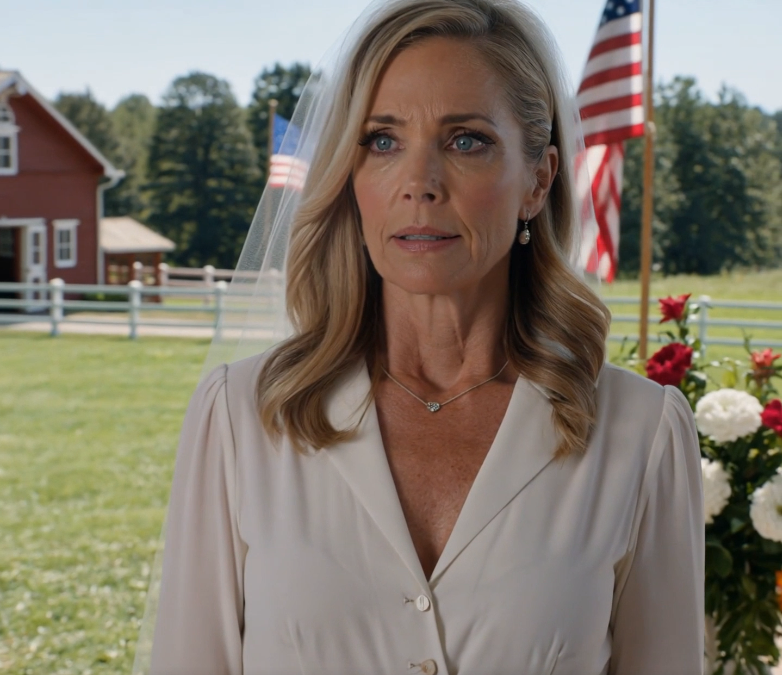
My name is Betty Rubio. I’m 39 years old.
The night my sister turned her face to the wall and refused to hold her own daughter, my mother shoved that newborn into my chest and said, “Take her. Don’t ruin your sister’s future. You’re the one we can afford to lose.”
I asked where I was supposed to go.
She didn’t blink. “That’s your problem. If anyone asks, you slept with a married man and ran.”
She threw a garbage bag at my feet and handed me $500 that still smelled like her purse. My father hung up when I called from the bus station. By sunrise, I was warming a bottle with my bare hands on a Greyhound, holding a baby who wasn’t mine.
While my sister chose flowers for her wedding, they told everyone in Ohio that I was the disgrace. She built a life as the perfect mother. They didn’t know I’d kept every piece of evidence from that night, including one message they prayed was dead.
Fifteen years later, she opened a wedding invitation and screamed so loudly that her assistant kept filming.
It wasn’t my wedding. It wasn’t hers. And the name inside wasn’t even the part that should have terrified her.
They thought silence meant I had vanished. They had no idea who else had been lied to that night, or that the lie had an expiration date.
Before I go any further, if this story is already hitting you in the chest, please take a second to like and subscribe, and drop your location and local time in the comments below. I love knowing where in the world you’re listening from right now.
I’m Betty. This is the story of the night they handed me a child and a lie, and of the envelope that handed both of them back.
It started on a Friday afternoon at the beginning of April, with my hands in a stranger’s mouth.
I’m a dental hygienist. I’ve worked at the same practice on the South Hill in Spokane, Washington, for almost ten years. And I’m good at the part of the job most people never think about: keeping someone calm while I do something they don’t enjoy.
I tell people what’s coming before it comes. I keep my voice low and even. I don’t rush.
My phone buzzed in my scrub pocket twice while I was finishing a cleaning. When I stepped away to let my patient rinse, I checked it.
Two missed calls.
Area code 614. Columbus, Ohio.
Nobody from the 614 had called me in fifteen years. Not once. I’d stopped expecting it the way you stop expecting rain in the middle of August.
The phone started buzzing again in my hand, so I walked into the break room, shut the door, and answered without saying a word.
Screaming came through first. Not words, just a sound, high and ragged, the kind you hear through an apartment wall and wonder whether you should call someone.
Then the words came, and I knew the voice before I understood any of them.
“What did you do? What did you do to me?”
My sister, Vanessa.
The last time I’d heard that voice, it had been muffled by a pillow.
Behind her, closer to the phone than I’d expected, a younger woman said something I couldn’t make out.
Vanessa turned away from the receiver and snapped, “Kelsey, turn it off. Turn it off now!”
“I don’t know what you’re talking about,” I said.
“Don’t. Don’t you dare do that!”
I heard paper. The stiff, expensive kind.
Then she read to me in a voice that shook with every word.
“Together with their daughter Clara, Hannah Elizabeth Doyle and Cole Patrick Brennan request the pleasure of your company.”
“Their daughter, Betty. Their daughter! And he wrote on it in pen!”
I knew about the wedding. I’d seen the proofs. I’d cried a little over them in my car, if I’m honest. What I didn’t know was that one of those invitations had traveled two thousand miles east and landed in my sister’s hands.
She read the handwritten line next, slower this time, as though it burned.
“You told me she was gone. She’ll be standing next to me.”
“Vanessa, I didn’t send you anything.”
“It’s addressed to Grant.”
Her voice dropped, and that was worse than the screaming.
“It came to my business mailbox with my husband’s name on the envelope. Cole Brennan is marrying some schoolteacher, and that girl is going to stand up there in front of half of Columbus!”
That girl.
In all that time on the phone, she never once said Clara’s name.
“I’ll fix this,” she said. “I always fix it.”
Then the line went dead.
I stood in the break room with the phone against my ear for a few seconds longer than I needed to. I could still smell the mint prophy paste on my gloves. I realized I hadn’t taken them off.
I peeled them away, washed my hands for a full thirty seconds out of habit, and went back out to finish my patient.
I finished the cleaning. I don’t remember a single thing about it.
Here’s what you need to know about my life that afternoon.
I lived in a small rented house with a detached garage and a maple tree that dropped helicopters all over my windshield every spring. I lived there with my daughter Clara, who would turn fifteen at the end of the month. She played club volleyball, left her knee pads everywhere, and had opinions about everything from my playlist to the way I loaded the dishwasher.
For most of the past year, two new people had been part of our lives: Cole Brennan, an electrician from Columbus, and Hannah Doyle, the middle school teacher he was about to marry.
The wedding was set for May 16 on Hannah’s family farm, about forty minutes north of Columbus. Clara was going to stand beside Cole during the ceremony. A proof of the invitation was stuck to our refrigerator under a magnet shaped like a volleyball.
I left work early and drove home without the radio.
When I came through the kitchen door, Clara was at the table eating cereal at four in the afternoon, one leg pulled up on the chair, her phone face down beside the bowl.
I set my bag on the counter.
“Did you know Cole mailed an invitation to Vanessa?”
She stopped chewing.
It was a small thing. Most people wouldn’t have noticed. But I’d been watching that girl’s face since the first minute of her life, and I knew what it meant when she went still like that.
She set her spoon down in the bowl and looked at the magnet on the refrigerator instead of at me.
The silence went on long enough that I heard the furnace kick on.
“I didn’t just know,” she said. “I asked him to.”
I put my car keys down on the table very slowly, the way you set down something that might break.
I wasn’t angry yet. That came later, and it passed.
What I felt first was the floor shifting under me, because the girl in front of me had just done the one thing I’d spent fifteen years making sure she would never have to do.
She had reached back into Ohio.
To understand why a scream over the phone could knock the air out of me, and why my daughter’s answer mattered even more, I have to take you back to the winter of 2010, when my sister was twenty years old and hiding something under a sweater.
We grew up in Hillyard, on the west side of Columbus, in a split-level house with a basketball hoop nobody used and a kitchen counter my mother treated like an office.
Every afternoon, she sorted the mail there. Bills, bank statements, insurance papers, birthday cards. She opened what she wanted, filed what she didn’t, and nobody else in the house touched the mail.
That was simply how it worked.
I didn’t think about it once in twenty-four years. I’ve thought about it a great deal since.
My father drove long-haul trucks. Three weeks out, a few days home, three weeks out again. When he was home, he slept late, fixed whatever had broken while he was gone, and let my mother run the house the way she always had.
He was a good man in the way quiet men are good. He didn’t ask many questions.
I was twenty-four and in my final semester of a dental hygiene program. I lived at home to save money for tuition, and I paid for it by being useful.
That winter, being useful meant sitting at the dining room table every night, hand-addressing envelopes for my sister’s wedding invitations because my mother said calligraphy services were a waste of money when I had such steady hands.
By January, the side of my middle finger was permanently stained blue.
Vanessa was twenty and engaged to Grant Whitfield. Grant was in his last year of law school at the University of Michigan. His family had a law firm downtown, a lake house, and their name on a wing of a hospital.
My mother kept a wedding binder three inches thick, with colored tabs for the venue, the florist, the guest list, and the dress.
“Vanessa is marrying into a family with its name on a hospital wing,” my mother told me once when I made the mistake of asking whether I could skip a dress fitting to study for an exam. “Try to be happy for her.”
That Christmas, Vanessa wore oversized sweaters every single day and told everyone she had mono. She wouldn’t let Grant kiss her.
“It’s contagious,” she kept saying.
Everyone laughed and called her a good fiancée for protecting him.
On Christmas night, I pushed open the upstairs bathroom door because the lock had never worked. I found my sister sitting on the edge of the tub, crying with her sweater pulled up.
She wasn’t sick.
She was pregnant.
And not a little.
“How far along?” I asked.
“They think twenty weeks. Maybe more.”
She’d fainted at the bridal boutique where she worked two weeks earlier, and the urgent care doctor had ordered an ultrasound. Her cycles had never been regular. She’d been spotting. She said she hadn’t known, and I believe that part was true.
“Okay,” I said. “Okay. You tell Grant. You figure it out together.”
She laughed at me.
It was an awful sound.
“Grant was in Chicago all summer, Betty. He was at that firm from June to August. He can count.”
Our mother came in behind me and closed the door.
She’d clearly known for days. She didn’t look shocked.
She looked organized.
“Here’s what happens,” she said. “Vanessa quits the boutique in January. Mono. The dress fittings move to May, and I’ll pay the rush fee. The shower gets postponed. Grant leaves for his semester in Switzerland on the eighth, and he doesn’t come home until May.”
She looked at each of us in turn.
“Nobody outside this house says one word for five months.”
“Does the father know?” I asked.
Neither of them answered me.
In March, somebody knocked on our front door on a weekday afternoon.
I was on the stairs with a textbook, and my mother got to the door first. I could see him through the narrow window beside the frame.
He was young, maybe twenty-five, in work boots and a canvas jacket, holding a brown paper bag with both hands like he was afraid of dropping it.
“Is Vanessa here?” he asked. “I just want to see if she’s okay.”
My mother’s face crumpled.
I’d never seen her cry, and I watched her do it on command.
“She lost the baby, sweetheart,” she said softly. “Please let her grieve.”
He stood there for a long moment. Then he set the paper bag on the porch railing, said, “I’m sorry,” and walked back to an old pickup truck parked at the curb.
Upstairs, my sister was almost eight months pregnant.
My mother closed the door, and her eyes were dry before the lock clicked.
She brought the bag inside and dropped it into the kitchen trash without looking in it.
That night, after everyone was asleep, I took it back out.
Inside was a pair of baby booties, pale yellow, knitted by hand. The stitches were tiny and a little uneven, the way they are when someone’s hands are old.
I went to Vanessa’s room.
“Who was that at the door?”
She didn’t look up from her phone.
“Nobody. He’s nobody now.”
I put the booties in the pocket of my winter coat.
I didn’t know why. I just knew I couldn’t leave them in the trash.
Vanessa went into labor on the night of April 29.
My mother didn’t drive her to the hospital fifteen minutes away. She drove her seventy miles to Dayton, with me in the back seat timing contractions on my phone.
Because, as she said on the highway, “Nobody knows us in Dayton.”
Clara was born just before dawn on April 30.
When the nurse tried to lay her on Vanessa’s chest, my sister twisted away so hard the bed rail rattled.
“If my fiancé finds out, I’m finished!” she cried.
She didn’t look at the baby. Not once.
The nurse was quiet for a second. Then she turned to the room.
“Does she have a name?”
“Write whatever you want,” Vanessa said to the ceiling.
My mother shrugged.
“Clara,” I said.
It was my father’s mother’s name. I hadn’t planned to say it. It just came out.
The nurse put a tiny plastic bracelet around the baby’s ankle. It read “Baby Girl Rubio.” And underneath that: “Mother: Rubio, Vanessa.”
Then, because the mother had turned her face away and the grandmother had her arms crossed, the nurse put that baby in my arms.
Clara wrapped her whole hand around one of my fingers and held on.
I was the first person who ever held her.
I have never forgotten that.
They came home on May 2. For two days, I did the night feedings because Vanessa slept with the door shut and my mother said she needed her rest before the wedding.
Grant was flying back from Geneva on Saturday. My father would be home Saturday, too.
The wedding was in ten days.
On the evening of May 4, I passed Vanessa’s open door and saw her phone light up on the nightstand with a name I didn’t recognize.
She turned it face down.
A while later, I saw her pick it up, type something short, and put it face down again.
Then my mother came up the stairs carrying Clara. She walked into Vanessa’s room without knocking.
“Hold her,” my mother said. “One time.”
My sister rolled over and faced the wall.
My mother stood there a moment. Then she walked out into the hallway where I was standing and pushed the baby into my chest so hard I had to catch her with both arms.
“Mom, I have finals in nine days.”
“Then she goes to the fire station on Cleveland Avenue tonight,” my mother said. “They take them up to thirty days old. No questions asked.”
I held Clara tighter.
My mother saw it, and I watched her understand that she had won.
“Take her,” she said. “Don’t ruin your sister’s future. You’re the one we can afford to lose.”
“Where am I supposed to go?”
She didn’t blink.
“That’s your problem. If anyone asks, you slept with a married man and ran.”
She went into my bedroom and came back with a black garbage bag, already packed.
My jeans. My scrubs. My sweatshirt. Diapers. Two cans of formula. The hospital’s little bottles.
She’d done it that afternoon while I was at school.
She threw it at my feet.
Then she pulled $500 out of her purse, folded the bills, still smelling like her perfume and the leather lining, and pressed them into my hand with a sheet of paper.
“Vanessa signed this at the bank today. It’s notarized. It lets you take her to a doctor.”
I looked past her at my sister’s door.
It stayed closed.
“And don’t bother calling your father,” my mother said. “I already called him.”
I called a cab at one in the morning.
I didn’t own a car. The family car was in my mother’s name.
The cab took me downtown to the Greyhound station. I sat on a plastic bench with a five-day-old baby under my coat and a garbage bag between my feet.
At about two, I called my dad.
He answered on the fourth ring, sleepy. He was parked at a truck stop somewhere in Missouri.
“Dad, it’s me. I need you to listen.”
“Your mother told me everything.”
His voice was flat, like he was reading it.
“A married man, Betty? Don’t call me again.”
Then he hung up.
Half an hour later, my phone buzzed with a text from my mother.
“Do not call your father again. Nobody can ever know she is Vanessa’s. You keep her or you leave her somewhere, but you do not bring her back here.”
I had a friend from my program, Tessa, who’d moved home to Spokane the year before. She’d once told me, laughing, that if I ever wanted to start over, Spokane was cheap and nobody asked questions.
It was the farthest place where I knew a single person.
The ticket cost $219.
The first westbound bus left at sunrise.
The bottle was cold, and there was nowhere to heat it. So I held it between my palms and rubbed them together the way you’d warm your hands at a bus stop in January, while Clara fussed against my chest.
I knew from the binder that my sister had an appointment at ten that morning to finalize her wedding flowers. Peonies, white and blush.
So while I was somewhere in western Ohio, warming a bottle with my hands, she was sitting in a florist’s shop, choosing between two shades of pink.
I was twenty-four years old. I’d slept maybe eleven hours in a week, and I was holding a daughter who wasn’t mine on a bus, going as far from home as my money could take us.
The trip took about fifty-five hours.
We changed buses in Chicago, and on the second leg, a woman traveling with three little kids watched me struggle for a while. Then she leaned across the aisle and showed me how to hold Clara upright against my shoulder to get the air out.
“You’re doing fine,” she said. “They just want to be held close.”
I’ve never known her name.
I think about her every time I see someone struggling with a baby in public.
Somewhere in Montana, while Clara slept, I read my mother’s text again.
I read it probably twenty times.
Then I did the only thing that felt like I had any power at all.
My phone had a feature most people never used. You could lock a message so it couldn’t be deleted by accident.
I opened my mother’s text, pressed the menu button, and chose “Lock.”
A tiny padlock appeared beside it.
Three days after we got to Spokane, the phone stopped working.
The screen said, “No service.”
I was on my mother’s family plan, and she’d canceled my line.
I think she believed that was the end of it. A dead phone in a drawer somewhere, and whatever was on it gone.
What she didn’t know was that a phone without service still remembers everything you tell it to keep.
Tessa let us sleep on her couch for three weeks. She had a one-bedroom apartment and a boyfriend who was patient about it for about ten days.
Her neighbor across the street was a widow named June Albright, seventy-one years old, with a basement apartment she’d been meaning to rent out since her husband died.
She rented it to me for $400 a month, and she didn’t ask me a single question until the second week.
The first thing I did with a real address was take Clara to a community clinic for a newborn checkup.
The doctor looked at the notarized paper, then at me.
“I’m her aunt,” I said. “Her mother signed this.”
She studied me for a moment, then nodded and weighed my niece.
I let out a breath I felt I’d been holding since Ohio.
I found work on the night shift at a twenty-four-hour diner off the interstate, and June watched Clara while I worked.
The first morning, I came home smelling like coffee and fryer grease. June was sitting in her recliner with Clara asleep on her chest under a patchwork quilt she’d made decades earlier.
“That baby’s got a good grip,” she said. “So do you.”
That night, for the first time in weeks, I slept four hours straight.
In late May, I used a computer at the public library to check my email, and I made the mistake of looking at my sister’s Facebook page.
She’d posted her honeymoon pictures.
Cancún. White sand. Turquoise water. A cover-up over her swimsuit. A drink with a little umbrella.
She was smiling in every one.
The caption said the past ten days had been the best of her life.
The post was dated about three weeks after she’d given birth.
Under a cousin’s post from the wedding, somebody from our church had commented about me.
“Praying for Diane. Some daughters just break your heart.”
I sat in that library chair and understood something that took me years to put into words.
The story of my life had already been written in Ohio, and it had been written without me in it.
I was the girl who got pregnant by a married man and ran.
That was who I was now to every person I’d grown up with.
In July, I wrote my father a letter. It was six pages long, front and back.
I told him everything.
The bathroom on Christmas night. The man at the door. The hospital in Dayton. The garbage bag. The fire station.
I told him the baby was Vanessa’s and that I’d take any test he wanted to prove it.
I told him I missed him.
I mailed it to the house in Hillyard.
Nothing came back.
Every afternoon, I checked June’s mailbox. Every afternoon, it was empty.
I told myself he was reading it on the road. I told myself he needed time.
I told myself that for a year.
In May of 2012, I mailed a photo of Clara’s first birthday to Vanessa. I used the address I’d seen in my mother’s binder, under the tab where she’d written down the newlyweds’ home address for thank-you cards.
It was a small photo.
Clara in a high chair with frosting in her hair, grinning at the camera.
The envelope came back three weeks later.
Across the front, in blue ink, someone had written, “Refused. Return to sender.”
The capital R had a big loop at the top.
I knew that loop.
I’d watched my sister sign birthday cards with it my whole life.
I sent another photo in 2013. It came back the same way. Again in 2014.
After the third one, I stopped.
I didn’t throw the envelopes away.
I put them in a shoebox on the top shelf of my closet with the dead phone, the hospital bracelet, and a pair of yellow booties.
I didn’t know what I was saving them for.
I just knew I had to keep them.
That December, I wrote my father a second letter. By then, I had a new phone number, one I would keep for the next fifteen years, and I wrote it at the bottom in big numbers so he couldn’t miss it.
“Call anytime,” I wrote. “Even if it’s just to yell.”
He never called.
In March of 2013, Clara was almost two and had a string of ear infections that wouldn’t quit. Her pediatrician recommended ear tubes, a simple surgery.
The hospital looked at my notarized paper from Ohio and frowned.
It was almost two years old. They wanted something stronger.
A legal aid clinic helped me start the paperwork to adopt her.
I braced myself for a fight.
There wasn’t one.
Vanessa signed her consent within days through a lawyer who was a friend of my mother’s from church.
The papers came with a short cover letter.
“Ms. Whitfield asks that there be no contact of any kind, now or in the future.”
That same week, I saw on Facebook that my sister had posted an ultrasound picture.
“Baby boy Whitfield coming this summer.”
Hundreds of likes. Dozens of hearts.
She’d signed away her daughter while she was pregnant with her son.
The adoption was finalized that fall.
On paper, Clara became mine. But the truth is, she’d been mine since a nurse in Dayton put her in my arms because nobody else in that room would hold her.
In 2014, I went back to school. June watched Clara in the afternoons while I took night classes and clinical rotations in a dental hygiene program across town.
Two years later, at twenty-nine, I finally passed the licensing exams I would have taken at twenty-four.
I got a job at Dr. Alan Pierce’s practice on the South Hill, and I’m still there.
When Clara was five, she decided June’s teeth needed professional attention.
She climbed onto the arm of June’s recliner with a toothbrush and my old mirror.
“Open wide, Miss June,” she said very seriously. “You have a lot of plaque.”
June laughed so hard she had to take her dentures out.
Clara looked at them, horrified and then fascinated, and asked if mine came out, too.
In 2017, I rented the little house with the maple tree.
It was the first time I’d ever held a key to a place with my own name on the lease.
I stood on the front step for a long time before I opened the door.
June got sick in the fall of 2019. Hospice came to her house, and I sat with her in the evenings after work. Clara, who was eight, drew her pictures and taped them to the wall where June could see them from her bed.
A few nights before she died, June took my hand. Her grip wasn’t what it used to be, but she held on.
“You didn’t get handed a burden,” she said. “You got handed a person. Don’t let anybody tell it any other way.”
She was seventy-nine. She left Clara the patchwork quilt, the same one Clara had slept under on her chest that first morning in Spokane.
After the funeral, Clara crawled into my bed with the quilt around her shoulders.
“Are we still a family if it’s just us?”
I pulled her close.
“We were always enough.”
I didn’t tell Clara the truth until she was twelve. In the summer of 2023, she needed a sports physical for volleyball, and the form had a section for family medical history, both sides.
She filled out mine. Then she got to the part about her father and looked up at me across the kitchen table.
I’d always told her that her father wasn’t part of our lives. That was true as far as it went, but she was twelve now, and she could read a form. I’d promised myself a long time ago that when she asked the real questions, she’d get real answers.
So I told her. Not all of it.
I told her that my sister Vanessa had given birth to her, that Vanessa hadn’t been able to keep her, that I’d taken her and adopted her, and that I was her mom in every way I knew how to be.
She was quiet for a long time.
“So you’re my aunt?”
“I’m your mom,” I said. “I’m also your aunt. Only one of those is a job.”
She didn’t laugh. She picked at the corner of the form.
“Did she ever ask about me?”
I thought about lying. I didn’t.
“No.”
There was one thing I didn’t tell her that night, and I’ve never told her since. I didn’t tell her about the fire station on Cleveland Avenue. Some sentences don’t need to live in a child’s head.
She went to bed without saying good night. I sat at the table until almost midnight.
When I finally went to my room, there was a sticky note on my pillow in her handwriting.
“Night, Mom.”
I kept it.
The next morning, she came into the kitchen, poured herself some cereal, and said without looking at me, “I want to know who my dad is.”
For her fourteenth birthday in April of 2025, she asked for a DNA kit.
I set up the account in my name because she was a minor, and I watched her spit into the tube at the kitchen counter, both of us pretending it was no big deal.
The results came in June.
Most of it was what we expected: a long list of distant cousins, a map of Europe with colors on it, and one match at the very top.
Parent. A man listed only as Cole B.
I messaged him first. I kept it short. I said my daughter had taken a DNA test, that he appeared as a parent match, and that I wanted to talk before anyone did anything else.
He wrote back that night.
“That’s not possible. She told me she lost the baby. I’ve spent fifteen years believing my kid never got to be born.”
I read it three times.
Then I got up, went to the closet, took down the shoebox, and opened it.
The yellow booties were right on top.
The man at the door.
In August of 2025, Cole Brennan flew from Columbus to Spokane.
I set the rules. We met at a park, out in the open, on a weekday afternoon. I’d be there the whole time, and Clara could leave whenever she wanted, no explanation needed.
He was forty, broad in the shoulders, with rough, calloused hands and the kind of face that doesn’t know how to hide anything. He stood up from a picnic table when he saw us, and then he didn’t seem to know what to do with his arms.
Before Clara walked over, he showed me his old phone. He’d kept it in a drawer for fifteen years.
On it was an ultrasound picture Vanessa had texted him in December of 2010 and a message from January of 2011.
“I lost the baby.”
And one more exchange.
His message read, “Heard the wedding’s the 14th. I just want to know you’re okay. Then I’ll leave you alone.”
Her reply was, “It’s over. Never contact me again.”
I looked at the date.
May 4, 2011.
The night she turned her face to the wall. The night the phone lit up on her nightstand and she turned it face down.
I took the booties out of my bag and put them in his hands.
“Your grandmother made these,” I said. “She wore them home on a Greyhound bus.”
He sat down on the bench and cried with his elbows on his knees, holding those booties like they weighed a hundred pounds.
Clara stood a few feet away and watched him. Then she walked over, sat down next to him, and waited.
That was how it started.
He came back in October. He called every Sunday. He never missed one.
At Thanksgiving, he proposed to Hannah, and they set the wedding for May 16 on her family’s farm in Delaware County. A few weeks later, he asked Clara to stand beside him during the ceremony.
The invitation proof they emailed us read, “Together with their daughter, Clara.”
Clara read it about fifteen times. Then she printed it out and stuck it to the refrigerator.
Before he flew home that first August, Cole had asked me one question.
“Does Vanessa know where she is?”
“She’s always known,” I said.
And when Clara asked me whether we could go to the wedding, I said yes.
That meant I was going back to Ohio for the first time in fifteen years.
Which brings us back to my kitchen table that Friday afternoon in April, and my daughter’s answer.
I pulled out the chair across from her and sat down.
“Why?”
She pushed the cereal bowl away.
“Because I’m tired of it.”
“Tired of what?”
“Of being a secret.”
She said it quickly, like she’d practiced.
“I’ve never been a secret in this house. You never made me feel like one, but I’m still a secret in hers. She has a whole life, and I’m not in it. And she gets to pretend I don’t exist. I’m done being that.”
“You could have told me.”
“If I’d asked you, you would’ve said wait.”
She was right.
I would’ve said wait. I would’ve said, “Let’s think about it. Let’s talk to a counselor. Let’s see how you feel after the wedding.”
I would’ve said wait until she stopped asking.
Hearing her say it out loud stung more than I expected because it meant she knew me that well.
“I just wanted her to see my name,” Clara said. “Printed, like it’s real. That’s all.”
She wound the edge of the proof around her finger.
“What did she say?”
“She read me the invitation,” I said. “And the note.”
Clara frowned.
“What note?”
I called Cole from the backyard, where Clara couldn’t hear. He picked up on the second ring, and I could hear a drill whining in the background. He was on a job site.
“The invitation you sent Vanessa,” I said. “Did you write on it?”
The drill stopped.
There was a long pause.
“Yeah,” he said. “I did.”
“You didn’t tell Clara.”
“She asked me to send it. She didn’t ask me what to say.”
His voice got tight.
“For fifteen years, Betty, I thought my kid was in the ground. I used to drive past cemeteries and wonder. I wanted her to know that I know.”
“You wrote that note for you,” I said. “Not for Clara.”
He didn’t answer right away. When he did, he sounded tired.
“Maybe. Maybe I did.”
I pressed my hand against the maple tree.
“How did you even get her address?”
“It’s on her channel. There’s a mailbox for brands to send her stuff.”
He hesitated.
“I addressed it to both of them. Mr. and Mrs. Grant Whitfield.”
Grant’s name was on the envelope.
I closed my eyes.
Grant Whitfield. The fiancé who couldn’t find out.
For fifteen years, keeping Grant from counting had been the whole reason Clara was handed to me in a hallway. Now his name was sitting on the outside of an envelope in my daughter’s father’s handwriting, and I had no idea whether he’d seen it.
My mother called on Monday.
I was driving home from work when my phone lit up with a Columbus number I didn’t know. I pulled into a gas station and let it ring three times before I answered.
“Betty.”
Her voice was warm and soft, the voice she used at church.
“It’s Mom. I know it’s been a long time.”
I didn’t say anything.
“I think we both want what’s best for everyone,” she went on. “Vanessa is very upset. She has two boys, a husband, a business. Things that could be hurt by a misunderstanding.”
“A misunderstanding?”
The warmth drained out of her voice like water from a sink.
“You’ll keep that girl out of Ohio. Vanessa is prepared to send $20,000. Think of it as back pay.”
“You don’t get to pay me for her,” I said. “You didn’t then, and you don’t now.”
“Then don’t come.”
A pause.
“You have no idea what this family can do with a story.”
She hung up.
I sat in the parking lot for a while, watching a man fill up his truck at the next pump.
My mother had just talked to me for the first time in fifteen years. She’d offered me money, and she’d threatened me.
And she hadn’t asked a single question about her granddaughter.
Not her name. Not her age. Not whether she was happy.
On Thursday, an email came to my work address.
It was from Vanessa.
It started formally, like a letter a lawyer might have looked over. She hoped I understood the seriousness of the situation. She hoped we could handle this privately.
Then, at the bottom, the tone changed.
“I was sick, Betty. You know I was sick. I need you to remember that before you let anyone rewrite what happened.”
Sick.
She used the word twice in one short paragraph.
That same night, Clara showed me my sister’s Instagram. Vanessa had posted a story: a single lit candle on a windowsill at night.
Over it, in soft white lettering, were the words, “Some losses only a mother understands.”
I looked at that candle for a long time.
“What does that mean?” Clara asked.
“It means she’s about to tell a story,” I said. “I just don’t know which one yet.”
On Saturday morning, I made a decision.
I sat at the kitchen table with my laptop and booked two plane tickets from Spokane to Columbus for May 13. I asked Dr. Pierce for the week off, and he said yes without asking why. I booked the return flight, too.
Fifteen years ago, I’d bought a one-way ticket.
This time, I bought a round trip.
Then I went to my closet, took the shoebox down from the top shelf, and set it on my bed. I went through it slowly, one piece at a time.
The hospital bracelet, the plastic gone slightly yellow. The three envelopes with the looped R. The adoption papers. The old flip phone, its battery long dead, its red paint worn down at the corners.
The booties were gone.
They belonged to Cole now.
I turned the phone over in my hands. I’d never thrown it away, and I’d never turned it back on. I hadn’t wanted to see that message again, but I realized I didn’t even know if it was still there.
I found a compatible charger online and ordered it. It would arrive in a few days.
I told myself I was ready. That I had time. That I’d be the one who decided what happened next.
Two days later, my sister moved first.
On Monday morning, before school, Clara came into my room holding her phone out in front of her like it was hot.
“You need to see this,” she said.
The video was titled “The Hardest Thing I’ve Ever Shared.”
It had been posted at six in the morning, Eastern time, and already had more views than anything else on my sister’s channel.
Vanessa sat on a cream-colored couch in soft light, wearing no makeup, or makeup designed to look like none. Beside her sat a man I recognized from wedding photos I’d seen fifteen years earlier on a library computer.
Grant Whitfield.
Older now, gray at the temples, holding her hand.
“When I was twenty-one,” my sister said, and her voice broke right on cue, “I was very sick. I’d had a baby, and I didn’t know how to be a mother yet. I could barely get out of bed. My family made a decision. I was too broken to stop.”
She pressed her fingers under her eyes.
“My sister disappeared with my daughter. For fifteen years, I’ve prayed for her every single night.”
She never said my name. She didn’t have to.
At the one-minute mark, she held up an old photo of the two of us as teenagers, with half of my face cropped out.
On the coffee table in front of her, turned perfectly toward the camera, sat one of her own mugs. White ceramic, with her brand slogan printed in her handwriting.
“Raised With Love.”
The R had a big loop at the top.
At the end, the credits read, “Filmed by Kelsey Ward.”
I watched it twice.
The second time, I watched Grant. He didn’t speak. He held her hand and looked at a spot on the floor a few feet in front of him.
He had the face of a man reading lines someone else had written.
“Is she talking about you?” Clara asked quietly.
“Yes,” I said.
“Is it true?”
“Go to school,” I said. “We’ll talk tonight. I promise.”
By Tuesday, the video had passed a million views. People had started reposting it with their own commentary on top.
By Wednesday, strangers had found my name.
It wasn’t hard. Vanessa Rubio had one sister, and a few church friends from Hillyard were happy to fill in the rest in the comments. Somebody found my old Facebook account. Somebody else found the dental practice.
By Wednesday afternoon, our office had forty new one-star reviews from people who’d never set foot in Spokane.
“Baby thief works here,” one said.
Another said, “Would you let a kidnapper clean your kid’s teeth?”
On Thursday, a patient I’d seen twice a year for six years canceled her son’s appointment. She left a voicemail at the front desk, and the receptionist, who was nineteen and didn’t know any better, played it on speaker before she realized what it was.
“I don’t want someone who steals babies anywhere near my son’s mouth.”
Dr. Pierce called me into his office at lunch. He’s a kind man, a careful one, and he looked like he’d rather be doing a root canal on himself.
“Betty, I don’t believe any of it,” he said. “I want you to know that first.”
He rubbed his forehead.
“But I have forty patients a day, and the phones haven’t stopped. Take some paid time off, just until this blows over.”
I handed him my key card.
I drove home at one in the afternoon on a Thursday with nothing to do. And I understood for the first time what my mother had meant when she said I had no idea what this family could do with a story.
She hadn’t needed to lift a finger.
She’d only needed Vanessa to cry on camera.
On Saturday, Clara had a club volleyball tournament across town.
She rode there with her team on a chartered bus, and one of the girls, a teammate she’d known since fifth grade, played the video out loud from the back row with everyone else listening.
Clara didn’t say a word about it at the tournament. She played three matches, came home, took a shower, and sat down at the kitchen table with her wet hair soaking the collar of her sweatshirt.
“Is any of it true?” she asked. “Did you take me?”
I didn’t argue. I didn’t defend myself.
I went to my closet, took down the shoebox, and set the three envelopes in front of her.
I told her more than I ever had before.
The mono. The garbage bag. Dayton.
I left out one sentence. The same one I always leave out.
She picked up the top envelope and ran her finger along the words.
“Refused. Return to sender.”
She traced the loop at the top of the R slowly, twice.
“That’s her writing,” she said. “It’s on the mug.”
“Yes.”
She put the envelope down and looked at it for a long time.
“Maybe she really was sick. Maybe that’s why.”
Her voice was small.
“Maybe she didn’t mean it.”
I wanted to say a dozen things.
I didn’t say any of them.
I nodded and let her have the maybe, because she was fourteen and Vanessa was her birth mother. And because anything I said in that moment would’ve sounded like a woman defending herself.
But when she went to bed, I sat in the dark kitchen and felt the fear I’d carried since she was twelve grow a little bigger.
That some part of her would always choose the woman who didn’t want her over the one who stayed.
On Sunday, my mother commented under the video.
She used her real name. Her profile picture was a photo of her in front of our church.
“I begged Betty for years to bring my granddaughter home,” she wrote. “I have the letters to prove it.”
The comment got thousands of likes within hours.
Cousins I hadn’t heard from since high school started messaging me. One of them wrote, “How could you do this to your own mother?”
I read my mother’s comment several times, trying to understand it.
Letters.
I’d never received a letter from my mother in fifteen years. Not one. Not a birthday card, not a Christmas card, not a single line.
So what letters was she talking about?
That night, Cole called. He was furious.
“I’m posting the texts,” he said. “The ultrasound, the ‘I lost the baby,’ all of it. People need to see what she did.”
Hannah was on speaker, too. I could hear her in the background.
“No,” I said.
“Betty, they’re calling you a kidnapper!”
“I know what they’re calling me.”
I kept my voice level.
“The minute we post anything, Clara becomes content. Her face, her name, her school. Every one of those people will go looking for her. I won’t do to her what Vanessa is doing.”
“She’s right, Cole,” Hannah said quietly. “It’s her face they’ll screenshot.”
He was silent for a long time. Then he let out a breath.
“Okay,” he said. “Okay. We wait.”
After we hung up, I went back to my closet.
The charger for the old flip phone had arrived on Tuesday. It had been sitting in its package on my dresser for five days because I didn’t want to see what was on that phone again, and because I was afraid of what it would mean if the message wasn’t there anymore.
I plugged it in.
For a long minute, nothing happened.
Then the little screen glowed, the phone buzzed in my hand, and a line of text appeared.
“One locked message.”
I read my mother’s words again the next morning, sitting on the edge of my bed fifteen years after she’d sent them.
“Do not call your father again. Nobody can ever know she is Vanessa’s. You keep her or you leave her somewhere, but you do not bring her back here.”
I photographed the screen. I backed up the photos to two different places.
Then I made myself think about it clearly, the way I would if someone else had brought it to me.
What did it prove?
It proved my mother knew the baby was Vanessa’s. It proved she’d told me never to bring her back. It proved that “Betty ran off with a married man’s baby” was a story my mother had built herself, on purpose, the night it happened.
What didn’t it prove?
It didn’t prove what Vanessa had been feeling in that bedroom. It said nothing about whether she’d been sick or scared or anything else.
My mother’s text was about my mother.
That mattered to me. I didn’t want to prove more than I could prove.
That was what they did.
I didn’t post it.
That night, I got up for water at two in the morning and saw a light under Clara’s door.
Her phone screen was glowing in the dark.
I stood in the hallway with my hand raised to knock. Then I lowered it.
I’ve never gone through my daughter’s phone, and I wasn’t going to start because I was scared.
I went back to bed and lay awake until the light went out.
On Wednesday morning, she came into the kitchen before school and set her phone down on the counter in front of me.
“I need to tell you something,” she said. “Don’t be mad.”
After the volleyball bus, on the night she’d asked me whether I’d taken her, she’d gone into her room and sent my sister a message request on Instagram.
Five words.
“Were you really sick?”
Vanessa had answered the next morning.
“I’ve always wanted you,” the message said. “They kept you from me. I just want to hold you once.”
Since then, they’d talked twice on video, both times late at night.
“She cried the whole first time,” Clara said. “She said she thinks about me every day. She has my laugh. Did you know that? We laugh the same.”
I felt something tear quietly inside me, and I didn’t let it show on my face.
“I’m not mad,” I said.
And I wasn’t. Not at Clara.
She had every right to want to know her birth mother. She had every right to hear that someone had been thinking about her, even if it wasn’t true.
Clara picked at the edge of her sleeve.
“She asked me to do something.”
On the second call, Vanessa had asked Clara to record a short video on her phone. Just a few sentences, looking at the camera.
“I just want to know my mom.”
Vanessa said she’d help her with the words. She said it would help their story.
She asked Clara to fly to Columbus a week before the wedding so they could finally have their moment somewhere quiet, with someone there to capture it.
And she asked Clara not to tell me.
Then Clara said, “I was wearing my old volleyball sweatshirt. The gray one with the hole in the cuff.”
She looked down at it.
“And she said, ‘Don’t wear that sweatshirt, sweetie. Wear something soft. Lighting is everything.'”
Clara’s voice cracked on the last word.
“She didn’t ask me one question about me,” she said. “Not one. Not what grade I’m in, not what position I play. Nothing. She just told me what to wear.”
Then my daughter put her face in her hands and cried for the first time since that video went up.
I came around the counter and held her. I didn’t say anything about her aunt or her mother or whatever Vanessa was to her.
I just held her until she stopped shaking.
“You’re allowed to want her,” I said finally. “You’re allowed to be curious. That’s not wrong. But you get to decide how it happens.”
Clara wiped her face with the heel of her hand. She picked up her phone and typed for a long time, deleting and retyping.
Then she showed me before she sent it.
“I’m not making a video. If you want to talk to me, you can talk to me at the wedding. No camera.”
She pressed send.
The answer came within a minute.
“After everything I’ve been through?”
Clara stared at it.
Then she did something that made me more proud than I can explain.
She took screenshots of every message, all of them in order, and saved them to a folder.
“You told me to keep everything,” she said. “Remember when that boy in seventh grade was sending me weird stuff? You said keep everything.”
“I remember.”
“So I’m keeping everything.”
That evening, out of a habit I wasn’t proud of, I looked at Vanessa’s account.
There was a new story. A latte on a marble counter with a caption about healing. Someone else had clearly filmed it. The framing was off, the light a little harsh.
Under it, one follower had written, “Where’s Kelsey?”
On Thursday afternoon, my phone rang. It was an Ohio number I didn’t recognize.
I almost didn’t answer. I’d had two dozen calls from strangers that week, but something made me pick up.
“Betty.”
A man’s voice, rough and slow.
“It’s Dad. Please don’t hang up. I found your letters.”
My father told me the story in pieces over the next hour, and some of it again later, in person.
He’d seen my mother’s comment under the video.
“I have the letters to prove it.”
He believed her. He’d believed her for fifteen years. And he thought that if there were letters, if I’d been writing to her and refusing to come home, he wanted to read them. He wanted to understand how his daughter had turned into someone who would do this.
He knew where my mother kept things. She stored her papers the same way she stored everything: in labeled plastic tubs in the attic.
On Tuesday night, while she was at Bible study, he climbed up there with a flashlight.
He found them in a tub marked “Christmas Lights,” under a tangle of old bulbs.
Two envelopes addressed to him in my handwriting, postmarked Spokane. July of 2011 and December of 2012.
Both still sealed.
And one more letter, addressed to my mother, from a man named Cole Brennan.
He read all three sitting on the attic floor.
“She called me first,” he told me, his voice giving out. “That night, I was parked outside a truck stop in Missouri, and she called me crying. She told me you’d been hiding a pregnancy by a married man, and you’d confessed, and you were leaving. An hour later, you called.”
He stopped.
“I believed whoever called me first. And then I let her be my ears for fifteen years.”
“Does she know you found them?”
“No.”
He cleared his throat.
“I put the lights back just the way they were. I don’t want her near those letters again.”
“Dad, I’m coming—”
“I’m coming to you,” he said. “I’m driving. Don’t argue with me.”
He told my mother he’d picked up a short haul, one last run before he fully retired.
It was the first lie he’d ever told her, he said later.
He left early Saturday morning and drove about 2,100 miles in three days, the way he’d done his whole working life. Eleven hours on, rest, eleven hours on.
On Monday evening, a gray pickup pulled up in front of my house.
I watched him get out from the kitchen window. He was sixty-eight now. He moved slower than I remembered, and he held the edge of the truck door for a second before he stepped down.
He had a manila envelope in one hand.
He walked up to the porch and stopped at the bottom step like he wasn’t sure he was allowed up.
Fifteen years ago, I’d ridden that road west alone.
My father had driven it to find me.
I opened the door.
We stood there looking at each other. Neither of us knew what to say, so for a while, we didn’t say anything.
Then Clara came up behind me in the doorway, wearing her gray volleyball sweatshirt with the hole in the cuff.
My father looked past me at her, and his face changed completely.
“This is Clara,” I said.
He whispered it.
“Clara.”
Then his eyes filled up, and he looked at me.
“You named her after my mother.”
“I did.”
Before I could say anything else, my daughter stepped around me, walked down the steps, and put her arms around a grandfather she’d never met.
He held on to her like she was the only solid thing on earth.
I stood in the doorway and let them have it.
That night, after Clara went to bed, my father opened the manila envelope at my kitchen table and laid my letters in front of me.
My own handwriting from when I was twenty-four and twenty-six.
I didn’t open them. I didn’t need to.
I knew what was in them.
“I never looked closely at either of my daughters,” he said. “Not really. I thought if the house was quiet, everything was fine.”
On Tuesday, an email came to my work address from someone I’d never met.
Kelsey Ward was twenty-six. She’d worked for my sister for two years, filming, editing, answering brand emails, and running the business mailbox.
She’d quit the previous Wednesday.
She wrote that she’d found my email address on the dental practice’s website, underneath all the reviews.
Then she explained why she was writing.
After the video, Vanessa had planned a follow-up. She wanted to show a grief journal, a notebook she claimed she’d kept for fifteen years, writing to her lost daughter.
There was no notebook.
Vanessa had bought a blank one, and she’d asked Kelsey to help fill it by hand with dates going back to 2011, using different pens so it would look real.
“I’m not sending this to go viral,” Kelsey wrote. “I signed a confidentiality agreement, and I’m scared to death. I’m sending it only to you because she asked me to forge fifteen years of grief in a notebook, and I can’t stop thinking about the kid.”
There was a video file attached.
It was the raw footage from Friday, April 3, Vanessa’s weekly Friday Mail Day segment, which she filmed for her followers.
She sat at a white desk, opening packages from brands, reading product names out loud, smiling.
Then she picked up a cream-colored envelope.
She read the front, and her smile flickered.
She opened it.
She read the card.
And then she screamed.
The camera shook, but it kept rolling.
Vanessa was on her feet, the card crumpled in one fist, pacing.
“She was supposed to stay gone,” she said. “Mom promised me she’d stay gone. Mom said she has nothing. Mom said that old phone died years ago.”
Then she grabbed her phone and dialed.
A few seconds later, she was screaming into it.
“What did you do? What did you do to me?”
Then she turned toward the camera.
“Kelsey, turn it off. Turn it off now!”
The footage ended.
I opened the call log on my phone and scrolled back to April 3.
The time of the call from the 614 number matched the timestamp on the video file almost to the minute.
The name inside the invitation had never been the thing that should’ve terrified my sister.
The camera was.
She’d screamed the truth into it, and it had kept rolling.
I didn’t post it. I didn’t forward it to anyone.
I knew exactly who needed to see it first.
And it wasn’t the internet.
On Wednesday, Cole flew in for Clara’s birthday.
My father and Cole met in my living room. Two men from Columbus, one sixty-eight and the other forty-one, who’d both been lied to by the same woman about the same baby, and who’d never once been in a room together.
They shook hands awkwardly.
Then my father took the last letter out of his envelope and held it out.
“I think this is yours,” he said.
Cole looked at the handwriting on the front and went still.
He’d written it himself in the spring of 2012, when he was twenty-seven. He’d sent it to my mother’s house because he didn’t know where else to send it.
He opened it with shaking hands and read it out loud, maybe without meaning to.
“Mrs. Rubio, I’m sorry to bother you again. I’d like to know where she’s buried. I never got to say goodbye, and I’d like to bring her flowers.”
Nobody spoke.
Clara was standing in the hallway.
She’d heard every word.
“She read this,” Cole said quietly. “Your wife. She read this, and she put it in a box with Christmas lights.”
“Yes,” my father said. “She did.”
He looked at the floor.
“I’m sorry, son. I should’ve seen it. I should’ve seen all of it.”
Cole folded the letter and put it in his shirt pocket, over his heart.
Then he walked down the hallway to where my daughter stood and hugged her very carefully, like she might break.
On Thursday, April 30, Clara turned fifteen.
We had a small dinner at home, just the four of us: me, my father, Cole, and Clara.
Hannah called from Ohio and sang over speakerphone, badly on purpose, and Clara laughed so hard she snorted.
My father had bought her a card at a gas station in Montana and written in it in big, careful block letters.
“For Clara. Fifteen years late. Love, Grandpa.”
She read it and didn’t say anything. Then she put it on the refrigerator, right next to the wedding invitation proof.
When she blew out the candles, I looked around the table and thought about how, fifteen years ago, there’d been one person in this child’s life who wanted her.
Tonight, there were four at this table and one more on the phone.
The next day, Friday, Cole’s phone rang while we were cleaning up breakfast.
He looked at the screen, and his face went blank.
“It’s Grant Whitfield,” he said.
He put it on speaker.
Grant’s voice was careful and controlled, the way lawyers talk when they’re trying not to feel anything.
He explained that after the video, something had been bothering him.
The night before they filmed, Vanessa had told him about the baby for the first time. She’d said it happened during a break they took in the summer of 2010.
Grant had believed her because he’d wanted to.
“But we weren’t on a break,” he said. “I went back through my old emails. We were engaged. We talked every night that summer. And at Christmas, she told me she had mono. She wouldn’t let me kiss her.”
He’d gone looking in her desk drawer for something else, and he’d found the invitation, with his name on the envelope and Cole’s handwriting inside.
He found Cole’s electrical company online.
“I have two sons,” he said. “I need to know what’s true before I decide anything.”
Then he asked a question I didn’t expect.
“Is Clara okay?”
No one from the Whitfield family had ever asked about her. Not once in fifteen years.
I thought about it for a long moment.
This was the man whose name had been used to throw my daughter away. The fiancé who couldn’t find out.
“I’ll show you what I have,” I said. “Not to help you win anything. To stop the lie.”
“That’s fair,” he said.
Before he hung up, he added, “She’s coming to the wedding. She bought a new camera lens last week.”
After the call, Cole pulled something up on his phone and showed it to me.
Hannah had sent it that morning.
The response card for the wedding had come back in the mail.
“Vanessa Whitfield and Diane Rubio accept with pleasure.”
My father drove home to Ohio that weekend.
He went back to the house in Hillyard and slept in the same bed as my mother for ten days without saying a word about the attic.
He told me later it was the hardest thing he’d ever done.
On Wednesday, May 13, Clara and I flew from Spokane to Columbus with a connection in Chicago. The whole trip took about seven hours, and we lost three more crossing time zones.
When we walked out of the airport, the Ohio air hit me in the face, warm and thick and heavy with coming rain.
I hadn’t breathed it in fifteen years.
I stopped on the sidewalk without meaning to.
Clara took my hand.
She hadn’t done that in public since she was ten.
My father was waiting for us at arrivals, holding a piece of cardboard with “Clara” written on it in black marker.
She rolled her eyes, and then she hugged him.
That night, we had dinner with Cole and Hannah at their house.
Cole brought up the response card again.
“We can uninvite them,” he said. “Hannah’s brothers are ushers. We tell them she’s not on the list, and that’s that.”
“Don’t,” Clara said.
We all looked at her.
“Don’t uninvite her. I want her to come.”
She was sitting very straight.
“I told her she could talk to me at the wedding. No camera. I want to see if she means it.”
Hannah looked at me, and I nodded.
Then Hannah said, “Okay. Then I’ll print a sign.”
She did it that night at her kitchen table.
“This is an unplugged wedding. Please put away your phones and cameras.”
The next day was May 14.
Fifteen years to the day since my sister had walked down the aisle.
My father drove me to the house in Hillyard. He parked at the curb in the same spot where Cole’s pickup had been parked in March of 2011, and he stayed in the truck.
My mother opened the door before I reached the porch.
She’d seen me coming.
She was sixty-five, smaller than I remembered, her hair a careful blonde.
She didn’t invite me in.
We stood on either side of the same door where she’d once told a young man that his baby was dead.
She tried denial first.
She said she didn’t know what I’d been told, but people were confused and emotional, and the internet made everything worse.
Then she tried guilt.
She said I had no idea what she’d given up for this family, how hard she’d worked to hold it together.
Then she stopped pretending.
“You were always going to be fine,” she said. “You were the strong one. Vanessa wasn’t. She wouldn’t have survived it. Everything I did, I did so one of my daughters could have a life.”
“You had two daughters, Mom,” I said. “You only raised one.”
I took the flip phone out of my bag and held it up.
I didn’t turn it on. I didn’t have to.
She stared at it.
For a second, I saw real fear in her face.
“That phone should’ve died years ago.”
“It did,” I said. “But it kept your message.”
She recovered fast.
She always did.
“A text proves nothing about what your sister went through.”
“It proves what you did,” I said. “And so do the letters you kept in the Christmas tub. My letters to Dad. Cole’s letter asking where to bring flowers.”
That was when she went quiet.
For the first time in my whole life, my mother didn’t have an answer.
Her eyes moved past me to the curb, to the gray pickup, to my father sitting behind the wheel.
“You brought him?” she whispered.
“No,” I said. “He brought me.”
She looked at me one last time, and her voice went cold again.
“She’ll be there Saturday. You can’t stop her.”
“I’m not trying to,” I said.
Then I walked back to the truck.
That night, my father packed two suitcases and moved into his younger brother’s house in Grove City.
My mother called him eleven times.
He didn’t answer.
On Friday evening, after the rehearsal dinner, Grant Whitfield met me in the restaurant parking lot.
He was taller than I’d expected and more tired. He was still wearing his wedding ring.
He didn’t shake my hand.
He just said, “Show me.”
I handed him my phone with Kelsey’s video on it.
He watched the whole thing standing between two parked cars, the screen lighting up his face.
When Vanessa said, “Mom promised me she’d stay gone,” his jaw tightened.
He watched it again.
Then he handed the phone back.
“Mom promised,” he said. “She said it like it was a contract.”
“It was,” I said.
He stared at the restaurant windows for a while.
“Yesterday was our fifteenth anniversary,” he said. “I’ve known since the first of May.”
I didn’t say anything.
“I wanted to give her one more chance to tell me herself. I thought if she tells me on our anniversary, then maybe there’s something left.”
He laughed, but it wasn’t really a laugh.
“She posted a photo. A filtered photo of us from our honeymoon. Cancún.”
I thought of that library computer, the white sand, and the caption.
“I’m coming tomorrow,” he said. “Cole invited me. I need to see it with my own eyes.”
“One condition,” I said. “Nobody confronts her in front of Clara unless Clara wants it. Not you, not me, not Cole. This isn’t about us.”
He looked at me for a long moment.
“Okay,” he said. “That’s fair.”
That night, in our hotel room outside Columbus, Clara’s sage green bridesmaid dress hung on the closet door.
She lay on her bed staring at the ceiling, and I lay on mine.
Neither of us was sleeping.
“If she comes,” Clara said, “I talk to her. Me. Not you, not Cole, not Grandpa.”
It was the hardest thing anyone had ever asked me to do.
And I’d once carried a newborn across the country on a bus.
“Okay,” I said. “You talk to her.”
The room was quiet for a long time.
Then she asked, “Were you ever scared I’d pick her?”
I could’ve lied.
I didn’t.
“Every single day since you were twelve.”
She didn’t answer.
She reached up and turned off the lamp, and I lay in the dark, listening to her breathe.
The farm was beautiful on Saturday.
Hannah’s family had set up white chairs in rows on a lawn that sloped down toward a pond. At the bottom, near an old red barn with its doors thrown open for the reception, stood an arch covered in greenery.
At the end of the gravel drive, on an easel, stood Hannah’s sign.
“This is an unplugged wedding. Please put away your phones and cameras.”
There were about 120 guests.
My father sat beside me in the second row, wearing a suit that was a little too big in the shoulders. He was holding my hand without seeming to notice he was doing it.
Clara stood up front in her sage green dress beside Cole.
When Hannah came down the aisle on her father’s arm, Clara grinned at her, and Hannah grinned back.
When it was time for the vows, Cole said his to Hannah first. His voice shook the whole way through.
Then he turned, just for a moment, to the girl standing beside him.
“Clara,” he said, “I didn’t get your first fifteen years. I’m asking for the rest of them.”
I heard my father make a sound next to me, and I squeezed his hand.
After the ceremony, the guests drifted up toward the barn for drinks and appetizers. The evening light went gold across the lawn.
I was standing near the barn doors with a glass of lemonade when I heard tires on gravel.
A white SUV came slowly up the drive and parked right beside the easel.
The doors opened.
My mother got out of the passenger side.
My sister got out of the driver’s side.
And from the back seat came a young man in a black T-shirt, with a camera already on his shoulder.
The red light was already on.
Vanessa was wearing a dress the color of blush. Soft. Exactly what she’d told my daughter to wear.
She walked straight past the sign and across the lawn toward the barn, her arms already opening, her eyes already wet.
People stopped talking.
Heads turned.
The young man with the camera walked backward in front of her, framing the shot.
“My baby,” she said. “Oh, my baby!”
Clara was standing near the barn doors with Hannah’s cousins.
I saw her go stiff.
I set down my lemonade and took a step forward.
Then I stopped myself.
I’d made a promise.
Clara stepped out in front of everyone on her own.
“Can he stop filming, please?” she said.
Her voice was clear and steady.
She pointed at the easel.
“There’s a sign.”
Vanessa kept walking toward her.
“It’s for us, honey. It’s our story.”
Clara didn’t move.
“It’s not a story,” she said. “It’s my life.”
The young man with the camera looked from Clara to Vanessa, then around at 120 wedding guests staring at him.
He lowered the camera.
The red light went off.
Vanessa’s face changed.
Her eyes found me across the lawn, and the tears were suddenly gone.
“You poisoned her,” she said.
My mother had come up behind her.
She turned to face the crowd, her voice pitched to carry, the way she used to talk at church committee meetings.
“I want all of you to know the truth,” she said. “My daughter was sick after she gave birth, and Betty took that baby and ran. For fifteen years, we didn’t know where she was. Ask her. Go ahead. Ask her!”
A murmur moved through the guests.
I felt their eyes turn to me.
I didn’t raise my voice.
I said four sentences.
“My sister gave birth two weeks before her wedding. My mother put the baby in my arms and told me to leave. And when I asked where to go, she said it was my problem. I raised Clara in Spokane, and every year I mailed her a photo, and every year it came back refused. I have never kept her from anyone who wanted her.”
“Lies,” my mother said. “All of it.”
Behind me, my father stood up.
He walked out from the row of chairs where he’d been sitting, slowly, in his too-big suit, holding the manila envelope.
He stopped a few feet from my mother and took out the two sealed letters. He held them up so everyone could see my handwriting on the front.
“These have my name on them, Diane,” he said. “They were in your Christmas tub, under the lights.”
My mother opened her mouth.
Nothing came out.
Cole walked up next to my father. He had his old phone in his hand, the one he’d kept in a drawer for fifteen years.
“You stood at your front door and told me she was gone,” he said to my mother.
Then he turned to Vanessa.
“And on the night you gave her away, you texted me. May fourth. ‘It’s over. Never contact me again.’ She was four days old.”
My mother looked at the envelopes, at Cole’s phone, at my father, and at the 120 faces staring back at her.
For the first time in my life, I watched my mother stand in front of a crowd with nothing left to say.
Vanessa spun around, searching the lawn.
“Grant!” she said. “Grant, tell them!”
He’d been standing at the corner of the barn the whole time.
He walked forward slowly.
“You told me you had mono,” he said.
Vanessa stared at him.
“Christmas of 2010. You said you had mono. You wouldn’t let me kiss you.”
His voice was very calm, and that made it worse.
“I’ve seen the video Kelsey took, Vanessa. The one from Mail Day. ‘Mom promised me she’d stay gone.'”
I watched my sister understand that the camera had kept rolling, that the moment she thought was hers alone had been recorded.
“I was twenty-one!” she cried.
“You were twenty-three when you signed her away,” Grant said. “You were pregnant with Wyatt.”
He took a breath.
“And two days ago was our anniversary. I waited all day for you to tell me the truth. You posted a photo.”
He slid the wedding ring off his finger.
He didn’t throw it.
He put it in his jacket pocket, and he stepped back.
My sister stood alone on the lawn in her soft pink dress.
She turned in a slow half circle, looking for someone.
Anyone.
Her husband had stepped away. Her mother was silent. Her cameraman had lowered his camera.
There was only one person left.
She turned to Clara.
Clara was still standing where she’d been, with Hannah’s cousins a few feet behind her.
She looked at the woman who’d given birth to her, and she asked the question she’d carried the whole spring.
“Did you ever look for me?”
Vanessa’s face softened instantly.
The tears came back.
“Every day, sweetheart. I—”
“The envelope said ‘Refused,'” Clara said. “That’s your handwriting. I know what your R looks like. It’s on your mugs.”
Vanessa stopped.
Her mouth stayed open for a second.
Then something in her face collapsed.
The performance fell off her like a coat sliding to the floor, and underneath was someone I barely recognized.
Tired. Older than thirty-six.
“I didn’t want to be found,” she said quietly. “I wanted a life where you didn’t exist. And then I had one.”
It was the first true thing I’d heard her say in fifteen years.
Clara nodded slowly, like she was filing it away.
“Okay,” she said. “I’m not your content. I’m not your secret. I’m just Clara.”
She turned around and walked across the grass toward me.
People had their phones out.
Of course they did.
Even at an unplugged wedding, a scene like that brings them out.
I could see a dozen little screens pointed at the lawn.
I stepped forward and spoke loudly enough for everyone to hear.
“She’s fifteen,” I said. “Please delete what you recorded. This part belongs to her.”
For a second, nobody moved.
Then Hannah’s mother lowered her phone and tapped the screen.
One of Hannah’s brothers did the same.
And one by one, the screens went dark.
My mother took Vanessa by the arm and walked her back to the white SUV without another word to anyone.
The young man with the camera followed them, head down.
Grant walked the other way, toward the parking field, alone.
None of them looked back.
Clara reached me and stopped.
“You were scared I’d pick her,” she said. “I did. I picked you when I was twelve, Mom. I left you a note that night. You just didn’t notice what it meant.”
I thought of that little yellow sticky note.
“Night, Mom.”
It was in my dresser drawer at home, where it had been for three years.
I’d noticed it.
I just hadn’t let myself believe it.
Inside the barn, the DJ started the music.
Clara grabbed my hand and pulled me onto the dance floor before I could argue.
Then she went back and got my father.
And then she got Cole.
For one song, the four of us danced badly together in an old red barn in Ohio while the sun went down over the pond.
I asked Clara first before I did anything publicly.
It was her life, and I’d spent all spring saying so.
She thought about it for two days.
“Just once,” she said. “And not my face.”
On May 20, I posted one statement.
It was short.
I said I wouldn’t share my daughter’s face, her name beyond what was already out there, or her private messages. I said I would share the truth once, and then we were done.
I posted a photo of the three returned envelopes with the word “Refused” in my sister’s handwriting.
I posted the date of her honeymoon photos.
I didn’t post Kelsey’s video.
I didn’t post my mother’s text.
I didn’t need to.
Two days later, my sister took her video down.
She posted a short written apology.
“I told a version of my story that wasn’t true.”
It said she was stepping away to focus on her family.
Within a week, the brands she worked with had quietly paused their partnerships.
Grant moved into an apartment downtown and hired a lawyer. He made sure his sons were kept out of every part of it.
I heard that from Cole.
I never spoke to Grant again, and I don’t think either of us needed to.
On the Tuesday after Memorial Day, I went back to work.
Dr. Pierce handed me my key card.
“Good to have you back,” he said.
He didn’t say anything else, which is exactly why I like working for him.
That afternoon, the receptionist told me that the patient who’d canceled her son’s appointment had called to rebook.
She’d asked for me by name.
My father filed for legal separation.
At sixty-eight, after forty-one years of marriage, he said it was the easiest decision he’d made in a long time.
People at my mother’s church stopped sitting next to her on Sundays.
I didn’t celebrate that.
I didn’t feel much of anything about it.
Honestly, it was simply what happens when the truth finally catches up to a story.
A few days later, my mother left me a voicemail.
Four words.
“Are you happy now?”
I didn’t call her back.
Instead, I wrote her a letter. The first one I’d sent to that house since 2012.
It was two lines long.
“You were right about one thing. She became mine.
“Don’t contact either of us again.”
I mailed it to Hillyard.
I don’t know whether she opened it or kept it or put it in a plastic tub in the attic under the Christmas lights.
This time, I didn’t need to know.
On the last Sunday of May, back in Spokane, my father pulled into my driveway with two suitcases and a cooler full of sandwiches from a gas station in Idaho.
He’d decided to spend the summer with us.
Maybe longer.
He said he was too old to waste any more years reading my mother’s version of things.
That evening, Clara stood in front of the refrigerator with the actual wedding invitation in her hand.
Cole and Hannah had given her a fresh one, cream-colored and heavy, the same kind my sister had crumpled in her fist.
Clara moved the volleyball magnet and pinned the invitation right next to her final exam schedule and the birthday card that said, “Fifteen years late.”
She stepped back and looked at it for a long time.
“It’s the first time my name was printed next to the word daughter,” she said, “and nobody had to lie.”
Then she went upstairs to study for her biology final, and my father went out to the backyard to look at the maple tree.
I stood alone in my kitchen.
Fifteen years ago, my mother handed me a baby in a dark hallway and told me she was my problem.
She was never my problem.
She was my daughter.
If this story stayed with you, stay with me for the next…








