“Mom, your crazy daughter won’t let us in!” my sister screamed, banging on my door, 3 kids and 6 suitcases behind her. She’d decided my kids’ rooms were hers “until spring.” Mom rushed over to “fix it” with the door code I’d given her. The keypad flashed red. Then my doorbell camera spoke…
“Mom, your crazy daughter won’t let us in.”
My sister was banging on my front door and shouting into her phone, with three kids in the van and six suitcases lined up on my steps. She had decided my sons’ rooms were hers until spring. Her old bedroom was now my seven-year-old’s.
I’m Jenna Ryder. I was thirty, and I’d bought that house from our mother five years earlier at full price.
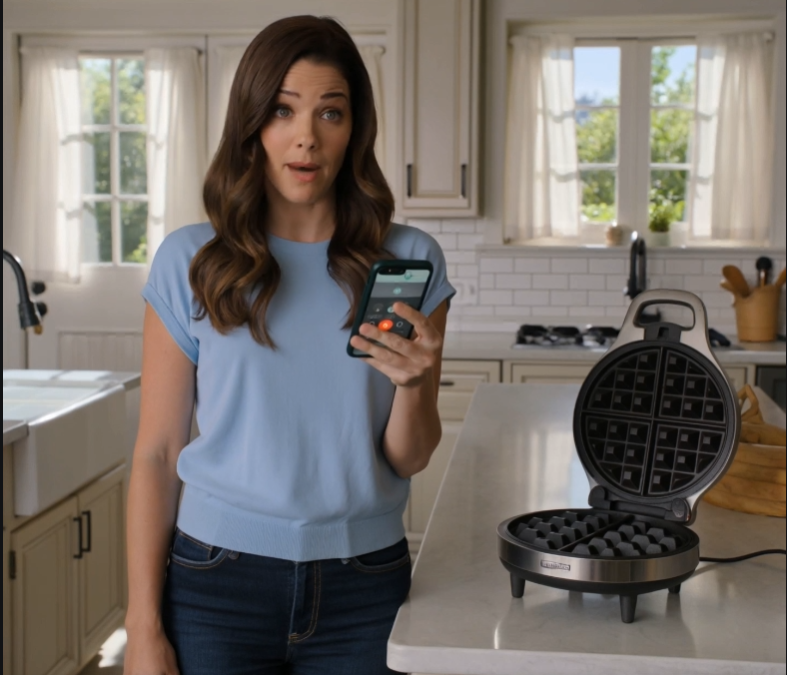
I watched it all on my phone from the kitchen, a waffle burning on the iron behind me.
Mom came up the steps to fix it. She entered the code I’d given her when I bought the house, as though my saying no had only delayed things.
The keypad flashed red.
She typed it again, slower.
Red again.
Then my doorbell camera spoke.
Tell me where you’re listening from and stay. Because to understand what that camera said, you have to know what those four numbers used to mean.
I’ll come back to my mother’s hand on that keypad, flat over the numbers, the red light blinking up into her glasses.
First, the numbers.
Their story starts in March of 2019, in that same house, when it was still hers.
On West 27th Street in Kearney, every porch faces another porch. In March, when the sandhill cranes come back to the Platte, the whole town sits outside to listen. So on our street, who wheeled Gary Hullman out to hear them, and who didn’t, got counted long before he died.
Gary Hullman was my father.
That spring, cancer moved him from the hospital to a rented bed in our living room, which smelled like antiseptic over coffee. I was twenty-three, teaching third grade, with a thirteen-month-old named Owen on my hip and four nights a week on that couch.
My sister, Kayla Lutz, had two little ones and came when she could.
Dad didn’t want to be looked at.
People came anyway, carrying casseroles.
“We just wanted to see him, honey,” one church lady told me at the door.
So I did something I’d never done in that house.
I said no.
“Call first,” I told them.
I told everyone.
That was the week I heard it from the kitchen while I was warming a bottle. Kayla’s voice was low and sharp.
“She’s not right, Mom. She’s acting like it’s her house.”
My mother, Deb Hullman, let a whole breath go by.
“Then get the plates.”
Nobody corrected it.
That was the first time.
When the cranes came through that March, Dad asked to be wheeled onto the porch. The rail was cold enough to come through my sleeve, and the sound rolled down over the roofs like a thousand rusty hinges very far away.
He listened with his eyes shut, then looked at me.
“You’re the only one in this house who tells people no, Jen. Keep doing it.”
“Okay, Dad,” I said.
He died in May.
The funeral lunch was in the basement of First Lutheran. Ham sandwiches and lemon bars. My mother’s sister, Carol, kept the coffee going while I shook hands with Owen asleep on my shoulder.
Something was said about me at Dad’s funeral.
I wouldn’t hear it for six years.
The keys were in a plastic bag at the hospital with Dad’s belongings from his last admission. A month after the funeral, the hospital called to say they couldn’t find the bag.
His wallet.
His reading glasses.
The house keys.
My mother stood in the kitchen with the phone still in her hand and didn’t move.
Somebody, somewhere, had a key to her front door.
That weekend, I drove to the hardware store on Second Avenue and bought a deadbolt with a keypad. I paid for it myself.
The house wasn’t mine, and that didn’t seem to matter.
My husband, Ben Ryder, and I put it in that same afternoon, the drill kicking in my hands, brass shavings falling onto the porch boards. Mom stood behind us, counting under her breath every time I punched in the test code.
“I don’t like numbers,” she said. “I like a key.”
“You can’t lose a number, Mom.”
Ben blew the dust out of the strike plate.
“Well, you can, but it’s harder.”
I remember that as the first boundary that house ever had, and it wasn’t there to keep anyone out.
It was so my mother could stop being afraid.
I bought the lock so my mother would never have to carry a key.
She never did.
The test code stayed on that lock for a year, and the house stayed in my parents’ names. Then the bills from Dad’s last year caught up with the mortgage that was left, and my mother couldn’t hold it.
She was going to list it.
Ben and I bought it instead, at the appraised price, not a dollar under.
We signed at the title office on Central Avenue the next August. After the bank was paid off, Mom walked out with a little over $118,000.
She said the number out loud at the table like a confession.
“It’s for my retirement, honey. Don’t look at me like that.”
“I’m not looking at you like anything.”
“Your sister’s fine. I’m taking care of it.”
“Of what?”
“Of your sister, Jenna. Sign the paper.”
Kayla didn’t come to the closing, though she’d been invited.
She texted me three words.
Must be nice.
Mom moved into a rented two-bedroom townhouse over by the hospital, nine minutes from the house, and kept the heat at seventy-four every day of the year. Her school pension covered it.
She’d been the secretary at Meadowlark Elementary, the school where I teach, for twenty-five years until she retired that June.
Whenever anyone asked how she was doing, she said the same thing.
“I’ve got my pension. I’m fine.”
On our first night as owners, I stood at the front door with the weight of that pen still in my hand and reset the keypad.
The year she and Dad bought the house.
I told her over the phone.
“It’s still your house, Mom.”
I meant it.
Within a month, she was using it the way she’d always used a key.
Seven in the morning. A casserole still warm on the counter by ten. And, “It’s just me,” floating up the stairs.
What she’d meant by taking care of it, I wouldn’t understand until November.
At the time, I thought she meant a phone call.
The next thing started with a lilac wall.
The summer our second son, Max, was born, Owen moved up into the front bedroom, the one over the porch with the window seat.
My sister’s old room.
Under his dinosaur posters, the paint was still the lavender Kayla had picked at twelve. Inside the lid of the window seat, in a twelve-year-old’s handwriting, someone had carved:
KH 2004.
Owen was four when he asked for green.
“Later, bud,” I said.
I said it because the last time Kayla had visited, she’d run her hand down the seat cushion and said, “This was mine. I used to sleep with the window open,” and it had seemed unkind to paint over that.
Those were the years I said yes.
Yes to Mom at seven a.m.
Yes to “It’s just me” coming up the stairs.
When Max was born, I asked her to call first.
“You’re doing the Dad thing again, Jenna Marie.”
A beat.
“Okay, Mom. Come at eight.”
The Christmas Max had pneumonia, I didn’t host, and Kayla told the cousins I was having an episode.
I let it go.
I always let it go after one round.
I told myself that was what grown women did.
There was one good thing in that room that wasn’t mine.
Kayla’s oldest, Addison—Addie—had piano at First Lutheran on Tuesdays, two blocks from us, and she’d walk over afterward.
She and Owen did homework side by side on the window seat, her legs long enough to reach the floor, his not.
There were two layers to what I was doing.
The outside layer was the yes.
The inside layer was a belief I’d never said out loud: that good people would eventually see the truth on their own, and that saying it for them would make me the loud one.
“Owen wanted green,” I’d say.
Later.
I said it for three years.
Every Tuesday, Addie on the seat. Every Sunday, dinner at our table, the Hullman Sunday dinner, kept going even when the house became ours.
Mom at the head.
Kayla’s family when they came.
Kayla’s husband, Brandon Lutz, drove one of two trucks with his name on the door. In the fall of 2020, they’d bought a house in the new development east of town.
Then, in the spring of 2025, diesel went up and a contract went away.
Brandon had already borrowed against the house to keep the second truck on the road. By April, the company was done, and Kayla, who kept the books, knew first.
They fell behind on the house.
By August, the bank had sent a letter.
What the family heard was, “Banks screwing us. Don’t ask,” in the group text.
Brandon said nothing.
Kayla said plenty about the bank and stopped coming Sundays.
When I offered to take the kids after school, she said they were fine.
Ben saw Brandon at the co-op that summer, paying for diesel in cash.
“Two trucks,” Brandon said. “Didn’t make it. Sorry, man.”
Ben said that was the conversation.
In August, Kayla called.
“We might need somewhere for a while.”
And I said the thing I always said.
“We’ll figure something out.”
On Labor Day, Kayla stood up at the picnic table and said she knew where they’d go.
Yanney Park on Labor Day is the whole town at once. Smoke off a hundred grills, kids screaming in the splash pad, the last hot sun of the year on the back of your neck.
We had two picnic tables pushed together.
Kayla waited until the pie was out.
“We’re moving home till spring,” she said, loud enough for both tables. “It’s decided.”
Home meant West 27th.
Spring meant the tax refund and a job Brandon had a line on in Grand Island after the holidays.
I set down my fork.
“The basement’s finished,” I said. “Two rooms and a bath. Ben did it three years ago. You’d have your own door.”
“I’m not putting my kids in a basement, Jen.”
She smiled at Mom, not at me.
“Your boys are little. They’d love it down there.”
“That’s my room.”
She said it the way you’d say your own birthday.
So there it was, laid out on a picnic table between the pie and the potato salad.
Her children up in my sons’ rooms.
My sons downstairs where I’d offered her.
Mom said, “Jenna, it’s family.”
I kept my voice where I keep it for parent-teacher conferences.
“The boys’ rooms aren’t available, Kayla. The basement is.”
Kayla looked around both tables.
“This is what I’m talking about.”
Then, lighter, to Mom, like she was asking for directions:
“You still have the code, right?”
Under the table, Ben’s hand closed over my knee and stayed there.
Ben is a farm kid. He doesn’t fill silences. He puts his hand on your knee and lets you decide.
Until spring.
In Kearney, spring isn’t a date. It’s the week the cranes come back over the Platte, and I sat there with a splinter from the bench working into my thigh, thinking about my father’s last one.
The cranes had been over the porch the morning he told me to keep saying no.
I had said it.
I believed then that you only had to say it once.
Mom didn’t argue with Kayla at the table.
She waited two days and called me instead.
She called Wednesday night after the boys were down, and she’d already had a version of the story from Kayla. In that version, I’d agreed in August and then gone cold at the picnic.
“Like after your dad. You said you’d figure it out. That’s a yes.”
“Jenna Marie, it was a basement.”
“Mom, you’re doing it again.”
“Like after your dad, shutting people out.”
“Mom—”
“She’s got three kids, Jenna. Three. They’re losing their house. You’ve got a whole one. Your father would have—”
She stopped.
She always stopped there.
I didn’t argue.
I want to be precise about that because it’s the part I change.
I sat on the edge of the tub with the phone hot against my ear and listened to my mother explain me to myself.
And I let her.
When she was done, I said the only two things I had.
“The basement’s open. The kids are always welcome.”
“I’ll fix it,” she said.
Then she hung up.
I stood in Owen’s doorway for a long time after that, the wood of the frame under my palm.
Owen asleep with his mouth open under a T-Rex, lavender showing at the peeled corner.
Downstairs, the dishwasher finished its cycle and clicked into silence, and the house was quiet the way it had been quiet the spring Dad was dying, when I’d stood in doorways then, too.
I asked myself the question my family had been asking about me for six years.
Was I being cruel?
Was I making a seven-year-old’s closet into a hill to die on?
I got as far as picking up my phone to call Kayla and say, Fine. Take them. Take the rooms.
I didn’t call.
I also didn’t say no a second time.
I said nothing.
Which, in my family, had always counted as yes.
“I’ll fix it,” Mom had said.
I didn’t ask what she thought was broken.
Within three weeks, the story had gotten to the pickup line before I did.
A mother I knew from Addie’s grade leaned into my passenger window at Meadowlark, the cold coming in with her.
“I heard about your sister. Three kids. If you ever need anything…”
She lowered her voice like she was handing me something fragile.
“Kayla said you’ve had a rough few years. I’m so sorry.”
“Thank you,” I said.
Nothing else, though there was plenty.
At church that week, the women’s circle looked at me the way you look at a car you’ve heard was in an accident.
The pastor’s wife squeezed my arm without saying why.
The next Tuesday, at a quarter to three, nobody knocked.
Addie didn’t come.
Kayla had ended the Tuesdays without telling me, and Owen sat on the window seat with his homework and kept looking at the door.
The house was too warm that afternoon.
The thermostat said seventy-four.
I keep it at sixty-eight.
I stood with my hand on the little plastic face of it, warm as a forehead.
By October, strangers were sorry for my sister and gentle with me.
That’s how I learned I was the story.
Someone had changed the thermostat.
I told myself Mom had stopped by, because she did that, and seventy-four was her number.
Then it happened again the next week, and I started writing things down in my phone.
Not because I suspected anyone, but because I’m a teacher, and I keep a log of what I can’t explain.
The thermostat.
The laundry basket in Max’s room when I’d left it in the hall.
Max’s toy bin moved from under the window to beside the closet.
And one afternoon, on the window seat in Owen’s room, a yellow tape measure, the kind with a belt clip, that we didn’t own.
I started checking the thermostat when I came in the door the way you check a stove.
Sixty-eight.
Sixty-eight.
Seventy-four.
“Your mom dropped something off. Probably,” Ben said, turning the tape measure over.
“Probably.”
“Want me to change the code?”
“Not yet. I want to know what I’m looking at.”
I did wonder, standing in that too-warm room with the cold steel of the tape measure in my hand, whether I was being paranoid.
Then I noticed that paranoid was exactly the word my family would have reached for.
I put the tape measure in the junk drawer and said nothing to anyone.
Kayla hadn’t called since the picnic.
Mom had called twice.
Both times about Sunday dinner.
Both times as if nothing had happened.
And both times I’d said yes to Sunday dinner.
I didn’t open the locks app.
I had never once looked at its history.
I’d forgotten it kept one.
The next Tuesday, the fourteenth, I taught fractions, drove home, made spaghetti, ran the bath.
At bedtime, Owen tugged on my shirt with wet hands.
“Mom, why are my shirts in a bag?”
Two black trash bags sat at the top of the basement stairs.
Not garbage.
Owen’s shirts, folded.
His school pants.
His winter coat.
Someone had started moving my son down to the basement.
The exact place I’d offered my sister.
His closet shelf was cleared.
On the floor sat two plastic bins, lids on, labeled in my sister’s block capitals:
ADDIE.
PAISLEY.
Now I knew what the tape measure had been for.
The lid of the window seat was up.
Owen’s Legos were on the floor in a pile.
Max’s room was half the same.
I opened the locks app.
Then, for the first time ever, I opened its history.
Deb.
Tuesday, 10:40 in the morning.
And the two Tuesdays before that.
Midmorning, all three.
School hours, all three.
My mother’s code, all three.
Kayla had never had a code to my house.
Every one of those doors had been opened by my mother’s hand.
I took a screenshot.
Then I hung Owen’s shirts back up while he watched from his bed.
The first hanger missed the rod.
So did the second.
“Is Addie moving in?” he asked.
“No, bud. Somebody moved your things without asking. I’m putting them back.”
The plastic edge of a bin under my thumb.
The smell of a new trash bag.
Hangers clicking together.
Three Tuesdays.
Three times my mother’s numbers.
Wednesday, I did something I’d never done to her.
I taught with the screenshot in my pocket.
Long division, a spelling test, a boy who threw up at lunch.
I don’t remember any of it.
After the last bell, I was sitting on the window seat in Owen’s room, in the dent Kayla had left in the cushion years ago, with the lock app open in my hand.
Here’s what I understood sitting there.
My silence had a price now.
And I wasn’t the one paying it.
Owen was.
For six years, I’d told myself that not fighting was the grown-up thing. That letting Mom walk in was love. That Kayla would see the truth if I didn’t shout it at her.
And in the meantime, someone had put my son’s coat in a trash bag.
One more yes wasn’t kindness anymore.
It was handing over his room.
I sat there very still, I think, for about an hour.
I remember the lilac at the corner of the poster and the sound of the school bus two streets over.
Before the boys got off that bus, I decided.
I changed the code.
Owen’s birthday.
The rubber buttons gave under my thumb one at a time.
I didn’t call my mother.
I didn’t call my sister.
I knew exactly what I was doing.
I did not yet know what I’d say when it mattered.
That night, I told Ben all of it and slid the phone across the table with the log on it.
“Want me to call Kayla?”
“No.”
“Your mom?”
“No. I want to see who comes and what they bring. And if it’s your mom, then I’ll know that, too.”
Before bed, I checked the doorbell camera we’d put up after a package walked off our porch a couple of years back.
Motion recording was on.
The two-way talk still worked.
I tested it from the kitchen and heard my own voice come back off the porch, thin and strange, like a stranger saying my words.
I changed four numbers and didn’t tell my mother.
It was the first thing I’d done in five years without asking.
Friday night, a little after eight, my phone lit up on the counter.
Kayla had put it in the family thread, so Mom saw it too.
Nobody else replied.
House sold Thursday. We’re out by the first. Coming Saturday at 9:00. Mom has the code if you’re going to be weird about it.
I typed a paragraph.
I deleted it.
I typed a sentence about the closet and deleted that, too.
Because anything I said about the closet would become a story about me.
Then I wrote the one thing I could stand behind in writing.
The boys’ rooms aren’t available. The basement is. The kids are always welcome anytime.
Kayla’s answer came back in under a minute.
Mom has the code.
I didn’t answer that.
Ben had the Saturday shift at the elevator. Harvest. The trucks lined up before dawn.
He stood in the kitchen doorway with his keys already in his hand.
“I can skip the elevator.”
“Go. It’s my door.”
I got Dad’s waffle iron down from the top shelf that night and set it on the counter.
My thumbs were cold from the phone.
I plugged the iron in to make sure it still heated, and it did.
Saturday morning, I made Dad’s waffles and put my phone faceup on the counter.
Dad made waffles every Saturday of my childhood in this kitchen, on this iron, and the smell of it is the smell of him.
Owen had the batter bowl.
Max had the syrup, and most of it on his hands.
Ben had left before light.
The house was at sixty-eight.
At four minutes to nine, a white van pulled to the curb.
Kayla got out alone.
The kids stayed in the van.
She opened the back and began lining suitcases along my front steps.
I counted them on my phone screen the way you’d count anything.
Six.
She banged on the door with the flat of her hand.
She didn’t touch the keypad.
She’d never had the code.
Three Tuesdays, and every time it was my mother’s hand.
She banged again.
I didn’t move.
I stood in the kitchen with the spatula, watching a small square version of my sister on my phone.
She put her phone on speaker.
I could hear my mother’s voice through it, small and tinny.
“Kayla, what’s going on?”
Then my sister threw her head back and screamed it at my door and into the phone at once.
“Mom, your crazy daughter won’t let us in!”
“I’m coming,” my mother’s voice said. “Don’t do anything.”
I put the spatula down.
“Owen, Max, downstairs, please. Take the tablet.”
“Is Addie here?” Owen asked.
“In the van, bud. Downstairs, please.”
He went.
Max followed the tablet.
Nine minutes is a long time.
Kayla went back to the van twice to say something to the kids.
The neighbor across the street came out for his paper and stood on his own porch holding it, not pretending to read it.
My phone buzzed with a text from my sister, all in capitals.
MOM IS ON HER WAY.
I let it sit there.
I stood with my back against the refrigerator, cold through my shirt, the waffle going from gold to black on the iron behind me, and watched my phone.
Nine minutes later, Mom’s Buick pulled in.
She came up the steps already talking.
The camera caught her before she reached the door.
“Kayla, I told you she always comes around. Let me.”
Red.
Kayla laughed one short bark.
Mom pressed it again, slower.
Red.
Her palm went flat on the keypad as if she could hold it down.
Behind me, the waffle iron ticked.
“See?” Kayla said louder. “See?”
I pressed Talk.
My voice came out on the porch.
“Kayla, the kids can come in. Owen’s making waffles.”
Kayla turned to the camera.
Her face filled my screen.
Mom’s mouth opened and closed.
“Mom, that code stopped working Wednesday. The day after it opened this door for somebody else’s boxes.”
“She’s recording us,” Kayla said.
“Mom, she’s recording you.”
“Jenna Marie, open this door.”
She said it to the camera, not the door.
“The door isn’t the problem, Mom.”
The button clicked under my finger.
“Kayla, the basement’s made up. Same as I said. Do you want it or not?”
“I’m not putting my kids in a basement.”
“Then you’ve answered.”
My knees were the only part of me shaking.
My voice wasn’t.
Kayla threw the suitcases back into the van, one after another, and started the engine.
My mother stayed on the porch with her hand flat on the keypad.
She stood there forty seconds.
I know because the clip has a timer.
She didn’t try the numbers again.
She looked straight into the camera, into me, and didn’t say a word.
Then she went down the steps and got into the Buick.
The van followed her off West 27th toward the hospital side of town, toward her townhouse, which had been there the whole time.
The steps were empty.
I slid down the refrigerator until I was sitting on the kitchen tile.
That’s when my hands started.
I put them flat on the floor to make them stop.
They didn’t.
The waffle iron ticked off behind me, cooling.
The boys came up when I called.
Owen looked at the burned waffle and then at me.
“Was that Grandma?”
“Yes.”
“Why didn’t she come in?”
“Because I changed the numbers and she didn’t ask me for the new ones.”
Max climbed into my lap.
Sticky.
“Is Grandma mad?”
“Maybe.”
“She’s still Grandma?”
I made new waffles.
Owen wanted to know if we could still call them Grandpa’s waffles if Grandma was mad.
I said yes.
They were Grandpa’s.
That didn’t change.
Ben came home after lunch with corn dust in his hair.
I didn’t play him the video.
I told him, start to finish.
He watched my face while I did it, not the phone on the counter.
“You okay?”
“I will be. Ask me Sunday.”
Here’s what I didn’t know yet.
Sitting on that floor, the door had done its job.
It had held.
It had recorded.
It had said exactly what I’d asked it to say.
But my sister had walked off my porch with three kids, six suitcases, and a story.
By Sunday, the story had left the porch entirely.
I had no idea where it would come down.
The door held.
I’d like to say that was the end of it.
It was the end of the door.
I didn’t go to church that Sunday.
I told Ben it was Owen’s cough.
It wasn’t Owen’s cough.
I didn’t want to walk into First Lutheran and find out what my sister had said before I got there.
And I knew she’d said something, because Kayla has never in her life sat on a story.
The pastor called the next morning while I was on lunch duty.
He’s a careful man. Lutheran careful. His pauses were longer than his sentences.
“Kayla shared at circle,” he said. “A family situation. I’m not taking sides, Jenna. I’m calling because she mentioned a recording, and I didn’t know there was one.”
“There’s a doorbell, Pastor. It’s been there since 2022.”
“I see.”
He told me the rest because I asked.
Her sister had locked their mother out of her own house.
That was the phrasing.
On camera, with three children waiting on the steps.
And then a line he repeated carefully so I’d hear it exactly.
“Somebody should keep an eye on her at that school.”
I thanked him.
I hung up and stood in the cafeteria with the phone still warm in my hand while a hundred third graders opened milk cartons, and I worked it out.
I had never told anyone outside my own kitchen that there was a recording.
It hadn’t occurred to me that a doorbell was news.
Kayla had told forty women in a church basement on the first Sunday she could.
The camera hadn’t been my weapon.
She’d made it hers before I’d watched the clip twice.
The family group text was silent.
My cousins read it and said nothing.
My mother didn’t post.
The only message that came was from my aunt Carol, and it was one line.
Call me when you want to. Not before.
Tuesday, I called Aunt Carol.
She told me where my mother had been sleeping.
Carol is a retired nurse.
She reports.
She doesn’t editorialize.
“Kayla and the kids are at your mother’s. Your mother gave them both bedrooms. Your mother’s on her own couch.”
A pause.
“I’m telling you because you’d want to know. Not so you’d do anything.”
“Okay,” I said.
“Okay is fine,” Carol said.
Then she hung up.
I stood at my front door with my car keys in my hand.
It was nine minutes to Mom’s townhouse.
I could be there with the new code written on a Post-it and hand it to her on her own couch and say, Take the rooms. Take them till spring.
Everyone would exhale and call me reasonable again.
Sixty-one years old and sleeping on a couch because of a door I’d locked.
That’s how it would sound at Circle.
That’s how it sounded in my head.
The teeth of the keys pressed into my palm.
Through the little window beside the door, the porch light made a yellow square on the boards where the suitcases had been.
I have never wanted anything the way I wanted, for about a minute, to be the person they’d stopped talking about.
I had my keys in my hand a long time.
Then I hung them back on the hook.
The next night at bedtime, Owen asked the question with his face in his pillow.
“Addie said you’re crazy and they’re getting my room anyway.”
He turned his head.
“Are you?”
I sat down on the edge of his bed, which is too short for me, my knees up near my chest.
I didn’t ask him to say it again.
I didn’t reach for my phone.
“No,” I said. “Your room’s yours.”
“Addie’s not mean. She just says stuff.”
“I know, bud.”
She was ten.
It would have been easy to do something with that.
A ten-year-old repeating her mother is not evidence.
It’s a weather report.
I didn’t write it down.
I didn’t bring it up at Thanksgiving.
I’ve never used it.
I’m only telling you now so you’ll know I didn’t.
I stayed until his breathing changed.
His hair smelled like the green-apple shampoo he insists on.
Above his head, the corner of the T-Rex poster had peeled another inch, and the lavender underneath looked almost gray in the night-light.
Diane Lindgren, our principal, had sat ten feet from my mother’s desk for most of twenty-five years.
Thursday morning, Mrs. Lindgren asked me to stop by her office before first bell.
Her office hadn’t changed since I was a kid, waiting in it for Mom to finish a phone call.
The same cracked vinyl chair by the door.
Mom’s chair.
The one she’d rolled over from the secretary’s desk to gossip in.
Diane pointed me to it and closed the door.
She had one sheet of paper still warm from the printer.
The subject line said:
Concern Regarding Ms. Ryder.
She let me read it myself.
The family has serious concerns about Jenna’s stability. She has locked her mother out of her home and is isolating her children. You may want to keep an eye on her with the students.
Isolating her children.
Keep an eye on her with the students.
I read it twice because my job was in it.
Then I looked up.
“I’m not filing this,” Diane said. “It’s not a personnel matter. It’s a family matter that landed on my desk. But you should know it exists. And you should know that if a second one comes, I’ll have to loop in the district. I don’t get to decide that part.”
I had one question.
I’d learned that week to ask only one.
“Who sent it?”
“It came from your mother’s address. I’ve known that address twenty-five years.”
She turned the page so I could see the header.
“I can’t tell you who typed it. And I haven’t called her. You’re my teacher. I talked to you first.”
I didn’t defend myself.
I noticed that I wanted to.
A whole speech was right there about the closet and the bins and the code.
I let it go by, because a speech about my stability was exactly what the email wanted from me.
“Don’t file it,” I said. “But don’t lose it. I want it to exist somewhere that isn’t my house.”
She nodded slowly.
“For what it’s worth, I sat next to your mother for twenty-five years.”
She stopped.
The first bell went through the wall.
Then she finished.
“This isn’t about your classroom,” she said.
“I know.”
I stood up.
“It’s about my door.”
Brandon texted on Saturday morning.
The first I’d heard from him directly in months.
Wyatt’s inhaler. Left at your place in August. Mind if I swing by?
I found it in the bathroom drawer, the blue one. Wyatt was Kayla’s youngest.
I had it in my hand when the doorbell rang.
Brandon had never once had a code to my house.
And it had never once occurred to him to ask for one.
He looked like a man who’d been sleeping on a brother’s couch, which he had been since the house sold.
He and Kayla weren’t talking.
Not really.
He took the inhaler and turned it over in his fingers.
He didn’t leave.
Brandon is not a talker.
In eleven years of Sunday dinners, I don’t think he’d said three hundred words to me, and most of those were about the weather or the Huskers.
So when he didn’t leave, I noticed.
“For what it’s worth,” he said, “I told her the basement was more than fair.”
The wind came across the porch.
It was November now, the kind of wind that gets under a coat.
The inhaler in his fingers was still warm from my hand.
“Thanks, Brandon.”
“I mean it. I’d have taken the basement. It’s nicer than the house. We—”
He stopped.
Then he said the thing he’d apparently believed for five years.
“Deb told us back then you wanted us to have it.”
“The house money. I always figured you were the generous one.”
“What money?”
He looked at me.
I watched him understand it before I did.
Watched his face do the thing faces do when a floor isn’t where they left it.
“You didn’t know?”
It wasn’t a question.
“Brandon, what money?”
He didn’t answer.
He put the inhaler in his jacket pocket, walked back down my steps, opened the passenger door of his truck, and leaned in.
When he came back up the steps, he had a folder in his hand.
It was the paperwork from the house.
The whole file.
Everything with a signature that he’d been pulling together for the bank since summer.
He found the page without looking.
It was folded in four.
He unfolded it on my porch rail.
A paper my mother had signed for the bank in the fall of 2020.
Plain language, the kind banks use when they want no confusion.
Deborah Hullman is giving her daughter Kayla Lutz $118,000 toward the purchase of a home. This is a gift, not a loan. No repayment is expected.
Dated six weeks after I’d signed at the title office on Central Avenue.
I didn’t have to do any math.
$118,000 was the number my mother had said out loud at that table.
“Retirement,” I said.
“Kayla said you insisted,” Brandon said. “Guilt money, she called it. Only fair since you got the house.”
“I bought the house, Brandon.”
“I know that now.”
My thumb was on her signature.
The fold lines had gone soft from being carried.
“Keep it,” I said. “It’s yours.”
And it was gone anyway.
Every dollar of it had gone into the house east of town, and the bank had sold that house in October.
My mother’s retirement had bought my sister a down payment, and the down payment had bought five years, and the five years were over.
I didn’t take the paper.
I’d already paid for it once.
Where that paper ended up is coming.
And if you’re new here, subscribe, because this family still has to sit down to Thanksgiving together.
That night, Ben sat across the kitchen table from me with a glass of water he never drank, and I laid it out for him the way I’d lay out a lesson, one card at a time, because I needed to hear whether it held.
In the kitchen, the spring Dad was dying:
“She’s not right.”
At the funeral lunch:
Something I still hadn’t heard.
The next summer:
The house sold to me at full price.
The money to Kayla.
The word retirement said to my face.
Then every no I ever said—Call first. Not this Christmas. Not the boys’ rooms—filed under the same heading.
The Dad thing.
An episode.
Not right.
It held.
That was the terrible part.
It wasn’t a family that had a crazy daughter.
It was a family that had a set of books.
And the books only balanced if one daughter was broken.
I got the house because I was the one who wasn’t right.
Kayla got the money because she was the one who was.
And now the broken one owed a room.
None of them had ever said the word out loud to me.
Crazy.
They’d never had to.
They’d said not right.
And the Dad thing.
And episode.
And I’d heard crazy every time because that was the job those words were doing.
I’d like to tell you it felt like grief.
It felt like relief.
The cold kind.
The kind you get when a sound you’ve heard in the walls for years turns out to be a pipe and not a ghost.
“Are you going to say something?” Ben asked.
“No. I’m going to stop saying nothing.”
That’s a difference.
It’s the whole difference.
The wood grain of the table was under my palm.
The kitchen clock did its small work.
I picked up my phone and didn’t call Kayla.
I didn’t call Carol.
I didn’t call the pastor.
I texted Mom.
Sunday. 2:00. Dad’s grave. Just us.
She wrote back one word.
Okay.
Kearney Cemetery on a Sunday in November is wind and not much else.
Dad’s stone is in the newer section.
Gray granite.
His name and two dates.
I’d picked the place on purpose.
It was the one spot in Kearney where my mother couldn’t simply walk in.
She was already there when I pulled up, wearing the good wool coat, her gloved hand on the top of the stone the way she used to put it on his shoulder.
I didn’t work up to it.
“I know about the $118,000.”
“Who?”
“It doesn’t matter.”
She tried the defenses in order, and I let her get through all of them.
“You got the house.”
“I bought the house.”
“Jenna—”
“Mom.”
“I had my pension, honey. I didn’t need that money. Kayla did.”
“Then why tell me it was retirement?”
“Because Kayla would never have forgiven me. You know how she is about that house.”
“You told her it was my idea.”
Silence.
“You told me it was your retirement.”
“I was keeping the peace.”
She said it to the stone.
The wind took the end of it.
The cold came up through the soles of my boots.
I’d knelt to brush the leaves off his dates, and the grass was dead under my knees.
I stayed down there because it was easier to say the next part to his name than to her face.
“I don’t want the money, Mom. It’s gone, and I don’t want it. I’m coming to Thanksgiving. I’m not going to bring it up. But I’m done being the one who isn’t right so the numbers come out even.”
She didn’t move.
“If anybody at that table asks me why I said no, I’m going to tell them the truth. What you tell them is yours.”
She was quiet a long time.
Then she reached for the thing she reaches for.
“Give me the new code, honey, and we’ll put this behind us.”
“No. Not yet.”
“You can’t tell Kayla I said it was your idea.”
“I’m not telling anyone anything. I’m just not lying.”
She asked for the new code.
I said not yet.
She didn’t ask what would make it yes.
The Tuesday before Thanksgiving, Kayla’s text came through while I was grading.
Mom’s doing Thanksgiving at hers. Pastor’s coming. Aunt Carol. We need to talk about you as a family. Be there or don’t.
I read it twice.
The pastor.
Aunt Carol.
A family meeting.
And I was the agenda.
Ben read it over my shoulder.
“You’re going to sit there and let them sit there?”
“The letting is theirs,” I said.
A second text came from a different number ten minutes later.
Brandon.
Kayla wants the kids there. So I’m coming. Just so you know.
I didn’t tell him to bring the folder.
I want that on the record, since we’re all keeping records now.
I didn’t ask him to say anything.
I didn’t ask him not to.
I typed three words to my sister.
I’ll be there.
Then I opened the kitchen drawer that sticks, put the phone in with the batteries, and shoved it closed with my hip.
The cold of the table got into my forearms while I sat there not picking it back up.
Ben made dinner.
Owen asked why my phone was in with the batteries, and I said it was resting.
Wednesday night, the night before, Owen had the lid of the window seat up, looking for a Lego he swore was in there.
His finger found the letters before I did.
They were shallow, a twelve-year-old’s work with a butter knife, and my fingertip could read them without looking.
“Whose is that?”
“Aunt Kayla’s, when she was a kid.”
He traced the K.
He’s seven.
He’s not sentimental.
He looked up at the wall.
“Can we do green now?”
“After Thanksgiving.”
I had a paint chip in my coat pocket.
A green called something like Meadow.
I’d picked it up at the hardware store the week before and carried it around like a receipt for a decision I hadn’t made yet.
My father’s voice came back to me then.
Not the sound of it, but the sentence.
And kneeling on that floor, I heard it differently than I had on the porch.
He hadn’t been complimenting me on being stubborn.
He’d been telling me what it costs to keep a house.
Somebody in it has to be able to say no and mean it.
And stay.
“After Thanksgiving,” I’d said.
For the first time, after had a date.
My mother’s townhouse was seventy-four degrees and full of folding tables.
She’d borrowed them from church and lined them through the living room end to end under two tablecloths that didn’t match.
Down the hall, still lined against the wall a month later, stood six suitcases.
Kayla hadn’t unpacked.
You don’t unpack when you’re only staying till spring.
On the arm of the couch sat a folded blanket and a pillow.
Mom’s bed since October.
She was in the kitchen basting when we came in, and she hugged me with the oven mitt still on.
Neither of us mentioned the cemetery.
The kids’ table was set up in the second bedroom, and Ben took a plate in there and stayed because I’d asked him to.
Owen.
Max.
Addie.
Paisley.
Wyatt.
And a grown man on a child’s chair being a wall.
Whatever happened at the big table, the children were going to be in another room eating away from it.
At the big table were Aunt Carol and her husband, two cousins I hadn’t seen since the funeral, the pastor at Mom’s right hand, Brandon at the far end by the kitchen, and Kayla, who had made the pie and said so twice.
I went with nothing in my hands.
Not the screenshot.
Not a speech.
I decided that at Dad’s grave.
We got through the turkey.
We got through the pie.
The pumpkin was too sweet, and I ate it.
Then Kayla put down her fork and folded her hands.
I watched the pastor realize something.
“I was told this was dinner,” he said quietly.
“It is,” Kayla said. “And we’re worried about my sister.”
She turned to Mom.
“Say it, Mom.”
I folded my napkin in half.
Then in half again.
I didn’t say anything because I had decided not to, and because the cold metal of a folding chair through dress pants is very good at reminding you of your decisions.
Kayla looked at Mom.
“Say it.”
Mom looked at her plate.
Mom didn’t say it.
So Kayla did.
“Fine. She got the house.”
She leaned forward.
“She got everything. All we asked was a room until spring, and she locked Mom out on camera like a criminal.”
She said it four feet from the woman who’d put $118,000 in her hands.
Brandon didn’t raise his voice.
He never has.
“Deb, tell them where our down payment came from.”
The heat clicked on.
Nobody moved.
“Deb.”
That was Carol.
Kayla went fast, the way you do when you’re not denying a thing, just moving it.
“That was Jenna’s idea. And it’s gone anyway. The bank took it. She still got the house.”
“No,” I said.
My first word at that table.
And the only lie in her sentence was the one I’d answered.
My mother put her fork down.
She looked at the pastor, of all people, and said it plainly, without a single honey.
“I said it. I told Kayla it was Jenna’s idea. I told Jenna it was for retirement. It was the house money. All of it.”
Brandon took a paper folded in four out of his jacket and set it on the tablecloth beside the pie.
He didn’t open it.
My hands were in my lap, the tines of my fork pressed into my thumb, and I let them.
Aunt Carol put down her fork.
“Deb, what did you tell me at the funeral lunch?”
Carol didn’t wait for permission.
“At the funeral, you told me she wasn’t right. You told me to keep an eye on her with the baby. The summer you sold, I asked why the house went to Jenna and not Kayla. And you said she’d come apart if she lost that house.”
Carol looked at her.
“So nobody asked where the money went, Deb.”
“Yes,” my mother said.
That was the whole of it.
And a retired nurse had said it in the voice you’d use to read a chart.
Keep an eye on her.
I’d read those words a month before on a sheet of paper still warm from Diane’s printer.
Not right hadn’t described me.
It had explained a sale.
Then it had explained every no I said for five years, because a word that has done one job will do another.
Kayla came halfway out of her chair.
“She’s been recording all of us. She recorded Mom on her own porch.”
The pastor didn’t stand.
“Kayla, the only person who’s told me about a recording is you, at Circle, in front of forty women.”
She turned on Brandon.
“You did this.”
“I read a piece of paper,” Brandon said.
I looked at my sister then.
Kayla Lutz.
Who had kept the books for a trucking company and knew to the dollar where every dollar came from.
I said the second and last thing I said at that table.
“I said no to a room. That’s the whole thing I did.”
The room was too hot.
Carol’s hand lay flat on the tablecloth like she was holding it down.
My neck was burning.
My voice hadn’t been.
Kayla stood up.
Nobody else did.
She went for the second bedroom, for her kids.
Ben was standing in the doorway with a paper plate in his hand, and he didn’t move out of it.
“Let them finish their pie, Kayla,” he said, mild as milk.
She stopped.
I don’t know what she saw in his face.
Ben has one setting.
But she stopped and stood in the hall between the suitcases and didn’t go in.
I didn’t go into the kids’ room either.
I got my own coat off the pile on Mom’s bed, put it on, and said good night to my aunt Carol, who held on to my hand a second longer than a handshake, and to the pastor, who looked like a man who’d like to be somewhere with fewer tablecloths.
Mom followed me out.
No coat.
She stood in the cold beside the Buick with her arms wrapped around herself.
“What do you want me to do?”
“Whatever you told them about me, untell it. To the same people.”
She nodded at the ground.
“Can I still come Sunday?”
“Ring the bell.”
She looked at me like I’d said it in another language.
Then she went back inside without her coat.
I watched the door of her rented townhouse close on a house full of my family.
Ben drove.
Owen was asleep before we hit Second Avenue, his head against the window.
Max wasn’t.
“Did Grandma cry?”
“A little.”
Under the streetlights on Second Avenue, somewhere between the Dairy Queen and the turn, my hands stopped shaking.
I noticed it the way you notice a noise that’s quit.
Relief.
Plain and simple.
Then Max’s breath fogged a circle on the glass beside my face.
The kids finished their pie.
I wanted that said.
Kayla’s three and my two.
The last two at the little table, Ben told me, were Addie and Owen, eating the crust nobody wanted.
Monday at 7:40, Mom walked into the office she’d worked in for twenty-five years and sat down in her old chair.
Diane Lindgren told me at lunch.
“My mother had come in at twenty to eight, before the buses, and sat down in the vinyl chair by the door without being asked and said she’d written something she shouldn’t have and wanted it on record that she was wrong.”
“I told her there was no record,” Diane said. “She said, ‘Then make one.’ So I did.”
She showed me the printed email.
Under it, in my mother’s round secretary’s hand, was one line in blue ballpoint.
I was wrong.
Deb Hullman.
“You keep it,” I said.
“I intend to,” Diane said.
She put it in the top drawer of her desk, and I heard that drawer close the rest of that month in short strokes.
Within the week, Carol had carried my mother’s correction to the women’s circle.
In Carol’s words, which are short.
Kayla stayed at Mom’s.
Brandon took the kids on weekends.
Within a month, the two of them had a word for it.
Separated.
My sister did not speak to me.
Not one word.
From the night of the coats onward.
That was her decision.
And it was hers to make.
Sunday, my mother rang my doorbell.
In five years, she never had.
I’d heard that bell a thousand times and never once with her on the other side of it.
She stood on the mat with her purse in both hands like a woman at a stranger’s door.
The boys were at Ben’s parents’.
I put the kettle on.
We sat at the kitchen table.
Sixty-eight degrees.
She didn’t reach for the thermostat.
“Can I see it?” she asked.
“You can. I won’t show anyone else.”
I set the phone on the table between us and pressed Play.
The little speaker gave her back her own voice coming up my front steps.
“Kayla, I told you she always comes around. Let me.”
Her hand went to her mouth and stayed there through the red light, through my voice, through Kayla’s, through the forty seconds of her standing with her palm on the keypad.
When it ended, she didn’t ask to see it again.
“I typed it,” she said.
“The email?”
“Kayla stood behind me and told me what to say. But I typed it.”
“And the Tuesdays?”
She knew which ones.
“Kayla brought the bins. I had the numbers.”
Her eyes went to the ceiling, toward Owen’s room.
“I folded his shirts first. I told myself if they were folded, it wasn’t the same as taking them.”
“It was the same, Mom.”
“I know that now.”
I waited.
“Your dad said something to me once before he got sick. He said, ‘Whoever keeps this house has to be able to say no in it.’”
She turned her cup around on the table.
“I couldn’t,” she said. “I never could. So I made sure you got it. And then I made sure nobody could say you deserved it.”
She kept turning the cup.
“I gave Kayla the money so she’d forgive me for the house. And I said you weren’t right because that was easier than saying I was buying peace.”
“It didn’t buy peace, Mom.”
I got as far as her name and had to stop and start the sentence over.
“It bought a room. And then she wanted the room too.”
She cried then, into her hand.
I let her.
I didn’t fix it.
When she was done, I took a Post-it off the fridge and wrote a new code on it.
Under the code, I wrote one more thing and slid it across the table.
Sundays. Noon to 6. It only works when I’m home.
She read it twice.
“When you’re home.”
“When I’m home,” I said.
She put the Post-it in her wallet.
The next Sunday, she rang the bell anyway.
She told Owen she was sorry about his shirts.
He said it was okay.
They were back on the hangers.
The week after Christmas, we painted.
Owen picked Meadow off the chip without hesitating, and we did the whole front bedroom.
Three coats.
The lilac going gray.
Then gone under the roller.
Max was allowed one handprint by the closet and made three.
Ben ran a box fan in the doorway to push the fumes down the hall.
I took the cushion off the window seat and lifted the lid.
KH 2004.
I ran my thumb over it once.
Then I put the cushion back without sanding it.
Owen asked what the letters stood for again.
I told him.
He said it was weird that his aunt had been a kid and went back to his corner.
“You kept the initials,” Ben said from the ladder.
“They’re hers,” I said. “The room isn’t.”
Some things stay because they happened, not because somebody claims them.
That’s the closest I’ve come to a rule for that house.
Owen stood in the middle of the floor with paint on both elbows, turning slowly.
“It’s so green.”
“It’s so green,” I said.
Kayla, in one sentence, because she’d earned one:
She’d taken a bookkeeping job at the farm-equipment dealer out on the highway.
By spring, she’d have her own place with her own paycheck and her tax refund.
The spring she’d named on a picnic table was arriving somewhere else, on her money.
I don’t tell you that as a scoreboard.
My sister is thirty-three and good with numbers, and she’d been keeping someone else’s books for eleven years.
Getting her own was the least surprising thing that happened that winter.
We hung the T-Rex back up on green.
It looked wrong for about a day.
Then it looked like it had always been there.
Green paint dried on my knuckles in a pattern I didn’t wash off until morning.
The paint was still tacky when Brandon texted.
Addie wants to know if Tuesdays are still a thing.
In March, Kayla signed a lease on an apartment above the insurance office on Second Avenue.
Until spring, she’d said.
And here was spring.
And here she was in it.
A door with her name on the buzzer, paid for with her own paycheck.
Two bedrooms.
The kids would share.
Nobody was in a basement.
Brandon had them half the week.
I told Brandon that Addie’s question was Kayla’s to answer.
It took me until March to ask her.
I sat in my car in the school lot with the engine running and texted my sister for the first time since Thanksgiving.
Addie’s Tuesdays. I’d give her a code. 3:15 to 5:30. Your call.
Nothing that day.
Nothing that night.
The next afternoon, one word.
fine
Lowercase.
No period.
My thumb sat on it a while.
I read it the way I’d read a hard student’s note—as an answer, not a temperature.
It wasn’t forgiveness.
It wasn’t an apology from either direction.
It was a door left unlocked from the other side.
And I knew better than anyone alive what that costs.
I set Addie’s code that night.
Four numbers.
Tuesdays only.
3:15 to 5:30.
Tuesday at 3:15, a backpack hit my porch boards.
Four numbers went in.
The keypad lit green.
In daylight, you can still see it.
“Hi, Aunt Jen.”
Addie is eleven now and taller than the window.
Owen was already on the seat with his math sheet.
She dropped down next to him the way she used to.
Then she stopped and looked at the walls.
“It’s green now.”
“It’s so green,” Owen said.
She ran her hand along the seat cushion, the whole length of it, exactly the way her mother had, without knowing she was doing it.
Then she lifted the lid to put her piano book away and saw the letters.
“That’s Mom’s.”
“It stays,” I said.
She looked at it a second longer.
Then she closed the lid and sat on it.
Owen told her the math was stupid.
She told him he was stupid.
They did it together anyway.
Two kids who’d been on opposite sides of a door in October and had never, for one second, picked a side.
Pencils on paper.
The house at sixty-eight.
The cranes came back the way they do.
First a few high up, sounding like a gate that needs oil.
Then thousands spiraling down toward the Platte south of town.
On a Sunday, Owen and I sat on the porch steps and watched them go over the house.
He counted until he ran out of numbers.
Max was inside with Ben, being talked out of a third waffle.
Dad’s waffle iron was washed and drying on the counter behind us.
We’d used it that morning.
Mom’s Buick pulled in just as the last of them went over.
She came up the steps in the good wool coat.
Her Post-it was in her wallet.
The code on it worked.
She stood on the mat and rang the bell.
Owen got there first.
“Grandma, you have a code.”
“I like ringing,” she said.
Owen looked at me.
I looked at her.
It was the kind of pause you could have driven a Buick through.
Then I came to the door behind him.
“You don’t have to wait, Mom.”
She looked at me.
“You just have to ring.”
She came in.
She took her shoes off on the mat, which she’d never done in five years of walking in, hung her coat on the hook where my keys live, and went to the kitchen.
The house was at sixty-eight.
She didn’t touch the thermostat.
She set a casserole on the counter.
She still brings one every Sunday, and I’ve stopped pretending I don’t want it.
She asked Owen about the green.
Here is where things stand.
Kayla hasn’t come.
Six suitcases went up the stairs to an apartment on Second Avenue, and I wasn’t there to count them.
And that’s right.
Addie comes every Tuesday and lets herself in.
Brandon rings.
My mother rings every Sunday with a code in her wallet she’s never once used.
Nobody’s called me crazy since Thanksgiving.
Not because I proved I wasn’t.
Because my mother said out loud where the word came from.
If somebody in your life ever renamed your no—a mood, a phase, the Dad thing—tell me in the comments what you were actually saying no to.
I read them, usually Sundays before the bell.
And if this story earned it, a like and a subscribe means the next one finds you.
It’s Sunday.
The cranes are over the house.
The bell rings.
I open my door.








