Mom threw me a surprise 40th. Halfway through the cake, my 13-year-old whispered, “Mom, get the keys. Now.” I thought he was bored, until he said in the car, “Don’t go home. Your sister left an hour ago. Look.” What was on his phone made me pull over.
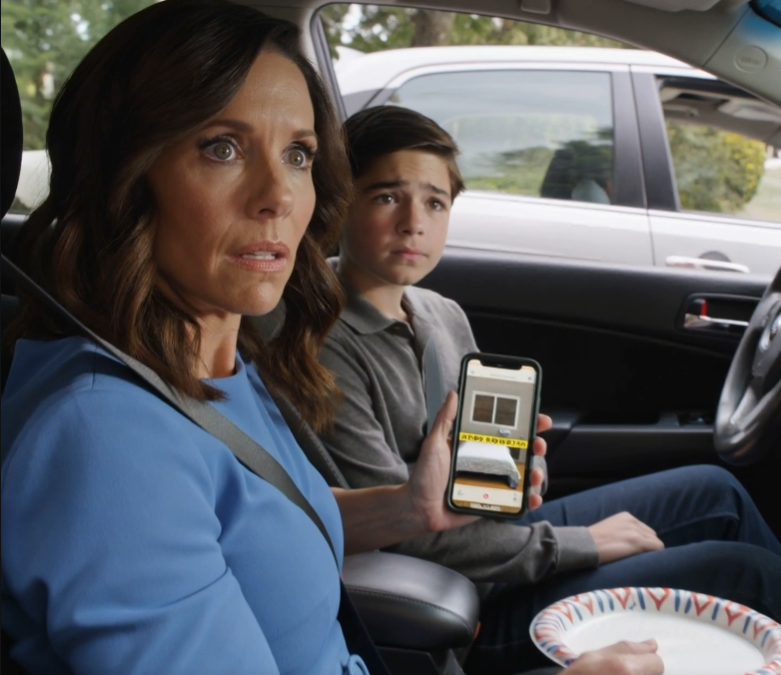
My mother threw me a surprise 40th. Sixty people from the parish. My name in blue icing on the cake. I was still holding my plate when my 13-year-old leaned in and whispered, “Mom, get the keys now.”
I thought he was bored.
In the car, he said, “Don’t go home. Your sister left an hour ago. Look.”
His phone showed his bedroom, a yellow tape measure snapping tight across the window.
My niece’s voice: “This is going to be my room.”
Then my sister’s voice off camera.
“After Monday, baby.”
I pulled over, blinker still ticking, my son breathing beside me. For 11 years, I’d paid for that house. Monday at nine, I was supposed to send $76,000 to pay it off. It had never been in my name.
I didn’t call my mother.
They’d planned who would take my son’s room. They hadn’t planned for what I would do before nine.
Tell me where you’re listening from. I read every comment. And stay with me, because before nine started 11 years earlier.
From Grandview, you can’t see Brookline, but I could see the parish hall anyway. Eleven kinds of cookies on a folding table under the crucifix. Because in Brookline, a cookie table isn’t dessert. It’s a count of who showed up for you and who’s going to say so at the 10:30 Mass.
I was parked on Grandview Avenue on top of Mount Washington with the engine still running and the whole city laid out under the windshield like a bill I hadn’t opened.
My son, Luke Dwire, 13, held the phone between us the way you hold something that might spill.
“Kayla sent it to the cousins,” he said. “Not me. She thought I knew.”
My niece Kayla, my sister Nicole Dwire’s oldest, 15, had posted it to a group chat called Dwire Cousins. Luke had been added for his aunt’s birthday last year and never left.
Twelve seconds of my son’s bedroom window with a yellow tape measure stretched across it, locked at 11 feet 4.
Then Luke swiped.
The second clip was from our doorbell. I’d put the camera up for package thieves, and I’d put the app on his phone because he’s home alone every afternoon until I shut my laptop.
There was Nicole’s SUV in our driveway. There was a man I didn’t know in a gym shirt, wheeling a dolly up our front walk with a box on it. The box said NICOLE KITCHEN in black marker.
“Mom,” Luke said. “The guy had a dolly while Grandma was doing the speech.”
“Where’s your aunt now?”
He opened the location app my mother, Patty Dwire, had made the whole family install after my father died. The little circle with Nicole’s face sat on our street. It had been sitting there since the speech.
I’m a medical billing supervisor for a hospital system. I read other people’s statements all day. Who was charged? Who paid? Who’s pretending they never got the letter?
And I had missed my own son’s face across a folding table and a sheet cake.
My hands were on the wheel. The wheel wasn’t going anywhere.
I’d watched Nicole leave the hall.
“Running Kayla to Steve’s,” she’d said, and kissed my cheek.
Kayla was in the video. Steve’s house was in the other direction.
Eleven feet four is the width of my son’s room, and my sister already knew it.
I didn’t call her. I want to be clear about that, because everyone would ask me later why I didn’t.
I didn’t call my mother, and I didn’t drive down the hill to my own house, where my sister’s gym friend was carrying my sister’s kitchen into my garage.
My phone started.
Where are you?
The pastor wants to bless you.
The cookies.
Everybody’s asking where you went.
Each one told me the same thing. If you read texts for a living, they still needed me back in that hall.
You don’t need someone back if the thing is finished.
“Can we not go home?” Luke said.
“We’re not.”
I turned the key and the engine stopped.
For a second, there was no sound at all. No singing. No parish. No forks on paper plates. Just my son breathing and the river down there doing whatever it does.
Nicole had left the hall more than an hour before Luke’s mouth found my ear. I’d started an hour behind, and I hadn’t even known there was a race.
If you’ve ever been the one who pays and the one who gets asked where she went, you already know why I didn’t answer.
The keys were in my hand. Heavy. The way they’d felt the day my mother first slid them across a counter to me.
I put the keys in my lap, and for the first time all day, they felt like mine.
The phone buzzed on top of the keys.
And that’s the thing about my mother’s texts. They put me right back at her kitchen table.
Let me take you back to 2015.
I was 29. My husband, Brian, had left me a 2-year-old, a truck note in my name, and a bankruptcy I hadn’t known I’d signed for.
I’d found a brick two-story on a side street off Brookline Boulevard, close enough to walk to the bakery, far enough that the boulevard was a hum. The bank looked at my name and said no in the polite way banks have.
My mother opened a tin of pizzelles on the table and said the thing.
“I’ll put my name on it, honey. Just on paper. It’s your house. When it’s paid off, we switch it.”
My father, Frank Dwire, was a steamfitter who’d spent his whole life reading my mother’s face for the weather.
He nodded.
“It’s a lot of paper, Mom.”
“You don’t argue with family about paperwork.”
“Your mother’s right,” Dad said.
“Okay.”
I didn’t know it then. I know it now.
That okay was the first brick, and I laid every one after it myself.
I put in the down payment from the savings Brian hadn’t found. At the closing, my mother signed every page. She’d brought the title agent a tin of his own, which he set beside the stack and didn’t open, and I signed nothing because nothing had my name on it.
Afterward, in the empty kitchen of the house, she set the keys on the counter and slid them to me.
“Here. Yours.”
I thanked her.
I thanked my mother for my own money and my own house, and the keys were cold from her purse, and I would have thanked her again if she’d asked.
There was one person who’d read every page before my mother signed them. I’ll get to her.
Her name was Ellen Novak, and the week before that closing, she’d read every page of it for free in an office that smelled like the bakery under it.
Ellen had done my divorce. Storefront on the boulevard, second floor. Her name painted backward on the window so you could read it from the street. She’d watched Brian’s lawyer try to hand me his debts and made him take most of them back.
So when my mother’s closing packet came, I brought it to Ellen on my lunch break because she was the only person I knew who read things.
She read it with a pencil. She didn’t write anything. When she got to the last page, she took her glasses off.
“Get your name on it, Colleen. People change. Mothers, too.”
“It’s my mother.”
That’s what I said.
I laughed.
I remember laughing because I remember the bread smell. And the two together are the sound of me not listening.
Here’s why I didn’t listen. And I’m telling you so you don’t think I was stupid.
My father’s rule in our house was simple.
We don’t keep score.
The winter I was 12, the union hall had nothing for him for five months, and somebody had to sit at the table with the envelopes.
That was me.
My sister was eight.
“She’ll find her way,” my mother said, the way you say the sun comes up.
By 12, I knew my job. By 29, I’d stopped noticing it was a job.
When Ellen said, “Get your name on it,” the feeling that arrived first wasn’t fear.
It was guilt for even listening.
So I set up the payments from my account into a loan with my mother’s name on it. Every month, on the first, I built a spreadsheet to track it for taxes, the way I’d track anything, and I typed one word at the top of the tab.
I didn’t know it then. I know it now.
I’d been keeping records of my own disappearance.
I named the spreadsheet House.
The first row of that spreadsheet is the month we moved in. Every row after it ends the same way: the first of the month and a little buzz on my phone when the money left.
Eleven years of buzzes.
And the promise came up for air about once a year.
Always in my mother’s kitchen. Always warmer than the last time.
The year the roof went, I asked.
“After the roof, honey,” Mom said. “Let’s get the roof done.”
I paid for the roof.
The year Nicole’s marriage ended, I asked.
“After Nicole’s divorce, Collie. I can’t think.”
I paid for Nicole’s lawyer.
Two years ago, I asked once more, and Mom reached across and squeezed my wrist.
“Rich says it’s easy after it’s paid off.”
Rich is my mother’s cousin and the only lawyer my family has ever used, which in my family makes him the law.
After that, I stopped asking.
Asking felt like keeping score, and keeping score was the one thing a Dwire didn’t do.
I know how that sounds coming from a woman who bills 400 patients a month.
I stopped billing exactly one person.
And it was me.
In March, Mom said, “Rich says once it’s paid off, it’s a one-page thing.”
She didn’t say which page.
On the location app, my sister’s circle had drifted back to the parish hall. Nicole had gone back for cake like she’d promised and found me gone.
The strong one had walked out.
My mother has called me the strong one since I was 12.
And I’d like you to hear that word the way I finally did on that hill.
It isn’t a compliment.
It’s a job description.
Nicole is four years younger than me. In our family, that’s a different country. One where you’re still finding your way at 36.
She found her way to nail school, and I paid for it.
She found her way to a minivan, and I paid the down payment.
When her marriage to Steve came apart, she found her way to a divorce lawyer because Rich doesn’t do family law, honey.
And I paid him, too.
Every time, the same sentence at my door.
“I’ll pay you back when I’m on my feet.”
She was never on her feet.
She was on mine.
And every time, my mother laid the frame over it before I could think.
“You’re the strong one, Col.”
The last time we all ate at my table, Nicole looked around my dining room with a plate in her hand.
“Must be nice. A whole house.”
My mother, at the head of the table: “She works for it, Nicole.”
My mother, ten minutes later in my kitchen, low: “Don’t rub it in.”
I said okay.
I said okay to both.
The good Tupperware, the lids that match, went home with Nicole every year because she had three kids and I had one.
The weekend her kids slept over, Nicole stood in Luke’s doorway with her coffee and said, “Kayla’s bunk beds would fit in here.”
I laughed.
She’d measured it with her eyes.
I thought she was being nice about his room.
The good Tupperware went home with Nicole every year. I never asked what it would have taken to get some.
My father’s rule had a hiding place, and it was in my glove box.
I reached across Luke and took it out.
A pocket notebook with a rubber band around it, soft at the corners.
My father died in 2019 in his truck in the union lot. His heart.
His policy from the local paid my mother $60,000.
By the time the tree was up, Nicole had a chair at a salon and a car that wasn’t a minivan. And at my mother’s table, she raised her glass to Mom and Dad.
Dad had been gone eight months, and he was still paying for her.
At the funeral, my mother had held my face in both hands.
“Your father never kept score. We don’t.”
I’d believed her because I was standing in a church and she was crying.
Then I cleaned out his truck.
Under the seat was a notebook he’d hidden from the woman who didn’t keep score.
My father had written every bill he ever paid in pencil in a hand like a fence.
Lights paid.
Gas paid.
Colleen’s braces paid.
I sat in his truck in the lot and read it twice.
He’d kept score his whole life.
He just kept it where she couldn’t see.
Dad kept score in a notebook he hid in his truck.
I’m his daughter.
The last page my father wrote on is followed by a blank one, and I’d been keeping something behind it for years without admitting what.
The first winter without him, I opened an account at my own bank with nothing in it and one word on the nickname line.
Mine.
Not for the house.
Not for Nicole.
Every month after the mortgage buzz, something went into it, and I didn’t tell my mother because I didn’t tell myself.
By this spring, it held $78,000.
The loan on the house had a little more than $76,000 left on it.
You can see where I went.
I’d pay it off on my 40th birthday and get my name, and the whole thing would be finished the way a bill is finished.
I did ask about the order. I want that on the record.
I sat at my mother’s table and said, “Switch it first, Mom. Then I pay.”
She cried.
She actually cried and reached for my hand across the pizzelles.
“The bank won’t let us touch the deed till the loan’s gone, honey. Rich checked.”
It sounded like something a bank would say.
That’s the whole trick of my mother.
She only lies in the shape of a rule.
The Sunday after Easter, Nicole hugged me in the church parking lot longer than she ever had.
“Big year, Col. Everything changes after 40.”
That week, we went to my branch to set it up because that much money doesn’t move by app.
My mother brought the manager a tin.
Mr. Petraus, the branch manager, a tidy man with his father’s name on the plaque behind him, set it beside his keyboard and didn’t open it.
He scheduled the transfer to go Monday the 15th at nine.
“It can be modified or canceled by the account holder until the morning of,” he said. “I’m in at 7:30 if you ever need me before the doors open.”
I was standing next to the one man who could have told me.
I didn’t ask.
“I want to be there when it’s done,” my mother said, and squeezed my arm.
Mr. Petraus said the account holder could cancel until the morning of.
I said I wouldn’t need to.
The clock on the dash said the party would be ending about now, with or without me.
The two weeks before it, I’d known something was coming. My mother can’t plan a surprise without asking 12 people to keep it, and six of them had asked me what I was doing Sunday in a voice that was doing something.
Nicole had been odd, too.
“My lease is being weird,” she’d said.
And I’d said the couch was hers for a week if she needed it, which is the kind of thing I say.
Luke was the only one who told me the truth.
And I handed it back to him.
“Grandma asked what time you leave for work,” he said over cereal.
“You don’t leave. You work here.”
“She forgets.”
She doesn’t forget anything.
She’d been asking when the house would be empty.
Sunday, my mother picked my dress, the blue one to match hers, and told me to be at the hall right after Mass to help set up, which is how she tells you there’s a surprise.
Sixty people shouted.
The cake had my name in blue icing.
Nicole came late with Kayla and no little ones.
“They’re at Steve’s,” she said. “Back for cake, promise.”
They sang.
I stood at the front of a church hall with a paper plate and let 60 people sing at me, and I watched my mother’s hand go to her phone once, twice, a third time during the line about dear Colleen, her thumb moving.
Nicole slipped out during the speech.
“Running Kayla to Steve’s.”
A kiss on my cheek.
Gone.
A little later, my mother stepped into the hall kitchen with her phone at her ear and her back to the room.
I thought it was a cousin who couldn’t make it.
Luke found me at the cookie table with his face arranged.
“Mom.”
“Honey, go get a plate. Grandma’s watching.”
He went.
He got a plate.
He laughed at two of his grandmother’s jokes, and I didn’t see it as holding something.
Then the cake was cut, and I was holding mine, and his mouth was at my ear.
Mom checked her phone three times during the song.
I thought she was counting the candles.
Back on Grandview, I turned the volume up on my niece’s video and let my sister finish her sentence.
Kayla’s hand swings the camera across Luke’s window. The tape snaps taut off camera.
Nicole, in the voice she uses for her kids and for salespeople:
“After Monday, baby. Mom signs at Rich’s Tuesday. Once the money clears, then it’s ours. And Aunt Col pays us like she pays everybody.”
That’s the whole plan.
And it fits in a 12-second clip.
Monday, my $76,000 pays off my mother’s loan.
Tuesday, my mother sits at Rich’s desk and signs my house over to Nicole.
The one-page thing.
It had a name on it, after all.
The party was my mother’s calendar, not her heart.
I opened my father’s notebook to the blank page and wrote three lines in his column.
The time Nicole left the hall.
The time Luke’s mouth found my ear.
The time I knew.
Luke watched me write the way you watch someone sign something.
“She said, ‘Like she pays everybody.’”
“I heard.”
I put the pen down and looked at the three lines.
Keeping score, Dad.
I wrote down the time I found out.
The next line was going to be theirs.
The texts kept coming while the notebook sat open on my knee, and I opened my bank instead.
There it was, the thing Mr. Petraus had built for me.
A scheduled transfer. Seventy-six thousand and change, set to go Monday morning at nine.
My name on the account.
My thumb an inch from the line.
The clock I’d been running behind all afternoon turned around right there and became mine.
Seventeen hours until the money moved.
And nothing moved it but me.
“Can you just not send it?” Luke said.
“That’s what I’m going to find out at eight.”
My mother’s texts changed temperature.
You’ve humiliated me.
Nicole came back for you and you were gone.
People saw.
And from Nicole, two words and a period.
Wow. Okay.
If you’ve never been the one who leaves, here’s what those texts are.
An inventory.
Each one told me what was still unfinished.
She needed me back at the hall.
She needed me calm.
She needed me to think I was the problem, because you don’t manage a person after the thing is done.
You manage her before.
The house wasn’t signed.
The money hadn’t moved.
My mother was still sending me the countdown.
I muted her.
I muted Nicole.
I answered no one.
Luke’s hands were around his phone like it was warm.
“You’re not in trouble,” I said. “You did the one thing nobody in that hall did.”
He didn’t ask what.
He knew.
He’d looked.
We stayed on the hill while the light went orange and then went. I wasn’t going to walk into my own house while my sister’s gym friend was in it.
I’d wait her out.
Luke watched the location app, the little circle with his aunt’s face, and I watched the river.
Nobody said the word home.
That night, Life360 said Nicole was home.
It didn’t say what she’d left in mine.
We came down the hill and parked on the street, not the driveway. The garage door was closed. I lifted it by hand so it wouldn’t sing.
Six boxes.
NICOLE. KITCHEN. KAYLA. ROOM. BATHROOM. TOYS.
Two with nothing written on them.
And a crib mattress leaning against my Christmas bins.
That’s not a few things.
That’s a kitchen, a bathroom, and a crib.
That’s a move.
Inside, I didn’t turn on a light until Luke’s door.
The yellow tape measure was on his bed, not retracted. Stretched across his comforter, locked at 11 feet 4. The way you leave a tool when you’re coming right back.
On his desk, a pink Post-it in my niece’s round handwriting.
Bunk beds fit.
Under it, a second one.
Luke’s getting the basement. LOL.
I did not touch any of it.
You document before you dispute.
It’s the first thing you learn in billing.
I photographed the tape from the doorway, then from the foot of the bed, then the Post-its, then the boxes, then the crib mattress against my Christmas bins.
Then I picked up the tape measure without letting it retract and carried it, still open, to my own desk and laid it down there.
Luke stood in his doorway with his shoes on.
“Do I have to sleep in there?”
“You sleep in your room.”
My voice did something on the word room that I’d rather not describe.
So I’ll just tell you it did.
I photographed my son’s bed the way I photograph a denied claim.
Before anyone can say it didn’t happen.
Stay with me, because what I did with the hours between that bed and nine o’clock is the part nobody at that party saw coming.
And if you’re new here, subscribing means you’ll hear how it ends from me, not from anyone else.
The tape measure lay open on my desk like a sentence that hadn’t finished, and I sat at the kitchen table with coffee.
I let it go cold.
Luke was asleep in his room, in his bed where the tape had been.
I checked twice.
My mother’s last text of the night arrived late, and it’s the one I’d frame if I framed things.
I’ll see you at 9. I hope you’ve calmed down. Nicole’s just bringing a few things over. Don’t make it a thing. Love you.
A few things.
I had the photo of the crib mattress open on my other screen.
My mother thought the plan was intact.
That’s what the text told me underneath the “love you.”
She believed she was walking into a payoff in the morning, and she was counting me down to it like I was a kettle.
I went back to the doorbell clips from the afternoon because the camera keeps everything.
Nicole on my porch with her arms full of a lamp and her phone on speaker, pinned up by her chin.
Nicole knew about the doorbell.
She didn’t know it listened.
I played it once at the kitchen table with the volume low enough that my son wouldn’t hear his grandmother’s voice through the wall.
I’m not going to tell you what was in it yet.
You’ll hear it when my mother did.
What I can tell you is that I didn’t cry, and I didn’t drink, and I didn’t start writing a speech.
I did what I do when a claim comes back wrong.
I found the one person who could read the thing I couldn’t.
It’s Colleen Dwire. The house. Can I see you before 8:30?
Ellen Novak answered a text at an hour lawyers don’t answer in three words.
8:10. Bring everything.
I set the alarm.
I didn’t need it.
The cup had a ring under it by then, and my mother’s last text was still lit on the phone beside it.
Eight hours.
My mother thought she was coming to a payoff.
The alarm went off into a kitchen that already had eggs in it. I’d been up since the window turned gray.
Luke came down in the pajama pants he’s too tall for, and I put a plate in front of him and sat across from it.
School had let out the Friday before, which meant there was no bus to hand him to.
Only a decision.
“Yesterday, you did my job for an hour,” I said. “That’s over. You’re 13. Today, you go to Mrs. Howerin’s. You don’t look at your phone, and whatever happens at that bank is mine.”
He pushed egg around his plate.
“What if Grandma calls me?”
“She won’t get through. I took you off Life360 last night.”
“She’ll think I’m mad at her.”
“She can think that.”
He ate.
He’s a kid who eats when the adults are being clear.
Mrs. Howerin lived in the brick house on our left. She’d buried a husband and raised four sons on a steamfitter’s pension and had never once asked me a question she didn’t already know the answer to.
I knocked at ten to eight with Luke behind me and a file box under my arm.
She looked at the box, then at my face, then turned around and put the kettle on.
“Go,” she said. “He’s fine. I raised four.”
Luke sat at her table and put his phone facedown on the oilcloth without being told.
Which is when I understood what the day before had cost him.
He’d stood at that cookie table knowing, with a plate in his hand. He’d laughed at his grandmother’s jokes twice so she wouldn’t ask why he was quiet.
That was his whole war.
Mr. Petraus’s card had been in my wallet behind my insurance card since the day my mother handed him a tin, and at eight, I called the number on it from the curb outside Mrs. Howerin’s.
He picked up on the second ring.
He’d said he was in before the doors opened.
He was.
“Has the transfer gone?”
“No, ma’am. It’s set for nine.”
“Can the account holder cancel it?”
“Yes.”
“Cancel it.”
A pause the length of a keystroke.
“Done.”
“I’ll still be there at nine. When they come in, you tell them. I want it to come from you.”
“Understood.”
“My mother’s bringing cookies.”
A longer pause.
I could hear him deciding not to ask.
“I’ll have the conference room,” Mr. Petraus said.
That was the whole call.
He didn’t say a word about my mother’s loan because it wasn’t his to say.
And he’s the kind of man who knows the edges of his job.
He’d done the one thing that was mine to ask for.
And he’d said, “Done.”
Done.
Done is a word I bill with every day without ever hearing it like that.
It was relief.
Plain relief.
The kind that arrives before you’ve decided whether you deserve it.
The curb under me was already warm, and my father’s notebook was open on my knee, and I wrote the word in his column under my three lines.
Done.
My hands didn’t shake.
They’d been waiting 11 years for a reason not to.
Ellen’s door is the one between the bakery and the dry cleaner, and the stairs smell like the first thing that ever told me not to listen to her.
She had the coffee made.
She didn’t say hello.
She held out her hand, and I put the phone in it, opened to the doorbell clip, then the photos, then my mother’s text about a few things.
And Ellen Novak read it all in four minutes without her face moving.
“Okay,” she said. “Here’s what I can’t do. I can’t stop your mother from giving her house to your sister. It’s hers. Eleven years of your payments didn’t change the name.”
“I know. She told me the bank wouldn’t let us touch the deed till the loan was gone. Rich checked.”
“A deed is one page, Colleen. Your mother could have signed it over to you any day in 11 years. No bank was stopping her.”
She didn’t blink.
“Rich didn’t check. Rich knew.”
Then she said, “Here’s what’s yours. Two things. The money that hasn’t moved, and the choice to keep moving it.”
“The money’s not moving. I called at eight.”
She looked at me over the glasses for a second, and something in her face approved of me without saying so.
“You could sue her,” she said. “For what you paid. You’d win some of it in three years and lose all of her in three weeks.”
“No lawsuit.”
“Good.”
She slid a legal pad across the desk.
“Then write down every dollar. When they say you’re hysterical, hand them a page. Nobody argues with a page.”
Clarity.
Then I’ll name it, because it’s the kind of thing you should name.
I knew what I had and what I didn’t.
And the not having stopped rolling around inside me like something loose in a trunk.
The bread smell was the same as 11 years ago.
I was not.
“I told you to get your name on it,” Ellen said.
“I know.”
“I’m not billing you. You paid for this advice in 2015. Just not to me.”
I opened the file box, and she pulled her chair around to my side of the desk.
“Every dollar,” Ellen said. “All of it. Even the ones you’ve been pretending were gifts.”
The cursor sat in the empty cell under 11 years of numbers, and Ellen waited the way lawyers wait, which is without blinking.
I’d brought the laptop.
The spreadsheet opened the way it always opens on the House tab, and I scrolled the way I always scroll.
Past it.
Row one, the down payment from the account Brian never found.
Then a row for every first of the month since the mortgage buzz turned into a figure.
Then the lines that aren’t monthly.
The roof.
The furnace, the winter it quit on Christmas Eve.
The sewer line when the yard turned into a swamp and the plumber said the word collapsed.
There was a second tab.
I’d made it two summers ago late one night and named it Family and told myself it was just to see.
Nail school.
The minivan.
Nicole’s lawyer.
Three rows.
I’d never added those either.
My father’s notebook lay open beside the laptop.
Same column, different hand.
Lights paid.
Gas paid.
“You logged the sewer line,” Ellen said.
“I log everything.”
“Then why haven’t you added it?”
“Because then it’s a number.”
She didn’t say anything.
She didn’t have to.
The cursor was doing it.
Here’s what a medical billing supervisor knows that nobody else wants to.
A total isn’t information.
The rows are information.
The total is a verdict.
For 11 years, I’d kept the record the way my father kept his: honest, private, pencil. And I’d declined the verdict every single month because a Dwire doesn’t keep score.
And because the number, once it existed, would sit between me and my mother at every table we ever sat at.
I put my finger on the trackpad.
The bakery’s mixer started up through the floor, a low hum under everything.
Ellen’s coffee went cold next to mine.
Two cold cups.
Two women.
One cell.
I’d typed House at the top in 2015.
In 2026, I finally clicked the cell under it.
The cell filled in, and Ellen read it out loud so I wouldn’t have to.
“$146,200.”
Then the other tab.
“And about nineteen on your sister.”
I looked at the two numbers side by side, and the thing I’d avoided for 11 years turned out to be exactly as heavy as I’d thought.
Not heavier.
Exactly.
Ellen’s voice went down. The only time I ever heard it do that.
“And the house is worth more than it was. Over a hundred thousand of equity in your mother’s name.”
“That’s gone.”
“Yes.”
Nobody said sorry.
Sorry is for the parts you can get back.
“I put it in the wrong name 11 years ago,” I said. “I’m not putting the next dollar there.”
Ellen nodded once and hit print.
I’d billed every month of my life to the wrong patient.
The house wasn’t the first time.
It wasn’t even the worst time.
It was just the biggest line on a statement that went back to a 12-year-old at a table with the envelopes.
Every emergency.
Every runway.
Every roof.
A pattern with a total.
My mother had been building toward this since the day she signed every page and slid me the keys.
The house wasn’t the betrayal.
The house was the finale.
$146,200.
I’d been keeping score the whole time.
I just never let myself win.
Ellen’s printer gave me the page, still warm, and I wrote one word in the margin beside the equity line in my father’s pencil.
Gone.
Then I looked at the photo I hadn’t been able to stop looking at.
Not the tape measure.
The second Post-it.
Luke’s getting the basement. LOL.
And it rearranged in front of me.
The whole 11 years, like a statement finally sorted by patient instead of by date.
The basement wasn’t a room.
The basement was the job.
The one who pays lives below the ones who don’t.
That’s how it had always been in my family.
And my mother wasn’t moving my son downstairs.
She was moving the job, renovating me into the basement of my own life and training the next strong one while she was at it.
Kayla gets the window.
Luke gets the lower floor and the lesson.
If I paid, my son would learn that love is a direct debit on the first of the month.
I said that out loud to Ellen, and she didn’t correct it.
“This isn’t revenge,” I said. “Revenge is the lawsuit. This is a cancellation.”
“Good word.”
“I bill with it.”
I turned the legal pad over and started a list.
Not of what they’d done.
Of what I was still paying for on my own accounts, by my own hand.
The doors I’d left open with my name on the keypad.
Five of them, when I counted.
Five standing instructions.
My mother’s plan had been built on without anyone asking me because nobody asks the strong one.
They just assume the autopay.
Ellen read the list upside down.
“Add one,” she said. “A date. You’re out. Yours, not theirs.”
I thought about the boxes in my garage with a stranger’s kitchen in them.
I thought about Tuesday at Rich’s.
I thought about how long it takes a woman who’s been looking at listings for fun to stop calling it fun.
“July 24th.”
She wrote it under the five.
I wrote basement on the last line and underlined it.
Nobody in my family was going to live there.
In the car outside Ellen’s, with the list on the passenger seat and the boulevard waking up in front of me, I started closing doors.
One: the mortgage payment that had left my account every first of the month for 11 years.
I found the standing instruction and pressed cancel, and confirmed, and confirmed again because banks make you say it three times.
June’s had already gone.
July’s would not.
Two: the money I sent my mother every month for the household, her pills, my father’s plot.
Venmo.
Recurring off.
Three: the lockbox on my porch with the key inside it that my sister’s gym friend had used.
Four numbers.
New numbers.
Four: the garage keypad.
Same.
Five: my mother’s family circle.
The app with all our little faces on it.
Nicole gone.
Then I left it myself, and the map of my family went dark on my phone.
Thumb.
Screen.
Done.
Thumb.
Screen.
Done.
It took less time than a hold with an insurance company.
I put the laptop in the file box with the printed page and the photos, set the box on the passenger seat where the list had been, and pulled into the traffic on Brookline Boulevard like any woman on a Monday with somewhere to be.
Five doors in five minutes.
The sixth had a lock I didn’t own.
And I was done paying for it.
The box rode beside me down the boulevard, past the bakery and the dry cleaner and the parish hall with its door shut.
At the light by the pharmacy, my sister posted.
Nicole’s page is public. It always has been. That’s the point of it.
A photo from this morning.
My mother on her own front porch in the blue dress from yesterday, holding up the letter from the bank with both hands like a diploma.
The caption had a little house drawn in after it.
Big day for the Dwires. Mom’s paying off the house. So proud.
Then hearts.
I read it twice at the light.
My name wasn’t in it.
Not in the caption.
Not in the comments from people who’d eaten my mother’s cookies the day before.
I’d been erased from my own wire.
The money that had sat in an account called Mine for six years was, as of this morning and according to the parish, my mother’s achievement.
The light changed.
My phone did, too.
My mother:
Leaving now. Wear something nice. George Petraus’s boy from the 10:30 is the manager.
Then Nicole:
Kayla’s got the little ones. We’re on our way.
No children, then.
Good.
Whatever happened in that room, I didn’t want a 15-year-old watching her mother’s face do it.
There was one more clip on the doorbell.
I’d listen to it at midnight at the kitchen table with the volume down.
I’m not playing it for you yet.
You’ll hear it when my mother did.
I drove the last two blocks slowly, the way you walk into a church.
The bank’s glass front caught the morning and threw it back.
Somewhere behind me, my mother was backing her Buick out of her driveway with a tin on the seat beside her, dressed for a payoff.
Nicole captioned it, Mom’s paying off the house.
Nobody in the comments asked with what.
Before I’d found a parking spot, my mother called, and I watched her name light up the dashboard and let it go to voicemail.
I played the message in the bank’s lot with the engine off.
“Colleen, I didn’t sleep. My pressure’s up. Whatever you think you saw, we’ll talk after like adults. Just come. People are going to ask.”
There are two halves to that message, and I want you to hear both.
The first half is a woman with a blood-pressure cuff in her voice.
The second half is a woman telling me who’s watching.
People are going to ask.
That isn’t a plea.
That’s a reminder of the frame.
The daughter who walked out.
The mother who stood there.
The parish keeping count.
Then Rich by text, like a man returning a call he’d been told to return.
Patty says you’re upset. Let’s all sit down. Tuesday.
Tuesday.
The signing day.
Even the lawyer was counting me down.
Here is what I did with my mother’s crying.
And I learned it from my mother.
I put something louder over it.
I closed my eyes in the parking lot and played the hall back.
Sixty people.
The pastor’s bad baritone.
Mrs. Howerin a half beat behind on every line.
Luke’s mouth moving with no sound coming out of it.
Happy birthday, dear Colleen.
Sixty voices.
They’d come.
They’d sung.
Whatever my mother had built the party for, those people had meant it.
And I was allowed to keep that part.
I’d counted the blows the way I count anything.
The party.
The room.
The street.
One sentence for each, nothing more, because a second sentence is where they get you.
I had the three sentences.
I had the page.
I had the box on the seat.
I played 60 people singing over my mother crying.
Sixty beat one.
The Buick turned in while I still had my hand on the box.
I watched my mother park it crooked across two spaces the way she’s parked her whole life.
She got out in the blue dress from yesterday, the tin held against her chest with both hands like a casserole for a funeral.
Nicole got out of the passenger side in sunglasses, lifted her phone, and filmed herself at the bank’s front door, mouthing something at the screen that I’d read later on her page.
Here we go.
A man I recognized from the 10:30 Mass held the door for both of them without looking up from his deposit slip.
I went in ahead of them through the other door with the box under my arm.
“Miss Dwire,” Mr. Petraus said from the end of the counter. “Conference room’s ready.”
Glass walls.
A long table.
I took the chair facing the door, set the box on the table in front of me, and folded my hands on its lid.
And then I smiled.
I’d like to tell you it was strategy, but it wasn’t anything.
It felt like putting on my own coat.
The minute hand on the wall clock moved.
The teller counted a drawer.
Through the glass, my mother’s tin came across the lobby toward me, and my mother behind it, and my sister behind her, and neither of them looking at the conference room yet.
At nine, my mother came through the glass with her cookies, and I stayed in my chair.
Mr. Petraus met them at the conference room door.
The teller was ten feet away.
So was the man from the 10:30, pen over his slip.
“Mrs. Dwire, good morning. Before we sit, there’s no payoff this morning. The account holder canceled the transfer at 8:02.”
My mother stopped.
“The what?”
Nobody answered.
“Who?”
She looked at him.
She looked at the lobby.
She looked at me through the glass, in the chair I’d picked.
Nicole pushed her sunglasses up into her hair.
“Colleen, what did you do?”
Not a question.
A verdict with my name on it.
The way she’d been taught.
I hadn’t said a word.
That was the point.
Mr. Petraus had said it in his bank, in his voice, and it was already true before I opened my mouth.
My mother put the tin down.
She didn’t set it down.
She put it down from a height, and the lid jumped, and the cookies inside shifted like gravel.
The tin hit the table hard enough that the teller looked up.
That was the first time anyone had.
My mother came around the table with her hands already moving.
“After yesterday? I stood in that hall three hours. Sixty people. The pastor. And you walked out on your own party like I was nothing. Do you know what people said?”
I kept my hands on the box.
“I walked out of my party, Mom. Nicole walked into my son’s room.”
Silence.
One second of it.
Mr. Petraus studied the table.
Nicole filled it.
“Oh my God. It’s a room, Colleen. You have a whole—”
I didn’t finish her sentence for her.
I didn’t answer it.
I’d had one sentence for the party.
And I’d spent it.
And it had landed where I’d aimed.
If you’ve ever had one sentence ready for 11 years, you know you don’t add a second.
My mother’s mouth was open on the next thing.
Her face started toward tears and stopped halfway because I hadn’t given it a reason yet.
The man with the deposit slip had stopped writing.
The teller had found something to do very near the conference room door.
Nicole said it was just a room.
I reached for the phone, not to answer her.
The phone was already open to the clip.
I set it faceup on the table between my mother’s tin and my box, pressed play, and turned the volume up so the lobby could have it.
My porch.
Yesterday afternoon.
Nicole with her arms full of a lamp, her phone pinned to her shoulder on speaker, and coming out of it a voice every person in that bank had heard at a funeral or a fish fry.
My mother’s.
“Your boxes have been in my garage two weeks, Nicole. I want them in your sister’s garage before five. She never goes in there. Tomorrow she pays. Tuesday we sign. And she can have the basement if she behaves. And if she doesn’t, then she can explain to the pastor why her mother’s crying.”
The clip ended on the lamp going through my front door.
Nobody in the room moved.
The man from the 10:30 had stopped pretending to fill out his slip.
His pen lay on the counter, and his hand lay next to it.
Mr. Petraus was looking at the table because the manager of a bank cannot look at a customer’s mother at a moment like that, and he knew it, and he kept his eyes where they belonged.
My mother’s voice was still in the air.
Her own voice.
Not mine.
I hadn’t needed mine.
I asked her three things.
And I asked them the way I ask a clinic for a chart.
Plain.
In order.
Waiting.
“Whose room was Kayla standing in?”
Nothing.
My mother’s hand went to her throat and stayed there.
“What gets signed at Rich’s tomorrow?”
Nothing.
Nicole looked at my mother.
My mother looked at the tin.
“Who’s paying the rent, Mom?”
Nothing.
Three silences.
Each one longer.
Each one doing the work a confession does when the person is too proud to make it out loud.
I didn’t fill them.
I’d learned at that table in 2015 what it costs to fill a silence for my mother.
I let them sit there in the glass room with the cookies while the lobby listened to my family say nothing.
Three questions.
Three silences.
Then Nicole opened her mouth, and my mother reached for her arm too late.
Nicole’s mouth was open, and my mother’s hand was on her sleeve, and it didn’t matter because it was supposed to be mine.
“You got Dad’s good years. You got the degree. You got the kid who isn’t a mess. I got Steve and three kids and a lease. I—Mom owes me. And you owe Mom. And that house is the only thing this family ever gave me.”
“Ma’am.”
Mr. Petraus.
One hand raised.
“Lower your voice or step outside.”
She didn’t lower it.
She ran out of it.
The man from the 10:30 picked up his slip, folded it, and left without finishing his deposit.
He’d be at the 10:30 with it by Sunday.
Everyone in the room knew that.
And my mother knew it most.
Patricia Dwire began to cry.
Nicole’s sunglasses went off the edge of the table when her hand came down, and nobody picked them up.
“This appointment is over,” Mr. Petraus said. “Miss Dwire, I’ll walk you out whenever you’re ready.”
I was ready.
“The only thing this family ever gave me,” Nicole said.
Nobody corrected her.
I’d paid for that, too.
My mother caught my wrist before I got the box off the table.
“You’re putting your own mother out on the street on your birthday.”
I took my hand back.
Not fast.
Just back.
“No, Mom. You put your daughter and her son on the street. I just stopped paying the toll.”
I picked up the box.
Mr. Petraus opened the conference room door and walked beside me across the lobby.
Not ahead.
Not behind.
At the front door, he said the only thing he said to me all morning that wasn’t procedure.
“For what it’s worth, Miss Dwire, it’s your account. Nobody else’s.”
I went out through the glass slowly.
Yesterday, a 13-year-old had walked me out of a room before I understood it.
Today, I walked myself out, understanding all of it at my own speed, with the box.
I stopped on the sidewalk and looked back once.
My mother and my sister were still in the conference room, turned toward each other now, mouths going through the glass with no sound.
I could still read it.
You said she’d never check.
Get in the car.
Through the glass, my mother and sister were finally talking to each other.
I had a box to carry.
The first thing to arrive after that morning was a text from Rich, and I didn’t answer it.
Patty says you’re upset. Let’s all sit down.
He’d asked for Tuesday already.
Tuesday came and went, and nobody signed anything at Rich’s.
And I didn’t learn that from Rich.
I learned it in Mrs. Howerin’s kitchen over tea, the way you learn everything in Brookline.
“Not my business,” she said, pouring. “Here’s what I heard. Your mother’s been at the rectory twice this week. Dolores says Rich won’t put Nicole’s name on a house she can’t pay for.”
Not with what the bank still owed.
That was the shape of it.
And it held.
The house had a loan on it with my mother’s name, and the money that had carried that loan for 11 years had stopped coming out of my account.
My mother’s pension couldn’t carry it.
Nicole couldn’t carry a grocery bag.
And Nicole, it turned out, had given up her apartment before the party.
Before the boxes.
Which is why the boxes had a kitchen in them.
Three kids in my mother’s living room.
Six boxes in my garage that nobody came for.
My mother texted once.
I hope you’re happy. Nicole has nowhere.
I didn’t answer that either.
There was a time I’d have answered it with a check.
What I did instead was open a listing I’d been looking at for years, the way you look at other people’s vacations.
Beechview.
Up the hill by the trolley line.
Two bedrooms.
Brick.
A porch the width of a chair.
I’d found it the week after the bank, and this time I’d called the number.
Mrs. Howerin set a plate of something in front of me and watched me not eat it.
“You’ll want to see this,” she said, and tipped her head at the window.
By the Fourth of July, there was a realtor’s car on my street.
And it wasn’t there for me.
On a Monday, the sign went into the lawn I’d mowed for 11 years.
By the 10:30 Mass the following Sunday, every woman who’d brought cookies to my party had walked past it.
That’s the thing about a side street in Brookline.
There’s one way to the boulevard, and it goes by the sign.
Nobody had to say anything.
Nobody did to my face.
The woman who’d stood at the front of a parish hall and let 60 people believe she’d thrown her daughter a party had a FOR SALE sign in front of the house.
Half of them had congratulated her for paying it off.
The crown fell exactly where she’d worn it.
And I didn’t have to touch it.
Nicole posted.
Of course she did.
A photo of a sunset that wasn’t hers and the words:
Some people destroy their family over money and a broken heart.
I didn’t answer.
The parish didn’t need me to.
The parish had already seen the sign.
I watched the realtor hammer the post in from Luke’s window, the one Kayla had measured, with the tape measure still lying open on my desk behind me.
About the money in that house, the part with my mother’s name on it that would come to her when it sold?
That was the price of 2015.
I’d already paid it.
The sign had my mother’s realtor’s name on it.
Mine was going on something else.
Something else was a closing date.
And the day after it was the one I’d written under Ellen’s five.
July 24th.
The house was empty by noon.
Luke had packed his room himself, which is a thing I hadn’t asked for and will remember.
Mrs. Howerin stood on her porch with her arms folded, supervising the truck like it was one of her sons.
I walked the rooms once, the way the realtor would.
Luke’s doorframe had his height on it.
Pencil marks.
A date beside each one in my hand, from the year he was two and reached up at the frame on his toes to this spring, when he’d stood with his back flat and his chin up and I’d had to reach.
Eleven years of marks.
You can’t take a doorframe.
“Are we taking the marks?” Luke said from the hall.
“We’re taking the picture.”
I photographed them the way I photograph everything.
And then I did something I don’t do.
I put my thumb on the lowest one, the 2-year-old one, and left it there a while.
The tape measure had lain open on my desk since the night I’d carried it out of his room.
I picked it up, pressed the button, and let it go.
It came home with a snap I felt in my teeth.
I put it in my pocket.
The only thing of Nicole’s I kept.
It measures the same for everybody.
Then the key.
The house key.
My mother had slid it across the kitchen counter in 2015 and said, “Yours.”
It had been on my ring every day for 11 years.
I worked it off the ring, carried it into the kitchen, and set it on the counter in the exact place where it had started.
Luke took the last of our boxes out to the truck.
Nicole’s six boxes and the crib mattress stayed in the garage, right where her gym friend had left them.
Mrs. Howerin called from her porch.
“Go on. I’ll keep an eye on the place till they show.”
I left the key on the counter where my mother had handed it to me 11 years ago.
Here.
Yours.
The day before the truck, in a title office in Dormont with a fish tank in the lobby, I had signed every page.
Every one.
The agent kept sliding them across, and I kept reading them first, which slowed us down.
Nobody rushed me.
Somewhere in the middle of the stack, there was a line that said:
Colleen M. Dwire, a single woman.
And nothing after it.
No and.
No also.
The first time in my life, my name had been the only name on a house.
Ellen came.
I hadn’t asked her to, and she didn’t send a bill.
She sat in the chair by the door with her coat on and read the room.
“Read page one,” she said when the agent handed me the deed.
“I read all of them.”
Something in her face approved of me again.
And this time she let it show.
The agent, a stranger with a lanyard, put the keys on the table and said, “Congratulations, Miss Dwire.”
And that was all.
Nobody slid them across a counter.
Nobody said, “Here. Yours.”
It didn’t need saying.
I’d read the page that said it.
Beechview is a hill with a trolley line along the bottom of it, and the house is brick.
Two bedrooms up a flight of concrete steps that Luke counted the first day.
I’d put $78,000 down.
The rest had my name on it, too.
And I could carry it because I’d been carrying more for 11 years in someone else’s.
The first night, we ate pizza on the floor of a kitchen with nothing in it.
Late, the T came through at the bottom of the hill, and the windows hummed, and the pizza box walked a quarter inch across the floor.
“It’s loud,” Luke said.
“It’s ours.”
My voice went on ours.
I let it.
Nobody handed me the keys and said, “Yours.”
The paper did.
The first Saturday of August, with the kitchen still half boxes, my son threw me a do-over birthday.
He’d walked to the Giant Eagle at the bottom of the hill and bought a sheet cake with his own money.
And he’d forgotten candles.
So he held his phone over it with the flashlight on and told me to blow that out.
“Make a wish.”
“Already did.”
We ate it on the floor with two forks.
And we ate all of it.
Halfway through, I noticed I was halfway through, and I kept going, and he kept going, and the box was empty when the T came up the hill.
Then Luke got up with frosting on his thumb and walked down the hall into his room, and I heard him talking to his phone.
I went to the door.
He was turning in a slow circle with the camera up, panning across a wall with nothing on it yet, a window with no curtains, a bed with his comforter from the old house.
“This is my room,” he said to the phone.
He wasn’t doing it for me.
He wasn’t doing it for Kayla.
He stopped recording, put the phone in his pocket, and didn’t post it anywhere.
And I understood that he needed to say it to something that would keep it.
He filmed his room and sent it to nobody.
Three weeks later, somebody sent me something.
The something came from next door, from a woman who’d never texted me a photo in her life.
Mrs. Howerin.
A picture of my old street taken from her porch and the sign with a new rider across the top.
SOLD.
Thought you’d want to know. Not to gloat.
Well, then, a minute later, because she couldn’t help it:
Your mother told the pastor she should have put the girl’s name on it. Thought you’d want that, too.
I read it twice.
I’ll tell you what it was and what it wasn’t.
It was the closest my mother will ever come to the word sorry.
And it had come the way everything in my family comes.
Through someone else.
After it couldn’t change anything.
I put it where I’d put her other text, the one that said, I hope you’re happy.
In the box under the printed page.
Closed.
I didn’t write back to the rectory.
You don’t reopen an account because the bank finally admits the statement was wrong.
The other message was from Kayla.
I’m sorry about the video. I didn’t know.
I know you didn’t.
That’s the only door I left open.
And I want you to notice who it was for.
Not my sister.
Not my mother.
The 15-year-old who’d been handed a tape measure and told it was a game.
She’s a Dwire, too.
Somebody in that line should get to find out early what things cost.
That night, I sat on the edge of Luke’s bed in the new room and said the thing I’d owed him since the parish hall.
“You spent an hour laughing at your grandmother’s jokes so she wouldn’t ask. That’s the last thing you hold for me.”
He said, “Okay.”
And it didn’t sound anything like mine.
If you’ve ever been the one who paid while nobody counted, count.
Not to collect.
To know.
And if you’ve got a tape measure in your story, a room somebody else decided was theirs, tell me about it below.
I read every one of these, usually at the kitchen table.
If this one held you, a like and a subscribe is how I know to keep counting.
It’s the last Saturday in August, and we’re painting his room.
Nobody keeps score in my family.
That was always the point.
If nobody’s counting, the one who pays never learns the total.
Luke hands me the roller.
The tape measure sits on the windowsill, pulled in, measuring nothing.
I paint the wall under his window.
I don’t know how wide it is.
Nobody’s measured it, but—








