I’m the bad one for expecting my oldest daughter to pay for her sister’s fertility treatment, even though she slept with her fiancé.
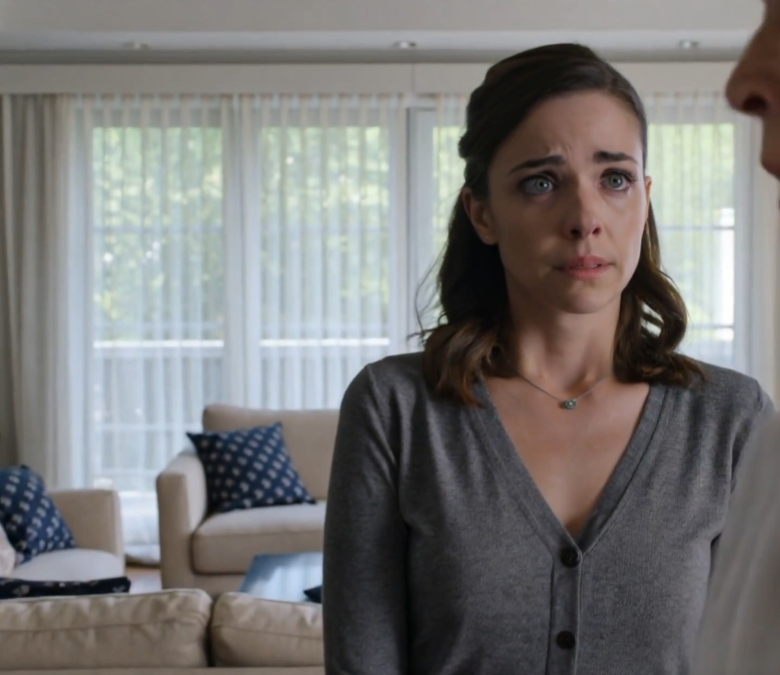
I’m the bad one for expecting my oldest daughter to pay for her sister’s fertility treatment even though she slept with her fiancé.
Before we continue, subscribe to the channel. Turn on notifications now because every day we have new stories. And tell us in the comments what city you’re watching from.
I’m 57, and I’m writing this because, honestly, I don’t know anymore if what I did was out of love or foolishness. For years, I’ve been telling myself I acted as any mother would, that I did what I felt was right. But lately, I can’t help but wonder if, by protecting one daughter, I ended up betraying the other.
I have two daughters, Fabiola, 31, and Clara, 28. From a young age, they were very different. Fabiola was the natural leader—intelligent, determined, always one step ahead. Clara was calmer, more emotional, the kind who looks at you with eyes full of stories she doesn’t know how to tell.
While one brought home diplomas, the other brought flowers from the garden to put on the table. While one talked about goals, the other asked if she could sleep in my bed because she’d had a bad dream.
I never wanted to admit it, but Clara was always closer to me. I don’t know if it was because I felt she was more vulnerable or because she reminded me of the little girl I once was. The truth is that although I tried to treat them both fairly, many times I gave Clara more—more time, more comfort, more forgiveness.
And maybe that was the beginning of everything.
Growing Up Together
Martin was the third party in the conflict, although that came much later. He had been our neighbor since they were kids. He lived two houses down, and the three of them played together. They grew up almost like siblings. They built forts out of sheets, had water-balloon fights, and stayed up late watching movies in the living room.
I’d watch them and think my house was full of laughter. I never imagined one of those laughs would turn into a scream years later.
When Fabiola turned 19, she and Martin officially started dating. It wasn’t a surprise. There was an obvious chemistry between them. They looked good together. She was focused on her medical career. He was dreaming of studying architecture after taking a gap year.
Clara—well, Clara became the third wheel.
I noticed it in small things. She stopped sitting with them. She stayed in her room more. She’d joke, saying things like, “They traded me for a romantic date,” or, “Nobody wants to watch movies with me anymore.”
I’d tell her not to be dramatic, that her sister wasn’t excluding her. But deep down, I knew she felt that way.
I spoke to Fabiola. I told her not to forget her sister, not to become completely absorbed in her relationship. She told me it wasn’t her intention to leave Clara out, but that she and Martin needed time for themselves.
And I understood. We all need our own space.
But Clara didn’t understand it the same way.
In college, they each went their own way. Fabiola was brilliant. Clara, with effort and help, managed to study to become a teacher. She had always loved teaching children. She didn’t earn much, but she worked hard.
My husband and I did our best to support them both. Student loans, double shifts, sacrifices. But yes, we gave Clara a little more. I admit that. Because she needed more. Because she asked for more.
Martin was still very present. He spent more time at our house than at his own.
When Fabiola and Martin got engaged, it was a moment of joy for everyone. We had a small gathering with our families. We toasted, took pictures, dreamed about the future.
Clara was there. She smiled. She clapped, but not too much. She left before the night was over, saying she had a headache.
I didn’t think anything of it.
Until months later, when my world fell apart.
The Devastating Betrayal
It began with a phone call.
Clara was crying on the other end. She told me Fabiola had hit her, that everything had gotten out of control, that she needed me to come see her.
I went immediately.
When I arrived, I found her with swollen eyes, trembling hands, her face a mess. Then she blurted it out as if the words were burning her throat.
“Fabiola found me. I was in bed with Martin.”
I sat down.
I couldn’t speak. I couldn’t breathe. I could feel my heart pounding in my ears.
“It wasn’t my intention, Mom. I swear,” she told me. “It’s just that I was always in love with him. Since before. But I kept quiet because he was hers. But when he confessed to me, when he told me he also had feelings for me, I didn’t know what to do.”
I asked her since when.
She told me it had started two weeks after the engagement. They had been seeing each other in secret. They couldn’t help it.
“I deserve to be loved, too,” she told me, as if that explained everything.
I tried to stay calm. I told her what she had done was wrong, that Fabiola had every right to be furious. But I also told her that hitting her wasn’t the solution, that they needed to talk it out, that we were family, that nothing was lost.
How naïve I was.
That night, I told my husband everything. He got angry. He felt betrayed. But in the end, he also felt sorry for Clara because Clara had always been more fragile.
And when you have a daughter like that, you feel you have to support her even when she’s wrong.
We decided to organize a dinner and talk to both of them. We thought maybe we could heal what had happened.
The Confrontation Dinner
Clara arrived with her eyes downcast. Fabiola arrived with a broken heart, and when she saw Clara sitting at the table, the first thing she said was, “What is she doing here?”
I told her Clara had come to apologize.
Fabiola laughed bitterly.
Then Clara spoke in a weak voice. She asked for forgiveness. She said she’d made a mistake, that she hadn’t wanted to ruin her life.
Fabiola stood up.
“Forgive her? After she slept with my fiancé? Are you listening to what you’re saying?”
I tried to calm her down. I told her some time had passed. That Clara was sorry.
My husband also intervened.
“Maybe if you, as the older sister, had realized what was happening—”
That’s when Fabiola screamed that we were all crazy, and the dinner turned into a battlefield.
Fabiola was screaming. Clara was crying. I was pleading. And my husband, who almost never raises his voice, ended up hitting the table with so much force that the cutlery jumped.
“Enough!” he roared. “This isn’t a soap opera.”
Fabiola looked at him, stunned. Then she looked at me.
Her eyes were red and glassy, but not a single tear fell. There was only rage, contained pain.
“You agree with him, too?” she said to me. “So now I’m the victim, but I’m also the one who’s supposed to give in?”
“Fabiola, please,” I begged. “Just listen. Clara apologized. She’s sorry. We all make mistakes. It’s not about taking sides. It’s about healing. About rebuilding.”
“Healing?”
She laughed bitterly.
“After she slept with my fiancé? After they humiliated me? After they took everything from me? You want me to forget that because we’re family?”
Then she said the thing that still echoes in my chest.
“And if Dad cheated on you with one of my friends, would you also tell him it was a human error?”
My blood ran cold.
“Don’t say that,” I whispered. “You can’t compare—”
“I can’t?” she screamed. “This happened between sisters. Between blood. And you? You protect her. You comfort her. You understand her. And me? I’m the crazy one. The exaggerated one. The resentful one.”
My husband tried to calm her down.
“Daughter—”
“Don’t call me daughter,” she spat through clenched teeth. “Because if I’m your daughter, what is Clara? The golden child? The one who gets forgiven for everything?”
I told her it wasn’t like that. I told her she couldn’t talk to me that way.
Then she said it coldly, almost without emotion.
“From today on, I don’t have a sister. And you two no longer have a daughter.”
She grabbed her bag, slammed the door, and left.
That night, I cried.
Not for Clara.
For Fabiola.
Because I felt with every fiber of my being that I was losing her.
Aftermath and Silence
I tried to communicate with her. I sent messages, voice notes. I asked her to please talk to me, not to shut us out like that, that we could fix it. I told her it wasn’t fair to condemn us all for one mistake.
She never replied.
Then I saw the post.
It was an old photo of her and Martin smiling, accompanied by a text that broke my soul.
“Sometimes betrayal comes from the one who sleeps under the same roof and eats at your same table. My sister slept with my fiancé. My family knew, and they chose to forgive her. I, on the other hand, chose to save myself.”
There were dozens of comments. Some offered support. Others expressed outrage. Many judged Clara without knowing her. Many asked who she was. Several people recognized her.
And one of the first people to see the post was Martin’s father.
We’d known each other our whole lives. We’d shared dinners, parties, even family trips. But when he read that post, he didn’t hesitate.
He blocked all of us.
He withdrew financial support from Martin, cut off his expenses, and removed him from the family insurance. Martin had to drop out of university, find a job, and live on his own.
He was left without the future he’d planned.
Clara was devastated.
And Fabiola disappeared.
She blocked us on her phone, social media, email. She moved. Changed her number. We didn’t know anything about her—not whether she was okay, not whether she needed anything, not whether she hated us or simply no longer considered us part of her story.
Three years passed.
Then one day, a cousin sent us a digital invitation.
Fabiola was getting married to another man. It was going to be a private, intimate ceremony with only close friends and family.
We weren’t invited.
Clara wasn’t either.
And yes, it hurt.
I told Clara it wasn’t fair, that she had already paid, that everyone deserved a second chance, that Fabiola should mature, let go of the past, open herself up to healing.
But Fabiola didn’t reply.
From that moment on, every family event became a minefield. If Fabiola went, Clara didn’t. If Clara went, Fabiola would leave. Birthdays, Christmases, weddings—all fragmented.
Some aunts took sides. Others stayed on the sidelines. Some cousins stopped inviting us altogether just to avoid problems.
Everything became silent, cold, bitter.
Until something changed again.
Fabiola had a daughter, Roxanna.
And for the first time in years, she spoke to us.
A New Crisis Emerges
She sent us a photo. Then another. Then an invitation to meet her.
It was as if the ice began to melt.
Very slowly, but genuinely.
She let us into her house. She let us hold the baby. She allowed us to share small moments with her again.
But not Clara.
Because to Fabiola, Clara was still poison.
And although Clara tried with letters, messages, gestures, Fabiola never forgave her.
Six years had passed since that infernal dinner. Six years of silence, distance, and open wounds.
And just when it seemed that time was finally giving us a truce, everything broke again.
One night, Clara called me with a broken voice.
“Mom, I can’t have children.”
And then I knew the story wasn’t over yet.
Everything was about to start all over again.
She told me between sobs, like someone confessing to a crime she hadn’t committed.
“Mom, I can’t have children. Martin can’t either. We got tested, and there’s not much hope.”
That day, I heard her break in a different way.
It wasn’t like the time she’d been discovered with Martin, nor when Martin had been cut off by his family. Not even when Fabiola got married without inviting us.
This was a different kind of pain. A quiet, dry pain that settles in the chest like a stone.
Clara had always wanted children. She’d said it since she was little. She’d play teacher, but she’d also play mommy. Sometimes she’d ask me to let her sleep with one of her dolls wrapped in a blanket as though it were a real baby.
She’d say that one day she’d have many children, that she’d be like me, only less strict and more fun.
And now her dream was evaporating.
She told me they had been trying for almost two years. Every month they’d gotten their hopes up, and every negative test had left them crying. Finally, they’d decided to consult specialists.
The results were devastating.
They were both technically fertile, but their levels were so low that together, the odds were almost nonexistent.
“They recommended we try IVF,” she told me. “But it’s very expensive, Mom. Martin doesn’t earn enough. And me? Well, you know what a teacher’s salary is like.”
I listened in silence, a lump in my throat.
Then she suggested it.
Asking for the Impossible
Her voice trembled, like someone throwing a wish into the void and hoping it didn’t sound as absurd as she already knew it was.
“What if Fabiola helped me?”
My first reaction was silence.
My second was a nervous laugh—not out of mockery, but disbelief.
But Clara was serious. Hopeful.
It was as though, after years of emotional punishment, she believed she might finally receive some gesture of redemption.
“Maybe if you talk to her,” she said. “If you explain. If you tell her this isn’t about the past, but about the future.”
Part of me knew it was an absurd idea.
But another part of me—the more stubborn part, the more maternal part—wanted to believe that maybe, after everything that had happened, Fabiola could open her heart. Not for her sister, perhaps, but for Roxanna. To set an example of compassion.
So we planned it.
Roxanna’s birthday was in two weeks. It would be a small family party with some cousins, aunts, uncles, and close friends.
Fabiola had invited us.
Even Clara.
It was the first time she hadn’t directly objected to her sister’s presence.
“I just hope she behaves,” she told us without looking at her.
We understood it as a fragile but real truce.
That day, Clara dressed up in a way I hadn’t seen her do in years. She wore a simple but pretty cream-colored dress. She braided her hair. She carried a gift wrapped with a silver ribbon.
“I’m not going to talk about it until we’re calm,” she told me. “I don’t want to ruin anything. I just need to try.”
The party was cheerful. Roxanna ran among the balloons. The children played. The adults laughed.
Clara stayed close, helping with the dishes, serving juice, picking up gift wrapping. Fabiola didn’t look directly at her, but she didn’t completely ignore her either.
It was as if she was tolerating her.
Then, in the middle of lunch, Clara said it.
Her voice was barely a whisper, but the words fell like a stone into water.
“I can’t have children, Fabiola.”
The table went silent.
Everyone kept eating, but the conversations evaporated.
Fabiola looked up. Looked at her.
Said nothing.
“We’re trying IVF,” Clara continued. “But it’s very expensive. Mom thought maybe—”
And that’s when I intervened.
“Maybe you could help her,” I said. “Even with part of it. We’re not asking for it as a debt, but as an act of generosity. I know a lot has happened, but maybe it’s time to heal old wounds.”
Fabiola put down her fork, wiped her mouth with her napkin, and spoke with a calmness that hurt me more than if she’d screamed.
Rejection and Despair
“This is not the time or the place.”
“And when will it be?” Clara replied. “You have a daughter. You know what it’s like to wake up with a purpose, to look at someone and feel that your life has meaning.”
Fabiola pursed her lips.
“Let’s talk in private,” she said.
“No,” Clara blurted out. “Always the same. Always postponing. Always your dignity first. And me? When is it my turn? You have everything, and I have nothing.”
“You chose that,” Fabiola replied without raising her voice. “Nobody forced you.”
“I loved you, Fabiola!” Clara screamed. “But he loved me, too! Why is that so unforgivable to you?”
And that’s when the atmosphere broke.
Some family members stood. Others looked away.
Fabiola got to her feet. Clara remained where she was, her eyes glassy.
I took her by the arm.
“Come on,” I said. “It’s not the right time anymore.”
We left.
Clara didn’t speak the entire way home. She just cried silently, as if the last thread of hope inside her had finally snapped.
And I could think of only one thing.
How long could the same thing keep hurting?
That question stayed with me for days like a stone in my stomach.
Clara stopped eating. She spent her afternoons lying down with a vacant stare. She said she had no energy, that everything was repeating itself, that she’d tried everything.
And still, Fabiola treated her like she was less than nothing.
As hard as it is for me to admit, I became desperate.
Because beyond everything she’d done, Clara was my daughter. And seeing her fade away little by little was breaking my heart.
Martin tried to comfort her, but it was clear he felt defeated, too.
They were losing hope.
And I, who had witnessed Clara destroy herself once, didn’t want to see her break again.
So I decided to act.
Police Intervention
I wrote to Fabiola several times.
At first, I was gentle. I told her I only wanted to talk, that it wasn’t fair for her sister to pay with loneliness for something she’d already paid for with guilt. I told her it wasn’t about money but about giving someone a chance, that she shouldn’t do it for Clara, but for the good she was capable of doing.
She left me on read.
So I insisted.
I wrote again, this time more directly.
“It’s just a little help, daughter. Clara deserves to be a mother as much as you do. Please think about it.”
She blocked me.
And then I made the mistake.
I went to her house with Clara and my husband, unannounced and without any prior agreement.
We knocked on the door. It was late, already getting dark.
“Roxanna is already asleep,” Fabiola told us when she opened the door.
She was wearing her bathrobe and was visibly annoyed.
She didn’t say hello.
She simply asked, “What are you doing here?”
“We need to talk,” I said. “Please.”
She let us in.
Clara wasn’t saying anything. Her head was down, her fingers intertwined, her whole soul seeming to tremble.
We sat in the living room.
Fabiola crossed her arms.
“What’s this about?”
“Whether you’re going to help your sister or not,” my husband said firmly. “We didn’t come to beg. We came to ask clearly.”
Fabiola took a deep breath and closed her eyes.
“I already said no.”
“Why?” I asked. “What else has to happen for you to forgive her?”
“Because I don’t want to,” she said. “Because I can choose not to. Because I don’t have to be anyone’s savior. I don’t owe Clara anything. Nothing.”
“She’s your sister,” I insisted. “She’s suffering. Are you really going to stand by with your arms crossed?”
“And did she stand by with her arms crossed when she ruined my life? When she destroyed my wedding, my reputation, my relationship with Dad and you?”
“That was years ago!” Clara screamed, already on the verge of a breakdown. “You’ve hated me enough. You’ve punished me enough.”
“No,” Fabiola replied, cold as ice. “I haven’t paid you back for everything yet.”
And that’s when everything broke.
Clara stood up.
Her body was trembling. She moved toward Fabiola, crying, shaking, gasping.
“What more do you want from me? You’ve already taken everything from me. Now my last hope, too.”
“I didn’t take anything from you, Clara. You took it from yourself.”
“I hate you!” Clara screamed. “You always thought you were better than me. You always thought you were the good one, the fair one, the untouchable one.”
“And you’re always the professional victim,” Fabiola replied. “The eternal poor thing. The martyr.”
My husband stood.
“That’s enough.”
But it was too late.
Clara pushed Fabiola.
It wasn’t hard, but it was enough to make her lose her balance and fall onto the sofa.
The little girl started crying from her room.
Fabiola got up immediately and grabbed her phone.
“I’m calling the police.”
“Don’t exaggerate,” I said. “She’s your sister.”
“She just assaulted me in front of you.”
“It was an impulse. It was wrong, yes, but—”
“No,” she interrupted. “That’s enough. You came here to demand things, invade my house, disrespect me, and now this.”
And she called.
The police arrived in less than fifteen minutes.
Clara didn’t resist. She just cried.
My husband and I tried to talk to the officers. We told them it was all a misunderstanding, that they were sisters, that no one had been hurt.
One of them looked at us impassively.
“If you insist, we’ll take you, too.”
We fell silent.
We watched them take Clara away in handcuffs.
That was the worst day of my life.
We paid her bail the next day.
Viral Consequences
Clara received a legal warning. Fabiola seemed determined to press charges. She said she didn’t care whether Clara was her sister or not, that she’d crossed a line.
And then the inevitable came.
Clara posted a long text on social media. A plea, a complaint, a confession.
“I just wanted to be a mother. I just asked for help. But my sister, the perfect woman, hates me so much that she’d rather see me suffer than lend me a hand.”
Twenty minutes later, Fabiola replied.
“I don’t owe her anything. She asked me to pay for a treatment so she could have a child with the man who betrayed me, and on top of that, she came to my house to assault me. That’s what they want me to support.”
The story went viral.
Hundreds of comments. People taking sides. People giving opinions without knowing any of us. Some called Clara a victim. Others called her a manipulator. Some defended Fabiola for setting boundaries.
But the worst came later.
The school where Clara worked saw the post and suspended her without pay.
“It’s not compatible with our values,” they told her.
Martin just left.
He didn’t leave a note. He didn’t say goodbye. He simply packed his things and disappeared.
And Clara faded away.
She didn’t talk anymore. She didn’t eat anymore. She didn’t cry anymore.
She just slept or stared into space.
And I wondered when, exactly, this family had gone to hell.
Maybe when Fabiola closed the door.
Maybe when Clara crossed it.
Or maybe when I decided I had the right to determine who deserved more comfort.
But that night, seeing Clara like a ghost, I understood that it was no longer about being right.
It was about accumulated suffering—the kind that kills in silence, that starts in childhood and explodes when it’s already too late.
Clara went days without speaking. She didn’t even complain. She’d get dressed out of habit, eat just enough, sleep too much, and when we spoke to her, she’d respond only with monosyllables or shake her head.
It was as if she had left, but her body had stayed.
It was my husband who said we should try one last time. He said we couldn’t let this enmity decide our daughter’s fate, that even a broken family could still build a bridge.
A Conditional Offer
“We’ll just talk,” he said. “No drama. Please.”
I nodded, but deep down I knew that was a lie.
So we went to Fabiola’s house again.
This time, without Clara.
Just the two of us.
Fabiola opened the door. Her face was a mixture of annoyance and resignation.
“Again?” she said without moving.
“We need you to listen to us,” I said. “Five minutes. That’s all.”
She let us in, not because she wanted to, but because it was easier than arguing.
We sat in the kitchen—the same place where, years ago, she’d learned to read, where I’d braided her hair, where we all used to have breakfast before school.
Now the space seemed borrowed.
Cold.
Alien.
“What do you want?” she asked bluntly.
My husband spoke.
“We want to know whether you’re willing to help your sister with the IVF. Not for what was, but for what could be.”
Fabiola let out a laugh.
Not mocking.
Not hysterical.
Empty.
“Again with this?”
“We’re not doing it just to be insistent,” I said. “We’re doing it because she’s not well, Fabiola. Really not well. And you can change that.”
“Me?”
She raised an eyebrow.
“And what did she change when she ruined my life?”
“It’s not about punishment, daughter. It’s about healing wounds.”
“And if I don’t want to? And if I can’t?” she said, her voice growing firmer. “Do you even give me that right?”
“It’s your decision,” I admitted.
“But?”
I didn’t know what to say.
“And if I say no, I’m selfish.”
I still didn’t know what to say.
Then she said it.
“I can lend you the money. But with conditions.”
My husband and I looked at each other.
“A contract,” she continued. “Clara signs that she’ll pay me back within a specific time frame. No excuses. No drama. It’s a loan, not a handout.”
“You’re going to charge her for wanting to be a mother?” I asked.
“I’m giving her an option. Something she never gave me.”
“That’s petty,” my husband said. “You’re putting a price on a blood tie.”
“You know what’s petty?” she said.
Now she was trembling.
“That after everything that happened, you still come here asking me to be the good one. The savior. The understanding one.”
“It’s not about that,” I tried to calm her. “It’s about showing that there’s still something in you that values your family.”
Final Fallout
“What family, Mom?”
She looked at me with eyes full of fire.
“The one that abandoned me when I needed you most? The one that hugged Clara while I cried alone? You, who preferred to understand the traitor instead of comforting the betrayed?”
“You were strong!” I yelled without meaning to. “Clara wasn’t.”
The silence that followed was devastating.
Fabiola took a deep breath.
“Now I understand,” she said. “It was never that she needed more. It was that you believed I needed less because I was always the one who didn’t complain. The one who complied. The one who didn’t cause problems.”
My husband tried to hug her.
She pulled away.
“Go away. I’m not arguing anymore.”
And then I made another mistake.
“You can’t punish her forever.”
Fabiola turned around.
“And you? How much longer are you going to keep forgiving her just because she cries more than I do?”
I didn’t answer.
“Take the contract to her. Sign it or leave me alone.”
We went home with trembling hands.
We told Clara.
She listened to everything in silence and said she would sign whatever it took.
“Just to have something in this life,” she whispered.
Those were the darkest days.
She signed.
We took the contract to Fabiola.
Fabiola didn’t say a word. She simply kept it.
But the next day, everything exploded.
Clara published an open letter, a text that was half plea, half vent.
“I’m asking for a chance. I’m not stealing. I’m not demanding. I just want to have a family. And my sister puts a price on me. She calls me a debtor when all I asked for was love.”
Fabiola replied.
“You want to have a family with my ex? The same one you cheated on me with? And you still expect me to help you? I don’t owe you anything. I never did.”
It went viral again.
And this time, there was no possible defense.
The school suspended Clara indefinitely. The reputations of both women crumbled across social media. People insulted them. People chose sides.
And Martin just left.
Again.
Without a note.
Without a goodbye.
Clara locked herself in her room and cried for hours. In the end, she said only one sentence.
“I don’t want to live with this guilt anymore.”
Then she slept for three days straight.
From the sofa, I asked myself how much a family costs.
Not in money.
Not in contracts.
In decisions.
In wounds.
In forgiveness that never comes.
The Mother’s Regret
Sometimes I wake up in the middle of the night with my heart beating as though it’s going to explode.
I get up.
I go to Clara’s room and find her asleep in a fetal position like a little girl, her hair tangled, her eyes sunken, her face tired.
And I think, I did wrong.
But I also think, what else could I have done?
I’m a mother, not a saint.
And what nobody wants to admit is that even mothers have favorites. We don’t choose it. Sometimes it just happens.
With Fabiola, everything was discipline, order, logic. She was the daughter who never gave me a scare. The one who worked hard. The one who didn’t cry over silly things.
The one who swallowed her pain.
And yes, I was proud of her.
But she didn’t need me.
Clara did.
Clara was my daughter of tears, of late-night hugs, of letters hidden under the pillow. She needed me like air, like a guide, like a refuge.
And maybe that’s why, when the engagement disaster happened, when I saw Fabiola break, I didn’t know what to do.
Save the strong one or the fragile one?
I chose the fragile one.
And I lost the strong one.
To this day, Fabiola still doesn’t really speak to us. She sends us pictures of Roxanna out of courtesy. Sometimes she answers messages, always cold, always punctual, as though there’s no trace left of that little girl who used to curl up in my lap while I told her stories.
She says she’s fine. That she works a lot. That her husband is stable. That Roxanna is a fast learner.
And I’m happy.
But it also hurts.
Because she doesn’t forgive me.
Because she doesn’t need me anymore.
Because she stopped being my daughter and became a woman with a wall around her chest.
Clara, on the other hand, is still trying to get back on her feet.
She was relocated to another school with a warning. No social media. No scandals.
She’s in therapy.
Sometimes she smiles.
Sometimes she hugs me without saying anything.
Sometimes she cries while washing the dishes.
Martin never came back.
She says she doesn’t miss him, but I know she’s lying.
The fertility treatment is still on hold. The contract with Fabiola hasn’t been executed.
There’s a legal silence between them that neither dares to break.
And I’m in the middle.
The mother who didn’t know how to divide her love without hurting someone.
The woman who thought forgiveness was enough, who understood too late that loving someone more shouldn’t feel like a betrayal.
Facing the Harsh Truths
Sometimes a family doesn’t break because of one great tragedy.
It breaks because of small decisions repeated too many times.
I made many of those decisions.
And yes, some of them I would make again.
Because as cruel as it sounds, if I went back in time, I would protect Clara again.
Because not all daughters need the same thing.
Because sometimes the mistake isn’t in choosing, but in assuming we can ever avoid choosing.
Maybe, yes.
Maybe I’m the bad one for preferring one daughter, for not understanding the other, for trying to put back together something that can’t be taped up.
But I don’t regret it.
Because I did what any mother would do when she has two daughters and only two hands, and one of them is falling into the abyss.
I grabbed the one who was screaming the loudest.
And I let go of the one who knew how to fly.
The unfair part is that, in the end, they both fell.
And I watched them get lost from the edge.
Comment One:
“There’s no way to sugarcoat it. You preferred one daughter over the other, and on top of that, you protected her after she destroyed her sister’s life. You’re not a victim. You’re an accomplice.”
Response:
“You’re right that I protected Clara more than I should have, but it wasn’t out of complicity. It was because I sincerely believed she wouldn’t be able to bear the weight of everything.
“Fabiola was strong. Clara wasn’t. Maybe I was wrong, but I did it as a mother, not as an enemy.”
Comment Two:
“You say you did it for love, but you really did it to feel needed. You fed on Clara’s pain so you could remain the hero. That’s not love. It’s control.”
Response:
“It’s hard to read this, but I understand where it’s coming from. I can only say that I also felt lost. I wasn’t trying to be anyone’s hero. I was just trying to keep at least one of them from breaking completely.
“I clung to what little I could save.”
Comment Three:
“Asking Fabiola to pay for IVF after what happened is a huge lack of respect. Do you really think time erases everything? Your mediation was pure selfishness.”
Response:
“I know it sounds unusual to ask for that. And now, looking back, I understand it was inappropriate. But at that moment, I thought that maybe if they were ever going to rebuild something, it could begin with an act of compassion.
“I was wrong.”
Comment Four:
“Your oldest daughter had the right to set boundaries. Calling her immature for not forgiving such a serious betrayal shows you never understood her pain.”
Response:
“You’re right, and it’s something that weighs on me. I never understood that Fabiola’s silence was contained pain, not just pride. She set her boundaries, and I crossed them without permission, believing it was for the good of the family.
“Today, I understand it wasn’t fair to her.”
Comment Five:
“Clara didn’t need you to overprotect her. She needed you to set limits for her. You turned her fragility into an excuse to justify everything she did.”
Response:
“I never thought that protecting her was the same as justifying her. Maybe I confused care with permissiveness. I was afraid of losing her, but maybe by overprotecting her, I also made her weak in the face of her own decisions.
“It’s something I carry with me every day.”
Comment Six:
“You’re the type of mother who thinks family forgives everything. No, ma’am. There are things that destroy forever, and you helped it happen.”
Comment Seven:
“You always talk about what you suffered, but not about what you caused. You can’t be a judge, a lawyer, and a mother at the same time.”
Comment Eight:
“I’m an older sister. If my mother had done the same thing to me, I would never look at her again. Fabiola owes you nothing, not even a call.”
Comment Nine:
“Don’t you realize you use guilt as manipulation? You’re always talking about healing wounds when what you really want is for everyone to forget your mistakes.”
Comment Ten:
“You’re not the bad one for loving. You’re the bad one for not taking responsibility. Love doesn’t clean up the consequences of your decisions.”
Response:
“Loving doesn’t erase anything. I know that. But it was the only thing I had in those moments when everything was getting out of my hands.
“I’m not hiding behind love.
“I’m just saying I chose as I knew how, not as I should have.”








