I was packing up my desk after being laid off when the chairman arrived with an investor, but the investor saw me and froze: “Why are you here?”
Welcome to the Career Chronicles. Let’s get into today’s story.
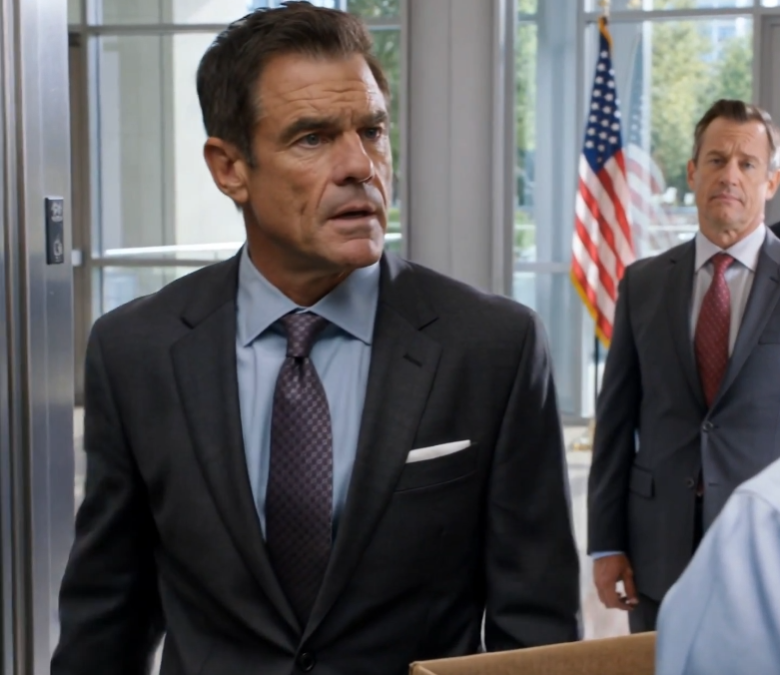
I was packing up my desk after being laid off when our chairman walked into the building with a group of investors. One of them saw me holding a cardboard box and stopped dead.
“Why are you here?” he asked.
It was the kind of question that could mean a dozen different things. In my case, the answer was simple. Northstar Build Works had decided that after six years of reliable work, I was suddenly an expense it could do without.
When I took off my employee badge, one thread in the lanyard snapped. It wasn’t poor quality. I had worn that badge for six years, swiping in every morning and out every evening, more than six thousand passes. Even plastic gets tired eventually.
Jenna Ortiz from human resources pushed a box toward me. It was the standard five-layer corrugated kind, eighteen inches by fourteen by four. The purchasing order called it separation supplies. According to the invoice, each box cost $2.37. I looked at it and thought it was even smaller than the Apple boxes the company had handed out during last year’s holiday giveaway.
There wasn’t much on my desk. An old stainless steel thermos had a dent in its side. I had dropped it out of a moving car in 2019 while rushing to a client meeting. On the bottom, in faded permanent marker, were the words Evan 3. That year, three people in sales had bought the same model. I had been the third one to order it.
There was a rubber-banded stack of business cards. The top one belonged to Hank Wilson at Horizon Building Supply. On the back, I had written: Likes jasmine tea. Grandson named Luke. Preschool on Lynden Street.
I kept details like that because construction was never only concrete, tile, and schedules. It was also remembering who had a granddaughter in the hospital, who couldn’t take a call before school pickup, and who would say a project was fine while staring at a ceiling stain he couldn’t afford to repair.
There was a 2021 edition of Reading Construction Plans. The spine had been repaired twice with clear tape. On the title page, my old mentor, George Miller, had written in pencil, “Evan, drawings are deadlines. People are alive. Don’t fight the labels so hard that you forget to look at the building.”
Under that sat half a bag of throat lozenges, a ballpoint pen whose refill I had replaced twice, and a crayon drawing from my daughter’s preschool. Three stick figures stood in front of a crooked apartment building. The sun was purple. On the back, her teacher had written, “Lily Carter: Is your dad a superhero who builds houses?”
I smoothed the paper and laid it over the thermos.
Outside, late September had bleached the Houston sky almost white. A delivery truck groaned out of the industrial park below us, its exhaust mixing with the scent of ginger and brown sugar drifting from the little dessert shop on the corner. I drew in a breath. The air smelled like dust, wet pavement, and the beginning of another long season.
My phone buzzed.
Hannah, my wife, had texted. “Lily wants to know if you’ll be home for dinner. I told her it depends on how busy Dad is. Don’t pretend everything is fine if it isn’t. We’ll figure it out.”
I typed Okay, deleted it, and replaced it with, “I’ll be home at 6:30. Beef stew with you and Lily.”
Then I placed the phone face down.
Noah Kim leaned over the partition beside me. His voice was quieter than the tapping of his keyboard.
“Evan, you’re really leaving?”
“I am.”
“But the Horizon order tomorrow—”
“It’s in the handoff file. Hank’s temper, the inspection dates, which wall needs an access panel. Everything is in there. Follow it. And don’t cut the second waterproofing layer.”
I lifted the box. “I’m leaving, but the work still has to be done, right?”
Noah’s eyes reddened. He looked down before I could say anything else.
At the end of the corridor, the engineering department door was half open. Alex Bennett, the new project director, was on the phone.
“Yes,” he was saying. “We’ll optimize the whole old crew. That saves us two hundred thousand in labor. Don’t worry, I understand the plan. It’s just a schedule.”
I heard every word and kept walking.
I wasn’t emotionless. By thirty-seven, though, a man’s temper gets rubbed down by the mortgage, preschool tuition, his mother’s blood pressure medication, and the Monday morning project meeting. It becomes like sandpaper, rough to the touch but not sharp enough to draw blood.
The elevator opened. I stepped inside and pressed the lobby button.
Just as the doors were closing, I heard polished shoes, easy laughter, and our chairman’s carefully maintained voice.
“This way, Marcus. We revised the model unit according to your team’s comments. Today, I can show you the site in person.”
I instinctively moved toward the corner. I didn’t want Daniel Whitmore, Northstar’s chairman, to see me at that exact moment—a man who had just been optimized, still standing in one of his elevators with a cardboard box in his arms.
It wasn’t illegal, but it felt as awkward as showing up to a parent-teacher conference wearing your sweatpants inside out.
The elevator stopped. A hand caught the door.
On the wrist was an old watch, polished bright by years of wear. The band was braided nylon, the kind that had cost twenty dollars when we bought them.
“Hold it.”
The hallway light slanted into the elevator. I looked up and met the man’s eyes.
He was in his early fifties, wearing a charcoal suit. There was gray at his temples and a pale scar beside his left eyebrow. His expression moved from polite uncertainty to disbelief, then to recognition. It looked like someone finding a textbook he had lost twenty years earlier in a box at a yard sale.
“Evan?”
I stared at him for two seconds.
“Marcus?”
His name was Marcus Reed.
Twenty years earlier, before he became the CEO of Mercer Development Group, before people began calling him Mr. Reed in conference rooms with glass walls, he had simply been Marcus, a field technician in a green work jacket on a wind farm project in New Mexico.
I had just graduated and been sent there as a junior project coordinator. We slept in the same prefab trailer, two narrow bunks facing each other, his snoring answering mine through the night.
One night, Marcus developed a fever of 103.6 degrees. He mumbled for his mother and tried to sit up, but his knees folded under him.
The nearest urgent care clinic was eight miles away in a small desert town. Our van had broken down. There was no signal, and a cold rain had started hammering the metal roof.
I carried him four miles. For the last four, I held him upright while he gripped the back of my jacket like it was the only rope left in the world. At the clinic, the nurse told me that another half hour could have turned the infection into something far worse.
Several years later, Marcus’s father fell and broke his hip. The surgery and rehabilitation deposit came to eight thousand dollars, an impossible mountain for a family that had no savings.
I had just received my first project bonus. I had $8,300 in my checking account. I withdrew it, counted it out, and handed it to Marcus without asking for a promissory note.
His eyes were red.
“I’ll pay you back.”
“Get your dad into surgery first,” I told him. “If you never pay me back, I’ll pretend I bought him eight thousand dollars’ worth of tea.”
After that, Marcus moved back east and joined a small building supply company. He started by riding in delivery trucks and carrying bags of cement. I stayed in construction, moving from project records to field supervision, owner’s representative work, and eventually senior project coordination at Northstar.
For more than a decade, we lost touch.
Who would have guessed that the young man who once hauled cement bags for a living would become the head of Mercer Development Group, a company holding procurement contracts for several major residential developers across Texas? And the man who had carried him through eight miles of cold rain was now standing in an elevator with a box, preparing to leave.
“Evan!”
Marcus grabbed my wrist. His grip was still as fierce as it had been in the desert.
“What are you—how?”
The purple sun drawing stuck out of the box and brushed against his sleeve.
“Northstar said my position was being eliminated. I signed the paperwork. I’m on my way out.”
Marcus turned toward the people behind him: Daniel Whitmore, our chairman, and Alex Bennett, whose face had gone rigid.
“Daniel,” Marcus said.
His voice flattened, his surprise disappearing behind the polished calm he used in board meetings.
“Is Evan one of the people you’re optimizing?”
Daniel had never looked so uncomfortable.
Mercer was one of Northstar’s most important potential investors and purchasing partners. A single sentence from Marcus could decide whether Northstar’s residential division had a profitable year or spent the next one begging for scraps.
“Marcus, I think there’s been a misunderstanding,” Daniel said with a laugh that landed badly. “This is an internal reassignment. We’re still discussing reassignment.”
Marcus pointed at my box.
“He took off his badge, collected his client cards, and packed up his daughter’s drawing. You’re telling me he’s being reassigned?”
Alex cleared his throat.
“Mr. Reed, Evan’s approach is a little traditional. Our digital scheduling system is moving faster than he can keep up. We’re making a decision for project efficiency.”
“His 2021 delivery at Riverbend Building 3 had zero water intrusion for three years,” Marcus said.
He did not raise his voice. He simply placed one fact after another on the floor between us.
“Last month, I reviewed the model unit plans Northstar sent Mercer. The flooring transitions, the access panels, the waterproofing returns—all of it came from Evan’s so-called traditional methods. You eliminated the person who wrote the plan and then used his work to pitch me while calling him outdated.”
Daniel’s forehead began to shine. He reached for my arm.
“Evan, don’t be hasty. We can revisit the position, the salary, the title.”
I stepped back.
“Daniel, I signed. I’m not acting out, and I’m not waiting for someone to rescue me.”
I looked at Marcus. My voice was the same voice I had used in the prefab trailer all those years ago.
“I’m glad you recognized me. But if you force Northstar to reverse its decision because of me, that’s not the same as me carrying you to the clinic. If I climb back into this company because my friend is a CEO, then the last six years meant nothing.”
Marcus stared at me, then laughed softly.
“Still you,” he said. “You haven’t changed.”
“I’ve gained weight.”
I patted my stomach.
“Texas barbecue is dangerous.”
The elevator doors opened in the lobby. I walked out with the box. Marcus did not physically stop me. He understood.
Some people could be pulled out of a termination line in front of everyone and made to look rescued. A proud man would rather carry his own box through the front doors than owe an entire future to the phrase, We made an exception because of your friend.
At the reception desk, a young woman slipped me a bottle of water.
“Evan, it won’t feel right without you,” she whispered. “Yesterday, you fixed the printer jam and said, ‘Machines aren’t scary. People who behave like machines are.'”
I took the bottle and twisted off the cap.
“The printer is harmless,” I said. “It’s the people who write the maintenance budget that scare me.”
Outside, the September heat carried the smell of bayou water and hot asphalt. I ordered an Uber. In the notes, I wrote, Please don’t honk. There’s a cat near the curb.
Some drivers ignored notes like that. Someone always accepted.
The car crossed Buffalo Bayou. Barges moved slowly beyond the highway bridges.
I thought about my mother, who had called two days earlier.
“Evan, don’t work yourself to death,” she had said. “I still have enough blood pressure medicine.”
I had answered, “Sure, Mom,” and said nothing about being laid off.
Some things aren’t lies. They’re facts you postpone because you don’t want the person on the other end of the call losing sleep before you do.
At 6:40, I reached our neighborhood on Lynen Street. The apartment complex was old, its patched exterior looking like a jacket that no longer fit.
The elderly woman who ran the dessert shop on the first floor saw me and called out, “Evan, no overtime tonight? I saved you a piece of beef from the stew.”
“Save it for yourself, Mrs. Alvarez. You need the brain food more than I do.”
She shook a wooden spoon at me.
Our apartment door was unlocked. Lily came running barefoot down the hall.
“Dad, you promised you wouldn’t work late!”
I set the box down and knelt. She collided with my chest, smelling like shampoo and crayons.
“I promised,” I said. “And I’m home.”
Hannah came from the kitchen with a dish towel in her hand. She studied my face without asking the question.
We had been married seven years. She knew that when I came through the door, I touched Lily’s hair before taking off my shoes. She knew when I was carrying a problem by the way I placed my keys on the counter.
Dinner was beef stew with tomatoes, sautéed green beans, and squash soup. I took two bites and said, “A little salty.”
Hannah gave me a look.
“Then drink more soup. You’re not judging a cooking competition.”
Lily spread her purple sun drawing across the table.
“My teacher said I colored the sun wrong today.”
“You didn’t.”
I dipped the end of my chopstick into the broth and drew a tiny purple sun on the corner of a paper napkin.
“The daytime sun is hot. At night, it gets tired and turns purple. That makes perfect sense.”
Hannah laughed, but her eyes filled with tears.
After Lily went to bed, Hannah stood beside the balcony door holding her phone. The screen showed our mortgage reminder.
“Evan?”
“Yeah?”
“We have six months of expenses saved.”
“I know.”
“I can pick up extra shifts at the clinic next month.”
“Not too many late ones. Your back has been bothering you.”
She looked out at the parking lot lights. Moths circled them in frantic loops.
“Do you regret it?” she asked.
“Not staying? Not making a scene? Not using Marcus’s influence to get your desk back?”
I watched the moths throw themselves against the light.
“Hannah, twenty years ago, I carried Marcus eight miles through the desert because he was sick. I didn’t do it because I expected him to become a CEO. Today, I’m not refusing his help to prove I’m tough.”
I rubbed the calluses on my palm.
“I want Lily to understand that her dad’s skills are his skills, and a favor is a favor. A chair you recover through somebody else’s influence is never steady under you.”
Hannah reached for my hand.
“What happens next?”
“Tonight, we sleep. Tomorrow, I’ll review the handoff file so no one gets hurt because I’m angry. The day after that, I’ll send out applications and find my old contractor license paperwork.”
I squeezed her fingers.
“There are more construction sites in Houston than I can count. There are old buildings, small owners who don’t understand transitions, and contractors who think waterproofing is optional. I may not have Northstar’s desk, but I still know what I’m doing.”
Hannah leaned against my shoulder.
“Fine,” she said. “I’ll eat six months of salty food with you.”
“Salty stew and squash soup are better than the shrimp at the company banquet.”
For the next two weeks, I did not have time to feel sorry for myself.
At seven every morning, I took Lily to preschool. I greased the security guard’s stubborn sliding gate on the way home, then sat at the little table on our balcony and broke six years of work into skills I could carry with me.
Owner communication: turning what someone wanted to feel expensive into practical decisions. Use stone instead of vinyl at the baseboard. Don’t drop the ceiling below eight feet. And don’t hide the access panel inside a closet.
Field backup: spotting the place where an inspector would object, the shortcut a crew would take, the wall that would retain moisture after a storm, and the tile that sounded hollow when tapped.
Cost judgment: knowing which process could be simplified and which savings would become a lawsuit eighteen months later.
Human judgment: when a client shouted, waiting until he drank water and then saying, “Mr. Wilson, I wrote down what you said. Let’s raise the waterproofing return from ten inches to twelve. I’ll ask the subcontractor to absorb half the difference.”
I wrote everything into a three-page document titled The Project Doctor’s Field Guide. I avoided words like synergy, leverage, and closed-loop execution. I wrote about where the building would leak, why people would argue, and where the money needed to go.
I sent it to twelve companies.
Three read it and never replied. Five answered that applicants over thirty-five were not preferred. Two invited me to talk and then vanished.
The last was an old factory property outside the city that a restaurant owner named Raj Patel wanted to convert into affordable apartments for young workers. Two contractors had already overcharged him and left water in the basement.
Raj read my line about a twelve-inch waterproofing return being insurance rather than waste.
“Mr. Carter,” he said, “I don’t want you as an employee. I want you as a consultant. You get paid at milestones. Don’t bring me a PowerPoint deck. Stand in the mud with me.”
I looked at him.
“I don’t manage hiring or procurement. I don’t present to your investors. I only make sure you don’t get cheated again.”
“That’s the job.”
I accepted.
I went to the site three days a week and took smaller jobs on the other days, reviewing renovation contracts, checking a relative’s electrical bid, and advising Noah on the Horizon order from a distance.
Noah quietly transferred two hundred dollars to me. I sent back a hundred and fifty.
“You make eight thousand dollars a month,” I told him. “Don’t learn corporate generosity from your boss.”
In late October, Marcus came to find me.
He did not arrive in a black SUV. He took a rideshare to Lynen Street and waited outside Mrs. Alvarez’s shop with a grocery bag full of grapefruit.
“Evan,” he said, handing me one. “Mercer has an old building redevelopment project. I want you as the site lead. I’m not giving you a favor. I genuinely need someone who will stand in the field. What Northstar calls traditional is what keeps an old building alive.”
I peeled a segment of grapefruit and winced at the sourness.
“Don’t turn me into a miracle worker. I’m just a construction guy who shows up and remembers that clients have grandchildren.”
“That’s exactly why I’m asking.”
I was quiet for a while.
“No title or equity yet. I’ll take it through my own consulting practice. If the project works, we discuss a long-term partnership. If I ruin it, I’ll repay you. If I can’t pay cash, I’ll work it off.”
Marcus laughed.
“You still make money sound cleaner than life.”
“Clean numbers help me sleep.”
We sat on plastic stools outside the dessert shop and wrote the framework on the back of a receipt.
I would take Mercer’s redevelopment project through Carter Field Engineering Consulting. My rate would be based on site days, with travel reimbursed. I would have authority over critical construction decisions, and Marcus would not interfere with field details. If the property made it through a year without major leaks or a mass resident complaint, we would discuss forming a permanent partnership.
Mrs. Alvarez brought us two bowls of red bean pudding, listened for a minute, and shook her head.
“A CEO and a contractor sitting on the same plastic bench,” she said. “Maybe the world isn’t completely broken.”
At the beginning of November, Jenna from Northstar HR called.
“Evan, Daniel wants me to ask if you’d consider coming back. Engineering deputy manager. Forty percent raise. You’d still lead the Horizon account.”
I was kneeling at Raj’s construction site, measuring a utility shaft. My pants were rolled to my calves, and the soles of my boots were covered in concrete dust.
“Tell Daniel I appreciate the offer.”
“Are you coming back?”
“No.”
There was silence on the line.
“Jenna, remember this. When a company lets you go, it has calculated cost. When it asks you to return, it has calculated embarrassment. If I ever go back, it will be because Northstar has learned how construction works, not because Marcus paused in an elevator.”
Jenna lowered her voice.
“After that day, Alex was moved to warehouse operations. Daniel told the department that Northstar could cut jobs, but it couldn’t cut people clients specifically asked for.”
“That’s good for Northstar,” I said. “It’s not a reason for me to return.”
I hung up.
Raj shouted from the stairwell, “Evan, the elevation on this drain line is reversed again. Come look. I think these guys studied fine art in college.”
I slapped the dust from my pants and stood.
“Let’s measure before we insult anyone. A senior engineer puts his anger on the data.”
By December, my practice still wasn’t a corporation. I had registered it as a sole proprietorship and ordered business cards through an online printer.
At the bottom, in tiny type, the card said, Buildings are for people. Don’t build them only for the executive tour.
I had three active jobs: Mercer’s old building redevelopment, Raj’s young worker apartments, and a renovation for a former client whose mother wanted her balcony enclosed as a greenhouse.
I spent two afternoons at a garden center, then designed an operable aluminum enclosure with flood-resistant drains. The old woman got her bougainvillea. The downstairs neighbor did not get a ceiling map made of water stains.
My income was uneven, but when Hannah calculated the month-end balance after the mortgage, preschool, and medicine, there was $2,300 left.
She put it into Lily’s college fund.
“Don’t dismiss this,” she said. “It’s the first money you’ve earned since you stopped being somebody else’s replaceable part.”
“It’s not exactly freedom. We’re still tight.”
“Tight is honest. When life gets too comfortable, people start lying to themselves.”
Two days before Christmas, Marcus took me to the Mercer redevelopment site.
It was a former municipal workforce apartment complex built in the 1990s. Half the brick facade had cracked or fallen away. Bicycles, pickle jars, folding chairs, and faded holiday wreaths filled the stairwells. Old residents had taped paper snowflakes to the lobby windows.
I walked every floor. I tapped the walls, inspected the beams, opened drain covers, and climbed onto the roof.
“Marcus, we can renovate this place,” I said. “But don’t make it expensive for the sake of looking expensive. Most people here live on retirement checks. Add elevators, yes. Skip the smart-home gimmicks. Use stainless steel handrails, not painted metal that chips when a walker bumps into it. Keep the community kitchen. Neighbors are worth more than a model unit.”
Marcus nodded.
“I knew you wouldn’t turn it into luxury minimalism.”
“Luxury minimalism is for people posting apartment tours online. People live here.”
I took Lily’s purple sun drawing from my pocket, tucked it into a crack beside the rooftop parapet, and took a photograph. I posted it to my social media page with one sentence:
Day one of my sixth year in construction. Don’t make a building look like a quarterly report.
Marcus commented, “Carrying me through that rain was worth it.”
Noah wrote, “The Horizon order is following your handoff. Hank says, ‘How does this guy still know exactly what I’m going to complain about?'”
Hannah wrote, “Be home for stew. Don’t be late.”
I put my phone away.
Wind slipped down the back of my collar.
I was thirty-seven. I had been laid off, carried debt, drunk with clients until my stomach cramped, and carried a feverish friend through eight miles of cold rain.
I was not a hidden tycoon waiting to be invited back to a stage. I was not a hero in a revenge story. I was just a man who had finally taken the name Evan Carter off an employee badge and fastened it back into his own life.
After Christmas, on the first morning of the new work year, Lily asked me at the entrance to our apartment complex, “Dad, which job site are you going to today?”
“The old apartment building with the roof deck. I’m helping the grandparents there get handrails that don’t freeze their hands in winter.”
“Are you still building superhero buildings?”
I crouched so we were eye to eye.
“Not superhero buildings. I’m building places where the rain stays outside, doors don’t slam, grandmothers can grow flowers, and kids can climb the stairs without being scared.”
Lily thought about that.
“That’s still a superhero.”
“Why?”
“Because other people build for the boss to look at. You build for the people who live there.”
My nose stung. I rubbed her hair.
“You understand construction better than Daniel Whitmore.”
I carried my tool bag to the car. Hannah had filled my thermos with jasmine tea.
My phone chimed.
Marcus had sent a message.
Legal added a clause to the second-phase contract, he wrote. The site lead has one-person authority to stop work for a safety risk. I used to think that was dangerous. Then I remembered the night you carried me. Anyone willing to treat another person’s life as real should not be swallowed by a procedure.
I replied, Don’t make it sentimental. Put it in the contract.
The morning fog over Buffalo Bayou had begun to lift. I did not turn around to look at the old apartment building. I did not look toward Northstar’s office and the desk that had once been mine.
The badge could be returned. The calluses on my hands, the job sites stored in my head, and the stubborn conviction that work should not be faked could not be optimized away.
That spring, Carter Field Engineering Consulting received its first major assignment: the second phase of Mercer Development’s Oakidge renewal project.
The first phase had involved elevators, roof repairs, and new public utility lines. Phase two covered the exteriors of six buildings, an underground parking garage, and a small set of neighborhood businesses.
The budget was significant, but not astronomical. What mattered was that more than four hundred households depended on it.
Marcus handed me the proposal, the contract, and the construction plan.
He did not say, “You have to take this.”
He said, “If anything looks wrong, draw a line through it.”
I read the packet twice. On the third page, I stopped.
“The garage waterproofing budget is short by four hundred thousand dollars.”
“Finance says it’s enough.”
“Finance doesn’t live on the first floor. Finance has never put a bucket under a ceiling during a week of thunderstorms.”
I circled three areas in the estimate.
“If we follow this plan, the problem won’t show in the first year. In the second year, moisture will spread through this slab. The four hundred thousand we save now will become four hundred household complaints, property management repairs, and compensation claims.”
Marcus called finance and the general contractor into the meeting.
The young cost manager, Laura Grant, flipped through the documents. Her tone was polite but resistant.
“Evan, we all understand cost control. We can’t increase a budget based on instinct.”
I nodded.
“You’re right. That’s why I’m not using instinct. I’m showing you data.”
I opened my laptop and pulled up records I had kept for ten years. More than three hundred water intrusion locations, sorted by building age, material, installation temperature, and storm season.
The charts were not attractive. Some photographs were crooked. But every location had a repair bill and a record of who had accepted responsibility.
“The garage’s biggest risk isn’t cheap material,” I said. “It’s skipped details: inside corners, pipe penetrations, construction joints. Remove one treatment and you create a hundred places where the crew has to cut open the finished surface later.”
Laura reached the last page.
“You kept all this yourself?”
“On every project I touched. A construction professional who remembers only awards and forgets failures will step into the same hole again.”
Marcus approved the increase.
He added three requirements to the contract: photographs of concealed work, the responsible person’s signature, and independent spot inspections.
The contractor complained privately.
“That’s a lot of extra paperwork.”
“A little more paperwork helps people sleep,” I said. “If you’d rather use pictures of your family’s flooded kitchen as your phone wallpaper, we can save the money.”
That night, the first formal concealed-work inspection form was printed.
At the bottom was a blank labeled Site Engineer Name and Opinion.
I stared at it for several seconds before signing my name.
Not below an employee badge. Not beneath a report written to absorb somebody else’s failure.
This time, I was signing a decision that truly belonged to me.
The Oakidge work had been underway for a month when Northstar Build Works ran into a problem.
Horizon’s finished materials arrived at a Northstar-managed project with obvious color differences. The residents refused to accept the installation.
Hank Wilson called me before he called anyone else.
“I know you’re not with Northstar anymore,” he said, “but you’re the only person who can make sense of what happened.”
“Where is Northstar’s project manager?”
“He came with three people. They looked at the walls for an hour and said it was a lighting issue. It isn’t lighting.”
I put down my measuring device and drove to Horizon’s sample warehouse.
We pulled tiles from the wall one by one. The order had combined two different firing batches. Northstar’s procurement team had mixed material that was supposed to be installed in separate zones, then sent it out on one truck. The field crew had not checked each carton before installation.
Hank’s hands shook with anger.
“They’re saying I approved a cheaper substitute.”
I did not curse Northstar. I asked for the purchase order, delivery slips, warehouse receipt, and acceptance photographs.
The problem appeared on the third delivery sheet.
Procurement had changed the language from same color, same batch to same series, same color code.
Four words had disappeared. The boundary of responsibility had changed with them.
“Someone blurred the contract on purpose,” Hank said.
“Maybe,” I answered. “But we need to prove what happened before we accuse anyone.”
He looked at me.
“Can you handle it?”
“I can organize the evidence. I can’t sign a responsibility statement for Northstar.”
“You’re still protecting them.”
“No.” I shook my head. “But because you trust me, I don’t get to use my professional reputation to cover for either side.”
That day, I prepared a complete batch-trace report. It listed delivery, warehouse intake, carton verification, and field installation as four separate responsibility points.
Procurement’s wording change was the starting problem. The warehouse had failed to verify the cartons. The site crew had not performed a color check before installation.
Hank took the report into negotiations. Northstar had no way to keep shifting blame. It replaced the entire affected installation and paid the delay costs.
Daniel Whitmore called me personally.
“Evan, if you have a problem with Northstar, bring it to me. You didn’t have to write a report that hard.”
“The report says what happened.”
“If you were still with the company, we could solve it internally.”
“When I was with the company, people often turned facts into softer wording. I’m not there now, so I wrote the facts back the way they were.”
There was a long silence.
“You’ve changed,” Daniel said.
“I just don’t have to trade my paycheck for silence anymore.”
The line went quiet again before he ended the call.
Noah texted me afterward.
I heard you’re a big deal now.
I wrote back, Don’t exaggerate. Cows are big deals. I’m still eating instant noodles.
Then he asked, Would you ever come back and lead us?
I considered the question before answering.
Start by signing things clearly.
In May, Mercer invited several investment groups to inspect Oakidge. Marcus called me early that morning.
“One of the fund representatives is difficult,” he warned. “Try not to argue with her.”
“If she only wants to see the spreadsheet, I won’t argue.”
“She doesn’t only look at spreadsheets. She likes to ask who is responsible.”
“Then let her ask.”
The lead investor was a woman in her forties named Grace Cole. She wore flat shoes, carried no marketing brochure, and held a black folder against her side.
She toured the model unit without complimenting the paint or asking about the projected return.
Her first question was, “Why aren’t you turning the community kitchen into retail space? The rent would improve the numbers.”
Marcus looked at me.
“Because there are 107 older residents in these buildings,” I said. “Many can’t afford to eat out every day. The kitchen isn’t wasted square footage. It’s part of the community safety net.”
Grace opened her folder.
“A safety net doesn’t generate cash flow.”
“Residents who want to stay generate long-term cash flow.”
“That sounds like an engineer’s emotional judgment.”
“I can show you actual data.”
I took her to a temporary service desk in the lobby. On it was a handwritten log of resident requests during construction: which building needed another handrail, which senior needed medication delivered, where rainwater collected during storms, and which apartment window had leaked for years.
“Renewal isn’t painting an old building a new color,” I said. “It’s making sure the people already living here don’t lose their neighbors and routines in the name of improvement. Stable residents mean fewer vacancies and fewer management complaints. That’s what keeps the small shops alive.”
Grace studied the handwritten pages.
“Who records all this?”
“The people on site.”
“Do they receive bonuses?”
“Bonuses are a separate system. Their names still go into the project record.”
She closed the folder.
“Where did you work before?”
“Northstar Build Works.”
“Why did you leave?”
“Position optimization.”
“Why haven’t you gone back?”
I looked toward the workers installing stainless steel handrails.
“Because here, someone is willing to let me finish a sentence before deciding I’m wrong.”
Grace did not ask another question.
As she left, she said to Marcus, “I’m willing to fund this project, but the consultant agreement must stand alone. Evan’s decision-making authority needs to be written into it.”
Marcus smiled.
“See? I told you she was difficult.”
“She isn’t difficult. She’s careful.”
“Then why didn’t you keep talking to her?”
“If I talked too long, she would negotiate my rate down.”
That evening, Grace sent me a draft of the investment terms.
It included critical work-pause authority and a direct channel for resident safety complaints. I replied in the group chat, “I can sign, but add one more term. Any safety measure removed for the sake of return must be confirmed by the decision-maker by name.”
Grace answered almost immediately.
“Mr. Carter, you’re very good at adding work. I’m better at reducing rework.”
She sent a laughing emoji, then added the clause.
The next major problem began with a wall nobody wanted to open.
During exterior work on Building 5, I found a thin crack on the west side near an old utility shaft. It was narrow enough to dismiss as surface shrinkage, but after three straight days of rain, the crack lengthened.
The crew foreman suggested mesh tape and another coat of paint.
“We can cover it before the inspection,” he said. “If we stop today, the schedule slips.”
I shone a flashlight along the line and told everyone to stand down.
“This wall stays open.”
The foreman frowned.
“One day turns into three. Three turns into a claim.”
“A delayed repair is cheaper than a collapse.”
“Evan, are you being too cautious?”
“If I were only being cautious, I wouldn’t ask you to remove two square meters of plaster.”
We opened the surface.
Beneath it was a section of an old beam that had been cut and recast. The cut edges had not been treated correctly. The reinforcing steel was visibly corroded. Worse, the original records contained no mention of the alteration.
Marcus came to the site. His face tightened.
“Who did this?”
The older residents said nothing at first. Then a man in his seventies came forward with a cane.
“More than ten years ago, a store downstairs wanted a wider doorway,” he said. “The manager thought the beam was in the way, so he hired people to cut part of it. The property office said it was fine and covered it with plaster.”
I ordered the west-side work sealed off and called a licensed structural engineering firm.
The report required Building 5 to be reinforced. The schedule had to extend by at least twenty days, and the budget increased by $1.2 million.
Finance objected immediately.
“That’s enormous,” Laura said. “Can’t we just repair the surface crack?”
I placed the engineering report on the conference table.
“We can. But sign the last page and write that you believe reinforcement is unnecessary.”
Laura’s face changed.
“You’re forcing me.”
“No. I’m asking the person who makes the decision to put her name on it.”
Marcus looked around the room.
“Reinforce the building.”
Nobody argued.
That evening, he stood outside the construction fence smoking.
“A million two,” he said. “The investors will ask me why.”
“Tell them we found it early.”
“That’s your comforting answer?”
“It isn’t comfort. After delivery, what would resident complaints, inspections, compensation, and reputation cost?”
Marcus laughed and shook his head.
“Were you this stubborn with Daniel?”
“Sometimes. That’s why they optimized me.”
“Then I’ve been upgraded.”
Marcus put out his cigarette.
“You weren’t upgraded. You finally found a place where you can tell the truth.”
By late September, phase one of Oakidge’s renewal was complete.
More than four hundred residents gathered in a temporary meeting room for the public acceptance inspection. There was no glossy backdrop and no red ribbon. The walls were covered with inspection records and a list of responsible people for each work item.
One resident pointed at the photographs.
“Why did you post pictures from before and after construction? I don’t understand most of this.”
I took the microphone.
“You don’t have to understand every technical term. You should still be able to see where the money went, what was opened inside your walls, and whom to call if there’s a problem later.”
A younger resident flipped through the packet.
“This says Evan Carter is responsible for the basement waterproofing details. Are you the owner?”
“No.”
“Then why put your name so close to the front?”
“Because I did that work. If water appears, you need to know who to call first.”
People laughed, but the room stayed serious in a way no promotional speech could have achieved. That was what made me comfortable.
A construction project wasn’t a stage.
After delivery, it disappeared from the camera and became the balcony where an old man dried laundry, the stairway a child climbed after school, and the bedroom where a married couple returned after an argument.
As long as someone lived there, the project was never truly finished.
Grace walked through the buildings with us. At each landing, she noticed a small label beside the handrail showing the installation date and contractor name.
“Will these stay?” she asked.
“At least ten years. And after that, there may be new labels. If somebody is still willing to take responsibility.”
The inspection passed.
The residents did not applaud for long. They wanted keys, move-in dates, and a clear answer about when they could put their furniture back. Their impatience made me trust the result more than applause would have.
The next day, Marcus put a partnership agreement in front of me.
“Carter Field Engineering and Mercer Development will form a long-term project company,” he said. “You’ll own thirty-five percent. It isn’t a bonus. It’s equity for technical and management work.”
I didn’t sign immediately.
“I have three conditions.”
Marcus smiled.
“I knew you would.”
“First, the safety lead on every project must have independent authority to stop work. Second, field signatures and credit cannot be altered by management. Third, major projects must give families reasonable time off. We don’t get to disguise chronic exhaustion as ambition.”
Marcus picked up a pen and added a fourth term.
“Evan Carter may not use ‘the client invited me to dinner’ as a reason to stay away from home three nights in a row.”
I looked up.
“Is that a corporate provision?”
“It’s from Hannah.”
“When did you meet Hannah?”
“The last time you took my call, she was in the kitchen telling you not to drink whiskey on an empty stomach. I heard her.”
I lowered my head and signed.
For the first time, I was not signing a job assignment someone else had handed me. I was not signing separation paperwork. I was signing the road I had chosen.
After the project company formed, I occasionally had business near Northstar’s office.
One afternoon, Noah waited for me in the lobby.
The receptionist was new, and the building’s access system now used facial recognition. The plants were taller. The wall of company awards had become noticeably smaller.
Noah wore a new vest. His badge said Project Manager.
“Evan,” he said, smiling with embarrassment. “I got promoted.”
“I can see that. Your back is straighter.”
“It’s not because of the title.”
He scratched his head.
“Nobody makes me spend meetings taking notes anymore.”
He told me Daniel had rebuilt Northstar’s engineering department. Evaluations that measured only presentations and never visited job sites had been removed. Alex had left warehouse operations.
Northstar had not instantly become a good company, but it had started admitting what it had failed to see.
“Your old desk is still there,” Noah said. “A recent graduate named Maya sits there now. She asks me how to prepare an inspection package every other day.”
“Do you know how?”
“Half of it. For the other half, I tell her to ask you.”
We stood outside the lobby and watched people pass through the revolving doors.
Noah’s smile faded.
“Did you really not resent us?”
I laughed once.
“Who doesn’t resent being laid off? I was angry. I imagined leaving two pages out of the handoff file and letting the company fall into the hole it had dug.”
“Then why did you write everything so carefully?”
“I resented the people who made the decision. I didn’t resent the residents who would eventually live inside those buildings.”
Noah was quiet.
“I understand now.”
“What do you understand?”
“A person can lose faith in a company without using a client’s safety or a resident’s money to settle the score.”
I put my hand on his shoulder.
“That’s enough.”
I didn’t go upstairs to look at my old desk. It wasn’t that I was afraid of seeing it. There was simply no reason.
A desk was a table, a chair, a computer, and a nameplate. Work a person had truly done did not disappear when someone else sat there. And a place a person had truly lost did not become his again because he sat in it for ten minutes.
My mother still lived in a small town outside San Antonio.
Her blood pressure was reasonably controlled, but Hannah discovered that she had been opening her medication packets and mixing them together because the same prescription cost fifteen dollars less at a different pharmacy.
The next day, I bought her a weekly pill organizer. I labeled the morning, afternoon, and evening compartments and entered her next appointment into my phone calendar.
“You’ve been laid off,” Mom complained over the phone. “Don’t waste money on me.”
“I have work.”
“You said they kicked you out.”
“One company kicked me out. That doesn’t mean I have no work. I’m taking projects directly now. My income may rise and fall, but I can see why money comes in and where it goes.”
She was quiet for a moment.
“Are you still working for someone?”
“Yes. The boss is just a contract now.”
She laughed.
“When you were little, you tried to fix your bicycle and got angry at the bicycle for not cooperating.”
“I didn’t have the right tools.”
“Do you have them now?”
“I have experience.”
She didn’t ask anything else.
She didn’t understand investors or redevelopment plans, but she heard that my voice had changed. I used to rush through every call because someone might need me in the next minute. Now I could stay on the phone for twenty minutes and ask, “Did you feel dizzy today?”
At thirty-seven, I finally understood that stability wasn’t a fixed paycheck. It was what remained when one piece of life suddenly disappeared: the people beside you and the part of yourself that refused to collapse.
At the end of that year, Mercer held a small thank-you gathering for the Oakidge team.
There was no investor logo on the wall. The only display was a printed project photograph showing electricians, cleaners, property staff, residents, designers, and contractors standing together.
I was not in the center. Marcus was not in the front.
The host had prepared a plaque labeled Outstanding Project Lead and handed it to me. I read it, then put it back on the table.
Marcus frowned.
“What?”
“One name is missing.”
“Whose?”
“George Miller.”
“Who’s George Miller?”
“He helped me deliver Building 3 at Northstar. He retired and spent much of last year in the hospital. He couldn’t work on Oakidge, but most of the details I insisted on were things he taught me.”
Marcus immediately ordered a new plaque.
The front said Oakidge Project Team. The back listed every worker, resident representative, engineer, and consultant. When there was not enough room, he ordered a second plaque.
I took one home.
Lily examined the names through a magnifying glass.
“Dad, your name is here.”
“It is.”
“Why isn’t it first?”
I thought about that.
“Being first isn’t the important part.”
“What is important?”
“That the work is finished, nobody is hurt, and everyone who goes home understands what they did.”
Lily didn’t seem to understand.
She carried the plaque to her stuffed animals.
“This is my dad’s building,” she told them. “It isn’t allowed to leak.”
Hannah called from the kitchen.
“Who’s washing dishes?”
I stood up.
“I am.”
“Dad is an engineer,” Lily protested. “Not a dishwasher.”
“Engineers wash dishes, too. Otherwise, tomorrow’s inspection will fail.”
The three of us laughed in the small living room.
The plaque sat beside Lily’s purple sun drawing on the television cabinet. It had brought no promotion, no bonus, and no standing ovation.
But looking at it, I felt for the first time that the years behind me had not been wasted.
The first real test came two weeks later, when a tropical storm pushed across the Gulf.
The weather service issued a flood watch before dawn. By breakfast, the rain was striking the windows in sheets.
Hannah wanted me to cancel the site visit.
“You’re not a weather system,” she said. “You don’t have to personally inspect every cloud.”
“I’m not inspecting the cloud. I’m checking the garage.”
“You inspected it yesterday.”
“Yesterday, it wasn’t under six hours of rain.”
She put Lily’s lunchbox on the counter harder than necessary.
“Then take Marcus with you.”
“Marcus owns the company.”
“Exactly. He can stand in the rain, too.”
I laughed, packed my waterproof field notebook, and drove to Oakidge.
The parking lot was already half covered by shallow brown water. The new drains were carrying most of the runoff, but a clogged grate had created a pool along the east entrance.
I called the maintenance supervisor, photographed the obstruction, and had the grate cleared before anyone tried to drive through it.
Inside the garage, the lights flickered. I walked the expansion joints and checked every pipe penetration.
The newly treated corners were damp but intact.
A resident who had been carrying groceries saw me in my rain jacket.
“Mr. Carter, are we safe?”
“The building is doing what it was designed to do,” I told her. “We found one blocked drain outside. It’s being cleared now.”
“You’re sure?”
“I’m sure enough to put my name on the inspection record.”
She looked at the notebook in my hand and nodded.
By noon, the storm had moved east. There was no basement flooding and no water intrusion in the repaired buildings. The only damage was a broken sign and a row of fallen flowerpots.
That evening, I entered the inspection results into the project archive. I added a note about the blocked grate and assigned a maintenance deadline.
Marcus called while I was finishing.
“The investors are relieved,” he said.
“The residents are relieved.”
“The investors are looking at the insurance spreadsheet.”
“You’re impossible.”
“I’m accurate.”
He paused.
“You know, the old version of you would have stayed at the office until midnight after a storm.”
“The old version of me thought being needed was the same as being valuable.”
“And now?”
“Now I leave a record so somebody else can handle the next one.”
That was one of the first policies we added to the partnership.
No critical procedure could live only inside one person’s memory. The field lead had to train a backup, and the backup had to sign that he understood the work.
The business would not be allowed to create another indispensable man who could be praised one day and discarded the next.
It was harder than it sounded.
Experienced workers often carried knowledge like a private bank account. If nobody else knew which subcontractor cut corners or which supplier changed packaging, the experienced worker remained powerful.
I understood that temptation because I had lived with it myself.
So I began asking different questions at weekly meetings.
“If you’re out sick for a month, who can finish this inspection? If the client calls you at midnight, what part of the answer is written down? If a new employee reads this report six months from now, will she know what you decided and why?”
At first, people thought I was trying to replace them.
I explained that I was trying to prevent a company from making their absence a crisis.
Noah understood immediately. He created a digital archive for the Northstar integration work and asked every field manager to upload photographs before covering concealed work.
Priya built a color-coded checklist for material batches.
Marcus, who had once believed paperwork slowed business, began opening meetings by asking, “What do we know, and where is it written?”
The changes did not make everyone happy.
One subcontractor quit after we rejected three invoices with no supporting site records. He told Marcus that I was turning construction into a courtroom.
Marcus repeated the comment to me over lunch.
“Did you?” he asked.
“No. Courtrooms usually have better chairs.”
I showed him the invoices.
They billed for waterproofing work on a day when the site had been closed for lightning. The subcontractor had simply copied the previous week’s quantities.
Marcus stared at the pages.
“How did you notice the weather record? You keep weather records, too?”
“The building keeps them. I just look.”
He leaned back and smiled.
“You know what your problem is?”
“I’m sure you’re about to tell me.”
“You assume reality is leaving clues everywhere.”
“It is.”
“And you assume people will eventually read them.”
“That part is less certain.”
The subcontractor was replaced.
The work was completed on time because the schedule had enough float to absorb the dispute.
That was another lesson we wrote into future contracts.
A schedule with no margin was not an efficient schedule. It was a promise that one unexpected problem would become everyone’s emergency.
At home, Hannah noticed the change before I did.
I no longer checked email while Lily was explaining a drawing. I stopped bringing construction photographs to the dinner table unless someone had specifically asked to see them.
When a client called during dinner, I let the call go to voicemail and returned it after Lily was asleep.
“You’re learning,” Hannah said one night.
“I’ve always been learning.”
“No. You used to collect facts. Now you’re changing your behavior.”
I looked at the purple sun Lily had taped to her bedroom wall.
“Maybe losing the desk made room for something else.”
Hannah didn’t answer. She just rested her head against my shoulder.
The next month, one of our clients asked us to remove a line from a safety report because it might alarm the residents.
The line described a temporary stair closure and the reason for it.
The client’s vice president called me.
“We aren’t hiding anything,” he said. “We just want the notice to sound less serious.”
“How much less serious?”
“Say the stairs are being refreshed.”
“They’re being closed because the railing anchors failed inspection.”
“That language makes us look incompetent.”
“The failed anchors are what make the work necessary. The notice only makes you look incompetent if the truth is your concern.”
He threatened to bring in another consultant.
“You can,” I said. “But the report stays factual while my name is on it.”
He hung up.
The following day, I expected Mercer to tell me the client was gone.
Instead, Grace called.
“You kept your name on the report,” she said.
“It was my report.”
“The vice president said you were difficult.”
“He’s not the first.”
“Good. Difficult is cheaper than a funeral.”
She ended the call before I could thank her.
That sentence stayed with me.
I had spent years trying to be useful without being troublesome. I thought the ideal employee was the one who solved problems quietly and made leadership feel comfortable.
But some problems became dangerous precisely because everyone wanted to remain comfortable.
By the time the next annual budget meeting arrived, our partnership had a reserve fund specifically for safety discoveries, resident relocation, and independent inspections.
It reduced our short-term margins. It also meant that when a wall opened and something unexpected appeared, nobody had to begin by asking whether the budget could afford the truth.
I had no illusion that we had created a perfect company.
We still missed deadlines. We still hired the wrong people sometimes. A client still tried to save money by deleting an item from a scope of work.
The difference was that we had somewhere to put the problem when we found it, and we had stopped pretending that the person who spoke first was necessarily the person who understood most.
The following spring, Northstar was involved in another dispute.
Noah came to me and asked whether I would act as an independent evaluator. I read the file carefully. This time, the fault was genuinely Northstar’s, and the client’s compensation demand was reasonable.
“They owe the client,” I said.
Noah gave me a tired smile.
“I know, but management wants you to write that both sides contributed to the problem.”
“Then I’m not taking the assignment.”
“We can negotiate your fee higher.”
“It isn’t about the fee.”
He stared down at the papers in his hands.
“You’re right.”
“Tell them the building can be repaired. Responsibility can’t be repaired with adjectives. Pay what the client is owed. Investigate the people who made the mistake and fix the process. A mistake is survivable. Turning a mistake into valuable experience without admitting it happened is how a company repeats it.”
Northstar hired another independent firm. It paid the reasonable compensation and completed the corrective work.
Daniel did not call to complain. Instead, he sent me a text.
At least now I know there are still people in the market who don’t write reports through personal connections.
I read it and did not answer.
I no longer needed every former manager to admit they had been wrong. I didn’t need to win back my dignity in every room.
Some people changed. Some never would. Some companies learned, while others replaced their staff and repeated the same mistake under a new set of names.
The only thing I could control was the boundary around my own work and whether I kept my promises inside it.
Marcus asked me later, “Why didn’t you use Northstar’s embarrassment to negotiate a bigger contract?”
“Because I’m not their employee.”
“You could have used the leverage.”
“I don’t want to spend my life waiting for somebody else to fail so I can receive an opportunity.”
Marcus nodded.
“That explains why the consulting business is growing.”
“It isn’t growing that fast.”
“That’s because you pay everyone else before you pay yourself.”
“The field crew needs it more.”
“And your wife?”
I stopped with my cup halfway to my mouth.
Marcus slapped the table and laughed.
“Hannah told me to remind you to use the profit distribution to pay down the mortgage. Don’t spend it all buying anti-slip shoes for the crew again.”
That night, I divided the money in our account into three portions. One went toward the mortgage, one went to my mother, and one went into a reserve for the business. The rest stayed with Hannah, Lily, and me.
A person couldn’t live on ideals alone, but a person couldn’t live only for the next invoice either.
A building needed structure, and so did a life.
Three years after I left Northstar, Carter Field Engineering had twenty-six employees.
The office was small. One entire wall was covered with photographs from job sites: a stained ceiling before repair, a beam after reinforcement, an elderly resident smiling while testing a new handrail, and children chasing a kite through a renovated courtyard.
Every photograph had a date, location, and list of participants beneath it.
When a new employee joined, I showed them the old cardboard box.
It had been flattened and reinforced with two strips of clear tape. I could have thrown it away many times. I never did.
“Is that a keepsake?” one young engineer asked.
“No.”
“Then why keep it?”
“To remember that anyone can be told to leave one day. You work here not because the company will never change or because every manager will understand you. You work here because you need to turn your ability into records, read your contracts, and put your name beside the work you actually did.”
Lily was in the office that afternoon because her school had closed for a teacher training day.
She sat cross-legged beneath the photograph wall, drawing a new apartment building on scrap paper.
“Dad,” she asked, “did you really leave your old job in that box?”
“Not in the box. I carried the box.”
“What was inside?”
“A cup, some cards, a book, and a picture of you.”
She looked at the flattened cardboard.
“Was the box sad?”
I considered the question seriously.
Lily had a way of asking things that made grown-up answers feel unfinished.
“The box didn’t know what was happening,” I said. “It only carried what I gave it.”
“Did you know?”
“I knew I was leaving. I didn’t know where I was going.”
She held up her drawing.
The building had six floors, three windows on each side, and a purple sun pressed into the corner.
“You could have put this in the box again,” she said.
“I could have.”
“But you didn’t.”
“No. It belongs on the wall.”
She nodded as if that settled an important legal question. Then she added a tiny green door at the bottom of the building.
“What’s that for?” I asked.
“So people can get out if they need to.”
I looked at the door for a long moment.
The best building was not the one that trapped people inside. The best company was not the one that made leaving impossible.
A good structure gave people support, but it also gave them a safe way forward when the old room no longer fit.
I taped Lily’s new drawing beside the purple sun.
Some employees found that old-fashioned. I didn’t mind.
When I was young, I also thought documentation was something you prepared only for people you didn’t trust.
Later, I understood that records were not built to accuse everyone. They gave facts somewhere to stand when pressure made people forget them.
One early summer afternoon, a young female engineer named Priya came to my office with a report.
“Mr. Carter, the client wants my name removed,” she said. “They say I’m new and shouldn’t appear on the first page.”
“How much of the work did you do?”
“The site measurements, the material verification, and two revisions to the plan.”
“Then your name stays.”
“But it could affect the relationship.”
I picked up the report and called the client.
“Good afternoon. This is Evan Carter, the project lead. We can discuss the placement of names, but we can’t use ‘new employee’ as a reason to erase documented work. If you insist on removing her name, we can continue serving you, but the supplemental agreement must identify who performed each task and who accepts the resulting risk.”
The client was silent for a long time.
In the end, they agreed to keep Priya’s name.
She stood beside my desk with bright eyes.
“Thank you.”
“Don’t thank me,” I said. “You didn’t keep your name because I’m powerful. You kept it because you did the work. Next time, don’t come to me first. Put that sentence in the contract.”
I was still usually the last person to leave the office.
Not to prove I was more dedicated than everyone else, but to check the breaker panel, windows, and file cabinets.
At the door, I looked back at the photograph wall.
In one corner was a copy of Lily’s purple sun drawing. Beside it was a later note in her uneven elementary school handwriting:
Dad Builds Houses for People.
Lily was older now. Her letters were straighter, but she still drew purple suns.
Hannah once asked why.
“Dad said the sun gets tired at night,” Lily answered. “It changes colors.”
When I heard that, I laughed for a long time.
In the fourth year of the partnership, Mercer acquired part of Northstar’s residential renovation business.
Marcus wanted me to help integrate the teams. I agreed to establish construction standards, but I refused to take an administrative position.
The first integration meeting took place in Northstar’s old office building.
The reception desk was new. The company name on the wall had changed.
The elevator was the same.
When the doors closed, it made the same small click it had made years earlier.
I stood in the corner and remembered holding my box while Marcus reached his hand into the closing doors.
Why are you here?
He had asked me that then.
At the time, I thought the turning point in a person’s life arrived when an important person recognized him.
Later, I learned that an important person could hold an elevator door. The road out still had to be walked by the person inside it.
The elevator stopped on the seventeenth floor.
The old engineering department was now a project integration office. Noah waited at the entrance.
His badge said Engineering Operations Lead.
“Welcome back,” he said.
“I’m not back.”
“I know.” Noah smiled. “You’re here to teach us how not to lose people again.”
During the meeting, I listed the new standards one at a time: material batch traceability, photographs of concealed work, authority for the field lead to stop unsafe work, clear credit for completed work, and public responsibility records.
One manager asked, “What if the site lead makes the wrong call and causes a schedule loss?”
“We review it.”
“What if the call is correct, but leadership dislikes it?”
“Then leadership’s objection goes into the record, too.”
“Won’t that weaken management’s authority?”
“No. Real authority can survive documentation. Only authority built on ambiguity and intimidation is afraid of evidence.”
The room became quiet.
Several young engineers stood outside the glass while listening. One of them was holding a cardboard box containing a coffee mug, folders, and a small green plant.
For a second, I saw myself in that box.
I walked over.
“Are you resigning?”
The young man startled.
“No. I’m transferring to another project.”
I nodded.
“Then make the handoff clear. Don’t be afraid of changing desks. Be afraid of leaving your ability behind in the old one.”
He straightened and nodded quickly.
When the elevator came down again, Marcus stood beside me.
“Have you ever wondered what you would be now if I hadn’t recognized you that day?”
“Probably still in construction.”
“Not necessarily.”
“Definitely.”
Marcus glanced at me.
“Recognition might have saved me from taking a few wrong turns,” I said. “But where I eventually went had less to do with whether you recognized me than with what I did after I left.”
He was silent for two seconds, then slapped my back.
“You won’t even let me take credit for a memory.”
“You still owe me $8,300.”
“I saved your life.”
“Then we definitely shouldn’t mix the accounts.”
We stepped out of the elevator into sunlight spilling across the tile.
I didn’t retreat into a corner, and I didn’t deliberately stand at the front of the crowd.
I simply walked at my own pace.
That autumn, Oakidge was selected as a city renewal model project.
When the award invitation arrived, I wanted to decline. I disliked events that required polished shoes, long speeches, and a room full of people waiting for someone to read a list of titles.
Hannah took my suit from the closet.
“Go.”
“I don’t like awards.”
“I’m not sending you for the award. I’m sending you to see the residents.”
The man from Building 5, the one with the cane, was sitting in the front row. He waved me over and handed me a wrinkled piece of paper.
It showed a building beside a large tree. Under the tree were several stick figures.
“My granddaughter drew it,” he said. “She says we don’t need buckets when it rains anymore.”
I took the paper and gently smoothed the creases.
When the host announced my name, the applause was modest. Some people were still looking at their phones, but the old resident stood and tapped his cane against the floor.
“Thank you, Evan,” he called.
The people nearby joined him.
The applause began in one small patch of the room, then spread until it became clear and warm.
I walked onto the stage and accepted the trophy.
I had prepared a speech, but I looked at the audience and set it aside.
“A building doesn’t become stronger because one person receives an award,” I said. “It becomes stronger because many people do the invisible work correctly. I hope everyone who works in construction gets to sign the word ‘responsible’ beneath their own name.”
I returned the microphone.
There was no dramatic confession, no long career speech, and no attempt to turn myself into a triumphant hero.
Afterward, Hannah handed me a bottle of water.
“That was better than the speeches you give at home.”
“At home, the audience is only you and Lily.”
“Lily was listening. She only wants to know if the trophy can be a table for her dolls.”
“Then take it home.”
That night, Lily placed the trophy beside her block castle and built a blue paper roof over it.
“Dad, this building won’t leak,” she said.
I crouched beside her.
“How do you know?”
“I used two layers of paper.”
“Did you add a secondary waterproofing layer between them?”
Lily narrowed her eyes.
“Dad, you’re doing it again.”
Hannah laughed from the couch.
“Occupational disease. There’s no cure.”
I laughed, too.
I used to think winning meant seeing a chairman regret a decision in front of everyone, watching an investor fight over me, or watching the people who had once sat above me return in embarrassment and ask for help.
Later, I learned that real victories were quieter.
Sometimes victory was simply a man who had been optimized out finally getting home at 6:30 for dinner.
Sometimes it was a forgotten engineer writing his name beside the work he had done.
Sometimes it was a company losing one person and beginning, slowly, to respect the people who stayed.
The next morning, I took Lily to school as usual.
I no longer had a permanent desk or a daily access-control reminder. My calendar was full anyway: inspections, site visits, follow-up calls, and family time.
At 8:30, I returned a client’s call. At ten, I inspected an old apartment wall. At noon, I ate a bowl of noodles beside a construction fence. In the afternoon, I taught a new employee how to read a set of plans.
At 5:30, I packed my tools and texted Hannah.
I’m buying fish. I’ll be home for dinner.
Life still had problems.
Sites ran late. Clients tried to lower the price after signing. Workers cut corners. My mother’s medication became more expensive.
Freedom did not mean having no problems.
It meant knowing why you were responsible, whom you needed to explain yourself to, and what process could solve the problem.
That evening, I finished the last inspection record and set my old thermos at the corner of the desk.
The words Evan 3 had almost disappeared from the bottom.
I didn’t trace them again. I didn’t replace the cup.
It reminded me that people could be numbered, categorized, and removed from a list with the phrase position optimization.
But if you were willing to finish the work, a number was never the whole of you.
Hannah leaned out of the kitchen.
“Evan Carter, wash the dishes.”
“In a minute.”
“You said that ten minutes ago.”
“I’m managing a complex project.”
“The project is three plates and one pot.”
“That’s more complex. It involves grease, temperature, and family coordination.”
She came over and pushed the thermos aside.
“Stop being clever.”
I stood and rolled up my sleeves.
Outside, Houston had just received another rain. The hallway smelled of damp earth. Far away, a tower crane blinked red against the night, a thin needle stitching the darkness together.
I remembered that September afternoon six years earlier when I had carried a box out of Northstar and believed the world had erased me from my desk.
Now I understood that a desk had never been qualified to define a person.
The table could change. The nameplate could change. The boss could change. The company’s name could change.
What stayed was the judgment you made in real situations, the responsibility you accepted, and the experience you left behind for someone else to use.
I washed the last plate and turned off the faucet.
From her bedroom, Lily called, “Dad, what color should the sun be tomorrow?”
“Whatever color you want.”
“Then I’m making it green.”
“That works.”
“Because you said people shouldn’t stay trapped in one color forever.”
I froze and looked at Hannah.
She dried her hands on a towel.
“When did you say that?”
“I don’t think I did.”
“Then she figured it out herself.”
I went to Lily’s doorway.
She was bent over her desk drawing a house. The roof was blue. The walls were yellow. Beside it floated a green sun.
I did not correct her.
A house existed for the people inside it. And the sun did not have to be only one color.
The next morning, I would return to a job site.
I would keep looking at the details other people wanted to ignore. I would keep writing the clauses that were easiest to remove from a contract. I would keep telling young engineers to understand what they were accepting before they signed their names.
If someone asked whether I regretted being laid off, I would say that I had regretted it.
If someone asked whether I had eventually won, I would say nobody wins forever.
But if someone asked what mattered most after I carried that cardboard box out of Northstar, I would answer this:
I finally understood that I had left a desk, not my life.
My name is Evan Carter.
A desk can be emptied. A badge can be collected. A position can be optimized away.
But a person who has truly done the work carries the site, the judgment, and the name with him wherever he goes.
Morning light slipped through the curtains and landed on the old thermos.
Only a blurred part of the word Evan remained.








