I noticed a stain on the female CEO’s pants. I took off my jacket and wrapped it around her waist. At that moment, she yelled, “You pervert!” and slapped me. “What department are you in?” I said, “You’re leaking.” Looking at me in my tattered T-shirt, she coldly said, “Thank you.”
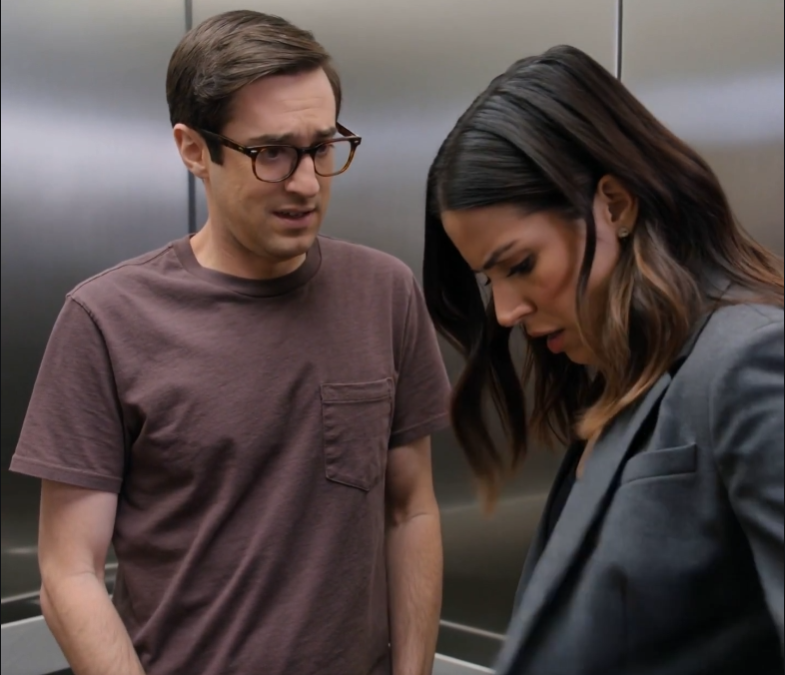
THE JACKET
August 26, 2026. 3:51 p.m.
My name is Leo Carter. I’m turning twenty-six this year, and I have a master’s degree in computer science from Stanford University. Right now, I’m working as a junior engineer in the systems department of a company called Innovate Solutions.
Want to know how much I make?
Four thousand dollars a month. Take-home.
You heard that right. With a master’s degree from Stanford, my monthly salary is a mere $4,000.
There’s a long story behind that. To put it simply, my old man wanted me to take over his company. When I refused, he cut off all financial support. Not only that, he used his influence in the industry to blacklist me, secretly blocking my applications at every major tech firm in the country.
Furious, I packed my things and came to New York, determined to find somewhere beyond my father’s reach. On my résumé, I listed only a standard four-year college degree and managed to blend in at Innovate Solutions. I’d always loved coding from the bottom of my heart, so I figured the money didn’t matter.
Of course, even I wasn’t entirely convinced by my own bravado.
That morning, like any other, I endured the crowded subway on my way to work. In my hand was a hot coffee I’d bought from the convenience store on the first floor of our building. The lobby was a chaotic sea of people rushing toward the elevators, and I slipped into one of them, pressing the button for the sixteenth floor, where the systems department was located.
I retreated into a corner and started scrolling through my phone. Just as the doors were about to close, a hand shot out and stopped them.
I looked up and nearly crushed the paper coffee cup in my hand.
Isabella Reyes.
The CEO of our company.
Known internally as the Ice Queen.
She always walked as if she were cutting through the wind, and her gaze was cold enough to freeze a man where he stood. In meetings, her statements were brutally concise. It was rare for her to utter a sentence longer than ten words. In my year at the company, I’d never once been within twenty yards of her.
Yet here she was, standing less than two feet away.
She stepped briskly into the elevator and pressed the button for the eighteenth floor, where the executive suite was located. Then she turned her back to me and stood perfectly still.
As the elevator began to ascend, my heart started pounding.
Don’t get the wrong idea. It wasn’t some romantic flutter. It was pure, unadulterated terror. An invisible peon like me, trapped in a confined space with the highest-ranking executive in the company. If she suddenly asked me a question and I couldn’t answer, I might be fired by tomorrow.
I huddled farther into the corner, pretending to be absorbed in my phone, my head bowed.
I’m invisible. I’m invisible. You can’t see me. Just get there, quick. I need to escape.
As I let out a soft sigh, my gaze drifted downward without thinking. For one fleeting moment, my eyes caught on her pantsuit.
The dark gray suit pants fit her perfectly. But just below her hip, there was a small stain of a different color.
The instant I noticed it, my mind went blank.
It was a bloodstain. A vivid red mark against the dark fabric. It might not have been immediately noticeable, but once you’d seen it, you couldn’t unsee it.
My first thought was that she might have injured herself somewhere.
My second thought was very different.
No. That location, that color… It’s probably exactly what I think it is.
She must have gotten her period.
Did she even know it had bled through her clothes?
She absolutely didn’t. Knowing her personality, there was no way she could have stood there so composed if she’d realized what had happened.
What was I supposed to do? Should I tell her?
Ma’am, there’s a bloodstain on the back of your pants.
If I dared say something like that, would I even survive long enough to come to work tomorrow?
But if I didn’t tell her, she’d step off on the eighteenth floor with her executive assistants waiting for her. Being seen like that would be a far more tragic public execution.
A fierce battle raged inside my head. If I told her, my professional life was over. If I kept quiet, she’d suffer a social death.
In my twenty-six years of life, I had never faced such an impossible choice.
The elevator passed the fifteenth floor. She shifted slightly closer to me, probably making room in case someone else got on. The distance between us was now barely ten inches. I could even catch the faint scent of her perfume.
Only three more floors, and she’d be gone.
I clenched my jaw.
To hell with it. If I’m going down, I’m going down.
I quickly shrugged off my work jacket. Taking a deep breath, I gently wrapped it around her waist from behind. As carefully as if I were performing surgery, I held my breath and tied the two sleeves into a neat knot at her side.
Perfect.
Now, when she stepped off on the eighteenth floor, the jacket would cover the dark red stain.
Unfortunately, I’d overlooked one crucial detail.
How would a woman react if a strange man suddenly wrapped his arms around her from behind?
It certainly wouldn’t be with gratitude.
It would be with pure terror.
Her body went rigid. She spun around with lightning speed, and before I could even attempt an explanation, a slap came flying through the air.
Crack!
The sharp sound echoed through the elevator, and my glasses went flying sideways.
“You creep!” she hissed, her eyes wide, her voice as cold as ice. “What department are you in?”
I clutched my ringing, swollen cheek and stammered, “Y-your… your pants…”
She glanced down at her own attire and seemed to understand everything.
The fury vanished from her icy face, replaced by a flash of embarrassment. Then her expression shifted into something complicated, something I couldn’t quite decipher.
But she didn’t apologize.
She merely took a deep breath, restored her usual stoic mask, and bit out two cold words.
“Thank you.”
Then she looked at me again, her expression softening by an almost imperceptible degree.
Amid the chaos, the doors to the sixteenth floor—my stop—had already opened and closed. I was now heading up to the eighteenth floor with her.
Those two floors felt like an eternity.
When the doors finally opened, she turned on her heel and walked away. Her stride was as confident and composed as ever, as though nothing had happened.
The elevator doors closed again, and I looked down at myself.
Without my jacket, I was left wearing a shabby T-shirt.
I’d bought it during my junior year of college and had been wearing it for nearly five years. It was so comfortable that I’d grown attached to it. The collar was stretched out like overcooked pasta, threads were unraveling from the cuffs, and there was even a tiny pin-sized hole near my left shoulder blade.
Normally, my jacket hid all of that, so no one ever noticed.
Wearing an expression that probably screamed end of the world, I returned to the sixteenth floor and entered the systems department.
My nosy coworker, Mark, immediately called out, “Leo, what happened to your jacket?”
“Left it on the subway,” I mumbled, offering the first lame excuse that came to mind.
Mark didn’t buy it.
He circled me, pointed at the hole in my T-shirt, and burst out laughing.
“Dude, what’s with the raggedy clothes? You’ve been wearing that thing for three years. Five? That’s insane. Even on four grand a month, you shouldn’t be this broke.”
The other coworkers joined in the laughter. I couldn’t be bothered to deal with them, so I sat down at my desk and started coding.
But a small, nagging feeling remained deep in my chest.
It wasn’t because they’d laughed at me. I was used to that.
It was because of those two words.
Thank you.
I’d saved her from social annihilation. You’d think she could have managed something a little better, even if apologizing was too embarrassing.
Were the words I’m sorry really that difficult to say?
I angrily hammered at my keyboard and finished my program at a furious pace.
When lunchtime came, I headed to the company cafeteria and immediately noticed something strange. Several employees were whispering among themselves, occasionally glancing in my direction.
Fragments of conversation drifted to my ears.
Elevator. CEO. Slap.
My heart skipped a beat.
Had the rumor already spread?
That afternoon, Mark sauntered over to my desk wearing a grin.
“Leo, you hear? Apparently, some guy tried to grope the CEO in the elevator this morning and got slapped for it.”
“Who told you that?”
“Sarah from reception. Apparently, it leaked from the security department.”
I felt a small wave of relief. It seemed the full details hadn’t gotten out. At least nobody knew her clothes had been stained.
“Wasn’t me,” I lied without batting an eye.
“Then what’s that handprint on your cheek?”
Mark pointed to the left side of my face. I instinctively touched it. It was definitely still a little swollen.
She packed a serious punch.
I shot him a glare, and Mark, finally reading the room, scurried away.
That evening, I was making instant ramen in my old apartment. It was a sixth-floor walk-up in a forty-year-old building, and the rent was $1,500 a month. The room was Spartan but tidy, with bookshelves crammed full of technical manuals. On my desk sat three monitors, my most prized possessions.
The ramen had just finished cooking when someone knocked at the door.
Figuring it was the landlord chasing me for rent, I opened it while still holding my noodles.
The moment I saw who was standing outside, I nearly dropped the whole thing.
Isabella Reyes.
She was wearing an off-white trench coat, her long hair falling loosely around her shoulders. She looked like a completely different person from the Ice Queen at the office.
In one hand, she held a paper bag.
“CEO?”
She nodded, her gaze flicking past my shoulder to take in the apartment. A single bed, an old desk, three monitors, and walls covered with posters from tech conferences.
“May I come in?” she asked.
“Of course. Of course!”
I scrambled out of her way.
As she stepped inside, the clicking of her heels echoed against the floorboards. She stood in the middle of the room, her gaze lingering for several seconds on the wall-to-wall bookshelves.
“This book.” She pointed to a technical manual titled Hacking and Defense in Practice. “A hobby?”
I set my ramen on the desk.
“Please, have a seat, Miss Reyes. I’ll make some tea.”
“No, thank you.”
She didn’t sit. Instead, she turned to face me.
“I came to return your jacket.”
The jacket she handed me had already been dry-cleaned. It was neatly folded and carried a faint, pleasant scent.
Gardenia fabric softener.
Not bad.
“You could’ve just left it with Sarah at reception,” I said. “You didn’t have to come all this way.”
“It was on my way.”
On her way?
Let’s concede, for argument’s sake, that the sixteenth-floor systems department wasn’t exactly on her way from the eighteenth-floor executive suite.
But there was absolutely no way this run-down apartment in the outer boroughs was on her way home from her luxury high-rise in Manhattan.
I decided not to press the point and simply smiled.
“Well, thank you very much, ma’am.”
“That T-shirt,” she said suddenly. “You should probably get a new one soon.”
I looked down at my frayed shirt.
“I’ll buy one when I get my paycheck at the end of the month,” I replied, scratching my head.
She said nothing more. An awkward silence settled over the room for several seconds.
“Have you had dinner yet, Miss Reyes?” I asked, pointing to the cup of ramen on my desk. “I can offer you one if you’d like. It’s the deluxe pork-bone broth with egg.”
Her eyes fell on the ramen, and I thought I saw the corner of her mouth twitch.
“I’ll pass. I came here today because I have a favor to ask you.”
A favor?
What kind of favor could the CEO possibly have for a junior engineer in the systems department?
“What is it?”
She took a flash drive out of her bag and handed it to me.
“There’s been an anomaly in the company’s database logs recently. The systems department can’t find the cause. Could you take a look at it for me?”
My heart thudded as I accepted the drive.
A log anomaly? This was no small matter.
“Do I have access privileges?”
“I’ll grant them to you.”
“Understood. I’ll investigate tonight and report my findings tomorrow.”
She nodded and turned to leave.
As I saw her to the door, she suddenly stopped and looked back.
“You’re a Stanford graduate, aren’t you?”
My heart leaped.
She’d had me investigated.
“Yes,” I admitted readily. There was no point in lying if she already knew.
“Then why are you here?”
“I wanted to make it on my own,” I said, looking her straight in the eye. “I didn’t want to rely on my family’s influence.”
She remained silent for a moment, then said something I hadn’t expected.
“I lost my parents early and have been supporting this company on my own. I understand how you feel.”
With that, she left.
The sound of her heels faded down the staircase. I leaned against the doorframe, standing there blankly for a while.
Isabella Reyes. Twenty-eight years old. CEO of Innovate Solutions.
Rumor had it that her father died of an illness five years ago, and her mother had passed away when she was still a child. She took over the company at twenty-two and single-handedly turned it around from the brink of bankruptcy.
She was cold, but her business acumen was the real deal.
I returned to my computer, plugged in the flash drive, and began examining the logs.
I found the problem almost immediately.
Someone had been tampering with the database logs, using highly sophisticated cloaking techniques and fabricating multiple routing paths. A regular engineer would never have spotted it.
But I wasn’t a regular engineer.
Back at Stanford, I’d competed in hacking competitions for three consecutive years and won twice.
The traces left by the perpetrator were faint, but the signature was unmistakable. It perfectly matched the methods of an international hacker collective operating on the dark web.
I traced the alterations backward through the logs and eventually narrowed the source to a specific network address.
The address was associated with the account of an assistant to one of the company’s executive vice presidents.
Mr. Wallace.
Wallace.
I narrowed my eyes.
The fact that Isabella had asked me to investigate this meant she probably already suspected something.
At two in the morning, I sent her a message.
Found the cause. I’ll brief you in person tomorrow.
Three seconds later, a reply appeared.
Understood. It’s already 2 a.m. Aren’t you going to sleep?
I shook my head and continued analyzing the data.
I didn’t sleep a wink that night.
The next morning, I went to work wearing my freshly dry-cleaned jacket. As soon as I reached my desk, Mark approached.
“Leo, someone saw the CEO’s car near your apartment last night.”
“What apartment are you talking about?” I asked, feigning ignorance.
“Near your place, man. A fancy Bentley was parked there, and the license plate matched the CEO’s.”
I cursed inwardly.
The speed at which rumors spread through this company was faster than light.
“Just because a Bentley was parked near my house, what does that have to do with me? You live in the area too, don’t you? If a Bentley parks in the neighborhood, do you have to know every single owner?”
Unable to squeeze any more information out of me, Mark walked away looking disappointed.
At ten that morning, I received a call from the executive assistant telling me to come to the eighteenth floor and report my findings.
As I headed upstairs with my laptop, my heart beat a little faster. Not because I was nervous, but because the evidence I’d discovered the previous night was far too shocking.
The CEO’s office was enormous, with a large window overlooking half the city. She sat behind her desk in a black suit, her hair tied back neatly, looking as sharp and cold as a drawn blade.
“Report,” she said curtly.
I sat in the chair opposite her, opened my laptop, and projected my analysis onto the monitor in front of her.
“There are three key points. First, the logs were manually tampered with. The technique is highly professional and belongs to an organization called Shadow. Second, the origin of the tampering was heavily disguised, but I’ve traced it back to a terminal on the company’s internal network. Third, the account logged into that terminal belonged to Mr. Wallace’s assistant.”
She stared at the monitor, her face growing visibly paler.
“Kenjiro Wallace, you mean?”
“At this point, there’s no direct evidence linking him personally. Either his assistant acted alone, or someone used the assistant’s account.”
“He has a motive,” she said coldly.
I didn’t interject.
Wallace had co-founded the company with her father and was a long-serving executive. Ever since she’d taken over, he’d resented having to take orders from a young woman. Rumors had circulated within the company for years that Wallace was conspiring with other board members to oust her.
“What’s your proposal?” she asked.
“Give me the authority, and I’ll set a trap.”
“What kind of trap?”
“I’ll place a fake confidential file in the database as bait. If anyone tries to steal it, a tracking program will automatically activate. The moment they touch that file, we’ll have definitive proof.”
She considered it for a moment, then nodded.
“Permission granted.”
She stood, walked over to the window, and turned her back to me.
“What time did you sleep last night?”
For a moment, I was at a loss for words.
“Around two in the morning, I think.”
“Go home and rest. You can skip work this afternoon. Go home and sleep.”
“Ma’am, I can’t do that.”
“That’s an order.”
Her voice was as cold as ever, but I could detect a hint of concern beneath it.
Reading the room, I left the office.
When I returned to the systems department, Mark was on me again.
“You were on the eighteenth floor. What did the CEO want?”
“Computer repair.”
“Computer repair? They called you upstairs for that? Isn’t the CEO’s computer something the department head usually handles directly?”
“Maybe the head couldn’t fix it,” I replied vaguely.
Then I sat down and started writing the code for the trap.
I was about halfway through when my phone buzzed.
It was a message from her.
Cafeteria. 12 p.m.
I stared at the screen.
Was she asking me to lunch?
At noon, I headed to the company cafeteria.
She was already sitting at a corner table with two lunch trays in front of her. I sat opposite her, feeling a little awkward.
“Miss Reyes, you eat in the company cafeteria?”
“Where else would I eat?” she replied, looking at me.
“I figured it’d be a five-star restaurant every meal.”
I thought I saw the corner of her mouth lift slightly, but her face quickly returned to its usual cold mask.
“Eat.”
I picked up my fork.
Braised pork belly, a fluffy omelet, steamed greens, and rice. A perfectly ordinary company cafeteria meal.
She ate very slowly, her movements elegant and controlled. I noticed her pick up a piece of pork belly, examine it as though it were too greasy, and set it aside on her plate.
“You don’t like it?”
“It’s too oily.”
“Then I’ll take it.”
I pointed to the untouched piece of pork on her plate.
She paused for a second, then nodded.
I moved it onto my own plate and popped it into my mouth.
She watched me with a somewhat complicated expression.
“Doesn’t that bother you?”
“What? Wasting food is more shameful.”
Just then, I noticed a tiny smudge of sauce at the corner of her mouth. I pointed to my own mouth to signal her.
She understood immediately. Her cheeks flushed slightly as she wiped her mouth with a napkin.
In that moment, I began to think that maybe this Ice Queen wasn’t such a cold person after all.
A week later, the trap I’d set was triggered.
At three in the morning, I was jolted awake by the violent vibration of my phone. I opened it and saw an alert from the tracking program.
Someone was trying to copy the fake confidential file.
I leaped out of bed and sat down in front of my computer.
Tracking data poured across the screen like a waterfall. The culprit was routing the connection through multiple layers of obfuscation, but my tracing program stripped away those disguises one by one.
Eventually, a familiar network address emerged.
Mr. Wallace’s home computer.
Not only that, but I’d also managed to record his screen while he operated the machine. I’d hidden a remote-control program within the trap, and it had captured everything.
I had evidence of him stealing information from the company database, along with transaction records involving Shadow that were saved on his computer.
I had secured complete proof.
Taking a deep breath, I called Isabella.
The phone rang three times before she answered.
“Hello?”
Her voice was slightly hoarse, as though she’d just woken up.
“Miss Reyes, he took the bait. It’s Wallace.”
There were several seconds of silence on the other end.
“Are you certain?”
“Irrefutable proof. I have a screen recording, transaction logs, and wire-transfer history. I have everything.”
“Come to the office.”
Her voice was suddenly crystal clear.
“Right now.”
“I’ll come pick you up.”
“No, it’s fine. I’ll be at the base of the building in thirty minutes.”
After hanging up, I stared blankly at my phone.
I’ll come pick you up.
The CEO of a major corporation, coming to pick up a junior engineer.
I quickly washed my face and changed into slightly better clothes.
In the end, it was still the same T-shirt with the hole in it. I didn’t own anything more comfortable.
Thirty minutes later, a black luxury car pulled up in front of my apartment building. The window rolled down, revealing her face.
She wasn’t wearing any makeup, and her hair was casually tied back. Dressed in a white shirt and jeans, she looked completely different from her usual office self.
Relaxed. Almost ordinary.
“Get in.”
I climbed into the passenger seat, holding my laptop.
The car was quiet, filled only with the low hum of the engine.
“Aren’t you scared?” she asked suddenly.
“Of what?”
“Wallace has held power in this company for twenty years. If you present evidence that corners him, you could be in danger.”
“Aren’t you scared, Miss Reyes?” I asked in return.
She glanced at me.
“What do I have to be afraid of?”
“Retaliation. He’s the kind of person who would steal confidential information. You don’t know what he’s capable of.”
“I’m not afraid.”
Her voice was perfectly calm.
“The only thing I’m afraid of is the company falling apart.”
I looked at her profile and suddenly felt a pang in my chest.
This woman was carrying the weight of an entire company on her shoulders without even allowing herself a moment to feel fear.
“Then don’t worry,” I said. “As long as I’m here, I’ll never let the company fall apart.”
She didn’t say anything, but I thought I saw the corner of her mouth lift slightly.
The office building was illuminated against the late-night darkness when we arrived. We went straight to the CEO’s office on the eighteenth floor, where she’d already summoned the head of legal and the head of security.
I projected the evidence onto a large screen.
Wallace’s computer desktop appeared in perfect detail. The recording showed him logging into the database, locating the fake confidential file, downloading it, and attempting to send it to an external party. His connection source and operation history were displayed alongside the footage.
The final, damning piece of evidence was an encrypted transaction record involving Shadow. It clearly documented how much he was paying, what data he was purchasing, and the method of payment.
The head of security turned pale.
After reviewing the evidence, the head of legal said only one thing.
“This is corporate espionage. He’s facing serious prison time.”
Isabella stood and looked at everyone in the room.
“We will hold a board meeting next Monday. Until then, this matter is top secret. Do not disclose it to anyone.”
She paused before continuing.
“Furthermore, as of today, Leo Carter is appointed senior security expert for the systems security division. He will be granted special authority and will report directly to me.”
Everyone in the room froze.
I was speechless myself.
“Ma’am,” the systems department head began, “Leo has only been with the company for a year. With his experience—”
She cut him off, picking up a file and tossing it onto the table.
“Take a look at this.”
The department head picked it up.
His expression changed with every page he turned.
“Master’s degree from Stanford. Six papers published at top-tier international conferences. Cited over a thousand times. Three-time hacking competition winner. A documented case of tracing the notorious Shadow organization. A job offer from Google’s security team…”
The room fell silent for several seconds.
The way everyone looked at me changed completely.
“You…” The department head pointed a trembling finger at me. “Are you that legendary programmer with thirty thousand stars on the developer site?”
I nodded slowly.
He gasped.
“No way,” he muttered, an unprofessional expression slipping out. “You’re telling me a monster like that has been doing menial tasks as a junior engineer in our company for a year?”
“Hey, hey. Calm down,” I said, waving a hand.
Isabella glanced at me, but I couldn’t read the meaning behind her gaze.
After the meeting, she asked me to stay behind.
Once we were alone, she leaned back in her chair and massaged her temples.
“Headache?” I asked. “Chronic insomnia? Is that why you’re working until three in the morning?”
“I’m used to it.”
Seeing how exhausted she looked, I said something that surprised even myself.
“I have a method that might work, if you’re willing to try it.”
“What method?”
“I’ll give you a technical lecture.”
She looked at me.
I continued seriously.
“My college roommate had insomnia for two years, but whenever I started explaining network architecture, he’d fall asleep a hundred percent of the time.”
She looked skeptical.
“Are you making fun of me?”
“It’s true. Just try it. Think of it as an experiment. I’ll give you one right now.”
I settled into my chair.
“Do you know why a communication protocol requires a three-way handshake to establish a connection instead of just two? If it were only two—”
She closed her eyes, wearing an expression that clearly said, Do whatever you want.
So I began.
Starting with the mechanics of communication protocols, I moved on to the differences between various communication methods, the principles of encrypted communication, and network-routing technologies. From there, I expanded into the psychological methods of famous hackers and consensus algorithms in distributed systems.
After about twenty minutes, I noticed that her breathing had become slow and regular.
She’d fallen asleep.
Leaning back in her chair, her eyelashes trembled slightly. The tension around her mouth had relaxed. She looked like a soldier who had finally taken off her armor.
I watched her quietly, unable to look away for some reason.
Here, on the top floor of one of the city’s most luxurious office buildings, beneath the lights at four in the morning, the woman known as the Ice Queen was fast asleep.
Lulled by my boring technical lecture.
I gently took a blanket from the sofa, draped it over her, and returned to my seat.
Then I continued preparing the emergency deployment for the security team until dawn broke.
At the Monday board meeting, Wallace was arrested.
It was as dramatic as a scene from a movie.
He went on the offensive first, brazenly claiming that critical flaws in systems and security management had caused catastrophic damage during a hacker attack. Then he blamed Isabella, pointing his finger directly at her.
He’d already won over three other board members, and he wore the smug expression of a man who believed victory was assured.
Isabella didn’t change her expression in the slightest.
She simply waited for him to finish.
“Mr. Wallace, are you done?” she asked, slowly rising to her feet. “Then next, we will hear a report from our head of systems security, Mr. Carter.”
The conference room doors opened, and I walked in carrying my laptop.
Wallace’s face changed.
“A junior engineer has no right to attend a board meeting!” he started to shout.
Isabella cut him off sharply.
“He does. His authority is equivalent to that of a systems expert.”
I connected my laptop to the projector and displayed the first slide on the massive screen.
“Good morning, members of the board. Today, I’ll explain how our database logs were manually altered last month.”
I began presenting the evidence: the login history from Wallace’s assistant’s account, the source of the connection used for the tampering, the intricately disguised communication routes, and the unique program code associated with Shadow.
With every slide, Wallace’s face went from red to white, then from white to blue.
The second slide contained the screen recording from his home computer.
At three in the morning, he’d logged into the database, downloaded the fake confidential file, and compressed it.
The conference room was so quiet you could have heard a pin drop.
“This is a fabrication!”
Wallace slammed his hand against the table.
“This footage is doctored! There’s no way a junior engineer could do something like this!”
“Then how about this?”
I brought up the third slide.
Displayed on the screen was an encrypted folder recovered from his computer, along with the transaction records involving Shadow.
A down payment of $100,000.
A success fee of $300,000.
The recipient was a shell company in an offshore tax haven, and the named beneficiary was Wallace’s brother-in-law.
The room erupted in chaos.
The three board members who had been siding with Wallace only moments earlier now looked on in horror.
“Furthermore,” Isabella said quietly, “the three individuals he stationed around the building today have already been apprehended by security. They are his brother-in-law, a hacker, and a bodyguard. They are currently being questioned by the police downstairs.”
Wallace’s face turned ashen.
Suddenly, he screamed at her.
“Isabella! I’ve known your father for twenty years! Please, for the sake of my twenty-year bond with your father, forgive me!”
She looked at him with a merciless gaze.
“Actually, I had the evidence two weeks ago. I reported it to the police immediately and had them investigate covertly. I gave you a chance to back down on your own, but you didn’t take it.”
The conference room doors opened again.
Two uniformed police officers who’d been waiting outside entered. One stepped forward and displayed his badge.
“Kenjiro Wallace, you’re being brought in for questioning on suspicion of corporate espionage and extortion.”
Just before he was led away, Wallace turned and glared at me.
The look sent a chill down my spine.
But I had no time to dwell on fear.
A much bigger storm was already gathering on the horizon.
That night, at eleven, I was still at the office working on system repairs when a deafening alarm suddenly blared throughout the building.
A new member of the security team, a junior engineer named Chris, burst into the server room, his face pale.
“Sir, the main database has been hacked! All the data is encrypted, and they’re demanding a ten-million-dollar ransom!”
A violent ringing started in my ears.
So they’ve come.
With Wallace arrested, Shadow’s funding had been cut off. Now they were attacking the company’s assets directly.
“Does the CEO know?” I asked, already hammering at my keyboard.
“She’s been notified and is on her way.”
Just as I grabbed my phone to call her, an incoming call appeared on the screen.
It was Isabella.
“Are you at the office?”
Her voice was trembling slightly, but I could tell she was desperately trying to stay calm.
“I’m in the server room.”
“I’ll be there in ten minutes. Leo, you need to—”
“I’ll handle it,” I interrupted. “Miss Reyes, just give me a little time.”
I hung up and put all ten fingers on the keyboard.
A cascade of code flowed down the screen. The coworkers gathered around me stared wide-eyed as I began my analysis.
Chris timidly offered me a coffee.
“Mr. Carter, this attack is intense. They’re using top-level encryption.”
“I know.”
My fingers never stopped moving.
“They didn’t just encrypt the main database. They’ve planted a virus on the backup server too. It’s a two-pronged attack. Very professional.”
The department head paced anxiously around the room.
“Can we try restoring from the offline backups?”
“Don’t touch them!” I barked.
He froze.
“The offline backups are already infected. If you access them and activate the virus, we’ll lose our last hope.”
The department head swallowed hard.
I started writing a program, launching a password-recovery attack with a custom tool while simultaneously tracing the origin of the intrusion.
This wasn’t a standard method. It was an AI-powered analysis system I’d developed with a professor back in college. The system hadn’t been released to the public yet.
Gradually, the attack path began to emerge.
“Ten minutes,” I said, staring at the screen. “They infiltrated through an internal system, moved laterally across the network, and reached the database server. The execution is brilliant, but they left a trail.”
I took a sip of the coffee Chris had handed me and resumed typing.
“As long as there’s a trail, I can reel them in.”
Twenty-three minutes later, the analysis program emitted a low beep.
Decryption complete.
The department head stared in disbelief.
“What? You broke the main database encryption in just twenty-three minutes?”
His voice cracked.
“This is the kind of encryption professional hacker groups use. It’s supposed to take three days!”
“Get the server room environment prepared. I’m sending in a tracing program,” I said, ignoring his astonishment as I stood and stretched my shoulders.
The systems team immediately scrambled into action.
Just then, Isabella arrived.
Her usually perfect hair was slightly disheveled, and the corners of her eyes were red.
“What’s the situation?”
“The encryption has already been broken. We’re currently restoring the data.”
I looked at her.
“Don’t worry. I’m about to give the attackers a little present.”
“A present?”
“They demanded a ransom. I’m going to follow the payment route and expose their entire operation.”
I sat back down at the computer and placed my hands on the keyboard.
“Want to watch?”
She said nothing. She simply stood behind my chair, resting one hand on the backrest.
I could feel her fingertips trembling slightly.
The late-night server room was wrapped in silence, broken only by the steady hum of cooling fans and the sound of my typing.
“Are you going to attack their server directly?” the department head whispered.
“This isn’t just a counterattack.”
My hands didn’t stop.
“I’m embedding a tracing program, just like they sent us a virus. I’m going to rewrite their encryption algorithm and reverse the flow of the ransom payment.”
“Isn’t that illegal?”
“It’s completely legal,” I replied. “I’m leaving a full audit trail. Besides, the other party is a wanted criminal organization.”
“I’ve already reported it to the police department’s financial crimes unit on my way here,” Isabella continued. “I have permission for electronic evidence gathering. Leo, do whatever you have to do.”
I looked back at her.
This woman had already prepared the way for me.
I immersed myself in the work.
All three monitors moved in unison. The left screen displayed the progress of data restoration. The central screen traced the attacker’s server, while lines of code flowed across the right screen at lightning speed.
The server room fell silent except for the relentless tapping of my keyboard.
“Found it.”
Twenty-eight minutes later, I’d located their main server in an illegal data center in Southeast Asia.
Six minutes after that, I’d pinpointed its physical address.
They’d hidden behind seventy layers of proxy servers, convinced they were safe.
But they’d made one mistake.
When testing their payment system’s connection, they’d used a home internet line just once.
I hadn’t missed that single mistake.
The department head stared at the latitude and longitude displayed on the screen, speechless.
“You located the mastermind’s whereabouts in less than forty minutes?”
“Their skills are solid, but their security awareness is lacking,” I said, saving the evidence. “True security isn’t about relying on technology. It’s about never letting your guard down, no matter how small the connection.”
I wasn’t bragging.
It was the first lesson I’d learned from my professor at Stanford.
At 4:50 a.m., all data restoration and evidence archiving were complete.
Simultaneously, the program I’d planted on the attackers’ server began collecting their communication logs and member information. The identities, addresses, and transaction histories of everyone involved became clear.
My colleagues in the server room erupted in applause.
Exhausted, I leaned back in my chair. Only then did I realize my back was soaked with sweat.
Suddenly, a hand settled on my shoulder.
It was Isabella.
She said nothing. She simply squeezed my shoulder firmly for three seconds, then let go.
But those three seconds carried more weight than any words of praise.
That evening, at eight, a joint operation involving international law enforcement was conducted using the location data I’d provided.
All six key members of Shadow were arrested.
Among them was Wallace’s brother-in-law.
Detective Miller from the police department called Isabella, and the first thing he said was, “Who on earth is your head of systems?”
She had him on speakerphone, so I heard every word from where I stood beside her.
“A master’s graduate from Stanford,” she said, glancing at me. “Is there a problem?”
There was a three-second silence on the other end.
“No. No problem at all.”
After hanging up, she turned toward me.
“We’re having a celebratory dinner at a hotel tomorrow. You must attend. That’s an order.”
“Understood,” I said, stretching. “Well, I’m going home to sleep, then.”
“Wait.”
She took a paper bag out of a drawer and handed it to me.
I opened it and found a brand-new, crisp white T-shirt inside.
The fabric was soft, and the design was simple.
“I bought it on a whim,” she said. “Throw that one with the hole away.”
I stood there stunned, feeling as if something had struck me squarely in the chest.
“Miss Reyes, this is—”
“Are you still going to call me Miss Reyes?”
She turned away, pretending to examine a screen.
“After hours, you can call me Isabella.”
“And during work hours?”
She didn’t answer.
But the tips of her ears turned bright red.
I left her office clutching the new T-shirt.
Right outside the door, I ran into Mark, who was carrying a stack of documents. His eyes immediately lit up as he looked me over with intense curiosity.
Mark was the biggest gossip in the systems department, known throughout the company as the human loudspeaker. Ever since the elevator incident, he’d been trying to squeeze information out of me.
“What are you looking at?”
“I’m looking at a legend,” he said with a grin. “Leo, you’re seriously amazing. A Stanford master’s graduate doing menial work with us for a whole year.”
“It wasn’t menial work. I was gaining practical experience.”
“Yeah, yeah. Whatever you say.”
He lowered his voice.
“So, you were in the CEO’s office for quite a while. Was it really just about work?”
I kicked him in the backside.
He laughed and ran off, but three seconds later, his head popped back around the corner.
“By the way, tonight, to celebrate your promotion, I’m treating! I’ll invite people from the other departments, and I promise not to pry.”
“It’s written all over your face that you’re going to pry.”
“It’s called looking out for my boss.”
I shook my head in exasperation and shooed him away.
Looking down at the new T-shirt in my arms, I couldn’t stop a smile from spreading across my face.
The following evening, the hotel ballroom was packed with people.
I was seated at the head table, right next to Isabella.
At a neighboring table, Mark kept winking and sending ridiculous signals in my direction. He quickly returned to his meal, however, after receiving one cold glare from her.
Amid the clinking of glasses, Isabella stood and, unusually for her, went around to every table to offer a toast.
Finally, she raised her glass in my direction.
“Leo Carter, this one is for you personally.”
I scrambled to my feet.
“You saved the company, and you saved me.”
Her tone was as restrained as ever, but I could hear a definite warmth beneath it.
“Thank you.”
“You’re welcome,” I said, lightly clinking my glass against hers. “I told you, didn’t I? As long as I’m here, I won’t let the company fall apart.”
She took a sip of her drink, her cheeks flushing slightly.
Midway through the party, she leaned toward me. Perhaps it was the alcohol, but the tense, icy air that usually surrounded her had vanished.
“Why did you help me back then?” she asked softly.
“When are you talking about? In the elevator?”
She nodded.
“Because I didn’t want you to be embarrassed.”
She looked up at me, the chandelier light dancing in her eyes.
My heart skipped a beat.
Then she reached out and plucked a strawberry from my plate.
“Thank you.”
“Weren’t you about to say something else just now?”
“Of course not,” she said firmly, popping the strawberry into her mouth.
But the tips of her ears were red again.
I looked down and stifled a laugh.
The Ice Queen was adorable, even when she was trying to act tough.
After the party, Mark caught me near the hotel’s revolving door.
He was completely drunk, his face bright red, and he insisted on dragging me to a late-night food truck, demanding to know the truth about the elevator incident.
“There’s nothing to tell. It’s exactly as I told you.”
“Liar! That handprint on your face that day—I even measured the finger length. That was definitely a woman’s hand. And there’s only one person in this company you’d take a slap from without fighting back.”
“You’ve had too much to drink.”
“I’m not drunk!”
Mark slammed his hand against the table, making the plates rattle.
“What I want to know is, was the slap on your right cheek or your left?”
I sighed and stuffed a piece of grilled chicken into his mouth.
Mark was the first person to realize that something was going on between me and the CEO.
Although he gossiped openly, he’d also skillfully deflected questions from other coworkers.
According to him, “You’re my boss. Your gossip belongs to me alone. I’m not letting anybody else have it.”
The logic was ridiculous.
But it was so typically Mark.
The day after the party, the company made an official announcement.
I’d been promoted to systems expert.
My annual salary multiplied several times over, and I was given a private office and a dedicated assistant.
The news rocked the entire systems department.
Not in a bad way, of course.
Even as a junior engineer, I’d been the one quietly solving technical problems nobody else could fix. What surprised everyone was discovering that the guy wearing a T-shirt with a hole in it and eating instant ramen every day was actually a world-class engineer.
“Hey, Mr. Carter.”
Mark approached me during lunch break.
“Now that you’re an expert, shouldn’t you move out of that run-down apartment?”
“I’m used to it.”
“You’re making six figures and still living in a place with fifteen-hundred-dollar rent. What kind of hobby is that?”
“A frugal one.”
I didn’t tell him the real reason.
I hadn’t moved because the apartment was only a fifteen-minute walk and a five-minute bike ride from the office. If a system emergency happened in the middle of the night, I could rush straight to the server room.
Of course, it might also have been because that little room was the only place Isabella had ever come to visit me on her own.
The thought crossed my mind, surprising even me.
Don’t get ahead of yourself, Leo Carter.
She’s the CEO, and you’re an employee.
Even as an expert, fundamentally, nothing has changed.
But the position of expert certainly was different.
My new office had a window, an ergonomic chair, and even a coffee maker. Most importantly, I could now go to the eighteenth floor and report directly to the CEO without raising eyebrows.
Using my lunch break, I headed upstairs.
Sarah at reception gave me a meaningful look.
“Mr. Carter, reporting to the CEO? Let me just buzz her to let her know you’re here.”
Then she smiled.
“She’s in her office. Go right ahead. She’s wearing a lovely dress today, by the way.”
“I didn’t ask, Sarah.”
I stood in front of Isabella’s office, knocked, and went inside.
The moment I opened the door, I caught my breath.
She really was wearing a dress.
A dusty-blue dress that revealed her slender ankles, giving her an entirely different appearance from her usual black suits.
She was examining documents at her desk and didn’t look up.
I sat down on the sofa, but she continued staring at the papers.
“Miss Reyes.”
“Yes?”
“Have you had lunch?”
She finally looked up.
“Did you come here to check up on me?”
“Not at all. Just came by to see how you were doing.”
“Your office is on the sixteenth floor. How is the eighteenth floor on your way?”
“The elevator was on my way.”
The corner of her mouth twitched, and she put down the document she was holding.
“Is there something you need?”
“No major business. Just came to pay my respects and pledge my loyalty to my boss.”
I smiled and continued in an exaggeratedly solemn voice.
“Thank you for your guidance and trust. I, Leo Carter, will henceforth—”
“Can’t you just talk normally?”
“Let’s go get lunch.”
She stared at me.
After three seconds of silence, she said just one word.
“Cafeteria.”
“The cafeteria is perfect.”
And so I started having lunch with her in the company cafeteria at least twice a week.
At first, our colleagues were surprised, but gradually, they got used to it. After all, I was the systems expert. It wasn’t strange for me to report to the CEO and have a meal with her at the same time.
“Of course it’s strange,” Mark whispered after observing us from a distance.
He’d cornered me during a break.
“There were two pieces of pork belly on the CEO’s plate. She took one bite of one piece and left the rest because it was too greasy. So far, so good. But what did you do after that? You took it and ate it!”
“What’s the problem with that?”
“It’s a huge problem!”
Mark’s eyes went wide.
“That’s Isabella Reyes! The CEO of Innovate Solutions! A woman worth hundreds of millions! And everyone in the company knows she’s a germaphobe. She doesn’t even let other people touch her glass. And yet you ate meat she’d already bitten into, and she didn’t get mad!”
“She told me not to waste food, so I ate it.”
“Do you really believe that excuse?”
“It’s not a matter of believing it or not. I actually ate it.”
Besides the cafeteria, being a systems expert came with another privilege: a dedicated workspace in the server room.
Even as a junior engineer, I’d liked bringing a folding chair into a corner of the server room to code. Now my spot had simply moved from that corner to the central control console.
One afternoon, Isabella came for an inspection and found me there.
“What’s an expert doing somewhere other than his own office?”
“It’s calming in here. The sound of the fans helps me concentrate.”
“Nonsense.”
But she came inside anyway.
She looked around the server room, then finally stopped behind me and peered at my screen.
“What’s this?” she asked, pointing at the countless lines of code.
“The architecture for a new defense system. I’m building an AI-powered intrusion-detection system for our internal network. With this, even if an attack on Shadow’s level comes along, the system will automatically detect and isolate the anomaly within five seconds.”
“Just five seconds?”
“Yes. Before, we monitored everything manually, so our response was slow. Now the AI analyzes traffic in real time, learns from patterns, and optimizes itself.”
I paused and looked at her.
“With this in place, even if something happens to me, the system will protect the company on its own.”
Her brow furrowed.
“Are you planning on going somewhere?”
“I’m not going anywhere. It’s just a hypothetical.”
“Don’t make hypotheticals like that.”
Her voice was cold, but her words made something tighten in my chest.
The air in the room suddenly changed.
She was standing very close, the tips of her hair almost touching my shoulder.
The overhead light softened the contours of her face.
“Miss Reyes, you have a piece of lint in your hair.”
It was a lie.
I just wanted to make conversation.
But she believed me and reached toward her hair.
“I don’t see it.”
“Here, I’ll get it.”
I reached out and pretended to pluck the nonexistent lint from the ends of her hair.
As my fingertips brushed past her ear, she trembled slightly.
“Got it,” I said, pulling back my empty hand.
“Thank you.”
She stepped back, the tips of her ears turning red again.
This was the third time.
The first had been in the cafeteria when she’d wiped her mouth. The second had been at the party when she’d taken my strawberry, and the third was now.
Her ears were fascinating.
No matter how cold and composed her face remained, her ears always reacted honestly.
So I made a bold decision.
“Miss Reyes, are you free this weekend?”
She looked at me warily.
“It’s not what you think,” I said quickly. “There’s a new movie out about hackers. It’s getting good reviews for its technical accuracy. I was wondering if you’d like to go with me and see whether the director actually did their homework. I’ll buy the tickets.”
“A movie?” she repeated, her brow furrowing.
“Yes. A movie theater. We’ll buy popcorn and Coke and watch it like regular people.”
She fell silent for several seconds.
Damn. Was that too sudden?
She was the CEO, and I was an employee. Being seen together in public on a Saturday afternoon would probably cause a scandal.
“Saturday afternoon,” she said at last. “Two o’clock, at the cinema complex downtown.”
With that, she turned on her heel and left.
I watched her go, a goofy grin plastered across my face for a full five seconds before returning to my coding.
After writing a few lines, I realized I was humming.
For some reason, it was an old love song.
Before going to bed that night, I sent her a voice message through a secure app.
As usual, it was a technical lecture.
This time, I explained vulnerabilities in database languages, from the basics to advanced applications.
Just as I was about to fall asleep myself, my phone vibrated.
A voice message from her had arrived.
I played it and heard her soft, slightly sleepy voice.
“Today’s lecture isn’t boring at all. I’ve been listening the whole time, and I’m still not sleepy.”
I laughed, pressed the record button again, and talked for another ten minutes about data-compression algorithms.
This time, there was no reply.
She must have fallen asleep.
I put down my phone and was about to turn off the light when the screen lit up again.
Only two words appeared.
Thank you.
In that moment, I thought I might never move out of that apartment.
Saturday afternoon, 1:50 p.m.
I was standing in front of the movie theater.
I wore a new casual jacket over the white T-shirt she’d bought me, and in my hands, I held two Cokes.
To be honest, I was a little nervous.
A movie with the CEO?
What kind of romantic movie script was this?
In my twenty-six years, I’d written incredibly complex programs and broken through some of the most robust defense systems in the world, but I’d never once gone to a movie alone with a woman.
I’d had a crush on a senior in college, but she’d turned me down three times, saying she had experiments to run. In the end, all I’d accomplished was helping her process the data for her thesis.
Anyway, I digress.
At 1:55 p.m., a taxi pulled up to the curb.
The door opened, and Isabella stepped out.
I almost didn’t recognize her.
Today, she looked completely different from her office persona.
White sneakers. Light-blue jeans. A loose-fitting ochre hoodie.
Her hair was tied in a high ponytail, and she wore oversized sunglasses.
She looked like a college student out for the weekend.
“You’re staring,” she said in her familiar cold voice, removing her sunglasses.
“I didn’t recognize you. Are you perhaps the CEO’s younger sister?”
She rolled her eyes in exasperation, but the corners of her eyes were smiling.
“Let’s go.”
As we walked toward the theater, several people turned to look at her, but nobody recognized her.
Of course not.
Who would imagine that this woman in sneakers was the infamous Ice Queen?
The movie was an action film about hackers.
The story itself wasn’t particularly complicated. A genius hacker gets framed and has to clear his name while on the run.
I watched intently, checking the accuracy of the code that appeared on the screen.
About ten minutes in, there was a scene where the protagonist typed code to break into a system.
I leaned over and whispered to Isabella.
“This code is syntactically correct for the programming language, but the screen that appears after he hits Enter is actually a video-editing software interface. That’s a clear editing mistake.”
“Focus on the movie.”
Her voice was even quieter than mine.
“But the technical flaw—”
“Leo, be quiet.”
“Yes, ma’am.”
I clutched the box of popcorn, picked out the biggest piece, and tossed it into my mouth.
In the darkness, she held the popcorn, and I held the Cokes.
The story reached its midpoint.
The protagonist was being chased by an enemy organization and ended up fighting in a downpour at the docks.
Then came a moment of crisis.
An enemy pulled a knife and lunged toward the protagonist’s chest.
A loud sound effect blared.
Isabella flinched.
The box of popcorn on her lap trembled slightly.
Without thinking, I reached out and covered the hand she was using to grip the box with my own.
Her hand was very cold, and it went still beneath mine.
Only after the screen shifted to a quieter scene did I realize what I’d done.
I quickly pulled my hand away.
“It’s okay now. The protagonist won’t die,” I said, clearing my throat to hide my embarrassment. “He’s got plot armor.”
She said nothing.
The popcorn box remained on her lap, and she didn’t move her hand.
After leaving the theater, we walked along a pedestrian street. The setting sun cast our shadows long across the pavement.
“That final twist,” she said suddenly. “Wasn’t it a bit forced?”
“Which one?”
“The fact that the real villain was his partner.”
“Oh, that. There were plenty of clues. Whenever the protagonist was in trouble, his partner was never around. And even when he was about to get caught, he always managed to escape. If someone’s consistently too lucky, it’s not luck. It’s proof that something’s happening behind the scenes.”
“Your analysis is very detailed,” she said with a nod. “So, in the real world, do you think it’s possible to be betrayed by the person closest to you?”
“Of course,” I replied, looking at her. “We just went through the whole thing with Wallace, didn’t we?”
Her steps faltered.
“He was my father’s business partner and old friend. They worked together for twenty years, and yet he tried to destroy the company my father left behind.”
“But you protected the company. His betrayal almost made you lose everything, but in the end, you won. In a way, you should thank him. If he hadn’t made a move, you wouldn’t have realized you had such a talented—”
“Don’t be so smug,” she said, stopping.
Then she looked directly at me.
“What if one day I betray you too?”
I turned to face her.
“You wouldn’t.”
“How can you be so sure?”
“Because you’re the kind of person who would rather put yourself at a disadvantage than owe someone a favor. Back in the elevator, you could’ve pretended nothing happened, but you went out of your way to return my jacket. You could’ve had an assistant deliver it, but you came yourself. You investigated my background, yet you still gave me a chance. Someone who betrays others doesn’t do things like that.”
She remained silent for a long time.
So long that I began to think she might not answer at all.
Eventually, she spoke in a small voice.
“Let’s go. I’ll treat you to dinner.”
“Sounds good. What do you want to eat?”
“You decide.”
“Spicy Sichuan hot pot,” I said instantly.
She looked surprised.
“You can eat spicy food?”
“Not at all.”
“Then why did you choose it?”
“Because you said you wanted to eat it.”
My heart thudded.
Last week, while we’d been having lunch in the cafeteria, she’d mentioned it offhandedly.
Hot pot is the best in winter, but I don’t have anyone to go with.
She’d heard that remark.
Not only heard it, but remembered it.
We entered a restaurant specializing in spicy hot pot, and the hostess greeted us cheerfully.
“Welcome! A table for two? Are you a couple?”
Isabella didn’t answer.
“A regular table in the back is fine,” we said almost simultaneously.
We looked at each other, and the hostess gave us a knowing smile.
When the pot was brought to our table, the fiery-red broth was bubbling, with a mountain of chili peppers floating on top.
Isabella stared at it.
For the first time, I saw what looked like genuine fear on her face.
“Isn’t this too spicy?”
“This is what spicy hot pot is all about. Don’t worry. You’ll understand after one bite.”
She picked up an ingredient with her chopsticks, dipped it into the broth for about seven seconds, and put it into her mouth.
The next moment, her eyes visibly reddened.
“Spicy.”
“Want some water?”
She nodded, and I passed her the glass.
She took three quick gulps, but her eyes were still watery.
“Try another bite.”
I picked up a thin slice of meat, swished it through the broth, then dipped it into a bowl of water before placing it on her plate.
“If you dip it in water, it’s not as spicy.”
She still looked hesitant.
“Just try it. If you don’t like it, you can spit it into my hand.”
“No. I’ll get you a napkin.”
“That’s enough. I’ll just spit it onto my plate.”
She looked at me doubtfully, then put the meat into her mouth.
After chewing twice, her tense expression turned to surprise.
“It’s not spicy.”
“Yeah, it’s okay.”
“A little sweet, maybe.”
“Meat is sweet.”
“It’s not that the meat itself is sweet. Your tongue’s numb from the spice, so you can taste the subtle sweetness of the meat.”
She glanced at me.
“For a programmer, how do you know so much about this?”
“The celebrations at my college lab were always at super-spicy restaurants. We all ended up becoming amateur food critics.”
She picked up a vegetable with her chopsticks, copied my method of dipping it into water, and savored it with narrowed eyes.
That night, she ate a lot.
Much more than I did.
Since the day I’d met her, I’d never seen her look so satisfied.
She had the cautious yet proud expression of a cat that had just stolen a fish.
A few days after our hot-pot dinner, the dynamic between us changed subtly.
At the office, she was still the Ice Queen.
In meetings, her words were clipped and her gaze was sharp as a knife.
But whenever I was in the room, her voice would soften by the slightest fraction, and her eyes would linger on me a few milliseconds longer.
The difference was so subtle that almost nobody else would have noticed it.
But I could feel it clearly.
Unfortunately, Mark noticed too.
“Leo, what in the world is going on with you two?”
We were on the stairwell landing during lunch break. Mark was munching on a sandwich, looking at me with undisguised curiosity.
“Some people on the company message board are starting to spread weird rumors.”
“What kind of rumors?”
My heart jumped.
“That you two have been feeding each other in the cafeteria. That you’ve been having secret meetings in the server room. Someone even posted a picture of you two going to see that hacker movie.”
“A picture?”
My blood ran cold.
“Yeah. Some guy who saw you at the theater on Saturday sent a picture of your backs to the systems department chat group. But don’t worry. I recognized your back immediately, and as your best friend, I shut it down. I told everyone it was just somebody who looked like you, then deleted the picture.”
I pressed my palms together as if in prayer.
“Mark, you’ve actually done something useful for the first time.”
“But if you’re serious about going after the CEO, you’d better be prepared. The line of guys in this company who want her stretches from the sixteenth floor all the way down to the lobby. The son of the company managing the building next door has even been making up excuses to visit her. You’ve got a lot of competition.”
“Thanks for the warning,” I said, standing up. “But right now, I have two even more troublesome rivals.”
“Who?”
“The defense program that absolutely has to go live tonight and the presentation materials for tomorrow morning’s board meeting. See you.”
That night, I stayed late in the server room, running the final tests on the new system.
I kept the program running, and at two in the morning, I finally reached my target.
I stretched and went to the break room to get some coffee.
As I passed the eighteenth floor, I noticed that the light in Isabella’s office was still on.
I knocked and went inside.
She was sitting behind her desk, a mountain of financial statements piled in front of her. Her face was a little pale, and there were distinct dark circles beneath her eyes.
“Not going home yet?”
“There’s a small issue with the quarterly financial report. I’m rechecking it.”
“What kind of issue?”
“A large payment from a client is delayed. If it doesn’t come in by the end of the month, it’ll affect our cash flow for the next quarter.”
I walked over and placed a coffee on her desk.
“Coffee isn’t good for your stomach,” I said, “but it’s better than the stock price crashing because of a mistake in the report.”
“It’s too late to call in the finance team, so I have to check it myself.”
“But you can’t pull an all-nighter. You have a board meeting tomorrow.”
She didn’t answer.
She simply continued staring at the spreadsheet on her screen.
I sighed, pulled up a chair, and sat down beside her.
“Which item is it? I’ll look at it with you.”
“You understand finance?”
“A little. My mother was an accountant, and she taught me how to keep books when I was a kid. I also dabbled in corporate valuation modeling in grad school, so I understand the basic logic.”
She glanced at me, then turned the monitor in my direction.
And so we put our heads together and began checking the densely packed columns of numbers, one by one.
At 3:30 in the morning, we finally found the cause.
The client’s remitting bank had made a mistake in the payment reference field, and the finance department had processed the money as an unidentified deposit.
Problem solved.
She massaged her temples.
“Thank you.”
“You’re welcome. Let’s go home now.”
She looked out the window at the pitch-black night sky.
“I don’t want to go home,” she said softly.
“Why not?”
“I’m the only one there. It’s empty.”
Her voice lacked its usual coldness. It carried the weariness of someone who’d been trapped in the dark for far too long and was finally breathing fresh air.
“After my parents passed away and I took over the company, everyone around me became either a business partner or an enemy at a board meeting. Going back to that house just makes me feel emptier.”
I was silent for a moment.
“Then I’ll keep you company.”
“Keep me company? Doing what?”
“Chatting. Or just sitting together in silence. Whatever you want. I won’t go home until you want to.”
She studied me skeptically.
“You’re planning on not going home tonight?”
“Working overtime is a daily occurrence for me. There’s a folding cot in the server room, and you can rest in the break room.”
“Let’s continue this tomorrow. You sleep on that cot?”
“It’s much more comfortable than my dorm bed in college.”
She said nothing more.
She stood and headed toward the break room.
At the doorway, she stopped and looked back.
“Leo, do you think my personality is too cold?”
“No.”
“Be honest.”
“Okay. Yes, a little cold. Especially your gaze in meetings. It looks like it could kill someone.”
She looked down.
“If I’m not like that, I can’t manage this company. Everyone thinks women are easy to handle, especially young women. So if I’m not ruthless and assertive, the board members won’t listen. Clients will look down on me. Even my own subordinates will take me lightly.”
“So you’ve trapped yourself inside a shell of ice.”
She raised her eyes.
“But even if the outside is cold, the inside hasn’t frozen over.”
The words made my own chest ache.
“You don’t have to push yourself so hard,” I continued. “Just because you lower your guard a little doesn’t mean everyone will take you for granted. Take me, for example. I have this weird habit of wanting to protect people who are trying to be strong. Especially people who seem cold on the surface but will come to return a jacket in the middle of the night. People who remember a casual conversation about hot pot. People who care about not embarrassing others.”
I looked at her.
“People like that aren’t truly cold.”
She turned her face away before I could see her expression.
A moment later, the break-room door closed quietly.
The next morning, I woke on the folding cot in the server room with a blanket draped over me.
It smelled faintly of gardenias.
The presentation at the board meeting went smoothly.
The data from the new defense system was perfect. Since its implementation, there hadn’t been a single security incident.
The few board members who hadn’t trusted me before nodded one after another as they reviewed the report.
Isabella remained expressionless throughout the meeting. But as she passed me afterward, she spoke in a low voice.
“Thank you for last night.”
It was only a few words, but their weight wasn’t lost on me.
Wallace had been arrested, but the mess he’d left behind was far bigger than I’d imagined.
As an executive vice president, he’d overseen finance and human resources. Many of his subordinates remained loyal to him. The backdoors that had been used as entry points into the company’s systems were things he’d gradually established over several years.
While my team and I were cleaning up the network, we discovered three more hidden malicious programs.
Even more troublesome was a time-activated program Wallace had probably planted before his arrest.
If we’d discovered it any later, confidential data would have been silently transmitted to an external party.
“This is nasty,” I said to Chris.
Chris was a new security hire. His technical skills were solid, but he still lacked experience.
He stood beside me, his face pale.
“This program’s hiding place is too good. It’s disguised as a standard database-maintenance tool. You’d never find it without a detailed check.”
“That’s the scary thing about Wallace being with the company for twenty years. He knew the company’s structure better than anyone, and he knew exactly where things were least likely to be noticed.”
As I deleted the program, I instructed Chris to log the complete operation history.
Wallace’s trial was scheduled to begin the following month, and all this evidence needed to be submitted to the court.
Just then, my phone rang.
An unknown number.
I hesitated for a moment before answering.
“Leo.”
An unfamiliar man’s voice came through the speaker.
“You think it’s all over just because you caught Wallace?”
“Who is this?”
“Who I am doesn’t matter. Innovate Solutions is standing in a lot of people’s way.”
His voice was low and threatening.
“You think a junior systems expert like you can protect that woman? If you’re smart, you’ll resign. This has nothing to do with you.”
“And if I refuse?”
“Refuse? You think your degrees, your papers, and your trophies can protect you?”
The line went dead.
My hand was clammy with sweat where it gripped the phone.
Chris stood beside me, holding his breath.
I took a deep breath, saved the number in my notes, and turned to him.
“Share this only with the heads of legal and security. Let’s keep it from the CEO for now.”
“Why?” he asked, looking confused.
“If we make an official move too soon, it’ll cause chaos in the company. First, we need to work with legal to gather evidence quietly and get through next month’s board meeting smoothly. We can’t distract the CEO.”
Chris nodded, but his eyes remained filled with anxiety.
After work, I stayed alone in the server room and began investigating the number.
Tracing it wasn’t easy.
It came from an unregistered prepaid SIM card that had already been deactivated, with no registration information remaining. Cards like these could be bought at any small phone shop in the city.
But the man who’d called me had made one mistake.
During the call, I’d faintly heard a subway station announcement in the background.
The sound was barely audible, but I’d recorded the conversation.
After removing the noise with audio-analysis software and amplifying the volume, I could clearly make out the words.
“The next stop is Hudson Yards.”
Hudson Yards Station.
Three subway stops from the office.
The man had been somewhere near Hudson Yards Station when he’d called.
I recorded that information but decided to hold off on further tracking for the moment.
I didn’t want to poke the snake and force it out of its hole before I was ready.
I got home after ten that night.
As I took off my jacket and was about to make instant ramen, I noticed an envelope on my desk.
A plain white envelope with no return address.
Inside were photographs.
One showed me working late in the server room. Another showed me eating in the cafeteria. A third showed me riding a shared bike beneath my run-down apartment building.
And then there was one more.
A photograph taken the day Isabella and I had come out of the movie theater.
Our profiles were clearly visible.
She was wearing sneakers, and I was holding a Coke.
It had obviously been taken by someone lying in wait.
The blood in my veins turned to ice.
At the bottom of the envelope was a short message.
Next time, it won’t be just a photo.
I gathered the photographs, placed them back inside the envelope, and locked everything in a drawer.
Then I sent Isabella a message.
Are you awake?
Not yet. What’s wrong?
If you can’t sleep, shall I tell you another boring story?
Thirty minutes later, another message arrived.
I couldn’t sleep again. Today’s story was too boring. It’s your fault. What will you talk about next?
Anything you want.
Then tell me about the history of distributed systems and databases.
That’s boring.
It’s boring, so it should make me sleepy. Just do it.
I spoke into my phone for twenty minutes.
I kept my voice as calm as possible, but my eyes constantly scanned the darkness beyond my window.
Four days after the threatening call, I started noticing that someone was following me on my way to work.
A silver van without license plates kept appearing near the entrance to a narrow alley in my neighborhood.
Its windows were tinted black.
I’d seen it once at seven in the morning and again at nine at night.
One day, I deliberately took a back street, only to find the same van parked on a different corner.
They clearly knew my daily routine.
Which meant they weren’t targeting me on a whim.
They’d done their homework.
I didn’t report it to the police.
And I didn’t tell Isabella a single word.
What I needed wasn’t simply to be protected.
I needed to make the first move.
The next day, I temporarily handed my responsibilities over to Chris and took a day off.
My official reason?
A burst pipe at home. I had to be there for the repairman.
“Your pipe burst, but you look like you’re about to rob a bank,” Mark said, studying my face during lunch break. “And you taking a day off is an emergency in itself. Last New Year’s, you were practically living in the server room with your laptop. What’s really going on?”
“Pipe repair. A life-threatening pipe.”
He took a bag of spicy snacks out of his pocket and shoved it toward me.
“Here, eat this and snap out of it. If you don’t want to talk, fine. But if you’re in trouble, call me. I can’t match your tech skills, but I have an uncle who’s a lobster fisherman.”
“Your lobster-fisherman uncle is completely useless in my current situation.”
“How do you know? He might be surprisingly helpful.”
I patted his shoulder.
“Just try to stay on good terms with your lobster-fisherman uncle.”
With that, I quickly left.
After returning home, I spent the next several hours on two things.
First, I isolated the subway announcement from the recording of the threatening call. I extracted the faint electronic hum in the background and analyzed its frequency.
After running it through several filters, I determined that the sound matched the distinctive frequency of a particular laptop brand’s cooling fan when it overheated.
That alone wouldn’t reveal a location.
But cross-referenced with public Wi-Fi signal-strength distribution data around Hudson Yards Station, it was a different story.
My analysis suggested that the man who’d called me had been sitting beside a first-floor window in a chain coffee shop near Exit D of the station.
The café offered free Wi-Fi and cheap coffee.
It was probably one of his regular spots.
I spent several more hours cross-referencing prepaid SIM-card sales records within a half-mile radius of Hudson Yards Station. I examined call records from the period immediately before the threat and calculated changes in signal strength to find a match.
Finally, one address emerged.
Apartment 405, 12 Tech Park Avenue, Brooklyn.
The name on the lease was David Wallace.
He was a cousin of the arrested executive vice president.
Through Wallace’s connections, David had been placed in an executive position at a subcontracting company. He’d been named a person of interest during the Shadow raids but had avoided arrest because investigators lacked direct evidence.
Now he was trying to get revenge on me on behalf of his arrested associates.
I called the CEO’s assistant.
“Get me an appointment with Detective Miller of the NYPD. Tomorrow morning. I have new evidence.”
The following morning, at nine, Detective Miller arrived at a conference room in our office building.
I displayed my analysis on the screen, explained everything, and placed an envelope of supporting documents on the table.
The first thing he did was turn to one of his subordinates.
“Secure Tech Park Avenue immediately. Contact the cybercrime center and shut down all his communication devices. Don’t let him delete a single byte from those hard drives.”
Then he looked back at me, his expression extremely complicated.
“Mr. Carter, who analyzed this data?”
“Just me.”
“Any interest in working for the NYPD’s cybercrime division?”
“I’m quite happy with my current job.”
That afternoon, at three, Detective Miller’s team raided Apartment 405 and arrested David Wallace.
They confiscated three computers, fourteen unopened prepaid SIM cards, a signal jammer, and the laptop I’d identified as the source of the unusual cooling-fan frequency.
The final, damning piece of evidence was a target list discovered on his hard drive.
My name was second.
The first name was Isabella Reyes.
Every photograph David had taken of me was also stored on that drive.
Not only that, but the investigators found Isabella’s daily schedule, her car’s license plate number, her driver’s shift schedule, the blind spots in the security cameras around the elevator she frequently used, and even her preferences for airplane seating during business trips.
As I organized the evidence on my computer, a chill ran down my spine.
The sound of heels suddenly echoed from the hallway.
The door opened without a knock.
Isabella burst in and slammed it shut behind her.
She stood in front of me, her chest rising and falling rapidly.
It was the first time I’d ever seen her so openly emotional at the office.
“Why did you investigate this without telling me?”
“You were making moves on your own too, weren’t you, Miss Reyes?”
“Leo Carter, do you think of me as a stranger?”
Her voice rose.
“The remnants of Shadow were trying to kill you, and I have to find out about the danger to one of my own employees from a follow-up police report?”
She slammed her phone onto my desk.
The screen displayed a message from Detective Miller.
Miss Reyes, the threat has been neutralized. Your systems expert is truly exceptional. Thank you for your cooperation.
“I asked him not to tell you,” I said, looking a little guilty.
“He’s a police officer. His job is to protect citizens, not keep your secrets.”
Her voice cracked.
Her eyes were rimmed with red.
“If something had happened to you, what was I supposed to do?”
The words caught in her throat.
“What was I supposed to do?”
I looked at her.
“How was I supposed to explain it to the board?” she added, turning her face away.
I stood and walked over to her.
“Miss Reyes, I’m sorry. I didn’t mean to hide it.”
“Sorry doesn’t fix this.”
“Then what should I do?”
“Move to a condominium near the office tomorrow. I’ll arrange it.”
“That’s fine. I can arrange it myself.”
She glared at me, her eyes still bloodshot.
“You put yourself in danger for me. I can’t let you keep living in a run-down apartment that anyone can break into. This is my decision.”
I was silent for a moment.
Then I nodded.
“All right. But on one condition.”
“A condition?”
“On moving day, you have to treat me to hot pot.”
She stared at me, her eyes wide with disbelief.
Then she burst out laughing.
“You people. Even at a time like this, you’re talking about food.”
“Eating is important at all times,” I said. “The easiest problem to solve in this world is hunger. And the most painful thing is seeing someone close to you get hurt.”
I looked at her seriously.
“I won’t get hurt. And I won’t make the people around you sad. You can rest assured that goes for both of us.”
Over the weekend, the move took place.
When the movers arrived, Mark and Chris came to help too.
Mark was carrying a heavy cardboard box up the stairs, panting and complaining the whole way.
“Leo, have you ever bought a single piece of clothing? These programming books alone weigh eighty pounds. Two boxes weigh as much as I do! Hacker or whatever—does your head contain nothing but books? Three hundred bucks to help you move is way too cheap.”
Chris called from behind him, “Is your lobster-fisherman uncle off today? Wouldn’t it be faster to call him?”
Just as I was about to retort, a car horn sounded from below.
A Bentley slowly pulled up to the entrance.
The door opened.
Isabella stepped out.
The box Mark was holding nearly fell onto his foot.
“CEO!”
“Are all the boxes packed?” she asked, glancing at the cartons on the stairs before looking at me. “I’ve made a reservation for hot pot.”
Mark’s eyes looked as though they were about to pop out of his head.
The new place was a luxury condominium just a short walk from the office.
The apartment wasn’t enormous, but it was sunny and, most importantly, had excellent security. You had to pass through three layers of authentication just to get from the lobby to the apartment.
On the night I moved in, I thoroughly checked the condo’s smart-home system and network environment to make sure there were no listening devices or suspicious communication equipment.
Then Isabella called.
“How’s the apartment?”
“It’s great, but the rent is eight times what I was paying before. Can I pay in installments?”
“It’s company-provided housing. There’s no rent.”
“Won’t people complain that you’re giving me special treatment?”
“You’re a systems expert. You’re already at a level that qualifies for company housing. It just came a little early.”
She paused.
“Are you satisfied now?”
“Yes.”
“Good. Also, starting next week, every Wednesday night, you’re coming with me to a martial arts gym.”
“What?”
“Self-defense. The instructor is a friend of mine. The next time you’re faced with a similar threat, just typing on a keyboard won’t be enough to protect yourself.”
I could feel a vein pulsing in my temple.
“You’ve arranged that too?”
“Are you not going?”
“If it’s an order from the CEO, I’d go through fire and water.”
After hanging up, I looked at my tired reflection in the mirror.
Then I suddenly laughed.
On Wednesday night, I went with Isabella to the gym.
The instructor was a woman in her thirties named Lynn.
She was a former police judo champion who’d opened the gym after retiring.
She took one look at me and laughed.
“So, this is the genius programmer Isabella’s been talking about? I was expecting a twig, but you’re surprisingly solid. Give me three months, and you won’t look like a nerd anymore.”
Coach Lynn began by teaching me the basic stance and how to throw a punch.
I was a quick learner.
Unfortunately, my stamina was practically nonexistent.
After thirty minutes, I was panting like a bull and collapsed onto the floor, spread-eagled like a starfish, unable to move.
A few weeks after we’d started training together, Isabella and I were heading toward the underground parking lot after our Wednesday session.
Just as she set down her water bottle, her face suddenly went white.
She grabbed the car door with one hand and clutched her stomach with the other, slowly slumping toward the ground.
I rushed over and caught her.
Her hands were covered in cold sweat.
“We need to go to the hospital,” I said immediately, pulling out my phone.
“It’s fine. It’s a chronic thing.”
“It’s not something to ignore. It could be an acute stomach ulcer. You’ve been in back-to-back meetings through lunch lately, and you haven’t been eating properly.”
I helped her into the passenger seat, fastened her seat belt, and got behind the wheel.
At the emergency room, the diagnosis was exactly what I’d suspected.
An acute stomach ulcer.
She needed to be hospitalized for two days for observation.
Lying in the hospital bed, she spoke in a faint voice.
“Don’t tell anyone at the office. Just say I’m on a business trip.”
“Understood.”
That night, I went home, made some rice porridge, poured it into a thermos, and returned to the hospital.
She was leaning against the headboard, staring blankly out the window.
“Eat something.”
I poured the porridge into a bowl and handed it to her.
“Did you make this?”
“It’s delivery.”
She ate slowly.
After finishing about half, she stopped and looked at me.
“You should go home and rest. Just leave it here. I’ll eat the rest tomorrow morning.”
“You haven’t slept a wink since last night. Your eyes are bloodshot.”
“I’m fine. When I was writing my thesis in the research lab, I set a record of sleeping only eight hours in three days.”
“You’ll put a strain on your heart doing that.”
“Who was the one who almost collapsed in the parking lot?” I retorted. “I’m fine. I’m absolutely not leaving you alone.”
She placed the spoon back into the bowl with a soft clink.
Then she turned her face away.
For a long time, she didn’t say anything.
Eventually, she spoke in a low voice.
“Leo, in the last ten years, you’re the first person to tell me stupid jokes, to make me porridge, and to stay beside my hospital bed all night.”
She paused.
“I thought I could carry this company on my own until I was forty. Fifty, even. But now…”
She looked up.
Tears glistened in her eyes.
“Now, if you were gone, I don’t know how I would go on.”
I reached out and firmly held her cold, trembling hand.
“You don’t have to think about that. From now on, I’ll always be by your side.”
During her two-day hospital stay, she finally put down her smartphone, forgot about work emails, and slept soundly while listening to recordings of my technical lectures.
On the day of her discharge, when her assistant called, the first thing Isabella said was, “I’m taking a few days off. Postpone the board meeting for two days.”
I carried her luggage, walking a little behind her.
And for the first time, I felt that some of the tension she’d always carried in her shoulders had finally eased.
On the third night, just as I was about to turn off my phone and go to sleep, I received an encrypted email from Chris.
Expert, the internal audit team was reviewing last year’s systems implementation and outsourcing contracts. They found a strange contract without the CEO’s signature.
The subcontractor is a consulting firm founded last year by Mr. Wallace’s wife. The amount is small, only $80,000, but there’s a hidden clause on the back of the contract.
It states that if a major data breach occurs at the company, the consulting firm can charge an additional recovery fee based on the amount of data involved.
“This is insane!”
I shot upright in bed.
The email included a scanned copy of the contract.
On the last page, buried in a sea of technical jargon within a supplementary section, was the clause.
It was a clever trap that anyone might have missed unless they read every single word carefully.
The loophole hadn’t been triggered during the recent hacker incident because the contract had expired just before Wallace’s arrest.
But the contract itself was still in the records.
Which meant Wallace had prepared an escape route.
If he hadn’t been arrested, he might later have used the contract and an alleged breach to extort even more money from Innovate Solutions.
Normally, an automatic deletion program should have erased the record long ago. But on the day Wallace was arrested, he hadn’t had time to perform the final cleanup.
The data had survived by chance.
I immediately called the head of legal on his encrypted line.
He worked through the night and confirmed that the provision was malicious and potentially constituted contract fraud.
The next morning, he reported the matter to the financial authorities and began the process of voiding the contract.
That afternoon, the logs from my defense system recorded a suspicious login attempt from an overseas network.
The attempt failed, but the target was the cloud server holding a backup copy of the contract data.
Was someone on the outside trying to erase evidence of the trap while Wallace was still in custody?
I immediately set up a honeypot server and placed a fake contract file there, designed to look exactly like the original. Then I configured the system to monitor incoming traffic in real time.
Four hours later, another access attempt arrived from a disguised network, this time trying to overwrite the file.
The connection was routed through an overseas search-engine server.
I traced the connection back one hop at a time and confirmed that its origin was a completely new address, one that hadn’t appeared in any of Wallace’s previous communication records.
The address was associated with an automated financial-report distribution service belonging to a competitor.
The very company Isabella had beaten in a bidding war for a major government project six months earlier.
I worked through the night preparing a cyberattack tracing report.
Its title was The Other Trap Hidden in the Backdoor: Discovery of a New Threat Through Honeypot Tracing.
Once it was complete, I sent the report to Detective Miller and the head of legal.
Early the following morning, Detective Miller called.
His voice was a little hoarse.
“Leo, you didn’t pull another all-nighter, did you?”
“I got about three hours. That’s enough.”
“You stay home and rest. You don’t need to come to the station. We’ll handle it from here.”
“Handle what? Where are you going?” I asked.
He paused for a moment.
“First, an arrest. You’ll know everything in a couple of days.”
Two days later, the media reported the news all at once.
The vice president of a rival technology company had been arrested on suspicion of corporate espionage and illegal access in connection with the Wallace case.
Innovate Solutions immediately held an emergency press conference and announced a comprehensive compliance review of all previous outsourcing contracts.
When Isabella returned to the office, the corner of her mouth was slightly upturned.
We happened to be sharing an elevator.
I took off my jacket and held it in my hand.
She looked at it with a gentle expression, then deliberately spoke in her usual cold tone.
“You don’t need to wrap it around my waist today.”
“It’s a habit. Better safe than sorry.”
The elevator arrived, and the doors opened.
She took two steps, then suddenly turned back.
“That new enemy. You sent him to prison in just five days.”
“Three and a half, actually. He took the bait as soon as I set up the honeypot.”
“From now on, don’t keep dangerous things like this to yourself.”
“I could say the same to you.”
Just before her office door closed, she gave a small nod.
I didn’t miss that subtle movement.
On the day of David Wallace’s trial, the courtroom was open to the public.
The gallery was filled with reporters and company representatives. The head of legal and I sat in the back row, while Isabella sat in the very front, her back perfectly straight.
When David was brought into the courtroom, I noticed that his hair had turned half gray.
He scanned the gallery, his eyes resting on Isabella for several seconds before he quickly looked away.
During the presentation of evidence, the judge read out the list of electronic records I’d submitted.
The prepaid SIM-card communication records, the target list recovered from David’s computer, and even the custom audio-analysis report I’d created were all admitted as evidence.
His confession during interrogation, detailing the prolonged stalking, surveillance, and threatening letters, had been entered into the official transcript.
The head of legal turned toward me and whispered, “Are they going to play the subway announcement audio you restored? This might be the first time in your life you’re called as an expert witness.”
I nodded without saying anything.
When the audio played through the courtroom’s sound system, the room fell silent.
The subway announcement that had been audible behind David’s threatening call, now stripped of background noise and amplified, was eerily clear.
His lawyer heard it and lost all color in his face.
After the trial, as David was being led away, he suddenly stopped and turned toward Isabella in the gallery.
“You got yourself a good knight in shining armor.”
“The law judged you,” she replied, standing and looking him straight in the eye. “I just helped a little.”
That evening, I was back in the server room, staring blankly at my screen.
Isabella opened the door, came inside, and pressed a cold bottle of mineral water against my cheek.
“Cold, isn’t it? Wake up. You haven’t said much since you came back from court. Were you thinking about David’s testimony?”
She opened her own bottle and took a sip.
“The name at the top of his target list wasn’t mine,” I said. “It was yours.”
I looked at her.
“This wasn’t just revenge from Wallace’s remaining associates. If you trace the creation date of that list back nine months, it coincides with when Shadow first contacted Wallace. Which means you were the target from the very beginning.”
She met my gaze.
“Why do you think that is?”
“Because you’re the soul of this company. If you fall, the company’s value drops by at least forty percent. That makes a buyout or hostile takeover much easier.”
“That’s why I can never fall,” she said. “I have to stand stronger than anyone else.”
“Exactly. But…”
I looked directly into her eyes.
“Please don’t carry it all by yourself anymore. Wallace fell. We found the competitor pulling the strings, traced them to an overseas server, investigated the bidding prices, uncovered evidence in past contracts, and even testified in court. Even the head of legal told me to take a break.”
I paused.
“The stronger you try to be, the more worried I get. I’m afraid that one day you’ll push beyond your limits and break.”
After a long silence, she let out a small laugh.
“But I held on because you were here.”
Then her icy expression softened, and she spoke in a voice barely louder than a whisper.
“After the new year, when the company is stable, I was thinking of slowing down a little.”
“Really?”
“Yes.”
I raised my bottle of mineral water.
“To the new year and a new start.”
“Cheers.”
For once, she clinked her bottle against mine.
The corners of her mouth lifted just a little.
But a peaceful new year did not arrive.
Tuesday, 9:15 a.m.
The moment I entered my office and brought up the monitoring system, the entire screen filled with red alerts.
The inventory-management system, logistics-dispatch platform, and partner-integration system—three of our core operational systems—had all gone down simultaneously.
Data read-and-write latency had reached thirty-seven times the normal level.
The systems department’s initial investigation confirmed another malicious cyberattack.
This time, the target wasn’t the main database.
It was a pinpoint attack on the control systems at the heart of our supply chain.
Which meant the attackers had a complete understanding of our business structure.
They weren’t coming for our information assets.
They’d come to sever our operational lifeline.
“Extract the attack’s communication patterns and compare them with last year’s Shadow incident!” I ordered as I ran toward the server room.
Five minutes later, the results came in.
An eighty-percent match.
But this time, the method was even more precise, and the scope of the attack was extremely narrow.
It was as though a cornered enemy had acquired new technology and returned with an entirely different weapon.
Even more troubling, the attack included a physical-network disruption backdoor.
Barcode readers in our warehouses began going offline one after another.
The damage had spread to the internal programs of our logistics terminals.
Chris immediately instructed all warehouses nationwide to halt automated shipments and switch to manual inventory checks.
While the technical team began preparing a remote patch, I opened a communication channel.
“Legal, get an incident-response plan ready. Now.”
A minute later, Isabella called.
“What’s the situation?”
“The supply chain is being targeted. We’re also seeing hardware-level interference. It’s a combined physical and network attack. Give me until noon.”
“I’m not rushing you,” she said, taking a breath. “I just received a call three minutes ago. News articles have been published online simultaneously, claiming our logistics are paralyzed and store supplies have been cut off. Their goal isn’t ransom. They’re using the chaos to crash our stock price.”
My heart gave an unpleasant thud.
“Give me two hours to stop the spread of physical damage. And I need authorization to activate the emergency alternative supply chain.”
“You have full authority.”
I hung up, took a deep breath, and began analyzing the malicious program sent to the warehouse barcode readers.
It was disguised as a standard version update.
Unbelievably, its digital signature had been forged.
And the forgery was so sophisticated that it had completely fooled the standard verification tools.
Which meant the attacker had obtained access to our root security certificate.
“Chris, where’s the digital certificate that was used to sign the barcode-reader program last year?”
“It’s from a domestic certificate authority. They had a security breach at the beginning of this year, and we switched certificates afterward, but the old one hasn’t been fully revoked yet.”
I closed my eyes.
That was it.
The attacker had compromised the certificate authority, used the old certificate to sign a malicious program, and sent it to our terminals disguised as a legitimate update.
This wasn’t just a network attack.
It was a carefully planned war designed to destroy our supply chain from its foundations.
“All hardware-division personnel, force a rollback of the barcode-reader program to the previous version! Contact the certificate authority immediately and have the old certificate revoked under emergency procedures. Notify all warehouses that a mandatory network shutdown is in effect, and permit only manual shipments until recovery is complete!”
With every order, the tension in the server room grew more intense.
I sat at the central console, all ten fingers flying across the keyboard as I wrote a reverse-engineering script.
Then I noticed a major contradiction.
While signs of infection were appearing in all twenty-three warehouses across the country, the barcode readers at our main New York warehouse were completely clean.
Not a single one of the nearly two thousand terminals there had been compromised.
It was unnatural.
Maintenance at the regional warehouses was handled by subcontractors with varying security standards. The regional hubs had been hit, but the main headquarters remained untouched.
The only plausible explanation was that the attackers were using a faster and more vicious means of entry from the outside, while the central system had escaped infection through sheer luck.
I manually checked the main warehouse’s network configuration rules, line by line.
And I found an abnormal record.
The previous day—the day before Wallace’s trial—someone had attempted to log into the main warehouse’s barcode-reader management system from an external source.
The attempt had been blocked by two-factor authentication.
If the system hadn’t required a one-time password, the main warehouse almost certainly would have been hit.
And the location associated with the access attempt was an old shared desktop computer in the human-resources and general-affairs department.
I remembered that computer.
It sat at the far end of the hallway on the eighth floor, and practically nobody ever used it.
It wasn’t connected to the printers or the main business systems. Its only purpose was simple document creation and file-format conversion.
Its security level was low.
But by chance, it was connected to an old network segment that lay outside the protection of my AI defense system.
I immediately extracted its operation history.
Cross-referencing the records, I recognized a familiar pattern.
The time that computer had been operated perfectly matched the time the target list on David Wallace’s hard drive had been updated.
Which meant information on David’s list had been stolen through this insecure computer.
Someone deep inside the company had been leaking information to the outside for nearly a year.
I added the discovery to the final page of my tracing report, restricted access, and encrypted the document.
After typing the last character, I called security.
“The old computer at the end of the eighth-floor hallway. Don’t let anyone touch it. Don’t even turn it off until the police arrive.”
Then I called Isabella.
“The attack is under control. All operations will be restored within seventy-two hours. But I found something else.”
“What?”
“There’s someone inside our network who’s been leaking operational secrets to the outside for almost a year.”
“Who is it?”
“I’m still trying to identify the account, but so far, all the evidence points to someone with high-level clearance who can track supply-chain movements in real time. It’s not someone from the systems department. A systems person wouldn’t use a low-security computer at the end of a hallway.”
There were a few seconds of silence on the other end.
“Continue the investigation. Whoever it is, hand them over to the legal department.”
“Understood.”
After the attack had been completely suppressed, I worked through the night strengthening the defense settings across our entire network.
My vision began to blur from exhaustion and too much caffeine.
At four in the morning, Mark opened the server room door and came inside.
He knew his technical skills were no match for mine, so he didn’t try to tell me how to do my job.
Instead, he carried a thermos and two blankets.
He set the thermos on the edge of the console and tossed the blankets onto a folding chair.
“Chris told me you were pulling another all-nighter. The cafeteria’s closed, so I had my mom make you some beef porridge.”
“Your mom was up at this hour?”
“I told her it was for a hero who’s staying up all night to protect the company. She not only got up, she even threw in some extra ginger.”
He opened the thermos and pushed it into my hands.
“The external logistics terminals are mostly restored. Just two more warehouses doing final manual checks. Basically, we’re in the clear. Eat this, then get some sleep.”
I stared down at the thermos.
Warm steam drifted upward and brushed against my face.
For the first time, I didn’t have a sarcastic comeback for him.
“Thanks.”
“Don’t mention it. You’re my boss.”
He paused.
“Oh, one more thing. Yesterday afternoon, Sarah from reception came by with a screenshot from the systems department chat. She wanted to know if you’d upgraded to a more expensive brand for that new T-shirt of yours.”
I looked down at my chest.
It was the same white T-shirt Isabella had given me.
I’d washed it countless times, but the cuffs hadn’t stretched, and the collar still held its shape.
“Tell her I’m wearing good clothes, so I don’t need to replace them.”
I grinned.
“It’s me who’s high-end.”
Six days after the report was discussed at the board meeting, the true mastermind was finally revealed.
It wasn’t Wallace.
It was the very person who’d been the first to turn against Wallace during that board meeting.
Board member Peterson.
Peterson was in charge of logistics and facility management.
After Isabella’s father passed away, he’d strongly supported her appointment as CEO, promising, “As long as I’m here, I won’t let anyone lay a finger on this company’s foundation.”
That was why nobody had suspected him for so long.
Even Wallace had covered for him during his testimony.
But the shared computer in the hallway didn’t lie.
Peterson had exploited the disposal cycle for general-affairs computers to deliberately delay the removal of that old machine.
Then he’d planted a young man who served as David’s contact among the rapidly rotating part-time maintenance workers, creating a physical communication loophole.
The information leak had been executed almost perfectly.
Following every thread led back to the head of logistics, a position of immense power within the company.
The scheme was so carefully orchestrated that even Wallace had believed he was in control.
In reality, he was just another pawn, fed information and manipulated into dancing to someone else’s tune.
On the afternoon Peterson was taken in for police questioning, I was in the general-affairs office finishing the final cross-check of entry and exit logs.
The timeline was consistent.
There was no mistake.
Isabella stood by the window.
She hadn’t moved an inch since the police had taken Peterson away.
In her hand was a cup of tea that had long since gone cold.
“He was my father’s childhood friend,” she said. “When I was a little girl, I called him Uncle Peterson.”
Her gaze remained fixed on the window.
“When I took over the company, he was the one who said he wouldn’t let anyone touch a single share. My father’s will was kept in his safe. I always thought I had Wallace and Peterson—two strong pillars standing behind me.”
She placed the cold tea on the desk and turned around.
There was no sadness or anger on her face.
Only a deep emptiness.
“I can understand Wallace’s greed. But why did Uncle Peterson try to ruin me?”
“I don’t think he wanted to ruin you,” I said. “I think he wanted to plunge the company into a crisis, buy up its stock while the price was low, and seize control.”
She looked at me.
“You’re the soul of this company. If he could convince the outside world that you panicked during a crisis, he could turn the board against you.”
“How do you know all that?”
“Because the enemy’s movements were too quiet. David Wallace was flashy, but the attacks on the logistics system and the coordinated news leaks to the media cost a lot of money. If it were just personal resentment, he wouldn’t have spent a fortune buying compromised certificate information or manipulating public opinion online.”
I paused.
“His target wasn’t your life. It was control of the company. Wallace was the vanguard. Peterson was the real mastermind.”
A long silence followed.
“And you?” she asked. “What do you want after everything you’ve done?”
I looked into her eyes.
For the first time in a long while, I saw vulnerability there.
A glimmer like water flowing silently beneath a layer of ice.
“I don’t want to take anything from you,” I said.
“I just want to stand by your side.”
At the end of the workday, she stopped me outside her office.
The hallway was already dark, and the ceiling lights cast her long shadow across the wall.
“It might take until next year’s board meeting to completely dispose of Peterson’s shares. This isn’t over.”
“I know.”
“That’s why I have to keep fighting a little longer.”
“Together,” I said.
She nodded.
“So, no more board-meeting talk tonight.”
“Where are we going?”
“Tell me that boring, sleep-inducing story about distributed systems again.”
“Distributed systems aren’t that boring.”
“I want to hear whatever you have to talk about.”
After the Peterson incident, the company conducted a large-scale internal audit.
As the systems expert, I led the effort to strengthen security across the entire internal network.
However, the aftershocks of the incident were far greater than I’d imagined.
Peterson had been with the company for nearly thirty years, and his influence was intricately woven into its structure.
Just because he’d been arrested didn’t mean the people he’d placed in various departments could be removed in a day or two.
Isabella’s stress was visibly increasing.
She was working more than fourteen hours a day, caught in an endless whirlwind of meetings, negotiations, and attempts to persuade board members from morning until night.
Her insomnia worsened, and the dark circles beneath her eyes became impossible to hide.
I could even see her fighting to stay awake during meetings.
The voice messages I sent her each night gradually grew from ten minutes to thirty.
Sometimes, I’d be on the verge of falling asleep while talking, but she’d still be awake.
“What’s the topic for tonight?” I asked one evening, leaning against my headboard.
“Anything. Tell me about your college days.”
“My college days? What do you want to know?”
“Why you chose programming.”
I was silent for a moment.
“My mother’s influence.”
“I thought your mother was an accountant.”
“She was, but she was always very interested in computers. When I was a kid, we had an old desktop at home. She taught herself the basics of programming and showed me how to write simple code.”
I paused, remembering.
“Later, she was hospitalized with an illness. At the hospital, I borrowed a nurse’s computer and made a small game to help her pass the time. She was so happy about it. She told me I had a talent.”
I looked toward the window.
“And then she passed away the year I got into Stanford.”
The other end of the line remained silent for a long time.
“I’m sorry,” Isabella said.
“It’s fine. It was many years ago.”
“That’s why you wanted to live on your own terms instead of taking over the family company.”
“That’s right. Before she died, my mother told me, ‘Leo, don’t let anyone else decide how you live your life. You have to make it for yourself.’ So I thought making a living through my own skills was what she would’ve wanted.”
“She sounds like a wonderful mother.”
“Yes. She was a much more amazing person than I am.”
Silence fell again.
Eventually, Isabella spoke in a small voice.
“Then I’ll tell you a secret too.”
“What is it?”
“Before my father died, he also left me with some last words. He said, ‘Isabella, the company is yours. Don’t let anyone push you around.'”
She paused.
“So for the past few years, I’ve been constantly on edge. I couldn’t relax. I couldn’t make mistakes. I couldn’t show any weakness. I was always afraid that if I let my guard down for even a moment, the company would be taken away from me.”
“And now?”
“Now…”
She hesitated for a long time.
“Now, I feel like maybe it’s okay to relax a little sometimes.”
Her voice softened.
“Because I have someone supporting me right beside me.”
My heart hammered in my chest.
“Miss Reyes…”
“Don’t call me that. It’s Isabella.”
“Isabella.”
Just one word.
But in it, I could hear a world of unspoken emotion.
The next morning, I ran into Mark outside my condominium building.
He was riding a shared bike with two paper bags tied to the back rack.
“Morning, Leo. Want a rice ball?”
“Rice balls? What’s the occasion?”
“My mom made them,” he said. “She wanted to thank you for the porridge you brought her a while back. And since you didn’t give her anything in return, I brought these for you. It’s a thank-you to my mom from me on your behalf.”
I looked at him.
Before I could respond, he added, “Oh, and by the way, Linda from sales was asking whether you have a girlfriend.”
“What’s it to Linda?”
“Her niece is twenty-four this year, works at a bank, and is supposedly gorgeous. She wants to set you up if you’re single.”
“Tell her I have someone I like.”
Mark’s eyes lit up.
“Who? Tell me! Is it the CEO?”
“Give me the rice balls and shut up.”
I laughed and walked past him.
Carrying the paper bag, I headed toward the office.
In the elevator, I met Sarah from reception.
Her eyes lit up when she saw what I was holding.
“Mr. Carter, are those homemade rice balls?”
“A coworker’s mother made them.”
“Which coworker?”
“Mark.”
Sarah shook her head.
“His mother is such a nice person.”
When I reached the sixteenth floor, I shared half the rice balls with Chris and the others.
Chris took a bite, and his eyes went wide.
“What’s in this?”
“Tuna, mayonnaise, and kelp.”
“This is amazing, Expert. You’ve gotten really popular lately. People help you move. Coworkers’ mothers send you porridge and rice balls. Even the CEO seems to have taken a liking to you.”
“Don’t talk nonsense.”
“It’s not nonsense. After yesterday’s security-enhancement meeting, the CEO had her personal coffee maker moved into the systems department break room. She specifically said it was for your late-night work.”
He leaned closer.
“Everyone in the company knows that coffee maker was a memento from her late father. She never let anyone else touch it.”
My hand froze around the rice ball.
It was true.
She’d never let anyone touch that coffee maker.
I’d once joked that the instant coffee in the server room tasted like mud, and she hadn’t said anything at the time.
I couldn’t believe she’d remembered.
My birthday was in November.
I hadn’t told anyone about it, and I had no plans to celebrate.
It was just my twenty-sixth birthday.
Nothing particularly special.
But somehow, Isabella had found out.
That afternoon, I was in the server room conducting the quarterly security check when Chris suddenly told me I had a visitor.
When I stepped outside, Sarah was standing at the entrance holding a large box.
“Happy birthday, Mr. Carter!”
“How did you know it was my birthday?”
“It’s in the HR system.”
She laughed and held out the box.
“This is a cake we all chipped in for. It’s not much, but—”
I accepted it, feeling unexpectedly emotional.
“Thank you, everyone.”
“It’s too early to thank us. There’s one more present.”
She pulled a smaller box from behind her back.
“The CEO asked me to give this to you.”
The small box was beautifully wrapped in deep-blue paper with a silver ribbon.
I opened it.
Inside was a mechanical keyboard.
Not just any keyboard.
It was a rare, discontinued model from Germany.
It had an exceptional typing feel, the kind of keyboard programmers dreamed about owning.
During my junior year of college, I’d written a review of that exact model on an online forum, praising it as every programmer’s soulmate.
“The CEO said your keyboard was getting old and the letters were faded,” Sarah explained. “So she asked all her friends and finally managed to track this one down.”
She lowered her voice.
“Expert, what exactly is your relationship with the CEO?”
I didn’t answer.
I simply stared at the keyboard in my hands.
There were only a thousand of these limited-edition models in the entire world.
How much trouble had Isabella gone through to find one?
That evening, I headed for the eighteenth floor.
I’d already asked Sarah about Isabella’s schedule, and she’d assured me that the CEO shouldn’t have any plans that night.
At eight, I arrived outside Isabella’s office carrying a slice of birthday cake and the keyboard box.
The light inside was still on.
I knocked and entered.
She was standing by the window, talking on the phone.
She gestured for me to wait and continued her conversation.
“And as for the Hong Kong IPO plan, get a press release out as soon as possible.”
She ended the call and turned toward me.
“You came.”
“I brought you some cake.”
I placed the cake box on her desk.
“And thank you for the keyboard.”
“You’re welcome.”
She walked over, opened the box, and looked at the cake.
“What flavor?”
“Chocolate. Do you like it?”
“It’s not bad.”
“Then try some.”
She took a bite with a small fork and nodded.
“It’s delicious.”
I smiled.
“There’s something I wanted to ask you. Where on earth did you find that keyboard?”
“Got it from a friend.”
“What kind of friend can find something so rare?”
“A collector.”
I looked at her.
The tips of her ears were red again.
“You went to all that trouble to find it for me, didn’t you?”
“It was on the way.”
“Miss Reyes, the next time you’re doing something ‘on the way,’ please don’t send me something so expensive. I’ll never be able to repay you.”
She raised an eyebrow.
“Who said anything about repaying me?”
Then she stood and took a file from behind her desk.
“I’ve looked over next year’s budget proposal for the systems department. I’ve written my revisions on the last page. Take it back and fix it.”
“Yes, ma’am.”
“And one more thing. Regarding the site for the new data center in Texas, I’ve instructed the facilities department to negotiate based on the power-backup and latency standards you mentioned.”
“Thank you, Miss Reyes.”
“And one more thing.”
She hesitated.
“At next month’s company holiday party, you’ve been chosen to give a speech onstage as the representative of the employees of the year. So be prepared.”
“Employee of the year? Me?”
“You’re the systems expert and the hero who prevented this year’s security incidents. If you don’t go onstage, who will?”
“Can I decline?”
“No.”
I sighed.
“All right. But don’t complain if my speech is too long.”
“Your speeches being long is nothing new.”
I laughed.
Carrying the keyboard and the file, I left the eighteenth floor and stepped into the elevator.
Just as the doors were closing, a hand shot out to stop them.
It was Isabella again.
She said she’d forgotten something and handed me an envelope.
“Read it when you get home.”
The elevator doors closed.
I looked at the envelope in my hand.
Then I opened it.
Inside was a birthday card.
On the front, written in elegant handwriting, were the words:
To Leo Carter.
I unfolded it.
Neat handwriting filled the inside.
Thank you for everything you’ve done for me and the company this year.
I hope you’ll be by my side next year as well.
Isabella Reyes.
It wasn’t printed text.
Every character had been written by her own hand.
I read it three times, then carefully placed the card in my breast pocket.
My phone vibrated.
A message from Mark.
Leo, happy birthday! My mom heard it was your birthday and wants to know if you want to come over for dinner this weekend.
Tell your mom thank you for me.
If you have a girlfriend, you can bring her too. My mom loves a lively house.
Girlfriend.
I stared at that word for a long time.
Then I opened my conversation with Isabella and typed a message.
Are you free this weekend? A coworker’s mother invited me over for dinner and said I could bring my girlfriend.
Five seconds later, a reply appeared.
When did I become your girlfriend?
Could you just pretend?
Pretending is no good.
Then will you be the real thing?
There was no reply.
Three minutes passed.
I started regretting being so forward.
Then my phone vibrated again.
What time on the weekend?
I stared at those words and burst out laughing right there in the elevator.
That weekend, I took Isabella to Mark’s parents’ house.
To be precise, I drove to the office to pick her up, and from there, we took a taxi together.
Driving her Bentley into the outer boroughs would’ve been far too conspicuous.
In the car, she seemed a little nervous, constantly smoothing imaginary wrinkles from her clothes.
“Relax. It’s not like you’re meeting my parents.”
“I know, but it’s been a long time since I’ve been a guest in someone else’s home.”
Mark’s family also lived in the outer boroughs, in an old six-story building just three blocks from my former apartment.
The stairwell walls were covered with flyers, and the paint was peeling.
When we arrived, Mark’s mother was already waiting at the door.
She was a woman in her fifties with a round, friendly face and a warm smile.
“Oh, Leo! Welcome. And this is…”
Her eyes went wide when she saw Isabella.
“Oh, my! What a beautiful young woman. Leo, you have such a lovely girlfriend.”
“It’s a pleasure to be here,” Isabella said, bowing politely.
Her voice was much softer than usual.
“Come in, come in!”
We stepped inside.
Mark, who was helping in the kitchen, poked his head out.
The moment he saw Isabella, he nearly dropped the spatula in his hand.
“C-CEO?”
He looked at me, his face a picture of disbelief.
“Thank you for having me,” Isabella said politely.
Mark swallowed, his expression thoroughly conflicted.
“Welcome.”
His mother led Isabella to the sofa and looked her over with friendly curiosity.
“Dear, what’s your name?”
“Isabella Reyes.”
“What a lovely name! And what do you do for work?”
“I’m in a management position at a company.”
“That’s wonderful. Are you at the same company as Leo?”
“Yes.”
“Oh, I see. You’re truly so elegant and lovely.”
His mother smiled at me.
“Leo, you’ve done well for yourself.”
“Thanks to you,” I replied with a smile.
Dinner began soon afterward.
Grilled meat, baked fish, seasoned vegetables, and miso soup filled the table.
Everything was homemade.
Isabella was usually a light eater, but she tried a little of everything.
Whenever Mark’s mother served her another portion, she accepted it politely and said, “Thank you.”
Mark watched from the side, his expression growing more complicated by the minute.
When his mother went to make tea, he leaned toward me and whispered, “Leo, is this for real, or are you two just acting?”
“It’s real,” Isabella answered before I could speak.
Mark’s chopsticks fell to the floor.
After dinner, his mother pulled me aside and began telling embarrassing stories from Mark’s childhood.
Isabella sat beside me, listening quietly with a small smile on her face.
When we were leaving, his mother pressed a food container into my hands.
“Give this to Isabella. I packed some oxtail soup. That girl is too thin. She needs more nutrition.”
“Thank you.”
In the taxi on the way back, Isabella sat holding the container, looking a little dazed.
“What’s wrong?” I asked.
“Oh, nothing. I was just thinking…”
“About what?”
“It’s been years since I felt like this.”
“Felt like what?”
She looked down at the container in her hands.
“The warmth of a family.”
I reached over and took her hand.
She didn’t pull away.
In December, at the company’s holiday party, hundreds of employees gathered in the grand ballroom of a five-star hotel, all dressed to the nines.
Mark was wearing an ill-fitting suit, his tie knotted like a schoolboy’s.
Chris, whose hair was unusually tied back and who was dressed entirely in black, was being teased by Sarah for looking like an extra from The Matrix.
Midway through the party, the announcement for Employee of the Year was made.
As expected, my name was called.
I was practically pushed onto the stage.
The spotlight shone directly into my face, and for once, I was genuinely nervous.
“Good evening, everyone. I’m Leo Carter from the systems department.”
I looked out at the audience.
“Around this time last year, I was on the sixteenth floor fixing a printer. The main reason I’m standing here today is because the company got hit by a cyberattack.”
Laughter rippled through the ballroom.
“But in all seriousness, this has been an incredibly tough year. We faced internal betrayal, external hacking, and a crisis in our supply chain. There were countless nights when I sat in the server room thinking, ‘This is no job for a human being.'”
The laughter faded.
“But every time a problem arose, there were always teammates standing on the front lines.”
I continued.
“Chris worked for seventy-two hours straight without sleep to restore our systems. Mark ran through the hallways in the middle of the night carrying warm porridge. The legal department worked through the night reviewing contracts until their eyes were as red as rabbits.”
A few people laughed softly.
“And our CEO stood alone in the conference room, shouldering all the pressure from the board, never once backing down.”
I looked across the room.
“This isn’t one person’s achievement. It’s a victory for the entire team. Thank you for letting me stand here.”
The hall erupted in thunderous applause and whistles.
As I stepped down from the stage, I spotted Isabella seated at a corner table.
Her eyes were misty.
But she quickly looked away and spoke in a small voice.
“Your speech gets full marks.”
“It wasn’t just a speech. Every word came from the heart. The reason this company survived the year is thanks to everyone’s efforts.”
I paused.
“But the reason I decided to stay at this company is because of you.”
She looked up in surprise.
“Leo…”
“CEO—no, Isabella. After this is over, will you dance with me?”
“No.”
She looked away.
“Not refusing this time,” I said.
Later that evening, the lights dimmed, and the music changed to a waltz.
I took her hand and escorted her onto the makeshift dance floor.
Her fingers were very cold, and the hand she placed on my shoulder was a little stiff.
“I’ve never danced in public before,” she admitted.
“Me neither. So if I step on your feet, we’re even.”
She couldn’t help laughing.
As we moved to the rhythm, she gradually began to relax.
With every turn, the hem of her dress swirled around her, and the lights illuminated her profile.
It was a scene so beautiful that it hardly seemed real.
As the song neared its end, she looked up at me.
“You said earlier that you decided to stay because of me. Was that part of your speech?”
“No. I ad-libbed it.”
“Why did you say it, then?”
“I figured if I said it in front of the largest possible audience, you wouldn’t be able to run away.”
“You’re not afraid I’ll run away anymore?”
I squeezed her hand.
“I’m not afraid.”
I looked at her.
“I realized something while I was standing onstage just now. All the confidence I have today—you gave it to me.”
She remained silent.
“You gave me a new office. You chose a new keyboard for me. You gave me the authority to improve the company’s security. And you nominated me by name at the board meeting.”
I smiled faintly.
“You’ve given me so much, and all I’ve given you in return is an old jacket. And to be honest, I didn’t even want to give it back.”
The dance came to an end.
Light and shadow moved across her face.
“That jacket,” she said suddenly. “You never once asked for it back, and I never intended to return it.”
“If you never intended to return it, does that mean you’ll let me stay by your side too?”
Her face turned red, all the way to the tips of her ears.
“I love you, Isabella Reyes,” I said, in a voice so quiet that only she could hear.
It wasn’t a systems expert speaking to his CEO.
It was Leo Carter speaking to Isabella Reyes.
She remained silent for a long time.
Just when I thought she wasn’t going to answer, she leaned a little closer, rested her chin against my shoulder, and whispered in a voice almost drowned out by the music.
“I was afraid you’d never say it.”
Then she spoke again.
“I love you too.”
My breath caught.
“From that day in the elevator,” she continued. “From the moment you took a slap for me but were still worried about my embarrassment. From the moment you stood there in your tattered clothes and broke top-level encryption in twenty minutes in the server room. From the moment you told me you didn’t want me to worry…”
Her voice softened.
“I love everything about you.”
Just then, the band played its final note.
When the ballroom lights came up again, we didn’t pull apart.
We no longer tried to escape anyone’s gaze.
The first spring after we got together, the company finally completed construction of its new data center in Texas.
On the day of the opening ceremony, Isabella stood in the cold aisle of the brand-new server room.
She wore an off-white suit, her hair neatly tied back, and there was a smile on her face.
I stood one step behind her.
“Leo,” she said, turning around. “What were you doing this time last year?”
“After finishing my New Year’s Eve soba, I was about to head back to the server room to work overtime.”
“And this year?” she asked.
“This year, I have someone to make sure I eat my meals on time.”
She smiled, her eyes crinkling.
From the crowd of guests, Mark pushed his way toward us.
He held out two thermoses.
“My mom made some warm red-bean soup. One for each of you.”
He handed one to Isabella.
“The CEO’s has less sugar.”
Sarah walked by carrying a binder. She saw the scene and immediately began whispering to a new receptionist.
“Mr. Carter will never wear a T-shirt with a hole in it again. He doesn’t buy his own clothes anymore. The CEO picks them all out.”
“Good to know.”
Chris, who was leaning against a pillar nearby, added, “We haven’t lowered the attack-alert level, you know. Last quarter, we blocked eleven illegal access attempts targeting the supply chain, with a hundred-percent tracing success rate.”
“Don’t talk about work at a happy occasion,” Sarah scolded him.
Chris pushed up his glasses.
“If there’s no work, we can’t have a peaceful holiday, can we?”
I took the thermos and was about to open it when my phone rang.
An unknown number.
The screen showed an international call.
I answered.
“Hello?”
“Hello, is this Mr. Carter? This is the International Security Research Institute. We were wondering whether we could invite you to give a keynote speech at this year’s Security Summit in North America. The topic can be anything you choose.”
I was speechless for a moment.
“How do you know about me?”
“It’s your report from last year on defending against supply-chain attacks and tracing through honeypot servers. It’s caused quite a stir in the security community.”
Isabella tilted her head, looking at me curiously.
I shrugged and put the call on speakerphone.
“Thank you for the invitation. However, I can’t confirm my attendance yet. I need to get permission from my CEO first.”
The other end of the line went quiet for a moment.
“Ah, I see. Is your CEO with you right now?”
“One moment, please.”
I turned to Isabella.
“I’ve been invited to speak at an international conference. Think you can clear my schedule?”
She smiled, her eyes softening.
“Permission granted. But you have to submit a report when you get back.”
“Roger that.”
I turned back to the phone.
“Did you hear that? I have my CEO’s permission.”
The person on the other end of the line responded enthusiastically several times.
After hanging up, I looked at Isabella.
She was cradling the thermos of red-bean soup in both hands, her head lowered as she laughed quietly.
I opened the lid of my own thermos.
A cloud of steam rose into the air, carrying a sweet, comforting scent.
Spring had just begun.
EPILOGUE: THE JACKET
Afterward, that old work jacket remained hanging in her closet.
“It’s the best present I’ve ever received,” Isabella once told me.
When I pointed out that she’d basically taken it from me in exchange for a slap, she glared at me.
And I laughed.
Outside the window, the lights of the city spread out before us.
A gentle spring breeze drifted through the open window, carrying the faint scent of flowers.
The old jacket, freshly washed and carefully preserved, hung there silently.
Like an unspoken medal of honor.
It reminded me of that hectic morning in the elevator.
The day I’d taken it off to save her from embarrassment.
The day I’d received a sharp slap in return.
The jacket never truly came back to me after that.
But in its place, we’d gained something far more wonderful.
Our world wasn’t perfect.
But it was uniquely ours.








