I made an unannounced visit to my subsidiary and ran into the college beauty who rejected me 12 years ago—she mocked my faded jacket. Then the president rushed over: “Chairman, why didn’t you warn us?”
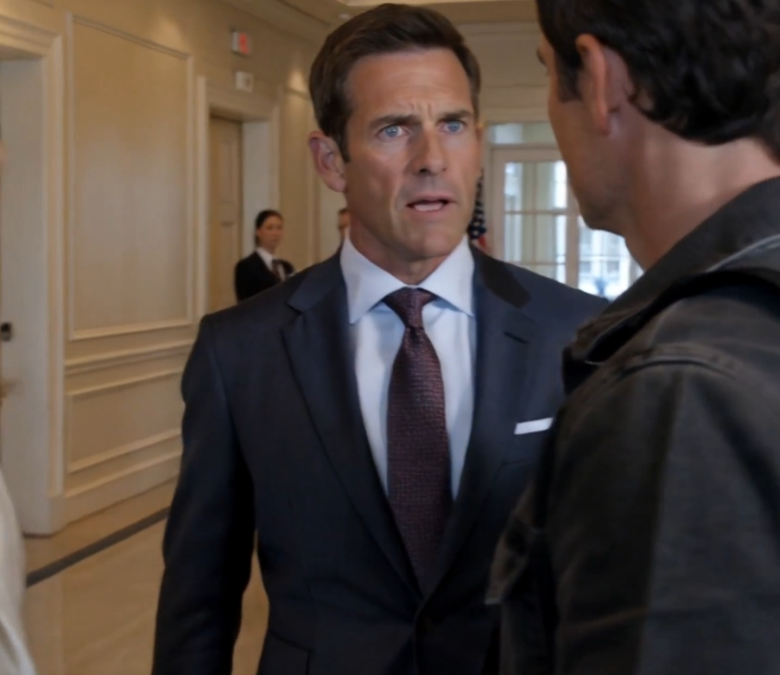
The first time I inspected one of our subsidiaries after becoming chairman, I didn’t tell headquarters I was coming. I wore a washed-out black jacket, carried an ordinary laptop bag, and walked through the employee entrance of Meridian Systems just after nine in the morning. I had barely reached the reception desk when someone stopped me.
It was Claire Bennett, the most admired woman in our department back in college, and the same woman who had rejected me in front of half the graduating class twelve years earlier. She stepped out of the elevator in a white suit and high heels. The moment she saw my temporary visitor badge, she paused. Then she laughed.
“Ethan Carter,” she said. “Wow, I almost didn’t recognize you. How did you end up looking like this?”
Several coworkers turned to see what was happening. Claire seemed to regain the effortless confidence she’d worn in college, the confidence of someone who had always been surrounded by admirers.
“I’m glad I didn’t choose you back then,” she added.
She had no idea that the man standing in front of her was the new chairman of the parent company. And she had no idea that the president of Meridian Systems was about to come running down the hall, pale with panic, asking why I hadn’t warned them I was coming.
My name is Ethan Carter.
In college, I was the least noticeable person in my entire department. Not because of my grades. I was always near the top of the class. What made me invisible was everything else: my family, my clothes, and the faint smell of damp hallways that seemed to cling to the cheap detergent I used.
My father had failed at running a small repair shop when I was young. The debt nearly swallowed our family. After his health declined, he took a night security job at a warehouse in our rural hometown. My mother rented half a stall at the local farmers market, where she sold coffee, breakfast sandwiches, and hash browns. She left home before sunrise, and the skin around her wrists carried old burns from years of working over a hot griddle.
When I was accepted into a state university in Chicago, my family couldn’t afford a celebration. After my mother closed her stall one evening, she made me a bowl of egg noodles with a fried egg on top. She sat on a little folding stool and waited until I finished eating before pulling a tightly rolled bundle of cash from her apron pocket.
“Don’t be afraid to spend money when you’re at school,” she told me. “Eat when you’re hungry. Your dad says that no matter how hard things get, we can’t let you go hungry away from home.”
The bundle held crumpled one-, five-, and ten-dollar bills. Their corners had yellowed from years of smoke and cooking oil. I held the money in my fist and realized for the first time how heavy an acceptance letter could feel.
Once I moved into the dorms, I avoided group dinners, never bought new clothes, and stayed in the library until closing whenever I could. My roommate joked that I lived between the bookshelves. I laughed along with him, but there was only one person who could make me look up from my notes and search the crowd.
Claire Bennett.
She was the undisputed star of our department. Her family had money, but she also worked hard and earned excellent grades. She played piano at orientation events and could dismantle an opponent in a debate without raising her voice. Everywhere she went, people gathered around her. She always carried a coffee in one hand and looked like the kind of person in a television drama whose clothes never picked up a speck of real life.
The first time Claire and I had a real conversation was during the university’s student startup competition in our second year. I had designed a supply chain management system to help small manufacturers track inventory and orders without hiring a full operations team. Mobile apps were beginning to take off, and most students were building flashy consumer products. No one thought my project sounded exciting.
On the day of the preliminary round, I stood at the front of the lecture hall in a shirt that had been washed so many times it had turned gray. The projector failed. The judges grew impatient, and the room filled with restless whispers.
“Equipment trouble isn’t an excuse,” one judge said. “If you can’t present, step aside and let the next team go.”
My palms were wet. A demonstration I had spent two weeks preparing was trapped on my laptop, and my throat had gone dry.
Then Claire stood up from the audience.
“Professor, my laptop can connect to the projector.”
She brought it to me and leaned close enough that only I could hear her.
“Transfer the file. Don’t panic.”
My presentation went forward. By the end of the day, my project had won second place.
After the ceremony, I returned her laptop backstage and stumbled through a thank-you. Claire smiled at me.
“Ethan, your idea was good. You were just nervous. You clearly have something to say, so stop acting like you’re afraid people might notice.”
I remembered those words for years.
After that competition, we often worked on the project together. I handled the software and mathematical models. Claire handled the pitch deck, the demonstrations, and the public-facing story.
Sometimes we left the engineering building after midnight, when the campus was empty except for the streetlamps. Claire would walk ahead on the brick path, then turn around and call to me.
“Come on, Ethan. You’re too slow. If you ever start a company, you’ll have to learn how to move fast.”
I would hurry after her with my laptop pressed to my chest and say, “I know.”
Inside, I couldn’t calm down for hours simply because she had looked back at me.
Before graduation, I finally confessed how I felt.
The department had just held its graduation reception. Students were taking pictures near the fountain outside the hall, dressed in clothes they had borrowed, bought on sale, or saved for months to afford. I stood beside the fountain with a letter I had written and rewritten a dozen times.
Claire came out in a white dress with several classmates around her. When she saw the letter in my hand, her smile slowly disappeared.
“Ethan, don’t,” she said.
The warmth drained from my face. She didn’t take the letter. Someone nearby whistled. Someone else laughed. Claire frowned, embarrassed by the attention and worried that the scene might get worse.
“We’re not on the same path,” she said quietly. “You work hard, Ethan, but hard work doesn’t make two people compatible.”
She looked away.
“I don’t want to spend my life struggling out of a tiny apartment with someone.”
Then she walked away.
The letter crumpled in my hand.
That night, I sat on the roof of the dormitory and let the wind cut through my shirt. My roommate, Noah Brooks, eventually found me and handed me a can of beer.
“She said no,” I muttered.
Noah sat beside me.
“A rejection is a rejection. Don’t treat it like your project got sentenced to death.”
I didn’t answer. He nudged my shoulder.
“If you’re really that upset, finish the system. Not to make her regret turning you down. Do it so you don’t regret giving up on yourself.”
I tore the letter into pieces and dropped them in the trash. After that, I never contacted Claire first again.
Life after graduation was harder than the rejection.
I didn’t join a major company. Noah and I rented a run-down two-bedroom apartment on the South Side of Chicago and kept developing the supply chain system we had started in college.
The apartment was stifling in summer and freezing in winter. The windows never sealed properly, and every time it rained, the walls smelled of wet plaster. Noah handled sales. I wrote code.
At our lowest point, we had $327 left in our business account.
The landlord pounded on our door like a debt collector. Noah hid in the bathroom and called a potential customer, forcing his voice to sound calm.
“Mr. Lawson, our system really can reduce your staffing costs. Give us one more month. If you’re not satisfied, I’ll come to your office and refund you personally.”
When he hung up, he remained crouched on the closed toilet lid and looked at me.
“Refund what? We don’t have money to refund anyone.”
I broke two packets of instant noodles in half and dropped them into a pot.
“First, we survive this month.”
Over the next few years, I learned how many ways people could look at you when they thought you had nothing to offer.
One small factory owner slapped our proposal onto his desk and said, “What do two kids know about running a business?”
An investor listened to our presentation, then asked whether I would sell him the technology. He said I could name any price, but he didn’t want Noah or me involved after the sale.
Another company used our system for months, then refused to pay the final invoice. When we protested, the owner laughed.
“What’s a little startup going to do about it?”
Whenever I felt close to breaking, I remembered Claire’s words.
I don’t want to spend my life struggling out of a tiny apartment with someone.
She wasn’t wrong. Life in that apartment was hard. But sometimes a person keeps going not to prove someone else wrong, but to make sure someone else’s opinion doesn’t become his destiny.
Our turning point came during the third year after graduation.
An old parts manufacturer outside the city was close to bankruptcy. The owner, Walter Lawson, had a reputation for being difficult. Noah visited the plant six times. Even the security guard knew him by name, but Walter still refused to meet with us.
On the seventh visit, I went with him.
The factory floor shook with the sound of machinery. The warehouse was stacked with mislabeled boxes. Walter sat smoking near the loading bay and barely looked up when he heard we sold software.
“I can barely make payroll,” he said. “And you want me to buy a system?”
Noah started to answer, but I caught his arm. I crouched beside Walter and studied the inventory sheets in his hand for ten minutes.
“You don’t have an order problem,” I said. “You have a fulfillment problem. There are three batches of parts in your warehouse that could be assembled and shipped today, but your records mark them as backordered.”
Walter finally looked at me.
“And what are you going to do about it?”
“Give me two days. I won’t charge you. Let me untangle this part of the operation first.”
“And if you can’t?”
“Then we leave.”
For two days, Noah and I slept in an unused office at the factory. At night, only a few lights remained on over the machinery. I sat with my laptop and checked every inventory record one by one, while Noah helped the warehouse crew move boxes. His hands blistered, but he never complained.
On the third morning, the first delayed shipment left the loading bay.
Walter stood beside the forklift and watched the boxes roll into the truck. He said nothing for a long time.
Eventually, he became our first long-term customer.
He also introduced us to Arthur Concincaid, the founder of Concaid Holdings.
Arthur was already in his sixties when we met. His hair was silver, but his eyes were sharp. He didn’t ask about our family, our connections, or our investors. He asked three highly specific questions about the system.
I answered each one.
Arthur leaned back in his chair.
“If this platform is deployed across a company with twenty warehouses and hundreds of suppliers, will it crash?”
Noah nearly dropped his coffee.
“Yes,” I said.
Everyone in the conference room looked at me. Noah kicked me under the table.
I continued, “It would crash today. Give me six months, and I can rebuild it so it won’t.”
Arthur watched me for a long moment. Then he smiled.
“At least you’re not bluffing.”
That day, he invested in our company and gave us our first project that truly mattered.
Over the next ten years, Noah and I turned a small inventory tool into a complete platform covering supply chains, warehouses, logistics, and demand forecasting.
Our company raised round after round of funding, merged with larger firms, went public, and eventually became part of Concaid Holdings.
Arthur’s health began to decline. Before stepping away from daily management, he moved me into the executive spotlight.
The day I was appointed chairman, he handed me an old fountain pen in his office.
“Ethan, I’m not giving you this group so you can sit upstairs and stare at spreadsheets,” he said. “Some people running our subsidiaries have learned to report only good news. If you want to hold this position, you need to go see those companies yourself.”
I accepted the pen.
“I understand.”
He coughed, then looked me over with a grin.
“And stop dressing like you just walked out of that old apartment. You’re the chairman now.”
I glanced down at my black jacket.
“It’s practical.”
Arthur shook his head.
“You’re still that stubborn, broke college kid underneath all the titles.”
I laughed with him.
What he didn’t know was that I had never wanted to disguise myself as someone else. Over the years, I had watched people draw close because of a title and turn cold because of a jacket.
The way someone treated a stranger at first glance often revealed more than all the polished speeches delivered in a boardroom.
So after I became chairman, I chose Meridian Systems for my first unannounced inspection.
It was the subsidiary with the most customer complaints and the highest employee turnover in the group. I asked my executive assistant, Hannah Cole, to pull the internal reports without notifying the subsidiary.
“You’re going alone?” Hannah asked.
“I want to look around alone first.”
She handed me a tablet.
“Meridian has had a lot of customer complaints lately. Sales has expanded quickly, but the implementation department is losing people at an alarming rate. There’s one more thing.”
“What is it?”
“The new brand director is Claire Bennett.”
My fingers stopped on the screen.
Hannah noticed.
“You know her?”
I closed the report.
“We went to college together.”
I hadn’t seen Claire in twelve years. I never expected to hear her name again in a place like this. I certainly didn’t expect her to be the first person I met during my inspection.
Meridian’s office building stood in one of Chicago’s newer technology districts. I arrived at 9:20 a.m., when employees were constantly moving through the lobby.
The entrance was bright and expensive-looking. Behind the reception desk, a polished company slogan read, Efficiency for Every Customer.
Under that slogan, two customers sat on a couch with unhappy expressions.
The receptionist kept making phone calls in a low voice.
“Mr. Lewis, the customers have been waiting forty minutes. Yes, I know you’re in a meeting, but they said they have to speak with someone today.”
I listened for a moment, then walked over.
“Are you here about an implementation issue?” I asked the customers.
The older man looked at my temporary visitor badge and seemed to assume I was just another outsider waiting for an appointment.
“We’re not here to discuss implementation,” he said bitterly. “We’re here to demand an explanation. The system has been live for three months, and our inventory data has been wrong seven times. Sales promises everything during the pitch, and when something breaks, sales and engineering point at each other.”
The receptionist looked embarrassed.
“Please have a seat. Our manager will be down soon.”
The older man gave a humorless laugh.
“I’ve heard that three times.”
I didn’t reveal who I was. I sat nearby and asked a few specific questions. At first, the customers didn’t want to say much. Once they realized I understood the details, they showed me the complaint history on a phone.
Delayed data. Missing features. Inadequate training.
None of the problems was fatal by itself, but together they were enough to destroy a customer’s confidence.
I was still reading when the elevator doors opened.
A group of employees in business clothes walked out around a woman in white. Her hair was pinned up. Her makeup was perfect.
For one instant, I saw the college girl who had handed me her laptop and told me not to panic.
Then the memory vanished.
Claire Bennett.
One of her employees was briefing her on the morning’s customer event. Claire walked quickly through the lobby, glanced toward the couches, and stopped.
“Ethan?”
I stood.
“It’s been a long time.”
She studied me for several seconds. Her eyes dropped to my faded jacket and visitor badge.
Surprise flickered across her face, then turned into amusement.
“It really is you,” she said. “I thought I was mistaken.”
The young employees around her looked at me with curiosity.
Claire didn’t introduce me. Instead, she treated our reunion like an old story she could use to entertain the room.
“Are you here on business?”
“Just looking around.”
“Just looking around?”
Her smile deepened.
“Meridian isn’t a place people can wander through. Are you looking for a job or trying to sell something?”
The two customers looked at me, too.
Before I could answer, the receptionist said quietly, “Claire, he was helping the customers with their problem.”
Claire’s brow tightened.
“Customer complaints are handled by the account managers. Outsiders shouldn’t interfere.”
She said it quickly, with the automatic authority of someone accustomed to being obeyed.
I handed the phone back to the customer.
“They’ve been waiting forty minutes.”
Claire’s smile faded.
“Ethan, this isn’t a student startup competition. Companies have processes. You don’t get to take over simply because you feel helpful.”
The older customer stood.
“Are you Claire Bennett? We’re here because your processes are so complicated that no one will solve the problem.”
Claire immediately switched to her professional smile.
“Mr. Lewis, I’m sorry you feel that way. We take your feedback seriously, but some of these issues need to be verified internally. We can’t make decisions based on one side of the story.”
Mr. Lewis gave a sharp laugh.
“Our system is unusable. How many sides do you need?”
The sales manager stepped in.
“Mr. Lewis, the conference room is ready. Let’s go through everything there.”
After the customers were escorted away, Claire turned back to me.
“You haven’t changed. You still want to fix everything yourself.”
“You work in branding now?”
She lifted her chin slightly.
“I’m director of the brand center. Meridian recruited me from headquarters. We’re aiming to become the industry benchmark. Building good software isn’t enough anymore. You have to know how to tell the story and secure the right resources.”
The word resources carried the same pride I remembered from college.
“And you?” she asked. “What have you been doing?”
“Supply chain projects.”
Claire seemed to hear exactly the answer she had expected.
“You always liked behind-the-scenes work. It’s stable, I suppose, but it’s not the kind of thing that gets people noticed.”
A man standing nearby let out a small laugh, then quickly looked away.
I watched Claire and felt no sharp pain. What I felt was a kind of belated clarity.
For twelve years, I had assumed she rejected me because I was poor. Now I understood that she had rejected everything that couldn’t immediately be displayed in public and admired by strangers.
Claire checked her watch.
“I have a meeting soon. Since we’re old classmates, I’ll give you some advice. Meridian isn’t hiring for ordinary positions right now. If you really want an opportunity, send me a résumé. I can ask whether we need an outside contractor.”
I smiled.
“No, thank you.”
She seemed surprised by how quickly I declined.
Still too proud, she probably thought.
I turned toward the office area.
The receptionist hurried after me.
“Sir, you haven’t registered for access to the upper floors.”
I took out the temporary authorization code Hannah had sent me.
The security gate beeped and opened.
The receptionist froze.
Claire froze, too.
I looked back at her.
“I really am just looking around.”
For the first time that morning, a crack appeared in her composure.
The problems inside Meridian were worse than the reports suggested.
The sales department was loud and frantic, filled with ringing phones, keyboard clicks, and people demanding updates. A performance board on the wall displayed the month’s new contracts in bright red letters.
Behind a glass door, the implementation department was quiet in the wrong way. Printed change requests covered the desks. Engineers stared at their screens with exhausted eyes.
In the break room, several people complained under their breath.
“Sales changed the scope again. The customer thinks we can launch a new module in three days.”
“Claire wants to package the account as a benchmark success story.”
“What success story? The back end is barely holding together.”
“Keep your voice down. Daniel trusts her.”
I stood outside the break room and didn’t interrupt.
A young engineer carrying a folder nearly collided with me.
“Who are you looking for?” he asked.
“I want to understand the Lewis account.”
He looked at me suspiciously.
“Are you with sales?”
I shook my head.
Some of the tension left his face, but he still didn’t seem willing to say much.
“The implementation team isn’t refusing to do the work,” he said. “The problem was created when the contract was signed. The customer wanted a customized version, but sales quoted the standard version to win the deal. Then the extra development hours landed on us.”
He realized he had said too much and stopped.
“Forget you heard that.”
I asked his name.
He hesitated.
“Evan Shaw.”
“Does your supervisor know?”
Evan laughed without humor.
“What would it change? My supervisor resigned last week. Daniel only looks at signed contracts, and Claire only looks at the launch event. Anyone who points out a risk gets labeled a blocker.”
High heels clicked behind us.
Claire stood at the end of the hallway, her expression hardening.
“Evan, why are you standing around during work hours?”
Evan stiffened.
“I was getting water.”
Claire walked toward us, her eyes moving from Evan to me.
“Ethan, how did you get into this area?”
Her voice no longer sounded like a teasing reunion between old classmates. It carried open displeasure.
“The security gate opened.”
“Don’t play word games with me. There’s confidential material here. You’re an outside visitor walking through an active department. If something goes wrong, who takes responsibility?”
Evan tried to explain.
“Claire, he only asked about the customer’s issue.”
“Did I ask you?”
The words shut him down.
His face flushed. His grip tightened around the folder.
I glanced at the change requests in his arms.
“If customer problems aren’t solved, polished launch materials will eventually make things worse.”
Claire’s eyes went cold.
“Are you telling me how to do my job?”
Several employees peeked out of their cubicles. Claire noticed them watching, and instead of backing away, she doubled down.
“You were like this in college, too. You built one little project and decided the whole world should listen. Companies aren’t student clubs. You don’t get very far on technical ideals and long nights.”
She shoved the folder against Evan’s chest.
“Evan, organize the implementation issues for this afternoon’s customer review. Don’t push all the responsibility onto sales and brand. If the project isn’t working, the first problem is execution.”
Evan’s lips parted, but he only said, “Understood.”
I watched him lower his head, and the anger I had been holding back finally surfaced.
I knew that scene too well.
When Noah and I were starting out, we had often been trapped between customers and the people who had made the promises. The employees who did the real work stayed up all night repairing the damage. The people who made impossible commitments stood onstage and talked about vision.
When something failed, blame always landed on the people least skilled at packaging themselves.
Claire turned to leave.
“What time is the customer review?” I asked.
She glanced over her shoulder, amused.
“Why? Do you want to sit in?”
“If that’s possible.”
She laughed as though I had said something absurd.
“Ethan, do you still think winning second place in a college startup contest means you can lecture everyone everywhere you go?”
The hallway grew quieter.
Evan said softly, “Claire, let it go.”
She ignored him.
“If you were really doing well, you wouldn’t be wandering around with a visitor badge and that old laptop bag. I was going to spare you some embarrassment because we’re old classmates. But if you insist on making yourself look foolish, I can’t help you.”
My phone vibrated in my pocket.
Hannah had sent a message.
Daniel Price, Meridian’s president, had arrived in the lobby and would be upstairs in ten minutes.
Did I want her to come in and identify me?
I typed two words.
Not yet.
When I looked up, Claire was still watching me.
“Busy texting someone for résumé advice?” she asked.
I put my phone away.
“Claire, you said you were glad you didn’t choose me back then.”
Her smile faded.
“And I’m glad, too.”
She frowned.
“Glad about what?”
“Glad you rejected me early enough.”
Someone nearby drew a quiet breath.
Claire’s face changed instantly.
Before she could answer, the conference room door opened.
Mr. Lewis stepped out, clearly unhappy with the meeting.
“Claire, don’t bother explaining anymore,” he said. “I’m leaving. Have the person in charge send me a written response about the contract.”
The sales manager hurried after him.
“Mr. Lewis, please give us a little more time.”
Mr. Lewis gave a bitter smile.
“I’ve given you time. Who is responsible for my losses?”
Claire’s expression shifted. She moved toward him immediately.
“Please don’t leave angry. There may have been a communication problem this morning. We’ll give you a solution this afternoon.”
Mr. Lewis saw me and paused.
“Young man, the questions you asked were more useful than everything they said in that meeting. If you work here, I might listen for another minute.”
Claire’s face went rigid.
“He doesn’t work here.”
Mr. Lewis looked at her.
“Then why does he understand your customers better than the people who do?”
The sales manager lowered his head.
Evan stood nearby, and for a moment, I saw satisfaction flash across his face before he hid it.
Claire’s embarrassment was complete.
She turned to me, her voice slow.
“Ethan, what are you really doing here?”
Before I could answer, hurried footsteps sounded from the direction of the president’s office.
The entire hallway seemed to shift.
Daniel Price appeared at the end of it.
He was in his forties and normally ruled Meridian with absolute confidence. The sales manager, who had been sweating through his shirt, looked relieved to see him.
“Daniel, Mr. Lewis is threatening to terminate the contract. Claire is trying to calm him down.”
Daniel didn’t look at him.
His gaze passed over the sales manager and landed on me.
His step faltered.
Claire didn’t notice. She seemed relieved that someone senior had arrived to support her, and she moved forward.
“Daniel, this is my college classmate. He had no appointment and isn’t an employee, but he used temporary visitor access to wander through the implementation department and interfere with a customer conversation.”
She spoke quickly, afraid I might speak first.
“The customer became more upset after he got involved. I think security should escort him out while we investigate how his access was approved.”
The hallway went silent.
Evan held his folder against his chest, his face pale. Mr. Lewis watched the scene with a frown.
The sales manager hurried to agree.
“Yes, Daniel. He was asking about project details, and we don’t know how he got upstairs.”
Claire found her confidence again. She turned to me with a look of restrained contempt.
“Ethan, I already gave you a chance to leave with your dignity. Apologize, stop disrupting our work, and I won’t pursue this.”
I looked at her without speaking.
She thought I was afraid.
“You’ve always been like this,” she continued. “You push until the very end, then refuse to admit you’ve lost. You did it with your project in college, and you did it when you chased me. But real life isn’t a place where a few late nights and a few lines of code can transform you.”
Several employees looked uncomfortable.
Claire didn’t seem to notice.
She kept going.
“Honestly, seeing you here today made me nostalgic. I’m glad I didn’t choose you. Otherwise, twelve years later, I might still be standing outside company offices with you, waiting for an opportunity.”
I finally smiled.
Not because her words were funny.
Because twelve years had passed, and Claire still seemed trapped beside that graduation fountain, convinced that after she rejected me, my life could only move downward along the path she had imagined for me.
Daniel’s face had gone white.
He tried several times to speak, but Claire kept cutting him off.
When she finally stopped, sweat slid down his temple. The folder in his hand was crushed at one corner.
“Claire,” he said tightly.
She turned toward him.
“Daniel, don’t worry. I’ll handle this.”
“Stop talking.”
The words weren’t loud, but they made her freeze.
“Daniel?”
He ignored her and hurried toward me.
The people waiting to see security remove me slowly changed their expressions.
I remained where I was.
Daniel stopped in front of me, breathing hard from moving too quickly. He glanced at my temporary visitor badge, and the color drained from his face.
Then he bent forward.
“Chairman Carter,” he said, his voice filled with panic. “Why didn’t you tell us you were coming?”
Claire’s smile froze.
The folder in her hand slipped to the floor.
Several pages scattered across the polished tile and slid to the toe of my shoe.
The hallway became so quiet I could hear the air conditioning.
Claire stood motionless, as if she hadn’t understood Daniel. She looked down at the papers, then back at me. Her lips moved twice.
“Chairman?”
Daniel was sweating harder now.
“The chairman is here for an internal inspection,” he said. “Headquarters wasn’t notified because Chairman Carter specifically requested an unannounced visit.”
He quickly added, “Chairman, I’m truly sorry. I personally approved your temporary access last night. I simply didn’t know what time you would arrive.”
Claire looked as if someone had nailed her to the floor.
Every sentence she had spoken came back to her.
If you were really doing well, you wouldn’t be wandering around with a visitor badge.
I’m glad I didn’t choose you.
Twelve years later, I might still be standing outside company offices with you, waiting for an opportunity.
The employees around us had carefully arranged their faces into expressions of neutrality. Some lowered their heads. Others pretended to organize documents.
No one dared to laugh.
That made the embarrassment even sharper.
The sales manager was the first to recover.
“Chairman, I… I didn’t realize it was you.”
I didn’t answer him.
Instead, I crouched down, gathered the papers beside my shoe, and handed them to Claire.
Her fingers trembled when she took them.
“Ethan…”
Daniel’s face tightened.
“Claire!”
I raised a hand.
“It’s fine. We went to college together. Calling me Ethan is normal.”
Her eyes reddened. I couldn’t tell whether she was ashamed or frightened.
“I didn’t know you were…”
“If you had known I was chairman, you wouldn’t have said those things.”
She stopped.
I didn’t force her to answer.
The answer was obvious.
I turned to Mr. Lewis.
“I’m sorry you had to watch that. It wasn’t how your meeting should have gone.”
Mr. Lewis was still staring at me.
“You’re really the chairman of Concaid Holdings?”
“I am.”
His anger eased slightly, but his attitude didn’t change simply because of my title.
“Chairman, I respect your position,” he said. “But I’ll say the same thing I said before. We bought a system, not the chairman’s reputation. If you can’t solve the problem, we’ll still terminate the contract.”
I smiled.
“You should.”
He looked surprised.
“Customers pay for service. They shouldn’t have to protect a company’s pride.”
I checked my watch.
“You didn’t get a solution this morning. Don’t cancel the review meeting. I’ll attend.”
Mr. Lewis frowned.
“You’re joining personally?”
“I came to investigate problems. Since I’m here, we’ll start with the most urgent one.”
After a moment, he nodded.
“Fine. I’ll wait until this afternoon.”
He took his team back into the conference room.
Only then did I turn to Daniel.
“Find me an ordinary conference room,” I said. “Not the executive suite. And don’t line up the entire company to welcome me.”
Daniel nodded so quickly it looked painful.
“Understood.”
“I want the last six months of customer complaints, changes to sales commitments, delayed project lists, and voluntary resignations.”
His expression shifted.
“All of them?”
“All of them. And for this afternoon’s review, I want the people who actually worked on the project. Don’t invite only managers.”
My eyes moved to Evan.
He blinked.
“You’ll attend. Bring everything you know.”
Evan glanced instinctively toward Claire.
Claire’s face was still pale.
I noticed his hesitation and understood more than he had said.
“Don’t look at anyone else,” I told him. “No one has to protect anyone today, and no one has to attack anyone either. We’re going to talk about facts.”
Evan pressed his lips together.
“Understood.”
I walked several steps down the hall.
Then Claire called my name.
I stopped.
She stood alone beside the scattered remnants of her confidence. For one second, the woman in the white suit overlapped with the college student in the white dress.
But inside me, there was no trace of the old excitement.
“I’m sorry,” she said quietly. “What I said was out of line.”
Everyone nearby seemed to wait for my response.
Even Daniel watched me anxiously.
I nodded.
“I heard your apology.”
Relief briefly softened her face.
My next words erased it.
“But my inspection isn’t about the way you treated me this morning.”
I looked at her.
“It’s about the way you treat everyone else.”
Then I entered the conference room and closed the door behind me.
The real inspection had begun.
At 10:40, I sat in a small fourth-floor conference room with space for barely ten people. Daniel sent over every report he could find, and within minutes, the table was covered.
Seventy-two customer complaints.
Forty-six changes to signed sales commitments.
Twenty-eight delayed projects.
Forty-three voluntary resignations in six months.
Nineteen of those resignations came from implementation.
The number made me frown.
Meridian had just over two hundred employees. Losing forty-three people in six months wasn’t ordinary turnover. It was a management failure.
The exit reasons were all carefully written: personal development, family circumstances, career planning, health reasons.
Almost no one had written that they were unhappy with the company.
I pushed the list toward Daniel.
“Do you believe these explanations?”
He sat very straight.
“What do you mean?”
“Forty-three people resigned voluntarily in six months. Nineteen came from implementation. Your conclusion is that all nineteen happened to experience a life change at the same time?”
Daniel’s mouth tightened.
“HR respects how employees describe their own reasons during exit interviews.”
“Have you read the actual interviews?”
He didn’t answer.
That told me enough.
“Meridian’s revenue rose thirty-eight percent last year,” I continued. “Profit rose only nine percent. Customer complaints doubled. Employee turnover is approaching the group’s warning threshold. Yet your monthly reports to headquarters highlight signed contracts and almost nothing else. Why?”
Daniel’s forehead began to shine with sweat.
“Headquarters set aggressive targets.”
“So completing the target means ignoring the holes behind it?”
“That isn’t what I meant.”
I didn’t continue arguing.
Every problem could be wrapped in a reasonable explanation: leadership pressure, market competition, difficult customers, weak execution.
But if every problem ended with there was nothing we could do, what were the company’s highly paid managers actually managing?
I turned to the next report and found Mr. Lewis’s project.
Sales had promised one month to launch the customized module. The technical assessment prepared before the contract was signed clearly stated that development would require at least eight weeks, followed by another two weeks of stress testing.
I placed the two documents side by side.
“Who approved this?”
Daniel glanced at the papers.
“Steven Walsh, our vice president of sales.”
“And final approval?”
Daniel was silent.
“Me.”
“You knew the timeline was impossible.”
“Mr. Lewis had two competitors. If we didn’t make an aggressive commitment, we might lose a $3.5 million contract.”
I nodded.
“So you signed first and expected implementation to solve the consequences.”
Daniel lowered his head.
I understood why Evan’s words had sounded so familiar.
Most companies didn’t fail because one person was uniquely evil. They failed because pressure was pushed down one layer at a time.
The board demanded growth.
The president demanded revenue.
Sales demanded signed contracts.
Brand demanded success stories.
Eventually, the pressure reached the people who had nowhere left to push it.
They worked late. They burned out. They resigned.
Someone new was hired, and the cycle began again.
At noon, Hannah arrived from headquarters.
She placed a USB drive on the table.
“The anonymous employee survey is ready.”
I inserted the drive into my laptop.
One hundred sixty-seven employees had responded.
The most important question was simple.
What is Meridian’s most serious problem?
The top answer wasn’t pay.
It wasn’t overtime.
It was this: Promises and responsibility do not match.
Sales made the promise, but implementation carried the responsibility.
Management made the decision, but frontline employees took the blame.
When a project succeeded, department leaders accepted the awards.
When it failed, the people who executed it wrote self-criticisms.
I stared at the sentence for a long time.
Hannah lowered her voice.
“There’s another issue.”
“Go ahead.”
“We reviewed the brand campaigns launched since Claire joined Meridian.”
I looked up.
“What did you find?”
“I wouldn’t call it a policy violation by itself, but three major case studies were promoted well before their projects were actually delivered. Two were submitted for industry awards before the customers completed formal acceptance.”
I frowned.
“Who approved that?”
Hannah looked at Daniel.
I understood.
Daniel spoke quietly.
“The award deadlines are fixed. If we wait for formal acceptance, we miss the window.”
I leaned back.
I almost laughed.
Sales feared losing customers, so they made promises early.
Brand feared missing awards, so it published early.
Management feared disappointing headquarters, so it reported good news early.
Everyone kept saying the same thing.
Deal with the hole later. Let someone else fill it.
“For this afternoon’s review,” I said, “invite Steven Walsh.”
Daniel nodded.
“And Claire, of course.”
Hannah studied me.
She had worked with me long enough to know that Claire and I had been classmates.
“Should someone from group audit chair the meeting?” she asked.
I knew what she was worried about.
Someone might say I was using a personal history from twelve years ago to punish Claire.
I shook my head.
“No. The closer the history, the more important it is to be clear. Claire had every right to reject me. Her attitude this morning is a matter of personal character. Neither belongs in the decision about an executive’s performance.”
I tapped the reports.
“We will judge only what she has done in her role.”
Daniel looked up at me but said nothing.
At two o’clock, fourteen people gathered in the conference room.
Mr. Lewis and his technical lead sat on one side. On the Meridian side were Daniel, Steven, Claire, Evan, and several employees who had actually built, implemented, and supported the project.
There were no flowers, no catered refreshments, and no opening slide that said, Welcome, Distinguished Leaders.
I started immediately.
“We have one purpose today. We’re going to explain how this project became what it is.”
I looked around the room.
“No polished language. No vague phrases. Facts.”
Mr. Lewis put his phone on the table.
“The contract promised launch within one month. After a month, only the basic version was live. In the second month, data began arriving late. We had to stop warehouse counts twice because of it.”
Steven immediately tried to explain.
“The contract also says some features would require additional development based on actual needs.”
Mr. Lewis gave him a cold smile.
“Why didn’t you say that when you were selling it?”
Steven stopped.
I looked at him.
“What happened?”
He clenched his jaw.
“We made the timeline more optimistic to win the account.”
“How optimistic?”
“Engineering estimated eight to ten weeks.”
“You promised four.”
The room went quiet.
“That isn’t optimism,” I said. “That’s half the required time.”
Steven looked down.
I didn’t shout.
“Continue.”
Evan opened his laptop.
He had clearly spent the entire morning preparing.
The first page wasn’t an accusation. It was a timeline: the date the contract was signed, the date requirements were frozen, the date the customer requested changes, the date sales promised additional features, and the date testing discovered the defects.
Everything was documented.
Seven minutes into his presentation, Evan opened an internal email.
“This was our first warning that the timeline was unsafe,” he said. “It was sent three days after the contract was signed.”
He read the message aloud.
“Engineering determined that the project could not be completed in one month. We recommended confirming a reduced launch scope with the customer.”
I asked who had rejected the recommendation.
Evan didn’t answer.
Steven’s expression darkened.
Claire spoke.
“I did.”
Everyone looked at her.
I was surprised, too.
Since entering the room, Claire had avoided eye contact with me. Now she sat straighter and took responsibility without being asked.
“We were preparing to promote this account publicly,” she said. “A delay would have affected the benchmark case study.”
Evan looked toward her.
“But the final announcement said the system was fully launched.”
Claire was silent for a moment.
“I changed that wording.”
Mr. Lewis stared at her.
“You did what?”
Claire took a breath.
“The day before the launch event, Daniel said this case study was important to Meridian’s industry ranking. Steven said the customer had already signed and would eventually go live. So I changed implementation started to fully launched.”
Mr. Lewis’s face hardened.
“We hadn’t even completed the first acceptance review.”
“I know,” Claire said quietly. “It was my mistake.”
I watched her.
Honestly, I had expected her to argue. I expected her to do what she had done to Evan that morning and turn the issue into an execution failure.
This time, she didn’t.
The review continued for more than an hour.
By the end, the chain of events was clear.
Sales had promised more than the technical team could deliver. Brand had advertised results before the customer had accepted the system. The president had allowed it because headquarters demanded annual growth.
Implementation had tried to meet an impossible deadline. Testing had been compressed to save time. Defects had exploded after launch.
Then several departments had pushed responsibility back and forth instead of solving the underlying problems.
No single person had created the entire mess.
But every person involved had pushed risk a little farther down the line.
That was how a manageable problem became a crisis.
I turned to Mr. Lewis.
“If we present a proper remediation plan, will you give us another opportunity?”
He didn’t answer immediately.
“How long?”
I looked at Evan.
“You tell him.”
Evan startled.
“Me?”
“You know the technical reality.”
Evan exchanged a few low words with the technical lead from Northstar.
Then he straightened.
“Six weeks.”
Steven immediately objected.
“Six weeks is too long. Can we do four?”
Every person in the room turned to him.
Steven’s face reddened.
I couldn’t help smiling.
“Steven, haven’t you learned anything?”
Someone let out a quiet laugh.
Even Mr. Lewis’s mouth twitched.
Evan continued.
“Six weeks is the complete repair. During the first two weeks, we can fix the inventory synchronization and permissions issues causing the most damage. We’ll update the remaining modules in stages and complete full-load testing in week six.”
Mr. Lewis considered the proposal.
“What about our losses?”
Daniel began to speak, but I raised a hand.
“The contract governs the answer. We’ll compensate you according to its terms.”
Daniel’s expression changed.
“Chairman…”
I looked at him.
“We signed the contract. We caused the failure. Why should the customer pay for our management decisions?”
Mr. Lewis stared at me for a long time.
Then he extended his hand.
“Chairman Carter, I’ll give you six weeks because of that answer.”
I shook his hand.
“Thank you. But I want one thing made clear. The project lead for these six weeks will not be sales. Implementation and engineering will lead directly. No external commitment goes into a contract without technical confirmation.”
Mr. Lewis nodded.
“Agreed.”
The meeting ended after four.
Evan was carrying his laptop toward the door when I called him back.
“Evan.”
He turned, suddenly nervous.
“Your presentation was good.”
He looked startled.
“Thank you.”
“I’m not complimenting your slides. I’m complimenting the fact that you didn’t use the meeting to dump all the blame on someone else.”
Evan gave an embarrassed smile.
“Everyone involved contributed to the problem.”
“Remember that. It will matter when you lead a team.”
His eyes brightened.
“I will.”
After Evan left, only Daniel, Claire, Hannah, and I remained.
Claire knew it was time to discuss her performance.
She spoke first.
“How are you going to handle me?”
I looked at her.
“How do you think I’m going to handle you?”
She gave a weak smile.
“Fire me.”
“Why?”
“Because of what I said this morning. Because I embarrassed you in front of everyone.”
I shook my head.
“You still don’t understand.”
I pushed the investigation documents toward her.
“I already said this. Rejecting me twelve years ago wasn’t wrong. Not recognizing me this morning wasn’t wrong either. Even believing I had failed would have been your right. I’m not going to fire a group executive over any of those things.”
Claire stared at me.
“Then why investigate all of this?”
“Because you are Meridian’s brand director.”
I tapped the documents.
“Not because your name is Claire Bennett. You promoted projects before acceptance. You helped suppress implementation risks for publicity. When customer complaints appeared, your first instinct was to protect the public message instead of solving the problem.”
I paused, then continued.
“And this morning, Evan stated a fact. Your first question wasn’t whether he was right. You wanted to know whether he had the authority to speak.”
Claire’s face slowly lost its color.
“Those are the problems we’re discussing.”
Daniel sat beside her, visibly uncomfortable.
Many of those decisions had passed through him, too.
I turned to him.
“Daniel.”
“Yes?”
“Don’t assume this meeting is only about Claire. Meridian’s largest management failures belong to you.”
Daniel’s face tightened.
“I accept that.”
“You’re the president. Sales promises, brand messaging, implementation overtime, all of it runs through your office. Your revenue numbers looked excellent last year, so headquarters didn’t examine the damage underneath. That was a failure by headquarters, too. It doesn’t erase yours.”
Daniel nodded in silence.
I looked at Hannah.
“Record this. Daniel Price’s annual performance bonus is suspended pending a special remediation review. The review lasts three months. If customer complaints, employee turnover, and on-time delivery don’t improve materially, his position will be reassessed.”
“Understood,” Hannah said, writing it down.
I turned back to Claire.
She instinctively straightened.
“Your position as brand director remains in place for now.”
Claire looked up sharply.
Daniel looked surprised, too.
“But every project without formal customer acceptance must stop using phrases like successful case study or fully implemented. The Lewis campaign must be withdrawn and corrected. You will personally apologize to the customer. For the next three months, every major brand campaign must be signed off by implementation as well.”
I held her gaze.
“A customer gets to say a project succeeded. We don’t get to declare success just because we designed a nice slide.”
Claire was quiet for several seconds.
“I accept.”
“And one more thing.”
She looked up.
“Apologize to Evan for this morning.”
Her lips pressed together.
After a long pause, she nodded.
“I will.”
Daniel and Hannah left first.
The late afternoon sun stretched long shadows across the conference table.
Claire remained in her chair.
“Do you think I’ve become ridiculous?” she asked.
I didn’t answer.
She continued anyway.
“In college, I really did think you were poor. I really didn’t want to start in a tiny apartment with someone. My father’s business was doing well then. I grew up believing a respectable life was the goal.”
She looked toward the window.
“What you wore, what kind of car you drove, which company employed you, what title you held. I thought all of it mattered.”
She paused.
“After graduation, my father’s business collapsed within two years. My family went deeply into debt. My mother became ill. I stopped attending reunions because I was ashamed.”
Her voice grew quieter.
“Then I worked constantly, changed jobs, chased projects, and competed for promotions. I became terrified of people thinking I wasn’t successful.”
She gave a small, bitter laugh.
“So when I saw your visitor badge this morning, I…”
She didn’t finish.
But I understood.
Sometimes the thing a person uses most eagerly to judge others is the very thing that has trapped them.
Claire looked at me.
“That doesn’t excuse me.”
“No.”
“What I said was cruel.”
“It was.”
She seemed surprised by my bluntness.
Then she laughed softly.
“You haven’t changed.”
“How so?”
“You still don’t know how to comfort people.”
“I’m not obligated to comfort you.”
“True.”
She looked out at the city.
“After I rejected you, there was a period when I regretted it.”
I said nothing.
She turned back to me.
“You’re not curious?”
“Not really.”
“Why not?”
“Because it was twelve years ago.”
The last trace of expectation in her eyes slowly faded.
It wasn’t exactly sadness. It was the realization that the young man who had stood beside the fountain, waiting for her answer, no longer existed.
Claire sat quietly for a while.
“Ethan?”
“Yes?”
“You won.”
I shook my head.
“No. There’s no winning or losing in love. You didn’t owe me an answer back then. And the life I built afterward wasn’t built to make you regret rejecting me.”
I stood.
“If I had spent twelve years working only to stand in front of you and say, ‘See, you were wrong about me,’ then those twelve years would have been a cheap price to pay for your attention.”
Claire looked at me for a long time.
Then she nodded.
“You’re right.”
“Work is work,” I said. “Do the next three months well. If you fail, we’ll make the appropriate change.”
She stood, too.
There was no contempt in her expression now.
“Understood.”
At the door, she called my name.
I turned.
“Congratulations.”
“For what?”
“Not for becoming chairman.”
She hesitated.
“For actually building the system you talked about in college.”
I remembered the broken projector in the lecture hall.
I remembered Claire standing up, handing me her laptop, and telling me not to panic.
The memory felt very far away.
I smiled.
“Thank you.”
This time, I meant it.
I spent three days at Meridian Systems.
I didn’t stay in the company’s preferred hotel. I didn’t allow the subsidiary to arrange special receptions. Every morning, I arrived at nine. Every evening, I ate in the cafeteria with frontline employees.
On the third day, an older service technician carried his lunch tray to my table.
“Chairman, can I ask you something?”
“Go ahead.”
“Are you planning to replace half the management team?”
Several people nearby quietly listened.
“Why would you think that?”
“Whenever someone from headquarters comes to inspect us, a few people get fired. Otherwise, it doesn’t look like the inspection accomplished anything.”
I set down my fork.
“Firing people isn’t an accomplishment. Fixing the problem is.”
The technician blinked.
“If someone committed serious misconduct, then deal with it,” I continued. “But if every failure ends with finding one person to sacrifice, then the actual problem is still there.”
The people around us exchanged looks.
The tension eased.
That afternoon, I held an all-hands meeting in the lobby.
I didn’t sit on a raised platform. I stood among the employees.
Many of them were seeing the parent company’s chairman up close for the first time.
I didn’t talk about strategy, vision, or the group’s market value.
I talked about three rules.
First, beginning the following month, every technical commitment in a sales contract had to be confirmed by the implementation or engineering lead. No one could promise an impossible delivery date just to get a signature.
Second, Meridian would create a project contribution record. Future awards, promotions, and bonuses would consider the people who did the actual work, not only the managers who presented the results.
Credit would go where the work went.
Third, employees could escalate serious customer risks above their direct supervisors. If a manager deliberately suppressed a risk, the employee who reported it would not be punished for bypassing the chain of command.
Scattered applause began in the lobby.
It grew into a steady wave.
I raised a hand.
“Don’t applaud too quickly. Writing a policy is easy. If we’re still following it six months from now, then you can applaud.”
Someone laughed.
After the meeting, I asked Evan to come to my temporary office.
He walked in twisting his hands together.
“Chairman, you wanted to see me?”
I handed him a document.
He read the first line and froze.
Acting Deputy Lead, Customer Implementation Task Force.
“Me? For three months?”
“Don’t celebrate yet. Leading a team is different from doing good work alone.”
Evan held the document in both hands.
“I’m only twenty-seven, so I’m afraid I won’t be good enough.”
I looked at him and remembered myself at his age.
Years earlier, Arthur Concincaid had asked whether my system would crash under the weight of hundreds of suppliers. I had admitted that it would.
Arthur had smiled and told me I wasn’t bluffing.
“Being afraid you’re not ready means you understand that the job is difficult,” I said. “The dangerous people are the ones who haven’t started and already believe they can do everything.”
Evan smiled.
“Then I’ll try.”
“Not try,” I corrected him. “If you accept the role, take it seriously. If you do a poor job, we’ll discuss the poor job.”
He stood straighter.
“Understood.”
When I left Meridian that evening, Daniel and several managers escorted me to the lobby.
I looked around.
Claire was nowhere in sight.
“Where’s Claire?” I asked.
Daniel paused as though trying to determine whether I was unhappy.
“She went to Mr. Lewis’s company. She left this afternoon to review the corrected campaign materials with him in person.”
I nodded.
“Good.”
Daniel visibly relaxed.
“Chairman, I’ll fix these problems over the next three months.”
I looked at him.
“Don’t fix them for me.”
He waited.
“I won’t be here every day. Fix them for the customers and the employees.”
Daniel was silent for two seconds, then nodded firmly.
“Understood.”
The receptionist from my first morning was still at the desk.
When she saw me, she stood.
“Good night, Chairman.”
I smiled.
“Did customers still wait forty minutes today?”
Her cheeks turned pink.
“No. Daniel issued a new rule. If no one greets a customer within ten minutes, the matter goes directly to the president’s office.”
“Good.”
When I stepped outside, a light rain had begun to fall.
Hannah was waiting with an umbrella.
“The car is up ahead.”
I took the umbrella from her.
“You can go. I’m going to walk a little.”
She sighed.
“Are you planning to take the train again?”
“Traffic is terrible. The train is faster.”
She shook her head with a smile.
“Arthur was right.”
“About what?”
“You really have no intention of dressing like a chairman.”
I looked at my black jacket.
“What’s wrong with it?”
“The color is faded.”
“It still works.”
“You can afford a new one now.”
I started walking under the umbrella.
“When I was broke, I couldn’t afford to throw it away. Now that I have money, I don’t need to throw it away just to prove that I have money.”
Hannah followed beside me.
“No wonder Claire didn’t recognize you.”
I glanced at her.
“Are you gossiping?”
“Executive assistants are allowed to be curious.”
I let it go.
Rain tapped along the edge of the umbrella.
One by one, lights came on in the high-rises around us.
Twelve years earlier, I had eaten half a packet of instant noodles in a cheap apartment and never imagined I would one day stand where I was standing.
But once you finally reach a place you thought would save you, many things that once seemed important become small.
The rejection at the fountain.
Other people’s contempt.
When you’re young, success can seem like a way to make the people who looked down on you regret it.
Later, you learn that real success is meeting them again and realizing you no longer need to win the argument you carried for years.
Three months later, Meridian delivered its first remediation report.
The Lewis project was repaired two days ahead of schedule.
Inventory synchronization errors fell below one in ten thousand transactions.
Northstar signed a second-phase services agreement.
The renewal mattered, but it wasn’t what interested me most.
Customer complaints had fallen forty-one percent. Voluntary resignations in implementation had dropped from eleven in the previous three months to three. Overtime had declined. On-time delivery had improved.
The figures proved that many of the tasks employees had supposedly needed endless overtime to complete were not inherently impossible.
They had been made impossible by reckless promises and repeated rework.
Daniel passed the remediation review.
Half of his suspended performance bonus was restored. The other half remained withheld under the original decision.
He didn’t object.
Evan’s acting appointment became permanent.
He became the youngest implementation team manager in Meridian’s history.
When Hannah showed me the appointment notice, she laughed.
“People in implementation have started calling him Fearless Evan.”
“Why?”
“He used to be too nervous to speak in meetings. Now, whenever sales makes an unreasonable promise, he slaps the requirements sheet on the table and challenges it.”
I smiled.
“As long as he doesn’t start slapping tables. Requirements sheets are acceptable.”
Claire stayed, too.
Over those three months, she revisited the three case studies she had promoted early and obtained formal customer approval for each one.
One customer refused to continue authorizing the promotional campaign. Claire withdrew the materials even though one of the campaigns had already won an industry award.
Several people in brand thought it was a waste.
Claire gave them one answer.
“A fake benchmark is worse than no benchmark.”
The sentence eventually reached me.
I didn’t comment on it. I simply asked Hannah to include it in the remediation report.
Six months later, Concaid Holdings held its annual customer conference.
Meridian was given one presentation slot.
Under the old system, the speaker would have been Daniel or Claire.
Instead, Evan shared the stage with the warehouse operations manager from Northstar.
They didn’t tell a grand story about innovation.
They told the truth about the project that had failed: how the promise had been wrong, how the launch had been delayed, how the remediation was organized, where Meridian had paid compensation, and how the system had eventually become stable.
The audience listened with unusual attention.
When the presentation ended, the applause was louder than anything generated by the polished success stories of previous years.
I sat in the front row.
Claire sat several rows behind me.
After the session, she caught up with me.
“Ethan.”
“Yes?”
She handed me a booklet.
It was Meridian’s new brand standards guide.
The first page contained one sentence.
Success that the customer has not confirmed is not success.
I turned a few pages.
“It’s good.”
Claire smiled.
“I’ve understood a lot over the past six months. For example, I used to think branding meant showing people the best version of yourself.”
She looked down at the booklet.
“Now I think a real brand is willing to admit what went wrong after a problem appears.”
I closed the booklet.
“That’s more progress than you made in any college debate.”
She laughed.
“You remember those?”
“My memory is good.”
We walked side by side toward the elevators.
At the doors, Claire stopped.
“I’m getting married next month.”
I was surprised.
“Congratulations.”
“He used to work with me. He’s an architectural designer.”
She hesitated.
“He doesn’t make as much money as you.”
I looked at her.
She laughed at herself.
“I’m kidding.”
Then she grew serious.
“He’s ordinary. He has a mortgage. His job is demanding, but being with him feels easy.”
I raised an eyebrow.
“You’re not afraid of struggling in a small apartment anymore?”
Claire stared at me for a second, then laughed.
“You really did remember that.”
“It’s been twelve years. Let me use it once.”
Her smile faded into thought.
“I was afraid back then,” she said. “Now I think if two people are willing to build a life together, a small apartment isn’t necessarily worse than a big house.”
I nodded.
“Then I’m happy for you.”
The elevator doors opened, and Claire stepped inside.
Just before they closed, she reached out and stopped them.
“Ethan?”
“What is it?”
“I picked up your letter after you tore it up.”
I stared at her.
“I tore it up.”
“A few pieces landed on top of the trash. I put them together.”
She smiled awkwardly.
“I kept it through a couple of moves, then lost it. I always wanted to tell you.”
I watched her.
After a few seconds, I smiled, too.
“If it’s gone, it’s gone. It was twelve years ago.”
Claire nodded.
“That’s true.”
The elevator doors closed.
This time, there was no regret.
No sense that fate had stolen something from us.
Some people enter your life when you’re young to walk beside you for years. Others appear so you can see your own longing and insecurity clearly for the first time.
Eventually, both people grow up and build separate lives.
That can be a good ending, too.
At the end of that year, Arthur Concincaid’s health improved enough for him to attend a board meeting.
Afterward, he called me into the office he had occupied for decades.
Almost nothing in the room had changed.
He poured me tea.
“I hear you gave Meridian a thorough shaking,” he said.
“You heard quickly.”
“Daniel used to be one of my people. He called me.”
I looked up.
“To complain?”
Arthur laughed.
“He called to thank you.”
“I’m surprised.”
“He thanked you for not replacing him immediately.”
Arthur leaned back.
“Ethan, do you know why I chose you for this position?”
“Because I look responsible.”
Arthur rolled his eyes.
“Don’t be ridiculous.”
He looked out the window.
“Because you’ve suffered. But you didn’t decide that everyone else should suffer just because you did.”
I said nothing.
Arthur continued.
“A lot of people are pushed around when they’re young. Once they become managers, they don’t try to change the system. They think, ‘Now it’s my turn to push people around.’ That’s the dangerous part.”
He looked back at me.
“You met an old college classmate at Meridian and didn’t use the inspection to punish her personally.”
I blinked.
“You know about that, too?”
“Is there any gossip in this group I don’t know?”
I sighed.
Arthur laughed loudly.
“I hear she rejected you back then.”
“Arthur, what? You sound like a retired man with too much free time.”
“That’s exactly what I am.”
He laughed for a while, then became serious.
“You handled it correctly. Personal debts belong to personal life. Work decisions belong to work. When you sit in this chair, the greatest danger isn’t that people will call you harsh. It’s that one day you won’t remember why you punished someone.”
I nodded.
“I’ll remember.”
As I prepared to leave, Arthur glanced at my jacket.
It was still the same faded black one.
“Can you buy a new jacket?”
“I did.”
“Where is it?”
“At home.”
“Why aren’t you wearing it?”
“It’s cold today. This one is warmer.”
Arthur pointed at me, speechless for several seconds.
Finally, he laughed.
“Get out.”
I smiled and walked toward the door.
“Ethan,” he called after me.
I turned.
“Looking back, was that old apartment difficult?”
I thought about it.
“Yes.”
“Do you regret it?”
“No.”
“Why?”
I stood in the doorway and remembered Noah crouched in the bathroom, trying to sound successful on the phone.
I remembered splitting a packet of noodles between us, the landlord pounding on the door, and cold air blowing through the window seams in winter.
I remembered winning Walter’s first order and celebrating with two bowls of cheap soup at a diner as though we had made a million dollars.
“Because even when we were poor, we knew exactly why we were enduring it,” I said.
Arthur nodded.
“That’s enough.”
The following spring, Concaid Holdings recruited a new class of management trainees.
I participated in the final interview round as usual.
After the session ended, a young man stayed behind.
His clothes were ordinary, and his voice was still tight with nerves.
“Chairman Carter, may I ask you something personal?”
“Go ahead.”
“I heard you were extremely poor right after graduation.”
Several HR representatives looked alarmed, afraid he had chosen the wrong question.
I smiled.
“That’s true.”
“Were you insecure?”
The question kept me quiet for a few seconds.
“Yes,” I said. “Very.”
He hadn’t expected such a direct answer.
“How did you overcome it?”
I thought about the question.
“I never completely did. I only gradually realized that poverty was my situation at the time. It wasn’t the price of my life.”
He listened carefully.
“If you dress badly and decide that makes you naturally inferior, then other people don’t have to do anything. You bend your own back before they ever touch you.”
I paused, then added, “But don’t swing to the opposite extreme either. If you make money and start believing everyone who dresses worse than you is worth less than you, then you’re no different from the people who once looked down on you.”
He nodded.
“Thank you, Chairman.”
After he left, Hannah walked over.
“You’re becoming very fond of giving young people life advice.”
“I’m getting old.”
“You’re barely in your forties.”
“People are asking me about graduation stories now.”
She laughed.
I stood beside the window and looked down at the plaza, where dozens of young applicants waited for interviews.
Some were dressed beautifully.
Some wore suits that clearly didn’t fit.
Some checked their résumés again and again, as if the right arrangement of words could change their lives.
Twelve years earlier, I had probably looked like one of them.
I suddenly wanted to call Noah.
He answered on the second ring.
“What does the chairman require?”
“Dinner tonight.”
“A formal event?”
“No.”
“Then I’m busy.”
“I’m paying.”
“What time?”
I laughed.
“You’re still practical.”
Noah laughed loudly on the other end.
“Of course I am. We used to split half a packet of noodles. Now you’re a chairman. If I don’t let you buy dinner, who will?”
We didn’t go to an expensive restaurant that night.
We found an old barbecue place near campus, one we used to visit when we were students.
The owner had changed, and the intersection looked different, but the beer was still cold.
Noah pointed toward the university.
“Do you remember the day Claire rejected you?”
“Can we talk about something better?”
“I remember your face.”
He lowered his head and imitated me.
“Claire, I’ve liked you for a long time.”
“Stop.”
Noah nearly sprayed beer across the table.
When he finally calmed down, he grew serious.
“Ethan?”
“What?”
“If you could go back twelve years, would you still tell her?”
My chopsticks paused.
I thought about it.
“Yes.”
Noah looked surprised.
“Why?”
“If you care about someone, say it. Being rejected isn’t the end of the world. At least you don’t spend years wondering.”
“Even if you knew she would reject you?”
“I’d still say it.”
I took a sip of tea.
“A bad result doesn’t make your feelings at the time dishonest.”
Noah studied me.
“You’ve gotten much better at pretending to be wise.”
I kicked him under the table.
He burst out laughing.
We stayed late talking about startups, the company, our parents, and the children we might someday raise.
Neither of us talked about revenge or making anyone regret anything.
Once you’ve walked through enough difficult years, you understand that the most important part of life isn’t making someone speechless on one particular day.
It’s having someone beside you when the days are hardest.
It’s still having a direction in your heart.
It’s still having a road under your feet.
Another six months passed.
Meridian’s annual customer satisfaction score reached the top three in the entire Concaid group for the first time.
Daniel remained president.
Evan was formally promoted to deputy manager of implementation.
On the day Claire got married, she sent me an electronic invitation.
I didn’t attend.
Concaid Holdings was holding a strategy meeting out of town, so I sent a modest wedding gift instead.
She replied with two words.
Thank you.
A few minutes later, she sent another message.
Ethan, I hope life continues to treat you well.
I answered.
Congratulations. I hope you’re happy.
There was nothing more to say.
After the meeting that afternoon, I stood beside the hotel window and watched the sunset over an unfamiliar city.
My phone rang.
It was my mother.
“Ethan, are you coming home for dinner?”
“I can’t tonight. I’m out of town.”
“Another business trip?”
“Yes.”
“Don’t work all the time.”
“I know.”
“Your father said he saw the group mentioned on television today.”
I laughed.
“His eyesight isn’t very good.”
“He wore his glasses.”
My mother kept talking.
She told me my father’s blood pressure had been stable. She told me the daughter of an old vendor at the farmers market had just had another baby. She told me the little diner where I used to eat as a child was still open.
Small things.
I listened quietly and felt more grounded by them than by any billion-dollar project discussed in a boardroom.
After the call, Hannah knocked and entered with the materials for the next morning’s meeting.
Her eyes landed on my old black jacket hanging beside the desk.
“You’re still wearing it?”
“What?”
“The cuffs are shiny from wear.”
I looked down.
She was right.
“I’ll replace it when I get home.”
Hannah raised an eyebrow.
“Finally.”
“It’s worn out. Not because I need to prove anything.”
I smiled.
“I can’t wear it forever.”
The next day, on my way home to Chicago, I stopped at a department store and bought a new black jacket.
It was simple.
No obvious logo. No flashy design.
When I got home, my mother ran her fingers over the fabric.
“How much did it cost?”
I told her half the actual price.
She still frowned.
“That’s expensive.”
My father, sitting on the couch, laughed.
“He can afford it now. Let him wear it.”
My mother muttered about waste, but she straightened the collar with careful hands.
At that moment, I remembered the night before I left for college.
She had pulled a roll of smoke-yellowed bills from her apron and told me not to be afraid to spend money on food.
Twelve years had passed.
Almost everything had changed.
My parents were older.
I had walked from a damp rental apartment into a boardroom.
The young man who had once stood beside a fountain, unable to hand over a letter, had become the person people called Chairman Carter.
But the thing that made me feel those years had been worthwhile was not the shock on Claire’s face when she discovered who I was.
It wasn’t Daniel’s panicked question in the hallway.
Chairman, why didn’t you tell us you were coming?
It was the fact that I could finally let my parents stop counting crumpled bills.
It was the fact that I could give Noah a career worth staying for.
And it was the fact that after rising to the top, I had the power not to pass the same contempt I had once endured down to the people beneath me.
People sometimes asked me, “Chairman Carter, was it satisfying to make that surprise inspection at Meridian?”
I would think about it a little.
Then I’d say, “At first.”
“And afterward?”
“Afterward, not really.”
“Why not?”
I would smile.
“Because once you’ve gone far enough, you stop turning around to see who didn’t choose you. You only feel grateful that the person you were back then didn’t let one rejection convince him he deserved a smaller life.”
Everyone is rejected by someone.
Everyone is underestimated by someone.
Everyone is misunderstood by someone.
Those moments are only short stretches of road.
What decides where you finally stand is not what someone said twelve years ago.
It is whether, during all those years when no one was applauding, you kept moving forward.
I never threw away the old black jacket.
After washing it, I folded it and placed it at the bottom of my closet.
Beside it, I kept the old fountain pen Arthur had given me.
Sometimes, when I opened that closet, I remembered the day at Meridian Systems.
Claire standing in the lobby, her eyes on my visitor badge, her light, dismissive voice saying, “I’m glad I didn’t choose you.”
When I think about it now, I realize I really am glad.
Not because Claire rejected me.
I’m glad because after that rejection, the young man who sat on the dormitory roof until midnight still got up the next morning.
When the sun rose, he picked up his laptop and went back to the lab.
He didn’t stop.
That is why, twelve years later, I was able to stand where I stood without needing to prove anything to anyone.
The best way to turn your life around is not to make the people who looked down on you regret it.
It is to keep walking until their regret is no longer necessary to prove your worth.








