I forced my daughter to drop college classes to help her brother after he got his girlfriend pregnant; I even called her selfish and put her on trial in front of the whole family, even though I was the one who cheated on my husband and destroyed our family.
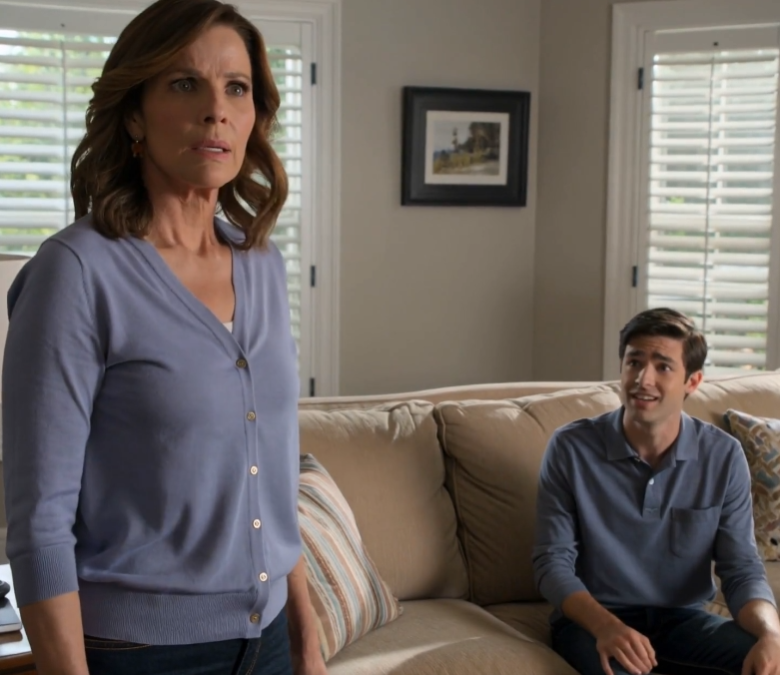
I forced my daughter to drop college classes to help her brother after he got his girlfriend pregnant. I even called her selfish and put her on trial in front of the whole family, even though I was the one who cheated on my husband and destroyed our family.
Before we go on, make sure to subscribe to the channel and let us know in the comments which city you’re watching from.
I didn’t know that trying to correct my mistakes would make everyone turn their backs on me. I had always believed redemption was a straight road, an uphill climb you conquered through effort and sacrifice until, somewhere at the summit, forgiveness was waiting. I thought forcing my daughter to do the right thing would prove I was still a respectable mother, someone capable of keeping the ship afloat when the storm came.
Instead, I revealed exactly why no one trusts me anymore, and I ended up sinking what little remained of our family.
My name is Marcela. I’m forty-five years old, and I’m the woman whose past mistakes still cast a shadow over everything, a shadow that sometimes feels as if it’s choking my family. I’m the mother of two teenagers, Camila and Diego, and the ex-wife of a man who, although he remains cordial with me for the sake of the children, never forgave the betrayal that ended our marriage eight years ago.
The conflict I’m here to talk about—the one I need you either to judge me for or somehow understand—began when I brutally pressured my daughter to take responsibility for the consequences of her brother’s pregnancy situation. I know how that sounds. Believe me, saying it out loud leaves a metallic, bitter taste in my mouth. But inside my head, in that labyrinth of guilt and justification where I’ve lived for years, it all made overwhelming sense.
Ever since I destroyed my marriage, I’ve carried around a constant mixture of shame and a pathological need to prove that I’m not the villain everyone once saw in me. It had been a stupid infidelity, brief and loveless, but its consequences were nuclear. My children never said much about it openly, but I saw it in their looks, in the distance at Christmas dinners, in the silences whenever somebody mentioned loyalty. Every time, I was reminded that my infidelity had been the fire that left scars on all of us.
So I rededicated myself to raising strong, responsible people, as if doing that could somehow compensate for the original crack I’d caused. I became an intensely present mother—maybe too present—always trying to glue together the pieces of a vase I had shattered with my own hands.
My daughter, Camila, was eighteen, and she had always been my example. In a sick way, she became my rehabilitation trophy. She was a good student, disciplined, organized, committed to her routines, with an almost unbreakable morality that she had ironically developed because she never wanted to become like me.
My seventeen-year-old son, Diego, was the exact opposite. He was impulsive, chaotic, emotional, and desperate for attention. In the worst ways, he was the child most like me. Maybe that was why I’d always had a guilty weakness for him, an almost compulsive desire to protect him from his own impulses.
It started on a Tuesday afternoon. Gray light came through the kitchen window while I made coffee and tried not to notice the particular kind of loneliness that sometimes fills a house that has become too large for the people living in it.
Diego walked into the kitchen pale, his hands trembling inside the pockets of his hoodie. He barely had to say anything before the atmosphere changed. The room seemed to charge with the kind of static electricity that comes just before a disaster.
Then he told me.
He had gotten his girlfriend pregnant.
His eyes filled with tears, his voice cracked, and he asked me for help. But my mind didn’t process the situation as an individual problem Diego needed to face. I processed it as a threat to the fragile stability I’d spent years trying to rebuild. My thoughts immediately took a direction I can now recognize as completely irrational, but at the time it felt like the only possible solution.
I decided Camila should sacrifice herself to support him.
Not simply support him emotionally. I wanted her involved practically, almost as if her participation could become a form of moral rehabilitation for the whole family. Somewhere in my warped thinking, Camila, with all her discipline and righteousness, could clean up the mess her brother had made—and, deep down, the mess I had made too.
It was a sick equation. If my two children came together to solve this crisis, then I would have succeeded as a mother. I would have created the unity I had destroyed years before.
Between sobs, Diego told me he couldn’t handle the pressure. He said his girlfriend’s family was going to destroy him. He didn’t know how to deal with medical appointments. He was terrified of dropping out of school. His life was over.
Then he began saying exactly the things he knew would hurt me.
“Mom, you know what it’s like to make a mistake and have everyone judge you. Don’t let the same thing happen to me.”
That sentence went straight into the oldest wound I had.
Then he added, “Camila always does the right thing. You always say she’s the responsible one. If she helps me—if she goes with me to talk to Lucia’s parents, if she helps me organize my schedule and talks to my teachers—maybe I can get through this.”
I swallowed the manipulation without hesitation.
All I saw was my frightened little boy, reflecting my own terror of social rejection, and I decided Camila had to become the shield. She had to become the savior. She had to provide the stability the rest of us lacked.
Diego knew exactly which buttons to push. And in my desperation to become the mother who fixed everything and held everyone together, I walked directly into the trap. I told myself it was a lesson in family loyalty. I convinced myself this would unite them forever.
How wrong I was.
Damn it, how blind I was.
I went upstairs to Camila’s room with my heart pounding, carrying the determination of a general sending a soldier into battle. I wasn’t going up there to ask her for a favor. In my mind, I was going to demand that she fulfill a family obligation.
When I entered, she was studying, surrounded by books, wrapped in that quiet concentration that had always made me a little envious. She looked up, removed her headphones, and gave me a small smile.
That smile disappeared within seconds.
I sat on the edge of her bed and dropped the bomb. I told her about Diego, but instead of giving her time to react, I immediately moved on to assigning responsibilities. I told her I needed her to rearrange her college schedule. I needed her to accompany Diego to meetings with his girlfriend’s family because she spoke better than he did and projected more confidence. I wanted her to help him find a part-time job.
Then I went even further.
I told her that, if necessary, she should drop a couple of classes that semester so she could be available for whatever crises were coming.
I talked about loyalty. I talked about blood. I told her that in this family, nobody got left behind.
When I told Camila I wanted her to drop some of her college classes to help her brother, she stared at me as if she didn’t recognize the woman sitting in front of her. A long, dense silence filled the room, so complete I could hear the low hum of the air conditioner.
Her expression moved from surprise to disbelief, and then finally settled into a defensive coldness.
“It’s not my problem, Mom,” she said.
She said it calmly. Almost too calmly. Like an adult.
And that calmness infuriated me.
It reminded me of how little control I had over her now, of how far she’d moved beyond the reach of my emotional influence. I raised my voice and told her that if she refused to support her brother during such a critical moment, then she was selfish.
I told her she was cold and calculating, exactly the kind of person she had always accused me of becoming after what happened with her father.
I used her own pain against her.
“You’re going to leave him alone, just like you say I left all of you.”
It was low. It was dirty. But I was desperate to make her react, desperate to force her into the fantasy of the united family I wanted so badly that I was willing to impose it through guilt.
I watched her face freeze. I could see that the accusation hit her. Guilt landed on her shoulders like a physical weight. But to my surprise—and my frustration—she didn’t give in.
She stood, slammed her book shut, and looked directly into my eyes.
“I’m not going to take responsibility for your son or your mistakes, Mom. Diego got himself into this. I have exams. I have my own life. I’m not putting my future on hold because he didn’t know how to take care of himself.”
Her words were rational. Logical. Fair.
But to me, in that moment, they sounded like betrayal. They sounded like abandonment.
I felt control slipping through my fingers like water.
I went downstairs, where Diego was waiting on the couch, biting his nails. When I told him Camila had refused, he panicked—or at least, he appeared to.
He began pacing.
“If Cama doesn’t go with me to talk to Lucia’s parents, I’m not going. If Camila doesn’t help me organize everything, I’ll drop out of school. She’s the only one who knows how to talk to people. Mom, you get nervous and yell. Dad is going to get mad. I need Cama.”
Again, his words went exactly where they needed to go.
“You get nervous and yell.”
He made me feel useless while elevating Camila into the role of indispensable savior. Suddenly I felt I had to deliver her to him, had to prove I could still be the mother who got her son the help he needed.
So I escalated the situation.
I called a family meeting for that same night.
I called my ex-husband, Roberto, and my parents. I told them it was an emergency and that we needed to close ranks around Diego. By the time everyone arrived, the atmosphere in the house was tense and almost funereal. Roberto looked at me with that familiar expression of exhausted concern. My parents were worried. Diego sat on the couch looking like a martyr.
Then I made Camila come downstairs.
She descended slowly, knowing perfectly well she was walking into an ambush. She sat in the single armchair with her arms folded tightly across her chest, creating a physical barrier between herself and everyone else.
I took the floor.
I explained the pregnancy, carefully softening Diego’s irresponsibility and emphasizing his need for support. Then I turned toward Camila in front of her father and grandparents.
“Cama, your brother needs you. This family is going through a crisis, and your attitude of indifference is hurting all of us. We need you to take the lead here. We need you to support him and sacrifice a little of your time so he doesn’t sink.”
I thought the social pressure would work. I thought her grandparents’ eyes and her father’s presence would make her surrender. I assumed she wouldn’t dare say no in front of everybody.
But Camila, my iron daughter, surprised me.
She turned to her father.
“Dad, Mom wants me to drop two classes and become Diego’s secretary and surrogate mother. She wants me to go face his girlfriend’s family because she says Diego is too scared. I said no, and now she’s holding this public trial to force me.”
Roberto frowned and looked at me.
“Is that true, Marcela? Did you ask her to drop out of college?”
Heat rose along my neck.
“I didn’t ask her to drop out of college, Roberto. Don’t exaggerate. I asked her to reduce her course load temporarily. It’s for the family. Diego is desperate. If we don’t all help him, he’s going to be lost.”
My mother tried to intervene, but I cut her off.
I was wound too tightly by then. Somewhere inside me, I felt that if I couldn’t make Camila agree, then the entire house of cards I’d constructed around the idea of being a good mother would collapse.
I looked at Diego, waiting for him to explain his anguish, hoping he would say something that justified what I was doing.
But Diego remained silent, staring at the floor and allowing me to do all the dirty work.
He let me become the villain.
And that was when I exploded.
Years of accumulated frustration, the terror of watching my children fail, the rage of feeling constantly judged—everything came rushing out of me and landed on Camila.
I yelled that she had no right to wash her hands of the situation, that she was part of this broken family whether she liked it or not.
“Do you think you’re better than the rest of us because you’re perfect?” I shouted, my voice breaking. “Perfection is useless if you don’t have empathy. You’re cold, Camila. You’re incapable of forgiving anyone. You’re incapable of helping.”
The argument became verbally violent in a way I hadn’t planned. My parents went pale. Roberto stood and tried to calm me, but I was beyond reason.
I wanted to break Camila’s facade of superiority.
I wanted to drag her down into the family mud with the rest of us.
Eventually, Camila began to cry. Her body trembled as she stared at me like I was the most dangerous person in the room.
There was no hatred in her eyes.
There was fear.
And somehow that hurt more than hatred would have.
“I’m not cold, Mom,” she said in a small voice that seemed to slice straight through the room. “I’m just tired. I’m tired of having to be the adult since I was ten years old. I’m tired of Diego being allowed to do whatever he wants while you always run in to save him. And now you want to use me as a shield. I’m not doing it.”
She stood, picked up her keys and purse.
“I’m going to Al’s house.”
She meant her best friend.
Roberto tried to stop her, but she moved around him. A few seconds later she walked through the front door and slammed it behind her.
The sound echoed through the house like a gunshot.
What followed was an absolute, heavy, suffocating silence.
I turned toward Diego, still expecting comfort, still looking for someone to validate everything I had just done.
“You see what she does?” I said. “You see how she treats us?”
But Diego wasn’t looking at me.
He was staring at the door his sister had just walked through.
Then something happened that changed the entire night.
Diego released a long sigh—not a sigh of sadness, but of annoyance—and leaned back on the couch. Suddenly his posture was completely different from that of the frightened boy who had come to me earlier.
“Damn it, Mom,” he said. “You crossed the line. You didn’t have to yell at her like that.”
I froze.
“I crossed the line? Diego, I’m defending you. I’m getting you the help you desperately asked me for.”
He scratched his head and avoided my eyes.
“It’s just… look, it wasn’t that big a deal. I mean, yeah, I’m scared, but I didn’t need her to drop classes. I just wanted her to come with me to dinner. And the school-meeting thing… well, I have some absences I didn’t want you to know about. I thought if Camila went with me, maybe the teachers wouldn’t rat me out as much.”
It felt as if the floor opened beneath my feet.
My ex-husband and my parents stared at him in disbelief.
“What are you saying, Diego?” Roberto asked, his voice dangerously low.
Diego shrugged, minimizing everything with the same immaturity I had spent years mistaking for vulnerability.
“I’m saying I told Mom I was basically on the verge of social and academic suicide so she’d pressure Camila, because Camila always fixes everything and nobody gets mad at her. If she went to talk to Lucia’s parents, maybe they wouldn’t yell at me. I just wanted—I don’t know—I wanted it to be easier. But Mom went crazy and turned it into this whole thing.”
There it was.
The naked truth.
Diego had exaggerated. Manipulated. Lied about the urgency and seriousness of several things.
He didn’t need the enormous amount of logistical support I’d convinced myself he needed. There was no immediate life-or-death meeting. He wasn’t nearly as desperate as he’d made himself sound.
He simply wanted Camila to carry part of the burden because it was easier for him.
Because he was scared.
Because he was a coward.
And he had used me—his own mother—as an attack dog to force his sister into doing it.
He knew I carried guilt from the past. He knew I’d do almost anything to create the illusion of family unity. He had used my trauma against me.
I stared at my son and barely recognized the boy sitting in front of me.
Without meaning to, he had just exposed the unbalanced mother who had helped create the imbalance in the first place.
He had been the puppeteer.
I had been the hysterical marionette.
And I had just driven my own daughter out of the house.
Roberto walked toward Diego. I had never seen him look so disappointed.
“You are a manipulator, Diego.”
Then he turned toward me.
“And you are unbelievable, Marcela. You still don’t see it. You keep projecting your needs onto these kids.”
“I just wanted to help,” I stammered.
My parents rose from the couch. My mother looked at me with a sadness so deep I almost wished she had yelled.
“Daughter, this isn’t help. This is sickness. You’ve turned your children against each other because of your own need for control.”
Diego tried to smooth things over.
“Okay, fine. Sorry. I didn’t think Camila was actually going to leave. Mom, just call her. Tell her to come back.”
The audacity of it.
The arrogance of assuming everything could be repaired with a phone call.
And in that moment, something broke open inside me.
I realized I had raised this.
I had taught him that his actions didn’t need to have consequences because Mom would always find someone else to blame, someone else to carry the burden, someone else to clean up the mess.
This time, that person had been Cama.
I sank into the armchair where Camila had been sitting. The cushion was still warm beneath me. I covered my face with both hands.
How could I have been so blind?
How could I have screamed at my daughter that way—the one child who had genuinely tried to move forward through her own effort—just to satisfy the demands of a boy who didn’t want to grow up?
Roberto picked up his jacket.
“I’m going to find Camila and make sure she’s okay. Diego, first thing tomorrow morning, you’re coming to my house. We’re going to have a serious conversation about your future and about this baby, without your mother interfering to save you.”
Then he looked at me.
“Marcela, don’t go near Camila for a while. Leave her alone. Every time you try to fix something, you break it even more.”
They left.
My parents followed not long afterward, murmuring hollow words of comfort that never reached me.
Then it was just Diego and me.
He looked at me, expecting what I had always given him: justification. He expected me to tell him his father had been too harsh. He expected me to reassure him that everything would be fine.
But this time, I couldn’t.
“Go to your room,” I said.
“But, Mom, what are we going to have for dinner?”
He asked it as if nothing had happened.
Something inside me snapped again.
“Go to your damn room, Diego.”
I yelled, but this time there was no hysteria in it.
Only pain.
He looked frightened and hurried upstairs.
The house fell into a sepulchral silence, a silence so heavy it felt as if it weighed several tons. I poured myself a glass of wine, even though I knew I probably shouldn’t, and sat alone in the dark.
I replayed the entire conversation over and over.
Camila’s words kept coming back to me.
“I’m not going to take charge of your mistakes.”
She hadn’t only been talking about Diego’s pregnancy.
She had been talking about everything.
My infidelity.
My divorce.
My constant habit of making myself the victim.
I tried to send her a message.
I wrote one and deleted it.
“Daughter, forgive me. I didn’t know Diego was lying.”
Delete.
“Daughter, please come back. I promise I won’t ask you for anything else.”
Delete.
“Camila, I’m your mother. I only want what’s best for you.”
Delete.
Nothing I wrote could erase the image of my own distorted face as I screamed that she was selfish. Nothing could erase the fact that, when forced to choose, I had believed the manipulator and attacked the innocent person.
Two days passed.
Roberto kept his word and took Diego to deal with the pregnancy situation and the girl’s family. They excluded me from the meetings. I was told my presence would only inflame things.
Through other people, I learned that Camila was temporarily staying with her father. She didn’t answer my calls. She blocked me on WhatsApp.
The most painful part wasn’t the physical loneliness.
It was the moral loneliness.
I realized my daughter saw me as a threat to her stability.
And she was right.
I was a threat.
I was a mother who, in her obsessive pursuit of redemption, had been willing to sacrifice one child’s well-being to rescue the other, all so I could tell myself we were still a united family.
Diego came home yesterday afternoon to pick up some clothes.
His attitude had changed. The arrogance was gone. He seemed subdued. Roberto must have read him the riot act in a way I never had.
“Dad says I have to get a weekend job,” he told me, “and that I’m probably going to have to repeat the school year, and Camila isn’t going to help me.”
There was resentment in his voice, but resignation too.
“Is that fair, Diego?” I asked, trying to keep myself composed.
“Yeah.”
Then, almost casually, he added, “Camila hates you, by the way. She told me she doesn’t even want to look at you.”
He went upstairs.
The words went straight through me.
Camila hates you.
Not that she was angry.
Not that she needed time.
She hated me.
Or maybe worse, she felt nothing at all. Maybe she’d decided I was expendable, something she had to remove from her life in order to survive emotionally.
I spent the next several nights looking through old photo albums.
I saw Camila as a little girl, always taking care of Diego. Always handing him the toy. Always comforting him when he fell.
And there I was in the background, smiling, thinking, What a wonderful sister she is.
I never realized I was helping create a pattern of emotional abuse in which she gave and he took.
I applauded her sacrifice.
I validated his need.
Now I understand that my favoritism toward Diego was never really about love.
It was identification.
I saw my own flaws in him, and I wanted to save him because saving him felt like saving myself.
And in Camila, I saw the judge.
Her discipline, her morality, her perfection—everything about her seemed to condemn me without her ever having to say a word.
Maybe that’s why I wanted to break her.
Maybe that’s why I wanted to drag her down into the mud with the rest of us.
The subconscious can be twisted that way.
And not healing can become dangerous.
This morning, my mother called.
She told me Camila had visited them. She was calm, she said. She was studying. But whenever someone mentioned my name, Camila changed the subject or left the room.
“Give her time, daughter,” my mother said.
But I know time doesn’t necessarily heal something like this.
Sometimes time only hardens the distance when there’s no real change.
And I don’t know how to change.
I don’t know how to stop being this intense, controlling woman who mistakes love for possession and sacrifice.
Now neither of my children really speaks to me.
Diego spends most of his time at his father’s house, dealing with the reality of becoming a teenage father without all the shock absorbers I used to put around him.
And Camila…
Camila is a ghost.
Her room is untouched, but now it feels like a museum.
The worst thing isn’t the silence in the house.
It’s realizing that I repeated the exact pattern I thought I had overcome.
I wanted my children to compensate for my failures. I wanted to turn Diego’s pregnancy into an opportunity to prove we were a team.
And instead, I divided them again.
Maybe this time irreparably.
My ex-husband made his position clear in a text last night.
“We gave you another chance to be a healthy mother, and you went right back to poisoning everything. Until you go to therapy and understand why you need to sabotage your children, you’re not going to have access to them the way you did before.”
Poetic justice, I suppose.
I cheated on my husband because I was looking for something more, and now I’ve been left with far less.
I demanded blind loyalty from my daughter, and now I don’t even have her respect.
I protected my son from consequences for years, and by doing that, I sent him into the real world without the tools to survive those consequences when they finally arrived.
I’m sitting here writing this like a confession.
Maybe I’m hoping somebody will tell me I’m not a monster.
Or maybe I’m hoping someone will confirm that I am, so I can finally hit rock bottom.
The irony is brutal.
I wanted to unite my family at any cost, and I became the dynamite that finished destroying the foundation.
I tried to repair my family and ended up breaking the only thing I had left.
Is it possible to come back from this?
Or did I finally cross the last line?
I don’t know whether Camila will ever come home. And if she does, I don’t know whether I’ll be able to look into her eyes without seeing the reflection of my own failure staring back at me.
Story Two.
I wanted a child-free vacation, so I used my spare key, left my kids inside my sister’s apartment with a note, blocked her number, and flew away as if she somehow owed me motherhood.
Before we go on, make sure to subscribe to the channel and let us know in the comments which city you’re watching from.
She had always helped before.
I went on vacation, and now everyone wants to take my children away from me.
Am I really that bad?
That was the first thing I thought when my mother called me crying. My sister had blocked me everywhere, and my husband—who until recently seemed good for little more than warming the couch—said he was going to speak with a lawyer.
And all because I wanted to breathe.
That was it.
I wanted to breathe.
I’m thirty-three years old. I have two small children who scream as if they live inside a drum, a marriage that functions only halfway, and a remote job that barely pays the bills.
For the past four years, my husband and I have taken one week of vacation during the summer. Nothing extravagant. A hotel. A little peace. A few days without children climbing over you while you’re trying to brush your teeth.
The secret had always been my sister.
She’s twenty-five. No partner. No kids. No mortgage. No serious responsibilities, at least not the kind I recognized as responsibilities.
She lives alone, freelances, goes out with her friends, watches shows until two in the morning, and never has to worry about getting anyone up for school.
She has always been the free one.
The flexible one.
The fun one.
And for the past four summers, she had watched my children.
No drama. No conditions.
She said she loved them.
She did crafts with them, took them to the park, baked cookies in funny shapes.
“It’s like practice for when I become a mom,” she’d say with a smile.
Then, after four perfect summers, suddenly she couldn’t do it anymore.
Or rather, she wouldn’t.
“This year I’m going on vacation with my friends. We already booked a place in Tulum. The flights are paid for.”
She told me this while we were eating at my mother’s house.
I thought she was joking.
I laughed.
She wasn’t.
“Are you telling me you can’t watch the kids?”
“It’s not that I can’t. I don’t want to.”
It felt like someone punched me in the stomach.
Not because of the childcare.
Because of the betrayal.
I spent that night awake, checking our travel dates, the hotel confirmation, babysitter prices—which, by the way, made it seem as if these people were being hired to guard golden puppies.
Nothing worked without my sister.
And she knew it.
I tried talking to her again.
First, I sent gentle messages.
“I know you’re busy, but it would only be seven days.”
Then I became more direct.
“The kids love you. They don’t want to stay with anybody else.”
I even sent a picture of the two of them hugging a stuffed animal with the message, “Auntie, come back.”
She left me on read.
That was the worst part.
She didn’t explain herself. Didn’t apologize.
She simply left me alone with the chaos, as if my problems didn’t matter, as if my need for rest was some ridiculous whim.
My husband wasn’t much help either.
I told him what had happened, expecting at least a little support.
“Well, if she can’t do it, we’ll have to find another option.”
We’ll have to.
Easy for him to say.
He was the one who went to work for eight hours and came home with the privilege of shutting the bathroom door without being interrupted.
Who handled everything the rest of the time?
Who broke her back keeping the household together?
Me.
Always me.
And now that I wanted one week of rest—a week I’d been able to take every year without anyone complaining—suddenly I was the selfish one.
Maybe I had been wrong to assume my sister would be available like she always had.
Maybe I should have confirmed it earlier.
Maybe I should have had a backup plan.
Fine.
But it still hurt that she told me the way she did, without any care, without empathy, as if my children were a burden she could simply put down whenever she felt like it.
And yes, I was angry.
But more than anything, I was exhausted.
I needed to breathe.
That was all I wanted.
Not a life of luxury. Not a three-week spa vacation.
Seven days.
Seven days a year to disconnect from being a mother, a wife, everyone’s emotional servant.
And she had taken that away from me.
After she left me on read, I tried to stay calm.
I sent more messages, each one more insistent than the last.
“Do you know how much it cost me to organize this trip? You can’t do this to me now.”
Another said, “You always said you wanted to be part of their lives. What changed?”
Nothing.
Not even an emoji.
I called.
She didn’t answer.
I left notes at her door. I sent her voice messages featuring the kids saying they missed her.
One evening, I even waited outside her building.
When she came out and saw me, she looked at me as if I were some stranger who had been following her.
“What are you doing here?” she asked.
“I need you to reconsider. The kids adore you. I trust you. Are you really going to destroy this tradition over some cheap trip with your friends?”
She stared at me.
Then she said the words that burned into my chest.
“They’re not my kids. You had them. I don’t have to raise them every summer.”
It wasn’t just what she said.
It was how she said it.
As though all that affection, all those previous summers, had meant nothing.
As though I had treated her like an employee instead of a sister.
I didn’t sleep that night.
Inside my head, the list of solutions grew shorter and shorter.
Babysitter? No.
Other family? Everyone was busy.
Cancel the trip?
No.
I’d already paid.
Everything was ready.
And I existed too, even if everybody seemed to forget that sometimes.
So I made a decision.
On Wednesday, at three in the afternoon, knowing my sister would be in a meeting, I went to her apartment.
I’d had a copy of her keys for years.
I let myself in.
I left the kids on the couch with their backpacks, two fully charged tablets, snacks, changes of clothes, medicine, and toys. Everything was labeled.
I even left a handwritten note.
“It’ll only be seven days. They love you. I trust you. Your sister.”
I closed the door carefully behind me.
Then I took a deep breath and called a taxi to the airport.
My hands shook a little. I won’t deny that.
But I also felt something I hadn’t felt in years.
Peace.
It was as though someone had lifted an invisible weight off my back.
I blocked my sister’s number.
I didn’t need more drama.
It was already done.
I muted the family WhatsApp group, put on my sunglasses, and took a selfie with the caption, “Finally.”
My husband didn’t understand.
“You left them there without telling her directly?”
“Of course not. I left everything in writing. She’ll understand.”
He gave me a strange look, but said nothing else.
He was too excited about the hotel’s breakfast buffet.
Three hours later, we landed in Cancun.
I turned on my phone.
Notifications.
Missed calls.
Messages.
Almost all from my sister.
But what made my blood turn cold was the picture.
My children were sitting in her living room. The note I’d left was positioned in the foreground.
Below it was her message.
“This is abandonment. This is illegal. This is kidnapping.”
Kidnapping.
I laughed.
I genuinely laughed, as though someone had just told me a terrible joke.
“Don’t exaggerate,” I replied. “Breathe. The kids love you. You already know how to take care of them. You’ve always done it.”
Then I turned on airplane mode.
That night, with a margarita in my hand and my feet in the water, I closed my eyes and convinced myself that everything would work out, just like it always had.
The next morning, my husband showed me his phone.
There was a video.
My son was crying. My daughter was asking for me. Behind them, my sister’s voice could be heard.
“Your mom left you here. She didn’t tell me. I’m here because I couldn’t leave you alone.”
The caption said, “Is this okay with you guys?”
There were thousands of views.
Comments.
Shares.
People were asking whether she’d called Child Protective Services.
Others said I should be put in jail.
My husband stared at me.
“You did this without telling anyone.”
“I’m sick of asking permission to exist,” I replied.
But inside, something had begun to fracture.
I felt it in my chest when I opened Twitter and saw the video of my children on the timeline of an account I’d never even heard of.
There they were.
My two little ones.
Confused, sitting on my sister’s couch with their backpacks still beside them, their eyes red from crying.
My older child clutched his favorite stuffed animal.
The younger one kept saying in a tiny voice, “Mommy’s coming back now.”
And my sister, her voice controlled but filled with contained anger, narrated the whole scene.
“These are my niece and nephew. They were left at my apartment without warning, with a note. Their mother went on vacation. This is abandonment. I’m recording this because I don’t know what else to do. I’ve already called my mother. I’m considering contacting Child Protective Services.”
She didn’t say my name.
But social media doesn’t need your name in order to destroy you.
Someone in the comments recognized my sister from her public photos.
Someone else found my Instagram account, where, of course, I had posted a story of myself in a bikini raising a margarita.
They placed the images side by side.
My crying children.
Me toasting on the beach.
Within hours, I became a meme.
A viral thread.
The absent mother.
There were hashtags about choosing vacations over children and jokes about how my sister was apparently more of a mother than I was.
My husband couldn’t take it.
“This is insane,” he said, scrolling through messages that were now reaching him too.
“It’s completely out of context,” I insisted. “She manipulated the whole thing. The kids were fine. I left food, tablets, toys. They weren’t in danger.”
“Then why didn’t you call her before you left? Why did you block her number? Why did you leave without even confirming she’d be home?”
I had no answer.
At least, not one that didn’t make me sound guilty.
By the following day, the video had spread to Facebook, TikTok, Reddit. Even a local gossip site published something about it.
A psychologist on Twitter referenced the case, saying this kind of abandonment was more common than people realized and that maternal narcissism needed to be discussed openly.
Then my boss wrote to me on Slack.
“Hi. We need to talk. This is affecting the company’s image.”
That was when I truly began to fall apart.
I tried to regain control of the narrative.
I posted an Instagram story saying nobody knew the full story. I wrote about how difficult motherhood was and how sometimes a mother needed a break so she could continue giving her best.
That only made things worse.
The comments were vicious.
“Then leave them with their father, not with somebody who didn’t consent.”
“This is one of the lowest things I’ve seen in a long time.”
“What if something had happened to your sister? Were the kids supposed to sit there until somebody showed up?”
Then my mother called for the first time since the scandal began.
Not to defend me.
“What the hell did you do?” she screamed. “How could you do this to your sister? To your children? To me?”
“Who takes care of me?” I shouted back. “Who worries about what happens if I break down?”
“Then ask for help! Don’t abandon your children. What you did was a betrayal.”
She hung up.
With her went the last thread of emotional support I thought I still had.
That night, my husband moved into the guest room.
He didn’t announce it.
He simply packed some clothes, took his laptop, walked down the hall, and closed the door behind him as if he were moving out while technically still living inside the same house.
I didn’t sleep.
I stared at the wall for hours, wondering whether all of this was truly my fault or whether I was simply surrounded by people incapable of understanding what it meant to be a mother without ceasing to be human.
Then dawn came.
I looked again at the thousands of furious comments, and one thought entered my mind and refused to leave.
There was no turning back from this.
Everything was already burning.
My reputation.
My family.
My marriage.
Still, part of me couldn’t understand why I was being crucified as though I’d committed some unforgivable crime.
I hadn’t left my children in the street.
I hadn’t abandoned them beside a dumpster.
I’d left them with their aunt.
Their aunt.
The woman who had cared for them summer after summer without complaint.
What had changed?
Why was I suddenly a witch?
That night, after another flood of notifications and hints from my sister about possible legal action, I went to confront my husband.
He was lying in the guest-room bed, looking at his phone. His face had the tense stillness of someone who no longer argued because he no longer believed arguing could change anything.
“Are you going to stay in here forever?” I asked.
He didn’t look up.
“For now? Yes. This is getting out of hand.”
“You’re seriously going to let a bunch of strangers who don’t know us destroy everything we built?”
“What we built?”
He laughed, but there was no humor in it.
“You mean what you built by leaving our children without warning, blocking your sister, and then pretending nothing was wrong while you toasted yourself on a beach?”
“Enough!” I shouted. “I’m sick of everybody acting like I’m some kind of monster. I’m an exhausted mother. I’m not a criminal.”
He said nothing.
“You never understand,” I continued. “Never. I take care of everything. School, clothes, homework, doctors. And when I finally want one week for myself—one week—everyone acts like I’ve killed somebody.”
He put his phone down and sat on the edge of the bed.
Then he looked directly at me.
“Did you ever stop to think about how they feel?”
“Who?”
“Our kids. Your sister. Even me.”
I laughed bitterly.
“You? You go to work, come home, and lock yourself in the bathroom for an hour while I bathe the kids, feed them, and put them to bed. You’ve never had to ask anyone for permission to breathe.”
“Then why didn’t you say something earlier?” he asked. “Why didn’t you ask for help? Why weren’t you honest?”
“Because if you actually loved me, I wouldn’t have to ask. It was your responsibility to notice. You should have seen it. You should have worked harder so we could afford a nanny. You should have been on my side.”
“On your side,” he repeated, his voice almost emotionless now. “Even after all of this? Even after you called the father of your children a wimp? After you yelled at your sister and called her useless in front of the kids? After you left without even saying goodbye?”
I went silent.
Not because I felt guilty.
Because I was too proud to answer.
“What are you going to do?” I finally asked.
He stood calmly, walked to the closet, and pulled out a suitcase.
Then he opened it.
“I’m separating from you.”
My legs trembled.
I grabbed the doorframe.
“Are you serious?”
“I’ve already talked to a lawyer. I’m going to fight for full custody.”
“You’re going to take my children away from me?”
“I’m not taking them away. I’m protecting them from you.”
I thought nothing else could hurt me.
Then he added, “And you aren’t the only one who lost something. I did too, because I don’t recognize the woman I married anymore.”
He took his suitcase, walked past me without looking at me, and went downstairs.
I remained alone in the dark.
And for the first time since everything began, I felt genuine fear.
Not fear of losing my husband.
Fear of what would happen when I lost my children too.
My children.
The only thing that had given my life meaning through all the chaos.
And now I was losing them.
After my husband left the house—or fled, as I preferred to think of it—I went into survival mode.
I told myself I needed to rebuild the narrative.
I needed to show the world I wasn’t the villain everyone believed I was.
I was a victim too.
I posted a picture on Instagram of my children’s empty bed.
“The silence of a house without laughter hurts more than any scream.”
It received several likes.
A few supportive messages came from people who didn’t know the full story, of course. People who had only seen the surface.
Everyone who actually knew what had happened ignored me.
I wrote to my mother.
Nothing.
I messaged a cousin who had always been the source of family gossip.
She left me on read.
I even contacted an old university classmate who lived nearby and asked if she could help me with a few things.
Her answer was short.
“I don’t think it’s a good idea for me to get involved.”
Meanwhile, my sister kept posting indirect messages without using my name, even though everybody knew exactly who she meant.
One said, “Sometimes the enemy isn’t life. It’s the person who swears they love you while carrying you around like an obligation.”
Her friends defended her.
Her followers flooded her with support.
They turned her into the martyr who had saved two children from abandonment.
Meanwhile, I was the bad mother.
The unstable one.
The irresponsible woman posing in bikinis with cocktails.
Then came the blow I never saw coming.
One night, unable to sleep, I opened my husband’s laptop.
He’d left his email logged in.
I hadn’t gone looking for anything.
At least, that’s what I told myself.
But something inside me pushed me to look.
I found emails exchanged with an address I didn’t recognize.
The subject line said something like, “About what we discussed.”
“The legal matter is moving forward.”
“Are they okay with me?”
“Don’t worry.”
I opened the thread.
The messages were between him and a woman I didn’t know.
A colleague.
They had been talking since before the vacation.
They wrote about how difficult it was to live with someone so unstable.
About protecting the children.
About waiting for the right moment.
One message read, “I’ve already spoken with the lawyer. If everything goes well, you’ll have temporary custody within a few weeks. You deserve it.”
My whole body went cold.
He had already begun the process.
He already had another place.
Another woman.
Another life prepared to replace me.
I collapsed onto the floor.
For the first time in years, I cried for real.
Not from anger.
Not from wounded pride.
From pain.
The pain of realizing I had been replaced.
The pain of thinking that all the sacrifices, the years of motherhood, the sleepless nights, the fevers, the guilt—everything—had amounted to nothing.
And still, I couldn’t allow the world to believe it was entirely my fault.
So I wrote a long Facebook post.
A confession.
I used phrases like emotional exhaustion, marital loneliness, emotional neglect.
I painted the portrait of a woman who had given everything and received judgment, betrayal, and contempt in return.
I ended with what I thought was a devastating line.
“Before judging a mother for breaking, ask yourself who was there to hold her together.”
People shared it.
The comments were mixed.
But none of it mattered.
Because although I was still desperately trying to control the narrative online, in real life there was nobody left listening.
Not my family.
Not my husband.
Not my children.
Meanwhile, my sister’s social-media presence continued to grow.
She was invited onto a motherhood podcast to tell her side of the story.
I became the viral anecdote.
She became the heroine.
That’s what people called her in the podcast comments, in the mothers’ groups that started inviting her to speak.
“The aunt who saved her niece and nephew from abandonment.”
“The definition of selfless family love.”
“I wish we all had a sister like her.”
And I became the opposite example.
The bad one.
The selfish one.
The woman who left her children with a note and went away to pose with a piña colada.
Nobody asked me how I was doing.
Nobody wanted to know what had really happened.
They saw the video.
They saw the crying.
They saw the scandal.
And they condemned me.
I lost my job.
Officially, the email said something along the lines of, “We want to thank you for your time with us, but given the circumstances…”
Blah, blah, blah.
It didn’t matter anymore.
My husband—my ex-husband, I suppose—received temporary custody.
He lives with the children in a small apartment now, but apparently it’s filled with stability.
According to his lawyer, I have the right to supervised visits once a month.
Supervised.
As though I’m a danger to them.
As though they aren’t mine.
My mother doesn’t speak to me.
My sister blocked me.
My children don’t ask for me anymore.
At least, that’s what I’m told.
Sometimes I leave them voice messages.
Stupid things.
Songs.
Jokes.
Little improvised stories like the ones I used to make up when they were younger.
Nobody answers.
I don’t even know whether they listen.
But I keep sending them because I have nothing else.
It’s either that or silence.
And silence is worse.
Some nights I wake suddenly with the feeling that somebody is calling me.
My daughter’s tiny voice.
My son’s laughter.
Then I open my eyes and there’s no one there.
Only the television playing quietly and my own reflection in the dark window.
I look different now.
Like somebody else.
My eyes seem empty.
I’m thinner.
Older.
As if this entire story has squeezed everything out of me until all that’s left is a hollow shell.
I tried writing another post.
Something calm this time.
Something that would explain everything and tell my truth without drama.
But it’s pointless now.
Nobody listens.
And the people who do have already chosen their side.
My sister posts photographs with the children.
She organizes parties for them.
Takes them to the park.
Bakes animal-shaped cookies like she used to bake with me.
And the worst part is that she’s good at it.
They love her.
And I…
I’ve become a confusing memory nobody wants to name.
Sometimes I think about writing to my sister directly.
To tell her I’m sorry.
To admit I was wrong.
To tell her I didn’t know how to handle any of it.
That exhaustion had eaten me alive from the inside.
That I was cruel.
That I used her.
That I betrayed her.
That I took away her chance to simply be an aunt by forcing her into the role of a mother when it wasn’t her responsibility.
But I don’t send anything.
Because I’m still afraid of hearing what I already know.
That I deserve what happened.
That I’m not the victim.
That maybe I was the problem from the beginning.
And then, in the earliest hours of the morning, when nobody else is awake and the world seems suspended inside that false calm, I sometimes ask myself in a whisper:
“What if I am the problem?”
But I don’t let myself stay with the thought for long.
Because if I accept it—if I truly accept it—then there’s nobody left for me to blame.
And without someone to blame, what do I have?








