I closed a $300 million deal, but my bonus was only $200. At the annual party, the CEO asked me to perform—so I took the stage and read my resignation speech aloud.
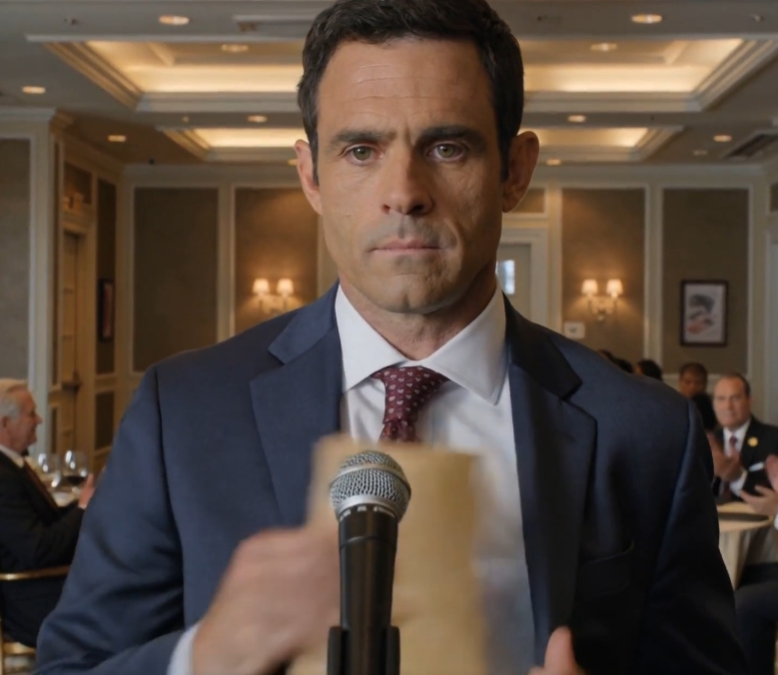
The new plan had arrived in a companywide email three weeks earlier. It said strategic account bonuses would be determined after delivery, collection, and final margin review. It did not clearly explain whether a deal already negotiated under the old plan would be governed by the new rules.
Daniel had asked HR for clarification. The answer had been a sentence from finance.
“Management retains discretion to interpret incentive eligibility.”
He had saved the email.
At home, Sarah Hayes was finishing a 12-hour shift as a registered nurse at a regional medical center. Their 13-year-old daughter, Lily, was at the kitchen table working on a science project involving soil samples and small plastic cups.
“Did it close?” Sarah asked.
Daniel set his briefcase down. “The contract is signed.”
Lily looked up. “Is that the huge one?”
“The huge one,” Daniel confirmed.
Sarah smiled. “Then you can finally fix the truck.”
Daniel smiled back, but he was already thinking about the new incentive language.
The contract had closed.
The money had not.
Chapter 2: The $50 Bonus
The bonus notice arrived in December.
Titan called it an annual performance recognition payment. It was separate from commissions and did not replace any payment owed under a written sales agreement. Daniel understood that distinction. A discretionary bonus could be generous, modest, or nonexistent.
What he did not understand was the number printed under his name.
$50.
He checked the notice twice. The document showed the Franklin account as a strategic customer. It listed the contract value as $18 million and credited Daniel with originating and coordinating the award.
Under Performance Recognition Payment, however, it showed $50.
He called payroll.
“Is this final?” he asked.
The payroll specialist sounded uncomfortable. “The system shows an approved payment of $50.”
“Who approved it?”
“The incentive review group. You would need to speak with sales operations.”
Victor’s assistant sent Daniel a meeting invitation for the next morning.
Victor arrived ten minutes late carrying a tablet.
“The $50 is not your commission,” Victor said. “Your commissions will be reconciled as revenue is recognized and cash is collected.”
“Then why does the bonus notice identify the Franklin contract?”
“Because the bonus is discretionary.”
“The old plan included a large-account incentive.”
“The old plan is no longer our operating model.”
“When did the new model become effective?”
Victor tapped his tablet. “Before the annual review.”
“The Franklin contract was signed before that.”
“The final payment will be determined under the plan in effect when the payment is earned.”
Daniel had spent enough years in sales to recognize a sentence that moved the finish line.
“When is the incentive earned?” he asked.
Victor leaned back. “You are focused on a symbolic payment.”
“Because the company described it as recognition for the contract I secured.”
“You have a salary, benefits, a retirement plan, and a job.”
Daniel looked at the tablet. “I also have a commission agreement.”
Victor’s expression hardened.
“We are not going to turn every compensation decision into a legal argument.”
It was not yet a legal argument. Daniel had not hired an attorney. He was asking what the company had promised and when it had changed the promise.
At home, Sarah found him sitting at the kitchen table with the notice in front of him.
“$50?” she asked.
“For the annual bonus. Not the commission.”
“And the commission?”
“They say it will be calculated later.”
Sarah took off her coat and sat opposite him. She was tired from work, but her questions were precise.
“Did you sign the new plan?”
“No. I acknowledged receiving it.”
“Did the old agreement say when the commission is earned?”
“Partly. Some of it is tied to recognized revenue and collected cash. The large-account language is vague.”
“Then do not resign tonight.”
Daniel looked at her. “I wasn’t planning to.”
“You were thinking about it.”
He did not deny it.
Lily came into the kitchen holding a permission slip.
“Dad, the school science trip needs a deposit by Friday. It’s $840.”
Daniel glanced at the number, then at the $50 notice.
The family could pay for the trip. Sarah had a stable income, and they had savings. But Daniel had expected the Franklin work to ease the mortgage, replace the aging pickup, and cover Lily’s summer STEM camp without another conversation about which account to use.
The $50 was not a financial disaster.
It was an insult attached to a larger uncertainty.
Chapter 3: The Company Holiday Party
Titan held its annual employee appreciation dinner at a hotel near downtown Columbus.
The ballroom had white tablecloths, a small stage, and a bar that closed before anyone could become too enthusiastic. There was no forced choir performance. Employees ate dinner, managers gave short speeches, and a few volunteers signed up for an open-mic segment.
Daniel had prepared a brief recognition speech for the Franklin project.
He had also prepared something else.
It was in an envelope inside his jacket: his resignation letter.
He had not decided whether he would use it.
Richard Coleman, Titan’s president, took the stage after dessert. Richard had been with the company for 25 years and had once known every service technician by name. Under pressure from investors and the board, he had allowed the sales incentive structure to become harder to understand and easier to reduce.
“This year, Titan completed one of the most significant regional equipment agreements in our history,” Richard said. “That achievement required coordination across sales, service, logistics, and finance. Daniel Hayes led the customer relationship.”
The room applauded.
Daniel felt the old familiar warmth of being recognized by people who had actually seen the work.
Then Richard smiled.
“Daniel, come up and say a few words.”
Daniel walked to the stage. Victor sat at the head table, clapping with the careful rhythm of a man aware that cameras were pointed in his direction.
Daniel unfolded the first page of his prepared remarks.
“The Franklin contract took eight months,” he said. “There were equipment configurations, delivery windows, maintenance terms, warranty language, and several moments when the deal nearly stopped moving. A lot of people helped make it work.”
He thanked the service department, Michael Turner, and the dispatch team led by Frank Dawson. He thanked the technicians who had answered calls at night.
Then he looked at the paper in his hand.
“The company also sent me an annual recognition notice for the project. It lists the Franklin contract at $18 million. The payment attached to that recognition is $50.”
The applause ended without a signal.
Daniel did not raise his voice.
“I understand the difference between a discretionary bonus and a commission. I understand that a contract is paid over time and that profit is not the same as revenue. What I do not understand is why 20 years of work can be described as essential in one paragraph and worth $50 in the next.”
Richard stood halfway from his chair, then sat back down.
Daniel continued.
“I started at Titan when the service yard had fewer trucks than it has now. I learned this business from people who knew that a machine is not sold when the paperwork is signed. It is sold when the machine arrives, works safely, and the customer calls again. I have missed dinners, weekends, and parts of my daughter’s childhood because I believed that work mattered.”
He looked toward Sarah. She was seated near the back with Lily.
“Maybe the company has decided that experience is too expensive. Maybe it has decided that the people who built its customer relationships should be measured only by the cost of their compensation. That is a business choice.”
He paused.
“I am allowed to make one, too.”
He reached into his jacket and removed the envelope.
“I am not resigning because of $50. I am resigning because I no longer trust the way the company values the work behind the number.”
He did not read the rest of the letter. He did not ask anyone to follow him.
He thanked the technicians, stepped down from the stage, and returned the microphone.
Outside the ballroom, the December air was cold enough to sting. Sarah followed him to the parking lot.
“Are you sure?” she asked.
Daniel looked back at the hotel lights.
“No,” he said. “But I know I cannot keep pretending this feels right.”
Chapter 4: Walking Away After 20 Years
Daniel sent the formal resignation letter the next morning.
He gave Titan two weeks’ notice, offered to document the Franklin account, and requested a written reconciliation of commissions earned or potentially earned under the existing sales agreement.
He did not copy customer databases, price books, contract files, or internal forecasts.
Victor replied within an hour.
“We accept your resignation effective immediately. Do not contact Titan customers or represent the company.”
Daniel read the message in silence.
Richard called him later that afternoon.
“I should have spoken with you before the dinner,” Richard said.
“You should have explained the incentive plan before the contract closed.”
“The plan was changing.”
“That is not the same as saying what happened to the old plan.”
Richard was quiet.
“Are you angry with me?” he asked.
“I am disappointed.”
“Those are close relatives.”
Daniel completed the transition through legal. Franklin received a new contact list. The account was assigned to another senior manager, and Daniel answered no customer calls after his access ended.
At home, Sarah reviewed their health insurance options. Daniel’s coverage would continue for the month, after which the family could join her employer’s plan. They adjusted the mortgage budget and paused the pickup purchase.
Lily listened from the stairs while they talked.
“Are we in trouble?” she asked.
Sarah turned around. “No,” she said. “We are making a change.”
Daniel wanted to promise that everything would work out. Instead, he said, “It may take time.”
In March, Robert Bennett called.
Robert owned Evergreen Equipment Rentals, a private company with 37 employees, two service shops, a dispatch yard, and a fleet of cranes, loaders, telehandlers, and specialty equipment.
Daniel had known him for years through customers and service contractors.
“I heard you are available,” Robert said.
“That is one way to describe it.”
“I need someone who knows how to sell equipment without selling promises we cannot deliver.”
Robert offered him a position as director of sales and operations.
The base salary was $14,000, slightly higher than Daniel’s Titan salary. The commission plan was written in plain language. A quarterly operating bonus was tied to collected margin, fleet utilization, safety performance, and customer retention.
There was no symbolic number hidden behind a vague phrase.
“You will have authority over sales and dispatch coordination,” Robert said. “Not unlimited authority. I still own the company.”
“That is reassuring.”
“And if we talk about equity, we put it in writing. No handshakes that become arguments later.”
Daniel accepted.
On his first morning, Michael Turner, Evergreen’s senior equipment technician, met him beside a crane with its boom lowered for inspection.
“You are the Titan guy,” Michael said.
“I used to be.”
“Good. We need somebody who can read a service record.”
Frank Dawson, the dispatcher, handed Daniel a radio.
“Don’t press the red button unless you know what you are doing,” Frank said.
“What happens if I do?”
“Everyone hears you make a mistake.”
Daniel looked across the yard.
The equipment was older than Titan’s fleet, but it was clean, inspected, and working.
It was a smaller company.
For the first time in 20 years, that did not sound like a warning.
Chapter 5: A Smaller Company, a Better Start
Evergreen did not become successful because Daniel arrived with a magic list of customers.
Most of his former accounts were Titan’s relationships, and he respected the contracts and confidentiality obligations that remained after his departure.
He could not call a Titan customer using an internal database. He could not carry over pricing files. He could not present himself as the person who had negotiated on Titan’s behalf.
What he could do was learn Evergreen’s fleet, inspect its records, and build new relationships through ordinary industry channels.
He began with service.
Michael Turner showed him which hydraulic systems needed preventive work and which machines were losing utilization because repairs were scheduled too late. Frank explained that two days of idle equipment could erase the profit from an entire rental week.
Daniel built a simple dashboard showing availability, inspection dates, transport status, repair hours, and customer delivery windows.
Robert had never seen all those numbers in one place.
“You are turning a rental yard into an airline,” he said.
“Airlines know where their planes are.”
The first major opportunity came from a regional contractor that had never done business with Evergreen.
The contractor needed five telehandlers and two mobile cranes for a manufacturing expansion near Dayton. The project required certified operators, load documentation, transportation permits, and a service response plan.
Evergreen’s initial proposal was not the lowest.
Daniel won the account by showing the contractor what would happen if a machine failed on a Sunday morning.
Michael designed the service coverage. Frank built the delivery schedule. Robert approved the pricing after reviewing the margin.
The contract was worth $1.6 million over ten months.
It was small compared with Franklin’s $18 million purchase agreement, but the money would be recognized through real deliveries, real inspections, and collected rental payments.
Sarah noticed the difference before Daniel did.
He came home at 5:45 one Thursday and still had time to help Lily prepare for her science fair.
“You are here,” Lily said.
“I am. For the whole evening. That is the current plan.”
She looked suspicious.
“Did they fire you again?”
Sarah laughed from the kitchen.
Daniel helped Lily build a display about water quality. He answered two work calls and ignored three others.
The decision felt unfamiliar.
At Evergreen, people did not confuse immediate availability with commitment. If Daniel was needed after hours, Robert explained why. If a customer made an unreasonable request, the team discussed the safety and financial consequences before promising anything.
Ryan Mitchell joined Evergreen in May.
He had been a young sales representative at Titan, energetic and eager to prove himself. He had also learned the wrong lessons from Victor’s management style.
“If I don’t answer every email in five minutes, they assume I am losing the deal,” Ryan said.
“Customers assume you are reliable when you answer accurately,” Daniel told him. “Those are different things.”
Ryan was impatient, but he listened.
Daniel taught him how to read equipment specifications, ask a contractor about the work site before proposing a machine, and explain why a lower rental rate could create a higher service cost.
By autumn, Ryan had his own accounts.
Daniel’s work grew more demanding, but his life did not shrink around it.
He still worried about money. He still checked the mortgage balance. He still remembered the $50 notice.
The difference was that the number no longer defined the entire conversation.
Chapter 6: The Money They Still Owed Him
Titan’s commission reconciliation took months.
The Franklin contract had been divided into delivery phases. Some equipment had shipped. Some had been accepted. Some invoices remained open.
Titan’s finance department calculated portions of the commission under the new incentive policy, even though Daniel had originated the account under the older agreement.
Daniel hired an employment attorney in Columbus.
The lawyer explained that Ohio law would not automatically resolve every dispute in his favor. The written plan, the timing of notice, the definition of earned commission, and the actual collection status all mattered.
“The $50 bonus is probably discretionary,” the attorney said. “The commission is a different question. We need to separate the claims.”
Daniel provided his signed plan, emails confirming the incentive structure, account records he was lawfully entitled to retain, and the transition documentation.
He did not ask former coworkers to secretly copy files.
An audit followed.
The audit found that Titan had applied the new plan to part of the Franklin account after the contract was signed. It also found that several delivery milestones had been recognized but not credited to Daniel.
The company had not necessarily acted with criminal intent, but the accounting was inconsistent with the documents provided to him.
The amount in dispute was not the fortune the $18 million headline suggested.
After margins, payment timing, split-credit rules, and earlier advances were accounted for, the adjustment was $27,400.
Titan offered $8,000 in exchange for a release.
Daniel declined.
“You left,” Victor wrote in a message through counsel. “You cannot expect the company to continue rewarding you for work you no longer perform.”
Daniel’s attorney replied that the issue concerned commissions earned under the agreement before the resignation, not future work.
Richard’s position changed after he left the presidency later that year.
The board had decided that Titan needed new leadership. Richard remained a director for a short transition period, then retired from active management.
He called Daniel from his home.
“I saw the audit report,” Richard said.
“It is not flattering.”
“No. Are you calling to defend it?”
“I am calling because I approved the incentive changes without asking how they would affect the people who had already earned the work.”
Daniel looked at the snow collecting on the porch railing.
“The company did not owe me gratitude. It owed me clarity.”
“I know that now.”
Richard’s attorneys and Titan’s new board authorized a settlement and payroll correction.
Daniel received $27,400, documented as a back-commission payment, along with a corrected statement and a release limited to the dispute.
The money arrived by bank transfer.
It was not a gift from Richard. It was a payment after a review.
Daniel used part of it to pay the remaining balance on the school trip and replaced the worst tires on Sarah’s car. He put the rest into savings.
Sarah looked at the transfer confirmation.
“Does it feel good?” she asked.
“It feels accurate.”
She nodded.
“Sometimes that is better.”
Chapter 7: A Real Stake in the Business
Evergreen grew carefully.
Robert added equipment only when the utilization projections justified it. He refused a crane purchase that would have looked impressive but sat idle outside the construction season. He expanded the service shop instead, hiring two mechanics and improving parts inventory.
Daniel helped develop a customer management system that tracked service calls, delivery promises, inspection records, and renewal dates.
The system was not glamorous.
It prevented people from promising equipment that was already committed to another site.
In the second year, Robert offered Daniel an operating partnership.
They met in Robert’s office with an attorney and a tax adviser. The proposal included a higher base salary, a profit participation formula, and a 10% membership interest in Evergreen Equipment Rentals that would vest over four years.
“This is real equity,” Robert said. “It is not a bonus with a fancy name. You will receive operating agreements, tax documents, voting limits, and the risks that come with ownership.”
Daniel read everything twice.
“What happens if the company has a bad year?”
“You share the good and the bad according to the agreement.”
“Then I want the bad described as clearly as the good.”
Robert smiled.
“That is why I want you as a partner.”
Daniel signed the equity participation agreement in September.
He became operating partner while Robert remained managing member and final decision-maker.
Sarah attended the signing dinner.
Lily asked whether her father now owned the equipment.
“Some of the company,” Daniel said.
“How much?”
“Ten percent when it fully vests.”
Lily considered the answer.
“Is that a lot?”
“It is enough to make me pay attention to every bad decision.”
Sarah raised her glass of sparkling water.
“That part has not changed.”
Ryan became a reliable account manager. He still moved quickly, but he stopped confusing urgency with pressure.
Michael improved the preventive maintenance schedule, and Frank redesigned dispatch around actual transport capacity rather than sales promises.
Evergreen’s biggest problem was not demand. It was discipline.
A machine could not be delivered because someone forgot a transportation permit. A customer could not operate a crane because an inspection record had not been uploaded. A repair part could be in the warehouse but not findable because three inventory numbers described the same component.
Daniel fixed those problems one at a time.
The work was satisfying in a way the Franklin contract had not been.
There was no stage, no applause, and no symbolic bonus. There was a fleet that worked better because the people responsible for it could see the whole process.
In December, Daniel’s annual profit participation was $31,000.
Robert explained the calculation.
Revenue collected, margin, service costs, insurance, equipment depreciation, and reserve requirements were all included.
Daniel asked questions.
Robert answered them.
That was the system Daniel had wanted at Titan.
He no longer needed Titan to provide it.
Chapter 8: The First Major Contract
The next spring, Franklin Construction Group issued a request for proposals for a large equipment rental package.
The work involved a manufacturing campus outside Columbus and required 12 months of crane and material-handling support. The total contract was worth $4.8 million.
Evergreen was one of six bidders.
Thomas Walker, Franklin’s director of equipment procurement, knew Daniel from the Titan years, but the proposal was evaluated by a committee.
Safety history, pricing, fleet availability, service response, certified operators, inspection records, and transportation plans all counted.
Thomas said it plainly during the kickoff call.
“I know you, Daniel. That does not win the contract. It may get the proposal read carefully. The numbers and the operating plan still have to work.”
Daniel appreciated the honesty.
Evergreen’s proposal included a phased equipment schedule, backup machines, a service response guarantee, and a clear process for weather delays.
It also included a clause allowing Franklin to reduce the fleet during a project pause rather than paying for equipment it could not use.
That flexibility lowered Evergreen’s potential revenue.
It also made the proposal credible.
The contract was awarded in June.
The first equipment move exposed a problem immediately.
A mobile crane scheduled for the manufacturing site encountered a road closure and a height restriction on the approved route.
The heavy-haul carrier called Daniel at 4:40 in the morning.
“The bridge clearance is lower than the permit file says,” the driver told him. “We cannot take the load through.”
Daniel did not tell anyone to use an abandoned railroad line or private property without permission.
He called the carrier’s logistics coordinator, the county permit office, and the state transportation authority. He asked Franklin’s site manager to confirm the delivery window.
Michael reviewed the crane configuration.
Frank checked the trailer length, axle weights, and alternate road.
By noon, they had a legal route using a permitted industrial road and a temporary traffic control plan.
The delivery moved by one day.
Franklin accepted the delay because Evergreen had called before the truck arrived at the gate.
“Most companies would have hidden the problem until the last possible minute,” Thomas told Daniel.
“That only makes the problem more expensive.”
The project proceeded.
Equipment inspections were documented. Operators were verified. Maintenance records were available to Franklin’s safety team.
The first invoice was paid on time.
When Daniel came home that night, Lily was practicing piano in the living room.
Sarah had switched from hospital night shifts to a daytime outpatient clinic the previous year. The change had taken months of applications and scheduling discussions. It was not a favor from anyone, but it had improved the household routine.
“How was the big crane?” Lily asked.
“It took the scenic route.”
“Did you get lost?”
“The crane did not. The paperwork almost did.”
She laughed.
Daniel sat beside Sarah while Lily played the same passage twice.
The project was profitable.
More important, it was repeatable.
Chapter 9: The Roadblock
Not every project went Evergreen’s way.
The second phase of Franklin’s expansion went to another bidder.
Evergreen’s price was competitive, but the winning company had a larger local fleet and could mobilize without transporting several machines from northern Ohio.
Ryan took the loss personally.
“We should have cut the price,” he said.
“Maybe,” Daniel replied. “Or maybe they had a better location for that phase.”
“We had the relationship.”
“Relationships get you considered. They do not guarantee an award.”
Daniel told the team to review the proposal without inventing excuses.
They found two weaknesses.
The backup equipment plan was too expensive, and Evergreen’s delivery assumptions had been optimistic.
The company adjusted its model.
It did not fire Ryan. It did not blame Michael. It did not accuse Franklin of being disloyal.
It learned.
At home, Lily wrote an essay for English class titled My Dad.
She asked Daniel whether she could interview him.
“What kind of questions?”
“What do you do at work? Why did you leave your old company? What is the biggest machine you have ever rented? Were you scared when you changed jobs?”
“That last one is too personal.”
“It is my essay.”
He agreed.
Lily wrote that her father used to answer work calls during dinner and check his email while driving, which he had promised not to do.
She wrote that he had once looked successful from the outside but was always tired.
She described the year he left Titan.
“I did not know what $50 meant,” she wrote. “I thought Dad was upset because the number was small. Later, I understood that he was upset because the number was supposed to tell him what his work was worth.”
Daniel stopped reading.
“You can change that sentence,” he said.
“Why?”
“It sounds too grown-up.”
“I am 13. I am allowed to understand things.”
Sarah looked over from the couch.
“Let her keep it.”
Lily continued.
She wrote about watching Daniel inspect a crane, check a service record, and call a customer when a delivery was delayed. She wrote that he did not have to be rich to be someone she respected.
Daniel did not know what to say.
He asked whether she wanted to mention the bonus.
“No,” Lily said. “The $50 is not the important part. It is how you changed afterward.”
The essay received an A-minus and a note from Lily’s teacher praising its specific details.
Daniel kept a copy in the drawer beside the old Titan incentive notice.
One paper measured what the company had paid him.
The other recorded what his daughter had seen.
Chapter 10: The Company I Left Behind
Titan did not fail overnight.
For a while, the company continued to report respectable sales. Its warehouses were full. Its sales team still had contracts. Its brand still meant something to customers who had known the business for years.
The problems accumulated underneath.
The new incentive structure pushed salespeople away from difficult long-term accounts and toward easy quarterly transactions.
Experienced representatives left.
Service technicians were asked to support more equipment with fewer parts.
Inventory decisions favored short-term margins instead of customer availability.
Victor’s replacement did not reverse the culture immediately. He inherited a damaged reporting system and a sales force that no longer trusted the commission plan.
Richard called Daniel one evening.
“The board is considering a restructuring,” he said.
“How bad is it?”
“Bad enough that we have stopped calling it temporary.”
Titan lost two major customers after repeated service delays.
A parts supplier shortened its payment terms. The company’s revolving credit facility became more expensive. The board hired turnaround advisers.
Daniel did not celebrate.
He remembered the service technicians who had applauded at the hotel. He remembered Michael Turner answering a customer call while a storm damaged a job site. He remembered Frank Dawson building routes by hand before anyone had a fleet management system.
In November, Titan filed for Chapter 11 bankruptcy protection.
The filing did not mean the company disappeared that day. It allowed Titan to seek financing, renegotiate obligations, and sell or reorganize parts of the business under court supervision.
The court approved a plan to maintain essential service operations while the company searched for buyers.
Some warehouses stayed open. Others were consolidated.
Employees received notices about possible layoffs and benefits changes.
Michael Turner called Daniel from his garage.
“I applied to four places,” he said. “Two want me to start at a lower rate, and one wants me to move to Indiana.”
“Send me your résumé.”
“I knew you were going to say that.”
“You need work, not a favor.”
Evergreen needed a service supervisor. Michael had the technical experience.
He completed the background check, reviewed the benefits, and accepted the job.
After negotiating the schedule, Frank joined three months later as a fleet dispatch coordinator.
He had to learn Evergreen’s software and safety procedures. Daniel did not put him in a truck until the required training was complete.
Ryan had left Titan before the bankruptcy was filed.
He had grown tired of waiting for the company to decide whether his job had a future. He joined Evergreen after a normal interview and a reference check.
He no longer spoke about Titan with anger.
“I thought pressure was what made people perform,” Ryan told Daniel. “Now I think clarity does more.”
Daniel did not correct him.
People learn slowly if they are given a place to do it.
Chapter 11: Making Room for the Forgotten
Evergreen could not hire everyone who lost a job at Titan.
Robert had to protect the company’s cash reserves. A new employee meant wages, benefits, training time, equipment, and a responsibility to keep the work coming.
Daniel created a hiring list based on actual needs.
Mechanics, dispatchers, and account representatives were evaluated separately. Safety-sensitive positions required documented credentials and training. No one was hired solely because Daniel recognized the name.
That rule caused an argument with Robert.
“You want to bring in five people at once,” Robert said.
“I want to bring in two now and three after the next contract is funded. Michael is ready. Frank is ready. Ryan is ready.”
“The company may be ready. The cash flow is not.”
Robert stared at the forecast.
“You are becoming conservative.”
“I am becoming responsible for 10% of the downside.”
Robert laughed.
They hired the two immediate candidates and built a training pipeline for the others.
One former Titan parts specialist joined after Evergreen opened a new equipment base near Newark, Ohio. Another found work with a competitor. A third decided to retire.
Daniel helped where he could, but he did not promise employment to people the business could not support.
At home, his parents watched the expansion from their small townhouse outside Columbus.
His father, a retired public school teacher, cared less about Daniel’s equity agreement than about whether he still played golf on Sundays.
“You look thinner,” his mother said during a weekend visit.
“Sarah is feeding me.”
“That is not what I asked.”
Sarah brought a homemade pie to the table. Lily told her grandparents about the Franklin crane and her English essay.
Daniel’s father listened, then said, “You spent 20 years proving you could work hard. You should spend the next 20 proving you can live well.”
Daniel smiled. “That sounds like a retirement speech.”
“I taught middle school for 30 years. Everything sounds like a speech if you wait long enough.”
The family laughed.
Evergreen’s new base began operating in February.
It had a service bay, a parts room, a dispatch office, and a gravel yard large enough for the growing fleet.
The company did not look like Titan. It did not need to.
Its systems were becoming reliable, and its people knew why the work mattered.
Chapter 12: Winning Some, Losing Some
The third year of Daniel’s transition began with a difficult bid.
A manufacturing consortium issued an RFP for crane rentals, equipment transportation, and on-site maintenance. The projected contract value was $6.2 million, large enough to change Evergreen’s growth plan.
Daniel led the proposal.
Michael reviewed the service requirements. Frank mapped transport capacity. Ryan prepared the customer relationship plan.
They lost.
The winning bidder offered a lower price and had a service base closer to the project. Evergreen’s safety record was better, but the committee decided the cost difference mattered more.
Robert delivered the news without trying to soften it.
“We did not win.”
Ryan looked at Daniel, waiting for anger.
Daniel closed the proposal file.
“Then we learn why.”
The team requested feedback through the procurement process.
The committee confirmed that Evergreen had scored highly on safety and technical support but poorly on mobilization cost.
Daniel accepted the result.
He had once believed that winning a contract proved a person’s worth. At 43, he understood that a lost bid could simply be a lost bid.
What mattered was whether the company could pay its people, maintain its fleet, and remain ready for the next opportunity.
Titan’s bankruptcy case reached its asset-sales stage.
That summer, a regional distributor bought selected warehouses, service agreements, and inventory.
The Titan name disappeared from several Ohio locations. The old headquarters was cleared floor by floor.
Richard visited Evergreen before the sale closed.
He looked older, but his voice was steady.
“I wanted to see what you built,” he said.
Daniel showed him the dispatch board, the service records, and the fleet maintenance schedule.
Richard stopped beside a row of machines waiting for inspection.
“You were always better at the details than I was.”
“You were good at getting people to take a chance on the business.”
“I used to think that was enough.”
Daniel did not tell him that it had not been enough.
Richard knew.
“The $27,400 payment is complete,” Richard said. “The board approved everything before I left.”
“I received it.”
“I should have made sure it was paid before you left.”
“Yes.”
Richard looked at him, surprised by the direct answer.
Daniel continued, “But I would still have left.”
Richard nodded slowly.
That was the truth neither of them needed to argue about.
Chapter 13: The Daughter Who Understood
Lily’s essay stayed in Daniel’s desk for months before she asked him to read it again.
She was 14 by then and had started high school classes through a summer program. The science project had become a robotics club. She still asked questions about cranes, but she was equally interested in design and music.
“My teacher wants me to expand the essay,” she said. “She says the ending is too quick.”
“What ending did you write?”
“I wrote that you left Titan and became successful.”
“That is too simple.”
“It is true.”
“Success was not immediate. We lost a bid. We worried about cash. I was afraid.”
Lily frowned. “Should I write that?”
“If you want to.”
She opened her laptop and typed while he spoke.
He told her about the $50 bonus, but also about the contract rules and the commission dispute. He explained that an $18 million contract did not mean $18 million in profit or cash.
He told her that he had been proud of the work and still allowed himself to leave when the company stopped treating the agreement honestly.
“So you didn’t quit because of one number,” Lily said.
“No. The number showed me the larger problem.”
“And Evergreen is better because you are a partner.”
“Evergreen is better because the people here can ask questions before a problem becomes expensive. My ownership only means I have to pay attention when we make a bad decision.”
Lily added that her father had learned to come home before dinner, attend parent conferences, and answer difficult questions without pretending to know everything.
She titled the revised piece The Man My Father Is.
Daniel read it in one sitting.
Sarah found him wiping his eyes at the kitchen table.
“Allergies?” she asked.
“Terrible ones.”
She kissed the top of his head.
The family routine had become ordinary.
Sarah worked days at the clinic. Daniel handled some school transportation. Lily practiced piano in the evenings. His parents visited on weekends when the weather allowed.
There were still arguments about money and time.
Daniel still checked work messages too often. Sarah still reminded him that a partnership agreement was not a medical emergency.
The difference was that work no longer consumed every decision.
Evergreen’s equipment base was busy. The company had 23 active machines on rent, a service backlog that stayed within target, and enough reserve cash to survive a slow month.
Robert called the numbers promising.
Daniel called them a beginning.
Chapter 14: The People Who Came Back
Some former Titan employees returned to Daniel’s life through Evergreen.
Michael became service manager after completing additional safety training. He improved repair scheduling and reduced repeat hydraulic failures.
Frank built a dispatch system that cut empty transport miles. Ryan became a senior account manager and began teaching new salespeople how to qualify a job site before quoting equipment.
None of them was hired because Daniel wanted to recreate Titan.
They were hired because they could contribute to Evergreen’s future. That distinction protected the company from nostalgia.
Robert and Daniel revised the operating agreement when the first portion of Daniel’s membership interest vested.
The document defined voting rights, distributions, buy-sell provisions, and what would happen if one partner left.
“You really want every possible disagreement in writing,” Robert said.
“I have met disagreement before.”
“At least we know where you got the habit.”
The new agreement also set aside money for training and safety improvements before profits were distributed.
Daniel supported it even when it reduced the amount available in the short term.
A fleet was not just machinery. It was insurance, inspections, qualified operators, transport plans, and people who understood what failure could cost.
One October morning, a customer called about a crane that had developed a hydraulic leak before a concrete pour.
Michael sent a technician. Frank adjusted the delivery route. Ryan called the site supervisor. Daniel coordinated the replacement machine.
The problem was resolved before the scheduled work began.
The customer renewed for another year.
No one wrote a speech about it. They entered the service record and went to work.
That was what Daniel had hoped for when he first learned the business.
Titan’s liquidation ended the following spring.
The remaining equipment and parts inventory were sold through a court-approved process. Some buyers kept the Titan name in limited markets. Others did not.
Richard’s old office was emptied.
Daniel did not visit.
He had already taken what was worth keeping: the knowledge, the friendships, and the lesson that an organization could become smaller in spirit while growing larger on paper.
Chapter 15: The Life He Chose
On a cold January evening, Daniel drove home from Evergreen’s equipment base.
Snow gathered at the edges of the road. The forecast promised more by morning, and he had already checked the weather-related delivery schedule twice.
Sarah texted him.
“Dinner in 20 minutes. Lily is pretending to practice piano.”
Daniel replied, “I will be home in 15.”
He kept the promise.
Lily was in the living room playing the same four measures with increasing confidence and occasional mistakes. Sarah was setting plates on the table.
Daniel took off his coat and started helping without being asked.
“How was the base?” Sarah asked.
“One machine needed a battery. The rest survived the weather.”
“And you?”
“I survived the meeting about the battery.”
Lily turned from the piano.
“Dad, my robotics club wants to visit the equipment yard.”
“We can arrange that.”
“Can I see the giant cranes?”
“If Michael signs off on the safety plan.”
She groaned. “You sound exactly like him.”
Sarah smiled.
After dinner, Daniel checked the family calendar.
His parents were coming for Sunday lunch. Sarah had a clinic training session on Monday. Lily had a school presentation Tuesday. Evergreen’s board meeting was Wednesday.
The calendar was full.
It was not the same as being owned by work.
Daniel still remembered the hotel ballroom and the small piece of paper with $50 printed on it. He remembered the applause that stopped, the envelope in his hand, and the cold air outside.
He had once thought the most important part of the story was the $18 million contract.
It was not.
The contract had opened a door, but the decision to walk through it had been his.
Evergreen had not made him young again. It had not erased the years he had spent at Titan or returned the evenings he had missed.
It had given him a place where experience could be discussed, measured, and rewarded without pretending that a person was only as valuable as the latest report.
The next morning, he would review a rental proposal. He would question the margin, check the delivery schedule, and ask whether the customer had budgeted for maintenance.
Then he would come home.
Sarah closed the kitchen light. Lily carried her schoolbag upstairs.
Outside, snow began to fall over the quiet Columbus neighborhood.
Daniel stood for a moment in the darkened living room, listening to his family move through the house.
The number on the old bonus notice had never changed.
His life had.
Chapter 16: The Winter Base
Evergreen’s second year began with a problem that could not be solved by a good sales call.
The company had outgrown its first yard.
Equipment was parked too tightly. Mechanics had to move two machines to reach a third. The dispatch office had become a room where three people spoke on radios while four others tried to update the same spreadsheet.
Robert Bennett wanted to lease a larger property on the edge of Columbus.
Daniel wanted to understand the numbers before anyone signed a letter of intent.
They spent a Saturday walking the site.
The property had a paved yard, a maintenance building, a small office, and enough room for the cranes Evergreen expected to add.
It also had a drainage problem.
After a night of heavy rain, water collected near the service entrance and flowed toward the fuel storage area.
“The landlord says the drainage is manageable,” Robert said.
Daniel looked at the dark line on the concrete.
“The landlord is not the person who has to move a loaded telehandler through this yard at six in the morning.”
Michael Turner crouched near a storm drain.
“The slope is wrong.”
Frank Dawson checked the distance between the gate and the road.
“And a lowboy trailer will need a wider turn.”
Robert looked from one man to the other.
“Can we fix both?”
“Probably,” Daniel said. “But the lease needs to say who pays, who maintains it, and what happens if the work is not finished before we move equipment.”
Robert smiled.
“You sound like a landlord.”
“I sound like someone who has been surprised by a sentence in a contract.”
The lease negotiations lasted six weeks.
Evergreen hired an environmental consultant, a civil engineer, and a lawyer who reviewed the insurance requirements.
The landlord agreed to repair the drainage system and widen the entrance. Evergreen agreed to pay for additional lighting and a secured parts cage.
The move happened in stages.
The dispatch office moved first, then the smaller machines. The cranes stayed at the old yard until the new ground had been tested after rain.
Customers were told about the change in delivery address a month in advance. No one was asked to pretend the move would be invisible.
Ryan Mitchell handled the customer notices.
He had joined Evergreen after leaving Titan and still moved through his workday with the nervous speed of someone afraid a mistake would expose him.
“You do not need to answer every customer email in 30 seconds,” Daniel told him.
“If I wait, they think we do not care.”
“If you answer before reading the whole request, they think we do not understand.”
Ryan leaned back.
“How did you know when to answer quickly?”
“I did not. I learned which questions were urgent and which only sounded urgent because someone used capital letters.”
“Can you teach me that?”
“I can show you examples. You still have to make the judgment.”
Daniel built a simple triage list: safety issues, job-site shutdowns, equipment failures, delivery delays, routine scheduling, and everything else.
The list did not make judgment unnecessary. It gave the younger employees a place to start.
The first major dispatch from the new yard involved a 90-ton crane needed at a hospital expansion project outside Newark, Ohio.
The route had been inspected, the permits were in hand, and the operator’s certification was current.
The delivery still ran into trouble when a bridge restriction was posted two days before mobilization.
Frank called Daniel at 5:40 a.m.
“The carrier is at the yard,” he said. “The approved route is closed.”
Daniel pulled up the permit packet.
“Is the closure for the bridge or the approach?”
“Approach. Construction crew found a utility conflict.”
“Can the carrier use the county road on the east side?”
“Not without a revised permit.”
Daniel called the logistics coordinator, then the county permit office.
He did not ask anyone to sneak around the closure. He asked what documentation was required for an alternate route and how long the review would take.
The answer was four hours if the carrier could provide a turning-radius analysis and confirmation that the equipment height cleared the overhead lines.
Michael prepared the equipment dimensions. Frank called the carrier’s safety director. Ryan sent the customer a factual update instead of promising the original delivery time.
At 10:00, the revised route was approved.
The crane arrived three hours late.
The customer was unhappy, but the job did not stop.
Thomas Walker, the contractor’s equipment procurement director, met Daniel at the site.
“You kept me informed,” Thomas said. “That matters more than pretending the road was open.”
“We would have preferred to arrive on time.”
“So would I. But I can plan around a delay I know about. I cannot plan around a vendor who tells me everything is fine until the crane is supposed to be here.”
Daniel thought of Titan’s dashboards and the old habit of presenting a clean number instead of a useful one.
“We are trying to make the useful version of the business,” he said.
Thomas looked toward the crane.
“Then we will talk about the second phase.”
Chapter 17: The Contract That Did Not Happen
The second phase did not happen.
Franklin Construction Group issued a request for proposals for a two-year equipment program.
Evergreen had performed well on the first phase, and Daniel believed the company’s service record gave them a strong position.
He also knew that a good prior contract did not guarantee the next one.
Evergreen submitted a proposal that included delivery windows, preventive maintenance, certified operators for the crane work, spare-parts availability, and a price based on actual equipment utilization rather than an optimistic assumption.
The proposal was competitive but not the lowest.
When Thomas called with the result, Daniel already knew what he was going to say.
“We selected another provider for phase two,” Thomas said. “Your technical plan was stronger. Their price was lower, and they have a larger fleet in the southern counties.”
“Thank you for telling me directly.”
“I wanted you to know this was not a service failure.”
“It is still a loss.”
Thomas laughed softly.
“Yes, it is.”
Daniel sat in his office after the call and stared at the proposal.
The contract would have filled a large part of the new yard. Losing it meant Robert’s expansion plan would take longer to pay for itself.
Robert came in without knocking.
“I heard,” he said.
“News travels quickly.”
“You are not going to hide it?”
“No.”
Robert sat down.
“Do you want me to be angry?”
“You can be disappointed. It is more accurate.”
“I am both.”
Daniel opened the financial model.
“If we reduce hiring, delay two purchases, and keep the older yard for another quarter, we can carry the new lease without pretending the second phase exists.”
“That means the company grows more slowly.”
“Yes.”
“Everyone likes you when the answer is growth.”
“Then we should find out whether they still like the answer when it is discipline.”
The company held a meeting with the staff.
Robert explained that the Franklin contract had been lost. He did not blame the customer or suggest the award had been unfair.
Daniel presented the revised operating plan.
Ryan raised his hand.
“Does this mean we stop pursuing large accounts?”
“No,” Daniel said. “It means we pursue them without making one award responsible for the entire company.”
Michael asked whether the maintenance shop still had enough room for the planned inspections for the next three months.
“Yes,” Daniel said. “After that, we will need to add a second service bay or adjust the fleet plan.”
Frank asked whether his dispatch team would be cut.
“No, but overtime will be scheduled more carefully.”
The meeting was not inspiring.
It was better than inspiring.
People left knowing what the loss meant and what would happen next.
Three weeks later, Thomas called again.
Franklin had a smaller emergency need: two crawler cranes for six weeks and a backup telehandler.
The original provider could not deliver one of the machines on the required date.
“We can help,” Daniel said, “but only if the schedule allows inspection and transport.”
“The schedule is the reason I am calling.”
The smaller contract did not replace the lost phase-two award.
It did not need to.
It gave Evergreen revenue, kept the maintenance crew busy, and reminded Daniel that business was not a verdict handed down once a year.
It was a series of decisions made by people who might call again if you treated them honestly after losing.
Sarah read the revised numbers at the kitchen table that night.
“You are not pretending the loss was good for you,” she said.
“It was not.”
“You are also not treating it like a disaster.”
“It was not that either.”
She looked at him over the spreadsheet.
“That sounds like a healthier way to live.”
“It is a more complicated way to live.”
“Those are usually the same thing.”
Chapter 18: The People Who Came Back
Titan Industrial Equipment entered Chapter 11 after another difficult winter.
The filing did not happen because Daniel left.
The company had carried too much inventory, lost several service contracts, and reduced its sales and maintenance capacity.
At the same time, a new management team had tried to solve a structural problem with quarterly cost cuts.
The filing paused some lawsuits and gave Titan time to negotiate with creditors.
It did not erase the damage.
Customers wanted to know whether parts would still be available. Employees wanted to know whether their health insurance would continue. Vendors wanted payment terms.
Richard Coleman called Daniel from a number he no longer had saved.
“How are you?” Richard asked.
“Busy.”
“That sounds like a good answer.”
“It is an honest one.”
Richard hesitated.
“There are people from the service department who need work. I know you do not owe me anything.”
“I am not doing it for you.”
“I know that, too.”
Daniel asked him to send the names through the normal application process.
Evergreen did not have enough positions for everyone. The company needed mechanics, dispatchers, and service coordinators.
But every hire affected payroll, insurance, training, and equipment utilization.
Michael Turner applied for a service manager role.
Frank Dawson applied for fleet dispatch supervisor.
Two younger mechanics applied for technician positions.
Ryan sent them the application link and told them not to expect a special path.
“They worked with you for years,” Ryan said.
“That is relevant experience, not an automatic offer.”
“They may think you are making them prove loyalty.”
“Loyalty is not a qualification for working around a crane.”
Michael passed the technical interview easily.
He identified a hydraulic pressure problem in a training scenario and explained how he would document the repair.
Frank’s interview was less polished.
He had not used Evergreen’s dispatch platform before.
Daniel asked him how he had handled a missed delivery at Titan.
Frank described the process: call the job site, identify the equipment need, locate another unit, check its inspection status, arrange a legal transport route, and tell the customer what had changed.
He had done the work for years, even though he disliked software.
“The platform can be taught,” Daniel said. “The judgment cannot be installed in a week.”
Frank was hired after a background check and safety review.
Michael received an offer with a training period and authority to stop a machine from being dispatched if a safety inspection was incomplete.
On the first morning, Michael walked through the service bay and stopped beside a crane with its access panel open.
“The filter record is missing a signature,” he said.
The mechanic looked at Daniel.
“It was changed yesterday.”
“Then the record should say that,” Michael replied. “We do not send out a machine because everyone remembers what happened. We send it because the inspection is documented.”
Daniel watched the young mechanic correct the record.
The rule was simple.
It was also the rule Titan had learned to treat as paperwork until a customer complained.
Over the next six months, Evergreen hired seven former Titan employees.
Three were not hired.
One found work with another rental company. Another decided to retire. The third needed more training than Evergreen could provide.
Daniel called the third applicant personally.
“I cannot offer you the role today,” he said. “That is not a judgment on your 20 years of work. The job requires a certification you do not have.”
“Titan never cared about it,” the man said.
“Evergreen does. We can tell you where to take the course if you want.”
The man was quiet.
“You really mean that?”
“Yes.”
Two months later, the man enrolled in the training program.
Evergreen did not promise him a job, but it kept the door open.
Chapter 19: The Yard in Spring
By spring, the new yard had begun to look like a business rather than a project.
The drainage repair held after two heavy storms. The service bays were marked with clear safety lines. The parts cage had an inventory system that no longer depended on one person’s memory.
Sarah visited on a Saturday with Lily.
Lily was 13 now and had become interested in the machines after Daniel took her to a school career day.
“Which one is the biggest?” she asked.
“The crane in the back.”
“Can it lift your car?”
“Probably. That does not mean we should test it.”
Michael showed her the inspection checklist.
He explained load charts, operator qualifications, and why a machine could be mechanically sound and still unsafe for a particular job site.
Lily listened seriously.
“It is like a school project,” she said. “You cannot just say you did it. You have to show the work.”
“That is exactly right,” Michael said.
Daniel watched his daughter ask questions that he had once assumed she would never care about.
The machines were not becoming a family inheritance.
They were becoming part of a language she could use to understand her father.
That evening, Sarah found him reviewing the next week’s schedule after dinner.
“You said you were done working.”
“I said I was done working during dinner.”
“That is a narrower promise.”
He closed the laptop.
“You are right.”
“I am not trying to stop you from caring about the company.”
“I know.”
“I am trying to make sure the company does not become another place where everyone praises you for being unavailable.”
Daniel thought about Titan’s holiday party, the $50 bonus, and the years in which his family had received the tired version of him after the important work was finished.
“I can delegate the dispatch review,” he said.
“To whom?”
“Frank.”
“Will he do it?”
“He will complain about the software.”
“That is not an answer.”
“He will do it.”
The next morning, Daniel moved the review from his calendar to Frank’s.
Frank called him ten minutes later.
“You assigned me the weekly fleet meeting.”
“You are the fleet dispatch supervisor.”
“I thought that meant I supervise dispatch.”
“It does.”
“It also means I have to sit in a meeting with sales.”
“You can survive it.”
“I survived Titan. That does not mean I enjoyed it.”
“You are allowed to enjoy this one.”
Frank grumbled, then asked for the agenda.
It was a small transfer of responsibility.
Daniel felt the difference immediately.
He had not become less important.
He had become less necessary in the places where his experience had turned into a habit of doing everything himself.
Chapter 20: The Life He Chose Again
At the end of the second year, Evergreen held a modest summer cookout at the new yard.
The machines were parked in neat rows. The service bays were closed. No customer contract was being announced, and no one was expected to perform.
Robert brought hamburgers. Sarah brought a fruit salad.
Michael argued with Thomas Walker about whether the best equipment was the newest or the best maintained.
Ryan taught two new employees how to update the customer relationship system without creating duplicate accounts.
Lily sat at a picnic table with a notebook.
“What are you writing?” Daniel asked.
“A school assignment about the yard.”
“About you?”
He looked at her.
“It is called The Man My Father Is.”
“That sounds dangerous.”
“It is for English class.”
“That does not make it less dangerous.”
She read a paragraph to him.
She wrote that her father used to take phone calls during dinner and explained that a big contract could change everything.
She wrote that he had come home from the holiday party quiet, not because he had lost his ability, but because he had finally understood that the company was not the only place where his choices mattered.
She wrote that he knew the names of machines, roads, permits, and repair parts, but had needed time to learn that his family could not be scheduled around the work only after the work was finished.
Daniel did not interrupt.
“Is it too much?” she asked.
“It is honest.”
“Mom says honest is not always the same as complete.”
“Your mother is right.”
“What should I add?”
He looked across the yard.
Sarah was talking with Robert near the grill. Michael was showing a young technician how to read a maintenance record. Frank was complaining to Ryan about a spreadsheet while using it correctly.
“Add that people can lose a job without losing everything they learned there,” Daniel said. “And that starting over does not always look like winning at first.”
Lily wrote it down.
“Is that what happened to you?”
“Some of it.”
“Did you win?”
Daniel considered the question.
He had won contracts and lost others. He had earned a formal profit interest in Evergreen, but the company still carried equipment debt and paid for repairs that could not be predicted.
Titan had entered bankruptcy, but former colleagues still struggled with the consequences.
His life was not a scoreboard.
“I got another chance,” he said. “What I did with it mattered more than whether someone called it a win.”
Lily closed the notebook.
“That is a good ending.”
“It is not the ending.”
“It is the ending of the assignment.”
“Then it is acceptable.”
She smiled.
“You are still a salesman.”
That night, after the yard emptied, Daniel and Sarah walked between the parked machines.
The sunset reflected off the cab windows. The office lights came on automatically as they approached.
“You have more time now,” Sarah said.
“I am trying to use it well.”
“You took Lily to school twice this week.”
“She said I was early.”
“That is a form of praise.”
He looked at the equipment rows, the service bay, and the office where the next day’s work had already been scheduled by people who did not need him to stand over them.
“I thought I wanted the contract because it would prove I still mattered,” he said.
Sarah took his hand.
“You mattered before the contract.”
“I know that now.”
“Good.”
They walked toward the parking lot.
Behind them, the yard settled into evening. The machines were ready for the next job. The records were in order. The lights stayed on over the service entrance.
Daniel did not think about Titan with satisfaction or anger.
He thought about the people who had learned new work, the customers who had called again, and the family waiting at home.
The old company had measured his value with a $50 bonus after an $18 million contract.
That number had been wrong, but it had not been powerful enough to define him.
His life was larger than the number.
And the next morning, he would choose what to do with it.
Chapter 21: The Agreement on Paper
Robert did not make Daniel a partner over a drink or a handshake.
He made him an offer in a conference room with an attorney, a tax adviser, and a spreadsheet that included numbers nobody enjoyed discussing.
“You have been operating like an owner,” Robert said. “That is not the same as being one.”
Daniel looked at the draft.
It described salary, bonus, profit participation, and a 10% membership interest in Evergreen Equipment Rentals subject to a three-year vesting schedule.
It also described what would happen if either man left, if the company took on new investors, or if the business was sold.
“This is less romantic than the conversation you promised me last year,” Daniel said.
Robert smiled.
“The conversation was romantic. The agreement is useful.”
The attorney explained that the membership interest would be taxed differently from ordinary wages, that distributions were not guaranteed, and that Daniel would not have authority to sign every contract simply because he owned part of the company.
“That last part is important,” Daniel said.
“Which part?” Robert asked.
“The part where ownership does not turn one person into the entire company.”
Robert nodded.
“You have been paying attention.”
Daniel requested one additional term.
The company would maintain a documented safety and maintenance budget before distributions were made.
He would not accept a profit-sharing plan that encouraged the company to delay inspections or operate equipment beyond safe intervals.
The attorney revised the draft.
Robert signed first. Daniel signed after his own lawyer reviewed it.
The agreement did not make Daniel wealthy overnight.
It gave him a measurable stake in the business and a reason to build systems that could survive beyond his personal relationships.
The next quarter, Daniel created a management dashboard that showed utilization, downtime, repair costs, safety inspections, receivables, and customer concentration.
It was less attractive than a sales ranking.
It was also more useful.
Ryan asked why customer concentration mattered.
“If one customer represents too much revenue, a single decision can damage the company.”
“But large customers are good.”
“They are. Dependence is the risk, not size.”
Ryan thought about it.
“Titan depended on a few accounts.”
“Titan depended on a few accounts and treated the people who managed them as replaceable. Those are different problems, but they reinforce each other.”
Ryan nodded.
He had begun training a new sales coordinator, and Daniel had learned not to take over when the younger employee explained something imperfectly.
Chapter 22: The Last Call from Titan
The bankruptcy court approved the sale of Titan’s service assets to a regional distributor.
The Titan name disappeared from most of the old trucks, but the work did not disappear.
Equipment still needed parts. Contractors still needed operators. Customers still needed someone to answer when a hydraulic system failed on a Tuesday afternoon.
Richard called Daniel one last time.
“The sale closes Friday,” Richard said. “After that, I will not have authority to place anyone.”
“You do not have to place anyone.”
“I know. I wanted to thank you for helping the people you could.”
“I hired people who could do the work.”
“You gave them a fair interview. That was more than some of them expected.”
Daniel looked through the office window at Michael and Frank reviewing a delivery schedule.
They had both come from Titan, but neither man spoke about it every day.
Their work had become current again.
“What will you do?” Daniel asked.
Richard laughed without much humor.
“Retire, I think. I have enough savings for a smaller house and enough mistakes for a book nobody should publish.”
“You could write it anyway. My mother would buy a copy.”
Daniel thought of his parents in their small Ohio town, his father’s garden, his mother’s pie cooling on the counter, and the way they had stopped asking whether he was safe to keep working.
They had begun asking whether he would visit on Sunday.
“She would,” Daniel said.
Richard became quiet.
“I was wrong about the incentive plan,” he said. “I thought if I reduced the cost of selling, the company would become more profitable. I did not understand that the people who carried the customer relationships would stop believing the company intended to keep them.”
“You understood eventually.”
“Eventually is expensive.”
“It is.”
“Did the back commission settle?”
“Yes.”
“Did the payment help?”
Daniel looked at the framed $50 bonus notice on the shelf.
The back commission had been paid after a commission audit and a written settlement. It had helped with the mortgage and Lily’s summer camp.
It had not repaired 20 years of silence.
“It helped,” he said. “It did not change my decision.”
“I know.”
After the call, Daniel walked through Evergreen’s yard.
The first crane he had delivered for Thomas Walker stood ready for inspection.
The new base had room to spare. The drainage channel was clear. The parts cage was locked. Frank had posted a maintenance schedule where everyone could see it.
Sarah arrived with Lily in the old Honda.
Lily held her school paper in both hands.
“I got an A,” she said.
“For the essay?”
“The essay and the presentation. I told the class about the crane route and why you called the permit office instead of driving around the roadblock.”
Daniel looked at Sarah.
“She left out the part where you checked the route three times,” Sarah said.
“That part is not interesting.”
“It is if your father spends 20 years telling people that speed matters more than paperwork.”
“I never said that.”
“You implied it with your driving.”
Daniel laughed.
They walked together toward the office.
The yard was busy, but nobody stopped to perform for him.
A dispatcher called out a delivery time. A mechanic answered from the service bay. Ryan asked a customer to confirm a permit number before the truck left.
The company was not large.
It did not need to be.
It was reliable enough to earn another call.
Daniel looked at the lights over the entrance and thought about the hotel ballroom where he had once held a $50 notice in his hand.
The paper had seemed to measure 20 years.
It had not.
It had measured one decision made by one management team at one point in time.
The rest of his life had been waiting outside the room.
This time, he went home before the work was finished.
The schedule would still be there in the morning. So would the family, the company, and the next honest decision.
At home, Sarah had left the porch light on.
Lily was at the kitchen table finishing homework, and the house smelled like something baking.
Daniel placed his keys in the bowl by the door instead of opening his laptop.
“You are home early,” Sarah said.
“The work can wait.”
She looked at him carefully, as if checking whether he meant it.
“Then sit down,” she said. “Dinner is almost ready.”
Daniel sat.
Outside, the Ohio evening settled over the neighborhood.
Somewhere beyond the houses, machines were being loaded for tomorrow’s jobs.
He knew the yard would need him again. He also knew it did not need him every minute.
For the first time in years, that felt like success.
Lily pushed the paper toward him.
“Read the last paragraph.”
Daniel read it.
She had written that her father was not the man who earned the biggest bonus or signed the largest contract.
He was the man who came home, kept his promises when he could, admitted when he could not, and taught other people how to do difficult work without making them feel small.
He looked up.
“You wrote this.”
“It is my assignment.”
“It is a very serious assignment.”
“You are a very serious person.”
Sarah placed a plate on the table.
“That is not always a compliment.”
Daniel laughed.
The house filled with the ordinary sounds he had once believed he was working so hard to earn: plates, questions, a chair moving across the floor, and his daughter asking whether the crane could really lift a car.
He answered her honestly.
“Yes,” he said, “but only if the operator, the load chart, the ground conditions, the permits, and the inspection all agree.”
Lily nodded as though he had confirmed an important scientific fact.
“So the answer is yes, but not casually.”
“Exactly.”
Sarah sat beside them.
“That is the most Daniel answer possible.”
He accepted the criticism.
Some answers needed enthusiasm. Others needed conditions.
The best life he had built contained both.
After dinner, Daniel washed the plates while Sarah helped Lily revise the essay.
He listened to them argue about one sentence, then dried the last plate and placed it in the cabinet.
The next morning would bring equipment inspections, customer calls, and another decision that could not be made by instinct alone.
For tonight, the house was enough.
Sarah turned off the kitchen light. Lily carried her notebook upstairs.
Daniel checked the lock on the back door, then stopped himself before checking the equipment schedule on his phone.
The schedule belonged to the morning team now.
He placed the phone on the counter and joined Sarah in the living room.
They watched the last ten minutes of a television show neither of them had followed.
It did not matter.
He was there, and nobody had to compete with a contract for his attention.
In the morning, he would return to the yard.
Tonight, he stayed where he belonged.








