I abandoned my first son at 18 and never looked back, but now my younger son is injured, my husband cannot work, and I had to knock on the door of the son I erased for 30 years to beg him for help.
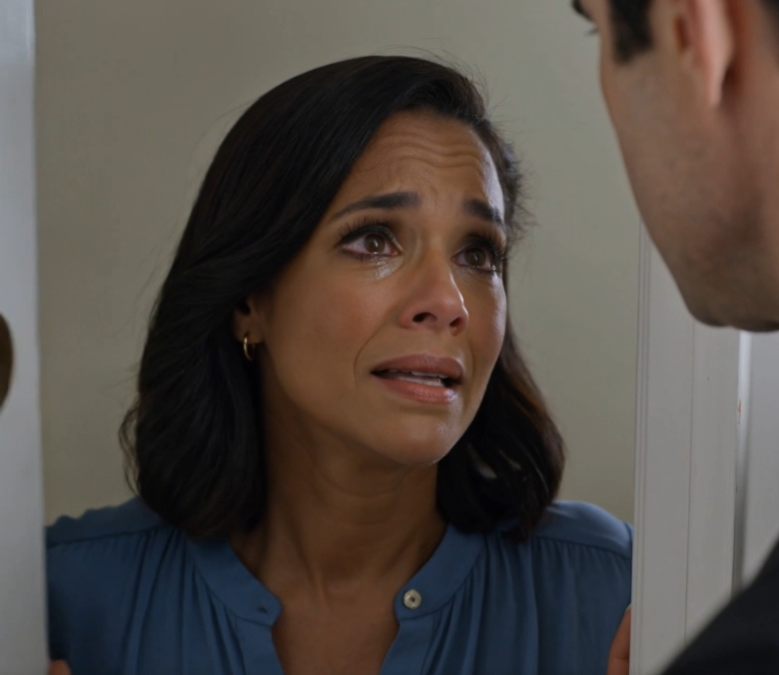
I abandoned my first son at eighteen and never looked back. But now my younger son is injured, my husband cannot work, and I had to knock on the door of the son I erased from my life for thirty years and beg him for help.
Before we go on, make sure to subscribe to the channel and let us know in the comments which city you’re watching from.
I know this is going to make me look like garbage, but I need to say it.
I never wanted my first son.
I was eighteen years old, an irresponsible, aimless teenager who went to a party and ended up with a life inside me without planning it. There was no love story, no illusion. There was only fear and a desperate need for it all to disappear.
When I found out about the pregnancy, my first thought was abortion. But in my family, that wasn’t an option. My father was blunt.
“You asked for it. Now you deal with it.”
My mother wasn’t any gentler. She told me a child wasn’t to blame for my decisions, that I should step up as a woman.
And what could I do? I had no money, no partner, nothing.
So I carried him for nine months with no attachment, no affection, without talking to my belly the way other mothers did. I didn’t buy baby clothes. I didn’t pick a name. I didn’t get my hopes up. Every kick was a reminder of my mistake.
When he was born, I looked at him and felt nothing.
Nothing.
Neither tenderness nor love. Just a sinking feeling, as if my life had closed forever.
I remember that same night at the clinic telling my parents, “I already had him. That’s the only thing I’m going to do for him. I plan to give him up for adoption.”
My mother cried. My father yelled at me. They accused me of being selfish, insensitive, immature.
And they were right.
But I was also being honest.
I couldn’t be a mother. I didn’t want to. I wasn’t ready.
Then I proposed something. Something I thought was the fairest thing at that moment.
“If it hurts you so much, you keep him. You raise him.”
They were forty, and they did.
My parents became his legal parents. They took care of everything—food, education, vaccines, birthday parties—while I left and went back to studying.
They even helped me financially with college, though not entirely. I worked in the afternoons and studied in the mornings. I strove to build a life, to climb out of the hole.
But I never went near that child again.
I never went to a medical appointment. I never bought him a gift. I never heard his voice or saw him take his first steps. Not because I hated him, but because he represented everything I wanted to leave behind.
At twenty-two, I graduated as a teacher.
At twenty-six, I married Diego. I told him, without much detail, that I’d had a son at eighteen but that my parents had raised him. He didn’t judge me. He never brought the subject up again.
At thirty-five, I had a second son, Samuel.
This time, it was planned.
Phân cảnh 2: Building a new life
This time, I cried when I held him.
This time, I felt.
And I never told him about Carlos. I never really talked about Carlos to Diego, Samuel, or anyone else. That chapter was sealed.
In my mind, that son didn’t exist.
I erased him like someone tearing a page from a book and throwing it into the fire.
And for many years, it worked.
Not looking back was easier than I imagined. Routine absorbed me: classes in the morning, grading in the afternoon, dinners with Diego, games with Samuel. A quiet, ordinary life.
Nothing extraordinary, but peaceful in a way I had manufactured myself out of silences and omissions.
Carlos didn’t exist in our conversations. He had no place in our albums.
Sometimes, very occasionally, my mother would mention something about him. That he’d started college. That he was good with numbers. That he didn’t go out much.
I’d nod, murmur an “uh-huh,” and change the subject.
I’d erased him, yes, but not entirely.
There were days, very few of them, when I’d catch myself imagining him. Who did he look like more? Did he have my temper, or was he more like my father, quiet and firm?
But as soon as those thoughts peeked out, I crushed them.
Because thinking about him meant facing everything I wasn’t. And I’d worked too hard at becoming someone new.
My husband never asked about him. Although sometimes I felt his gaze weighted with curiosity, he never crossed that line.
We focused on Samuel, on his education, on making sure he had what we hadn’t had. We took him to workshops. We celebrated his birthdays with themed cakes. We hugged him every night.
With him, I was the mother I had never known how to be.
Or rather, the mother I had decided to be with him.
Sometimes he’d tell me, “Mommy, I wish I had a little brother.”
And I’d answer him with a tired smile, “You’re my one and only love.”
And inside, I’d think, If you only knew.
Guilt was like a constant drizzle somewhere in the back of my chest. Never a storm. Never enough to stop me. But always there.
Stability, however, is a luxury that doesn’t last forever.
Mine broke with a fall.
Literally.
One afternoon, Diego slipped while walking down the school stairs.
Phân cảnh 3: Family crisis
One misstep, an exposed bone, and suddenly our lives were full of surgeries, crutches, and an unpaid leave from work that could last for months.
He tried to stay positive, but the frustration showed in his eyes.
At home, the pressure fell on me.
My income barely covered the basics.
A few weeks later, as if the universe wanted to finish the joke, Samuel fell during physical education class.
He fractured his femur.
He screamed in a way I’d never heard him scream before.
I was in the middle of class when they called me. When I saw him on the stretcher, trembling, I felt something inside me break too.
The treatment wasn’t particularly complex, but it was prolonged. Physical therapy, a splint, weekly appointments—and all of it cost money.
Insurance covered part of it, but not enough.
Our savings started disappearing like water through my fingers. Expenses piled up. The refrigerator grew emptier than usual.
One night, while Diego was trying to sleep, he said something that froze my blood.
“What if we asked Carlos for help?”
It took me a few seconds to answer. I turned slowly toward him.
“What did you say?”
“Carlos. Your son. The first one. Maybe he can help. Not for you. For Samuel.”
I sat up in bed.
“Are you crazy?”
“I’m not saying you reconcile with him. I’m just saying you look for him. Explain what’s happening. Maybe, if he has some humanity, he’ll understand.”
I looked at Diego as if I didn’t know him.
“Are you really asking me to show up in his life after thirty years and ask him for money?”
“And what other option do you have?” he asked in a hoarse voice. “This isn’t about pride anymore. It’s survival.”
I didn’t sleep that night.
The next day, I called my parents.
Phân cảnh 4: Confronting the past
It was a conversation loaded with silences and tension.
I asked them about Carlos.
They told me he was fine, that he had a steady job, that he lived alone.
“Do you think he remembers me?” I asked.
My mother hesitated.
“I don’t know. He never talks about you.”
“Can I talk to him?”
“I don’t know if he wants to, honey.”
I briefly explained what was happening. Samuel needed physical therapy. Diego couldn’t work. I was carrying everything alone. It wasn’t a whim. It was an emergency.
My father said only one thing.
“Don’t expect much from someone we raised because you didn’t want to do it.”
And he was right.
But they gave me Carlos’s number anyway.
I texted him.
Nothing.
I called.
Nothing.
I looked him up on social media, and there he was.
A serious profile picture. No smile.
I checked his information, his address, the area. Everything was there.
He lived only half an hour from my house.
And then I decided to do it.
I would go find him in person.
He wouldn’t open the door for me over the phone, but maybe he couldn’t ignore me if he had me standing face-to-face in front of him.
I packed a bag with Samuel’s medical papers, just in case I needed proof. I looked in the mirror, combed my hair, put on the blue blouse I used for interviews, and went out to find the son I’d left behind.
The one I’d never hugged.
The one I’d erased.
The building was old but clean, with a gray facade that looked as though it hadn’t been painted in years. The stairs smelled of dampness, and every step toward the second floor weighed on me as if I were carrying a slab of stone on my back.
I checked the address one more time in case I was mistaken.
I wasn’t.
Apartment 2B.
I knocked once.
Twice.
Nothing.
I was about to leave.
Maybe he wasn’t home. Maybe this had been a bad idea from the beginning.
Then I heard footsteps inside.
Slow. Firm.
The door opened only a few inches.
And I saw him.
Carlos.
My son.
Or at least the body of a man who had once been the boy I’d left behind.
He was taller than I had imagined, with the same strong chin as my father. He wore a black T-shirt and had a neutral expression.
No surprise. No curiosity.
Just coldness.
“Yes?” he asked, as if he were speaking to a salesman.
I swallowed hard.
“Hi, Carlos. I’m… I’m your mother.”
He didn’t react. Not even a blink.
His voice grew drier.
“Who are you?”
“Your mother. My name is Mariana. I—”
Before I could finish, he spoke.
“My mother lives somewhere else. Her name is Clara. She has gray hair, makes oatmeal cookies, and messages me every week.”
His gaze pierced me.
I felt the blood drain into my stomach.
“Carlos, please. I know I wasn’t there. I know. But I need to talk to you. It’s important.”
He didn’t open the door any farther.
“How important can it be for you to show up after thirty years?”
“I’m not coming for myself. My husband had an accident. My son Samuel, your half brother, also fractured his leg. We’re going through a hard time. A very hard time. I just wanted to know if you could help us.”
He stayed quiet for several seconds.
I almost expected an empathetic response. A crack in his expression.
It didn’t come.
“You want me to give you money for his treatment?”
“Just that. I’m not asking for anything else.”
“Treatment for a kid who doesn’t even know I exist? A kid you had after you’d already decided to forget about me?”
“It isn’t for me. It’s for him. He’s your brother.”
“Brother? Now I have brothers too?”
He said it almost mockingly, but there wasn’t a trace of humor in his eyes.
“Carlos, please. I know I have no right to anything, but this child needs help. You have a job. You live well. I can’t do it alone. He’s your family too.”
He rested his head against the doorframe. He closed his eyes for a moment.
When he opened them, I saw something inside him break completely.
“I don’t have family that abandoned me as if I were a burden. I only had grandparents. They fed me. They took care of me when I had a fever. They taught me to ride a bike. You gave me life, and then you took it away.”
“I was eighteen, Carlos.”
“I was a little girl.”
“And what was I? An experiment? A stone you threw into the water to see if it floated?”
I wanted to answer, but I had no words. Only tears caught in my throat.
“And now you come to my house asking for help as if we’re… what? Mother and son?”
I dared to reach out my hand, as if that could somehow save something.
“I’m only asking you not to do it for me. Do it for him. For Samuel.”
Carlos looked at me with a mixture of pity and anger.
Then, without yelling, without violence, he shut the door in my face.
I stood there listening to the click of the lock as though it were a sentence being handed down.
My breathing sped up. Tears blurred my vision.
I knocked one more time.
“Carlos, please. Don’t do this to me. I’m your mother.”
The door didn’t move.
“You can’t ignore me. Your brother needs you!”
I kept yelling desperately, a woman on the verge of collapse.
A neighbor opened her window and shouted, “Either you shut up or I’m calling the police.”
That was when I knew it was over.
I stumbled away as if my feet didn’t want to carry me, as though the ground itself had turned hostile.
I returned home empty-handed, my soul dragging behind me.
Diego asked how it had gone.
I told him the truth. Carlos wanted nothing to do with it. He had shut the door on me like I was a stranger.
“How selfish,” Diego murmured.
I said nothing.
I couldn’t.
Because deep down, no matter how much it hurt, there was something that felt fair about all of it.
No matter how badly it tore me apart to admit it, something about that humiliation felt deserved.
But I still couldn’t leave it there.
Not when Samuel looked at me with those eyes full of pain, asking when he would be able to run again.
Not when every new bill gave me tachycardia.
Not when I saw Diego frustrated and dull, feeling useless in his own home.
Three days passed after Carlos shut the door on me.
Three days in which I replayed every word, every gesture, every second of that scene.
I wondered whether I’d said something wrong.
Whether I should have cried sooner.
Whether I should have knelt.
Phân cảnh 5: Final refusal
On Wednesday afternoon, I decided to try again.
This time, I went earlier, hoping to catch him before he entered his apartment.
I saw him coming around the corner with a backpack over one shoulder and headphones on.
He stopped in front of the building entrance.
I took a deep breath and approached.
“Carlos,” I said without raising my voice.
He stopped and looked at me.
This time, there was no bewilderment on his face.
Only annoyance.
Again.
“I need to talk. Just two minutes. If after that you want to leave, I won’t bother you anymore. I promise.”
He hesitated.
Then he took off his headphones and nodded without saying anything.
We stood there on the sidewalk.
“I didn’t come to apologize. I know an apology isn’t enough. There are no words that can cover thirty years,” I began. “But I’m not here for me. I’m here for your brother. For Samuel. He’s suffering. Carlos, he’s suffering a lot.”
He frowned.
“And why doesn’t he go to the hospital like any other kid?”
“He does. But the physical therapy he needs isn’t covered by insurance. It’s expensive, and I can’t do it alone. We’re broke. Diego still isn’t working. I don’t know who else to ask for help anymore.”
Carlos crossed his arms.
He looked at me with a terrifying calm.
“And what makes you think I have an obligation to help you?”
“Because you’re his brother.”
“Brother, Mariana?”
He said my name as if pronouncing it disgusted him.
“I’m not his brother. I’ve never seen him. I never knew about him. To me, he’s a stranger. Like you.”
“But he’s your blood, and he’s just a child.”
“I was too, and you left me.”
“And now you expect me to become some kind of hero?”
“Not a hero. Just someone who doesn’t turn their back.”
Then he laughed.
It was a dry, sharp sound.
“You talk about not turning your back? You? You didn’t even give me a name. Do you know what it’s like to grow up knowing your mother lives a few blocks away and doesn’t want to see you? Did you ever hear my friends talk about their moms while I invented excuses so I wouldn’t have to talk about mine?”
I wanted to speak.
I couldn’t.
“And do you know what’s worse? I didn’t even hate you. Because to hate someone, first you have to have loved them.”
“Carlos, please,” I whispered.
“No. You aren’t my mother. My mother is Clara. She took care of me when I had a fever. She hugged me when I cried. She went to my school events. You were a biological formality.”
I felt my knees buckle.
“I was a little girl. I was scared.”
“And I was a baby. I had no choice. I never had a mother. And now you want me to be family for someone who doesn’t even know I exist. Don’t you realize how absurd all this is?”
“I’m doing it for Samuel. He’s not to blame for anything.”
Carlos stared at me, his eyes shining with contained fury.
“And neither am I. But I paid anyway.”
Silence.
Then, finally, he took a step back.
“You know what? Life cost me double because I had to learn how to exist without resentment. But this—this is no longer my responsibility.”
And he walked into the building.
This time there was no slammed door.
No yelling.
Only the coldness of something definitive.
I returned home broken.
I didn’t even cry.
Phân cảnh 6: Family rejection
It was such an old wound that it didn’t hurt anymore.
It only burned.
It burned the way things burn when you thought you’d already overcome them.
But no.
That night, I played one last desperate card.
The family group.
I sent a message to the WhatsApp group where my aunts, uncles, cousins, and even some of my parents’ friends were.
I told them everything.
Absolutely everything.
That Carlos had rejected me. That Samuel needed help. That if they couldn’t help financially, maybe they could at least talk to Carlos, convince him, do something.
What I received was worse than silence.
First came the read receipts.
One after another.
Aunts. Cousins. A couple of nieces-in-law.
Everyone read the message.
Nobody answered.
Until they did.
And I wish they hadn’t.
“So now he’s your son?” my cousin Lety wrote.
“How convenient, right?” her sister Estella added.
“You turned your back on him for thirty years, and now you expect him to save your new son. This is a joke,” one of my nephews wrote.
“It isn’t a joke. It’s a tragic comedy,” another one finished, adding a clown emoji.
The notifications kept arriving.
Mockery after mockery.
Sarcasm.
Even memes.
One of my cousins shared an image of a winged bill with a caption about looking for your mother after thirty years because she needs money.
They were all laughing.
And Carlos…
Carlos was in the group too.
He hadn’t said anything.
For a while, I thought maybe—just maybe—all that ridicule would stir something in him. Maybe he’d feel secondhand embarrassment. Maybe pity. Maybe he would decide to speak to me privately.
He didn’t.
What he did was worse.
“I don’t abandon anyone. I just learned to let go of the people who did it first.”
He wrote it coldly. Relentlessly.
Then he left it there, just like that, as if with those words he had closed a chapter he had never asked to open.
I tried to answer.
My hands were shaking.
I typed, “Carlos, I’m just desperate.”
Then I deleted it.
What was the point?
A few minutes later, my father called.
“You have to stop dragging yourself through the dirt like this,” he told me dryly. “It hurts to see you like this.”
“Dad, I have no other choice. It isn’t enough. I don’t want to lose everything.”
There was a long pause on the other end of the line.
“I’m going to lend you some money,” he finally said. “It isn’t much, but it’ll be enough for a few weeks.”
My whole body relaxed for a second.
I was about to thank him, but he interrupted me.
“And take it for what it is. Your inheritance.”
“What do you mean, my inheritance?”
“The little I have, Mariana. The house. The furniture. The savings. I’m going to leave all of it to Carlos. He deserves it more. You already made your life. He had no choice. We raised him, but he never stopped helping us. You did.”
I felt something inside me detach, as if my soul had left my body for a second.
“And you think that’s fair?” I asked, trembling. “That because of a mistake I made thirty years ago, I’m worth less than him now?”
“It isn’t because of one mistake, daughter. It’s because of everything that came after.”
I wanted to scream at him.
But I knew I would lose the little support I still had.
“If you raise your voice at me again,” he warned, “I’m hanging up, and I won’t give you a peso.”
So I swallowed hard, gritted my teeth, and said the words that cost me more than almost anything I’d ever said in my life.
“Thank you, Dad.”
He hung up without saying goodbye.
I sat on the floor.
I didn’t cry.
I didn’t scream.
I just stared into the void.
And I understood something horrible.
They weren’t punishing me for leaving him.
They were punishing me for never coming back.
The next morning, Diego tried to cheer me up. He told me we were going to get through this, that the loan money would give us some breathing room, that maybe with a little more time everything would be fixed.
I listened.
But I didn’t believe him.
Phân cảnh 7: Facing consequences
My family hates me.
Carlos hates me.
Or worse, he ignores me.
Samuel asks me every day when he’ll be able to play soccer again, and I only have answers that fall apart in my mouth.
I spent my entire life believing I’d buried the past well.
But it turns out you can’t bury something that still breathes.
And now, empty-handed and with my dignity reduced to dust, I wonder whether I was truly selfish for looking for Carlos, or whether I’m simply the villain time finally decided to expose in front of everyone.
That thought won’t let me sleep.
I repeat it in the shower, on the bus, while changing Samuel’s bandages, while serving Diego soup.
It pierces me like a venomous whisper.
What if I deserve all of it?
The rejection.
The humiliation.
The indifference.
Carlos never answered me again.
Not a message.
Not a glance.
He removed me from the family group, and several others followed him, as if I were a disease that needed to be cut out at the root before it infected everyone else.
I feel as though I’m serving a sentence I don’t even remember signing.
My father’s money barely covered three more weeks of Samuel’s treatment.
Some food.
The electricity bill is current, but now there is nothing left.
Diego still can’t go back to work.
And I…
I just can’t take it anymore.
I thought about selling things from the house. The TV. A piece of furniture. Even my engagement ring.
I thought about asking the school for a salary advance.
I thought about writing Carlos again.
I didn’t.
Because now it isn’t only about necessity.
It’s about dignity.
Yes, I was selfish.
Yes, I erased him.
But I was also a scared, lonely woman raised in a family that believed a mother was some kind of automatic sacrifice machine. That once you gave birth, you became a saint.
And I wasn’t one.
I’m still not.
But I’m not a monster either.
What nobody seems to understand is that I never felt free.
Not as a daughter.
Not as a mother.
Not as a woman.
I was always whatever other people needed me to be.
And when I tried to escape, they condemned me.
Carlos doesn’t want to see me.
My family despises me.
And my youngest son still thinks I’m a hero.
Sometimes I watch him sleep with his leg still in a cast, and I wonder if one day he’ll hate me too.
If, when he grows up and learns the story—because he will learn it—he’ll look at me with the same coldness Carlos did.
If, when he understands that his mother had another son she abandoned, he’ll feel less loved.
Less secure.
Maybe that’s the real punishment.
Not poverty.
Not rejection.
But the constant fear of repeating history.
I no longer know whether I was a bad mother, a bad daughter, or simply a woman trying to survive in a world that doesn’t forgive mistakes.
Today, I woke up to a message from my father.
Short.
Cold.
“Use what I gave you well. Don’t count on anything more.”
Then another message arrived.
“The house will be Carlos’s. It’s already settled.”
And I knew that, in his heart, I’m no longer part of the family.
I’ve thought about telling this story to seek comfort. To find someone who will say, “No, you aren’t the bad guy. You’re just a victim of circumstance.”
But maybe there is no comfort.
Maybe I am the bad guy.
I was just too late to realize it.








