HR handed me a termination notice—I signed without a word. Outside the building, my boss saw me and panicked: “Who told you to sign that?”
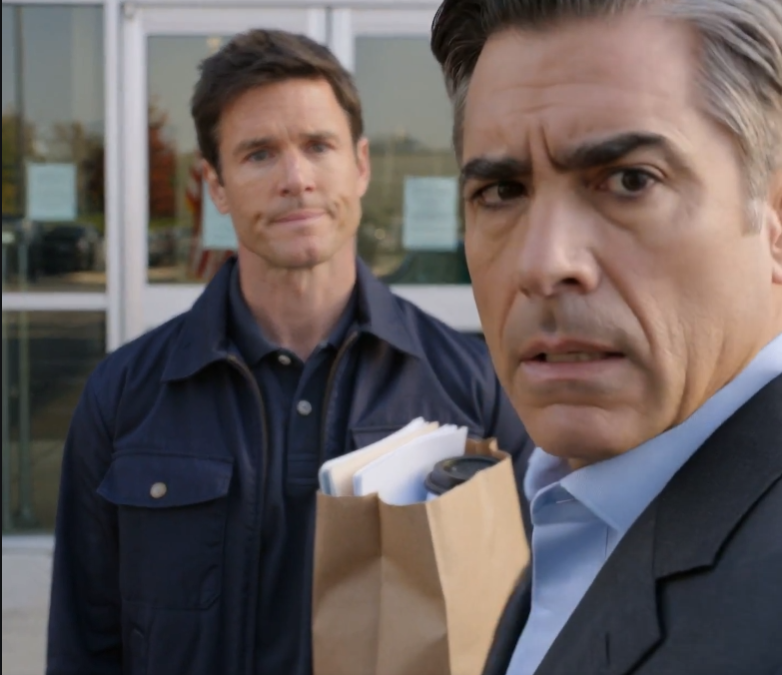
My name is Ethan Carter. I was thirty-nine years old when Keystone Precision Manufacturing dismissed me after eleven years.
I joined the company in my late twenties, still carrying the habits of a young engineer who believed a drawing could settle an argument. I knew how to read a tolerance stack, how to find a hidden source of vibration, and how to tell from the sound of a machine whether a bearing was beginning to fail.
My desk sat in a half-glass office at the far end of the plant. It was freezing in winter, sweltering in summer, and always smelled faintly of cutting oil. I loved that place more than I loved most people.
Victor had recruited me personally. Eleven years earlier, he had taken me to a small neighborhood restaurant and pushed a bottle of beer across the table.
“Ethan,” he had said, “you’re a technical man. Come work with me. I won’t shortchange you.”
I believed him.
For the first seven years, he didn’t shortchange me. Overtime was paid. Project bonuses arrived on time. When my father needed bypass surgery, Victor approved two weeks off without hesitation and arranged for the company to advance me $30,000 so I could deal with the hospital deposit and bills.
I treated him like an older brother.
The change began three years before my termination.
Keystone won a major contract to manufacture precision battery tray components for an electric vehicle company. Victor repeated the same sentence at every leadership meeting.
“This is our turnaround.”
I led three junior engineers through months of brutal process changes. We adjusted heat-treatment cycles, redesigned fixtures, corrected a robotic drilling sequence, and ran test batches until the shop floor felt like a second home.
The first-pass yield rose from 71 percent to 93 percent. The shipment went out. The customer accepted it. Everyone celebrated.
But the profit that should have appeared on Keystone’s books never seemed to arrive.
I was an engineer, not an accountant, and I didn’t ask questions.
Then, near the end of the following year, I heard two veteran machinists talking in the locker room.
“The final payment from Apex Mobility still hasn’t come in,” one said.
“It came in,” the other answered. “It just didn’t go through the company account.”
When I opened the door, both men fell silent.
I didn’t question them. I had spent my whole career believing that technical people stayed out of financial trouble, but some trouble doesn’t care whether you invite it.
Chapter 2: The First Crack
In March, Keystone announced a structural realignment. The engineering department was folded into manufacturing. My title changed from process engineer to production technical support.
My salary stayed the same, but I no longer reported directly to Victor.
I now reported to Martin Cole, a production director who had been with Keystone for less than a year.
Martin was in his early forties, wore his hair so precisely that it looked painted on, and used words like leverage, alignment, and closed-loop execution whenever a simple sentence would have worked.
His first meeting with me lasted nine minutes.
“All process changes will go through the digital approval chain,” he said, dropping a stack of forms on my desk. “You will not change drawings directly anymore. I sign first.”
“Some changes take ten minutes,” I said. “If we wait for the full approval chain, we could scrap an entire production run.”
“That’s a process problem, not permission to bypass process.”
I looked at the forms. “And if the line is down?”
“Then we will document why it was down.”
He smiled as if he had solved something. I went back to work.
By the end of that week, two of the three junior engineers I had trained were listed under Martin’s team. Their desks had been moved across the floor. The only one left with me was Noah Bennett, who had worked beside me for seven years.
That evening, Noah texted me.
Boss, people are saying you’re leaving.
Who said that?
Martin told the team that engineering has to become younger and more digital. He said senior people need to make room.
I sat alone in the cafeteria beneath the fluorescent lights.
Senior people.
I was thirty-nine. My hair hadn’t even turned completely gray.
I was also the practical inventor behind seven of Keystone’s process patents, although every patent certificate listed Victor Grant as the inventor.
That had been my choice, or at least the choice I had allowed myself to make.
Years earlier, Victor had told me, “Put my name on the patents. It makes the company look stronger to investors. I’ll give you double the project bonus.”
He had paid me $10,000.
Ten thousand dollars for seven patents.
At the time, I thought I had made a sensible trade. My father needed treatment. Victor had helped us. The company needed a clean public story. I told myself that names were less important than useful work.
Looking back, I understood that the signature had been the first explosive charge I buried beneath my own life.
The next several months made the new structure clear.
Martin asked for status reports that repeated information already stored in the project system. He required engineers to attend meetings about meetings. He called anyone who challenged a bad instruction resistant to change.
When a process improved, he described it as the result of manufacturing transformation. When something went wrong, he asked which engineer had failed to follow his direction.
He never raised his voice. He didn’t need to. He had learned that calm language could hide a threat more effectively than anger.
Chapter 3: The Termination Papers
In late September, Keystone began optimizing its workforce.
The first group was older machinists. The second was administrative and facility staff. The third was engineering.
Martin called me into a conference room on a gray Monday morning. He wore the expression of a man delivering good news.
“Ethan, Keystone appreciates eleven years of service,” he said. “But your skill profile isn’t aligned with the company’s automation strategy. We can offer the enhanced severance program. Sign today, and you can leave today.”
The phrase skill profile made me want to laugh.
The month before, I had solved an aluminum part-cracking problem that had stopped a production line for four months.
The cause wasn’t a single defective component. It was the relationship between the quench-fluid ratio and the machine spindle speed. I spent three nights in the plant, slept twice on the shop floor, and isolated the problem through controlled batches.
Martin presented the result at the monthly meeting as a milestone in digital process control.
He didn’t mention my name once.
I looked at him.
“Does Victor want me gone?”
He paused for less than a second.
“This is a board-level decision.”
“When did Keystone create a board?”
He pushed the agreement toward me.
The severance equaled twelve months of my salary. It wasn’t generous, but it was enough to keep me afloat while I found another position.
Then I read the seventh clause.
The language was printed in small type.
The employee confirms that no unresolved intellectual property claims, technical contributions, trade secret claims, or employment disputes exist between the parties and voluntarily waives any future claim relating to such matters.
I set the paper down.
“What does this clause mean?”
“Standard language,” Martin said. “Legal’s template. Every separation agreement has it.”
“Then I’m going to revise it.”
Beneath the clause, I wrote:
The employee’s identity as the actual inventor or contributor of any technical work completed during employment, and any rights connected to that identity, are not affected by this agreement.
Martin’s face tightened.
“You can’t change the agreement.”
“Then I won’t sign.”
We sat in silence for twenty minutes. Chloe, the young HR coordinator, kept looking between us. Her fingers trembled slightly against the folder in her lap.
“Martin,” she said quietly, “maybe Ethan should take the agreement home and review it.”
Martin stared at me as though I had become an unexpected variable in a calculation he had already finished.
“Fine,” he said. “You have one day. Sign tomorrow morning or pursue it through employment arbitration.”
The contempt in his voice was unmistakable.
He believed arbitration was a threat because most employees couldn’t afford the time, money, or emotional cost of using it.
I walked out of the building with the draft agreement in my hand. Cold air slipped beneath my collar.
I didn’t need a day to think. Eleven years had taught me something.
When a company uses structure and process to hide who actually did the work, it is no longer looking for talent. It is looking for obedient tools.
The next morning, I returned and signed.
I didn’t alter the seventh clause. If I changed it, Martin would only find another way to pressure me.
But on the back of the third copy, in pencil so lightly that no one else would notice, I wrote one sentence.
Only I knew what it said.
Chapter 4: The Question in the Parking Lot
That was why Victor looked frightened when he saw me leave.
An owner who sees a dismissed employee sign quickly should feel relief.
Victor felt panic.
“Victor,” I said, “are you afraid I signed it?”
He recovered his expression.
“Don’t read too much into this. We could still talk. Keystone is willing to be reasonable.”
“Reasonable like Martin’s seventh clause?”
The polite smile vanished.
“You know?” he asked.
“What do I know, Victor? Do I know that seven patents list your name even though I completed the core process work? Or do I know that the Apex Mobility payment never entered Keystone’s books?”
The air seemed to leave the parking lot.
Victor glanced toward the glass doors to make sure no one was coming out. When he spoke again, the sharpness was gone.
“Some things aren’t what you think. Don’t leave yet. Let me buy you dinner.”
“I’ve been optimized out. Is dinner a farewell, or is it a way to buy my silence?”
He didn’t answer.
“Seven o’clock. The usual place.”
Then he got back into the Audi and drove away like an animal retreating into the dark.
The usual place was a small restaurant where he had recruited me eleven years earlier. It had since been demolished and replaced by a chain coffee shop. For the last several years, we had gone to a quiet private dining room called Harbor House.
I would go, but not to hear an explanation.
Chapter 5: The Dinner
Harbor House hadn’t changed.
The room held a dark wood table, a yellow pendant light, and a framed sign about prosperity that looked as though it had been printed for a different decade.
Victor had arrived first. A pot of tea sat untouched in front of him.
When I entered, he stood.
In eleven years, he had never stood for me.
“Sit,” he said. “Tonight, we aren’t talking about the company. We’re talking about people.”
“Then let’s start with one person. Where did the Apex Mobility payment go?”
The teapot shook in his hand. A few drops stained the tablecloth.
“Who told you?”
“That isn’t important. Was the money supposed to fund our project bonuses?”
Victor was silent for a long time.
“Yes,” he said at last. “But not entirely.”
He spoke slowly, as if pulling a piece of glass from his throat.
Three years earlier, the electric vehicle contract had produced a large profit. Victor had taken part of the money and invested it in a friend’s semiconductor startup. He expected to triple the investment.
The startup failed.
The money disappeared into an unfinished plant and a series of debts.
To keep Keystone’s cash flow alive, Victor had done three things.
He routed later customer payments through private accounts. He kept the patent names under his control so the company could be presented as a technology-driven business during investment negotiations. And he began removing veteran employees because they were expensive, but also because they knew too much.
“Martin was my choice,” Victor said. “He understands capital. He understands how to make a company look ready for acquisition. I needed him.”
“So I was one of the costs of packaging the company.”
He didn’t deny it.
“Don’t hate Martin. He was doing what he was paid to do.”
Victor leaned forward.
“I know you were treated badly. I’ll increase the severance. Fifteen months instead of twelve. I can transfer the money tonight. And the patents—we can find a way.”
“Find a way?”
“Ethan—”
“You didn’t ask me to dinner because you feel guilty. You’re here because I signed quickly, and you’re afraid I signed away something or left something behind.”
His pupils narrowed.
“You’re afraid of the seventh clause,” I continued. “You’re afraid I’ll sign, then file arbitration and expose who actually completed the work. More than that, you’re afraid I kept something you don’t know about.”
“I don’t—”
“You did?”
I took an old notebook from the paper bag.
The cover was worn through. The corners had curled. It was the notebook I had carried during my first year at Keystone, filled with process parameters, failed trials, fixture sketches, and small corrections written in the margins.
Every page had a date and my signature.
“Do you remember that every one of the seven patent concepts began in this notebook?”
Victor’s face slowly turned gray.
“That isn’t direct proof,” he said. “The patents went through review. The company provided the equipment and data.”
“Correct. The notebook alone isn’t direct proof.”
I closed it.
“I didn’t come here to threaten you.”
“Then why did you come?”
I looked at the man who had once slapped my shoulder and promised not to shortchange me.
His eyes were ringed with exhaustion. His hair had gone gray at the temples. In the yellow light, he looked like a man trapped in a hole he had dug for himself.
“I came to tell you that I can sign a paper without becoming silent.”
I let the words settle before continuing.
“You can pay me twelve months or fifteen months. There are things money cannot buy.”
“What things?”
“Time. I’m thirty-nine. I gave Keystone eleven years. I gave the machines my best attention, the drawings my best thinking, and the production lines my best nights. What you owe me isn’t only money. You owe me the version of myself I might have become if I hadn’t spent so long accepting less than the truth.”
The room was so quiet I could hear traffic outside.
Victor lowered his head.
“Ethan,” he said, “I’m sorry.”
He sounded sincere.
That didn’t change anything.
“The agreement stands,” I said. “And I’m not asking for more money. But leave Noah alone. He has worked beside me for seven years. He did nothing wrong.”
Victor looked up as though he had never understood me before.
“That’s all?”
“That’s all.”
He gave a bitter laugh.
“You scare me sometimes.”
“You’re afraid of the wrong person.”
I stood.
“You should be afraid of the next person you push away.”
Chapter 6: The Turn
After Harbor House, I stood beside the road for several minutes.
My phone buzzed.
Noah was calling.
“Ethan, they’re transferring me to warehouse materials control,” he said. “I studied process engineering.”
“Go for now.”
“Go?”
“A warehouse is a different view of the supply chain. Learn everything you can.”
He sent a wounded silence through the phone.
Noah was thirty-two. He had to learn how to protect himself inside an unfair system without waiting for someone to rescue him.
On my way home, I passed Keystone’s old plant. The city had approved redevelopment of the industrial block. A red demolition mark covered the wall like an open wound.
I remembered standing outside that wall eleven years earlier with Victor’s job offer folded in my hand.
I had carried a small, stubborn belief that technical work could not lie. Give a process enough care, I thought, and the result would tell the truth.
I learned that technology doesn’t lie.
People do.
Chapter 7: The Anonymous Package
I thought the story was over.
Sign the agreement, take the money, leave a message for Noah, and move on.
I was wrong.
Ten days after my termination, an unmarked package arrived at my apartment. Inside were screenshots of a text conversation and a bank statement.
The conversation was between Martin and an unknown number. They discussed packaging Keystone’s process data and selling it to a competitor through a shell company called Meridian Advisory.
The bank statement showed a personal account receiving $800,000 the previous November.
The description read: Consulting services.
I stared at the number, not because of the money, but because I suddenly understood why Martin had pushed me out, why Victor had panicked when I signed, and why the seventh clause had been written in tiny type.
They hadn’t been optimizing me.
They were afraid of me.
I had spent eleven years on the floor. I knew the true cost of each operation, who approved each process change, which yield figures had been adjusted, and which failures had been hidden inside reports.
I didn’t have the patents in my name, but I had memory.
An honest engineer’s memory is dangerous to a company that survives by packaging appearances.
I copied the package and stored it in three separate encrypted accounts. Then I set an automatic release message. If I failed to log in for forty-eight hours, the files would be sent to Victor, Martin, and a manufacturing journalist I trusted.
Then I called Noah.
“How is the warehouse?”
“Messy,” he said. “But I found something. The aluminum stock supplier changed last year. The price increased seventeen percent, but the purchase orders still show the old price.”
“Are you sure?”
“I compared three months of receiving records and invoices. The difference is more than $200,000.”
I closed my eyes.
“Don’t confront anyone. Don’t tell anyone. Save the records somewhere only you control.”
“Ethan—”
“This is the only way to protect yourself until we understand the whole picture. Be a good person, Noah. Don’t be a careless one.”
My third call went to Daniel Harris, a former Keystone colleague who had left five years earlier and now served as a technical director at another manufacturer.
“I heard you got out,” Daniel said. “Are you looking for work?”
“Have you heard of Meridian Advisory?”
There was a pause.
“A shell company that brokers stolen technical data. Why?”
“I may need a desk.”
Daniel laughed.
“You always have a chair here. But first, you need to defuse whatever you’re holding.”
“I’m working on it.”
I put the phone down and looked at my old notebook.
Eleven years. Seven patents. Four production lines. Countless nights.
I had given my best years to a company that had turned me into a cost category.
But I didn’t hate it.
Hate was a chain I couldn’t afford to wear.
I had finally understood something simple. A company cannot betray you by itself.
People make choices.
And people can be bypassed.
Chapter 8: The Hunt
On the thirteenth day, Victor called.
His voice was fractured.
“Where are you?”
“Something happened?”
“Martin ran.”
“Ran?”
“He took the company’s process data package and part of an unfinished payment trail. Your work is in there. Not all of it, but enough. If someone releases it, you may be dragged into the mess.”
“What are you asking me to do?”
“Don’t say anything yet. I’m coming over.”
Thirty minutes later, Victor’s car stopped beneath my apartment.
He looked older than he had at Harbor House. His suit was wrinkled, and his eyes were deeply hollowed.
Inside the car, he handed me a document.
“Martin changed this before he disappeared. Read page three.”
It was a Core Technical Work Ownership Confirmation. The date was from the previous month. Martin had signed it.
The language declared that all of Keystone’s core technical work had been created by the collective company engineering team and that Keystone could freely transfer, license, or sell it.
“What does this do?” I asked.
Victor’s voice sounded like sandpaper.
“It separates Martin from personal liability. If someone accuses the company of misappropriating technology, he can say it was a corporate action.”
“But the person who knows exactly who created each process is me.”
“You—”
I closed the document.
“You didn’t come here to apologize. You want me to help carry the blame.”
He said nothing.
“You’ll say I was part of the collective engineering team, that I knew about the process, that I accepted the company’s method. Is that it?”
“If you sign a statement saying you understood and approved the technical management process, the trail won’t reach you. I’ll give you $500,000.”
I repeated the number quietly.
“Five hundred thousand dollars to buy one sentence.”
“Yes.”
The man I had once respected was trying to purchase eleven years of my honesty.
“Do you know what’s most pitiful about you?” I asked.
“What?”
“You still believe everyone has a price.”
I opened the door and stepped out.
Victor called after me.
“Think carefully. If this gets bigger, you won’t be clean either. You signed the patent documents. You took the bonuses. If you want to reopen the past, start by reopening your own part in it.”
I stopped but didn’t turn around.
“You’re right,” I said. “I will.”
Chapter 9: The Account I Owed Myself
At home, I did something many people would have called foolish.
I sat down and counted the eleven years of my life.
Not the money.
The debt I owed myself.
In my first year, I missed my mother’s sixtieth birthday because I was rushing a production trial. She told me not to worry. My father later admitted that she cried after hanging up.
In my third year, I slept on the plant floor for a month to save a yield rate. My girlfriend broke up with me.
“You love machines more than you love me,” she said.
I didn’t argue because she was right.
In my fifth year, my father underwent bypass surgery. I signed the consent forms outside the operating room with a hand that shook so badly I could barely write my own name.
Victor advanced me $30,000.
I still owed him gratitude, even if gratitude had never required me to surrender my identity.
In my seventh year, I trained Noah. I learned to teach instead of hoarding knowledge.
That was the only thing I did right during those eleven years.
In my ninth year, Keystone began declining. I started smoking a pack a day and waking at three in the morning.
In my eleventh year, I was fired.
I wrote twenty-three lines on a sheet of paper. At the bottom, I wrote:
You did not fail everyone else. You failed yourself. A person who abandons himself has no right to talk about principles.
That night, I decided to pursue employment arbitration.
Not for money.
I wanted the names on the patents corrected.
Seven inventions.
Actual inventor: Ethan Carter.
I wanted one ordinary form of justice that had been delayed for eleven years.
Chapter 10: The Filing
I drafted the arbitration petition three times.
The first version was full of anger. I tore it up.
The second was full of hurt. I tore that one up, too.
The third contained only facts: dates, project numbers, experiment logs, drawing versions, pilot batches, yield data, and bonus receipts.
Every line could be matched to a Keystone record. Every line pointed to the same conclusion.
The core technical solutions for seven patent applications had been completed by me, while the company had failed to identify me as the actual inventor.
I filed the petition on a rainy morning.
Victor called. I let it go to voicemail.
Then he sent a message.
Don’t take this that far. I’ll give you $800,000. No, $1 million. Withdraw the arbitration, and we can still be brothers.
I deleted the message.
Not because the money was insufficient, but because we can still be brothers was the sentence I had trusted most and should have trusted least for eleven years.
Three days later, Keystone filed its response.
It argued that the inventions were work for hire and belonged to the company; that I had signed a patent acknowledgment years earlier and accepted a bonus in exchange; and that I had no proof the core solutions were mine.
I smiled when I read the second point.
I had signed the paper.
Eleven years earlier, I had taken $10,000 and convinced myself that a name didn’t matter.
Then I opened my old notebook.
Every page contained a date, a project code, a sketch, and a signature.
I scanned the notebook at high resolution and compared each handwritten entry with the technical disclosure files in Keystone’s patent records.
The overlap was 87 percent.
It wasn’t because my memory was perfect.
Engineering doesn’t lie.
A process is a combination of parameters, failed paths, trade-offs, and reasons. Someone can copy the shape of a solution. It is much harder to copy the process that created it.
I submitted the comparison report and scans to the arbitration panel.
I also submitted something I had never planned to disclose: a tracing of the Apex Mobility payment.
The anonymous sender had given it to me.
I still didn’t know who that person was. I suspected it was someone inside Keystone, someone who had understood the situation but was too afraid to stand in front of it.
I understood that fear.
So I stood there for both of us.
Chapter 11: The Reversal
A week before the arbitration hearing, Martin came back.
He didn’t return voluntarily.
Federal investigators escorted him into the courthouse through a side entrance.
The process data he had tried to sell contained an undisclosed manufacturing method that didn’t belong to Keystone. It belonged to a government-owned research partner that had worked with Keystone on an unrelated program.
Martin had copied it while creating his digital process control package and included it in the sale to a competitor.
The research partner reported the theft.
Investigators followed the trail to Meridian Advisory, then to the $800,000 deposit, then to Martin, and finally to Keystone.
Victor spent seven hours answering questions.
When he came out into the courthouse corridor, he saw me and stopped as if he had run into a nail driven into the wall.
“Ethan,” he said hoarsely, “you won.”
“I wasn’t trying to win.”
“The company may be investigated. The patents may be challenged. Customers may demand damages. You destroyed Keystone.”
“I destroyed Keystone?”
I looked at him.
“You destroyed it three years ago when you put the contract profit into that semiconductor project. I only straightened the sign on top of the ruins.”
He had no answer.
Later, I learned that I hadn’t been the person who finally brought Martin down.
Noah had.
The apprentice Victor had pushed into the warehouse had spent three months reorganizing material codes. In the process, Noah traced the aluminum supplier change.
The difference, more than $200,000, had been routed into an account belonging to Martin’s brother-in-law.
Noah hadn’t called me first.
He had gone directly to the investigators.
“You taught me that a process has to be honest,” he told me afterward. “The books are a process, too.”
My eyes burned.
Training Noah was the only thing I had done during those eleven years that I never regretted.
Chapter 12: The Decision
The arbitration decision arrived on a clear afternoon.
It contained three central conclusions.
First, the panel recognized me as the actual inventor of the seven process inventions and ordered Keystone to submit corrected inventor information to the United States Patent and Trademark Office within thirty days.
Second, Keystone had to pay me $142,000 in unpaid inventor awards and related compensation.
Third, the panel denied the rest of my claims.
The severance was paid under the agreement. Together, the severance and inventor award came to less than $300,000.
People asked, “That’s it? You spent all that time and ended up with less than $300,000?”
“That’s it,” I said.
They didn’t understand.
I didn’t need the money.
I needed to stand in an arbitration room at thirty-nine years old while someone pointed to seven thick patent files and said, in front of Victor, “The inventor is Ethan Carter.”
At that moment, eleven years became worth something again.
The next day, Victor sent one final message.
You still shouldn’t think of yourself as innocent. You took the bonus. You signed the forms. You stayed silent. You were part of it.
I read the message for a long time before replying.
You’re right. I was part of it. That’s why I judged myself first. What have you done?
He never answered.
Keystone was later fined. Victor stepped away from daily operations, and the company was acquired by a public manufacturing group. Martin was convicted of trade secret theft and financial fraud.
Part of the Apex Mobility payment was recovered and distributed to several veteran machinists whose overtime and project bonuses had been delayed.
Noah didn’t return to Keystone. He joined Daniel’s company as a process supervisor and soon surpassed me in the number of projects he could manage at once.
I was proud enough to let him.
The weeks after the decision were less dramatic than people imagined.
There was no parade, no executive apology in the lobby, and no moment when every employee at Keystone suddenly understood what had happened.
Most people were busy surviving their own schedules. Production still had to run. Customers still wanted delivery dates. Someone still had to approve purchase orders and answer the phones.
Corporate disasters rarely stop ordinary work. They move through it like a leak in the roof, forcing everyone to place buckets beneath the same ceiling.
The difference was that people began asking questions out loud.
A machinist asked whether his overtime had been recorded correctly. A designer asked who owned a fixture concept created during a customer project. An accountant asked why one vendor had been paid through two different entities.
None of those questions were mine to answer, but they all came from the same change.
People had seen that records could matter.
Keystone’s new owners hired an outside compliance firm. They interviewed employees who had never been invited into a conference room except to receive bad news.
The first report was painful to read.
It described not one dishonest manager, but a workplace that had allowed dishonest habits to become normal.
The report quoted a former employee who said, “We knew the numbers were wrong, but we didn’t know whether telling the truth would make us unemployed.”
I read that sentence twice.
That was the real damage.
The company hadn’t merely stolen names or diverted money. It had taught people that honesty was a personal risk.
I was asked to give a statement about the patent process. I agreed, but I set a boundary. My statement would describe facts, not become a public campaign against every person who had worked there.
Some employees had stayed quiet because they were afraid. Some had stayed quiet because they were exhausted. A few had stayed quiet because they benefited from the arrangement.
Those were different kinds of silence, and I didn’t want to pretend they were all the same.
During the interview, a compliance attorney asked why I had accepted the original $10,000 payment.
“My father needed surgery,” I said. “Victor helped us. I was grateful. I also believed I was making a practical choice.”
“Do you consider that a defense?”
“No. It’s an explanation.”
“What is the difference?”
“A defense asks you not to judge me. An explanation asks you to understand how a reasonable person can make a decision that later becomes a trap.”
The attorney wrote that down.
I had spent years believing technical work was objective because a measurement either passed or failed.
Human decisions weren’t like that.
A person could be grateful and exploited at the same time. A contract could be voluntarily signed and still be designed to take advantage of unequal power. A boss could once help your family and later choose to erase your work.
Two truths could occupy the same room.
That was harder to learn than any engineering formula.
Victor’s decision to step away from Keystone was announced in a short internal memo. It thanked him for his vision and described the acquisition as a strategic transition.
No memo mentioned the private accounts, the stolen names, or the frightened question in the parking lot.
I didn’t need the memo to say those things.
People who had been there knew.
Noah called after the acquisition paperwork closed.
“They want me to sign a management agreement,” he said.
“Have you read every page?”
“I read the first half.”
“Then you haven’t read it.”
He groaned.
“I knew you’d say that.”
We went through the agreement line by line over a video call. He asked about noncompete language, invention assignment, bonus timing, and the phrase discretionary compensation.
I explained what I understood and marked the places where he needed an attorney.
“You’re not going to tell me whether to sign?” he asked.
“No. I’ll tell you what the words mean. The decision is yours.”
“That’s less comforting.”
“It’s more useful.”
He signed only after the company clarified the bonus formula and removed a clause that allowed management to change his responsibilities without notice.
The next week, he became the first person on the old Keystone line to require an inventor and contributor log for every process change.
When he told me, I felt a quiet satisfaction.
Not because I had won against Victor, but because a younger engineer had learned to read before signing.
That spring, Daniel asked whether I wanted a permanent executive title at his company. He offered me a vice president position, a larger office, and authority over three facilities.
I turned him down.
“Why?” he asked. “You’ve earned it.”
“Maybe. But I don’t want to become a person who spends all day approving other people’s work from a distance.”
“You can change the system from that office.”
“I can also forget what the floor sounds like.”
He didn’t agree, but he understood.
We created a technical fellowship instead.
Every quarter, two young employees from the production floor received paid time to study process engineering and shadow senior machinists. The fellowship required them to document what they learned and teach it back to the next group.
It was a small program. It didn’t make the news.
But the first two fellows later corrected a recurring assembly error that had cost the company nearly $90,000 in rejected parts.
“You see,” Daniel said, “the office would have been cheaper.”
“The office would have been quieter.”
“You dislike quiet only when it means nobody is willing to ask why.”
By the time Planecraft began preparing its book, my old termination papers had faded at the folds.
I kept them anyway.
The agreement wasn’t proof that I had been defeated. It was proof that I had once believed the only way to protect my future was to accept somebody else’s version of my past.
I no longer believed that.
Chapter 13: The Small Company
Three months after leaving Keystone, I joined a small engineering firm called Planecraft Manufacturing Solutions.
I worked as a consultant. I was paid by project instead of sitting at a desk every day.
The owner, Rachel Monroe, was in her forties, spoke little, and asked one question during our first meeting.
“Can you take a production yield to ninety-five percent?”
“Yes,” I said. “I’ll need three people and six months.”
“You’ll have the people and the time. I have one condition.”
“What condition?”
“Every inventor is listed by legal name. Every bonus is paid in the same month it’s earned. Every hour of overtime is recorded and paid.”
I studied her face.
“Someone hurt you,” I said.
“Not me,” she answered. “My husband was a technical engineer for twenty years. His patents carried his boss’s name. He never challenged it. I don’t want to watch another engineer disappear behind somebody else’s title.”
I nodded.
“Then we may work well together.”
Planecraft gave me a desk near the windows. The October light fell across a new oscilloscope that hadn’t yet been taken out of its packaging.
There were eight employees, with an average age of thirty-four. Half had been optimized out of previous jobs.
The receptionist, Maya Bell, was twenty-six. She had worked in operations at a technology company until her manager told her she wasn’t cost-effective enough.
She had performed the work of three people for eighteen months.
“They said my value wasn’t high enough,” she told me. “I laughed, went home, and applied here the next morning.”
“Why here?”
“Rachel asked what I was most proud of in my old job. I told her I had taken an event that was dying at two hundred attendees and grown it to twenty thousand. She said, ‘Then come make our events work.’ She didn’t ask whether I was willing to work weekends or drink with clients. She didn’t ask because she already knew the answer.”
Maya tilted her head.
“Were you optimized out, too?”
“Yes.”
“Did it feel good?”
I thought about it.
“No. But it made me see clearly.”
My first project was with a medical device supplier whose injection-molded components had an eleven-percent scrap rate.
The owner, Marcus Hill, was short, loud, and direct.
“I heard you solved Keystone’s cracking problem,” he said. “Solve this one.”
“Let me look first.”
I spent two days observing without touching a machine.
I watched how material was loaded, how the mold closed, how cooling water moved, and how the quality inspector measured the parts.
On the third day, I knelt beside the injection machine and drew a curve on the concrete with chalk.
“The mold isn’t the problem,” I said. “The material temperature is. Your temperature sensor is eighteen centimeters too far from the nozzle. The display says 240 degrees, but the nozzle is actually at about 226.”
I pointed toward the machine.
“The material isn’t fully melted when it enters the cavity. You’re calling the result a dimensional error, but it’s incomplete filling.”
Marcus crouched beside the curve.
“You saw that on the first day?”
“I saw the possibility. I needed to verify it.”
“Who’s responsible?”
“People.”
I pointed to the chalk again.
“Your senior operator adjusts by feel. His instincts are good, but he doesn’t know the display is lying. Quality measures the result instead of the cause. Maintenance keeps replacing sensors with the same model instead of asking where the sensor belongs.”
Marcus stood and dusted off his knees.
“Change it.”
“After the change, scrap should fall below three percent. I have a condition.”
“Name it.”
“Archive every process parameter. Who changed it, why they changed it, and what happened afterward. Turn your senior operator’s instincts into written records.”
“Why?”
“Because skilled workers retire. Hands cannot be passed down. Records can.”
He didn’t understand all of it, but he understood the part about losing knowledge.
One month later, the scrap rate fell to 2.7 percent.
Marcus paid my project fee at double the original estimate and tried to add a cash bonus.
I refused the extra envelope but asked for one promise.
“The next time you train someone, train two people. I want your process to outlive your hands.”
He agreed.
I brought in Frank Miller, a fifty-one-year-old toolmaker from the old Keystone plant, and Alex Rivera, a twenty-three-year-old Planecraft technician with a mind that moved faster than his mouth.
I didn’t teach them by giving speeches.
I taught them to record the process.
That was the sentence my eleven years had purchased.
Leave the process behind.
Chapter 14: The Name in the Frame
That spring, I returned to my parents’ hometown for a Memorial Day weekend visit.
My mother was hanging blankets in the backyard when she saw me. The lines around her eyes deepened with her smile.
“You’re back. Have you eaten?”
“Yes. I brought you something.”
I took a framed document from my bag.
It wasn’t an award or a diploma.
It was the official USPTO correction confirming my inventor status on all seven projects.
My mother could read only a little technical English, but she recognized my name.
“That’s yours.”
“It’s mine.”
“After eleven years, it’s finally yours.”
“Yes.”
I knelt and straightened the corner of the frame.
“I used to think that if the work was good, the name didn’t matter. I was wrong. Your name is part of what you made.”
She patted my head the way she had when I was a child.
“You came home. That’s what matters. Dinner is in the kitchen.”
I went inside and filled a bowl with rice.
My father was repairing an old radio at the table. A sycamore leaf drifted past the window.
I thought about Victor’s question in the parking lot.
Who told you to sign?
Now I knew the answer.
I did.
Not because I was angry.
Not because I had planned revenge.
I signed because I finally understood that a person must sometimes risk losing a job before he can own a career.
I hadn’t signed the end of my life.
I had signed the beginning of a late one.
Chapter 15: The People in the Notebook
One of Planecraft’s first long-term clients was a factory making smart-lock components.
The motor was rated for 100,000 cycles but jammed after 60,000. The customer expected me to replace the motor.
The motor wasn’t the problem.
The tooth profile of the gear was.
The design house had supplied a standard gear profile, but a smart lock operated under high-frequency, low-torque, intermittent conditions. The standard profile concentrated stress at the tooth root.
Microcracks appeared after 60,000 cycles.
I changed the root fillet from 0.3 to 0.5 millimeters and adjusted the pressure angle from twenty degrees to nineteen.
The test unit reached 160,000 cycles without failure.
The client wanted to pay me to keep the adjustment confidential.
“Put the parameters into your own standard,” I said. “Use them on every similar product.”
“Why? It’s your work.”
“Technical knowledge is meant to be used, not hidden.”
The moment stayed with me because it showed me the deepest difference between Victor and me.
He treated technical work as an asset that could be priced, withheld, or used to attract investors.
I treated it as a process that could be taught.
Assets depreciate.
Processes continue.
By summer, Alex came to me and said he had received an offer from a larger company at twice his Planecraft salary.
“Go,” I told him.
“You’re not going to stop me?”
“Why would I?”
“You trained me.”
“I trained you so you could go farther than I did, not so you could stand behind me forever.”
He lowered his head.
“Will you hate me if I leave?”
“No. But calculate the whole offer. Overtime, commute, retirement match, health insurance. If it’s still twice as good after you calculate those things, go.”
He laughed through wet eyes.
“You calculate everything.”
“If you don’t calculate it, someone else will calculate it for you. They usually charge interest.”
On his last day, Alex left a notebook on my desk.
The cover was new, and the pages were crowded with dates and diagrams.
On the last page, he had written:
Ethan says the process never lies. I’m leaving the process behind.
My shelf now held three notebooks.
Mine, stained with oil. Frank’s, soft at the corners. And Alex’s, almost new.
Three generations of technical workers.
That was what beginning again meant at thirty-nine.
Not seven patents.
Three notebooks.
Chapter 16: Noah’s Call
One November evening, Noah called.
“I need your advice.”
“Tell me.”
“Daniel’s company is acquiring the remaining Keystone production line. They want me to lead the process integration team. But the Keystone people don’t respect me.”
“Why not?”
“Because I’m younger. And because they say I reported Martin so I could climb.”
His voice dropped.
“They think I exposed the company to get promoted.”
I looked out the window. One office building across the street was turning its lights off, row by row.
“Why did you go to the investigators?”
“Because the supplier difference was company money. It came from the work we did.”
“Exactly. You weren’t climbing. You were checking the books. But people explain actions by guessing at motives. The more you defend yourself, the more they think you’re hiding something.”
“What should I do?”
“Two things. First, make the production line better than it was in any year under Keystone. Let the result close their mouths. Second, teach two people the material-coding method you developed in the warehouse. Let them see that you rose by understanding the work, not by making a complaint.”
There was a long pause.
“Were you always this confident?”
“No. I was patient to the point of disappearing. I endured eleven years. At thirty-nine, I’m only beginning to learn the difference.”
Noah laughed for the first time in months.
“One more thing,” I said. “Don’t hate the people who don’t respect you yet. They may simply not have learned what life feels like when it presses you against the floor.”
Chapter 17: Victor’s Last Dinner
In mid-December, Victor called.
It was the first time he had reached me directly since I left Keystone.
“I want to see you,” he said.
“Why?”
“It’s personal. Not about the company.”
“I’m busy.”
“One dinner. The last one.”
I almost refused.
But the phrase the last one fell into a part of me I thought I had already sealed shut.
We met at Harbor House.
The same private room. The same yellow light.
Victor had lost weight. His cheekbones stood out. He ordered tea but no food.
“I’m divorced,” he said.
“I’m sorry.”
“She stayed with me for ten years. I knew she wanted to leave, but I thought if the company survived, the family would survive. The company didn’t survive.”
I didn’t know what to say.
“I’m not asking you to forgive me,” he continued. “I’m returning something.”
He took a manila envelope from his briefcase and pushed it toward me.
“What is it?”
“Patent compensation. The amount I should have given you years ago. I estimated it using today’s market value. Between $1.2 million and $2 million after tax.”
I looked at the envelope.
“The arbitration decision already awarded $142,000.”
“That was the legal amount. This is mine.”
“Why?”
His eyes no longer held the sharpness of an owner or the calculation of a salesman.
He looked like a middle-aged man who had finally run out of surfaces behind which to hide.
“Because I still hear what you said in the car,” he answered. “You said my most pitiful quality was believing everyone could be priced.”
He lowered his head.
“I started the company at forty. I thought I understood people. I thought enough money would make them stay. I thought a signature ended a problem. I thought because you had followed me for eleven years, you would never leave.”
“I didn’t leave first,” I said. “You removed me first.”
He didn’t argue.
I pushed the envelope back.
“I can’t take this.”
“Why?”
“Because taking it would define those eleven years as a transaction. I don’t want to define them that way.”
“Then how do you define them?”
I thought about it.
“As the place where I learned something.”
Victor’s eyes reddened.
“Take the envelope back,” I said. “But if Daniel’s acquisition closes, let Noah lead the integration team. He is cleaner than I was.”
“I will.”
“And Frank Miller, the toolmaker. He’s fifty-one and has the best hands on that line. Give him a real position. Don’t send him to sweep floors.”
“I will.”
“One more thing.”
“What?”
“The $30,000 you advanced for my father’s surgery. I never paid you back.”
I placed a bank card on the table.
“There’s $30,001 on it. The extra dollar is interest.”
Victor stared at the card.
Then he laughed.
A moment later, he was crying.
“You always calculate everything.”
“Bills should be calculated. Feelings should be acknowledged. They cannot be mixed into one account.”
We drank tea and ate nothing.
Outside, the winter wind cut across the street.
“Ethan,” Victor called as I walked away. “If I hadn’t invested that money in the semiconductor project—”
“There are no ifs.”
He stood beneath the streetlamp, his shadow stretched across the pavement.
“No,” he said. “There aren’t.”
Chapter 18: The Second Anonymous Note
On December twenty-third, another unmarked package arrived.
There was only a printed note inside.
Thank you for standing up when I couldn’t.
I held the paper beneath the lamp for a long time.
I thought about who had sent it.
Maybe Keystone’s accountant, who had first noticed that the customer payment never reached the company books.
Maybe one of the machinists who had heard the locker room conversation.
Maybe Chloe, whose hand had trembled when she gave me the agreement.
Maybe Victor, finally trying to return something that money couldn’t buy.
I didn’t know.
I hoped it was the accountant.
If it was, then I hadn’t been the only person awake during those eleven years.
I placed the note inside my old notebook.
The notebook was too worn for careless handling, but every page was still there.
Every parameter.
Every date.
Every failed test.
Technology doesn’t lie.
The process doesn’t lie.
Chapter 19: Daniel’s Dinner
At the end of the year, Daniel organized a dinner at a Cantonese restaurant.
The private room held twelve people. Half were veterans of the manufacturing industry. The other half were younger engineers I had never met.
Daniel raised his glass.
“Two reasons to celebrate,” he said. “First, Planecraft survived the year. Second, we acquired Keystone’s remaining production line.”
People applauded.
Then Daniel set down his glass.
“Now we have a problem. Who will integrate the process?”
Every face turned toward me.
Noah spoke first.
“Ethan should do it. He understands the line better than anyone.”
“I won’t,” I said.
Daniel blinked.
“Why not?”
“Because Noah can do it more efficiently. He’s seven years younger than I am, faster with the numbers, and less afraid of a bad answer. I trained him for seven years. I didn’t train him to remain in my shadow.”
Daniel smiled.
“You’ve changed.”
“People who refuse to change eventually become part of the machinery.”
“Then who should lead?”
“Noah leads. Frank provides the practical backup. Alex handles the data. I’ll advise without taking the front seat.”
“Your consulting fee? By project?”
“Pay me if it works.”
Daniel thought for a moment and nodded.
As the dinner ended, a man I didn’t know followed me into the lobby.
He was in his forties, wearing a tailored suit and a professional smile.
“Mr. Carter, I’m Peter Vale,” he said. “I used to work with Meridian Advisory. I’d like to ask you about Martin Cole.”
“Go ahead.”
“How did you decide to report him?”
I studied his face.
“You’re not asking for advice,” I said. “You’re checking whether I still have records.”
His smile froze for half a second.
“You’re perceptive.”
“I’m not perceptive. I spent eleven years in manufacturing. A technician’s first instinct is to find out who changed the parameters.”
“Would you be willing to discuss what you have?”
“No. But I’ll give you a sentence for free.”
He waited.
“People who live by selling other people’s work eventually get buried by the work.”
He left without answering.
Daniel touched my shoulder.
“Stay away from men like that.”
“I am.”
“Aren’t you afraid of him?”
“Yes,” I said. “But I’m more afraid of being forty-nine and still sitting in the same place while someone asks why I signed.”
Daniel was quiet.
“You’re harder now,” he said.
“Not harder. I finally stopped lying to myself.”
Chapter 20: My Father’s Phone Call
Before New Year’s Day, my father called.
“Your mother wants to know whether you’re coming home for the holiday.”
“I’m coming.”
“She cured a ham. She also repainted your old bedroom.”
“Why?”
“She says you’ll be different when you come back, so the room should be different, too.”
My throat tightened.
“Dad,” I said, “the $10,000 I received for the patent acknowledgment. Did you and Mom use it for your medical bills?”
Silence filled the line.
“Yes.”
“Why didn’t you tell me?”
“If we had told you, you might not have signed. Then the money would have stayed with Victor, and you would have angered him. At least this way, we had the money when we needed it.”
His voice remained calm.
“Your mother said a name wasn’t as important as staying alive.”
“Staying alive,” I repeated.
“Ethan, you got your name back this time. I’m proud of you. But listen carefully. You get your name back so you can live with your shoulders straight. You do not get it back so you can spend the rest of your life calculating revenge.”
“I’m not calculating revenge. The arbitration wasn’t calculation. It was putting the name where it belonged.”
“Same road,” he said. “Look forward. People who spend their lives looking back don’t travel very far.”
After we hung up, I stood on the winter sidewalk while the streetlights stretched my shadow across the pavement.
I remembered opening the first patent certificate eleven years earlier and seeing the words Inventor: Victor Grant.
The feeling hadn’t been anger.
It had been a dull emptiness.
It was like planting a tree, watering it, feeding it, protecting it for three years, and then seeing someone else’s name on the sign when it finally bloomed.
You don’t hate the tree.
You simply stop wanting to plant another one.
For eleven years, I had done only the watering. I finished the work because the work had to be finished.
Then one day, even the right to water the tree was taken away.
That was when I decided to plant again.
Not for revenge.
To find out whether I could still grow something of my own.
Chapter 21: Home
I went back to my parents’ hometown for the holiday.
The sycamore in the yard was bare. My mother worked at the stove, and my father repaired the old radio by the front door.
Our neighbor, Mrs. Wilson, stopped by and called from the gate.
“Ethan’s back! I heard you sued your old boss.”
“Something like that.”
“Did you win?”
“Yes.”
“How much money did you get?”
“No money for that part. I got my name back.”
She looked confused, as if she couldn’t understand why a name deserved a legal fight.
Then she raised her thumb anyway.
“If you could fight them, you must be good at something.”
My mother called from the kitchen.
“Linda, stay for dinner.”
“I can’t. My husband is waiting.”
When she left, Mom sat beside me on the front step.
“I don’t understand patents,” she said. “But I know you’ve become thinner these past few years. And harder.”
“Is harder bad?”
“Hard things break more easily.”
She patted my hand.
“Be hard where you need to be hard. Be soft where you need to be soft.”
I looked at her hands. The knuckles were thick and crooked from years of factory work.
“Were you ever treated like that?” I asked.
She smiled without humor.
“A department supervisor once put my improved spinning method in his graduate thesis. He earned an engineering promotion with it. I challenged him, but no one believed a female line worker.”
“What did you do?”
“I stopped fighting for that name. I fought for you instead. I raised you, pushed you, and watched you grow. That was worth more than the name.”
Tears came before I could stop them.
She wiped my face with the back of her rough hand.
“Why are you crying? You got your name back.”
“I know.”
“Then come eat.”
That night, Dad repaired the radio well enough for it to play an old country song. Mom gave me extra roast meat because I had lost weight.
Outside, children set off fireworks in the cold.
I realized what I had been trying to recover.
Not the patents. Not the arbitration. Not the $800,000 payment or the company’s collapse.
It was the table, three plates, a crooked radio, and my mother saying, “You look thin. Eat more.”
After eleven years of being priced, altered, and optimized, I could still sit at a table and be called Ethan Carter.
Chapter 22: Spring Work
After the holiday, I returned to the city.
Planecraft’s second major project came from a smart-lock manufacturer.
The lock’s motor was rated for 100,000 cycles, but field units jammed at around 60,000.
I spent five days in the plant.
The problem was in the gear teeth.
The design firm had used a standard profile, but smart locks worked under high-frequency, low-torque, intermittent conditions. The standard profile concentrated stress at the root and created microcracks.
I changed the root fillet and adjusted the pressure angle.
The test unit passed 160,000 cycles.
The client was excited enough to offer me a bonus for keeping the solution secret.
“Put the parameters into your standard,” I told him. “Use them in every product of this type.”
“Why? It’s your work.”
“Technical work is meant to move forward. It isn’t meant to be locked in a drawer.”
The client looked at me as if I had said something larger than the gear problem.
I understood the difference between Victor and me.
Victor viewed technology as a financial asset.
I viewed it as a process that could be carried to the next person.
An asset can depreciate.
A process can survive its creator.
Chapter 23: Noah’s Wedding
In March, Noah got married.
The reception was held at a modest country venue outside the city.
His bride worked in quality assurance for another manufacturer. She spoke quickly, laughed loudly, and looked like someone who knew how to manage a difficult life without making it smaller.
Noah asked me to say a few words.
I stood with a microphone, suddenly more nervous than I had been during the arbitration hearing.
“I trained Noah for seven years,” I said. “I taught him three things.”
I looked at him across the room.
“First, record your parameters. If you can’t remember something, write it down. If you can’t write it down, photograph it. If you can’t photograph it, draw it. A technician carries experience in his head, but the notebook is where experience becomes transferable knowledge.”
A few people nodded.
“Second, keep the accounts clear. Who did what, how much they did, and who received credit must be visible. Any account no one can explain eventually becomes someone else’s achievement.”
I paused before the last point.
“Third, and most important, let machines carry the feel of your hands. Let standards carry the machines. Then let people carry the standards.”
The room was silent for two seconds.
Then people applauded.
Noah’s eyes turned red as he raised his glass.
“I used to think Ethan was the best process engineer I knew,” he said. “Now I think he’s the best teacher.”
“I wasn’t always a good teacher,” I said. “I made you see too many things no apprentice should have to see. But you also taught me not to tolerate what shouldn’t be tolerated.”
We drank.
The whiskey was strong enough to make me cough.
Noah laughed, and I realized that a technical career wasn’t measured only by the machines you improved.
It was also measured by whether the people who came after you were freer than you had been.
Chapter 24: Alex Leaves
In April, Alex came to my office.
“I’m thinking about resigning,” he said.
“Where are you going?”
“A larger company. They’re offering twice my salary.”
“Then you should go.”
He looked embarrassed.
“You’re not going to stop me?”
“Why would I?”
“You brought me up from an apprentice.”
“I trained you so you could go as far as possible, not so you could remain beside me forever.”
His eyes filled.
“Will you hate me?”
“No. But calculate the offer.”
He laughed weakly.
“You always say that.”
“Calculate the overtime, the commute, retirement contributions, health insurance. If the offer is still twice as good, take it.”
“You make everything sound like a spreadsheet.”
“Uncalculated promises always collect interest.”
On his last day, Alex left a new notebook on my desk.
Each page was filled with dates and diagrams.
At the bottom of the final page, he had written:
Ethan says the process never lies. I’m going to leave the process behind.
I placed the notebook on the shelf beside mine and Frank’s.
Three notebooks.
Three generations.
That was the meaning of starting again at thirty-nine.
Chapter 25: The Veteran’s Hands
Marcus Hill later asked me to help one of his oldest machinists.
The man, Raymond Dinguin, was fifty-six and had the best hands in the county.
He refused to use CNC systems, refused to trust drawings, and relied entirely on touch.
The new contracts required a tolerance of 0.02 millimeters.
Raymond could still feel 0.02, but his margin was getting smaller every year.
I watched him finish a fixture without a caliper or micrometer. He ran his fingers over the metal, installed it, and produced a perfect fit.
“Your hands are good,” I said. “But hands grow old. What happens in three years? Five?”
He looked at me suspiciously.
“Measuring tools lie.”
“Hands can forget.”
He didn’t answer.
“I’m not here to replace you,” I said. “I’m here to learn from you. You remember the difference between almost right and exactly right. You may not know how to describe it, but a machine can preserve it if we translate it into parameters.”
Raymond finally opened an old metal box beneath his workbench.
Inside were dozens of pages covered with numbers and symbols.
“Thirty years of notes,” he said. “My son can’t read them. My apprentices can’t.”
I could.
They were a database written by hand. A lifetime of information about the relationship between steel, pressure, heat, and touch.
“Give me one week,” I said. “I’ll turn your notes into a parameter guide. You give me one week to learn how you feel the metal.”
“What do we bet?”
“If we fail, I buy dinner. If we succeed, you teach two younger workers.”
He smiled for the first time.
We worked seven days.
During daylight, he taught me. At night, I translated his instincts into measurable steps.
On the seventh day, a nineteen-year-old technician followed the guide to make a fixture.
The first attempt missed by 0.06 millimeters.
The second missed by 0.04.
The third reached 0.02.
Marcus stood nearby with tears in his eyes.
“Raymond, your hands made it to the next generation.”
Raymond shook his head.
“Not my hands. Ethan translated them.”
“Your hands,” I corrected. “I only gave them a language.”
Chapter 26: The Personal Ledger
Eight months after leaving Keystone, I calculated my own accounts.
I had completed four projects, trained three people, rejected two payments that came with conditions, and recovered a name that had been delayed for eleven years.
My income was twice what it had been at Keystone.
I slept three times as well.
My smoking had fallen from a pack a day to three cigarettes.
The gray hair remained.
I plucked one out while looking in the mirror.
My mother had been right.
Be hard where you need to be hard. Be soft where you need to be soft.
I texted Victor.
How is the Keystone production line doing?
He replied quickly.
Yield is 94.7%. Noah is leading it.
Tell him he’s still missing 0.3%. The problem is the quench-fluid ratio, not the spindle.
How do you know?
I calculated it years ago.
Victor didn’t respond.
I knew he would forward the message to Noah.
That was how I wanted to win.
Not by crushing everyone beneath me, but by leaving behind enough knowledge for the people who remained to move forward.
Chapter 27: The Notebook Becomes a Book
In September, an editor from a technical publisher contacted me.
“We want to publish a book about process engineering on the factory floor,” she said. “Would you organize your old notebook?”
“Who would read it?”
“Young people entering manufacturing need to understand how many nights stand behind a drawing. They’re told technology will be replaced by artificial intelligence. Sometimes technology isn’t replaced. It’s killed by the failure to record it.”
I thought about the notebook’s cracked cover, curled corners, stained pages, pencil calculations, and numbers softened by years of machine oil.
Every page was part of me.
“I’ll do it,” I said. “But I have one condition.”
“What condition?”
“All royalties go into a small fund for frontline technicians. The fund will buy measurement tools, calipers, micrometers, and surface-finish gauges. Anyone who wants to learn should first have a tool accurate enough to show them whether they’re right.”
The editor was quiet.
“Why measurement tools?”
“Because the first thing stolen from a technician is often not his pay. It’s his ability to prove what he knows. If you can’t measure accurately, how can you argue with someone who changes the report?”
She smiled.
“This book could sell very well.”
“Don’t price it too high. Technicians aren’t rich.”
Chapter 28: Chloe’s Confession
In October, I passed Keystone’s old plant.
The red demolition mark on the wall had faded. A bulldozer sat resting beside the fence.
“Do you still know the way around?”
A voice spoke behind me.
It was Chloe Reed.
She wore a sweatshirt instead of an HR blazer and carried a stack of files.
“Chloe.”
“Ethan.”
She smiled.
“Actually, people call you Professor Carter now. Your arbitration case was added to our HR training material.”
“What does the lesson say?”
“Use caution with broad separation clauses.”
I laughed.
“Are you still in HR?”
“Yes. At another company. I learned a few things.”
She hesitated.
“There’s something I’ve wanted to tell you.”
“Tell me.”
“I prepared your agreement. The seventh clause wasn’t a legal template. Martin told me to add it.”
“I knew.”
She looked surprised.
“You knew the first day?”
“A standard clause isn’t printed in a font small enough to hide.”
Chloe lowered her head.
“I’m sorry.”
“You don’t have to apologize. You hadn’t learned how to protect yourself inside an unfair system.”
“I have now.”
She lifted her chin.
“At my current company, the first line of every separation agreement says, ‘An employee’s identity as an actual inventor or contributor is not affected by the agreement.’”
“Who wrote it?”
“I did.”
I looked at her.
The young coordinator whose hand had trembled while giving me the termination papers now stood in the autumn light with a voice as steady as a calibrated scale.
“You’re more useful than you thought,” I said.
Her eyes brightened.
“When the book comes out, save me a copy.”
“I will.”
She walked toward the street.
A gust of wind lifted a leaf and spun it over the patch of pavement where my old notebook had once sat inside a paper bag.
Chapter 29: After the Ending
I turned forty that year.
There was no cake and no party.
Daniel sent a gift card in the group chat. Noah sent a video of the new line. Alex sent a screenshot from his larger company.
His team had raised its first-pass yield to 96.2 percent.
My mother called.
“Forty,” she said. “That’s half a life.”
“Not even close. I only started at thirty-nine.”
“Then you have more to make up for. Come home. I made soup.”
That night, I sat at my desk and opened my old notebook to its final page.
The page was blank.
I wrote three lines.
Eleven years. Seven patents. One production line. Countless nights.
What I lost was time. What I recovered was my name.
Technology does not lie. The process does not lie. I will not lie to myself again.
I closed the notebook.
The city outside glowed window by window, a huge and indifferent chessboard.
I was no longer afraid of it.
The important thing wasn’t winning every move.
It was remembering which pieces I had placed and why.
Chapter 30: The Answer
Later, people asked me whether I would sign the termination agreement again.
I thought about the autumn sunlight, the paper bag, Victor’s panic, and the sentence I had written in pencil on the back of the third copy.
“Yes,” I said.
“Why?”
“Because signing isn’t surrender. Sometimes signing closes the past so the future has room to begin.”
“What about Victor? Do you hate him?”
“No. Hate is another way of letting someone else set your value.”
“Then what did you gain?”
I looked out the window.
Autumn had returned. The sycamore trees were dropping their last leaves.
“A beginning that arrived eleven years late.”
“Is forty too old to begin?”
I smiled.
“Forty is exactly right.”
I still keep the original termination agreement in a drawer. Not as a trophy. Not as a wound.
It is a reminder that a document can say one thing while a life is saying another.
When young engineers visit Planecraft, I show them the notebook before I show them the patents.
I tell them to keep records, ask questions, and never sign away a truth they haven’t had time to understand.
I tell them that a company can pay for their labor, but it cannot define the entire meaning of their lives.
Sometimes they ask whether I should have fought sooner.
I tell them the honest answer.
Yes.
Sometimes they ask whether I regret accepting the $10,000 years ago.
I tell them the honest answer.
Also yes.
Regret is useful when it becomes instruction.
It is useless when it becomes a permanent address.
The name on the seven patent records is Ethan Carter now.
Noah leads the old Keystone line. Frank’s hands are teaching a new generation. Alex sends me process reports from a company that once seemed impossibly large. Chloe writes policies that protect the workers she once thought she was merely processing.
And somewhere, perhaps in a quiet office, an anonymous accountant still knows that a single envelope helped a technician stand up.
I never learned who sent it.
I don’t need to.
The work survived.
The process survived.
And after being priced, erased, and dismissed, I finally learned that the most important signature on my life was the one I was willing to write for myself.
That signature didn’t make me invulnerable.
I still had difficult clients, failed trials, sleepless nights, and mornings when an old message from Keystone could sour the coffee in my hand.
Starting over didn’t erase the past.
It changed who was allowed to interpret it.
I was no longer the engineer who had surrendered a name because a respected boss asked him to be practical.
I was the engineer who had measured the loss, recorded the evidence, admitted his own part, and chosen what to carry forward.
When the first edition of the notebook book arrived, I opened to the acknowledgments.
I hadn’t asked the publisher to put my story there.
Instead, the page thanked the machinists, assistants, clerks, and apprentices whose names rarely appeared in executive reports but whose hands kept American manufacturing alive.
I recognized almost every kind of person described on that page.
Then I closed the book, set it beside the old notebook, and went back to the shop.








