“How does it feel to be the only one here without a career?” my sister asked across the Christmas table. Mom and Dad laughed. I reached for the gravy. “How does it feel knowing the ‘jobless one’ signs your husband’s paychecks?” Chairs scraped, her husband’s voice trembled, “You’re…”
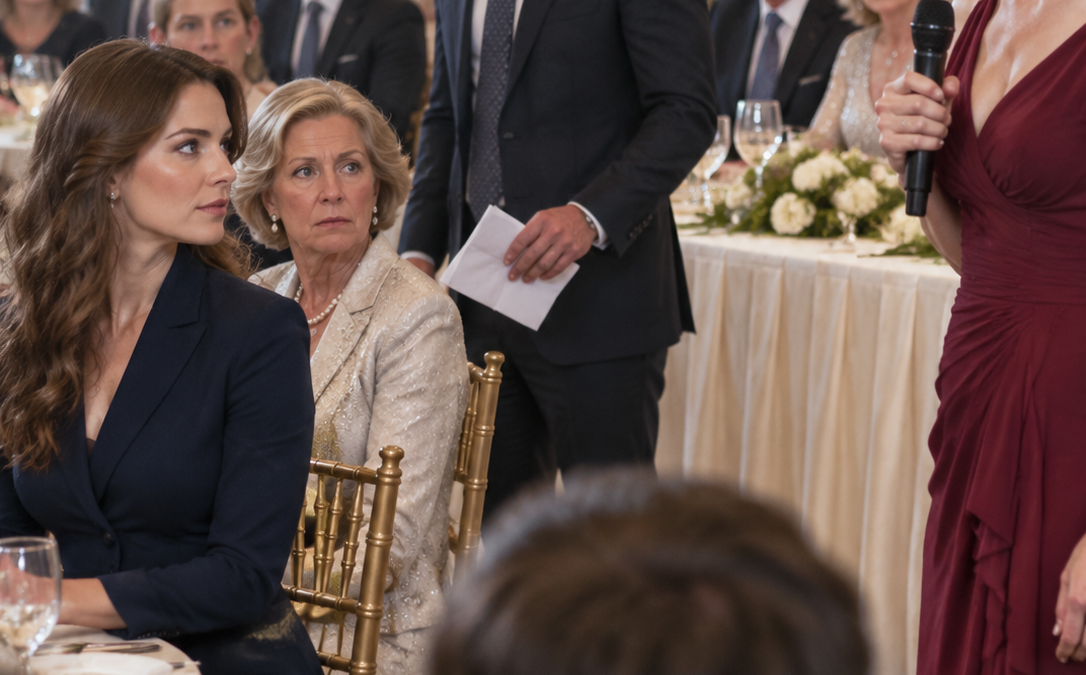
“How does it feel to be the only one here without a career?”
My sister asked it across the Christmas table as casually as if she were passing the rolls.
Mom and Dad laughed.
I reached for the gravy bowl and waited until they were finished.
“How does it feel knowing the one without a career signs your husband’s paychecks?” I asked.
Chairs scraped against my mother’s floor.
Daniel looked at me, and his voice caught.
“You’re—”
I’m Greta Linkfist. I was thirty-four that Christmas. In my father’s house, I was still the daughter who had quit nursing school. He had spent years running HR at the plant, but he had never asked what I did after I left. My sister hadn’t asked either. Nobody at that table had.
I let Daniel’s unfinished word sit there.
Before I tell you what he couldn’t finish, drop where you’re listening from in the comments. Then let me take you back.
The word sat there, and nobody picked it up. Daniel’s mouth was still open around it. My mother’s gravy bowl was still in my hand.
The three o’clock shift horn at Platte Valley Metal Works carries clear across the Loup River bottoms to the Lutheran cemetery on the hill. In Columbus, you can tell which families the plant is feeding by whose kitchen windows that horn reaches.
My parents’ kitchen window had heard it for forty years.
Everyone at that table had eaten off that horn.
My sister, Britta Roth, consulted for the plant. That was her word: consulted. Her husband, Daniel Roth, ran the production floor. My father, Carl Halverson, had run the plant’s HR department for twenty-eight years, and he had gotten Daniel the job.
Everyone but one.
June Roth, Daniel’s mother, a retired school nurse, had driven down from Norfolk that morning with a pie wrapped in a dish towel. She was the only guest at that table, and she was the reason my sister’s question had included the word here.
The only one here.
Everyone else could be counted.
June had folded her napkin into her lap when the laughing started and hadn’t unfolded it since.
Here’s why I answered that time, after ten years of not answering.
Two reasons.
There was a stranger at the table, and there was something already running that nobody at that table could see. Something that had started in the fall and would finish in January whether I opened my mouth or not.
When the leaves came down, I had decided this would be the last Christmas I sat in that chair.
So I answered.
My father’s version of me was easy to find. He told it at the Husker Cafe on Thirteenth Street to supervisors who still called him Carl.
“I ran HR for twenty-eight years. I know unemployable when I see it. I raised one.”
He said that the winter I was twenty-five. A man I’d gone to high school with told me because he thought I’d want to know.
I did.
It’s useful to know what you are in a place before you decide what to do about it.
Daniel wasn’t looking at my face. He was looking at my hands.
And I knew which paper he was seeing.
His pay stub.
Every other Friday for two years, printed at the bottom in type small enough to miss:
Authorized signature: G. Linkfist.
He’d missed it for a while.
Then he hadn’t.
And there were the forms. Forty of them, give or take, since the sale closed. Safety signoffs. Floor budgets. The papers a production director signs and sends upstairs.
Each one had a line at the bottom for the owner.
Each one said G. Linkfist.
Daniel had signed underneath that name forty times and sent those papers back upstairs.
I am G. Linkfist.
That is the name at the bottom of every check the plant had written for two years.
Because I owned the plant.
Six hundred people worked at Platte Valley Metal Works.
Two winters earlier, an outfit out of Texas had been set to buy it and move the line south. Columbus would have kept the building and lost the horn.
I bought it instead.
Through a lawyer. Through a company called Loup Valley Holdings. With the bank’s help and everything I had.
The town read about it in the paper.
Sold to an Omaha group. Terms undisclosed.
The new owner never came to the floor.
The new owner sent a signature.
Daniel finished the word in his head. I watched him do it.
“You’re the owner.”
Nobody in that family had said the name out loud in ten years.
Daniel had signed under it forty times.
The name was my grandmother’s.
Astrid Linkfist, my mother’s mother, kept payroll for half the feedlots in Platte County from a kitchen table on a farm by the Loup, in ledgers she ruled by hand.
When I was twenty-two and a year from finishing nursing school, she got sick. I moved into the farmhouse and learned the ledgers while I learned how to lift her.
For two years, she taught me the one thing she thought mattered about the work.
“Sign slow. People can tell when you rush one.”
She died in the spring.
That fall, at twenty-four, I went to the county courthouse and took her name.
My father answered at the door.
“You want to trade my name for a dead woman’s? Fine. Don’t bring it into this house.”
My mother, Ingrid, stood behind him and said nothing.
It was her mother’s name.
It was the name she had given up to become a Halverson, and she let him call it a dead woman’s name without saying a word.
After that, I was Greta.
No last name.
At every table in that house, and around town, I was the Halverson girl who never did anything.
What I actually did was this.
I took Astrid’s feedlot clients and her ledgers to a rented room in Omaha.
Payroll isn’t exciting. It’s the one bill nobody is allowed to be late on.
By thirty, I had forty desks, three hundred companies, and a plain sign that said LINKFIST WORKFORCE.
Nobody in Columbus ever asked what the Halverson girl was doing in Omaha.
I let it stand.
I’ll tell you the truth about why, because I promised myself I’d be honest about the parts I hid.
When people think you have nothing, they ask you for nothing.
And I kept waiting.
This is the part that isn’t smart.
I kept waiting for one of them to ask what I did all day.
I stayed off the plant floor for two reasons. After the sale, six hundred people needed a quiet owner, not the Halverson-girl story walking through the shop.
And I’ll say the other reason plainly.
Part of me wanted to own the thing my father measured people by and see how long they would keep measuring me.
What scared Daniel wasn’t the name.
It was a meeting six days earlier in a room I had never entered.
Britta got there first.
She always does.
She laughed one bright note—the hostess laugh—and set down her wine.
“Greta, honey, what are you even talking about?”
Then, because a question with no answer inside it makes her nervous, she supplied one.
“Did you get a job at some payroll place? Stamping checks? Honey, that’s not—”
“That’s enough,” my father said. “It’s Christmas.”
“Who wants pie?” my mother said, already standing.
Daniel didn’t say anything.
His face had gone the color of the tablecloth.
June Roth wasn’t looking at me. She was looking at her son the way a nurse looks at a chart.
I ladled gravy over my potatoes.
My hand did it the way it does everything.
It didn’t hurry.
I ate.
Nobody stopped me.
My mother came back with June’s pie and cut it, and the knife went through the crust with the same small crunch it had made every year of my life.
The room decided, all at once and without a vote, that nothing had happened.
Britta talked about the kids’ Christmas program.
My father talked about the roads.
Daniel picked up his fork.
His mother put her hand over his, the way you steady a glass.
I know what June saw in his face because Daniel told me in January, in a parking lot, and I’m going to give it to you now instead of making you wait.
Six days before Christmas, he had been called upstairs to the plant’s second-floor conference room, where two auditors from Omaha had a folder open.
The folder said ROTH STRATEGIC.
My sister’s company.
The company that “consulted.”
“We just need to see what was delivered for these,” the older auditor said, turning the folder around.
Three years of invoices, as far back as the audit reached.
Workshops.
Leadership retreats.
Culture training.
“I’ll pull them,” Daniel said.
There was nothing to pull.
He had known that for years.
Here’s how it worked, and it’s short.
Old man Peterson, who owned the plant before me, signed anything my father asked him to sign. When Britta started her company, my father asked Peterson to approve a small pilot program.
When my father retired, the plant replaced him with a part-time HR person out of Omaha, and approvals for people programs slid across the hall to Daniel’s desk.
The workshops stopped in 2021.
The invoices didn’t.
Daniel initialed them because the alternative was a conversation in his own kitchen.
Then, the spring before last, a form came across his desk with a new line at the bottom.
G. Linkfist.
He knew the name.
He had sat through my grandmother’s funeral.
He went home and asked Britta whether it could possibly be me.
She laughed for a full minute.
He timed it the way people do when a laugh lasts long enough to become something else.
He couldn’t ask me.
To ask me was to tell me what the invoices were.
So he did the one thing he thought he could do.
He told my sister the contract had to end.
“That’s my company,” she said. “That’s my name on the Chamber board.”
He stopped looking after that.
He initialed, and he stopped looking.
Until a Christmas table told him he had been right.
He told the auditors he would pull the deliverables.
There were none.
There was only my sister’s name.
My father caught up with me on the porch while I was buttoning my coat.
He had waited until the door shut behind him.
He is a man who prefers his meetings private.
“Let me be clear,” he said, which is how he starts when he isn’t. “You come into my house on Christmas and threaten your sister’s husband’s job. After I got him that job. After everything this family—”
“I didn’t threaten anything.”
“You said, ‘Who signs the checks?’”
“You stamp checks at a payroll place. Don’t dress it up.”
“I didn’t dress it up.”
I let the porch light hum.
“You’ve been unemployable since you quit nursing,” he said, quieter now, which was worse. “I told your mother that.”
“You told the cafe that, Dad. I heard.”
That landed somewhere.
I watched it land, and I watched him decide it hadn’t.
He looked past me toward the street, toward the snow the plow had stacked, and found his footing where he always finds it—in what he has done for people.
“I built this family’s name at that plant. Twenty-eight years. You don’t get to walk in and—”
The door opened behind him.
My mother stood there in her apron, holding a plate wrapped in foil.
“Take some ham,” she said.
That was all.
Not, What are you two doing out here?
Not, Carl, come inside.
Take some ham.
She held it out across my father’s shoulder, and I took it because I had taken that plate every Christmas of my adult life, and my hands knew what to do before I did.
Behind her, through the window, June Roth was watching with her coat already on.
Mom handed me the ham like she had every year.
That year, her hand was shaking.
Ninety miles to Omaha.
The ham rode on the passenger seat in its foil, and every time I took a curve it slid an inch, and I put out a hand to steady it without looking.
I didn’t turn on the radio.
I didn’t call Paul Brandt, my lawyer, who would have answered on the first ring.
I didn’t call Walt Sorenson, who ran the plant for me and would have answered on the second.
I’ll tell you what I thought about instead.
My grandmother’s headstone.
The summer I turned twenty-six.
The day after a man from high school told me what my father had said at the cafe, I stood at Astrid’s grave and made her a promise.
Not never again.
Never again in front of a stranger.
If they wanted to laugh at me, fine.
But not with somebody’s mother watching.
Not with a guest at the table.
That night there had been a guest.
And there was the other thing.
The thing already running.
It would finish in January whether I said anything or not.
I hadn’t decided to speak.
Britta decided that for me when she put the word here into her question.
What I could do about any of it had already been decided on one page.
I had written it eighteen months earlier.
And signed it.
The page had a date on it.
June, eighteen months before that Christmas. Four months after the sale closed.
Paul Brandt’s office downtown, the window open onto Farnam Street and buses going by.
Walt had driven in from Columbus with a binder.
Every vendor the plant paid, sorted by size, because the bank that helped me buy the place required every contract to be reviewed by outside auditors within two years.
Walt, who does not leave things for later, had already booked the first date the auditors had open.
It was fifteen months away.
He set the binder down, opened it to a page he had flagged, and didn’t say anything.
That is how Walt says things.
Line thirty-seven.
Roth Strategic.
My sister’s company.
Paid by my plant.
Approved by my sister’s husband.
I want to be exact about what I had in front of me because it matters later.
I had three buttons.
I could end the contract with one sentence.
I could pick up the phone, call Britta, and hear her voice change.
Or I could bury the page, let fall come, and see.
I didn’t press any of them.
I asked Paul for a sheet of paper and wrote one page.
I wrote that I was related to the owner of Roth Strategic.
That I was removing myself from every decision involving that vendor.
That anything concerning it went to Walt and the auditors, and I did not get a vote.
That the review would happen when it was already scheduled to happen.
Not sooner.
Not later.
I signed it slowly.
“You know what the audit’s going to find,” Walt said.
“Then it’ll find it without me.”
Walt wouldn’t terminate a vendor before an outside review. That was the bank’s rule, and terminating one without a review could become a lawsuit.
So he did the next thing.
Every Roth invoice from that day forward went onto a recovery list.
Paul checked that the contract allowed the plant to take the money back.
Paul read my page twice.
He typed a copy for Walt’s file.
I signed that one slowly, too.
Then he folded the original and put it in a drawer I have never opened since.
“Astrid would’ve done the same,” he said. “Slower, but the same.”
Then he gave me the one rule that came with it.
“When you want to touch this—and you will—go eat at somebody else’s table.”
The audit had a date before I ever saw my sister’s name on that list.
I left the date alone.
I told you I kept waiting for one of them to ask.
Here is the closest anybody came.
Thanksgiving that same year, five months after I signed the page.
My father was carving and complaining, which he can do at the same time.
“Loup Valley Holdings,” he said in the voice he uses for weather he doesn’t approve of. “Some ghost out of Omaha. Nobody’s laid eyes on them. Walt Sorenson won’t say a word.”
“Basically, I’m running it,” Daniel said to his plate.
It was the kind of bragging that pretends it isn’t.
“The owner doesn’t come around. I do the walkthroughs. I sign off on the floor. The owners have never even set foot in there.”
“Daniel is the plant,” Britta said.
My mother dropped the serving spoon.
It hit the hardwood and rang the way a spoon rings.
Everyone looked at it.
I looked at my mother.
She didn’t look back.
She looked at the gravy.
Something small happened around her mouth, and then stopped.
I sat with my hands in my lap and waited.
This is the part I would change if I could change any of it.
I didn’t want to say it.
I wanted her to ask.
Greta, is that you?
Four words.
She had them.
I could see her holding them the way you hold a spoon you have decided not to use.
She bent down.
Picked up the spoon.
Wiped it on her napkin.
Put it back in the bowl.
My father said something about the plow schedule.
And I said nothing, because a woman who has been asked for nothing her whole adult life does not know how to go first.
My mother picked the spoon off the floor and did not look at me for the rest of dinner.
Back to the winter I’m telling you about.
My mother called three times in the days after Christmas.
I want you to notice what she didn’t ask.
Because she never did.
The first call:
“Your father is very upset.”
The second:
“Britta’s beside herself. The kids can tell something’s wrong.”
The third came on a Sunday after church.
“Can’t you just say it was a joke for the party? Just say you were joking, and we’ll all—”
“Mom, did you ask Daniel who signs his checks?”
Nothing on the line.
The refrigerator running in her kitchen ninety miles away.
“Mom. Did you ask?”
“I don’t need to ask things. I don’t want to know.”
She said it quickly, like something she had kept ready for a long time.
Then she moved on.
And I let her.
I was learning the shape of what she knew from the shape of what she refused to say.
She told me about the party instead.
My parents’ fortieth anniversary.
Saturday, January seventeenth.
Britta was organizing it.
Britta had gotten the hall.
“Which hall?”
“Peterson Hall,” my mother said. “At the plant. Your father’s always used it.”
My plant.
My father’s hall.
I understood what my sister was building.
Britta called a few days later, and she opened with my own question because she had been thinking about it too.
“How does it feel to make Mom cry at Christmas?”
I didn’t answer that one.
She didn’t need me to.
She had the whole call written before she dialed.
“Daniel says the owner’s some investment group out of Omaha,” she said, “and you must work in their payroll office, which—fine, Greta. Good for you. But you made it sound like you own the place.”
Here is what had happened in my sister’s kitchen.
And I’m giving it to you straight.
Daniel had lied to his wife.
Not a large lie.
The smallest lie that would keep the auditors out of his house.
An investment group.
A payroll office.
A clerk.
And Britta had wanted to believe him more than she had wanted anything that week.
Between the two of them, I became a clerk.
She had done her homework, though.
Give her that.
“I looked you up,” she said. “Greta Linkfist. No LinkedIn. No Facebook. There’s a Linkfist Workforce in Omaha, and it’s a payroll shop, honey. There’s not even a name on the website. People with careers have LinkedIn.”
She let that sit.
She was proud of it.
Then came the plan, in the voice she uses on the Chamber board.
“Mom and Dad’s fortieth is at Peterson Hall on the seventeenth. Dad’s hall. I’ve got the supervisors coming, Pastor, Chamber people. We’re going to put this to bed. You’re going to come, you’re going to behave, and we’re going to have a nice night. Anyway, can you do that?”
“I’ll be there.”
“Good.”
A pause.
“It’s Dad’s hall, Greta.”
It was a room.
My father had taught me something about rooms without meaning to, over twenty-eight years of holding meetings in other people’s offices.
Whoever chooses the room thinks they own it.
Daniel found my car before he found me.
A dark-blue Subaru with two hundred thousand miles on it, parked behind the two-story brick building on Dodge Street where Linkfist Workforce kept its forty desks.
He was leaning against it when I came out at six.
He had driven ninety miles and hadn’t called first.
That told me how the drive had gone.
“You’re her,” he said.
“You’re the name on the checks.”
“Yes.”
“How long?”
“Two years this February.”
He nodded like a man absorbing a punch he had ordered himself.
“What did I tell her?”
He rubbed his face.
“I told her you were a clerk.”
“I know what you told her.”
“What do you want, Daniel?”
“Look, I’m not asking for a favor.”
He was.
“I’ll resign. Quiet. I’ll say I got something in Grand Island. You let the audit close out, and nobody has to—”
“I’m not in the audit.”
He stopped.
“I took myself out of it eighteen months ago. In writing. Everything involving your wife’s company goes to Walt and the auditors. There’s nothing for me to let.”
I watched him do the math.
Eighteen months.
He counted backward and landed where I had landed, on a June.
Then on a table with a turkey on it.
“You knew?” he said. “You sat at Thanksgiving and knew what those invoices were?”
“Yes.”
“And you didn’t—”
“It wasn’t mine to say. It was yours.”
The parking lot lights came on.
He looked at the building behind me.
Plain brick.
Plain sign.
And I saw him understand that the payroll shop was the thing.
There was no other thing.
His wife’s entire story about her sister had been assembled out of the wrong pieces of the right facts.
“She won’t let me stop it,” he said. “It’s her name on the Chamber board.”
He asked if there was a way out.
I told him there was exactly one.
And it wasn’t through me.
He drove home and tried.
I know because he told me, and because Britta told my mother, and the two versions differ only in who was reasonable.
She was at the kitchen island with the seating chart, a calligraphy pen, and a box of place cards on heavy cream stock she had ordered from somewhere nice.
Daniel stood on the other side of the island and put down his keys.
“The audit’s asking about your invoices.”
“Then show them the workshops.”
“There weren’t workshops, Britta. Not since ’21.”
“There were—I have decks.”
“Decks aren’t workshops.”
She capped the pen.
“Don’t you dare let my sister into this marriage.”
She said it evenly.
The way she says everything that matters, so it can never be quoted back as shouting.
“If you lose that job, it’s because you let her scare you. She stamps checks, Daniel. You run the plant. Act like it.”
He didn’t answer.
He had used up his three sentences.
His name was already on the seating chart, beside hers at the head table, underlined.
She slid the chart between them across the counter.
That was the end of the conversation.
Two nights later, my mother called crying.
This is the part where I almost broke my own word.
“Britta says Daniel could lose everything.”
She was in the bathroom. I could hear the fan.
“The kids’ school. The house. Greta, you work there. You can stop this. You can just talk to somebody.”
I told her I would call back.
I sat on the edge of my bed in Omaha with the phone in my hand and typed a message to Walt.
Can you ask the auditors to go easy on the Roth file?
I read it.
I read it the way my grandmother taught me to read a signature.
Slowly.
For what it was promising.
Go easy meant use it.
The thing I had put in Paul’s drawer eighteen months earlier. The thing I had said aloud I would not touch.
I would be touching it.
And if I touched it, Britta would have exactly the story she wanted.
The sister with the grudge leaning on the auditors.
And six hundred people whose plant needed clean books would be working for a woman who had bent those books for her family.
I held down the delete key.
Letter by letter.
Not all at once, because I wanted to feel each one disappear.
Then I called Helen Brandt.
Paul’s wife.
Thirty years teaching third grade.
A woman who has never once, in my hearing, asked how anybody feels.
“Come Sunday,” she said. “I’m making Astrid’s pepparkakor.”
“You cannot talk about it here.”
“I know.”
“I’ll come.”
I want to tell you something true, since I’ve promised.
I wanted to be the kind of daughter whose mother stops crying.
I wanted it badly enough that my thumb had typed the message before the rest of me had voted.
That wanting doesn’t disappear because you’ve owned a plant for two years.
It just gets outvoted.
I deleted the message.
Paul’s rule allowed exactly one thing that night.
Dinner at somebody else’s table.
Sunday.
The Brandts’ kitchen in Dundee.
The warm smell of cardamom and molasses coming off a cooling rack.
Helen put a plate of pepparkakor in front of me.
My grandmother’s recipe.
The thin ones that snap.
Paul sat across from me and said the only three things he intended to say.
“Report lands tomorrow. Walt’s decision follows. You’re on neither page.”
“Eat,” Helen said.
I picked up a cookie.
My hand shook.
It hadn’t shaken once.
Not at the table.
Not on the porch.
Not on the highway.
It shook now, over a plate of cookies in a kitchen where nobody needed anything from me.
I put the cookie down because I didn’t trust my hand to get it to my mouth.
Helen laid her hand flat over mine.
She didn’t say anything.
She left it there while Paul looked out the window.
After a while, the shaking stopped.
She took her hand back and pushed the plate one inch closer.
Paul’s phone buzzed on the table.
He read the message, then turned it around so I could see.
Walt.
Britta Roth called to take the 17th from 30 chairs to 120. Hall was booked in November. I’m not the one who cancels things.
“Good,” I said.
Thirty chairs had become one hundred twenty.
And the audit report would land on Walt’s desk the first Monday, five days before the party.
Walt called at one.
That is when Walt calls.
He didn’t ask how I was.
That is how I knew.
“I’m not asking you anything,” he said. “I’m telling the owner what the owner needs to know. That’s all this call is.”
“Go ahead.”
“Roth Strategic. More than half a million in the three years the audit covers. Nothing delivered since ’21. Every invoice approved by Daniel. Auditors recommend we end it, recover the money, and deal with the approver.”
I listened to the horn in the background, faint through his office window.
“Do what you’d do if my name weren’t Halverson.”
“Already did,” Walt said. “I sent him home at noon.”
I didn’t ask how Daniel took it.
It wasn’t mine to ask.
I pulled a sheet of paper toward me on my own desk, in my own building, and wrote one line for Paul’s drawer, to sit on top of the page from eighteen months earlier.
No vote.
G. Linkfist.
I signed it slowly.
Then I asked Walt whether there was anything else.
I expected nothing.
“There’s one more signature on the first contract from 2018,” he said.
He read me the name.
Carl Halverson.
Director of Human Resources.
A small pilot under his signature the year Britta started her company.
Employee Culture Initiative, it was called.
My father had walked it across the hall to old man Peterson.
Peterson had signed because my father asked.
That was the seed.
Daniel had only watered it.
I sat with that for a minute after Walt hung up.
I want to be careful here, because it would be easy to make this sound like a victory.
It didn’t feel like one.
My fingertips went cold, the way they do when you have been holding something heavy, set it down, and the blood comes back wrong.
My father had laughed at “the only one here without a career.”
My sister’s career had begun with plant money under his name.
He had known that.
And he had laughed anyway.
None of it had been visible from where I sat holding the gravy.
I called Paul.
“Is Dad in the report?”
“In the appendix.”
“No action?”
“He’s retired.”
A pause.
I could hear him deciding whether to say the next part.
“It’s page nineteen.”
“Appendices get read.”
“They do, Greta.”
The other call came that evening from a number I didn’t know, with a Norfolk exchange.
“This is June Roth.”
Daniel’s mother.
The guest with the pie.
“I don’t know what’s true. I’m not calling to ask you. I saw my son’s face at that table, and I raised him better than that face.”
I said nothing.
She didn’t need me to.
“If you need a witness who isn’t blood,” she said, “I was there.”
Then she said good night and hung up because she had said her one thing, and that was the whole of her.
Dad’s name was on page nineteen.
He didn’t know yet.
Britta was already printing the programs.
Those programs would be handed out Saturday night in a room I had never booked.
If you want to be there when the lights come up, subscribe and stay with me.
We’re almost through the door.
The programs were on the kitchen island when Daniel walked in at two in the afternoon carrying a cardboard box.
Forty Years in gold script over a photograph of my parents from their wedding.
Two hundred copies.
Britta looked up from them.
“Why are you home?”
He set down the box.
The report was inside it.
On top of the report was a single sheet Walt had handed him at the door with the words:
So you know who wasn’t deciding.
My page.
The typed copy from Walt’s file.
Eighteen months old.
“Walt sent me home,” Daniel said. “The contract’s done. The plant wants the money back.”
She didn’t cry.
I need you to understand that about my sister.
She didn’t cry, and she didn’t sit down.
She went directly to work.
“Who signed it?”
“Walt and the auditors.”
“Not the owner?”
“The owner took herself out of it. There’s a letter.”
She read my page standing up.
She stopped on one word.
Daniel watched her stop.
Related.
“Greta stamps that name for a living,” she said. “Daniel, Walt typed this up and she stamped it.”
I have thought about that a lot.
My sister reading my own signature beneath a statement that I had removed myself, and reading it as paperwork belonging to a ghost.
“An investor in Omaha does not care about a party in Columbus,” she said. “This is Walt. Walt has always hated me. I have decks. We’ll dispute it.”
“Britta, the party’s in five days.”
Then she moved fast.
Building.
“We say you’re transitioning. Consulting. New chapter. Nobody contradicts a man at his father-in-law’s anniversary.”
“Half the supervisors know.”
“Then we say it first.”
From the next room, the kids’ show went to commercial.
Britta lowered her voice and turned it into a weapon.
“Do you want them to hear this?”
Then:
“Help me.”
She picked up the phone.
First, the Chamber, to move her member spotlight into the party.
Seven years serving the plant.
A nice moment right after the toast.
Then my father.
“Dad,” she said, “they put your program in the report too.”
I wasn’t there for the rest of that call.
I only know what it did.
She put my letter underneath the programs.
“Five days,” she said. “Nobody scrapes a chair at Dad’s anniversary.”
My father walked into Linkfist Workforce on Wednesday morning without calling.
Britta had told him to be afraid, and my father’s fear has always traveled as anger.
He stood in the doorway of the main floor and counted the desks.
I watched him count forty.
He looked at the door to my office, where a plate said G. LINKFIST.
He said nothing about it.
Then he came in and closed the door.
“Whatever you told those auditors about 2018—”
“I’ve never spoken to the auditors.”
“That pilot was a legitimate program.”
“Then the appendix will say so.”
He put both hands on the back of my visitor’s chair.
“Standard practice at the time. Every plant did culture work.”
He had hired fourteen hundred people over twenty-eight years, he said.
Never once—
“After everything I did,” he said. “I got that boy his job. I built this family’s name at that plant.”
“I know,” I said. “It’s on page nineteen.”
He left.
He didn’t slam the door.
He isn’t a slammer.
He closed it the way you close a file.
I sat there looking at the chair he had held.
He had stood in a building with my name on the door and forty desks behind it.
And he had not asked.
It is a specific thing, watching a man not ask.
He never asked whether I owned the plant.
He only asked what I might say about him on Saturday.
The Chamber post went up before my father made it back to Columbus.
My sister moves fast when she is frightened.
It looks exactly like confidence.
ROTH STRATEGIC — SEVEN YEARS SERVING PLATTE VALLEY METAL WORKS.
JOIN US SATURDAY AT PETERSON HALL AS WE CELEBRATE CARL AND INGRID HALVERSON’S FORTY YEARS, PLUS A VERY SPECIAL MEMBER SPOTLIGHT.
There was a photograph of Britta standing in front of the plant sign in her good coat.
The comments were polite and slightly wrong.
So proud of this family.
That came from a supervisor’s wife who, I later learned, had said something different at the Husker Cafe that morning.
Congrats, Britta!
That came from a woman who had already heard at church that Daniel’s truck had been in his own driveway on a Monday afternoon.
The town knew half.
It was a town that knew half of everything before noon and pretended to know none of it after dark.
Walt called.
“Plant phone rang nine times before ten.”
“Who?”
“Wives, mostly. Two from the church.”
A pause.
“Not one of them asked about the anniversary.”
“It’s her post,” I said. “Not our business.”
“I’ll say it once more so it’s on the record. That hall was booked in November. Not my party to cancel.”
“I know.”
Paul asked me that night over the phone.
It was the question he had been holding.
“Do you want to go?”
“Yes.”
“As yourself?”
“Yes.”
“Which self?”
I looked at the plate on my office door.
“Both.”
He didn’t argue.
He said Helen would drive if he couldn’t, and that he would wear the gray suit.
Then a text came from the Norfolk number while I still had the phone in my hand.
June Roth.
Four words.
I’ll be there Saturday.
My mother called at twenty minutes to midnight from the bathroom again.
The fan running.
Her voice underneath it like something hidden in a drawer.
“Just say it was a joke,” she whispered. “Saturday. Say you were joking. Your father can’t—”
“Mom.”
“He can’t take it in front of those men.”
“Mom, you’ve never once asked me if it’s true.”
The fan.
Only the fan.
“Ask me.”
I could hear her breathing.
I could hear her decide.
And I could hear how long it took.
I want you to know I would have told her everything.
Every part.
The name.
The plant.
The page in Paul’s drawer.
All she had to do was turn four words into a question.
“I can’t,” she said.
“Then I’ll see you Saturday.”
I hung up first.
I had never in my life hung up on my mother first.
I set the phone facedown on the nightstand and sat in the dark with my hand resting on it, the way you keep a hand on something that might still ring.
It didn’t.
She couldn’t ask.
I had waited ten years for that question.
At 11:41 the night before the party, I stopped waiting.
I wasn’t in the Roth house that night.
Daniel told me about it later, on the phone that summer, and I have kept it exactly as he gave it because it belongs to him.
He sat in the little room off the garage that Britta called his office and he called the garage.
Two pieces of paper lay on the desk.
The first was mine.
The page Walt had handed him at the door Monday.
So you know who wasn’t deciding.
He had read it four times that week.
He told me the number.
Four.
The first time, for what it said.
The second, for the date.
The third, for the signature.
And the fourth—he said this slowly—for the fact that in eighteen months, with his job and his wife’s company and his father-in-law’s name all sitting underneath it, I had never picked it up.
The second paper was Britta’s.
An index card in her calligraphy hand.
Three lines:
Transitioning to consulting.
The plant is owned by an Omaha investment group.
Greta works in their payroll office.
On his phone was a voicemail from Norfolk.
His mother.
Nine words.
No greeting.
“Whatever you say tomorrow, say it as a man.”
He didn’t decide that night.
I believe him because by that summer he had no reason to lie to me, and because I know what it is to carry two versions of yourself into a room and let the room choose.
He turned off the desk lamp.
He picked up Britta’s index card and my page and stood in the dark garage with one in each hand.
He folded her talking points into one jacket pocket.
He put my letter in the other.
Saturday morning, I dressed in Omaha the way I dress for anything.
Navy coat.
Plain shoes.
Nothing that needed explaining.
Helen came upstairs with one hand closed around something.
She opened it.
A small silver brooch.
Astrid’s.
A wheat sheaf the size of a thumbnail.
“Hold still,” Helen said.
She pinned it to my lapel, stepped back, looked at it, and nodded once.
From Helen, that is a speech.
Paul drove the ninety miles through white fields in his gray suit, with nobody saying anything that needed saying.
Peterson Hall sits inside the plant fence, a long, low brick room the Petersons built for company picnics in a wetter year.
Walt was standing at the side door with his keys when we pulled up.
He held the door and looked at me over it.
“Owner’s here,” he said.
“Not tonight, Walt. Guest.”
“Guest, then.”
He stepped aside.
Behind us, from the line building, the Saturday half-shift horn sounded.
One long note.
I felt it in the backs of my teeth, the way I had felt it in my mother’s kitchen all my life.
June Roth was waiting at the door with her coat still on.
“I’m not sitting with family,” she said.
A hundred and twenty people, give or take, sat on folding chairs around round tables beneath a banner that said FORTY YEARS in gold.
In one corner was the plant logo.
Small.
Because it was the plant’s hall.
And Britta wanted everybody to remember whose hall it was.
Supervisors in pressed shirts.
Their wives.
The pastor and his wife.
The Chamber director in a blazer.
My parents’ church friends, people who had known me since I was baptized and had called me “the Halverson girl” ever since.
The head table faced the room.
My father.
My mother.
Britta.
Daniel.
The two kids in Christmas clothes.
Britta’s seating chart had put me at table nine, beside the kitchen door and next to the coffee urn.
I found my card and sat down.
June Roth sat beside me.
The room noticed.
You could watch it notice the way you can watch wind cross a field.
Daniel’s mother at table nine, beside the sister and two people nobody knew.
Paul sat on my other side in the gray suit.
Helen sat beside him with her purse in her lap.
At the head table, my mother saw us and raised a hand to her throat.
Then lowered it.
My father’s jaw did the thing it does.
Britta worked the room on her way toward the microphone, touching shoulders.
She stopped at table nine.
“Greta made it,” she said brightly.
Then, to the table:
“She’s between things right now.”
She squeezed my shoulder and moved on.
Then came the toast.
She is good at toasts.
“Forty years, folks. This family believes in work. Dad gave twenty-eight years to this plant. Daniel runs it. And my little company has been proud to serve it. Seven years now.”
Applause.
Warm enough.
“And Greta.”
A fond little laugh as she turned to find me.
“Christmas got a little dramatic. My sister has a vivid imagination. We love her.”
The laugh came.
Thinner than it had been at Christmas.
A few tables did not laugh at all.
The people who did looked around to see who hadn’t.
Then she said the words she had written for Daniel and held the microphone toward him.
“Daniel, honey, tell everyone who owns the plant and about your next chapter.”
He stood.
He stood the way a man stands when his knees have been told to do it and his mind hasn’t voted yet.
I looked at his jacket.
Right pocket.
Left pocket.
So did his mother beside me, her arms folded high across her chest the way she might fold them over a child with a fever.
The room went quiet the way rooms do when they don’t yet know why they have gone quiet.
At the back, Walt stood beside the coffee urn with a cup in his hand.
He didn’t drink from it.
At the head table, my father leaned back to enjoy what he thought was coming.
My mother looked at the tablecloth.
I had a cup of coffee in front of me.
My hand was wrapped around it.
My hand did nothing.
That is one thing I can promise you about myself.
In a room like that, my hands hold still.
Daniel looked down the length of the hall, past one hundred twenty faces, and found mine.
“Britta,” she said, smiling. “Go on.”
She held out the microphone.
He reached into his pocket.
He took out a piece of paper.
It wasn’t the one with her handwriting.
He didn’t take the microphone.
He didn’t need it.
“The plant is owned by Loup Valley Holdings,” Daniel said. “That’s G. Linkfist. That’s Greta.”
Nobody moved.
“She’s owned it for two years. I’ve signed under her name forty times. She’s not in payroll. She is payroll.”
Britta’s smile remained.
Her microphone hand dropped an inch.
“I told my wife she was a clerk,” Daniel said. “I lied.”
Someone at table four put down a fork.
“The contracts my wife billed—I approved them. There weren’t workshops. The audit found it. I’ve been home since Monday, and half this room knows it.”
He held up the paper.
One page.
He read the date from the top.
Then the signature from the bottom.
“This is the owner taking herself out of it. Eighteen months ago. She’s never once used it.”
He laid it on the head table in front of my father.
My father didn’t touch it.
Chairs scraped.
Louder this time.
There were one hundred twenty of them.
Britta raised the microphone again.
“He’s lying.”
Bright.
Fast.
To the whole room.
“She got to him. She’s been—she is threatening our kids.”
My father stood.
Not because of her.
At her.
He had known since Monday.
This was for the room.
“You built the plant under my program, under my name.”
“You signed the first one, Dad.”
“That was a pilot.”
“Seven years, Dad. You were so proud. You told everybody at the cafe.”
The microphone squealed.
The pastor looked at the floor.
A supervisor’s wife at table six put her hand over her mouth and kept it there.
Britta swung toward our mother.
“Mom. Tell them. Tell them she’s making it up.”
Then my mother stood.
She did not go to the microphone.
Across one hundred twenty heads, she looked at me.
When she spoke, she used a voice I had never heard her use in public because my mother had never once in her life said something in public that hadn’t been rehearsed.
“Greta, please.”
I waited.
“I knew.”
My father turned.
“What?”
“Since the church check.”
She kept looking at me.
“I saw Mom’s name, with your initial, on the plant’s check. I put it in the deposit bag, and I made myself not think about it.”
The room held still.
“Since the spoon, Greta.”
“Since the—”
“You knew?” my father said.
He turned all the way around and looked at his wife.
FORTY YEARS, the banner said.
My mother said she had known since the spoon.
Nobody at the head table was looking at me anymore.
I stood.
I didn’t go to the microphone.
I didn’t need it.
The room had become so quiet that a woman speaking from table nine could be heard at the head table.
And I had learned my volume from a man who ran meetings for twenty-eight years.
“Mrs. Roth.”
My sister’s head came around.
June didn’t move.
She knew which Mrs. Roth I meant.
Nobody in my sister’s life had ever called her that in that voice.
It was her married name.
It was the name on her company.
“You asked me a question at Christmas. I answered it. You don’t get to ask me that anymore.”
Then my father.
“Dad. You told the cafe you raised one. You raised the one who signs the checks. You just never asked.”
Then my mother.
I didn’t say anything to my mother.
I looked at her across the hall for as long as it took her to understand that this was the whole of what she would get.
She understood.
She sat down.
Then I spoke to the room.
Because the room was mine in the only sense that mattered, and had been for two years.
“The plant is fine. Your checks clear Friday. Same signature.”
I picked up my coat.
Paul stood.
Helen stood.
June Roth buttoned her coat the way a woman leaves a hospital shift.
We walked the length of the hall past one hundred twenty people who had known me since I was baptized.
Not one of them said “the Halverson girl.”
Not even with their faces.
Walt had the side door.
“Ma’am,” he said, and held it open.
Behind me, my sister found her voice.
It was the old one.
“Greta. Greta, after everything this family—”
My hand was on the push bar.
It was cold.
It was steady.
I noticed both.
I’ll name the feeling for you because I promised to be plain where I could.
It was clear.
Clear as the horn in the morning.
Clear as a signature you didn’t rush.
I didn’t answer.
The last thing they heard from me was the door.
And it didn’t tremble.
The consequences arrived the way real consequences do.
On paper.
Over days.
Without a soundtrack.
Sunday night, Daniel resigned before Walt could decide anything for him.
Walt accepted it the next morning.
The plant wanted its money back from Roth Strategic.
That became the lawyers’ problem.
It would be a long problem, the kind that comes with letterhead for years.
The Chamber board met and asked my sister to step down.
She stepped down.
The member spotlight never ran.
By March, there was a Realtor’s sign in her front yard.
The Columbus Telegram ran one paragraph on page three.
No drama.
It isn’t a dramatic paper.
PLATTE VALLEY METAL WORKS, PURCHASED TWO YEARS AGO BY LOUP VALLEY HOLDINGS, IS OWNED BY GRETA LINKFIST OF OMAHA, THE COMPANY CONFIRMED. MS. LINKFIST DECLINED TO COMMENT.
I declined to comment.
I had never had a reporter call me before.
It turns out I’m good at it.
At the Husker Cafe on Thirteenth Street, I’m told the supervisors who had sat with my father over six o’clock coffee for twenty-eight years began taking the booth by the window instead.
Nobody said why.
Nobody needed to.
My father drank his coffee at the counter for a week.
Then he stopped going.
I read all of it in Omaha, at my own desk, with my door open.
The Telegram printed my name on a Tuesday.
My mother’s letter arrived two days later.
It came care of Paul’s office.
My mother did not have my address.
She had never asked for it.
She still had her own mother’s lawyer.
Helen had the letter waiting on her kitchen table when I arrived.
A church envelope.
My mother’s handwriting.
Round, careful script, the kind Lutheran schools drilled into her generation.
I read it standing up, the way Britta had read my page.
She told me she had seen it on the church check that spring two years earlier, when the plant’s donation came in and she was doing the council deposit.
At the bottom, in blue ink, was her mother’s name with my initial in front of it.
She had put the check in the bag.
She told herself Linkfist was a common name.
And then she wrote this plainly.
I’ll give her that.
Your father can’t have been wrong for ten years, and I have to live with your father.
She didn’t apologize for laughing.
She explained the laugh.
Those are different things.
My mother has never known it.
Come home for Easter, she wrote.
Your father won’t mention it.
I read the letter twice.
The second time, I had to stop at your father and begin the line again.
Helen was drying a pan.
She stopped.
“What does it say?”
“It says she’d like me to keep being small.”
I folded the letter.
“But with better ham.”
Helen laughed.
One short bark that surprised its way out of her.
Then she put down the pan and came to stand beside me at the table.
Not touching.
Just there.
I didn’t write back.
I want to be clear about what that is and what it isn’t.
It isn’t rage.
I don’t have any left.
I spent it years ago on a highway.
It is simpler than rage.
When the invitation is to a table where you are still small, you don’t argue with the table.
You don’t come.
I put the letter in the drawer with the courthouse form.
Same drawer.
Different decade.
Early February, I walked onto the floor of my own plant for the first time.
Through the front door.
Navy coat.
Walt beside me.
Nothing in my hands.
He had told the shift the night before.
He hadn’t made a speech.
Walt doesn’t.
He had said the owner was coming through in the morning, her name was Linkfist, and that was all he had.
So the floor knew.
Supervisors nodded as we passed.
“Miss Linkfist.”
And I heard in that title what Walt had told them to hear and what he had decided.
I let it stand.
At the end of the line beside the press, an old man in a plant cap removed his glove to shake my hand.
“Your grandma did my daddy’s payroll,” he said. “On a kitchen table out by the river.”
I nodded.
“She never rushed a signature.”
He put his glove back on and returned to the press.
That was the whole conversation.
I would have driven ninety miles for it.
Then Walt’s office.
The payroll authorization for the previous two weeks.
Walt’s door, which he left open.
It is a heavy door on a spring.
You have to prop it.
He propped it open with a brick and went to get coffee.
I sat at his desk with the line noise coming through the doorway and signed the bottom of the page.
Not G.
Not initials.
Greta Linkfist.
All of it.
Slowly.
Relief.
That is the word.
I’ll use it.
Relief.
Plain.
Like the first deep breath after a long climb.
A brick holding open a door.
My whole name on a page.
June Roth called while I was still sitting in Walt’s chair.
She wanted to know whether I would come up to Norfolk for coffee one Saturday.
I said yes before she finished asking.
Walt walked me out through the front.
At the door, he stopped.
“Daniel asked for one thing.”
“What?”
“Not a job.”
Daniel had called Walt from Grand Island, where a warehouse was hiring for second shift.
“He asked for a letter. Dates of employment. Title. Nothing more. The letter we’d write for anybody who leaves here.”
“You want me to weigh in?” Walt asked.
“Same as anyone. I have no opinion.”
“That’s what I figured.”
He already had the letter typed.
I want you to notice what I did not do, because it is the only power I used in this whole story.
I didn’t help him.
I didn’t hurt him.
I let a letter be a letter.
Easter came.
I didn’t go.
I didn’t send anything.
And I didn’t explain, because an explanation is a door left open, and I had shut this one from the inside.
On Easter Sunday, my father left a voicemail.
The first one of my life.
“Your mother set a place for you.”
Seven words.
I listened once.
I didn’t call back.
Dad said Mom had set a place for me.
I had set one, too.
It wasn’t in Columbus.
June.
The plant picnic at Pawnee Park.
Six hundred families on the grass beside the river.
Walt at the big grill wearing an apron someone had bought as a joke, which he wore without making one.
Helen had brought the pepparkakor.
Two tins.
Astrid’s recipe.
She set them on the dessert table between a party tray of Oreos and somebody’s brownies on an unlabeled paper plate.
People took them.
Nobody knew what they were.
Helen watched them disappear with her purse in her lap.
June Roth found me at the edge of the shade.
She had driven down from Norfolk.
She put a hand on my shoulder.
Not a pat.
A hand left there.
Then she said her one thing.
“I’m sorry for my boy. He’s sorrier.”
She paused.
“He’s on second shift in Grand Island now. Says it’s honest.”
“It is,” I said.
She nodded.
Took her hand back.
Went to get a plate.
Because June Roth is a woman who says a thing once and then goes to get a plate.
A boy of about seven, somebody’s grandson, walked up to me carrying a hot dog and looked up.
“Are you the boss?”
“I sign the checks,” I said. “Walt’s the boss.”
He accepted that the way children accept a clear sentence and went back toward the river.
Britta had taken the kids to Lincoln in the spring.
June told me that later, sitting at the table with her plate.
“The kids are fine,” she said.
She didn’t say Britta was fine.
I didn’t ask.
We let the sentence stand where it was.
Daniel wasn’t there.
He hadn’t been invited, and he wouldn’t have come.
I looked across the park anyway, toward the far grill, out of an old habit of counting who was in a room.
His not being there was right.
Some absences are a kindness.
That one was his.
Helen’s pepparkakor sat between the Oreos and the brownies.
Nobody asked whose recipe they were.
They just ate.
If someone at your own table has ever asked you how it feels and everybody laughed, tell me in the comments what you reached for instead of answering.
I read every one, usually late, over coffee.
And if this story earned it, a like and a subscribe help the next one find its table.
At dusk, I walked to the edge of the park where the trees open and you can see the plant roofline across the river, the long, low shape of it and the light on the water tower.
The six o’clock horn sounded.
One long note.
My phone buzzed in my coat.
Britta.
The first message since January.
Three words.
A question mark.
Nothing else.
How does it feel?
I looked at it for a long time.
Not because I was deciding.
Because I wanted to be sure I had seen it correctly.
That this was the question.
The whole question coming back to me after ten years and one Christmas and a hall full of chairs, from the only person who had ever asked it and never once wanted the answer.
I’m not going to answer her.
I’m going to answer you.
It feels like this.
A name you chose on a check that clears in a town that finally says it out loud.
I put the phone back in my pocket.
The horn finished.
I went to help Walt fold the tables.








