Grandpa left me the key to a storage unit. My brother got his $730,000 house. Mom laughed: “Even your grandfather knew which one of you was the failure.” I drove 3 hours to the unit alone. When the door rolled up, I sank to the concrete. Grandpa had…
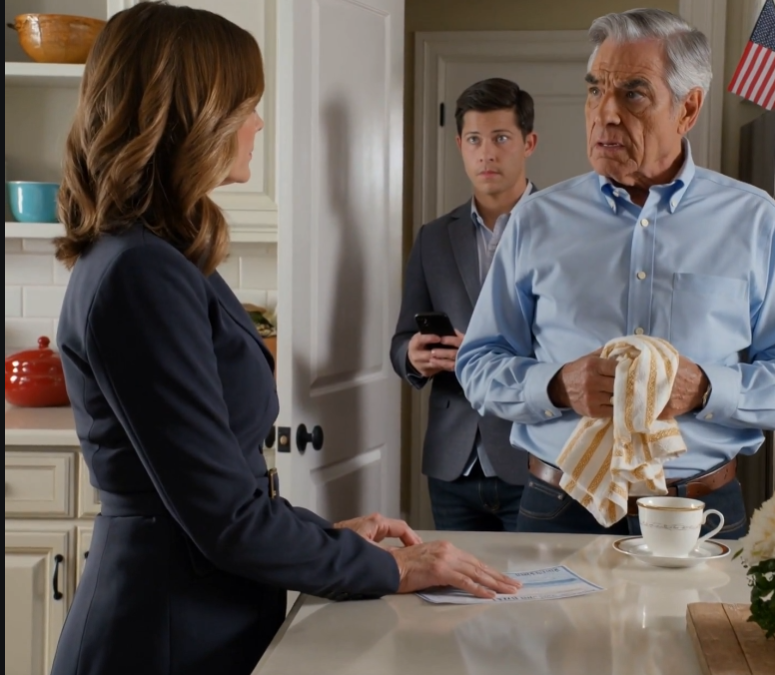
“Even your grandfather knew which one of you was the failure.”
My own mother laughed it across my grandfather’s funeral lunch in front of eleven church ladies who should have been grieving him, while my brother grinned into his phone. Nobody corrected her.
He got Grandpa’s $730,000 house. I got one brass key to a storage unit.
I closed my fist around that key until its teeth bit my palm, and I shut the door so softly nobody heard me go.
I’m Greta Angstrom, 36. Three years ago, my bakery went under. In my family, that settled who the failure was. The next morning, I drove three hours to that unit alone. When the door rolled up, the air smelled like cardamom, and I sank to the concrete.
Grandpa had—
I’ll get there.
Mom was right about one thing. He knew.
She just laughed right over the 90 days in his will. By day 90, that house was gone, and she was confessing to 4,000 strangers.
So let me tell you what she’d rather I didn’t: a phone call she made one June. I’ll get to that phone call, but it won’t mean a thing until you’ve sat through that lunch the way I did. So, the lunch first.
Tell me where you’re listening from. And if you’ve ever been handed the smaller share, pull up a chair.
The lawyer read something that day that nobody heard.
In Morningside, on the Edina side of France Avenue, where the rest of the state calls us cake eaters, a funeral lunch is something the neighbors grade, and my mother had set out the church’s good platters to be graded.
My mother is Lorraine Angstrom. She has chaired the funeral lunch committee at our church for 19 years, and that Saturday in March, she ran my grandfather’s house like the church basement: ham on buttered buns, the 30-cup coffee urn ticking on the sideboard, and a bakery box of cardamom rolls she’d bought and was calling a family recipe in the one kitchen where my grandfather, Walter Angstrom, ground his own cardamom every Saturday of my childhood.
Hers smelled sweet and flat.
His never did.
“Oh, for goodness’ sake, sit, sit,” she told the pastor, steering him into the good chair. Then she reeled my brother in by the elbow.
Derek Angstrom is three years older than me, and he sells lake homes.
“That’s my Derek.”
She got to me last.
“And Greta. It’s been a hard few years.”
Nobody had saved me a seat, so I did what I always do in that family. I unfolded chairs. I carried cups.
“The urn’s low, honey.”
“Okay.”
One of the church ladies tipped the cream pitcher and got nothing.
“I’ve got it,” I said, and I went and filled it.
Derek propped his phone on the bookshelf “for the memories,” he said. Then he talked to it instead of to us.
“You guys, this house—”
My father, Alan Angstrom, stood beside that bookshelf the entire time, holding a plate of ham he never touched. He is a quiet man. That day, he was quieter.
Then the lawyer set his folder on Grandpa’s dining table, and my mother tapped a spoon against her cup. The cup was still ringing when he opened the folder.
Marty Sorenson had been my grandfather’s lawyer for 30 years, and he read the way he does everything: level and exact.
“Thank you, Lorraine.”
He found his place.
“My house in Morningside to my grandson Derek, subject to the condition in the sealed page delivered to him Monday, to be completed within 90 days, failing which the house is to be sold.”
He slowed down for two words.
“90.”
“Sold.”
My mother was pouring the pastor’s coffee.
Derek heard the word condition. I watched him hear it. Then he waved it off for his phone, the way a man does who closes deals for a living.
“There’s always a page, you guys. Thirty days and we’re in. Forever home.”
Marty turned to me.
“To my granddaughter Greta: the key to Unit 41 at Headwater Storage, Park Rapids, and everything it opens.”
He put it in my palm himself.
Brass, with a paper tag on a loop of string.
“That locker,” my mother said, already half laughing. “Number 12. I hauled Betty’s canning jars up there myself.”
Betty Angstrom was my grandmother.
Nobody answered Lorraine, and she didn’t wait for anybody to.
I noticed one thing, and I kept it to myself.
Derek said 30 days.
The paper said 90.
Nobody in that room wrote down the difference.
My mother looked down at the key in my hand. Behind her, Derek went on selling the house to his phone.
She laughed.
A real one, from the chest. The laugh she saves for a full room.
“Even your grandfather knew which one of you was the failure.”
Derek grinned into his phone to see how it looked.
Most of that was not new. My mother has been sorting her two children out loud since I could stand at a counter. I know that weather. I have dressed for it my whole life.
Your grandfather knew.
That part was new.
That part went in somewhere I don’t have a name for, and I’m not going to try to give it one. So I’ll tell you what my body did, since it was the only honest witness I had.
My hand closed. The teeth of the key bit into my palm. My ears went hot, and I started to count.
My father looked down at his plate.
The pastor stirred his coffee.
One of the church ladies said, “Oh, Lorraine,” the way you’d praise a good joke.
Marty closed his folder. He looked at me half a second longer than a lawyer needs to.
Then he looked away.
Nobody corrected her.
Eleven church ladies heard her. I know because I counted them instead of crying. The laugh was still working its way around the room, and eleven faces had turned to see what I would do with it.
I washed my cup.
I want that understood.
I did not run out of that house.
I walked to my grandfather’s sink, washed the one cup I had used, dried it, and set it back on his shelf with the handle turned out. That was a decision. I made it on purpose, and I took my time.
My mother saw the dish towel in my hands, and her voice turned to honey. She never left her spot beside the urn.
“You drive safe, honey. Don’t let that old key weigh on you.”
Derek leaned in the kitchen doorway, generous, the way winners can afford to be.
“No hard feelings, G. It’s just how Grandpa saw it.”
“Thanks for lunch,” I said.
It was the only thing I said to any of them.
My father was in the front hall.
“Greta,” he said.
Then he studied the coat rack as if it had asked him something.
I passed Grandpa’s chair on the way out. The left arm was worn pale where his hand had rested for 50 years, and a question came up in me about him, about what he had seen when he looked at me these last three years.
I’m not going to say it out loud.
Not even here.
By the time I had my coat on, the room had gone back to Derek’s phone. Somebody asked him to show the fireplace.
I had the key in my fist.
With the other hand, I took hold of the front doorknob the way I’d been taught.
You don’t pull a door shut behind you. You hold the knob turned. You bring the door into its frame, and you ease the latch home so it never clicks.
Nobody looked up.
I turned the knob and let the latch down slow.
Bakers close doors that way.
He taught me.
He taught me in that same kitchen on Saturdays, back when I needed a step stool to reach his counter. The first job was always the grinder, a little cast-iron mill with a hand crank clamped to the counter’s edge.
Grandpa would split the green cardamom pods with his thumbnail, tip the black seeds in, and let me turn the handle. The smell that came up was green and sharp, close to pine. Nothing sweet in it.
That is how I knew, at his own funeral lunch, that my mother’s rolls came out of a box.
He had been a millwright, 38 years keeping a Minneapolis flour mill running, and he baked the way he fixed machines: one job done right every Saturday.
It was his mother’s cardamom braid, off a recipe card gone clear with butter. His mother was Ingrid Angstrom, and she had run a bakery up north in Park Rapids before he was old enough to shave.
He kept a pencil behind his ear.
While the dough rested, he wrote in the margin of that card.
“What are you writing?”
“That’s between me and my mother.”
“Is it a secret?”
“It’s a note, kiddo.”
He hooked the step stool over to the counter with his foot.
“Up you go. Three strands. Over. Under. Turn it again.”
“Mine’s crooked.”
“It’s bread. It’ll eat.”
He ate the crooked end himself, standing at the sink, and told me the next one could be straighter if I felt like it.
He didn’t say much, my grandfather. He put a stool where I could reach, and he let me ruin the first braid without fixing it for me.
He was the only person who ever watched me work without keeping score.
And he taught me doors.
The oven door first, then the kitchen door.
“Hold the handle. Bring it home. Let the latch down easy. Slam a door and the bread hears it.”
“Bread can’t hear, Grandpa.”
“Then it won’t mind you being quiet.”
We were on the second braid when my mother’s car pulled in an hour early, engine still running.
She never did turn that engine off. She came through the kitchen door, keys in hand, and there I was on the stool, flour to my elbows.
Derek was behind her in his hockey jersey. He was 12.
My mother looked at my arms. Then she said it the way she reads the church announcements, no heat in it.
“I have one child who’s going places and one who’s going to smell like yeast. Which one of you is which?”
Derek knew which.
So did I.
Grandpa wrapped my loaf in a clean dish towel and put it in my hands.
He didn’t say one word to her.
I have thought about that for a long time.
At home, my mother unwrapped it, looked at my crooked braid, and dropped it in the kitchen trash.
“We don’t bring that home.”
I cried. I was loud about it.
She took my wrist hard once so I’d look at her.
“Crying is asking. We don’t ask.”
I stopped in the middle of a breath.
The next Saturday, Grandpa never mentioned it. When her car pulled up, he handed me a loaf in a paper sack, folded over twice. He had printed my name on the sack in block letters.
GRETA.
So nobody could say whose it was.
I was nine.
I stopped crying that year, and I stopped asking the year after.
I kept that up for 20 years.
No crying. No asking.
It turns out you can build a fair amount on those two rules.
I worked in other people’s bakeries until I was 29. Then I signed a lease on Main Street in Hopkins, a narrow storefront with a good back door, and I opened Angstrom Bread.
I painted the sign myself, blue with a braid of wheat across the top. I got the lettering straight on the third try.
On opening day, I unlocked at four in the morning, and somebody was already standing on the sidewalk in the dark.
“You’re early,” I said. “I don’t even have the lights on.”
“Baker’s hours.”
Grandpa held out an envelope.
Inside was his mother’s recipe card, copied out in his block letters and laminated so I could splash it.
“For your wall.”
“You want coffee? It’s terrible. I made it.”
“I want a loaf of the rye.”
He stood at my counter in his good jacket while I bagged it. He put his nose over the open bag, and he took his time.
“Well,” he said. “It smells right.”
That was the highest praise he owned.
I had heard him spend it on a rebuilt gearbox once, and on my grandmother’s lefse, and now on me.
I said something smart about the health inspector so my hands would quit shaking.
My mother phoned later that morning.
“We had a thing at church. Honey, I’m sure it’s darling.”
Derek came by the following week, took one picture, and never posted it.
The shop held four years, and I paid every bill the week it came in.
Every Thursday, my grandfather drove over from Morningside for his rye and stood where he could watch me shape. Those were the years I let myself think I might be the one to carry his hands forward.
I never did ring up that first loaf. He wouldn’t take it free either. He paid with a $2 bill.
I taped it under the register and never spent it.
Then, one June in the fourth year, the walk-in cooler went quiet.
If you’ve worked a kitchen, you know that sound—or the lack of it. A compressor hums until the day it doesn’t, and then you can hear your own shoes on the floor.
That was the first thing.
The second was my rent, which stepped up that summer the way the lease said it would.
The third was a café that bought my bread wholesale and closed its doors owing me $9,000.
I ran the numbers the way I run a formula. I had a wholesale contract starting in the fall. I needed $60,000 to stay open 90 days and reach it.
There was one person I would have asked, but Grandpa had eye surgery that spring. He couldn’t drive until fall, so his Thursdays at my counter had stopped. He couldn’t read small print, so my mother had been put on his checking account to help with his bills.
That summer, every word between my grandfather and me went through her.
I told her I was going to call him.
“Don’t you go begging an 82-year-old man,” my mother said. “I’ll ask him.”
Two days later, my phone rang at the shop.
“I talked to your grandfather.”
Her voice was level. She could have been reading me the forecast.
“He said he’s not throwing good money after bad.”
I was holding a bench scraper. I remember setting it down square to the edge of the table.
“Okay,” I said. “Thanks for asking him.”
“That’s that, then.”
That’s the phone call.
I never called him to hear it for myself.
I had been taught not to ask twice.
That week, my brother posted a video. Derek on a dock in Prior Lake, holding up a ring of keys for his followers.
“Thirty-six and self-made, you guys. No handouts.”
That Friday, Derek closed on the lake house.
I didn’t do the math.
I wasn’t raised to.
So let me do it now.
The cooler is dead. The shop is quiet.
And here is the math I wasn’t raised to do.
At 16, I worked two summers at an ice cream shop on Excelsior. That money became my brother’s hockey fees.
At 18, I had savings put by for baking school. That became Derek’s last year of college. I was told I could go the year after.
At 22, I signed for the loan on his truck. I made eleven of the payments.
At 26, what I had saved went toward his wedding.
At 31, with my own shop two years open, I paid the fees for his real estate license.
Every one of those came with the same sentence from my mother, said kindly, like a hand on my shoulder.
“You’re the responsible one.”
I can prove a little over $37,000.
I kept the statements.
I keep everything.
If you were the responsible one in your family, you already know this list. Type the word responsible. I’ll know what you mean.
And stay with me. Subscribe if you’d like to hear how it ends, because that list was about to get its last line.
$37,000, give or take.
In my family, that had a name.
They called it being responsible.
The responsible one kept her shop open that whole summer on her own savings and a borrowed compressor.
She came up short anyway.
On the last day, I closed Angstrom Bread myself.
I swept the floor.
I left two things behind.
Grandpa’s $2 bill, still taped under the register because I couldn’t look at it.
And on the cooler shelf, my sourdough starter in its glass jar. I had fed it every day for four years.
I couldn’t carry one more living thing out of there.
Then I handed my key to the landlord.
I had already signed a paper to sell every piece of equipment I owned so that every vendor I owed would be paid in full.
I didn’t go to that sale.
The auctioneer phoned me afterward, pleased with himself.
“One buyer from up north took the whole floor,” he said. “Never even haggled.”
And I stood on Main Street in broad daylight while a man on a ladder took down my sign.
Four screws.
Each one shrieked coming out of the brick.
Two women from my mother’s lunch committee came down the sidewalk with shopping bags. They slowed down.
They did not stop.
That evening, my mother posted on the church page, asking everyone to pray for “our Greta in this hard season.”
People prayed.
A few sent casseroles to her house.
Grandpa called that night.
I let it ring because I thought I knew what he’d say.
The phone went dark on my kitchen counter, and then it lit again.
One voicemail.
Nine seconds.
“It’s Grandpa.”
A breath.
“You don’t have to call back.”
So I didn’t.
I believed he had already said what he thought of my bakery, and I wasn’t going to make an old man say it twice.
For the next two and a half years, I worked nights at a commercial bread plant where the ovens are tunnels and the baker pushes a green button.
Nobody there needed my hands, only my attendance.
I saw my grandfather at holidays. I was polite. I sat at the far end of the table.
I thought I was sparing us both.
He never brought up the shop.
I took that for his answer.
He took my quiet for mine.
One Thanksgiving, he caught me alone by the stove.
“You still got your hands?”
“They work nights now, Grandpa.”
He opened his mouth to say more, but Lorraine was already at his shoulder, bending to his ear, close enough that I caught it.
“Don’t, Walter. She’s embarrassed enough.”
I thought she was being kind to me.
He looked at me a long moment, like a man reaching for something on a high shelf.
Then he let it go and asked about the pie.
His last Christmas card had one line in it, in his block print.
KEEP YOUR SATURDAYS.
A few weeks before he died, he called me himself.
“Keep the first Saturday in April open for me. We’re taking a drive.”
“Where to?”
“You’ll see when we get there.”
I figured the cemetery in Park Rapids. My grandmother is buried up there, and he liked company on that road.
I wrote it on my calendar.
I bought new wiper blades.
I wondered what I would say to him for three hours in a car.
He went in his sleep in his own bed, with his reading glasses folded on the nightstand.
He died on a Tuesday in March.
April kept its Saturday.
The night of the lunch, in my rented kitchen, I set the brass key down on the counter and finally looked at it.
The tag was a paper luggage tag on a loop of butcher string. There was a number on it in his block print. The pencil pressed hard.
I turned the tag over.
Blank.
I could still hear her laugh.
It had come home with me, the way oven heat stays in your clothes.
And the question from beside his chair came back: whether he had looked at my closed shop and my night job and quietly agreed with her.
I thought it.
I want it on the record that I never said it.
There was one way to learn what a man leaves the grandchild he has supposedly given up on.
Three hours of road.
I didn’t tell anyone I was going.
Nobody asked.
Before daylight on Sunday, I was at the pumps filling the tank, with the key in my coat pocket and my thumb on that tag.
Something about the number would not sit flat.
Marty had read it out loud at the table, and I had let it go by because she was laughing.
My mother said Unit 12.
The tag on the key said 41.
Forty-one rode in my pocket the whole way, and the tank was full, so there was nothing to stop for.
Highway 10 runs northwest out of the Cities. St. Cloud. Little Falls. Motley. The fields in March are the color of dishwater, with old snow lying in the furrows.
At Wadena, you turn north on 71 and the pines begin.
I knew that road from the back seat.
Every Fourth of July, he drove us up, and when we turned onto Main Avenue in Park Rapids, where they park the cars down the middle of the street, his hand would come off the wheel and point at a brick building.
“That’s where the bread came from.”
He said it every year.
I thought it was just a thing he said.
Somewhere past Little Falls, I did what I do.
I worked it like arithmetic.
If a man believes his granddaughter is a failure, he leaves her nothing.
Or he leaves her a lecture.
He does not sit down with a pencil and a luggage tag and print her a number so she can’t miss it.
It didn’t add up.
And it was the not adding up that got to me.
I pulled into a gas station in Wadena because I couldn’t see the lines on the road.
I kept both hands on the wheel at ten and two, and it came up out of me with no sound at all.
About a minute.
Then I wiped my face on my coat sleeve and went in and bought a coffee I didn’t want.
It was the first time since I was nine years old.
In Menahga, there is a statue beside the road, a tall St. Urho with a grasshopper speared on his pitchfork.
Grandpa saluted it every single trip.
Two fingers off the wheel.
I heard myself laugh once, out loud, alone in the car.
I cried in a gas station lot in Wadena quietly, like a person paying a bill.
My face was tight with dried salt by the time I found Headwater Storage at the edge of Park Rapids.
Six rows of steel doors behind a chain-link gate.
It was Sunday morning, and the office was dark.
But there was a house beside the lot, and a woman came out of it in a parka and slippers before I had my seat belt off.
“Help you?”
I held the key up by its tag.
“Oh, sure. Forty-one’s the big heated one on the end. He moved up from 12 in October of 2023. Paid ten years ahead. My husband about fell over.”
“Ten years?”
“Ten. He came the first Thursday of every month. I’d have the coffee on.”
She pulled her parka shut.
“I was sorry to see it in the paper. He was a nice man. Fussy about that lock.”
“Did he say what was in it?”
“Not to me. He said a woman would come by herself with that key.”
She looked past me at my empty car and back.
“He said to let her.”
“Thank you.”
“You bet. Holler if the door sticks.”
She buzzed the gate open and went back into her coffee.
I walked the row alone.
The doors got wider toward the end.
The last one was twice the width of the others, with a strip of rubber along the bottom to hold the heat in.
The padlock was his.
I knew the make.
He bought that same lock for his garage, his toolbox, and my first bicycle.
It was bright with fresh oil.
I took my gloves off.
I put them back on.
The handle was cold right through the leather.
Nobody was with me.
I checked.
The way you check a mirror.
The key turned like it had been oiled last month.
I put both hands under the handle.
The door rolled up.
The smell reached me before the light did.
Cardamom.
The real thing.
Green, green and fresh-cracked, with cold steel under it.
Old flour under that.
Then the daylight went in.
My deck oven.
My 60-quart mixer.
My proof box.
My racks standing in a row.
My maple bench with the dip worn into its left end.
And on the back wall, facing the door, facing me, a blue sign with a braid of wheat across the top.
I sank to the concrete.
I didn’t decide to.
My knees went, and the floor was there.
It was all of it.
Wiped down. Set out in the order it stood in when I was open—oven to bench to rack—so a person could walk in and start a shift.
I knew every piece.
I had signed the paper that let a stranger haul it away.
The smell had a source.
On the bench sat a little cast-iron mill with a hand crank, and beside it a paper sack of green pods folded over twice.
I stayed down.
I counted racks because counting is what I have.
Six.
Then I saw that the oven wasn’t quite shut.
The warming drawer of my deck oven sat open an inch.
Something was taped inside it.
I went to it on my knees across that cold floor because standing up seemed like a lot to ask.
On the way, I touched things.
I couldn’t help it.
The mixer I had made payments on for three years, with the chip in the bowl guard from the morning I dropped a sheet pan on it.
The bench and the dip in its left end where I had divided dough 10,000 times with the same turn of my wrist.
Somebody had oiled the wood.
I pulled the drawer the rest of the way open.
Taped to the inside with one strip of masking tape was a $2 bill.
The one I had left under my register.
I let that be for a minute.
Under it lay a brown accordion folder, the kind that ties with string.
I worked the string loose and drew out the first sheet.
It was the receipt for my own sale.
Every lot was listed.
Lot one: deck oven.
Lot two: mixer.
On down the page to one painted sign.
And on every single line, the same buyer.
G. Halverson, Park Rapids.
I knew the name.
Gus Halverson was my grandfather’s oldest friend up there. They had fished together since they were boys.
There was a total at the bottom.
Almost $39,000.
Behind it was a bill for a moving truck and a rental agreement for Unit 41.
Across the top of the truck bill, in pencil, in his block letters:
WRAP THE SIGN.
And across the top of the receipt:
A BAKER WITHOUT HER OVEN IS A WOMAN WAITING.
Then one initial.
W.
So the thing my mother laughed at was my whole trade, kept in one piece in a heated room by the man she said had given up on me.
A man who thinks you’re finished does not keep your bench oiled.
But then what was the no?
He wouldn’t lend me $60,000.
He spent $39,000 buying my ovens back.
Both couldn’t be true.
There was more paper behind the receipts.
The folder had a back pocket, and it was thick.
First out was a deed.
Hubbard County, recorded in May two years ago.
A brick commercial building on Main Avenue in Park Rapids, conveyed to Greta Marie Angstrom.
I read my middle name twice.
Nobody uses it.
Clipped to the deed was a photograph, black and white with a scalloped edge.
A woman in an apron, arms crossed, in front of a plate-glass window. Painted on the glass in an arch:
ANGSTROM’S BAKERY.
Beside her, a boy of about 12 with a push broom taller than he was.
On the back, in ink gone brown:
That’s where the bread came from.
Under the photograph were two years of property-tax receipts, paid.
A bill from an electrician.
A bill from a plumber.
And a steel ring with two new keys.
So it wasn’t only a storage unit.
He had bought his mother’s bakery.
He had put it in my name.
And then he had gone on quietly getting it ready.
I was still on the floor.
I squared those papers against the edge of the bench the way I used to square invoices.
My name had been on a building for two years.
He’d been waiting to tell me.
One more thing lay flat in that back pocket.
A bank envelope, the kind with a window.
Inside was the bank’s copy of a check, front and back on one sheet.
I’ll give it to you the way it was laid out.
The date: a Friday in June, three years ago.
The amount: $60,000 and no cents.
The account: Walter Angstrom.
Pay to the order of: a company I had never heard of.
And typed beneath that, on the memo line, three words:
ANGSTROM PRIOR LAKE CLOSING.
I read the pay line three times.
My thumb was pressing down on the second Angstrom, the one that wasn’t him and wasn’t me.
So he had sent it.
He had sent exactly what I needed, the week I needed it, and it had gone to the company that handled my brother’s closing.
It had gone into a dock.
“Good money after bad.”
He never said that.
Somebody said it for him.
He had called me the night my sign came down.
Nine seconds.
“You don’t have to call back.”
If I had called back, he would have asked how far his $60,000 got me.
And I would have said, “What $60,000?”
Her phone call cost me my shop.
The one I didn’t return cost me his last three years.
And the failure everyone at that lunch had a laugh about?
That had been arranged.
I didn’t cry.
I laid the copy on the bench and lined it up with the edge.
My hands were perfectly steady.
Under the check was a letter.
Four pages.
His block print.
Dated six weeks before he died.
I sat down with my back against the oven door on that same concrete, and the steel was cold through my sweater.
Daylight from the open door lay across the pages, and I could smell old flour and pencil lead.
I read slowly, the way he had written it.
He printed everything.
Capital letters.
Each one set down like a part on a workbench.
He began with this past January.
He was putting his papers in order with Marty, and the bank sent over its copy of a check made out to a company he had never heard of.
I SIGNED WHAT SHE PUT IN FRONT OF ME THAT JUNE. I COULD NOT READ IT.
Then the sentence I have read more than any other in my life.
I TOOK YOUR MOTHER’S WORD FOR THREE YEARS AND NEVER ONCE ASKED YOU. THAT IS THE FAILURE IN THIS FAMILY AND IT IS MINE.
He had crossed out one word there and printed it again, straighter.
YOU DID NOT FAIL. YOU WERE $60,000 SHORT FOR 90 DAYS, AND SOMEONE MADE SURE YOU STAYED SHORT.
He wrote that he bought my ovens believing his money had reached me and fallen short.
Gus had done the bidding for him at the sale.
Grandpa paid Gus back out of an account at the bank on Main Avenue, one my mother never saw.
Then he wrote why he divided things as he did.
DEREK GETS THE HOUSE BECAUSE THAT IS WHAT YOUR MOTHER WATCHES. NOBODY WATCHES A STORAGE UNIT.
He kept the building quiet because she would have called it a waste and talked me out of it before I ever stood in it.
And he had wanted it ready first.
A MAN MY AGE HAS NO BUSINESS WAITING FOR READY. I WAITED ANYWAY.
He had meant to bring me here himself.
The first Saturday in April.
IF YOU ARE READING THIS, I RAN OUT OF SATURDAYS.
WHAT I SEND YOU THROUGH OTHER HANDS DOES NOT ARRIVE. SO THIS GOES INTO YOURS.
Near the bottom, by itself:
WHATEVER SHE TELLS YOU, I KNEW.
I KNEW YOU.
I didn’t make a sound.
I folded the pages back along his creases, laid them on my knees, and put both hands flat on top of them, the way you keep a thing from blowing away.
It was relief.
That is the plain word.
For three years, I had leaned my whole weight on a door that was never locked.
The last line said:
ONE MORE THING. LOOK IN THE PROOF BOX, TOP RACK, THEN CALL MARTY.
The proof box is a tall steel cabinet on wheels.
Its rubber seal let go with the same soft kiss as always.
Top rack.
A square tin dented at one corner, with a hinged lid.
Inside were his mother’s recipe cards, a hundred of them gone soft as cloth.
Every margin was crowded with his pencil.
Under the tin lay one typed page on Marty’s letterhead.
A copy of the sealed page Derek would get on Monday.
It was in my grandfather’s own words, and it was short.
The house goes to Derek when two things are done.
One: $60,000 is returned to Greta.
Two: Lorraine and Derek both sign a page saying where that money went in June.
They have 90 days.
If either thing is left undone, the house is sold.
Below the typing, by hand:
SHE WAS SHORT 90 DAYS. THEY CAN HAVE THE SAME 90.
I AM LEAVING THEM A DOOR, TOO.
ALL THEY HAVE TO DO IS TELL THE TRUTH.
And under that:
GRETA CAN LET THEM OFF ANY DAY SHE LIKES. THAT IS HERS TO SAY.
I AM DONE ANSWERING FOR HER.
There they were.
The 90 days my mother laughed right over.
He hadn’t asked me to do a thing.
He just handed me, for the first time, the last word.
The ring with the two new keys had an address stamped on its tag, and it was six blocks from where I was kneeling.
I spent the rest of that day on the floor of Unit 41, reading his margins.
Every card but one.
The braid card I left face down in the tin.
I wasn’t ready for that one.
I got to Main Avenue at dusk, with the cars parked down the center of the street the way they always are, and one brick storefront with brown paper over the glass.
The first key fit.
Inside, it smelled of sawdust and new paint.
Fresh wiring ran up the brick in bright conduit. A hood was already hung. The concrete floor had been ground smooth, and on that floor, in white chalk, in block capitals, he had written where things went.
OVEN HERE.
BENCH HERE.
I was standing on the word BENCH when the side door opened.
A woman came in from the diner next door, 60-some, in an apron, carrying a paper cup of coffee and a plate.
She didn’t ask who I was.
She set them both on the windowsill.
“You’re Walter’s Greta,” she said. “I’m Lois Doll. He said you’d come up alone, and you’d come up hungry. Eat.”
It was a hot beef sandwich.
I ate it standing up.
“He told you about me?”
“Every first Thursday.”
Lois looked at the chalk and then at the clean floor around it.
“He swept this himself in November. Eighty-five years old on that knee. I told him, ‘Give me the broom.’ He said, ‘It isn’t yours to sweep.’”
She didn’t tell me what to make of that.
She took the empty plate back.
“Thank you,” I said. “For the sandwich.”
“You bet. That door sticks in wet weather. Lift and pull.”
I would like to tell you I had some large feeling.
What I felt was expected.
Like walking into the kitchen and finding my apron already on the hook.
She left the coffee on the sill.
It smelled like every funeral lunch I’d worked here.
It smelled fine.
Monday morning, I was back in Edina in the chair across from Marty Sorenson, with his copy of the sealed page on the desk between us.
There was a coffee ring on one corner of the draft.
I knew whose cup had made it.
“Your brother got his envelope this morning,” Marty said. “It’s two things, and it’s both of them. Sixty thousand back to you. The page signed by Lorraine and by Derek by five o’clock on the 90th day.”
“Which is when?”
“Friday, June 12.”
“And if they don’t?”
“If the day passes, I list the house Monday. Sixty and interest to you. The rest goes where Walter said.”
He took his glasses off.
“There’s one other way. You—if you sign a paper giving it up—I have to treat it as done.”
“I saw he wrote that part by hand.”
“He did. He wrote most of it by hand. I had it typed so that I could read it.”
Marty pulled a thin file toward him.
“Walter had me look at how your shop closed. You sold everything and paid every vendor in full. You were short one bridge. That isn’t what failing looks like on paper.”
I looked at the coffee ring for a while.
Almost three years.
I had waited for somebody with a file in his hand to say that.
I didn’t trust my voice with it, so I asked about something else.
“Why did you read the 90 days out loud at the lunch, if that’s okay to ask?”
“I’m told I’m not much of a performer. I asked him the same thing.”
He almost smiled.
“He said, ‘Read it slow. They won’t listen. I want it said and on the page.’”
“Why did Derek have to wait until today?”
“That was Walter’s, too. He said, ‘She opens her door before they open theirs.’”
Nobody in that office said the word sorry or the word mother.
We talked about dates.
My phone buzzed on Marty’s desk.
Eleven seconds of voicemail.
I turned it face down and left it.
I played those eleven seconds at home.
“Sweetheart,” my mother’s voice began.
In 36 years, she had never once called me that.
I didn’t call back.
There were 88 days left, and they weren’t mine to count.
That Saturday, I drove north again.
Gus Halverson turned out to be 83, with a pickup and a grandson.
The two of them carried my bench and a small countertop oven from the unit to the brick building while I held doors.
Then I was alone with a recipe I didn’t need to read.
Ingrid’s cardamom braid.
Three strands.
I had known it since I needed a stool, but I had spent two and a half years pushing a green button, and my hands knew it.
They stopped at every fold to ask permission.
It came out dense.
Pale.
The braid had torn open down one side.
I stood over it and did the arithmetic I had been avoiding.
Suppose the $60,000 had arrived.
Would these hands have saved that shop?
I couldn’t make the number come out.
I carried the loaf to the trash can and dropped it in myself.
I knew exactly whose move that was.
That night, my mother wrote:
Come for coffee tomorrow. Just us.
She had never once meant just us.
Just us turned out to mean three cars in the driveway.
Derek’s truck was already there.
Sunday.
Day eight.
My parents’ kitchen, with the lemon bars out, cut small the way she cuts them for company, and the good cups down from the high shelf.
My father stood in the doorway to the hall, wringing a dish towel.
Beside the sugar bowl, squared up neatly, lay one typed page and a pen.
My brother had typed it himself.
A paper giving it up.
One paragraph, with a line for my name.
“We fix this like family, sweetheart,” my mother said, and poured.
I’ll tell you why I went.
I wasn’t there to find out where the money went.
I had the bank’s copy.
I was there to find out if she’d tell me.
I took the copy out of my coat.
I set it on her counter and turned it around so it faced her.
And I asked her one thing.
“Where did Grandpa’s $60,000 go?”
Lorraine didn’t look down.
She looked at me the way you look at a child who has carried a bug to the table.
“Oh, honey. That was a gift your grandfather made to this family.”
I waited.
“He signed for it himself.”
That one came out brisk, like minutes being read.
I waited.
Her hand went to her collarbone.
“After everything I did for that shop. I prayed for that shop.”
I put both my hands flat on the counter so I would know where they were.
I counted the cabinet knobs.
There are 14.
“You’re going to question your mother in her own kitchen?”
“G, come on,” Derek started.
My mother raised one finger without turning her head, and he stopped.
In the doorway, the dish towel went around once more in my father’s hands.
The refrigerator hummed.
The coffee sat there going cold in the good cups.
I didn’t ask twice.
I looked at the check until she looked at it, too.
She looked at it for a long time.
When she lifted her eyes, the honey was gone.
What was left was the voice from the church announcements.
“It would have gone down the drain with your little shop. I put it where it would do some good.”
There it was.
She had told me.
“Your grandfather would have agreed if he’d been thinking straight.”
She borrowed him and broke him in one breath.
I made a note of that.
“I was closing that Friday, and I was short,” Derek said. “Mom told me where it came from, and you weren’t going to make it anyway, G.”
He slid the typed page across the counter, and the pen after it.
“Sign it. I’ll make it right later.”
The pen rolled against my knuckle and stopped.
“No,” I said. “It stays the way he wrote it. Every word. You have until June 12.”
I didn’t say anything to my father.
He didn’t say anything to me.
I picked up my copy.
I left the pen where it lay.
Behind me, as I reached the door, Derek laughed under his breath.
“She’ll fold by May. She always does.”
It felt clean.
Like a bench scraped down to the wood.
“Follow his instructions,” I told Marty from the driveway.
For once, I didn’t add, if that’s okay.
I worked my nights at the plant through April and May, and I spent every day off on Main Avenue in Park Rapids with flour on the floor.
Gus brought a man with a pallet jack. They walked my deck oven in through the back and set it down on the chalk.
OVEN HERE.
It took them most of a morning to cover those two words.
My second braid was better than my first.
My third, I carried next door.
Lois chewed with her eyes on the ceiling.
“It’s good,” she said. “It’s a little scared, but it’s good.”
“Scared?”
“You bake like somebody’s about to take it away from you.”
That evening, I opened the dented tin and turned over the card I had left face down.
Ingrid’s braid.
I had seen the front of that card a hundred times.
I had never been allowed to read the margin.
His pencil ran down the side of it.
OVEN RUNS HOT IN BACK. TURN THE PANS AT 12 MINUTES. SHE NEVER WROTE IT DOWN. NOW YOU KNOW.
I read it standing up.
Then I preheated the fourth batch.
I turned the pans at 12 minutes.
And somewhere in the shaping, my hands quit asking.
They just went.
The smell came up out of my own oven and filled that room to its tin ceiling.
Green and sharp.
I was happy.
That’s all.
It was like finding the lights still work in a house you thought was shut for good.
The street door opened.
A man in a hardware-store vest stood there, nose lifted.
“That’s cardamom.”
“It is.”
“My daughter graduates in June. Open house in our garage. Can you do 200 buns?”
“Two hundred?”
“When do you need them?”
“Second Saturday in June. Early.”
He laid four twenties on my bench.
Lois said, “You’re real.”
I took down his name on an index card.
I wrote the pickup date on the card.
It was the morning after their 90 days ran out.
I propped that card against the tin, date circled, and the 90 days went by under it.
Here are the ones I can vouch for.
Day 20: Marty called. Their lawyer asked for the bank’s copy. Then he asked whether the 90 days were firm.
Lawyers who like their case don’t ask that.
Marty told him one thing.
“In a courtroom, that copy becomes a record anybody can read.”
He never called again.
Day 41: a check reached Marty from my brother.
$60,000.
No page.
Marty mailed it back with three words.
BOTH OR NEITHER.
Day 70: an aunt and two church ladies called about being the bigger person.
I let them go to voicemail.
Day 80: a voicemail from Derek in the voice he uses on nervous buyers.
“Our lawyer says sign. Dad says sign. I’d sign, G. Mom won’t. She says the day it’s on paper, it’s yours to show anybody. So just sign yours. I’ll make it right.”
I played it once.
So they knew the price.
They were betting on me anyway.
Day 86: Derek posted to his followers.
A CELEBRATION OF GRANDPA WALTER’S HOME. LIVE FRIDAY AT 4. FAMILY MEMORIES AND SOME TRUTH.
They went live at four.
Marty’s deadline was five.
My mother always did like to arrive early.
I’ve watched it since.
Friday.
Day 90.
4:00 p.m.
My grandfather’s living room.
They had let themselves in with the key my mother still carried from her bill-paying days, and she had dressed the room.
His chair pulled out to the middle of the floor.
Empty.
His photograph in a silver frame.
Lorraine in navy blue, with her cross outside her collar.
On the side table, squared up, lay the typed page and the pen.
“In case my daughter finds her heart,” she told the room.
The church ladies sat in a half circle of folding chairs.
My father stood by the bookshelf again.
“It’s a misunderstanding about a gift,” my mother said in her testimony voice. “That’s all it ever was, and it grieves me.”
She laid her hand on the back of the empty chair.
“Even at the end, Walter knew which one of his grandchildren to trust with this house.”
Nobody in those folding chairs asked her a single question.
Derek leaned into the lens.
“You guys, this is hard for us. Honestly, we just want to keep his home in the family.”
A couple hundred people were watching when they started.
The number in the corner kept climbing as the lake-neighborhood groups passed it along, and then the church families.
I was not one of them.
Three hours north, my phone lay face down on the lid of a flour bin.
I was scaling dough.
80 grams apiece.
200 pieces.
You set the lump on the scale, and it beeps. You pinch some off or add a little, and it beeps again.
I had the back door propped open for the heat.
Beep.
That is everything I knew about 4:00.
A few minutes before five, I’m told, a gray sedan parked behind the church ladies’ cars.
The pen was still on that table.
Nobody had touched it.
5:00 p.m.
Marty Sorenson stood in the doorway with his folder.
“Mrs. Angstrom. Derek. Is there somewhere we can talk?”
Not Lorraine.
Mrs. Angstrom.
My mother’s whole face opened.
She thought she knew what was in that folder.
She turned to the folding chairs.
She turned to the phone on the shelf.
“That’ll be from my daughter.”
She was glowing.
“Say it right here, Marty. This family has nothing to hide.”
Marty looked at the lens.
He looked at her.
“All right.”
He opened the folder.
“It’s five o’clock on the 90th day. The condition in Walter’s will wasn’t met. The house will be listed Monday.”
Derek stopped breathing.
You can see it happen.
Marty never said the word money.
“Walter asked that one line be read to you if this day came.”
He read it flat.
No weight on any word.
“MY GRANDDAUGHTER NEVER FAILED. I DID. THE DAY I LET SOMEONE ELSE ANSWER FOR HER.”
The room did not move.
An empty chair.
Eleven women on folding chairs holding their cups.
My mother was still smiling.
It had not reached her yet.
He closed the folder.
Three hours north, I was shaping bun 112.
Then it reached her.
The smile went.
The church voice went with it.
“He didn’t know what day it was.”
She said it to Marty.
She said it to the room.
“That money would have gone down the drain with her little shop. I put it where it would do some good.”
The same words.
Her kitchen first.
Now a living room and a lens.
Marty had not said money.
One of the church ladies set her cup in its saucer very softly.
“What money, Lorraine?”
Nobody answered her.
Derek had forgotten the phone.
One hand went out flat toward his mother.
“Mom, stop. You swore that bank copy would never get out.”
He heard it as it left him.
Then, from beside the bookshelf, my father.
Sixty-four years old.
The first time.
“Dad asked me twice if she got it. I told him to ask you.”
He said it to his wife.
He did not look at the floor.
A folding chair scraped.
Then another.
One woman lifted her own Pyrex dish off the sideboard and walked out with it.
Derek went for the bookshelf.
The number in the corner stood just under 4,000.
The stream ran 40 seconds after Derek lunged for the phone.
Somebody, somewhere, pressed save.
If someone in your family has ever answered for you at a table, in a will, over the phone, tell me in the comments what they said.
I read them with flour on my thumbs.
And if this is keeping you company, a like and a subscribe helps it find the next quiet one.
Now, before I tell you what it cost them, let me tell you where I was.
I was at my oven.
When the last tray had cooled on the rack, only then did I turn my phone over.
One line from Marty.
DONE AS WRITTEN.
I read it once.
Then I turned the phone face down again.
That night, I boxed 200 cardamom buns, a dozen to a box, and tied every box with white string.
I did not open the video.
I had knots to tie.
Saturday morning, I carried them into a garage hung with crepe paper in the school colors.
The hardware man’s wife took a bun off the first tray before I had it on the table.
She bit into it.
She stopped chewing and looked at it.
“Who made these?”
“The new bakery on Main,” her husband said, pointing at me with his coffee.
“There’s no bakery on Main.”
“There is now.”
A woman I had never seen came around the dessert table with a bun and a napkin.
“Do you take orders? My mother turns 90 in August.”
“I do now,” I said.
The hardware man counted the rest of what he owed me into my palm.
I wrote him a receipt by hand with a date on it, and I signed my name underneath.
I was proud.
It felt like a floor I had laid myself.
That was my first order.
Delivered whole.
By Saturday noon, I had 52 messages.
I opened one.
It was Marty’s, and it was all numbers.
I read the rest of Marty’s numbers at my bench.
Then I kept reading his numbers for six weeks, because that is how all of it reached me.
Him, and the voicemails I didn’t return.
The house was listed that Monday at $730,000.
It had a buyer in under two weeks.
When it closed, $60,000 came to me with interest.
The rest went where my grandfather had sent it: to a trade scholarship in Park Rapids with his mother’s name on it.
I did not get $1 more because they lost that house.
I want that on the record, too.
The 60 went into a walk-in cooler that hums.
Then Marty asked the company that handled Derek’s closing for its file.
One page came back with one typed line.
GIFT FUNDS — W. ANGSTROM — $60,000.
It had been typed for three years.
My brother and his brokerage parted ways.
Somebody had set “36 and self-made” beside the clip of him saying “bank copy,” and the house he had promised his followers was gone.
By the end of July, there was a FOR SALE sign at Prior Lake, too.
The dock was in every listing photo.
The funeral lunch committee invited my mother to take “a season of rest.”
After 19 years.
And the clip that traveled was not Marty.
It was two sentences of hers, one hour apart.
“Even at the end, Walter knew which one of his grandchildren to trust with this house.”
“He didn’t know what day it was.”
For three years, she’d spoken for him.
Now she’d been quoted accurately in her own voice.
There was one voice I had not let myself hear.
It had been sitting on my phone since that Sunday, two days after the livestream.
My father.
Two minutes and ten seconds.
I played it standing at the bench with dough under my nails.
He talks slowly, my father.
There was a long gap before the first word, and gaps after it.
“Greta. It’s Dad.”
A chair creaked.
“I knew to ask. Dad asked me twice. I knew what it meant that he was asking.”
There was wind, or his breathing.
“I let your mother answer.”
Then the longest gap.
I watched the seconds count up.
“I’m not asking you to call.”
That was all of it.
No sorry.
He doesn’t own the word.
But he had the facts in the right order.
And for my father, that is a long way to walk.
My thumb had left a floury print on the glass right over his name.
I didn’t delete it.
I didn’t call him.
I didn’t decide he was forgiven.
And I didn’t decide he wasn’t.
I let it be a true thing.
Sitting there.
Sixty-four years he had looked at his plate.
He looked up once.
I can count that without owing it an answer.
I set the phone down.
On the calendar by the oven, one square was circled.
August 1.
August 1 was a Saturday.
And by six that morning, there was a line on the sidewalk of Main Avenue.
The blue sign was up.
Gus and his grandson had hung it the evening before on the old iron bracket that once held Ingrid’s.
Gus stood out in the street with his thumbs in his belt, squinting at it.
“Sign’s level,” he said.
From Gus, that is a speech.
A man in a short-sleeved shirt and a tie came to the door before I had turned the lock.
He was from the bank down the block.
“Ms. Angstrom.”
He shook my hand as if I were a depositor.
“Your grandfather kept the taxes paid on this building in your name since 2024. Welcome to Main Avenue.”
“Thank you. Would you like a bun?”
“I would. My wife says bring four.”
I went back to the bench and did the first job the way I was taught.
I clamped his little iron mill to the edge.
I split the pods with my thumbnail and turned the crank.
The smell came up green and sharp.
And it was not a memory anymore.
It was Saturday’s work.
People say my grandfather saved me.
He bought ovens and a building.
He didn’t drive three hours alone, or turn that key, or say no in my mother’s kitchen.
I did.
I’m steady about that.
It sits in me the way a full pan sits on a rack.
Before I opened, I taped his $2 bill under the new register, the same place it had lived in Hopkins.
Then I unlocked the door.
Farmers.
Two nurses coming off a night shift.
Half of Lois’s breakfast counter, still in their caps.
“Two of the braids.”
“Is that rye?”
“A dozen buns and whatever she’s having.”
I bagged and counted change and said good morning 40 times.
And my hands did not shake once.
Somewhere in there between customers, I looked down.
The floor was poured concrete, sealed gray.
I’d been on my knees on one like it.
I stood.
I was still standing there with the line out the door when Lois came through it sideways.
She had something held against her chest, wrapped in a dish towel.
She didn’t say good morning.
She set it on my bench and took the towel off.
A glass jar.
My jar.
The lid I had dented on a cooler shelf in Hopkins.
“He took it out of your cooler the day of the sale,” Lois said. “Paid me $20 a week to feed it. Came the first Thursday of every month to check I was doing it right.”
She sniffed.
“The first year, I wasn’t.”
I could not get a word out.
“He said, ‘Don’t hand it to her on a bad day. Wait for a good one.’”
I unscrewed the lid.
Sour.
Sweet under the sour.
Alive and climbing the glass.
The one living thing I couldn’t carry out of there.
He had gone in and carried it for me.
Almost three years of Thursdays.
My face was wet before I knew it.
No sound.
And no sleeve this time.
Lois stepped behind my register.
“Next,” she said. “She’ll be a minute.”
A man in line took off his cap.
Nobody looked away.
And nobody made it into anything.
I cried in front of my own customers.
Nobody threw anything away.
The jar sat open on my bench the rest of that day.
By closing, my face had been dry for hours.
I locked the street door.
I swept.
I counted the drawer twice because I did not believe it the first time.
Then I fed the starter the way I used to.
Flour and water by weight.
And I stood there and watched it take.
That evening, I mixed the first sourdough rye of the new shop.
His loaf.
The Thursday loaf.
While it rose, I did one more thing.
I took the brass key out of my pocket, with its paper tag, and hung it on a nail beside the oven under the photograph of a woman in an apron and a boy with a broom.
It was handed to me across a lunch table as proof of something.
It hangs in the middle of my kitchen now, where I can see it from the bench.
His letter is in the tin with the cards.
I don’t need to take it out to know what it says.
My father’s voicemail is still on my phone.
I haven’t decided.
I’m telling you plainly that I haven’t, because not deciding is allowed, and nobody ever told me that.
My mother was right about one thing.
He knew.
He knew who had failed.
He printed the name in block letters, and it was his own.
Then he spent the time he had left making sure the next thing he sent me would arrive.
I used to think somebody would have to lose before I could feel loved.
It turns out I never needed them to.
The house was never the point.
I haven’t driven past it.
What I have is a jar that has to be fed, a tin of cards in two people’s handwriting, a key on a nail, and a floor I stand on.
A label is only what someone says about you.
Love is what someone bothers to keep alive.
The rye goes in.
I turn the handle and let the latch down.








