At Thanksgiving, dad asked why I didn’t drive. Before I could answer, mom said: “Because she can’t afford a car.” My sister smirked. “That’s sad.” I let them talk. Then my phone buzzed with a photo. My new electric bus fleet had just arrived at the depot. I turned the screen face down. Dad saw it first. “Wait… those are yours?”
My name is Mary Godbold. I’m thirty-five years old. Last Thanksgiving, ten people watched my father ask why I hadn’t driven. My mother answered before I could even take a breath. She patted my hand the way you pat a child who’s tracked mud into the house.
“Because she can’t afford a car, Hank. Let it go.”
My sister’s new Lexus keys sat beside her plate. She smiled into her glass. “That’s sad, honestly.”
Across the table, my mother’s church friend gave me the look people give a stray dog standing in the rain. Nobody asked whether any of it was true. I passed the cranberry sauce, and then my phone buzzed.
One photograph. A row of brand-new electric buses parked beneath my charging canopy, my company’s name printed along every side.
I turned the screen facedown. My father reached over and turned it back up. His fork stopped halfway to his mouth.
“Wait. Those are yours?”
The entire table fell silent.
What none of them understood, and what I had promised at nineteen never to say out loud, was that the buses were the only part of my life I was allowed to talk about. Everything else was about to come due.
Before I continue, take a moment to like and subscribe, but only if you genuinely want to know how this story ends. And let me know in the comments where you’re watching from and what time it is there.
To understand that promise, you need to know who we were before I made it.
My father, Hank Godbold, spent thirty-eight years climbing utility poles for the local electric cooperative in Spotsylvania County, Virginia. He was a lineman. When storms came through, he disappeared for days, and the lights came back on, house by house, because of men like him.
When I was a little girl, he let me ride in his bucket truck on quiet Saturdays. He showed me the transformers mounted on the poles and explained how electricity traveled from the substation, down the lines, and into somebody’s kitchen.
“Everything that moves needs a path,” he told me once. “Your job is to know the path.”
I was nine. I didn’t understand what he meant yet, but eventually, I would.
On my sixteenth birthday, in October 2006, he handed me the keys to a used 2003 Honda Civic with a dent in the passenger door. The key hung from a small brass keychain shaped like a lighthouse. On the back, he’d had three words engraved: Come home safe.
“Lights on. Eyes up,” he said. “Come home safe.”
It was the most words he’d ever put into a gift. I kept that keychain long after I lost the right to use it.
My mother, Joyce, ran our house the way some people run a stage production. She led the women’s ministry at our church, made casseroles for every funeral within ten miles, and mailed our Christmas cards during the first week of December every year. Each card featured a family photograph in which everyone was smiling on command.
She also handled everything that involved paperwork: the bills, the insurance policies, and the bank statements. There was a filing drawer in our kitchen, and she was the only person who had a key to it.
My younger sister, Amber, was the one my mother liked to show people. Amber was a cheerleader with a big laugh and even bigger plans. I was the practical one, the daughter who fixed the printer, the one who didn’t need much.
“What happens in this house stays in this house, girls,” my mother used to say, usually right before company arrived.
It sounded like a rule about privacy. It was actually a rule about silence.
The only person in our family who didn’t seem to follow my mother’s script was her older sister, my aunt Deborah.
Deborah lived out by Lake Anna, about forty minutes from us, in a gray house on a road called Harbor Lane. Every Christmas Eve, she threw a party. There were neighbors, cousins, too much food, and a roaring fire in the stone fireplace. There was also one rule she enforced as firmly as the law.
On top of her refrigerator sat an old blue cookie tin with a snowman painted on the lid. The paint had rubbed off part of his hat.
“Nobody drives from my house after a drink,” Deborah would announce at the door. “Keys go in the tin.”
People laughed about it, but they also obeyed. Deborah had a way of looking at you that made obedience easier than arguing.
Harbor Lane was where I spent the best nights of my childhood. It was the last place I remembered being whole.
In December 2009, someone in my family broke Deborah’s rule. It took me sixteen years to find out who.
That Christmas Eve, I was nineteen, a sophomore at Virginia Commonwealth University in Richmond, home for winter break. Freezing rain had been falling since the afternoon. By evening, the trees surrounding the lake were coated in ice, and power lines were sagging all over the county.
My father was called out before the party even started. He phoned my mother from his truck.
“If the roads get bad, you stay at Deb’s,” he said.
I could hear the windshield wipers moving behind his voice.
“All of you. I mean it.”
We didn’t stay, and for sixteen years, I believed that was my fault.
Around ten-thirty, I found my mother in the hallway and asked whether we could go home. My father was working all night. He would come back at dawn, cold and exhausted, on Christmas morning, and I didn’t want him walking into a dark, empty house.
It was a sweet thought. I was proud of it.
Amber wanted to stay and sleep over with our cousins. My mother said that was fine.
“I’ll take Mary,” she said. “She wants to be home for her father.”
I went into the kitchen to retrieve my coat from the chair beside the back door. Aunt Deborah and my mother were standing by the refrigerator. They weren’t shouting. They were doing the opposite, speaking in the low, hard whispers adults use when they don’t want children to hear them.
My mother smelled like peppermint. She always carried those little red-and-white candies in her purse.
“I’m fine, Deb,” my mother said. “She wants to be home for her father.”
Deborah looked at me and then back at my mother. She didn’t say anything else.
Behind me, Amber was sitting on the stair landing with her headphones on, looking down at the two of them. I remember that because she wasn’t moving her head to the music. She was simply watching.
I thought they were arguing about the ice. I heard my own name and never asked why.
We left around eleven-fifteen.
The heater in my mother’s car took forever to warm up. I leaned my head against the passenger window and closed my eyes. The radio was playing Christmas songs. I remember “Silent Night.” I remember thinking about my father’s face when he came home and saw the lights on.
Then I remember the car turning in a direction cars aren’t supposed to turn.
We were on Route 208, a two-lane road through the woods. It was about eleven-forty. The tires lost their grip on a curve, the car spun, and the world beyond the windshield slid sideways. Then came a sound I still hear sometimes when I’m falling asleep.
We hit a tree on my side. My head struck the doorframe.
When I opened my eyes, the window beside me was cracked into a spiderweb. The radio was still playing. My mother was gripping the steering wheel with both hands, and she was shaking.
“It was the ice,” she said. “Mary, it was the ice.”
She said it before the car had even stopped moving.
I spent two nights in the hospital. The doctors called my injury a frontal lobe contusion, a bruise on the brain. They told us I was lucky. My mother had a seat belt bruise across her chest and a cut on one hand.
A state trooper came by the emergency room around one in the morning. There had been dozens of accidents across the county that night, and he looked exhausted. He wrote down that the road was covered in ice, asked my mother a few questions, and left.
My father arrived just after sunrise. He was still wearing his work boots and reflective jacket, with mud and ice on his knees. He sat beside my hospital bed and took my hand. I watched his face do something I had never seen it do before.
“I should have been the one driving,” he said.
“It was the ice, Hank,” my mother said from the doorway.
Everyone agreed it was the ice. For sixteen years, so did I.
The first seizure came seven weeks later, in February 2010. I was back in my dorm in Richmond, studying for a chemistry exam. My roommate told me afterward that I’d made a strange sound, gone stiff, and slid off my desk chair onto the floor.
She called 911. I woke up in an ambulance with no idea what day it was.
My neurologist was a woman named Dr. Ellen Hartley. She was calm and direct, and she didn’t waste words. She showed me the scans and explained that the accident had left scar tissue in my brain. Scar tissue could disrupt the brain’s electrical signals.
The diagnosis was post-traumatic epilepsy.
“Your brain remembers that night,” she told me, “even if you don’t.”
She explained that I couldn’t drive until my seizures were controlled. In Virginia, drivers are expected to report medical conditions like mine to the Department of Motor Vehicles. I reported mine that March.
A letter arrived from the DMV informing me that my driving privileges had been suspended pending medical review. Under the section labeled Reason, it said: Medical seizure disorder, self-reported.
I placed that letter in a folder with my hospital paperwork and didn’t look at it again for a long time.
The next person I told was my mother. She made sure she was the last.
I went home with a friend that weekend. My mother and I sat at the kitchen table while my father was out on a job. She listened to everything I said and held my hand.
Then she told me the rule.
“You can’t tell your father.”
“Mom, I have to. He blames himself for that night.”
“Mary, you saw his face. This would break him.”
She squeezed my fingers.
“And people will treat you like you’re broken. Him most of all. Promise me.”
I was nineteen. I loved my father, and I believed her. So I promised.
My mother had already given up wine that January. She’d poured the last bottle down the kitchen sink and announced that it was her New Year’s resolution.
“New year, new me.”
At the time, I thought it was a health decision.
She told me to stay in Richmond, close to Dr. Hartley. That made sense. I withdrew from VCU on medical leave that spring and moved in with my former roommate while the doctors tried medication after medication.
Most of my seizures happened in my sleep, which is common with my type of epilepsy. That made them easier to hide. On holidays, I came home, stayed a night or two, and nobody noticed anything.
That June, my mother sold my Civic. She said the insurance had become too expensive now that I couldn’t drive. She took my name off the family policy, and I didn’t argue. What was the point of owning a car I wasn’t allowed to use?
I got a state identification card to replace my driver’s license, but I kept the old Civic key on the brass lighthouse keychain. It didn’t open anything anymore. I kept it anyway.
Meanwhile, my mother began telling people a version of my life that was technically true and completely wrong.
“She’s figuring things out,” she would say at church. “Money’s tight for her right now.”
My mother told the world I was broke. What she told my father was worse, although I didn’t know it then.
All I knew was that my father changed.
It happened slowly over the course of that year. He stopped calling me on Sunday nights. When I came home, he didn’t ask me to ride along to the hardware store the way he used to. He looked at me the way you look at a fence you already know is leaning.
At Thanksgiving in 2010, he picked up the wine bottle and filled everyone’s glass around the table. Then he set a glass of iced tea in front of me. He poured a second glass of iced tea and set it in front of himself.
My mother explained that the two of them had cut back on alcohol for their health. Nobody questioned it.
After dinner, while I was drying dishes, my father stood beside me for a long moment.
“Some mistakes follow you, Mary,” he said quietly.
I thought he meant dropping out of college. I thought he was ashamed that his daughter had quit.
I never asked him which mistake he meant.
In October 2011, I turned twenty-one. That same month, I took a job and rented a room of my own in Richmond. I never moved home again.
The job was at a company called Oldmill Medical Transport. It was a non-emergency medical transportation company. We transported people who couldn’t get themselves where they needed to go: dialysis patients who needed rides three times a week, seniors who could no longer drive to their cardiologists, people in wheelchairs, and people like me who weren’t allowed behind the wheel.
I couldn’t work as a driver, so they made me a dispatcher.
I sat in a small office with a headset, a paper route board hanging on the wall, and three telephones that never stopped ringing. I learned which drivers were reliable and which ones got lost. I learned which dialysis centers consistently ran late. I learned which patients would be waiting on their porches an hour early and which ones needed a phone call to wake them up.
One afternoon, an elderly man named Mr. Foster called because his ride was twenty minutes late.
“You’re the only one who calls when the van’s late,” he told me. “Everybody else just lets me sit.”
I couldn’t drive a single mile, but I could move a hundred people a day.
I was good at it.
In 2013, I was promoted to scheduling lead. I rebuilt our routes so the drivers weren’t constantly crisscrossing the city, and our late pickups dropped by almost a third.
In 2015, when I was twenty-four, I became operations manager. I hired drivers, negotiated with the state’s Medicaid transportation broker, and learned how insurance worked, how vehicles depreciated, and how a single broken wheelchair lift could wreck an entire morning.
My seizures still weren’t controlled. Two medications had failed, and a third helped only a little. I worked around it because that was what I’d learned to do.
At Easter in 2012, I’d had a seizure at Aunt Deborah’s house. Everyone else was outside on the back deck. My father was out on a storm call, and Amber was away at college. I was alone in the kitchen.
One moment I was standing there. The next, I was on the floor, with the tablecloth half pulled off the counter where I’d grabbed it on my way down.
When I came to, Aunt Deborah was kneeling beside me. She’d placed a folded dish towel beneath my head.
“How long has this been happening, sweetheart?” she asked quietly.
I told her the truth.
When my mother came into the room, Deborah stood up and looked at her for a long time. Later, my mother told the rest of the family that I’d had a migraine and needed to lie down.
My aunt never told anyone. I thought it was loyalty.
It was guilt.
In early 2019, the owner of Oldmill announced that he was retiring. I asked whether I could buy the company. He said he wanted to sell it to a larger operator, and I understood.
A few weeks later, I had coffee with a woman named Dana Whitfield. She was the director of patient access at Commonwealth Valley Health’s Richmond hospital, and I’d worked with her for years coordinating patient discharges.
When I told her what was happening, she stirred her coffee and looked at me as though I’d spent the last ten minutes explaining something painfully obvious.
“If you started your own company,” she said, “I’d sign with you.”
In June 2019, at twenty-eight, I did exactly that.
I took out a $360,000 SBA loan, added my savings, and bought six used wheelchair-accessible vans. I registered the business as Harbor Lane Transit, naming it after the road where my aunt lived. It was the last place I remembered being fine.
At Easter that year, I told my family I’d started a small business, a van company.
“Well, somebody has to do it,” my mother said.
She never asked what I’d called it.
In 2020, the pandemic hit, and most of the world stopped. But dialysis doesn’t stop. If a patient with kidney failure misses treatment, the consequences can be fatal.
My drivers kept working in masks and gloves while I managed the routes from a folding table in my dining room. When hospitals turned their parking decks into testing sites, they suddenly needed shuttles to move staff from remote parking lots.
We were already there. More importantly, we’d already proven we were reliable.
By the end of that year, Harbor Lane had twenty-four vehicles.
In 2021, I hired a chief financial officer named Carl Jensen, a quiet man with reading glasses and a spreadsheet for everything. During his first week, he studied our growth figures, took off his glasses, and stared at me.
“You realize you just tripled in eighteen months?”
“I realized,” I told him.
I also realized that my family had absolutely no idea.
That Christmas, my mother asked whether I needed help paying my rent. I’d just closed on a row house in Richmond’s Church Hill neighborhood.
I told her I was fine.
In 2022, Harbor Lane won the contract to operate parking shuttles at Commonwealth Valley Health’s Fredericksburg campus, twenty minutes from my parents’ house.
That December, my neurologist tried a newer medication. It worked.
For the first time since I was nineteen, the seizures stopped.
By 2023, I was medically eligible to apply for permission to drive again. I sat in a friend’s car in an empty parking lot, but my hands started shaking before I even touched the key.
“Medically, you’re cleared,” Dr. Hartley told me. “The rest isn’t medical.”
I told myself I’d try again when the time was right.
In October 2024, a local publication called the Richmond Business Review put me on its Top 40 Under 40 list. The article mentioned that Harbor Lane had grown to fifty-eight vehicles.
Carl framed the article and hung it in my office. I never sent it to my family.
In February 2025, Commonwealth Valley Health announced that it wanted to replace its entire shuttle system with electric buses across four campuses, including Fredericksburg.
They wanted an operator capable of managing wheelchair riders, patients, staff transportation, charging infrastructure, and vehicle maintenance under a single contract.
In June, we won it.
It was a five-year contract worth approximately $28 million.
To fulfill it, Harbor Lane ordered eighteen low-floor electric buses equipped with wheelchair ramps. We financed the purchase with $9.8 million in equipment financing backed by the contract. I signed a personal guarantee.
If something went wrong, my name would be on the line.
We leased an old freight terminal in Chester, south of Richmond, and converted it into a depot with eighteen chargers beneath a long steel canopy. By then, we had sixty-four vehicles and approximately 105 employees.
That same summer, on July 24, my mother had a heart stent placed at Commonwealth Valley Health’s Fredericksburg campus.
I took the Amtrak from Richmond and a rideshare from the station. I brought flowers.
She was sitting up in her hospital bed when I arrived, her hair already brushed.
“You didn’t have to come all this way,” she said.
It sounded polite. It wasn’t a thank-you.
Seven weeks later, my mother started riding my buses.
On Sunday, September 14, I was alone in the depot office late at night, reviewing charger installation reports, when I had another seizure.
It was my first in almost three years. The stress, the lack of sleep, and the long nights spent worrying about the bus order had finally caught up with me.
Carl found me on the floor when he returned for his laptop. He called my doctor, drove me home, and sat in my kitchen until he was certain I was all right.
In Virginia, after a seizure, you have to go six months without another one before you can be medically cleared to drive.
My clock had started over.
The following day, my mother began cardiac rehabilitation. Her insurance had taken almost two months to approve it.
Three mornings a week, she parked in the remote garage at the Fredericksburg campus and rode a shuttle to the heart center.
My shuttle.
Near the end of September, I received a text from Ruth Anne Keller, one of my longtime drivers on the Fredericksburg route.
There’s a sweet lady named Joyce Godbold on my route. Same last name as you. She asked if we’re hiring. Said her oldest needs a real job.
I read the message three times while standing in the depot parking lot.
My mother was talking about me to my own employee, on my own bus.
I typed back.
Please look after her. And please don’t mention me.
Ruth Anne responded with a thumbs-up.
From then on, she waited an extra minute whenever my mother was slow getting out of the garage elevator.
On November 19 and 20, twelve of the new buses arrived at the depot. They were white with teal stripes, the Harbor Lane Transit name running along each side, and the Commonwealth Valley Health logo beside the rear door.
The remaining six had been held at the factory for a quality inspection. Their delivery was rescheduled for Thanksgiving morning.
Our fleet manager, Shane Whitlock, volunteered to work the holiday and receive them.
“Go eat pie, boss,” he said. “I’ll send you a picture when they’re all home.”
Six empty charging spaces remained beneath the canopy. I stared at them for a long time before leaving.
I didn’t know that Shane’s photograph would arrive seconds after my mother finished a sentence that would change everything.
Two days before Thanksgiving, my mother called.
“Sharon from church is joining us this year,” she said. “Her kids are in Ohio. So please, Mary, don’t bring up work. Don’t bring up your seizures. Just be pleasant.”
She said seizures the way other mothers might say elbows on the table.
Dad had texted to say he’d pick me up at the station. When I told my mother, she immediately objected.
“Don’t make your father drive in holiday traffic. Take a car.”
My mother didn’t want my father alone with me for twenty minutes in his truck. I didn’t understand why. I simply recognized the feeling. I’d been living inside it for years.
That evening, Aunt Deborah called. She hadn’t attended one of our Thanksgiving dinners in a long time.
“I’m coming this year,” she said. “Is Joyce driving you?”
“Train.”
“Good.”
That was all. Just good, as though she’d been waiting a very long time to hear it.
I took the early Amtrak from Staples Mill Station on Thanksgiving morning. It was approximately an hour to Fredericksburg, and from there, a rideshare took me twenty minutes out into Spotsylvania County to the house where I’d grown up.
The driveway was full when I arrived.
My sister’s freshly washed white Lexus SUV was parked closest to the garage. Behind it were my father’s F-150, my uncle Wayne’s pickup, and Aunt Deborah’s old green Subaru.
The driver dropped me at the curb. I walked up the driveway carrying a pie box.
Amber was standing on the porch with her husband, Travis, and their two children, Lily and Nate. She watched the car pull away.
“Did you seriously take an Uber from the train?” she asked. “Oh my God.”
My father was standing in the doorway behind her. He watched me approach without waving.
Inside, the kitchen was loud and hot. My mother stood at the stove, directing everyone. Aunt Peggy, Uncle Wayne’s wife, was mashing potatoes. Sharon Pike, my mother’s friend from church, sat at the kitchen island with a glass of white wine. She wore a cardigan decorated with a little turkey pin.
“Amber just won President’s Club,” my mother was telling Sharon. “The top sales representatives get a trip to Cabo. She sells medical equipment to hospitals.”
“Mom,” Amber protested, pretending to be embarrassed.
“And the hospital’s been wonderful with my rehab,” my mother continued. “There’s a shuttle driver named Ruth Anne. The sweetest woman. She waits for me every single time. That shuttle company is so professional.”
I set down my pie box.
Sharon smiled at me. “And what do you do now, Mary?”
My mother answered before I could open my mouth.
“Mary does scheduling for a van company.”
I picked up a dish of sweet potatoes and carried it into the dining room. My mother had just praised my company and demoted me in the same breath.
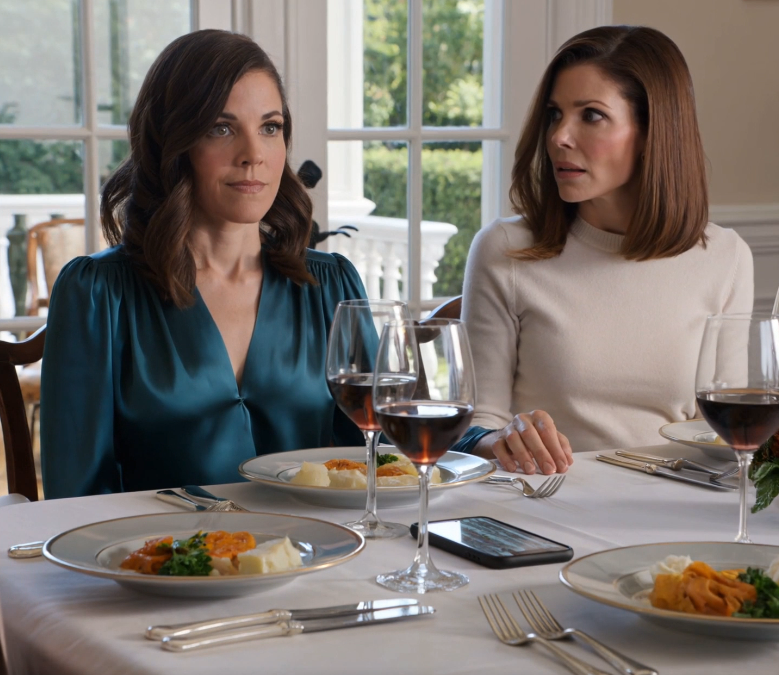
There were eleven of us around the Thanksgiving table. My mother had set my place at the far end, beside the kitchen door and next to the children.
When I started toward my chair, my father pulled out the one to his right.
“Sit here, Mary,” he said.
My mother’s mouth tightened almost imperceptibly.
I sat beside him.
He poured wine for the adults, moving around the table one glass after another. Then he poured iced tea for me. After that, he filled another glass with iced tea and set it in front of himself.
Fifteen years had passed, and he still did it every time.
Across the table, Aunt Deborah held a glass of water and watched my mother over the rim.
We said grace and passed the food. Travis told a story about a furnace that had exploded in a customer’s basement. Everyone laughed.
Then my father cleared his throat.
“It’s been almost sixteen years, Mary,” he said, not unkindly. “Why don’t you just drive?”
My mother answered before I could even inhale.
She reached over and patted my hand the way you pat a child who’s tracked mud into the house.
“Because she can’t afford a car, Hank,” she said. “Let it go.”
She was looking at my father when she said those last three words, not at me. Let it go wasn’t meant for my benefit. It was meant for his.
Amber’s new Lexus keys sat beside her plate. She smiled into her wineglass.
“That’s sad,” she said. “Honestly.”
Across the table, Sharon gave me the look you give a stray standing in the rain.
Travis leaned back in his chair.
“There’s financing for everybody these days, Mary,” he said. “Zero down. You just gotta ask.”
A couple of people laughed politely. Lily asked what financing meant, and Aunt Peggy told her to eat her green beans.
Nobody asked whether any of it was true.
I could have answered. I could have told them that I owned a transportation company with sixty-four vehicles. I could have explained that I was the only person sitting at that table who couldn’t legally drive, and that the reason was sitting across from me in a cream-colored sweater, holding a gravy boat.
But I’d made a promise when I was nineteen.
For almost sixteen years, the price of keeping that promise had been allowing people to believe I was less than I really was. I’d paid that price so many times that it no longer felt like a choice.
Sharon passed me the cranberry sauce, and I passed it along.
Then my phone buzzed against the tablecloth.
It was a text from Shane. One photograph and one line.
All eighteen home. First time they’ve all been under the canopy.
In the photograph, eighteen brand-new electric buses stood in a perfect row beneath the steel canopy. Their charging cables were connected, and the late-afternoon sunlight caught the teal stripes running along their sides.
You could clearly read the name printed on every bus.
Harbor Lane Transit.
It was 4:12 in the afternoon.
I turned my phone facedown. My father reached over, turned it back up, and studied the photograph for a long moment.
His fork stopped halfway to his mouth.
“Wait,” he said. “Those are yours?”
Ten people waited for me to say no.
“They’re my company’s buses,” I answered.
My father kept staring at the screen.
“Your company?”
Sharon leaned forward.
“What company is that?”
“Harbor Lane Transit.”
Across the table, my mother’s fork struck her plate.
It wasn’t a dramatic clatter, just a small, sharp sound. But afterward, her hand remained perfectly still.
She recognized the name. She’d been riding those shuttles three mornings a week for two months.
I watched her eyes, though, and realized it wasn’t the logo that had frozen her.
It was the first word.
Harbor.
The name of her sister’s road. The last road she’d driven on before the crash.
Beside her, Amber was squinting at the photograph.
“That’s the Commonwealth Valley logo,” she said. “They’re in my territory.”
“She means the company she works for,” my mother said quickly. “Mary does their scheduling.”
“No,” I said. “I mean the company I own.”
Nobody said anything.
My father zoomed in on the photograph with two fingers, examining it the way he examined anything electrical.
“Those are DC fast chargers,” he said slowly. “That’s utility-grade switchgear behind them. That’s not a small operation.”
He looked at me as though he were trying to find his daughter somewhere inside the photograph.
Aunt Deborah had put down her water glass. She wasn’t looking at the buses. She was looking at my mother.
My mother wasn’t looking at the buses either.
She was staring at the word Harbor.
After dessert, while the children ran through the living room and the men argued about football, Aunt Deborah came and stood beside me in the kitchen.
“I’ll take you to the station,” she said. “The evening train.”
The drive to Fredericksburg Station took only twenty minutes. We arrived early, and Deborah parked her Subaru in the lot. She turned off the engine but left both hands on the steering wheel, even though we weren’t going anywhere.
For a while, she said nothing.
Then she spoke without looking at me.
“You named it after my street.”
“It was the last place I remember being okay,” I told her.
She nodded. Her grip tightened on the steering wheel.
“Is it the seizures?” she asked. “Is that why you still don’t drive? Because Hank thinks…”
She stopped.
“Dad thinks what?”
She shook her head once.
“Ask your mother what she told your father.”
The train arrived. I got out of the car, and she didn’t say another word.
Let me pause here for a moment. Has your family ever told a story about you that you were never allowed to correct? Tell me in the comments. I read them.
The following morning, my phone wouldn’t stop buzzing.
It started with our family group chat.
Travis had spent part of his Black Friday doing research. At 8:15 that morning, he posted a link to the October 2024 Richmond Business Review article.
My photograph was at the top. Beneath it, the headline identified me as the founder of Harbor Lane Transit. The article mentioned our fifty-eight vehicles and our contracts with hospitals throughout central Virginia.
Found your sister, Travis wrote. She’s famous.
Uncle Wayne responded with a thumbs-up. Aunt Peggy wrote, Congratulations, honey!!!
Then Amber sent me a private message.
Why would you hide this from us?
I stared at the question for a long time before typing two words.
Nobody asked.
She didn’t answer.
Neither did my mother. She didn’t post a single word in the family group chat.
Instead, she called me.
It was just after ten. I was at the depot, walking along the row of new buses with Shane, when my phone rang.
“What did you say to Deborah last night?” my mother demanded.
There was no greeting.
“We talked about the company name.”
“What else?”
“Nothing else.”
She exhaled slowly.
“Don’t tell your father anything else, Mary. You’ve embarrassed me enough for one holiday.”
I stopped walking.
“Anything else, Mom?” I asked. “What else is there?”
The line went quiet. Then she hung up.
I stood between two buses with the phone in my hand.
For sixteen years, there had been exactly one secret between my father and me: my epilepsy. I’d kept it because my mother had asked me to, and she knew perfectly well that I’d kept my promise.
So why did she sound as though there was more than one?
People with nothing to hide don’t say else.
On Monday, December 1, my mother attended one of her last scheduled cardiac rehabilitation sessions.
At 9:40 that morning, Ruth Anne sent me a text.
Your mom asked me who owns the company. I told her the truth. I hope that’s okay.
A minute later, another message arrived.
I also told her you’ve been checking on her every week since September. I’m sorry if I overstepped. She asked me straight out, and I don’t lie to people’s mothers.
Then, a few minutes after that, came a third.
She sat in the back today. She’s always sat up front with me.
I read those messages while standing in the depot office.
I pictured my mother climbing into the back row, holding her purse tightly in her lap, riding all the way to the heart center in a vehicle paid for by the daughter she’d just told an entire table couldn’t afford a car.
It should have felt like a victory.
It didn’t.
It felt like watching someone flinch away from a hand that was only trying to help.
Kindness scares some people more than cruelty.
Over the next few days, people started reaching out to me in ways they never had before.
On Tuesday, Amber called. Her voice was bright and warm, the same voice she used with customers.
“Hey, so I’ve been thinking,” she began. “I know you work with Dana Whitfield at Commonwealth Valley.”
“I do.”
“I’ve been trying to get our patient transfer equipment in front of their value analysis committee for a year. Dana’s on it. If you could just make an introduction, even one email, that would change my whole quarter.”
“No,” I said.
The warmth vanished from her voice.
“It’s one email.”
“My clients aren’t favors I hand out, Amber.”
She laughed, but there wasn’t anything genuine about it.
“Mom’s right. You’ve always been cold.”
I ended the call.
That same week, something stranger happened.
On Wednesday morning, our front desk manager forwarded me a note. A woman had called the main office asking who the real owners of Harbor Lane were. She claimed she’d heard the company was actually owned by investors and that the young woman featured in the newspaper was merely its public face.
The caller had left her name.
Sharon Pike.
That evening, Uncle Wayne called me. He didn’t like gossip, he explained, but he thought there was something I should know.
Sharon had been telling people at church what my mother had told her after Thanksgiving.
According to Sharon, Harbor Lane was actually owned by investors. Mary had struggled with alcohol years ago, bless her, and that was why she didn’t drive.
I sat down on the stairs in my house.
My mother had kept my epilepsy secret for sixteen years. Now, less than a week after Thanksgiving, she was telling people I’d had a drinking problem.
It didn’t make sense.
If she wanted to explain why I didn’t drive, the truth was right there. It was the very thing she’d made me hide.
Why would my mother invent a drinking problem for me?
On Wednesday night, my phone lit up with a text from my father.
It wasn’t a forwarded holiday greeting or one of those chain emails about a lost dog. It was a real message he’d typed with his thick fingers, one word at a time.
Can I come see them? Saturday.
I said yes before I could talk myself out of it.
My father arrived at the depot in Chester at nine on Saturday morning, December 6. The drive from his house took approximately an hour and fifteen minutes.
He was early.
He wore his old lineman’s jacket, the heavy canvas one with the electric cooperative’s patch still sewn onto the shoulder.
He walked the entire row of buses without saying a word. Then he went straight to the switchgear cabinet at the end of the charging canopy and crouched in front of it.
Shane came over, and within five minutes, the two of them were discussing transformer capacity and load balancing like old friends.
My father looked up at me.
“Who designed the load management?” he asked.
“I did,” I said. “You taught me what a transformer does when I was nine.”
He stood up slowly and rested his palm against the side of the cabinet, the way he used to rest his hand against his truck after a long job.
He looked at me the way he used to look at a power line he’d just restored.
I took him inside one of the new buses. I showed him the ramp that folded out from the doorway, the floor tracks where the wheelchair restraints locked into place, and the button the driver pressed to lower the entire bus so a patient wouldn’t have to climb a step.
“Why wheelchair buses?” he asked. “Why all this?”
“Because the people who ride them can’t drive.”
He was quiet for a moment. His eyes moved to the floor tracks.
“Like you,” he said.
I didn’t answer immediately.
My chest tightened. For a second, I thought he finally understood. I thought perhaps my mother had told him, or maybe Deborah had, and he’d come all this way to tell me everything was okay.
Then we went into my office.
On the wall hung a framed photograph of our first six vans, lined up in a church parking lot in 2019. Beside it was the business magazine article Carl had framed.
My father studied both of them.
Then his eyes moved to my desk.
The brass lighthouse keychain was sitting beside my computer monitor.
He picked it up, turned it over, and ran his thumb across the engraving.
“You kept that?”
“I kept everything you gave me.”
He set it down very carefully, as though it might break.
Then he walked outside toward his truck with the deliberate steps of a man trying to work up the courage to say something.
In the parking lot, he stopped beside his F-150, his keys in his hand. He looked back at the depot, then at me.
“I’m proud of you, Mary,” he said. “I want you to know that. I mean it.”
“Thank you, Dad.”
“Turning your life around after the DUI.”
He shook his head slowly.
“Not everybody does that. Most people don’t.”
The wind picked up across the parking lot.
“After the what?” I asked.
He frowned.
“The DUI back in 2010. Your mother told me. She said you begged her not to bring it up. I never did.”
“Dad,” I said, “I’ve never had a DUI. I’ve never been arrested for anything in my life.”
He stared at me.
For the first time that day, he looked confused instead of careful.
His phone rang.
The name on the screen was Joyce.
He looked at the phone, then at me, before answering.
“Yeah,” he said. “I’m at the depot. Yes. No, I…”
He turned away and listened. His shoulders dropped.
“All right. I’m coming home.”
He climbed into his truck, looked at me once through the windshield, and drove away.
I stood alone in the parking lot.
Everything I thought I knew about my father rearranged itself in front of me. The distance. The disappointment. The warning he’d given me while we dried dishes together.
Some mistakes follow you, Mary.
The man who’d stopped calling on Sunday nights. The man who’d poured iced tea for me and for himself at every holiday meal for fifteen years.
He hadn’t been ashamed of me for dropping out of college.
He’d believed I was an alcoholic.
That was why my mother had told Sharon I’d had a drinking problem. She wasn’t inventing a new lie.
She was keeping the old one consistent.
Sixteen years of iced tea suddenly made sense.
I called my mother that night.
“You told Dad I had a DUI.”
At first, she said I was confused. Then she insisted my father must have misunderstood something she’d said. Finally, she went quiet.
When she spoke again, her voice had changed. It was softer, almost reasonable.
“Mary, I was protecting you.”
“From what?”
“Men like your father don’t hear seizures. They hear broken. A DUI is something people come back from. A daughter with brain damage is something he would have carried for the rest of his life.”
“It’s not brain damage. It’s a condition, Mom. It’s managed.”
“And you think he’d have understood that?”
She took a breath before continuing.
“I’m not doing this with you right now. My cardiologist said no stress, Mary. You know that. No stress.”
She hung up.
Then she called my father.
On Tuesday, December 9, my father called me. His voice was flat and cold, like a man reading from a list he didn’t want to hold.
“Your mother told me the rest,” he said. “About the seizures.”
For a second, I felt relief. The secret was finally out. He knew.
“She said they started because of the drinking,” he continued. “Because of what alcohol did to you.”
I couldn’t breathe.
“Dad, don’t…”
“I need time, Mary,” he said. “I need some time.”
The line clicked, and then there was silence.
She had taken the one thing I’d hidden to protect him and turned it into evidence against me.
I didn’t sleep that night.
Around two in the morning, I got out of bed and went into the spare bedroom. In the closet, I kept a box containing my old medical files. I pulled out the folder from 2010.
There were hospital discharge papers, prescription records, and, near the back, a folded envelope from the Virginia Department of Motor Vehicles, postmarked March 2010.
I unfolded the letter and read the line I hadn’t looked at in fifteen years.
Reason for suspension: Medical. Seizure disorder. Self-reported.
Nothing about alcohol. Nothing about an arrest.
It was a letter mailed directly to me before my mother had told my father anything.
The following morning, I called Dr. Hartley’s office and requested a letter summarizing my original diagnosis.
She sent it within two days.
It was a single page. The most important sentence read:
Post-traumatic epilepsy following a motor vehicle collision on December 24, 2009. The patient was the passenger.
On Friday, my mother left me a voicemail. It was twenty-eight seconds long, and I’ve listened to it more times than I’d like to admit.
“If you make a scene at Christmas,” she said, “I’ll tell everyone what you are. Let’s see how many hospitals want a transportation company run by a woman who isn’t allowed to drive.”
For sixteen years, my epilepsy had been the secret she held over me. It was a secret I’d kept because she’d asked me to. Now she was offering to use it as a weapon.
So I took that weapon away from her.
On Monday, December 15, I called a meeting with my leadership team at the depot. Carl was there, along with Shane, our safety director, and our dispatch leads. I asked Dana Whitfield to join us by video.
I told them everything.
I explained that I had epilepsy, that I’d lived with it since I was nineteen, and that my seizures had been controlled for almost three years before the incident in September. I told them I was following every medical requirement, that I didn’t drive, and that I’d never driven while operating Harbor Lane.
When I finished, nobody spoke for a moment.
Dana was the first to break the silence.
“Mary,” she said, “your license was never in our contract. Your safety record is.”
Shane cleared his throat.
“My brother has epilepsy. Should’ve told us sooner, boss. We’d have had your back.”
My mother had lost her weapon.
She just didn’t know it yet.
That evening, Aunt Deborah called.
“Your father called me last week,” she said. “He asked if you were a drinker back in college. I told him no. I told him to talk to you.”
“He won’t.”
“He will.”
She paused.
“I’m hosting Christmas Eve this year. First time since 2009. Your parents are coming. Amber and Travis, Wayne and Peggy, some of the neighbors.”
I didn’t say anything.
“Bring whatever you have,” she told me. “I’ll bring what I’ve kept.”
Sixteen years later, we would be returning to the same house, on the same street, on the same night of the year.
Before I tell you what happened on Christmas Eve, I want to ask you something. If you’d kept a secret to protect someone for sixteen years, and that person turned around and used it against you, would you still keep it? Tell me honestly, because what my aunt had kept inside that house changed everything I believed about the night I got hurt.
Shane lived in Louisa County, not far from the lake. On Christmas Eve, he offered to drop me at Aunt Deborah’s on his way home.
We drove along Route 208 in the late afternoon. When we passed the curve, I didn’t look out the window. I looked down at my hands.
Deborah’s house was full when we arrived. There were about twenty-two people inside, a fire burning in the stone fireplace, and an old Bing Crosby record playing somewhere in the background.
My mother’s car was already in the driveway. She’d arrived early to help with the cooking, just as she’d done every year before 2009.
My father’s truck pulled in behind us a few minutes later.
Deborah greeted everyone at the door the way she always had.
“Keys in the tin, everyone,” she announced. “House rule.”
People laughed and handed over their keys.
The old blue cookie tin sat on top of the refrigerator. The snowman painted on its lid was a little more faded than I remembered.
My father walked into the kitchen, reached up, and dropped his truck keys inside.
My mother kept her keys in her coat pocket.
For approximately an hour, I let the party happen around me. I talked to neighbors and helped Amber’s children put together a puzzle.
My father and I stood on opposite sides of the living room. Every time I glanced up at him, he was looking somewhere else.
Around eight o’clock, I walked over.
“Can we talk for a few minutes?” I asked. “You, me, Mom, Amber, and Aunt Deborah. In the den.”
My mother appeared at his elbow almost instantly.
“Mary, not tonight.”
“Tonight,” my father said.
The den was a small room off the hallway, furnished with a couch, two chairs, and a desk. I closed the door behind us, and the music from the living room faded into a soft hum.
Amber sat on the arm of the couch. Deborah stood by the window. My father remained standing, while my mother sat in the chair closest to him and crossed her legs.
“I think we all know what this is about,” she said. “Hank, I told you. She’s upset because the truth came out.”
“What truth, Mom?” I asked.
She turned toward my father as though I hadn’t spoken.
“She’s been drinking since college, Hank. I’ve watched it. The seizures were the price. I kept it quiet because I love her.”
I opened my bag and took out the first envelope.
I placed the letter from the DMV on the desk in front of my father.
He picked it up and read it slowly, the way he read everything.
“That was mailed to me in March 2010,” I said. “Before anybody told you anything.”
My mother didn’t even look at the page.
“Records get cleaned up, Hank,” she said. “People handle things quietly. You know how that works.”
“This isn’t a record, Mom,” I said. “It’s a letter they mailed me. Read the reason, Dad.”
My father lowered his eyes to the paper and read aloud.
“Medical. Seizure disorder. Self-reported.”
“There’s nothing about alcohol on that page,” I told him. “There’s nothing about alcohol anywhere, because it never happened.”
My mother shook her head.
“That’s what she told them. Of course that’s what she told them. Do you think she’d write I’m a drunk on a DMV form?”
My father looked at her.
It was a brief glance, but it was the first time that evening he’d looked at her instead of at me.
I took the second document from my bag and placed it on the desk.
It was the letter from Dr. Hartley.
My father read silently this time.
I watched his finger move down the page and stop near the middle. His lips moved without making a sound. Then he read a single word aloud.
“Passenger.”
He looked down again, as though he needed to make certain he’d read it correctly.
“Passenger. December 24, 2009.”
Then he looked up at my mother.
“It was the ice,” she said.
Her voice was higher now.
“It was the ice, Hank. Everybody knows it was the ice. So she hit her head. So it caused something. Why does it matter who knew what? I kept it from you because I knew what it would do to you.”
“You told me she drank,” my father said.
My mother turned toward me, her face red.
“And you kept it from him, too,” she snapped. “Sixteen years, Mary. Don’t stand there like a saint. You looked him in the eye every single Christmas. You’re as much a liar as I am.”
It was the one argument she had left, and it was the one that almost worked.
For a second, I felt nineteen again, sitting at the kitchen table with her hand wrapped around mine, believing that keeping silent was the only way to protect my father.
“I kept your secret,” I said. “You built a lie on top of it.”
My father sat down slowly on the edge of the desk.
“Why would you tell me she drank?” he asked.
His voice wasn’t loud. It was very quiet.
“If you just wanted to protect me from the seizures, you could have said nothing. Why would you tell me she had a DUI?”
My mother began speaking faster. Her hands moved as she talked.
“Because you’d have asked, Hank. You’d have asked about that night. You were always asking about that night. You’d have gone to Deb. You’d have asked what time we left. You’d have asked who…”
She stopped in the middle of the sentence.
Nobody moved.
Behind me, Aunt Deborah pushed away from the window. Her chair scraped across the wooden floor as she moved past it.
She walked out of the den without saying a word, leaving the door open behind her.
Through the doorway, I watched her cross the kitchen and reach up toward the top of the refrigerator.
She came back carrying the old blue cookie tin in both hands.
She set it on the desk beside my letters and removed the lid.
The tin was full of keys. My father’s truck keys were in there, along with a neighbor’s minivan keys and a dozen others. Deborah reached beneath them, all the way to the bottom, and pulled out a small white envelope that had turned the color of weak tea.
She handed it to my father.
“I kept this in the tin for sixteen years,” she said. “So every Christmas, when I collected everybody’s keys, I’d have to remember why.”
My father opened the envelope.
Inside was a small card with a painted winter scene on the front. He unfolded it.
The handwriting was my mother’s. I would have recognized it anywhere. Every birthday card and grocery list from my childhood had been written in that same handwriting.
My father read the card aloud.
His voice didn’t break until he reached the last line.
“Deb, thank you for the keys and for never saying a word. Some things are better left on the ice. Love, J.”
The card was dated January 3, 2010.
“She’d had four glasses of wine that night,” Deborah said.
Her voice was steady, but her hands weren’t.
“I took her keys and put them in the tin. I told her she was sleeping on my couch. She told me she was fine. She told me Mary wanted to be home for Hank.”
Deborah paused.
“When I went upstairs to check on the kids, she took the keys out of the tin herself. By the time I came back down, they were gone.”
“Four glasses over four hours,” my mother interrupted. “Four glasses, Deb, over four hours. I was fine.”
It was the first thing she’d said all evening that sounded like the truth.
And she didn’t realize what she’d just admitted.
Then Amber spoke.
She’d been silent throughout the entire conversation. Now she was sitting on the arm of the couch, removing her earrings one at a time, the way she used to do before cheerleading competitions when she was nervous.
“I heard you, Aunt Deb,” she said quietly. “I was on the stairs. I heard you say she’d had four glasses. I heard you say, ‘You’re not driving, Joyce.'”
She turned toward our mother.
“And the next day, you told me I’d misheard. You told me I was sixteen and didn’t know what I was talking about. And then Mary had a DUI, and Mary was the reckless one, and I just believed you.”
Her voice cracked.
“I’ve believed you my whole life.”
For a long time, nobody said anything.
I stood there, finally understanding something I’d been unable to see for sixteen years.
I’d believed the trip home was my fault. I’d asked to leave. I’d wanted to be home when my father walked through the door on Christmas morning.
I’d carried that decision around like a stone in my pocket.
But I hadn’t picked up those keys.
I hadn’t taken them out of that tin.
And my mother’s warning that telling my father would break him had never really been about protecting my father.
He stood up and looked at her for a long time.
When he finally spoke, he asked only one question.
“When you told me she had a DUI,” he said, “were you thinking about her or about you?”
My mother opened her mouth.
Nothing came out.
For the first time in my life, my mother had no answer prepared.
Then she began to cry. They weren’t the careful tears she used at funerals. She was crying with her whole body.
She stood abruptly, grabbed her purse, and pulled her car keys from her coat pocket.
“I’m going home.”
“You’re not driving like this, Joyce,” Deborah said.
“I haven’t had a drop.”
“You’re shaking,” Deborah told her. “You’re not driving.”
My father walked over to my mother.
He didn’t grab her or raise his voice. He simply held out his hand, palm up, and waited.
After a long moment, she placed her keys in his hand.
He walked to the desk and dropped them into the blue cookie tin.
“Not tonight,” he said.
In the hallway, Uncle Wayne stood holding a paper plate. He’d seen everything through the open door. He didn’t say anything. He simply looked at his brother and nodded once.
Amber and Travis took my mother home in the Lexus.
My father picked up his coat and turned toward me.
“Will you ride with me?”
Sixteen years late, the keys had finally gone into the tin.
My father drove me back to Richmond that night. The trip took approximately an hour and ten minutes, and for the first half hour, neither of us said much.
Route 208 was dark and dry. When the headlights swept across the curve, I saw his hands tighten around the steering wheel.
“She told me in March 2010,” he said finally. “She said you’d been pulled over near campus. She said you were so ashamed you’d begged her not to tell me.”
He paused.
“She said she was quitting wine to support you, so you wouldn’t be around it at home. So I quit, too.”
I looked at him.
“I poured us iced tea for sixteen years,” he continued. “I thought I was helping you stay sober.”
I’d spent fifteen Thanksgiving dinners believing that glass of iced tea was a punishment, a quiet little reminder that my father didn’t trust me.
It had never been that.
It had been a man who didn’t know how to say I love you trying to stand beside his daughter in the only way he could figure out.
I didn’t cry until we reached Richmond. Then I cried a little, and my father handed me a napkin from the glove compartment that probably dated back to 2015.
He dropped me at my front door on Christmas morning, just before one o’clock. He waited until I was safely inside, the way he used to when I was younger.
Then he didn’t go home.
He stayed with Uncle Wayne through January.
On January 5, the new electric shuttle system went live across all four Commonwealth Valley Health campuses. Eighteen buses rolled out of our depot before dawn.
Not one of them was late.
Dana sent me a two-word email at seven that morning.
Well done.
A week later, Sharon Pike repeated the story about my supposed drinking problem one more time, this time in the church women’s group chat.
Amber was a member of that group. She had been for years.
That afternoon, she posted a reply. She showed it to me later.
My sister has epilepsy from a car accident she was in when she was nineteen. She was the passenger. She has never had a drinking problem. Please stop repeating that.
Amber didn’t say who had been driving.
She didn’t have to.
People in small churches can do the math.
At the end of January, my mother stepped down as leader of the women’s ministry. Nobody forced her. She wrote a short letter explaining that she needed to focus on her health.
But she’d built her reputation on being the woman who knew everybody’s story. Now her own story had a hole in it that she couldn’t fill.
Nobody had done that to her.
She’d told Sharon the lie. Sharon had repeated it. My sister had answered it.
In late January, Amber brought Lily and Nate to the depot on a Saturday.
The children ran up and down the aisle of one of our new buses. Lily discovered the button that lowered the wheelchair ramp and pressed it about nine times.
Amber and I stood outside beneath the charging canopy, watching them.
“I said, ‘That’s sad,'” she told me. “At Thanksgiving. In front of everybody.”
She looked across the row of buses.
“It was about me, wasn’t it? I was the sad one.”
“You were sixteen,” I said. “She told you that you’d misheard.”
“I’m not sixteen now.”
“No,” I said. “You’re not.”
It wasn’t forgiveness, exactly. It was the beginning of two sisters learning to talk to each other without their mother standing between them.
In February, after one of my mother’s monthly follow-up appointments at the heart center, Ruth Anne handed me an envelope.
“Your mom left this on the seat,” she said. “Asked me to give it to you.”
She hesitated before adding, “She sat up front today.”
Inside the envelope was a card. I recognized my mother’s handwriting immediately.
There were only two sentences.
I would like to see you. I don’t know how to start.
I thought about it for three days.
Then I texted her.
Not yet. When I’m ready, I’ll call. Keep riding with Ruth Anne. She’ll take care of you.
I didn’t throw the card away. I put it in my desk drawer beside the letter from Dr. Hartley.
My mother still rides my buses. She sits in the front again.
In the middle of February, an ice storm hit central Virginia.
Around eleven that night, a transformer serving our depot failed, taking half our chargers offline. We had dialysis patients scheduled for pickup at five the following morning. If the buses weren’t charged, those patients would miss their treatments.
I called the utility company. They told me the repairs could take hours.
Then I called my father.
He arrived at the depot by midnight, wearing his old lineman’s jacket and carrying a thermos of coffee and a flashlight.
He couldn’t touch the utility company’s equipment, and he didn’t try. But he knew exactly what to tell the utility crew when they arrived. He knew which circuit they should check first and how to rebalance our remaining chargers so the buses assigned to the earliest routes received power first.
Every dialysis pickup the following morning left on time.
When the crew finished, Shane walked into the office, saw my father standing at the whiteboard, and grinned.
“Chief’s here,” he announced.
The name stuck.
After that, my father drove down to the depot every other Saturday. He talked charging schedules with Shane and told our newer drivers stories about the storm calls he’d worked during his thirty-eight years as a lineman.
He hung his old canvas jacket on a hook in my office and never took it home.
On March 14, my father moved back into the house in Spotsylvania County. He told me he and my mother were starting counseling.
He didn’t say whether he thought it would work, and I didn’t ask.
That same day marked six months since my last seizure.
Two days later, I sat in Dr. Hartley’s office and asked her for the form.
She signed my medical review paperwork without hesitation. I mailed it to the DMV that afternoon.
In early April, a letter arrived.
This time, the letter said my medical review had been approved.
I read it while standing beside my mailbox. Then I read it again.
A week later, I passed the written knowledge test at the DMV and walked out with a learner’s permit.
Because my old driver’s license had been expired for so many years, I had to start over like a new driver. Virginia required adults in my circumstances to either hold a learner’s permit for sixty days or complete a driver education course before taking the road test.
I signed up for an adult driver’s education course at a local driving school.
On weekends, my father taught me in his F-150. We met in the depot parking lot early in the morning, before the first shifts went out.
We drove slow loops around the row of eighteen buses, practicing forward driving, reversing, turns, and parking.
He sat in the passenger seat with one hand resting on the dashboard. He never raised his voice.
“Lights on,” he said the first morning as I placed my hands on the steering wheel. “Eyes up.”
He never finished the saying.
He left that part for me.
On May 21, I passed my road test.
The examiner was a woman in her fifties who carried a clipboard. When the test was over, she shook my hand.
“Nice, careful driving,” she said.
I nearly cried in the DMV parking lot.
Two days later, on Saturday, May 23, the beginning of Memorial Day weekend, my father came to my house in Richmond.
He handed me the key to a used silver sedan he’d helped me pick out.
The key was attached to the brass lighthouse keychain.
He’d removed the old Civic key and put the new one in its place.
Come home safe.
I drove out of Richmond by myself, following the highway until it gave way to the back roads.
I took Route 208 in full daylight, the windows rolled down and the trees green on both sides of the road.
When I reached the curve, I slowed down.
I took it carefully.
And I kept going.
Aunt Deborah was waiting on her porch on Harbor Lane.
She stood up when she saw my car.
She didn’t wave. She simply raised one hand to cover her mouth.
I’m planning Thanksgiving this year.
It won’t be at my parents’ table. It’ll be at the depot, for the drivers and dispatchers who work through the holiday so other people can get home to their families.
Carl is bringing the turkey. Ruth Anne is making her sweet potato pie. My father says he’ll carve.
Amber asked whether she and the children could come.
I told her yes.
I’ve spent a lot of time this spring thinking about the three words engraved on that little brass keychain.
When I was sixteen, I thought they were a warning.
When I was nineteen, I thought they were a promise I’d broken.
But sitting in that driveway on Harbor Lane, with the engine switched off and the key still resting in my hand, I finally understood what my father had given me all those years ago.
Those words had never been only about being careful.
They were permission to come back.
So I did.








