At my brother’s engagement party, Dad told everyone my husband and I were “donating” my maternity condo to the new couple; I stood up and said, “No, we’re not,” Dad shoved me back, I hit the table so hard the glasses fell, I grabbed my stomach and called my husband, and he came in, saw me, then asked Dad one question that made the room go silent.
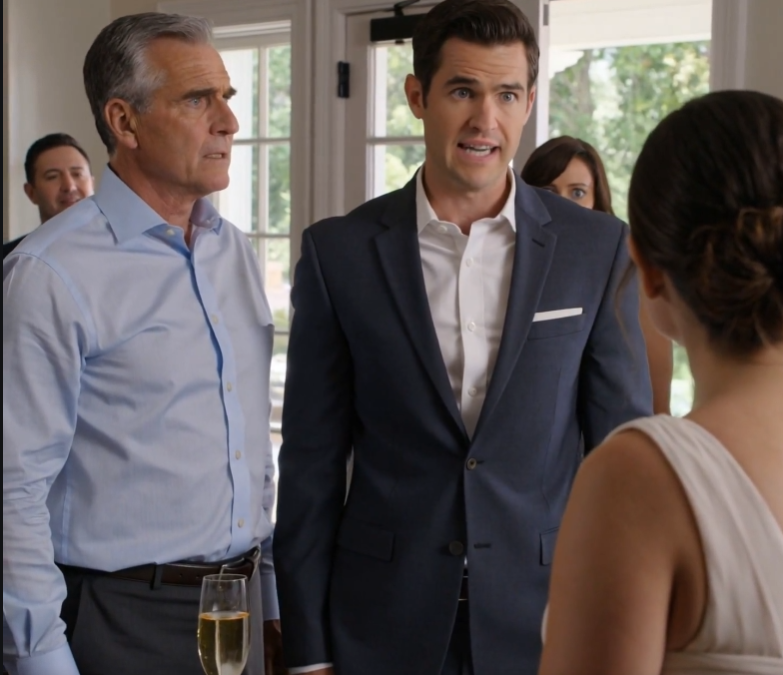
“Sit down,” my father said. “It’s already decided.”
At my brother’s engagement party, he told sixty guests that my husband and I were donating my condo to Tanner and Brooke. I was twenty-seven weeks pregnant. That condo was eight minutes from my hospital.
“No, we’re not.”
He smiled for the room. “You have a farm. Don’t play martyr in front of company.”
Then he shoved me.
My hip hit the table. Glasses fell. I checked for bleeding, held my stomach, and called Owen. They thought I wanted comfort. They didn’t know Owen had just come from our building. He knelt beside me first, then asked my father one question about the nursery.
They thought a toast could take a pregnant woman’s home. They had no idea that one question would end their night.
My name is Sienna Gallagher. I’m thirty-four years old. Drop a comment: Has your family ever humiliated you in public? If family betrayal, pregnant-mother injustice, and a quiet reversal are your thing, you’re in the right place. Subscribe for the full story.
That condo had been mine for eight and a half years before anyone in my family called it a gift.
I moved back into it on the first Saturday in March. I was twenty-six weeks pregnant, two days from turning thirty-four, and carrying nothing heavier than a pillow because my husband would not let me.
“Put it down,” Owen said from the doorway, a box of towels balanced on his hip. “You’re supervising.”
I’m an ICU nurse. For ten years, I’ve watched other people’s bodies make decisions without asking permission. Mine had started doing the same. I’d had high blood pressure since I was twenty-nine, managed with a small white pill and a lot of stubbornness. Pregnancy made it louder.
In January, a maternal-fetal medicine specialist looked at my numbers, looked at a map on her screen, and gave me a rule: fifteen minutes from the hospital after twenty-six weeks. Not negotiable.
Owen and I lived on his grandmother’s farm outside Sunberry, fifty minutes north of the city. It’s a white farmhouse with a sagging porch and a barn full of things nobody has used since 1990. I love it. But fifty minutes is a long time when your blood pressure decides to become an emergency.
My condo, unit 4C at Lynwood Terrace, was eight minutes from the hospital where I worked and where I planned to give birth. So the condo became the place where I would wait for my daughter.
It was a plain building, four stories of tan brick near the medical district, with a courtyard, a permit lot, and a side entrance with a metal railing. When Owen parked that morning, I noticed a gray lockbox clamped to that railing, the kind realtors use. I assumed someone in the building was selling a unit. It was the kind of detail my brain files without being asked.
Upstairs, the keypad on my door blinked on the first try.
My birthday.
My father had installed the lock in October and chosen the code himself.
“You’ll never forget your own birthday, kiddo,” he’d said.
Inside, the air smelled like lemon cleaner and something floral. On the kitchen counter sat a wicker basket wrapped in cellophane: baby socks, a lavender candle, a dozen cookies, each one wrapped separately in clear plastic and tied with a gold twist. A folded note leaned against the handle.
“Welcome home, sweet girl. Rest. Mom.”
I read it twice. Then I stood there with my hand flat on the counter because my mother does not write notes like that. Not to me.
On the bookshelf by the window was a framed photo of Owen and me from our wedding. New frame. Dusted glass. My mother had never framed anything of mine before.
“Your mom went all out,” Owen said.
“She did.”
I let myself believe it meant what it looked like. That’s the part I remember most clearly. Not doubt. Relief.
I kept the basket. I told Owen I’d use it for diapers. Then I walked down the short hallway to the second bedroom.
My parents had set up the nursery in January after my doctor gave me that fifteen-minute rule. The walls were sage green. The crib was white. Over it hung a mobile I had made myself, twelve felt birds I’d cut and stitched during the quiet hours of night shifts, when the monitors were steady and my hands needed something to do.
The first one I’d made was yellow, slightly lopsided, my favorite.
I counted the birds out of habit. I count everything. Breaths, drips, drops, beats.
Eleven.
The yellow one was gone. Its little hook hung empty from the wooden ring. I checked behind the crib, under the dresser, inside the closet. Nothing. Owen got down on the floor with his phone flashlight and found a paperclip and a lot of dust.
I texted my mother.
“Did one of the mobile birds fall off when you hung it?”
Her answer came within a minute.
“Must have fallen when we hung it. Honey, I’ll look next time I’m over.”
I read that message three times because something in it felt wrong, and it took me until that evening to understand what.
She didn’t ask which bird.
My father has a phrase he’s used for me since I was about nine years old.
“You’re my strong one.”
He said it when I got the flu the same week Tanner broke his wrist and I took care of myself on the couch while they sat in urgent care. He said it when I paid my own nursing-school tuition with two part-time jobs while my parents drove my brother to travel baseball tournaments in three different states. He said it when I was twenty-three and he lent my Honda to Tanner for a month without asking me, and I took two buses each way to my clinical rotation.
“You’re my strong one. You never need anybody.”
It sounded like praise. It took me a long time to understand what it actually meant.
Strong was the word he used when he needed me not to need anything.
Tanner is four years younger than I am. He’s thirty now, sells insurance, and has the kind of easy smile that makes cashiers give him extra napkins. I don’t blame him for being loved. I blame him a little for never once noticing that the love came in unequal portions.
He never had to.
In August of 2017, when I was twenty-five, I bought unit 4C. The price was $198,000. I put down $19,800, which was every dollar I’d saved from two years of night shifts and overtime.
The deed was in my name. The mortgage was in my name. The HOA dues, $385 a month, came out of my checking account automatically, and they still do.
My father drove me to two showings. That’s the full extent of his involvement.
By Thanksgiving, he was telling relatives, “I found her that place.”
At my little housewarming, he walked through the rooms with a beer in his hand, tapping the walls like a contractor.
“Every family needs one property,” he said.
He said family. I heard pride.
It took me years to hear it correctly.
I met Owen in 2020. He writes software for a company that makes scheduling systems for clinics, and he works from home, which means he knows exactly how many times a day I open the refrigerator.
His grandmother, Adah, raised him for part of his childhood. When she died in 2021, she left him the farmhouse and a rocking chair he refused to let anyone sit in for a year.
We married in May of 2023. I moved to the farm. The condo went to a graduate student on a two-year lease. When his lease ended in September of 2025, Owen and I decided to sell in the spring.
That’s when my father offered to help.
“I’m retired. I’ve got time,” he said. “Let me keep an eye on the place over the winter. Get it ready for showings. You won’t even need to come down here. I’ve got it.”
On October 4, he installed the keypad lock. Owen held the ladder for him.
Afterward, Owen handed him our spare building fob so he could get through the front entrance. My mother took the mailbox key so she could “grab the mail while your father’s there.”
Owen asked if he should download the lock app too.
“No need,” Dad said. “One admin is simpler.”
That same week, I found out I was pregnant.
We told my family at Thanksgiving, when I was twelve weeks along. My mother cried a little. My father hugged me and said, “Well, look at that.” Tanner high-fived Owen.
It was a good day. I remember thinking we might be turning a corner.
At Christmas, sitting at my parents’ dining table in Westerville, I mentioned that my doctor might want me close to the hospital later in the pregnancy and that we might hold off on selling the condo.
My father nodded slowly.
“After the baby, Tanner and Brooke could use a place like that.”
Brooke had been dating my brother for about two years. She was twenty-eight, worked in marketing for a grocery chain, and was always polite with me in a careful, slightly distant way.
I was tired. My feet were swollen. I didn’t want to debate over ham.
“We’ll see,” I said.
Six days later, on New Year’s Eve, Tanner proposed.
On January 9, my specialist gave me the fifteen-minute rule, and we took the condo off our list of plans.
That night, my mother called.
“Let your father and me do the nursery,” she said. “You’re working twelve-hour shifts. You shouldn’t be up on ladders breathing paint.”
This is the part I have to be honest about.
I said yes.
I said yes because I wanted it. I wanted my mother to paint a room for my daughter. I wanted to be someone she did things for.
So I bought the crib and the paint, sewed my twelve birds, and handed everything over.
Two weeks later, an ultrasound told us we were having a girl.
On a Sunday in February, at twenty-three weeks, I drove down to see the finished room. Sage walls. White crib. My birds turning slowly above it in the air from the vent.
I stood in the doorway and cried, and my mother put her arm around me, which she almost never does.
“We wanted it perfect,” she said, “for people to see it.”
I thought she meant family.
I thought she meant me.
If you’ve ever said “We’ll see” just to keep the peace and later heard it repeated back to you as a promise, stay with me. You already know how this goes.
On my second morning in the condo, I opened my laptop to answer an email from my charge nurse and saw the Wi-Fi network name.
Gallagher Guest.
I’d named that network myself years ago. It had been called something embarrassing involving a cat. Now it had my family name and the word guest on it.
That same morning, while looking for a hair clip in the bathroom drawer, I found a small elastic hair tie. Pink, with glitter woven through it. The kind you buy in packs of twenty for a little girl.
I called my father.
“Oh, I renamed the Wi-Fi for the painters,” he said. “So they wouldn’t have to ask you for the password. Don’t overthink it, Sienna.”
“And a kid’s hair tie?”
“One of the painters brought his daughter one Saturday. Kids lose things.”
He answered both questions before I’d finished asking the second one.
My father has always had an answer ready. I’d always considered that a sign of confidence.
I charted it the way I’d chart a slow drop in someone’s oxygen.
Not an emergency.
Not nothing.
On Tuesday, the woman in 4D introduced herself in the hallway. Her name was Irene Kowalski. She was seventy-four, wore a cardigan with pockets full of tissues, and had lived in the building since before I bought my unit.
“Oh, you’re staying in 4C,” she said. “Good. It’ll be quieter. Always somebody coming and going over there. I finally had to say something to the office before Christmas.”
I told her my brother had crashed there a few times. My father had told me that on the phone. Tanner’s apartment heat had gone out in December.
Irene nodded politely, then added, “And the lady with the cleaning caddy—is that your mother? She’s very thorough.”
I thanked her.
I went inside and sat on the couch.
My mother had been cleaning the place, getting it ready for me. That was the kindest explanation, so I chose it.
On Wednesday evening, I came back from a prenatal lab draw at about 6:10 and could not find a single spot in the permit lot. Every space was taken. I had to park on the street and walk a block with my back aching.
Standing on that sidewalk, I remembered Christmas dinner.
Brooke had been sitting across from me. Someone mentioned a restaurant near the medical district, and Brooke had said, almost to herself, “Parking behind Lynwood is impossible after six. The permit lot’s always full.”
I’d asked her how she knew the building.
“Tanner has a friend who lives near there,” she’d said, reaching for the rolls.
Now I stood on the curb and looked at the full lot and the building’s name on the brass plate by the door.
Brooke had never been to my condo. Not once that I knew of.
On Thursday, the engagement-party invitation was still stuck to my refrigerator with a magnet. My mother had designed it: cream cardstock, gold script, celebrating Tanner and Brooke and New Beginnings.
I’d read New Beginnings as marriage.
It’s what anyone would read.
On Friday, my mother called.
“I’ll pick you up at 4:15 tomorrow so you don’t have to worry about parking. And your father has a little surprise in his toast. Just smile, honey.”
“What kind of surprise?”
“You’ll see.”
Owen planned to drive up to the farm Saturday morning and bring back his grandmother’s rocking chair for the nursery. He’d meet me at the restaurant.
It was a simple plan. We’d talked about the chair for months.
That Friday night, I was looking for a vegetable peeler in the kitchen drawer next to the stove when, under a stack of takeout menus, I found a laminated card about the size of a postcard. It had a cheerful font and a little cartoon house in the corner.
“Checkout. Please leave used towels in the tub. Start the dishwasher before you go. Your host will take care of the rest.”
I held it up.
Owen looked at it over my shoulder. “From the tenant?”
I turned the card over in my fingers. It was laminated. It had been printed for someone who would read it more than once.
“Our tenant had a two-year lease,” I said. “Nobody checks out of a two-year lease.”
Saturday, March 14. I was exactly twenty-seven weeks pregnant.
My doctor had told me to rest in the afternoons, so I lay down at three with my phone on Do Not Disturb. I slept harder than I meant to.
When my mother’s car pulled into the circle drive at 4:15, I grabbed my coat, checked my blood pressure—136 over 88—and went downstairs without looking at my phone.
The party was at a restaurant called Harlo and Vine in Grandview Heights, in a private room with long tables, white linen, and two walls of windows.
My father was paying for the whole thing. He’d mentioned it several times that month, always casually, the way people mention things they want you to remember.
My mother had me help with the place cards. When we finished, she took mine and set it at the head table directly beside the small podium where my father would give his toast.
“Right here,” she said. “So you’re in all the photos.”
In thirty-four years, my mother had never once wanted me in the photos.
Guests arrived. Sixty of them. Aunts, uncles, cousins, my parents’ church friends, Tanner’s coworkers, and Brooke’s family, meeting most of us for the first time.
Her father, Glenn Hollister, was a broad, sunburned man who owned a landscaping company in Dublin. Her mother, Dana, managed a dental office and hugged everyone like she’d known them for years.
My aunt Deb found me first. She’s my father’s older sister, sixty-seven, a widow, and the unofficial news service of our entire family.
“Sweetheart.” She squeezed my hands. “Offering them the condo at Christmas. That’s so like you.”
I smiled because my face didn’t know what else to do.
“What?”
“Your dad told us. It’s a beautiful thing to do for your brother.”
Before I could answer, Glenn Hollister stepped in and shook my hand.
“Brooke told us you two are giving them a real start,” he said. “That’s generous, especially with the baby coming.”
I thanked him.
I actually thanked him.
Then I walked to the edge of the room near the coat rack and took out my phone for the first time in three hours.
Four missed calls from Owen.
All between 3:45 and 4:10, while I was asleep.
I texted him from the venue.
“Everything okay?”
The reply came at 6:12.
“Running late. Don’t let your dad start the toasts without me.”
I read it as a joke. Owen likes my brother. I thought he wanted to hear the speeches. The toasts were scheduled for seven. I decided I’d call him at a quarter to seven.
Brooke came over while I was still holding my phone. She looked lovely and nervous in a dark green dress. She glanced at my stomach.
“How are you feeling? Tired? Good. Are you staying at the Lynwood place now?”
“Since last Saturday.”
Something moved across her face. Not dislike. Something closer to confusion, as if I’d told her a date she’d written down differently.
“Since last Saturday?”
“Yes.”
“Oh.” She swallowed. “That’s good. That’s good for the baby.”
She went back to her seat.
A minute later, I saw her take out her phone and type something under the edge of the table, her thumbs moving fast.
Across the room, my father’s phone buzzed in his jacket pocket.
He read the message.
Then he looked straight at me.
At 6:38, twenty-two minutes early, my father tapped the microphone twice.
The room went quiet in the pleased, easy way rooms do before a speech. He welcomed the Hollisters. He told a story about Tanner losing a Little League game and crying in the car, and everyone laughed, including Tanner.
He said Brooke was the best thing that had ever happened to our family.
Then he lifted his glass a little higher.
“And I want to share some news. Sienna and Owen, who’ve been blessed with a whole farm, have decided to donate the condo to Tanner and Brooke.”
He smiled at me.
“Come summer, it’s theirs.”
The applause started immediately.
Real applause.
People turned toward me with soft, admiring faces. Aunt Deb put her hand on her chest, and beneath the noise, two seats down, I heard Brooke whisper, “Donating, Dennis? I thought it was—”
She stopped.
Tanner touched her arm.
My hand was flat on the white tablecloth. It was completely steady. I remember being surprised by that.
Sixty people were clapping for something I had never said.
I stood up.
The applause thinned. A few people kept clapping because they hadn’t noticed.
Then they noticed.
“No, we’re not.”
I didn’t raise my voice. I didn’t need to. The room was small enough.
My father smiled, not at me.
At the room.
“You have a farm,” he said lightly, the way you’d tease someone at a barbecue. “Don’t play martyr in front of company.”
A couple of people laughed nervously.
Glenn Hollister did not.
“It’s my home, Dad.”
He stepped closer. His hand came down on my shoulder, heavy and warm, the way it used to when I was a child and he wanted me to stop fidgeting in church.
“Sit down,” he said quietly. “It’s already decided.”
Then he pushed.
I don’t think he meant to push as hard as he did. I’ve thought about that a great deal.
I don’t think it matters.
My heel caught the leg of my chair. My right hip struck the edge of the table. The chair skidded backward. The table jolted, and the glasses along that side—six of them—tipped and fell.
Champagne ran across the white linen.
Glass broke on the floor.
I caught myself on the table with one hand and the chair back with the other.
Then my stomach went tight, hard from one side to the other.
“She fell.” My mother’s voice was high and bright. “She’s fine. She fell.”
Glenn Hollister already had his phone to his ear.
I heard him say, “A pregnant woman. She fell against a table,” and I understood that he was repeating what he’d just been told.
I didn’t correct anyone.
Not then.
I had work to do.
I lowered myself into the chair. I pressed my fingers flat below my navel and waited.
The tightening held for maybe twenty seconds, then slowly released.
I shifted my weight and checked.
No fluid. No bleeding.
My hip throbbed. My head was fine.
My daughter moved once—a small, hard knock under my ribs—and I have never been so grateful to be kicked.
“She’s being dramatic,” my mother said to someone behind me.
Sixty people were watching.
Nobody was moving.
I took out my phone.
It was 6:44.
I called Owen.
He answered on the first ring.
“I’m in the parking lot.”
“I need you inside.”
He didn’t ask why.
The line went dead.
My brother stood frozen by the podium. My father had his hands raised slightly, palms out, the posture of a reasonable man surrounded by overreaction.
Aunt Deb was kneeling by the broken glass, picking up pieces with a napkin as if that were the problem.
The door opened before I’d put the phone down.
Owen came in fast, but not running. His coat was open. His eyes went across the room once and found me.
After that, he didn’t look at anyone else.
He knelt beside my chair.
“Bleeding?”
“No.”
“Is she moving?”
“Yes. Just now.”
“Did you hit your head?”
“No. My hip. And one hard contraction.”
He nodded as if I’d given him a clean set of vitals.
He looked over his shoulder at Glenn, who was still on the phone.
“They’re coming,” Glenn said.
“Thank you,” Owen said.
Then my husband stood up.
He’s six feet tall and has never, in the six years I’ve known him, raised his voice at another person.
He didn’t raise it now.
He just turned toward my father, and the room seemed to arrange itself around the space between them.
“Dennis,” he said, “how much does our nursery go for a night?”
Nobody moved.
I watched my father’s face.
I’ve watched a lot of faces receive bad news. There’s a moment before people decide how to react when the truth shows through.
It lasted about half a second on him.
Then he smiled.
“I don’t know what you’re talking about.”
My mother set her wineglass down on the table very carefully, as though it might break.
Tanner looked at our father.
Just looked.
And Brooke, who had been standing behind her chair, lifted both hands and pressed them over her mouth.
Owen didn’t answer my father. He didn’t explain.
He came back to my side and took my hand, and a moment later, two paramedics were in the doorway with a stretcher.
The ambulance ride took ten minutes.
Owen followed in his truck, his grandmother’s rocking chair still strapped in the bed.
On the way, I asked the paramedic for my blood pressure.
She hesitated, then told me.
152 over 98.
It wasn’t a number I liked.
At the hospital, they took me straight to labor-and-delivery triage because after twenty weeks, any real trauma to a pregnant woman’s abdomen gets monitored no matter how she feels.
I’ve sent patients up there myself.
I knew the routine, which is not the same as being calm about it.
They strapped two monitors across my belly, one for the baby’s heart rate and one for contractions. They drew blood to check for preeclampsia. They did an ultrasound. They asked my blood type.
I’m Rh-positive, which meant one less shot and one less worry.
Every few minutes, the paper tracing showed a small hill. Mild contractions. Irregular. Not labor. Probably irritation.
We would watch.
My nurse was a woman named Renee with short gray hair and reading glasses on a beaded chain.
She asked how I’d gotten hurt.
Owen started to answer, and I shook my head.
“My father pushed me into the edge of a table,” I said. “Please write that down exactly like that.”
She looked at me over her glasses.
“Pushed by father,” she said, typing. “Do you feel safe going home tonight?”
“Yes. My husband will be with me.”
“Do you want to speak with an officer?”
I thought about it for a long moment.
“Not tonight. But I want it in the chart.”
“It’s in the chart.”
When she left, I asked Owen for my phone. I pulled my dress aside, laid the plastic ruler from my discharge folder beside the bruise already forming on my hip, and took three photos.
Old habit.
If it isn’t documented, it didn’t happen.
Owen sat in the chair beside the bed, his elbows on his knees.
“What did you mean?” I asked. “About the nursery.”
He looked at the monitor, at the steady green number of my daughter’s heart.
“It’s about the condo,” he said. “And it can wait until I’ve heard her heartbeat out loud. Just let me hear that first.”
His phone lit up on the tray table.
My father.
It buzzed, stopped, and lit up again.
My father.
A third time.
Owen turned it face down.
We waited.
The lab results came back normal. No protein. Normal platelets. Normal liver enzymes. The ultrasound showed nothing alarming.
My blood pressure came down slowly, a few points every hour, as the adrenaline wore off.
At about 11:20, the little hills on the tracing flattened out and stayed flat.
Renee came in to check. She adjusted the baby monitor, reached for the handheld Doppler, and turned up the volume.
The room filled with it.
That fast, galloping sound, like horses running somewhere very far away.
“That’s 142,” Renee said. “She’s annoyed with all of you.”
That’s when I cried.
Not during the push.
Not in front of sixty people.
Not in the ambulance.
I cried then, in a hospital bed at 11:30 at night, with a gel-covered plastic wand on my belly and a stranger’s hand resting on my ankle.
I cried the way you do after a code when the patient is stable and you’re finally allowed to be a person again.
Owen put his forehead against my shoulder and didn’t say anything at all.
They discharged me at 3:10 in the morning with a bruised hip, a clean bill of health for the baby, instructions to limit activity, check my blood pressure twice a day, and come back immediately if anything changed.
In the truck, the heater ran loud. Columbus was empty and wet. I watched the streetlights slide over Owen’s hands on the steering wheel.
“Tomorrow,” he said, “I’m going to show you our nursery.”
“I’ve seen our nursery.”
He kept his eyes on the road.
“Not the way everyone else has.”
At ten the next morning, Owen put a cup of decaf in front of me at the kitchen table and wrapped the blood-pressure cuff around my arm before he opened his laptop.
126 over 80.
“Okay,” he said. “Here’s what happened yesterday.”
At 3:40 the previous afternoon, while he was loading the rocking chair into his truck, an email had arrived from the Lynwood Terrace management portal.
My name was on the deed, but Owen’s email address was on file as our contact because he had handled the tenant’s lease back in 2023.
The subject line said: “Notice of Fine, Unit 4C.”
He turned the screen toward me.
The association had already sent two written notices to the unit’s mailing address about unauthorized short-term rental activity. The first came in December after a resident complaint. The second came in February, with a hearing date of March 12.
No one from unit 4C had attended the hearing.
The board had imposed a fine of $1,500.
Attached were three still images from the lobby camera.
Two adults and a little girl with rolling suitcases, stamped February 27.
The same family leaving on March 1.
“That’s why I called you four times,” Owen said. “When you didn’t pick up, I drove straight to the building.”
Pam Whitfield, the building’s resident manager, had met him in the office. She had pulled the footage for him. She’d shown him copies of both notices, the ones mailed to our unit.
Then she had walked him out to the side entrance and, with a pair of bolt cutters from the maintenance closet, cut the gray lockbox off the railing.
Inside was our spare building fob.
The one Owen had handed my father in October.
“That’s how the guests got through the front door,” he said.
Then he typed an address into the browser, and a listing loaded.
Cozy condo near the medical district.
Perfect for traveling nurses and families.
$139 a night.
4.9 stars.
Twenty reviews.
I scrolled.
My living room.
My kitchen, with a little bowl of wrapped cookies on the counter.
My bookshelf, with my wedding photo on it.
My bedroom, the bed made with hotel corners and a towel folded into the shape of a swan.
The seventh photo was the nursery.
Sage walls.
White crib.
Twelve felt birds turning in the light.
The caption underneath said:
“Now family-friendly. Real crib included.”
I don’t know how long I looked at it.
Owen didn’t rush me.
“That’s the question I asked him,” he said quietly. “It was right there on the page. One thirty-nine a night.”
At the bottom of the listing, it said:
Hosted by Dennis C.
Beneath that, in smaller letters:
Co-host: Brooke.
There was a tiny circular photo beside her name.
Brooke, smiling in the red sweater she’d worn at Christmas.
I sat back.
My blood-pressure cuff was still wrapped around my arm like a question nobody had answered.
“The lock,” I said.
Owen went to the door.
On the inside of the keypad, under a small rubber flap, there was a reset button. He held it down with a paperclip until the unit beeped, blinked, and went dark.
It was 11:10.
He stood looking at it with his hands on his hips.
“I held the ladder,” he said. “When he put that in, I held the ladder for him.”
“I know.”
“I gave him the fob.”
“I know, Owen.”
He came back and sat down, and we didn’t talk for a while.
At 11:48, my phone buzzed on the table.
A text from my father.
“Lock shows offline. Everything okay over there?”
I read it once and set the phone face down.
He hadn’t asked about the baby.
He hadn’t asked about my hip, or the hospital, or whether his daughter had slept.
He’d asked about the door.
And the only way he could know the door had gone offline was if he’d been watching it.
That afternoon, I read every review.
All twenty.
Most were ordinary.
“Great location.”
“Spotless.”
“Easy check-in.”
Several mentioned the host’s attention to detail.
One mentioned that the building’s permit lot filled up after six, which made me put the phone down for a minute.
One said, “Loved the family photos. Felt like staying with real people.”
Strangers had eaten breakfast looking at my wedding picture.
The most recent review was dated March 2.
“My daughter loved the birds over the crib. She took the little yellow one home. Hope that’s okay.”
The host had replied the next day.
“Of course, sweetheart. There’s plenty of love in this home. C.”
I read the signature several times.
My father signs everything with his full name. Emails. Birthday cards. The memo line of checks.
Dennis.
Always.
He had never signed anything with a C.
On Monday, a locksmith came and rekeyed the cylinder behind the keypad for $185.
Owen reprogrammed the lock under his own account.
Two codes.
His and mine.
An hour after the locksmith left, Aunt Deb called.
“Sweetheart, how are you? How’s the baby?”
“The baby’s fine. I’m sore.”
“Oh, thank God.”
A pause.
“Your father’s very upset. He says you fell and he feels terrible, but that Owen made a scene and has you all turned around. He says the condo was your idea in the first place. At Christmas.”
I looked at the photo of my bruise on my phone.
It had turned the color of a plum.
“I didn’t fall,” I said.
The line went quiet.
I could hear her television in the background. A game show. Someone winning a car.
“He said you’d say that,” Aunt Deb said finally.
“I’m sure he did.”
After we hung up, I sat very still.
Whatever story my father was telling, he had started telling it before I got home from the hospital.
Before I knew there was anything to tell.
If anyone’s ever rewritten something that happened to you before you’d even gotten home, I see you. Let me know in the comments.
Now, back to Tuesday.
On Tuesday, I saw my obstetrician for a follow-up. My blood pressure was fine. The baby was measuring right on track.
Walking out to the parking garage, I checked my phone and found a voicemail from my mother.
Her voice was soft. Wounded. Reasonable.
“Sienna, your father is heartbroken. He hasn’t slept. I don’t know what Owen has been telling you, but this is your family. If you want this baby to have grandparents, you’ll call your father before Easter.”
Before Easter.
As if Easter were a deadline I’d agreed to.
I didn’t call.
On Wednesday evening, a text came from a number I’d never saved.
“Sienna, it’s Brooke. I didn’t know it was yours. I didn’t know the nursery was real. I still have the host account. Please let me show you.”
I read the word real four times.
Owen read it over my shoulder.
“What do you want to do?”
My first instinct was to block her.
Her face was on that listing. Her name was under my father’s.
But she had whispered, “I thought it was—” at the party, and she had covered her mouth with both hands when Owen asked my father how much our nursery went for a night.
I typed back.
“Saturday. 10:00 a.m. Come alone.”
Then, a second later, I added one more line.
“Bring everything.”
Brooke arrived at 9:58 on Saturday with a laptop bag and eyes that had clearly been crying for several days.
She stopped in the entryway.
She looked down the hallway toward the second bedroom, then quickly looked away.
“I can’t go in there,” she said. “I’m sorry. I can’t.”
“You don’t have to.”
We sat at the kitchen table.
Owen stood by the counter with his arms crossed. Not hostile. Just present.
Brooke opened her laptop and logged into the host dashboard.
“Your dad asked me to help last November,” she said. “He said he had an investment unit that needed someone good with messages and photos. He told me he’d bought it for you when you were starting out and that it was his now because you had the farm. I believed him. I didn’t have a reason not to.”
She turned the screen.
Twenty-four stays since October 10.
Total earnings: $14,300.
All paid out to an account ending in my father’s initials.
Brooke’s co-host fee was ten percent.
She had cleaned the unit six times herself when Colleen couldn’t, and Colleen had cleaned the other eighteen.
Brooke clicked to the cleaning schedule.
Every turnover had a name.
Six said Brooke.
Eighteen said C.
Then she opened the lock-integration log.
Each guest had received an autogenerated code.
Between the guest codes, there was one code that repeated.
“Cleaner C.”
The last entry was March 6 at 10:12 in the morning.
The day before I moved in.
The day the welcome basket appeared on my counter.
“Your dad texted me about the nursery,” Brooke said.
She scrolled.
“Here. January 31.”
A message from my father.
“Colleen set up a nursery. Look, families pay more for a real crib. Update the photos.”
“He said it was staging,” Brooke whispered. “He said your mom decorated a room to look like a nursery so it would rent better to families. I thought it was clever. I wrote the caption.”
She scrolled again.
March 2.
“Block March 7 until she’s back at the farm after the baby. Then you two move in and the second bedroom goes back on as a private room. Covers your HOA.”
I read it slowly.
My daughter’s room, rented by the night again as soon as she was born and I was sent back up the highway.
“There was one more,” Brooke said. “From the night of the party. I texted him when you told me you’d been there since last Saturday.”
She showed me.
“She says she’s been staying there since last Saturday. Is that the block you meant?”
His reply:
“Handle it later. Smile.”
Brooke’s hands were shaking on the trackpad.
“There’s one more text,” she said. “It’s about the party.”
She found it.
January 17. The week they’d booked the restaurant.
Brooke had worried out loud about how expensive the room was.
My father had written:
“Don’t stress about the deposit, sweetheart. 4C covered it. That’s what an investment property is for.”
The deposit had been $6,500.
I sat back in my chair.
The party where he shoved me had been paid for by strangers sleeping in my bed.
After Brooke left, I kept thinking one thing.
My father isn’t greedy with money.
He’s greedy with appearances.
He’d rather overpay for a steak than let anyone see him check the price.
So why would he need $14,000 badly enough to rent out his pregnant daughter’s nursery?
On Monday, I called Aunt Deb.
I told her I wasn’t calling to argue. I asked her one question.
Were my parents having money trouble?
The silence lasted long enough that I checked whether the call had dropped.
“Your father hasn’t worked since February of last year,” she said. “They let him go. Sixty-two years old, after twenty-six years there. He told everyone he took early retirement.”
February of last year.
“His severance ran out in August,” she continued. “At Christmas, your mother asked to borrow $3,000. She made me promise not to tell you kids. She said your father couldn’t stand for you to think less of him.”
I looked out the window at the courtyard, at the full permit lot, at a woman walking a dog in the rain.
He had told us all he was retired.
He had driven a new truck to Thanksgiving.
He had hosted sixty people at a restaurant with white linen.
And all winter, he had been paying for it one stranger at a time.
“Does Tanner know?” I asked.
“No. Nobody knows.”
A pause.
“Nobody but me.”
On Thursday, I decided to finally use the welcome basket for diapers.
I cut away the old cellophane, took out the candle and the socks, and lifted the flattened cardboard insert at the bottom.
A card slid out from underneath it and landed face up on the floor.
It was printed, not handwritten. Heavy stock. A little cartoon house in the corner, the same one from the laminated checkout card.
“Welcome to our home. We hope you feel right at home. Your hosts, Dennis and Colleen.”
I sat down on the floor.
I didn’t mean to.
My legs just decided.
My mother hadn’t made me a welcome basket.
She’d had one left over.
She had added a pair of baby socks and a note in her own handwriting, then set it on the counter for the next guest.
Who happened to be her daughter.
“We wanted it perfect for when people see it.”
Owen found me there a few minutes later.
He didn’t ask.
He sat down on the kitchen floor beside me, his back against the cabinets, and held out his hand for the card.
He read it and set it face down on the tile between us.
We stayed like that until the light in the window changed.
On Sunday, Aunt Deb called again.
This time without small talk.
“He’s planning something for Easter,” she said. “He’s having everyone over for brunch like always, and he’s invited the Hollisters.”
“What is he planning?”
“He told me he’s going to give Tanner the key to the condo in front of everybody. He says once it’s done publicly, you’ll come around.”
“What else is he saying?”
She hesitated.
“That Brooke pushed for the condo. That she’s the one who wanted it. That you’re just upset about the pregnancy and taking it out on her.”
An hour later, Brooke texted me.
“I’m telling my parents at Easter in front of everyone. Your dad’s telling people this was my idea. I’m not letting him. I’d like you there.”
I put the phone down.
I wrapped the cuff around my arm and waited for the numbers.
124 over 78.
I picked the phone back up.
“I’ll be there.”
Forty-five minutes.
Easter Sunday was April 5.
I was thirty weeks and one day pregnant.
My blood pressure that morning was 128 over 82.
I’d called my doctor on Friday and told her the truth about where I was going. She didn’t love it.
She gave me conditions, and Owen added his own.
I would sit the entire time.
I would bring my cuff.
If my numbers went above 140 over 90, we’d leave. No discussion.
And no matter what happened, we would not stay longer than forty-five minutes.
“Forty-five,” Owen said, setting a timer on his phone as we pulled into my parents’ driveway in Westerville. “Not forty-six.”
It was 11:10.
The house looked the way it always looks at Easter. Pastel paper lanterns on the back patio. A folding table covered in deviled eggs. About thirty-five people, most of whom had been at the engagement party.
Glenn and Dana Hollister were standing near the garden with Brooke between them.
Brooke looked at me across the yard and gave one small nod.
My mother saw me and came across the lawn with her arms open.
“I knew you’d come around,” she said into my hair.
I let her hug me.
I didn’t hug her back.
My father was at the grill in an apron. He raised the tongs at me in a friendly salute, as if nothing had happened.
As if nothing ever happened.
As if that were a skill.
On the patio table beside the grill sat a small white gift box with a pale blue ribbon.
Owen pulled out a lawn chair for me in the shade, facing the patio.
I sat.
He stood beside me.
At about eleven, my father tapped a fork against his glass.
“Before we eat,” he said, “I want to say something. It’s been a rough few weeks for this family. There’s been some misunderstanding. Some hurt feelings.”
He looked at me warmly.
“But families forgive. That’s what Easter’s about.”
A few people murmured.
Aunt Deb looked at her plate.
My father picked up the white box and turned to my brother.
“Tanner. Brooke. Your first home.”
Tanner hesitated, then took the box.
He pulled the ribbon.
Inside was a brass key on a keychain that said WELCOME HOME.
Brooke stood up.
“Before you take that,” she said.
Her hands were shaking.
Her voice wasn’t.
“Dennis told me he owned that condo. He had me help him rent it on a vacation-rental site since November. I answered the guests. I took the photos. I wrote the ads.”
She took a folded sheet of paper out of her cardigan pocket and unfolded it.
“This is the listing.”
She handed it to her mother.
Dana looked at it and passed it to Glenn.
Glenn looked at it for a long time, then passed it to the uncle beside him.
It went around the patio like a collection plate.
The nursery photo.
The sage walls.
The twelve birds.
“Now family-friendly. Real crib included.”
“That’s a vacation rental,” my father said evenly. “The unit was sitting empty. It needed to cover its costs. Sienna agreed to it back in the fall.”
People looked at me.
I didn’t stand.
I didn’t need to.
“I’ve paid every mortgage payment and every HOA bill on that unit for eight and a half years,” I said. “Out of my own account. Including the $1,500 fine that’s sitting on it right now for renting it without the owner’s permission.”
I took the fine notice out of my bag and held it out.
Aunt Deb was nearest.
She took it and read it twice.
Tanner was staring at our father.
“You said the rental paid her HOA,” he said. “In November, you told me she said yes.”
My father opened his mouth.
My mother touched his arm.
Brooke had her phone out now.
She read aloud without drama, the way you’d read a grocery list.
“January 17, from Dennis: ‘Don’t stress about the deposit, sweetheart. 4C covered it. That’s what an investment property is for.’”
She scrolled.
“March 2: ‘Block March 7 until she’s back at the farm after the baby. Then you two move in and the second bedroom goes back on as a private room.’”
Silence spread across the patio.
Glenn Hollister set his paper plate down on the table.
He’d been quiet all morning.
He turned not to my father, but to my mother.
“At the party,” he said, “I told the dispatcher she fell because you told me to, Colleen.”
My mother’s face went very still.
Then Glenn looked at my father.
“Dennis, when you told me the party was handled, who handled it?”
Nobody spoke.
A wind chime moved on the porch.
Somewhere down the street, a child was shrieking happily at an egg hunt.
My father put the tongs down on the side of the grill.
They slid off and fell onto the grate with a clatter.
“Do you have any idea,” he said, and his voice cracked in a way I had never heard before, “what it’s like to lose your job at sixty-two and still be expected to pay for everything? For everyone? Do you know what that’s like?”
Tanner stared at him.
“Lose your job?” he said. “You retired.”
“Dennis,” my mother said. “Stop.”
It was too late.
You could see everyone doing the arithmetic.
The early retirement.
The new truck.
The restaurant with white linen.
My mother turned to me.
Her eyes were wet, and I think the tears were real.
I think she was genuinely sorry, in her way, that it had all come apart.
“We were going to tell you,” she said. “After the baby.”
“You were going to rent her room after the baby.”
Tanner looked down at the brass key in his hand as if it had burned him.
He set it on the patio table beside the empty white box.
I finally stood.
Owen’s hand was at my elbow.
“That key doesn’t open anything anymore,” I said. “We changed the locks the day after you pushed me.”
My father didn’t answer.
For the first time in my life, he had nothing ready.
I reached into my bag one last time and took out the printed card with the cartoon house.
I walked the three steps to the table where my mother was standing and laid it face up in front of her.
“Welcome to our home. Your hosts, Dennis and Colleen.”
I looked at her.
“You left this in my daughter’s room. It’s addressed to your guests.”
She didn’t pick it up.
Glenn and Dana gathered their coats.
Brooke went with them.
At the gate, Brooke looked back at me.
I nodded.
She left.
Aunt Deb put down her mimosa and came to stand beside me.
She didn’t say a word.
She just stood on my side of the patio.
Owen walked me to the truck. He helped me in, then pulled the cuff out of my bag and wrapped it around my arm in the passenger seat.
131 over 84.
He looked at the timer on his phone.
“Forty-one minutes,” he said.
The listing disappeared the next day.
Brooke asked the platform to remove her as a co-host and reported the unit as unauthorized. By the time I checked that afternoon, the page said it was no longer available.
On Tuesday, Pam called me from the management office.
“Your fine was paid this morning,” she said. “By a Dennis Gallagher.”
At my request, she deactivated every building fob registered to 4C except the ones in Owen’s and my pockets.
She added a note to the unit file saying that the owner had not authorized Dennis or Colleen Gallagher to enter.
On Wednesday, my brother texted me.
“Dad told me you offered. I never asked you. Not once.”
Then another message.
“I’m asking now. Are you okay?”
I read it on the couch with my feet up.
It was the first time in thirty years my brother had asked me a question like that and waited for the answer.
“We’re okay,” I wrote. “Ask me again in a month.”
Brooke and Tanner postponed their wedding.
She moved back in with her parents to think.
I don’t know yet how that story ends.
It’s hers to finish.
On April 20, a letter arrived from my mother.
Three pages, handwritten.
It said she was sorry.
It said my father had been so ashamed.
It said she’d only done what she had to do to keep the family afloat, that I didn’t understand the pressure she’d been under, that she prayed every night I would forgive them before the baby came.
I read it once.
I put it in the kitchen drawer where I’d found the checkout card, and I closed the drawer.
My father never wrote.
Some silences are the only honest thing a person has left.
On April 24, a card came from Glenn Hollister.
Inside was a check for $6,500 and one line in blocky handwriting.
“This belongs to whoever it was taken from.”
I used part of it to replace the mattress in my bedroom and the one in the crib.
I didn’t want my daughter sleeping where strangers had slept.
The rest went to the family-support fund in the neonatal ICU at my hospital, for parents who drive in from far away and have nowhere to stay.
If you’ve ever had to change the locks on someone you love, I hope you know it wasn’t cruelty.
It was a door.
On the last Sunday in April, Owen came up from the parking lot carrying his grandmother Adah’s rocking chair.
It had been sitting in the barn at the farm for six weeks.
He’d been waiting.
I hadn’t gone into the nursery since the morning he showed me the listing.
I’d kept that door closed.
He set the chair down in the hallway and looked at me.
I opened the door.
The room was the same.
Sage walls.
White crib.
Eleven birds.
Owen carried the chair in and placed it in the corner by the window, and I sat down in it for the first time.
He knelt beside me.
“I held the ladder for him,” he said.
And I understood he’d been carrying that sentence for six weeks.
“You held the ladder for a man you trusted,” I said. “So did I. For thirty-four years.”
That night, I cut a new yellow bird out of felt.
It came out lopsided, the same way the first one had.
I stitched it by lamplight, and the next morning Owen stood on a chair and hung it on the empty hook.
Twelve birds.
I counted twice, the way I count a patient’s breaths.
On May 22, I was thirty-six weeks and six days pregnant.
At my regular appointment, my blood pressure read 150 over 98, and there was protein in my urine.
Preeclampsia, superimposed on the high blood pressure I’d had for years.
No severe features.
My doctor recommended delivery at thirty-seven weeks.
We checked into labor and delivery the next morning.
Eight minutes from my front door.
Nora Adah Mercer was born on Sunday, May 24.
Six pounds, two ounces.
Dark hair.
Furious lungs.
That afternoon, a text arrived from my brother.
“Congratulations. I’m asking this time. May I meet her someday?”
I showed it to Owen.
He looked at Nora asleep on my chest.
“Yes,” I wrote back.
We brought her home on Tuesday.
It’s May 30 as I tell you this, and it’s two in the morning.
I’m sitting in Adah’s rocking chair in a sage-green room, feeding my daughter by the light of a small lamp.
The Wi-Fi network is called Nora’s Room now.
The keypad on our front door has exactly two codes.
Only two people know them.
Above the crib, twelve felt birds turn slowly in the air from the vent.
The yellow one is a little lopsided.
For most of my life, I believed that if I was strong enough, useful enough, quiet enough, my parents would eventually make room for me in their house.
I don’t audition for family anymore.
I keep one.








