At dinner, Dad slammed the table: “Grandma’s going to a home. Your sister needs her room. Don’t like it? Pack your bags!” I didn’t argue. I packed Grandma’s bags, then mine, and we left. Three days later, Grandma was planting roses at our new place while a sheriff knocked on their door…
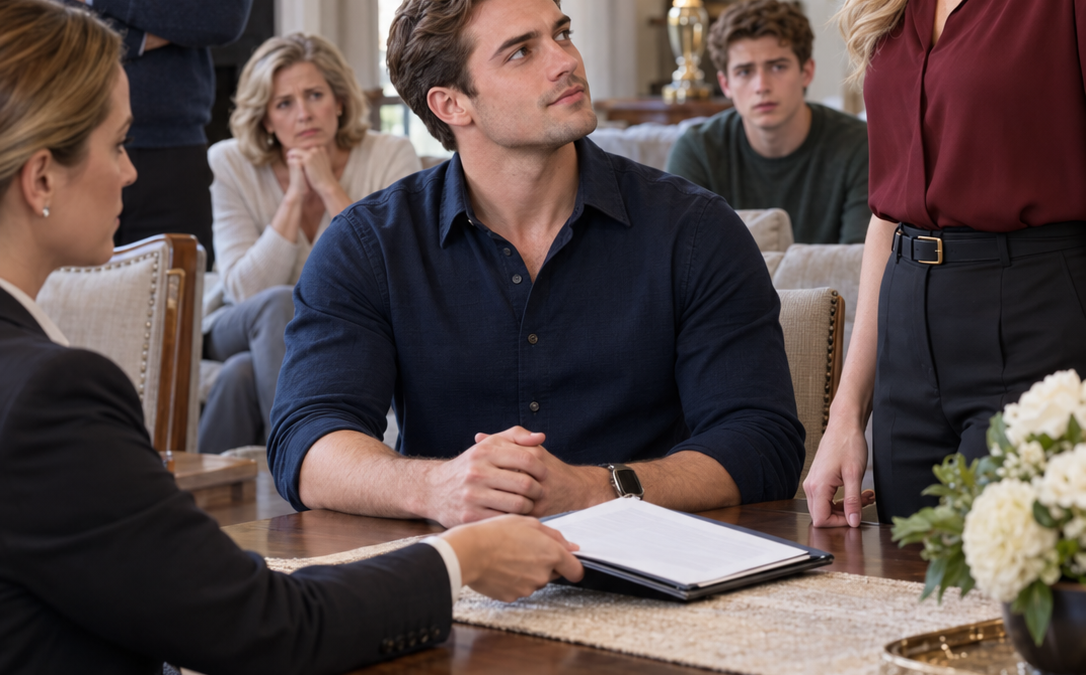
“Grandma’s going to a home. Your sister needs her room. Don’t like it? Pack your bags.”
Dad slammed his hand on the dinner table. The forks jumped. Grandma opened her mouth to answer, but since the stroke, finding a word took time. Dad didn’t give her any.
“Mom’s tired,” he said, passing the potatoes.
I’d heard him speak for Grandma before, but I’d never seen him do it while taking away her room. She was still trying to form that one word. Nobody at the table waited to hear it.
I didn’t argue. I packed Grandma’s bags first, then mine, and we left. Three days later, she was pressing roses into the dirt at our new place while a sheriff knocked on the door. By the time Dad opened his own door, he would wish he’d waited for Grandma to finish that one word.
Tell me where you’re listening from tonight, and stay with me, because that one word took her sixteen months to find and three days to be heard. That word started with an N.
I’m Anna Holm. I’m thirty-two, and for nine years, I’ve sat in a county courtroom typing down other people’s words exactly as they say them. And that night, I didn’t wait either.
I should tell you what else was on that table. My father, Eric Holm, had just finished saying grace, the way he always did, with his phone facedown beside his plate like a second fork. Behind my grandmother’s chair, on the windowsill, sat my grandfather’s steel lunch pail. My grandmother, Astrid Holm, had carried it downstairs that afternoon. Nobody had asked why.
My sister, Brianna, leaned forward with the voice she used on clients.
“Grandma, it’s going to be so cute. We’re doing sage, and the lodge is booked. Dad already paid, so it’s all happening.”
“Eric,” my mother said.
One word. He looked at her, and she went back to her plate. Brianna’s fiancé, Cody Reeves, studied his potatoes like they’d asked him a question.
I didn’t argue because I knew what arguing at that table bought you. It bought him the scene he wanted: the unstable daughter raising her voice at family dinner while he stayed calm and reasonable, and everyone remembered it that way. So I gave him nothing.
Silence, done right, is a decision.
I stood up. Grandma looked up at me. Not at him. At me.
She came up the stairs behind me with her right hand dragging along the rail. One step, a pause, another step. I had her suitcase open on the bed by the time she reached the door, and she pointed at what went in and in what order.
The lunch pail went first. It was heavier than it looked. Then came the little brass bell from her nightstand, followed by the blue coffee cup with the chip in its rim, which she watched me wrap in a sweater. Next was the half-finished mitten still on its needles, cream wool with the black star pattern she’d knitted since before I was born. Finally, she pointed to the coffee can on the closet floor, which clinked like a church collection when I picked it up.
My mother appeared in the doorway holding the kitchen radio. She set it on top of the suitcase and said nothing. Then, so quietly I almost missed it, she spoke.
“The radio. She needs it at six.”
Grandma pointed out the window. Below it, where my grandfather’s rose bed used to run along the front of the porch, there was now a strip of poured concrete. Dad had put it there two summers earlier.
“You can’t bend down anymore, Mom,” he’d said, pulling the Peace roses out by their roots.
She’d saved two canes in a bucket behind the porch. I went downstairs and got the bucket.
That house had belonged to her and my grandfather for forty-one years. Three winters earlier, they’d signed it over to Dad.
“To keep things simple,” he’d said.
At the key rack by the front door, Grandma stopped for one second. Five hooks, and not one of them was hers.
On Lake Stevens in June, it’s still light at nine, and every porch lamp shines straight down a neighbor’s driveway. Load a suitcase into a car at that hour, and the whole shoreline knows about it before coffee hour after Sunday service.
Dad stood on the porch with his arms folded.
“You’ll bring her back Sunday. Marysville’s expecting her Monday. She can’t do stairs, Anna. You’re not thinking.”
“This is so extra,” Brianna said from behind him.
Cody came down the steps without a word and opened the passenger door for my grandmother. She lowered herself into the seat, then looked at the bucket in the back and said the one word she could always find.
“Nils.”
“I’ll drive slowly,” I told her.
Her hand stayed on the lid of the lunch pail the whole way, as though she were holding something that might open.
The cottage in Machias had a yellow porch light and a key that stuck. I’d signed the lease in May, three weeks after Grandma had whispered to me in the pantry that Dad was making calls. I reminded her of that while I fought with the lock, and she nodded. She wasn’t surprised.
In the kitchen, she set the lunch pail on the table and opened it with her left hand, the hand she’d taught herself to write with after the stroke had taken her right.
Inside were papers. A power of attorney, dated the previous September, naming me. A receipt from a lawyer’s home visit, marked paid in cash. She’d arranged it through her speech therapist on a day I’d thought was therapy, and she’d paid for it with mitten money.
Under those documents was a page folded into a small square. She slid it across the table to me and waited.
Seven words, written in shaky capital letters that leaned to the left.
IF ERIC SAYS I’M GONE, BELIEVE ANNA.
“You didn’t tell me,” I said. “You didn’t tell me, and I’ve been—”
She reached across the table and tapped my ear twice.
That was why. Not because I was the one with time, but because of the ear.
“Later,” she said.
I looked at the two bedrooms and did what my hands always wanted to do. I pointed toward the room off the kitchen.
“This one. No stairs. It’s safer.”
She didn’t argue. She went into the room I’d chosen for her without a word, and I took that for agreement.
At six the next morning, the radio was already on. Marine forecast. Small craft advisory. Wind out of the southwest. My grandfather had listened to it every morning of his working life, and she’d kept the habit after he died.
She was standing at the counter, pouring coffee with her left hand into the blue cup with the chipped rim. She’d heard me come to the doorway before I said anything.
On the table, she had the coffee can open and was stacking coins, quarters in one pile and dimes in another. Mitten money from the church bazaar.
She pointed at the piles, then at the receipt from the lunch pail, then made a steering-wheel motion.
“Meg drive. Paid.”
Meg Whitfield, her speech therapist, had driven her. Grandma had paid the lawyer in coins from a coffee can.
She tapped the radio, pointed toward the lake, then pointed east toward Dad’s house, where a brand-new boat sat in the driveway under a tarp.
“Boat. Nils.”
She lifted one eyebrow and waited for me to understand.
My grandfather, Nils Holm, had worked with pipes at the Everett shipyard for thirty-two years and had never once owned a boat. It was her joke. I laughed, and she looked pleased with herself.
He’d died two summers earlier. She had written his eulogy with her right hand, the last long thing that hand ever wrote. Dad had read it at the service, but he’d fixed a few lines.
The line she’d written, “Thirty-two years with the same lunch pail, and I never once had to ask him what he needed,” had come out of Dad’s mouth as a statement about his own legacy of hard work. I’d watched her face from the front pew when he said it. She hadn’t moved.
Now she pushed a scrap of paper toward me. On it, she’d written Quiet? The question mark had taken her three tries.
“Let’s wait until things settle,” I said.
It was the same sentence Dad always said to her, only quieter.
It was also the sentence he’d used at the rehabilitation hospital sixteen months earlier, when she was five days past the stroke.
The nurse had leaned over the bed.
“Mrs. Holm, can you understand me? Squeeze my hand.”
“She’s not really there anymore,” Dad had said from the chair by the window. “Let’s wait until things settle.”
He was already filling out the forms.
Family contact: Eric Holm.
He took a call from the people handling the trust connected to my grandfather’s settlement right there in the hospital room.
“We’re handling it. I’ll take care of everything on this end.”
“Eric,” my mother had said.
He’d looked at her, and she’d nodded. She’d just nodded.
“Susan.”
That was all it took. My mother stopped, and she’d been stopped ever since.
Brianna had held up her phone.
“Aww, look at her sleeping.”
Grandma wasn’t sleeping. Her eyes were closed because the fluorescent lights hurt.
I came every evening with a letter board and sat beside her bed while she pointed. She spelled it slowly.
H. O. M. E.
I nodded and squeezed her hand. I told her yes. Soon we’d get her home to the lake house, to her room.
On the last day, Dad put a little brass bell in her hand and folded her fingers around it.
“Ring if you need something, Mom.”
I believed I was different from them.
My phone buzzed in my pocket and didn’t stop. By afternoon, there were fourteen missed calls, all from the same name. The voicemails kept coming.
“Anna, honey, let’s just talk.”
Then, “Marysville’s expecting her Monday. You know that.”
Then, “Mom told me herself she wanted somewhere safe. She told me.”
And finally, “Let’s be adults. I’m your father. You’re not thinking about the twenty-sixth.”
I didn’t know what the twenty-sixth meant.
Then came a text from my mother, typed the way she typed when she was checking over her shoulder.
He has her checkbook and her pension card in his desk. He says she comes home Sunday. He keeps saying the 26th. I don’t know what that is. Don’t tell him I texted.
Okay.
I stood in the kitchen and made a list of everything he still had. Her checkbook. Her pension card. Her mail. The tablet she used to communicate, which was on his account. My grandfather’s money, still coming in and still going to him. And her name in his mouth, wherever he wanted to put it.
At three, she got up and made coffee because at three, she always made coffee. She poured, and the cup tipped. Hot coffee ran over the back of her left hand.
I reached for the towel, but her other hand came down on my wrist and held it there.
She wiped her own hand and poured again. Then she set a second cup in front of the chair across from her and pointed.
“Sit.”
I sat. I put my phone facedown on the table.
She picked up the mitten and started working the needles one-handed. The yarn looped slowly through her weak fingers, and I reached to steady the needle for her. Her left hand came off the needle and gently moved mine away, all the way back to my side of the table.
On Sunday morning, I did what nine years of court reporting does to a person. I spread the papers from the lunch pail across the kitchen table and put them in order, just in case.
There was the power of attorney. Meg’s letter from May, explaining in plain sentences that my grandmother understood everything said to her, that she could communicate, and that she could sing. There was the lawyer’s receipt and two letters from the trust that paid out on my grandfather’s illness.
Folded very small at the bottom was a glossy brochure.
Lakeshore Senior Apartments. Independent Living.
Across the front, in Grandma’s left-handed capital letters, she’d written:
ONE BEDROOM. ASK ME.
One bedroom.
She’d meant to go alone. Not with me.
She’d planned a door of her own, and I’d walked her out of one house into another and called it we.
She was standing at the window with her back to me, looking down at the bucket of rose canes on the porch that we hadn’t planted yet. I folded the brochure in half and put it in the kitchen drawer with the takeout menus.
Not now. She wasn’t ready. She wasn’t settled.
She turned around.
“What?”
“Nothing,” I said. “Paperwork.”
Mom’s text arrived just as I closed the drawer.
He called 911. He told them you took her. They’re coming to you.
The county SUV pulled into the driveway a little after one. Two deputies got out. The older one looked at me across the hood, and his expression changed.
“Anna? Department Six?”
Deputy Tom Hansen had stood at the door of Courtroom Six for six years, back when he worked courthouse security. I’d typed a thousand hearings with him standing ten feet behind me.
The younger deputy read from his screen.
“Caller states his mother has dementia, is nonverbal, and was removed from the home by his adult daughter, who he describes as—”
“She’s not nonverbal,” I interrupted. “She has aphasia. Expressive aphasia. She understands everything. It’s the output that’s affected. If you’d let me explain what the stroke—”
A bell rang once.
My grandmother stood in the doorway with the lunch pail under her arm and the little brass bell in her hand.
I stopped talking.
She walked down the steps toward Hansen and held out the folder I’d made that morning. Then she spoke.
Each word cost her something, and she paid it.
“I left. Myself.”
She took a breath.
“He keeps. My checkbook.”
The younger deputy looked up from his screen.
“Ma’am, do you want to go back to your son’s house?”
She finished the word she’d been trying to say at the dinner table.
“Nei.”
Hansen held out his notepad.
“Are you here of your own free will?”
She wrote on it with her left hand.
JA.
The younger deputy looked at the word.
“Norwegian for yes,” Hansen told him. “My grandmother, too.”
He photographed the power of attorney.
“We’ll close his report, and we’ll be having a word with Mr. Holm.”
When they’d gone, I stood in the yard with the ring of that bell still echoing in my ears.
Because she’d rung it at me.
She came over and patted my hand.
“Not mad.”
My mother called that night from the garage. I could hear the freezer humming behind her.
“They called him. They’re coming by tomorrow. He’s… he’s not okay, Anna. He’s been on the phone with the trust people all week. He took a loan against that money for the boat. The money comes on the twenty-sixth. He says he needs Mom home before then. He didn’t say why.”
I counted on my fingers.
Twelve days.
“He told Pastor you kidnapped her,” she added.
She said those words.
“Mom, whose side are you on?”
“I’m on nobody’s side,” she said. “I’m in the garage.”
When I hung up, Grandma was standing in the kitchen doorway. She’d heard.
She took the pad off the refrigerator, wrote something on it, stuck it back under the magnet, and went to bed.
I went over and read what she’d written.
26. NILS’ MONEY.
Monday morning, the third day, she carried the bucket down the porch steps herself and set it beside the strip of dirt along the foundation.
I got down on my knees with the trowel. Her hand came down on my wrist.
“Mine.”
I sat back on my heels.
She dug with her left hand, slowly, the trowel going into the ground at an angle because her wrist didn’t turn all the way anymore. The dirt was black and wet and smelled like cedar. She talked to the roses while she worked, in Norwegian, in pieces, and one of those pieces was his name.
She set the first cane into the hole and pressed the soil around it with the flat of her palm.
My hands wanted that trowel so badly they hurt. Sitting still was the hardest thing I did that morning.
At noon, I had to drive to the courthouse to hand off my calendar and ask for two weeks of leave. I set the phone beside her chair. I set the tablet beside the phone. I told her where the tea was, which she knew, and where I’d be, which she also knew.
She flapped her hand at me without looking up.
“Go.”
So I went.
And while she pressed the second rose cane into the ground, four miles away on the lake road, something else was happening. I only know about it because my mother told me that evening, speaking from the back porch with the door closed behind her.
Four o’clock. Hansen and a woman from Adult Protective Services, wearing a lanyard, arrived at Dad’s house. Two neighbors walking their dogs slowed down on the lake road.
Dad opened the door with his outside face on.
“Thank God. Did you find her? She’s confused. She gets—”
“Your report’s closed, Mr. Holm. Your mother answered for herself. She’s asked that her checkbook, her pension card, and her mail be returned to her.”
“She can’t get a single word out.”
“She finished that word, sir. It’s no.”
Dad’s hand found the doorframe.
“I told my daughter to pack her bags. Not—”
“She did,” Hansen said. “So did your mother.”
Behind him stood Brianna, with sage paint on her forearms.
“Dad, the neighbors.”
The woman with the lanyard held out a card and a case number. Dad took them without looking.
“I’ll have to look for the checkbook,” he said.
After the SUV pulled away, Mom said, he went into the garage. She heard his hand come down on the hull of the boat.
Once.
I came in from our porch with my mother’s voice still in my ear and found the brass bell sitting in the middle of the kitchen table. Under it was a scrap of paper.
CHOIR. 7.
The house was empty.
The bus stop was at the end of our road. The 640 went to Lake Stevens. My hands found the car keys before my head caught up, and I drove with my heart beating in my throat.
I passed the bus stop. I passed the empty bench. I drove straight to Trinity Lutheran.
I went in through the back of the sanctuary. The choir was halfway through a hymn.
She was in the alto row, second from the end, and she was singing every word. She wasn’t stumbling or searching. The tune carried the words for her like a current, and her mouth simply followed where it led.
“Blessed Assurance.” Every syllable.
I sat down in the last pew and cried without making a sound.
When they finished, she came down the center aisle with her purse hanging from her weak arm. She stopped in front of me with a question on her face that didn’t need words.
Are you going to scold me?
“You took the bus,” I said.
“Ja.”
A woman with white curls and a soprano’s chin came up behind her. Ingrid Berg, from the front row of the choir, had known my grandmother for forty years.
“Oh, honey, she’s been telling us she’d come back, in her way. She’d hum at us in the parking lot. We just didn’t know when.”
On the drive home, Grandma sang one more line, then stopped.
And I realized those words weren’t in the hymn.
At ten, she picked up the tablet to tell me what she’d sung. The screen displayed a message.
This device has been locked.
My phone lit up. It was Mom.
He locked it from his phone. It’s on his account. Mine’s showing limited, too.
Grandma held the tablet for another moment. Then she set it facedown, exactly the way I’d set my phone down at the kitchen table, and reached for the pad on the refrigerator.
“Wait,” I said.
I went to my purse and took out the key I’d had cut on Saturday. It was the second key to the cottage, the one I’d been keeping until she was settled.
Then I went to the kitchen drawer and took out the brochure.
ONE BEDROOM. ASK ME.
I put both the key and the brochure on the table in front of her.
“I picked your room,” I said. “I put this in the drawer. I said wait. I keep saying wait.”
My finger pressed the teeth of the key into the wood.
“What do you want?”
She wrote two words.
ONE DOOR.
It was the line from the car, the one that hadn’t been in the hymn.
She wrote again.
“Ja,” I said.
I’d never said it before, and I got the vowel wrong.
At five on Tuesday morning, my mother’s car came up the gravel driveway with my grandfather’s armchair strapped to the roof. Cody had stopped by on his way to the first shift at Boeing and lifted it up there for her. He hadn’t asked what for.
That was Cody.
Susan stood in our kitchen with both hands wrapped around a coffee cup and told us what had happened.
After the deputies left, Dad had finished clearing out Grandma’s room to paint. He’d told Brianna it was her room now. But the armchair, the one my grandfather had sat in for forty years, didn’t go with the new color, so Dad had put it out by the curb.
My mother had lain awake looking at it through the window until she couldn’t stand it anymore.
“That’s not why I’m here,” she said.
She told us about last October, the morning of Grandma’s appointment with the family doctor. Dad had been in the bathroom with the door half-open, practicing a sentence in the mirror.
“My mother has asked to go somewhere she can be cared for.”
He said it three times, adjusting the sadness.
Then he said it to the doctor. Then he said it to Pastor. Then, on the phone with the lawyer at the trust, he said something else.
“She’s told me she wants me to handle it.”
“She never said any of it,” my mother said. “Not one word of it. I let him. It was quieter.”
“Why now?” I asked.
“Because they put the chair on the curb, and I’m fifty-five.”
Grandma came out of her room, saw the armchair against the wall, and sat down in it. Her hand went to the worn place on the right armrest where his hand used to rest.
“Nils,” she said.
My mother put her face in her hands.
Grandma pointed at the coffee pot, then at the chair across from her.
“Stay. Coffee.”
Mom left at six. At the door, she turned around and spoke quietly.
“He emailed the whole church last night.”
The Verizon store in Lake Stevens opened at nine. I bought a new tablet and a new line in my name, loaded the speech application, and did what my hands always did.
I typed phrases for her.
I’m hungry.
I’m tired.
Call Anna.
She sat at the table and deleted them, one at a time.
Then she typed her own.
Coffee. Nei. My turn.
I laughed so hard I had to put my hand over my mouth.
And then I wasn’t laughing anymore.
Ingrid forwarded the email at ten. The subject line said Prayer Chain. It read:
Please keep Mom in your prayers as she has chosen to enter a care community. The family asks for privacy during this transition.
Eric Holm, Church Council.
Underneath was Ingrid’s text.
We didn’t know if we should still call. We didn’t want to intrude.
The day after she’d sung with them, Grandma read the email twice. She picked up the tablet and typed one word.
Liar.
She looked at it for a moment, then deleted it.
“Do you want to answer Ingrid?” I asked.
“Ja.”
She typed with one finger.
Not in care. In Machias. Coffee 3.
I swallowed the reply I wanted to send to the whole prayer chain. It wasn’t mine to send.
Her message went out at ten.
By evening, nobody in the choir had answered it.
Brianna’s car came up the gravel driveway at four. I met her on the front step and didn’t open the screen door.
She had a card in her hand. Cream cardstock. A dress fitting on Saturday. Her name printed in gold.
“Grandma, the room’s done. I did sage. It’s really pretty. Dad’s a mess. Like, actually, the lodge is booked, the deposit’s paid. Please, just don’t make him look bad at the wedding.”
Then she turned to me and spoke quickly, the way you say something you’ve rehearsed.
“And I need bridesmaids who aren’t at war with Dad. Cody’s sister is going to step in. I can’t do this right now.”
Behind me, Grandma came to the door. In her left hand was the first mitten, finished that morning. Cream wool with the black star pattern.
She held it up to the screen so Brianna could see it.
Brianna looked at it.
And couldn’t.
“I have to go.”
“He lied to the whole church,” I said. “In writing.”
“Dad said she asked for it! He said she told him!” Brianna shouted.
Then she went quiet, as if she’d just heard herself.
Meg Whitfield came Wednesday with a canvas bag and her car keys still in her hand. She sat at our kitchen table and talked to my grandmother, not to me.
“Here’s the thing. Losing the words on the way out isn’t losing the words. You understand every syllable. And the singing pathways are separate, which is why the hymn works.”
She wrote a fresh letter explaining exactly that and dated it.
Grandma pulled the tablet over and typed while Meg watched.
Lakeshore. One bedroom. August.
It was the first time it had been said out loud with me in the room.
I sat with it.
“Independent living with home visits,” Meg said. “Plenty of my clients do it. The question is whether you want it.”
“Ja.”
“Then we’ll go look,” I said.
I heard myself say it, and I let the words stand.
Meg had two more things to tell us.
“As far as I know, they can’t admit her anywhere she hasn’t agreed to go. Your father knows that. It’s why he needs her to agree. And don’t ever let anyone hold a phone to her ear and answer for her. She can say ja. That’s her. That counts.”
She took a blank index card from her bag.
“If there’s something you need to say to one particular person, we write it. We put it on a tune, and we practice it until it’s yours.”
Grandma typed two words.
Eric. Table.
Outside the window, along the foundation, the rose canes had lifted their first leaves.
That afternoon, she wrote another message.
Lake. Alone.
The rule she set was ten steps.
I walked ten steps behind her down the lake path. At the bend, she turned around and pointed back the way we’d come. I stopped at the bench, my hands closed around its wooden slats.
I watched her continue slowly. Her weak side dragged a little on the gravel, and the wind off the water pushed against her coat. The fear I felt was small and specific, and it had her shape.
At the curve, Ingrid Berg came the other way with her dog. I watched her notice my grandmother and light up too brightly, the way people do when they’ve read an email and don’t know what to say.
“Oh, Astrid. Oh, honey, we heard.”
Grandma didn’t hurry.
She stood in front of Ingrid and sang the first line of the hymn straight into her face. Then she spoke.
“Machias. Coffee. Three.”
Ingrid laughed. Then she was crying and holding my grandmother by both shoulders, while her dog sat down.
From the bench, I understood something.
The repair was hers, not mine.
Ingrid texted me later.
I’m telling the sopranos. Eric can send another email.
In nine years of typing testimony, I had never corrected a single witness. I put down what they said, exactly as they said it.
And I’d been correcting my grandmother for sixteen months.
At the cottage door, she put her own key into the lock before I could get mine out.
For the first time.
The yarn shop on Main Street had the last skein of the cream wool she needed for the second mitten. The woman at the counter recognized us.
“Your son detailed my husband’s boat. Lovely man.”
Grandma put her card into the machine.
The machine thought about it.
Declined.
Her pension went into the joint account on the first of the month. Dad had moved it.
The coffee can was at home on the closet floor. I paid.
It wasn’t the money. It was the counter and the woman’s voice going soft.
“Oh, hon.”
My grandmother straightened her back. She picked up the skein and took the pen from the counter. Then she wrote on the receipt, left-handed and slowly, while the woman watched without understanding.
MY MONEY. NEXT MONTH.
She signed it.
Then she walked out.
In the car, I started to speak.
“I should have—”
“Nei. Eric.”
Then my phone lit up.
Mom had sent a photograph of an envelope with the trust’s logo on it. The envelope had already been opened.
My mother brought the letter itself that evening, or rather, the photograph she’d taken of it in Dad’s study while he was at the lodge. Susan set her phone on our table, and we read it together.
The trust had received two payment instructions that didn’t match. One had come from my grandmother the previous September. The other had come from Eric Holm in May, bearing a signature.
For the disbursement on the twenty-sixth to include her, the claimant herself would need to confirm by telephone, or her authorized representative would need to do so.
That was the twenty-sixth.
That was why she had to come home.
He needed her at his table with his phone on speaker, his hand over hers, saying yes for her.
My phone rang.
Dad.
I put him on speaker and set the phone down between us.
“Sunday dinner,” he said, his voice as warm as a hand on your back. “Whole family. No fighting. Lefse, her favorite. Bri repainted her room for her. She should see it.”
“She won’t.”
I stopped. I put the phone down on the table, looked at my grandmother, and asked her.
She pulled the pad toward her and wrote:
JA. SUNDAY. MY TABLE.
“He’ll have the phone right there,” Susan whispered. “Right beside her plate.”
“Ja,” Grandma said.
She knew.
I picked the phone back up.
“We’ll come.”
“Good girl,” my father said.
Then he hung up.
My grandmother had heard every word over the speaker.
She smiled.
If you want to know what a smile like that is worth at a family table, stay with me. And if you’re new here, subscribing keeps you in the kitchen for Sunday.
Friday, we made the card.
She typed, and I wrote it out in large letters. And I did what nine years of courtroom manners had taught me to do.
She typed:
You do not speak for me.
I wrote:
I would prefer to speak for myself.
The bell rang at me.
I erased it and wrote it her way.
“Polite is how Dad does it,” I said.
And I understood what that meant as I said it.
Polite was a coat you put on someone so they’d hold still.
In the end, the card had four lines.
In August, I move to Lakeshore. My door.
Anna is my voice when I need one, not my keeper.
Eric, you are my son. You do not speak for me. Not to the doctor. Not to the church. Not to the bank.
Sunday. My table. If you can be quiet.
“Lakeshore” wouldn’t come. It got stuck behind her teeth three times. She put it to the tune of the hymn, and it came out singing. Then it came out plain.
We practiced the third line slowly. Once, twice, three times, each time with less shaking in her voice.
We practiced the fourth line until she nodded.
Every time we went through that card, I heard her say something she hadn’t been allowed to say for sixteen months.
And it was warm and painful all at once.
Dad’s truck came up the gravel driveway at seven. He had grocery-store flowers and his caregiver voice.
“Mom, come see the room. Bri repainted it for you. It’s brighter. Sunday night, you can come back here afterward if you want. No pressure.”
I stood behind the screen door and didn’t unlatch it.
“Anna, be an adult.”
Grandma came up beside me and looked at him through the mesh.
She said one word.
“Sunday.”
Then she reached past me and closed the inside door herself.
Through the wood, we heard him.
“Sunday.”
He left the flowers on the step.
He thought he’d just won.
Lakeshore Senior Apartments sat on the eastern shore, with its back to the road. I’d booked the viewing Wednesday night after Meg left.
The leasing manager met us with a clipboard and talked to me.
“So, your grandmother would be looking at a one-bedroom. And does your grandmother have—”
“Ask her,” I said.
The manager blinked and turned toward Grandma.
My grandmother walked through the apartment the way she used to walk through the church kitchen before a funeral lunch. She slid the window open and stood in the lake air. She ran her hand along the counter to check its height. She turned each stove knob on and off.
At the front door, she stopped and pressed her palm flat against it.
“Mine?” she asked.
One word, and she’d made it a question.
“End of August, if you’d like it,” the manager said.
“Ja.”
There was a form.
I didn’t touch it.
She signed the line marked Interested, left-handed and slowly.
I stood in the hallway with my hand flat against the wall, because letting go turns out to be something your body does before your head agrees.
She came out and looked at me.
“Sunday. Coffee. Your house.”
Your house.
She’d already decided what I would be there.
A guest.
In the car, I wrote the date of the viewing on the corner of the brochure.
Ingrid texted at noon.
Your dad is telling the whole lodge. You should come.
The Sons of Norway picnic was held every year on the Saturday closest to Midsummer, in the park beside the water.
I went to face it.
Dad was at the grill wearing the lodge apron, and he had the table of ladies gathered around him.
“We’re bringing Mom home tomorrow. The sheriff thing was a misunderstanding. Anna’s been overwhelmed. Poor kid. She means well.”
They saw me.
Their pity turned like a lawn sprinkler.
“Anna, honey, are you getting some help?”
“There she is,” Dad said.
He put his arms around me in front of all of them. I went stiff as a post and let him.
Then someone was standing next to me, holding a paper plate.
Hansen.
He was an off-duty lodge member, saying nothing about anything.
“Bratwurst’s better than the salmon this year.”
I didn’t answer him.
I didn’t answer any of them.
I walked off the grass with the whole lodge watching. I had gone there to speak, and I still couldn’t.
Grandma was at the kitchen table when I came home, and the second mitten was finished.
The pair lay side by side on the wood, cream and black. While I stood in the doorway, she put them into the lunch pail, placed the card on top of them, and closed the lid.
She looked at my face.
“Eric.”
I sat down.
I told her about the grill, the apron, and the ladies.
“He said I was overwhelmed. He said, ‘Poor kid.’”
My voice went somewhere on those last two words, and I had to wait for it to come back.
She opened the lunch pail again, took out the first mitten, and worked it onto my right hand, over my fingers, one at a time.
A mitten she’d made with one hand.
Then she typed:
Tomorrow. You too.
“I don’t have anything to say to him.”
She typed again.
Write.
I turned the brochure over and wrote on the back.
You told me to pack my bags.
I did.
You don’t get to say what I am.
She read it and nodded once.
Then she stood up and got the flour down.
MY TABLE, she typed. MY LEFSE.
She rolled the dough left-handed, and I turned the rounds on the griddle. The kitchen smelled like every Sunday of my childhood.
The lefse was cooling on a towel when there was a knock at the door.
Not Dad’s knock.
Softer.
Brianna stood on the step with no makeup and a folder pressed against her chest.
“I was looking for the lodge contract,” she said. “In his desk.”
She put the folder on the table and opened it.
There was a check stub for the lodge deposit. The account listed on it belonged to Mom’s pension.
And there was a page torn from a yellow legal pad, written in Dad’s handwriting.
Sunday. After grace, tell Mom trust calls Monday. She stays the night.
If she stalls, “Mom’s tired.” I talk to them.
Mom will say, “I agree.”
Brianna’s finger rested on the last line.
“He told me it was my room,” she said. “He told her it was hers. He told me she asked to go.”
Her voice was flat now, with none of its usual shine.
“I don’t know where to stand.”
My grandmother looked at her for a long moment and did not tell her everything was all right.
Instead, she wrote:
Sunday. Sit by me.
Then she wrote again.
Room key.
“It’s—” Brianna started.
“Ja.”
“Okay.”
We didn’t hug.
“You found it looking for the lodge contract?” I asked.
“Yeah.”
Brianna read Dad’s page again.
“What if she says no?”
Nobody answered.
Sunday at five, the lake house smelled like roast meat and fresh paint.
They showed us the room first. Sage green. Her bed had been put back against the wall, but the boxes containing her things were still stacked in the garage. I’d seen them through the side window on our way in.
Brianna stood in the doorway and didn’t say the room was pretty.
The table was set the same way it had been that night. Dad’s phone lay facedown beside his plate. Cody sat in the chair by the window. Susan sat at Dad’s right hand, and when she passed the green beans, the dish shook.
Brianna picked up her chair and moved it next to Grandma’s. She didn’t say anything. She just sat there.
My grandmother set the lunch pail on the table beside her plate. Then she set down her own tin of lefse.
“Mom, we made—” Dad started.
“Nei.”
He said grace.
He thanked God for family. He thanked God that Mom was home.
My grandmother sat straight through it with the bell beside her fork. I kept my hand on my purse, where the brochure was tucked away.
“Amen,” Dad said.
He put his hand on the phone.
“Before we eat. Tomorrow at nine, the trust people call. Mom stays here tonight in her room, and I’ll be right beside her to help her answer. All you have to do is say one word, Mom.”
The bell sat beside her plate.
“Mom’s got something she wants to say about all this,” Dad continued. “I’ll say it for her. She’s tired.”
The bell rang once.
Nobody breathed.
She opened the lunch pail and took out the card.
She didn’t stand. She sat up straight and read the first line, one word at a time.
“In August, I move to Lakeshore. My door.”
“Mom, that’s—”
The bell rang twice.
Brianna’s hand lay flat on the tablecloth. Cody set his fork down.
Grandma read the second line.
“Anna is my voice when I need one. Not my keeper.”
I felt those words in my face and let it show.
She turned the card over to the third line and looked straight at my father.
He opened his mouth.
“Mom—”
“Eric.”
His name, spoken to his face.
For the first time since the stroke.
She began the third line. The word church wouldn’t come. She put it to the tune, and the whole table heard the hymn underneath it.
“You are my son. You do not speak for me. Not to the doctor. Not to the church. Not to the bank.”
Then she read the fourth line.
“Sunday. My table. If you can be quiet.”
He looked around the table for someone to finish the sentence for him.
Susan looked at her plate. Brianna looked at Grandma. Cody looked toward the window.
I looked at him.
Nobody spoke.
For the first time in sixteen months, he sat still and let his mother finish a sentence.
I took the brochure out of my purse and put it on the table. The viewing date was written in my handwriting on the corner.
“You told me to pack my bags,” I said.
“I did.”
“You don’t get to say what I am.”
My mother stood up. She picked up her chair from Dad’s right side, carried it around the table, and set it down at Grandma’s left.
Then she reached into her cardigan pocket and laid a checkbook and a pension card in front of my grandmother’s plate.
She’d taken them from his desk that afternoon while he was basting the roast.
Brianna set the key to the sage-green room on the tablecloth.
“I called the lodge this morning. The deposit goes back to Grandma. Not to you.”
Her voice didn’t shake.
“We’re doing it in Cody’s backyard.”
Cody nodded once.
Dad picked up his phone and put it in his pocket.
“Mom,” he said.
She waited.
“Okay.”
One word.
That was his.
“Eat, Eric,” my mother said.
My grandmother opened her tin of lefse and passed it to Brianna first.
For a while, the forks made the only sound in the room.
Then Dad tore off a piece of her lefse and ate it. I watched his face do something he hadn’t given it permission to do.
Susan told Grandma that choir was Monday night.
“Ja,” Grandma said.
Brianna looked at her.
“Grandma, will you come to the final fitting?”
A real question, with the lift at the end.
“Ja.”
Then my father asked a question the right way for the first time in my memory.
“Mom, do you need anything?”
The bell’s own sentence had turned around and become him asking.
“Nei.”
“The call comes to Machias tomorrow,” I said.
The power of attorney, Meg’s letter, and our number had gone to the trust on Friday.
He understood that his phone wouldn’t ring.
At the door, Grandma picked up the lunch pail herself.
“I’ll drive you,” Dad said.
“Anna,” she answered.
He stood on the porch as we backed out, alone beneath the porch lamp. Every house along the shoreline could see one man standing there with nothing to say.
At nine on Monday morning, the phone on our kitchen wall rang.
I didn’t pick it up.
A woman’s voice came through, patient and reading from a script.
“Mrs. Holm, are you confirming payment to your own account?”
“Ja.”
“Ma’am, for the record, I need a yes or a no in English.”
“Yes.”
I sat with my hands in my lap and said nothing.
And it was the easiest hard thing I’d ever done.
The rest came in pieces over the next two weeks, through texts from my mother and my sister.
On the twenty-sixth, the money landed exactly where my grandmother had instructed it to land. The loan Dad had taken against money that never arrived was called. A FOR SALE sign went up on the boat in the driveway, where the whole shoreline could read it.
By July, the church council had someone else in his seat.
He called the doctor’s office.
“My mother wants—”
“We’ll ask Mrs. Holm.”
He called Pastor.
“Mom’s decided—”
“We’ll ask Astrid.”
He called the trust as her son.
“I will speak with Mrs. Holm or with Ms. Holm.”
Monday night, Grandma went to choir, and when she walked in, the sopranos stood up.
Susan established a standing date.
Thursdays. Coffee. Three o’clock.
In the middle of August, Grandma wrote:
GRAVE. ALONE.
I drove her and waited in the car with the windows down.
She carried the first rose of the season, cut from the canes beside our porch. One Peace rose, its cream-colored bloom turning pink at the edges.
She walked the row by herself.
His stone. Her stone beside it, with the date still open.
Dad’s truck pulled into the lot while she was standing there.
He saw her.
He didn’t walk over.
He stood beside his truck, kept the distance she’d set, and waited.
When she’d finished, she walked to him.
“Sunday,” she said. “Her table. End of the month.”
“Ja,” my father said.
Her word.
The first time it had ever been in his mouth.
A week later, Brianna got married in Cody’s backyard with the lake behind her. My grandmother sat in the front row, and my father sat in the second.
At the end of August, I carried the boxes up to Lakeshore. She carried the lunch pail into the elevator herself.
“Mine.”
Once inside, the first thing she did was take the little brass bell out of her purse and hang it on a nail beside the front door.
Underneath it, she hung a card written in her left-handed capital letters.
RING IF YOU WANT IN.
A cutting from the Peace roses at the cottage went into a pot on the balcony. The radio went on the kitchen counter, where, at six the next morning, it would announce the wind. The blue cup with the chipped rim went beside the sink.
I held out the key.
She took it.
“Mine.”
“Ja,” I said.
And this time, I got the vowel right.
I drove back to the cottage, to my own door, which felt for the first time like a door and not a waiting room.
Susan had Thursdays. Ingrid and the sopranos had Tuesdays.
Grandma got the flour down for Sunday.
Sunday. Her table.
She sat at the head of it.
I rang the bell and came in as a guest.
Susan brought the coffee. Brianna and Cody came, and Ingrid arrived wearing a good scarf.
The lunch pail sat open on the table. There was nothing in it now but the mittens. Brianna took them out, put them on, and made Cody take a picture.
Grandma passed the lefse.
“Me first.”
Then there was a knock.
Not the bell.
A knock like the one on his own door in June.
The table went quiet.
Through the window, I could see my father standing in the hall with his hands at his sides, waiting.
“Come in,” she said.
He came in.
He sat at the far end, in the chair I’d sat in at his table.
He didn’t say anything.
She passed him the lefse.
“Takk,” he said.
“Grandma, these are warm,” Brianna said, flexing her hands inside the mittens.
A person’s voice doesn’t live in the throat. It lives wherever someone is willing to wait for the end of the sentence.
If someone in your family has ever finished your sentences for you, or if you’ve had to learn to stop finishing someone else’s, tell me about it in the comments. I read them at three o’clock, with coffee, and a like and a subscription help these stories find the people who need them.
She rolls the next lefse with her left hand.
The whole table waits.








