At 18, I was told to “figure it out” while my sister’s entire future was paid for. Dad said, “We invest where it makes sense.” I never forgot that. Nine years later, I attended her wedding. Mom said, “Don’t make this about you.” Her fiancé heard her, then he looked at my name card. His face changed. “You’re the one from…”
“Figure it out,” my father said in our kitchen the year I turned eighteen, folding the budget sheet I had brought him while my sister’s entire future was already paid for.
“We invest where it makes sense,” he added.
And I never forgot it.
Nine years later, I attended her wedding, and my mother stopped me in the hallway.
“Don’t make this about you.”
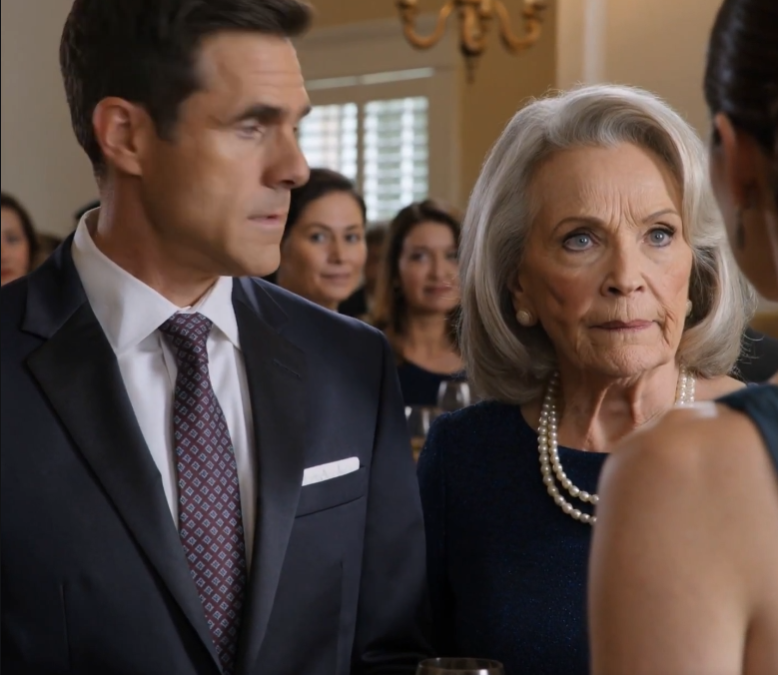
Her fiancé heard her, looked at my name card, and his face changed as if he recognized something he was not supposed to.
“You’re the one from the—”
My mother pulled him away before he could finish.
She should have let him.
Because by the end of that summer, she would wish that name had never reached his hands.
My name is Lydia Gray, and I’m twenty-seven years old. Welcome back to Hidden Shadows, where we tell the kind of family stories that stay with you long after the tables are cleared.
If a story ever made you feel less alone, drop a comment and subscribe.
The budget sheet was on graph paper. I remember that because I had borrowed the pad from my math teacher, and I wrote everything in blue pen so it would look serious.
It was March of 2016. I had turned eighteen the month before. I had been accepted to Wright State University to study electrical engineering, and Wright State was ten minutes from our house in Fairborn, Ohio. I could live at home. I could keep my job at Kroger.
I had done the math four different ways.
Tuition was about $8,800 a year. The university had given me a merit award of $3,000. I had $1,800 saved from two years of bagging groceries and stocking shelves.
At the bottom of the page, I had written one line and underlined it.
Short: $4,000 a year.
I laid the sheet on the kitchen table after dinner while my mother wiped down the counters and my father read the paper. I had practiced what I was going to say. I asked if they could help with the $4,000 or if my father would co-sign a small loan so I could cover it myself.
I told them I would pay it back. I told them I had a plan for everything else.
My father read the page. He didn’t rush. He was an insurance man, and he read everything the way he read a policy, looking for the part that would cost him.
Then he folded the sheet in half along one of the blue lines and slid it back across the table.
“Your sister tested gifted at eight, Ly,” he said. “You’re practical. That’s a good thing. You’ll figure it out.”
I said I was trying to figure it out. That was what the page was.
“We invest where it makes sense.”
He said it kindly, which was the worst part. He said it the way a man explains the weather.
My sister Brin was fifteen that spring. When she was eight, she had taken a test at school and been placed in the gifted program, and the following month, my parents opened a college savings account in her name.
I didn’t have one.
I had never asked why.
By 2016, Brin was a sophomore at St. Brendan Academy, a private school in Dayton, and I knew roughly what that cost because I had once heard my mother on the phone saying it was worth every penny.
While my father talked, my mother picked up an envelope from the end of the table and slid it into the kitchen drawer. She did it quickly, but not quickly enough.
The school’s crest was in the corner, and on the line where the amount was printed, I read $13,500.
Nobody mentioned it.
I didn’t either.
The next week, I went to see Mrs. Hadley.
Joyce Hadley had been the guidance counselor at Fairborn High for almost thirty years, and she was retiring that June. She kept a jar of peppermints on her desk and a sign behind her that read, ASK ANYWAY.
When I told her about the $4,000, she didn’t tell me it would work out. She opened a drawer and handed me a form.
It was an application for a local scholarship funded by Pierce Hardware, a family-owned chain with a few stores in Greene County. Arthur Pierce, the man who had started the business, had begun the scholarship the year before.
It paid $2,000 a year for four years. $8,000 total. One student from our area each spring.
“Arthur reads every essay himself,” Mrs. Hadley said. “Make him see you.”
The essay prompt was printed at the top of the second page.
Tell us about a time you had to figure something out on your own.
I almost laughed.
I wrote about the winter I was fourteen, when my father was away at a conference and the breaker for the back half of our house kept tripping. My mother wanted to call an electrician on a Saturday rate.
I rode my bike to the library, checked out a book on home wiring, and spent two evenings with a flashlight and a notebook until I found the space heater and the overloaded circuit in the laundry room.
I didn’t fix it perfectly, but I understood it, and nothing tripped again.
At the bottom of the application, there was a line of small print I read once and forgot.
Limit one award per household.
Under contact information, I wrote our home phone number because my phone was a prepaid one that ran out of minutes more often than it worked.
That night, I unfolded my budget sheet and added a line beneath the first one.
If I win Pierce: $2,000 gap. Fifteen hours a week. Possible.
I underlined the word possible twice.
The interview was in the back office of the Pierce Hardware store on Dayton Yellow Springs Road, between shelves of boxed fasteners and a pallet of birdseed.
Arthur Pierce was seventy-seven years old. He had big hands and reading glasses on a cord, and he made coffee for me in a dented aluminum pot that looked older than my father.
He asked about the breaker.
I ended up drawing the circuit on the back of a receipt, and he laughed. Not at me, but the way people laugh when something pleases them.
When we were done, he walked me to the front of the store.
“Somebody ought to bet on the kid who fixes the lights,” he said. “We’ll call the house by the end of April.”
I remember thinking on the drive home that it was the first time an adult had ever used the word bet about me.
The end of April came.
I checked the answering machine every day after school.
On the last Friday of the month, I finally asked my father if anyone had called about the Pierce scholarship.
He was reading at the counter and didn’t look up.
“They called,” he said. “They went with someone else. It happens.”
That was all.
He turned the page.
On the pad of paper beside the landline, someone had written the word Pierce and then crossed it out so many times the pen had torn through.
I assumed it was the call where they told him I hadn’t been chosen.
I didn’t think about it again for nine years.
Two weeks later was Brin’s sixteenth birthday.
When she came downstairs that morning, there was a silver Honda Civic in the driveway with a red bow on the hood. It was used. $11,000.
I know because my mother told three different people at the party.
I made it through the cake. Then I went out to my own car, a hand-me-down with a broken cassette deck, and I sat in the driver’s seat and cried harder than I had cried in years.
I wasn’t crying about the Civic.
I was crying because the word possible had been on my paper for five weeks, and now it was gone.
Someone tapped on the window.
It was Brin, still wearing her paper birthday crown.
“Is it about a boy?” she asked.
I said yes.
It was her birthday. It seemed like the kindest lie.
My mother called from the porch for Brin to come open her presents. Then she looked at me through the windshield.
“Don’t make this about you,” she said. “It’s your sister’s birthday.”
I graduated in June.
Mrs. Hadley hugged me in the hallway on her last day and told me to call her if anything changed.
By July, my prepaid phone had lapsed, and I didn’t renew it. By August, I had moved into a two-bedroom apartment in Dayton with a co-worker, and I was working nights at a distribution center, scanning pallets.
Before I left my parents’ house, I put the budget sheet, my essay, and my copy of the scholarship application into a manila folder.
On the tab, I wrote:
Things I Figured Out.
Then I put the folder in a box, and I taped the box shut.
I didn’t open it again for nine years.
Not until a man I had never met said my name like he’d been looking for it.
The distribution center was loud and cold and paid better than Kroger.
One of the guys on my shift, an older man who talked constantly about his fishing boat, mentioned that the electrical workers’ union was holding an aptitude test for its apprenticeship program. Algebra and reading comprehension. If you got in, they paid you to learn.
Classroom at night. Job sites during the day. Five years. No tuition.
I took the test that fall.
I scored near the top.
In January 2017, a month before I turned nineteen, I started my first day on a commercial job site in Beavercreek, wearing borrowed boots and a hard hat that was too big for me.
The foreman was Ray Donnelly. He was in his fifties then, with a gray mustache and a voice that could cut through a concrete saw.
He looked me over for about three seconds, then reached into his tool pouch and handed me a screwdriver with a red handle worn pale at the grip.
“Tools don’t care who your parents are,” he said. “Show me what you can trace.”
I traced it.
By the end of the first month, he was sending me up ladders with the second-year apprentices.
By the end of the first year, he had stopped checking my work.
One afternoon, while we were pulling wire through a school gymnasium, he asked where I had learned to read a circuit like that.
I told him about the library book and the flashlight when I was fourteen.
Ray was quiet for a moment.
Then he said, “Somebody should have bet on you sooner.”
I didn’t tell him anyone almost had.
The apprenticeship was hard in the ways I expected and in some I didn’t.
Men who assumed I was lost. Men who assumed I was there to prove a point. Winters when my fingers didn’t work until noon.
I kept going to class two nights a week. I kept a notebook of everything I learned, the same way I had with the breaker. I paid my rent on time.
I didn’t call home much, and home didn’t call me.
In the summer of 2020, I fell.
I was on a ladder in an elementary school that was being renovated while the building was empty, and a rung that should have held didn’t.
I broke my right wrist in two places.
The doctor said three months before I could work with it again.
The workers’ compensation checks covered part of my income. They did not cover all of it.
By the second month, my savings were gone, and I did something I had promised myself I wouldn’t do.
I called my mother and asked if she and my father could lend me $1,200. Two months of rent.
I told her exactly when I would pay it back.
There was a pause on the line.
“Honey, we just put $6,000 into Brin’s apartment in Oxford,” she said. “The deposit, the furniture, all of it. We’re stretched. You understand?”
I said I understood.
I did.
I understood perfectly.
Ray found out a week later because Ray found out everything.
The next Friday, he came to my apartment with an envelope. The crew had passed a hat. There was enough for both months and some left over.
His wife, Karen, sent a casserole dish covered in foil with a strip of masking tape across the top.
On the tape, in marker, she had written:
For the kid with the wrist.
I kept that strip of tape.
It’s still on the inside of a kitchen cabinet.
After Ray left, I took a yellow sticky note and wrote three words on it.
Don’t ask again.
I stuck it on my refrigerator.
I didn’t.
The last family holiday I went to was Easter of 2021.
It was small that year, just my parents, Brin, my mother’s older sister Deb, and a couple of cousins.
I came straight from a job and forgot to change my boots.
When my mother gathered everyone for a picture on the back steps, she looked at my feet and asked if I could stand behind someone.
At dinner, my aunt Deb asked what I was doing these days.
Before I could answer, my father did.
“Litty is doing her little electrician thing,” he said, and he smiled at me like he was being generous.
Deb nodded.
“Well,” she said. “At least one of Joe’s girls didn’t give up.”
Nobody corrected her.
I finished my plate. I said I had an early start. I left before dessert.
Brin followed me out to the driveway.
For a second, she stood by my car with her mouth half open, like she had come out to say something important.
I waited.
“Drive safe,” she said.
That was the beginning of what I would later learn to call low contact.
Birthday texts. A Christmas card. Nothing else.
In the spring of 2022, I finished my apprenticeship and became a journeyman electrician, a few months later than planned because of my wrist.
I kept working.
I kept learning.
In 2024, at twenty-six, I passed the exam for my electrical contractor’s license and started my own company, Grey Line Electric.
I bought a used white van and had the name painted on the side.
Licensed and insured.
By the next summer, I had three employees, two of them young women.
I had trained myself.
My parents didn’t know any of this.
I didn’t hide it.
They just never asked.
In August of 2024, I was eating lunch in my van between jobs when I saw it on Instagram.
Brin on a dock at sunset, her left hand held up toward the camera. A diamond.
A man with his arm around her, tall, sandy-haired, grinning.
The caption said she was marrying the love of her life.
The man was tagged Nolan Pierce.
Pierce.
I knew that name the way you know a door you once knocked on.
To understand what my sister had, you have to understand how my mother told it.
Every December, my mother mailed a Christmas letter to the extended family. It was printed on paper with a border of little pine trees, and it was always a page long.
I still have most of them.
Brin’s gifted program. Brin’s private school. Brin’s tutoring package for the SAT, which cost $4,800 and which my mother described as “an investment in her options.”
Brin’s acceptance to Miami University in Oxford, about an hour away.
Four years there, room and board included, roughly $28,000 a year.
Paid in full.
The 2019 letter had an entire paragraph about Brin’s semester, her grades, her sorority, her internship application.
At the very bottom, just above Merry Christmas from the Grays, there was one line.
Lydia is working.
That was me.
Three words every year.
Some version of those three words.
I’m not telling you this because I wanted what Brin had. Somewhere along the way, I stopped wanting it.
I’m telling you because a family’s story isn’t just what it pays for.
It’s what it chooses to write down.
In May of 2018, two years after my interview in the back of that hardware store, a notification popped up on my phone.
My aunt Deb had tagged Brin in a post.
So proud! Brin Gray named 2018 Pierce Hardware Scholar.
I read it three times.
I wasn’t invited to the dinner.
My mother had mentioned it once in passing as a small family thing with limited seats.
That evening, Deb posted a video.
It was forty seconds long, filmed from across a long table in what looked like a restaurant’s private room.
Brin in a blue dress, holding a framed certificate. My father beaming. And then my mother standing up with a glass of wine, raising it toward the camera.
“Second time’s the charm,” she said.
The whole table laughed.
I watched it and assumed I understood.
Second daughter.
The one who actually made it.
The Gray girl who got what the first one couldn’t.
Under the video, Deb had written a caption.
Our girl did what the other one couldn’t.
Followed by a winking face.
In the corner of the frame near the end, a young man in a tie leaned in to shake my father’s hand.
He was maybe twenty-three.
Sandy hair.
I didn’t notice him then.
I noticed him years later.
I sat with my phone for a long time.
Then I typed a comment under the post.
Congrats, B.
Brin never replied.
If you’ve ever congratulated someone for winning the very thing you were told you lost, you know what that comment cost me.
Tell me in the comments if you’ve been there.
You’re not the only one.
After I saw the engagement post in August of 2024, I did what anyone would do.
I looked up the Pierce family. The hardware stores. An obituary for Arthur Pierce from February of 2023, which said he had died at eighty-four, four years after a stroke, and which mentioned the scholarship he had founded.
Then I found the scholarship’s website.
There was a page called Scholar Stories.
Each recipient had a photo and a short excerpt from their winning essay.
Brin’s photo was the third one down.
Under her smiling face was the title of her essay:
Watching My Sister Give Up.
Beneath it, a line of description:
2018 Scholar Brin Gray on the sister who inspired her to never quit.
I put the cursor on the link.
I didn’t click it.
I closed the laptop and went back to work.
I didn’t read it for ten months.
The note came in February of 2025, tucked inside a save-the-date card with a watercolor barn on the front.
The wedding was set for June 21 at a venue called Glen Hollow Barn near Yellow Springs.
The card was printed.
The note wasn’t.
It was on a small square of cream paper in Brin’s handwriting, which still looked exactly like it had in high school.
I know it’s been a long time. I want you there. Please. B.
The word please was underlined twice.
I stood at my kitchen counter holding it for a long time.
Brin never underlined anything.
She had never had to.
It had been almost four years since we had spoken more than a sentence.
I put the note on my refrigerator, right beside the old yellow sticky note, and I left it there for two months.
In April, I mailed back the reply card.
Under Name, I wrote the name on my license.
Lydia Gray.
Under Will Attend, I checked the box.
At the end of May, the week after Memorial Day, my mother called me.
She hadn’t called me in over a year.
I was on a job site in Kettering and almost didn’t answer.
“I wanted to go over a few things for the wedding,” she said, as if we talked every week. “You’ll be at table fourteen. Please skip the family photos. The photographer has a list, and it’s very tight. And you should probably leave before the speeches. It’s going to be a long night.”
I asked why I should leave before the speeches.
“Because Nolan’s family is very traditional,” she said, “and I don’t want old things brought up in front of them. So please don’t bring up old things with Nolan’s family.”
“What old things?”
A pause.
“Litty,” she said. “You know how you get.”
Then she said she had to go, and she hung up.
I stood by the electrical panel I had been working on and stared at my phone.
I had been estranged from my family for four years.
My mother had never once called me to give me instructions.
Nobody makes rules about something they aren’t afraid of.
The morning of the wedding was clear and warm.
It took me about forty minutes to drive from my house in Kettering to the barn outside Yellow Springs.
It was a beautiful place.
Wide white doors. Strings of lights. A gravel lot full of cars.
Inside the front entrance, a long wooden hallway ran the length of the building.
At the start of that hallway stood an old wooden ladder leaned against the wall and strung with twine. Clipped to the twine were 160 little white cards, each written in calligraphy.
You found your name, and your card told you where to sit.
I found mine near the bottom.
Lydia Gray. Table 14.
I held it for a second.
It felt strange seeing my full name written so carefully by a stranger.
Nobody in my family had called me Lydia since I was a child.
From the far end of the hallway, behind a door marked BRIDAL SUITE, I heard my sister laugh.
It was the same laugh she’d had when she was ten.
I didn’t plan it.
I just started walking toward the sound.
I thought I would knock, hug her, tell her she looked beautiful, and go find my seat.
I got about halfway down the hall.
My mother stepped out of a side room and stood in front of the bridal suite door.
She was in a champagne-colored dress with her hair set and her lipstick perfect.
She didn’t raise her voice.
She never did.
“Don’t make this about you,” she said.
Behind me, a door opened.
Footsteps.
I turned my head.
It was the groom.
Nolan Pierce was coming from the other end of the hallway, straightening his cuffs on his way to the ceremony space.
He had heard her.
I could tell from the way he slowed down.
He looked at my mother, then at me, and then his eyes dropped to the card in my hand.
His face changed.
It wasn’t surprise exactly.
It was the look of someone who has just watched two puzzle pieces lock together and who doesn’t like the picture.
“Lydia Gray,” he said slowly. “Lydia, you’re the one from the—”
My mother was already moving.
She put a hand on his arm, light and firm, the way you’d steer a child away from a street.
“Nolan, they’re lining up,” she said. “Now.”
He let her turn him around.
But as they walked away, he looked back at me over his shoulder.
He didn’t say anything else.
He just looked at me as if I were a question he had been asked before and answered wrong.
I didn’t get to knock on the bridal suite door.
When I turned back, my mother had closed it.
I sat in the back row for the ceremony.
It was lovely.
I mean that.
Brin walked down the aisle on my father’s arm, and she looked radiant and nervous and nineteen and thirty all at once.
When she passed my row, she didn’t see me.
I don’t think she saw anyone.
Nolan watched her the whole way, but twice during the vows, his eyes went to the back row.
Both times they stopped on me.
After the ceremony, the photographer called for the bride’s family on the hill behind the barn.
I stayed where I was.
My mother had said there was a list.
I believed her about that, at least.
Table fourteen was exactly where I expected it to be.
At the edge of the reception room, right beside the swinging doors to the kitchen.
Every time a server went through, the door bumped the back of my chair.
I was seated with two couples who, it turned out, were clients of my father’s insurance agency.
One of the wives smiled at me across the centerpiece.
“So, how do you know the bride?”
“I’m her sister.”
She blinked.
“Oh,” she said. “I didn’t know Brin had a sister.”
I smiled.
“Most people didn’t.”
From my seat, I could see most of the room.
The head table. My parents at the family table beside it. The Pierce family on the other side.
And at table six, sitting among a group of older guests I didn’t know, a white-haired woman in a navy dress who made me set down my glass.
It was Mrs. Hadley.
I hadn’t seen her in nine years.
She was older, of course, but it was her. The same posture. The same way of listening with her whole face.
I couldn’t imagine why she would be at my sister’s wedding.
Brin hadn’t gone to Fairborn High.
As if she felt me looking, Mrs. Hadley turned.
Her eyes found mine across the room and stayed there.
She frowned slightly, the way you frown when you’re trying to remember where you’ve seen a face.
Then the servers came through with the salads, and the door bumped my chair, and I lost sight of her.
I had meant to leave before the speeches, the way my mother had asked.
But halfway through dinner, my phone buzzed.
It was a text from Brin, sent from the head table.
Stay for toasts, please.
There it was again.
Please.
I stayed.
The best man went first.
Then the maid of honor.
Both of them funny and a little too long.
Then my father stood up with a glass of champagne and a folded card of notes he didn’t use.
He talked about the day Brin was born. He talked about her gifted test. He talked about how proud he was.
Then he lifted his glass toward her.
“Joanne and I have always believed we invest where it makes sense,” he said. “And look at our girl tonight. Best investment we ever made.”
The room laughed.
People clapped.
A man at the next table said, “Hear, hear.”
I didn’t move.
I felt the words land somewhere under my ribs, in a spot that had been waiting for them for nine years.
Then Nolan’s mother stood.
Diane Pierce was in her late fifties, silver-haired and composed.
She thanked everyone for coming. She welcomed Brin into the family.
Then she said there was one more thing she wanted to share.
“Next month marks ten years since my father-in-law, Arthur Pierce, started the Pierce Hardware Scholarship,” she said. “We’re holding an anniversary gala on July nineteenth to honor every student it has helped. Ten years, ten scholars. And we are so proud that our Brin will be giving the keynote address.”
More applause.
Brin put her hand over her heart.
“Arthur funded every year but one,” Diane went on, her voice softening. “And that one year bothered him until the day he died.”
I was watching my father when she said it.
His champagne glass had been halfway to his mouth.
It stopped there just for a second.
Then he drank.
Across the room, Nolan wasn’t looking at his mother.
He was looking at table fourteen.
When the dancing started, I decided I had done enough.
I had watched my sister get married. I had heard the toasts.
I picked up my purse and my name card, slipped out through a side door, and walked across the gravel toward my van.
I heard the footsteps before I heard my name.
“Lydia.”
Nolan was jogging across the lot in his tuxedo, the jacket open.
He stopped a few feet away from me, breathing hard.
He glanced back toward the barn doors.
“I’ve only got a minute,” he said. “I’m sorry. This is going to sound strange. Did you apply for my grandfather’s scholarship in 2016?”
I stared at him.
Nobody had said those words to me in nine years.
“I did,” I said. “I lost.”
He shook his head slowly.
“You didn’t lose.”
Behind him, the barn door opened, and a slice of music and light spilled out.
Brin’s voice called across the gravel.
“Nolan, they’re cutting the cake.”
He looked at me with something like an apology.
“Can I get your number?” he asked quietly. “I have something you should see. I’ll send it tomorrow.”
I gave it to him.
He typed it into his phone and jogged back toward the light.
I got into my van and closed the door.
I didn’t start the engine.
I sat in the dark with my name card in my hand for a long time.
You didn’t lose.
The text came the next morning while I was still in bed.
It was from a number I didn’t recognize, sent at an hour when I knew he and my sister would be loading a car for their honeymoon in the Smoky Mountains.
There were three photos.
The first was an index card, yellowed at the edges, filled out in neat block letters.
Lydia M. Gray. Fairborn High School. Class of 2016.
Beneath that, in capital letters and circled twice, one word:
SELECTED.
The second photo was a smaller card, stapled behind the first.
The handwriting was different. It slanted to the right, old and a little shaky, the way my grandfather’s handwriting had looked in his last birthday cards.
I read it once.
Then I read it again out loud, alone in my bedroom.
April 16. Father called, declining on her behalf. Said, “We invest where it makes sense.” Didn’t sound like her. Follow up.
The third photo was a printed page, a list of years and names.
The history of the scholarship.
2015: a name I didn’t know.
2016: three words.
No award. Declined.
Below the photos was one more message.
I found these in May while I was going through my grandfather’s files for the gala slideshow. I don’t know what this means yet. I’m not trying to start anything, but you should have this.
I sat on the edge of my bed and looked at my father’s sentence in another man’s handwriting.
We invest where it makes sense.
Arthur Pierce had written down the words my father said to me across our kitchen table.
The words I had carried for nine years.
Except my father hadn’t said them to Arthur about my college.
He had said them to explain why I wouldn’t be taking the money.
I got dressed.
I went out to my garage.
I moved two boxes of conduit fittings and a box of old tax files, and I found the one I was looking for.
The tape had gone brittle and yellow.
I cut it with a box knife.
The manila folder was right on top.
Things I Figured Out.
I opened it for the first time in nine years.
My budget sheet was folded along the blue line exactly where my father had folded it.
Short: $4,000 a year.
Under that, in my eighteen-year-old handwriting:
If I win Pierce: $2,000 gap. Fifteen hours a week. Possible.
Underneath the budget sheet was my essay about the breaker.
Underneath that was my copy of the application.
I read the application slowly, the way my father read his policies, looking for the part that would cost me.
It was near the bottom of the first page in small print.
The line I had read once at eighteen and forgotten.
Limit one award per household.
I sat down on the garage floor.
I thought about the notepad beside the landline.
The word Pierce crossed out until the pen tore through the paper.
I had thought that was the call telling my father I had lost.
It wasn’t.
That was the call telling him I had won.
And I thought about the household.
If I had accepted that scholarship, my family would have received its one award.
And two years later, when my sister was a senior, she would not have been eligible to apply.
I took out my phone and found the video I hadn’t watched in seven years.
It was still on Deb’s page.
Forty seconds.
The private room. The blue dress. The framed certificate. My father smiling.
And then my mother rising from her chair, lifting her wineglass toward the camera.
“Second time’s the charm.”
I paused the video on her face.
Her mouth was open mid-laugh.
It had never been about the second daughter.
It had been about the second try.
That night, I finally did the thing I had avoided for ten months.
I opened my laptop, found the scholarship website, and clicked on my sister’s essay.
Watching My Sister Give Up.
It was well written.
That was the first thing I noticed, and I hated that I noticed it.
Brin wrote about a sister who was smart but unmotivated.
A sister who never even applied to college.
A sister who chose to drift.
She wrote that she had watched that sister give up at eighteen, and it had made her promise herself she would never do the same.
Then she wrote about the car.
On my sixteenth birthday, I found my sister crying in her car in our driveway. She told me she was crying about a boy. She wasn’t. I found out later she was crying because she’d already quit.
I read that paragraph three times.
At the end of the essay, there was a line of thanks.
Thank you to my mother, who helped me find the words.
I closed the laptop.
I sat very still in my living room with the lamp on.
I had thought my parents had taken a scholarship from me.
That was true.
But they had taken something else first.
They had taken the night I cried in my car.
The one moment of that spring that was only mine.
And they had explained it to my sister, and she had written it down, and a stranger had read it and given her $8,000.
Even my tears had been reassigned.
On Thursday, I found Mrs. Hadley.
It wasn’t hard.
Her name was in the bulletin of a Methodist church in Fairborn, listed as a volunteer for the food pantry.
I called the church office, left my name and number, and asked them to give it to her.
She called me back within an hour.
“Lydia Gray,” she said before I could say anything else. “I knew it was you at that wedding. I knew it.”
She invited me to her house the next afternoon.
She lived in a small brick ranch with a porch and two rocking chairs, and she brought out two glasses of iced tea and set them on the railing.
The glasses sweated in the heat.
She sat down across from me and looked at me the way she used to look at students who had been sent to her office for something they hadn’t done.
“I’ve been on the Pierce committee since 2020,” she said. “Diane asked me after Arthur’s stroke. And every spring, when we sit down with the applications, I look at that list of years, and I see 2016, and I think of you.”
I asked her what she knew.
She told me that in May of 2016, a few weeks before she retired, Arthur Pierce had called her at school.
He said the winner’s father had phoned him to turn down the award. He said the father claimed his daughter had decided to go straight to work.
Arthur didn’t believe it.
He had interviewed the girl himself, and she was not a girl who wanted to go straight to work.
He asked Mrs. Hadley if she would check.
“So I called your house,” she said. “Your mother answered.”
She set down her glass.
“Your mother said, ‘She’s decided to work. She’s fine. Please don’t call again.’ And I tried the cell number on your file, and it was disconnected. And then it was June, and I was gone. And you were gone. And I told myself that you were eighteen and it was your decision to make.”
She shook her head.
“You were eighteen, and you didn’t even know.”
I didn’t cry.
I want to be honest about that because people expect you to.
I sat on that porch, and I held my glass of iced tea, and for the first time in nine years, I felt the specific relief of someone else saying out loud what I had only just learned was true.
It wasn’t in my head.
It had happened.
And someone had tried.
Mrs. Hadley watched me for a long moment.
Then she leaned forward.
“There’s something else,” she said. “Arthur told me your father asked him a question before he hung up. Arthur didn’t like it. He wrote it down. I think he wrote everything down.”
She paused.
“Ask Diane to find the second card.”
On Sunday, Nolan and Brin came home from their honeymoon.
On Tuesday, the first day of July, Nolan texted me and asked if we could meet.
I suggested a diner near a job I was running in Beavercreek.
He was already in a booth when I got there, with a cup of coffee he hadn’t touched.
He looked like he hadn’t slept much.
“I owe you the whole story,” he said. “At least my part of it.”
He told me that he had managed the paperwork for his grandfather’s scholarship since 2019, after the stroke.
He had rebuilt the website in 2022.
In May of that year, he had started going through Arthur’s old files to put together a slideshow for the anniversary gala.
He found the 2016 folder.
He saw the name Lydia Gray, Fairborn High, and he knew his fiancée’s family was from Fairborn.
“But in four years, I’d only ever heard them call you Litty,” he said. “So at the Memorial Day cookout, I asked your dad. I showed him the photo on my phone. I asked if this was Brin’s sister.”
He turned his coffee cup in a slow circle.
“He looked at it for maybe two seconds,” Nolan said, “and he laughed and said, ‘Litty? Short for Elizabeth. There are a dozen Grays in Greene County.’ And then he said, ‘Don’t bring it up with Brin. The sister thing upsets her.’”
I sat back against the booth.
The phone call at the end of May.
The three rules.
Table fourteen by the kitchen door.
Skip the photos.
Leave before the speeches.
Don’t talk to Nolan’s family about old things.
I had thought my mother was ashamed of me.
She hadn’t been ashamed.
She had been hiding me.
“When I saw your name card,” Nolan said, “I realized he’d lied to my face. And I still don’t know why.”
He hesitated.
“I have to ask you something, and I’m sorry. Is there any chance your dad was protecting you from debt? I mean, maybe he thought the scholarship wasn’t enough and you’d be stuck with loans.”
It was a fair question.
It was the question a decent person asks when he’s just married into a family and wants very badly for the family to be decent, too.
I opened my bag, took out the budget sheet, unfolded it, and slid it across the table between our cups.
“A $2,000 gap,” I said. “Fifteen hours a week. That was the debt.”
He read it.
He read the word possible.
Then he put his hand flat on the table and was quiet for a while.
“I have to tell my mother,” he said finally. “She chairs the committee, and I’m going to step back from anything the committee decides. I’m married to your sister now. This isn’t mine to fix.”
He looked up at me.
“But it’s not mine to hide either.”
I asked him if he had told Brin.
He picked up his keys.
He stood.
And then he said the thing that told me how much it was costing him to be sitting in that booth.
“Brin doesn’t know I’m here.”
Diane Pierce called me the following Monday, the seventh of July.
“Lydia, this is Diane Pierce,” she said. “I’ve spent the weekend in my father-in-law’s filing boxes. I think you and I should talk.”
She had found the 2016 folder and, in it, the card Nolan had photographed.
But Mrs. Hadley had been right.
Arthur wrote everything down.
Stapled behind the first note, where the photograph hadn’t reached, there was a second card.
Diane read it to me over the phone.
Father asked if declining would keep the younger girl eligible. Told him yes. Didn’t like the question.
I was sitting in my van in a parking lot when she read it.
I put my forehead against the steering wheel.
He had asked.
My father had called to turn down my scholarship, and before he hung up, he had made sure the door would stay open for Brin.
“There’s one more,” Diane said more gently. “From 2018, the year your sister won.”
It was shorter.
Diane said the handwriting was shakier by then, a year before the stroke.
Younger Gray girl asked about sister. Says she chose to work. Maybe I was wrong. Let it go.
Arthur had followed up not only through Mrs. Hadley.
He had asked my sister face to face across the same desk where he had once poured me coffee.
And my sister, eighteen and hopeful and wearing her best interview blouse, had given him the only answer she had ever been given.
And he had let it go.
Diane told me that the committee intended to correct the record at the gala.
The slideshow would show 2016 with my name on it.
She asked if I would allow that and if I would come.
I had thought about this since the porch.
I knew exactly what I wanted and exactly what I didn’t.
“Correct the record,” I said. “That’s all. No tribute. No award. No microphone. I’m not giving a speech. My name goes back where it was erased. And that’s enough.”
“That’s fair,” Diane said.
Then she added something that I respected her for.
“But I’m not going to blindside family, Lydia. They’re my family now, too. I’m going to tell your parents before the gala. I’m meeting them on the tenth.”
That gave everyone nine days.
I don’t know exactly what was said at that meeting on Thursday the tenth.
I only know what happened after it.
By Thursday night, my mother had called my aunt Deb, my two cousins, and at least one woman from her church.
The story she told them was simple.
Ly had shown up at the wedding after four years of silence, and now she was trying to take Brin’s scholarship away and ruin her marriage before it had even started.
Deb called me at nine that night.
“Four years you don’t show up,” she said without saying hello. “And now this at your sister’s wedding? Do you know what your mother is going through?”
I told her I hadn’t said a word at the wedding.
I told her I hadn’t asked for anything.
She wasn’t listening.
She said something about jealousy and something about how I had always been like this.
Then she hung up.
On Friday, a plain white envelope arrived at the Grey Line Electric office.
My name was on it in my father’s handwriting.
Inside was a personal check for $8,000.
On the memo line, he had written one word.
Pierce.
There was also a note on the letterhead of his insurance agency.
Consider this settled. Let Brin have her night.
I read it standing at my desk.
Then I sat down.
Eight thousand dollars.
Two thousand dollars a year for four years.
The exact amount of the scholarship.
My father, who had once told everyone I had never applied, who had told Nolan there were a dozen Grays in Greene County, had just written down in his own hand precisely what he owed and why.
It wasn’t an apology.
It was a receipt.
I didn’t cash it.
I slid it into the manila folder behind the budget sheet, and I closed the folder.
Some things can’t be settled with a check.
If you’ve ever been handed money in place of the truth, type not settled in the comments.
I’d like to know I’m not the only one who kept the envelope.
That evening, my phone buzzed with a text from Brin.
It was the first message she had sent me since Stay for toasts, please.
We need to talk tomorrow.
She came to my house in Kettering on Saturday afternoon.
I had never seen her there.
She stood in my small living room in a sundress and sunglasses she didn’t take off, and she looked around at my secondhand couch and the rolled-up blueprints on my table as if she had walked into a stranger’s life.
“Mom is sick over this,” she said. “She hasn’t slept. Nolan’s family looks at me differently now. His aunt asked me yesterday if I knew. Do you understand what you’ve done?”
“I haven’t done anything,” I said.
“Dad said you told him you didn’t want it.”
Her voice cracked.
“He said you told him yourself. He said you sat at the kitchen table and said you were done with school.”
I didn’t argue.
I had learned a long time ago that arguing was what my family expected.
It was the shape of the story they had already written for me.
So instead, I went to the table and opened the folder.
I laid out my application first, and I put my finger under the line of small print.
Limit one award per household.
Then my budget sheet with the word possible underlined twice.
Then the photograph of the first card with our father’s words in Arthur’s handwriting.
Then the printout Diane had emailed me of the second card.
Father asked if declining would keep the younger girl eligible.
Then I laid down a printed copy of Brin’s own essay.
She took off her sunglasses.
She read the application.
She read the budget sheet.
She read the first card and made a small sound like someone touching a stove.
She read the second card twice.
Then she looked at her own essay, at the paragraph about the car.
“You told me it was about a boy,” she said quietly. “On my birthday. You said it was a boy.”
“I lied,” I said. “Because it was your sixteenth birthday, and you had a paper crown on, and I didn’t want to ruin it.”
She pressed her hand against her mouth.
I laid down one more card.
The one from 2018.
Younger Gray girl asked about sister. Says she chose to work.
Brin read it and sat down on my couch as if her knees had stopped working.
“He asked me,” she said. “In the interview. Mr. Pierce asked if I had a sister and if she went to college, and I said she stopped. I said you chose to work. That’s what they always said. I didn’t even think about it.”
We sat in silence for a while.
I watched her face go through something I can only describe as a slow collapse.
It wasn’t quick.
It wasn’t clean.
For a moment, I thought she might say the thing I had waited nine years for someone in my family to say.
Instead, she looked up at me and said, “Can you just not come?”
I didn’t answer.
“To the gala,” she said. “Please. Let me have this one night. Let me get through it, and then after, we can fix it. I’ll help you fix it. I promise. Just let me have this one night.”
It was almost word for word what my father had written on his note.
Let Brin have her night.
I don’t think she knew that.
I think she was just saying what she had been taught to say her whole life.
The way you repeat a prayer you learned before you understood it.
“I’m not coming to take anything from you,” I said. “I’m not giving a speech. I’m not going to stand up. My name is going back where it was erased. That’s all.”
I gathered the cards and put them back in the folder.
“What you read up there is your choice. It’s always been your choice. That’s the difference between us. That summer, you got to have one.”
She stood up.
She walked to the door.
She put her hand on the knob and stayed there, not turning it.
“Mom picked that title,” she said without looking back. “The essay. It was Mom’s idea.”
Then she left.
The gala was on Saturday.
On Friday evening, Nolan texted me.
Heads up. Your dad asked my mom for two minutes at the microphone to address a family misunderstanding.
She said no.
I think they’re going to get to people during the cocktail hour before the program starts. I can’t stop them, and I shouldn’t be the one who tries.
An hour later, Mrs. Hadley called.
“I’ll be there,” she said. “At the committee table. I just wanted you to hear that from me.”
That night, I sat at my kitchen table with the folder.
I took out the wedding name card.
Lydia Gray. Table 14.
I clipped it to the inside cover next to the budget sheet and the check with my father’s handwriting on the memo line.
The three things lay side by side.
A seat I had been given.
A future I had planned.
A price I had been offered.
At midnight, my phone buzzed.
It was a photo from Brin.
No message.
Just a picture of a printed page.
The first page of her keynote speech.
The title at the top, Watching My Sister Give Up, had been crossed out with a black pen, heavily back and forth until the paper was nearly torn through.
There was no new title written above it.
The gala was held at the Fairborn Community Center in the large banquet hall at the back.
About 120 people.
Past scholarship recipients and their families. The committee. People from the Pierce Hardware stores. A reporter from the local paper.
And my family.
My parents. My aunt Deb. My two cousins. Brin and Nolan.
Across the front of the hall hung a long banner in green and white.
10 YEARS. 10 SCHOLARS.
Along one wall, there was a row of framed portraits.
The 2015 scholar.
Then a space.
Then 2017.
My sister’s smiling face.
And on down the line through 2025.
In the space for 2016, there was a frame covered with a white cloth.
On an easel beneath it, a small printed sign:
2016 — UNVEILING TONIGHT.
Diane had seated me at table two beside the committee table.
Mrs. Hadley was there already.
She reached over and squeezed my hand once, then let go.
From across the room, I saw my mother see me.
She leaned toward my aunt Deb and said something without moving her lips much.
Deb looked at me and straightened her shoulders.
And then my father picked up a glass of white wine, put on the smile he used for clients, and walked straight across the room toward me.
The cocktail area was a cluster of tall round tables near the bar.
By the time I got up from my seat and stepped into it, my father had gathered an audience.
My aunt Deb. My two cousins and one of their husbands. Two women from the scholarship committee whom I didn’t know. A couple of older men from the Pierce stores.
My mother came up beside him and slipped her arm through his.
“Everybody,” my father said, loud enough to be heard and friendly in the way he said everything important. “Ly’s here.”
A few people turned.
“I think some of you may have heard some confusion this week,” he went on. “So let me just clear it up. Back in 2016, Litty was offered that scholarship, and she turned it down herself. She wanted to go to work. We respected that. And now, nine years later, she wants a plaque.”
He shrugged and smiled at the committee women.
“Families. What can you do?”
One of the committee women looked at me with polite discomfort.
My mother went further.
My mother always went further.
“She sat at my kitchen table,” my mother said, “and she told us she didn’t want college. She said it herself. We have never once stood in her way.”
My aunt Deb shook her head at me.
“Always about you, Litty,” she said. “Even tonight.”
I didn’t answer any of them.
I said the only thing I had planned to say.
“I’m here as Diane’s guest.”
My father set his wineglass down on the tall table.
He looked at me, and for a moment there was something in his face that I hadn’t seen since the kitchen.
Not anger.
Certainty.
He had always been sure that I would fold.
“Then show them,” he said. “Go ahead. Show them where you wanted it.”
So I did.
I opened the folder and took out the budget sheet.
I unfolded it along the old crease, the one he had made, and I laid it flat on the table in front of everyone.
Short: $4,000 a year.
If I win Pierce: $2,000 gap.
Fifteen hours a week.
Possible.
Nobody spoke for a second.
One of my cousins leaned in to read it.
My mother glanced at it and looked away.
“Kids change their minds,” she said. “She was eighteen. She changed her mind. That doesn’t prove anything.”
I took out the photograph of Arthur’s first card and set it down next to the budget sheet.
April 16. Father called, declining on her behalf. Said, “We invest where it makes sense.” Didn’t sound like her. Follow up.
This time, the silence was different.
It was my aunt Deb who reacted first.
Not with words.
She read the card, and her eyes went to my father.
I watched her recognize the sentence.
She had heard him say it at a hundred holiday dinners. About cars. About vacations. About which daughter’s graduation deserved a party.
My father laughed, but it came out too short.
“Arthur was seventy-seven years old,” he said. “The man was a sweetheart, but he was old. He misheard. He wrote down whatever came into his head. You can’t take a scrap of paper from a man who—”
“I called your house, Joanne.”
Mrs. Hadley had come up behind me.
I hadn’t heard her.
She stood beside me in her navy dress with her hands folded, and she was looking at my mother, not my father.
“In May of 2016, Arthur asked me to check on Lydia because he didn’t believe she wanted to turn it down,” she said. “So I called, and you answered, and you told me she’d decided to work, and you told me not to call again.”
She let that sit.
“She was eighteen. She didn’t even know she’d won.”
My mother’s mouth opened and closed.
For once, she didn’t have a sentence ready.
The two committee women exchanged a look.
One of the men from the Pierce stores set down his drink.
And then, through the small crowd, I saw Diane Pierce walking toward us.
She was holding something small and white in her hand.
An index card.
My father saw her, too.
And he did what men like my father do when the math stops working.
He raised his voice.
“I was protecting her,” he said. “Do you people understand that? That scholarship didn’t cover anything. She’d have been drowning in debt by twenty. I was her father. I made a responsible decision. I was protecting her from debt.”
Diane stopped at the edge of the table.
She didn’t raise her voice at all.
“Alan,” she said, “my father-in-law wrote this down the same day you called him.”
She looked at the card and read it aloud slowly so everyone could hear.
“Father asked if declining would keep the younger girl eligible. Told him yes. Didn’t like the question.”
Nobody moved.
I watched the understanding travel around the table.
From the committee women to the men from the stores to my cousins.
Limit one award per household.
It didn’t need to be explained.
Everyone at that table had watched Brin accept that scholarship two years later.
Everyone had seen the pictures.
And then my aunt Deb turned very slowly and looked at her sister.
“Joanne,” she said.
Her voice was quiet.
“Second time’s the charm.”
She stared at my mother as if she were seeing her for the first time.
“At the dinner. You stood up and said, ‘Second time’s the charm.’ That’s what you meant.”
My mother’s face went hard and pale.
“Lower your voice,” she said.
Deb took a step back.
Not a big one.
But she took it.
And she took it away from my mother.
Everyone saw.
At the front of the hall, someone tapped a microphone.
The lights dimmed slightly.
Diane touched my arm once and went to the podium to open the program.
Guests began moving toward their tables.
I looked toward the stage.
My sister was already standing to one side of it, holding a few printed pages.
Her face was very pale under the lights.
She didn’t look at our parents.
She didn’t look at me.
No one in that room knew what she was going to read.
Diane spoke for a few minutes about Arthur.
About the dented coffee pot and the back office full of birdseed.
About the way he read every essay himself.
Then the lights dropped further, and the slideshow began on the screen behind her.
It moved year by year.
A photo of each scholar.
Their school.
A line from their essay.
Then the screen went dark for a moment.
When it came back, it showed a single index card enlarged.
My name in block letters.
Lydia M. Gray.
Fairborn High School.
Class of 2016.
SELECTED.
At the side of the room, a committee member stepped over to the covered frame and pulled the white cloth away.
Inside was the same card, framed beside a copy of the first paragraph of my essay.
The one about the breaker and the flashlight.
People turned to look.
A few turned to look at me.
I kept my hands in my lap.
I didn’t stand.
I didn’t nod.
I had said I wouldn’t.
And I didn’t.
The slideshow moved on.
And then 2018.
My sister’s face in a blue dress.
Then the screen faded to the anniversary logo, and Diane introduced the keynote speaker.
Brin walked to the podium.
She put her pages down.
She looked at them for a long time.
Long enough that people began to shift in their seats.
Then she folded the pages in half and set them aside.
“I was going to read my scholarship essay tonight,” she said.
Her voice shook at first.
Then it didn’t.
“It was called Watching My Sister Give Up. I wrote about how my older sister never tried, how she quit at eighteen, how that inspired me.”
She took a breath.
“It wasn’t true.”
She didn’t give up.
She never got the chance to try.
“And I didn’t know that,” Brin said. “But I should have asked, and I never asked.”
She looked down at the podium.
“Mr. Pierce followed up. He did. He asked me about my sister in my interview, and I gave him the answer I’d been given. And he let it go because he trusted me.”
She looked up at the room.
Then she looked straight at table two.
“The first Gray to earn this scholarship wasn’t me,” she said. “It was Lydia. I just wanted that said out loud in this room by me.”
She stepped back from the microphone.
For a moment, there was nothing.
Then someone near the front began to clap.
Slowly.
Uncertainly.
Then a few others.
It wasn’t thunderous.
It wasn’t a movie.
It was a room full of decent people trying to figure out what the right thing to do was and deciding, one at a time, that it was this.
At the family table, my father stood up.
He buttoned his jacket, turned, and walked out the side door without a word.
My mother picked up her purse and followed him.
I looked at the door for a long moment.
Then I picked up my folder and went after them.
Not to chase them.
To finish this myself instead of leaving it to be finished by someone else.
They were in the parking lot, standing beside my father’s car.
My aunt Deb had come out behind me.
Through the glass door behind us, I could see Nolan standing just inside, watching but not coming out.
My father turned when he heard my steps on the pavement.
His face had lost its client smile completely.
What was underneath was older and more tired than I had expected.
“You humiliated your mother,” he said. “In front of the whole town.”
I didn’t answer that.
“You want to know the truth?” he said. “Fine. Here’s the truth. I invested where it made sense. That’s all I ever did. We had what we had. One of you was going to make it.”
He spread his hands as if it were obvious.
As if anyone would have done the same.
“I picked.”
There it was.
After nine years.
Not a mistake.
Not a misunderstanding.
A choice.
My mother stepped forward.
Her voice was shaking, but not with tears.
“Do you have any idea what it cost to raise two girls?” she said. “The clothes. The braces. The house. All of it. We gave you eighteen years. We gave you a roof. And you stand here and act like we owe you something.”
I opened the folder.
I took out the check with the one word on the memo line, and I held it out to my father.
“You didn’t invest in Brin,” I said. “You spent me on her.”
He looked at the check.
He didn’t take it.
“This is the first time in my life you’ve paid for anything of mine,” I said. “And I don’t need it. I haven’t needed it for a long time.”
I laid it on the hood of his car.
“Don’t call me to manage your stories anymore. Don’t call me to sit where you put me or leave when you tell me to. If you ever want to know me, you can start by telling the truth to the people you lied to. All of them. Until then, I’m done.”
My mother said my name.
I think she meant it as an order.
I don’t know.
I had already turned around.
I walked to my van and got in and closed the door.
Before I started the engine, I looked back toward the building.
My parents were still standing beside their car.
My aunt Deb was standing a few feet away from them, alone with her arms crossed.
And in the open doorway of the community center, framed in the light from the banquet hall, was my sister.
She hadn’t followed our parents out.
She wasn’t walking toward them.
She was just standing there by herself in her good dress, looking at my van.
I lifted my hand.
After a moment, she lifted hers.
By the end of July, the scholarship website had been updated.
Under the year 2016, there was now a name and a line in parentheses.
Lydia M. Gray — declined by a family member without the recipient’s knowledge.
The local paper ran a short article about the gala.
It mentioned ten years, eleven classes, and one correction to the record.
It didn’t mention my father’s name.
It didn’t need to.
My aunt Deb called me a week later.
She didn’t say hello this time either, but it was for a different reason.
She said she was sorry.
She said she had repeated things she never checked for years, and she didn’t know how to take them back.
I told her she could start by not repeating them anymore.
She said she already had.
My parents sent me a long email.
It used the word misunderstanding four times and stress twice.
It said that families make difficult decisions and that I would understand when I was older.
I read it once.
I didn’t reply.
Diane called in early August.
She told me the board had voted to set aside $8,000 in Arthur’s name.
The money that should have been mine in 2016.
She said Arthur had always meant it for me.
I thanked her.
And I said no.
“I don’t want it back,” I said. “I want the thing that happened to me to stop happening.”
I told her what I had been thinking about since the porch.
A second award given each year to a student nominated by a school counselor.
A student whose family couldn’t or wouldn’t help.
And every notice, every phone call, every piece of news about that award would go directly to the student.
Their own phone.
Their own email.
Nobody else.
“Call the kid,” I said. “Not the house.”
Diane was quiet for a moment.
Then she laughed softly.
“Arthur would have liked you very much,” she said. “We’ll call it the Follow-Up Award.”
She paused.
“And I’d like you to sit on the committee.”
“Ask me after the first student gets the call,” I said.
She said she would.
In late August, Brin came to see me on a job.
I was running the rewiring of a branch library in Dayton, and she found me at the top of a ladder in the children’s section, surrounded by coils of wire and low shelves of picture books.
I climbed down.
She said she was seeing a therapist.
She said she wasn’t taking our parents’ calls for a while.
Not forever.
Just for now.
She said she and Nolan had talked, and they were giving $8,000 from their wedding gifts to the Follow-Up Award.
“You don’t have to pick me over them,” I said. “That’s not what I need from you. I need you to stop telling their story about me.”
“I know,” she said. “I know that now.”
We made a plan to get coffee every other Thursday.
It wasn’t a promise of anything more.
It was just coffee.
At the door of the library, she stopped and turned around.
The way she had in my living room.
The way she had in the driveway four years before, when she had come out to say something and said drive safe instead.
This time she said it.
“I didn’t give up on you,” she said. “I just didn’t look.”
In January, I drove to Wright State University.
It was the middle of the month, the week before the spring semester began, and the campus was quiet and gray and smelled like snow.
I parked outside the building where I would have taken my first classes nine years ago if a phone call had gone another way.
I walked in and stood in line at the registrar’s office behind two freshmen who looked about twelve years old.
I had already chosen two evening courses in electrical engineering.
I wasn’t doing it because I needed the degree to prove anything.
I had a license and a business and three people who counted on me for a paycheck.
I was doing it because I had wanted it once, very much.
And I still did.
I paid my own tuition.
It felt like nothing and everything at the same time.
The woman at the counter pulled up the form on her screen.
“Name?”
“Lydia Gray,” I said.
She typed it in.
That was all.
Nobody answered for me this time.
The same week, the apprenticeship program assigned a new first-year apprentice to Grey Line Electric.
Her name was Josie Harland.
She was eighteen.
She had borrowed boots and a hard hat that was too big for her.
And on her first morning, when I asked why she had applied, she told me her parents had said college wasn’t worth it for her and she should figure it out.
I didn’t tell her my story.
Not yet.
There would be time.
Instead, I took a strip of label tape, printed Josie Harland on it, and pressed it onto the front of the locker next to mine.
Then I reached into my tool pouch and took out a screwdriver with a red handle worn pale at the grip.
I put it in her hand.
“Tools don’t care who your parents are,” I told her. “Show me what you can trace.”
At home that night, I opened the manila folder one more time.
The budget sheet with the word possible.
The essay about the breaker.
The name card from the wedding.
Lydia Gray. Table 14.
And now a copy of a yellowed index card in handwriting that slanted to the right.
Follow up.
I used to think the worst thing my father ever said to me was that we invest where it makes sense.
I carried that sentence for nine years like a price tag somebody had stapled to my coat.
I thought if I worked hard enough, someday someone would look at the tag and tell me the number was wrong.
But the number was never the problem.
The tag was.
At eighteen, I learned what my father thought I was worth.
At twenty-seven, I stopped letting anyone calculate it.
I put a new name on a locker, handed a scared kid a screwdriver, and made the only investment that has ever made sense to me.
I bet on her before she had to prove a thing.
If this story stayed with you, subscribe to Hidden Shadows and share it with someone who still needs a person to bet on.








